
INTRODUCTION
India has had a rich history of inventions and innovations since antiquity. The Indian Intelligentsia, right from ancient times, has systematically endeavoured to develop body of knowledge, in fields like technology, medicine, architecture, agriculture and more. However, in addition to developing knowledge, it is indispensable to be able to retain, utilize and in some cases reclaim the knowledge obtained by way of consistent strenuous efforts.
In the modern age of protecting Intellectual Property (Hereinafter “IP”) by way of patents, copyrights, geographical indications, etc. the Traditional Knowledge (Hereinafter “TK”) can be at peril of being misappropriated, depriving others of its benefits. The danger is even more imminent in Indian scenario where this knowledge is commonly used in ordinary course of life1. Thus, India has taken openly defiant stance towards attempts from the global north to impose its patent agenda in India2.
Given the exclusivity over use of IP by obtaining the rights in the form of patents, copyrights, etc., it is necessary to ensure adequate protection against misappropriation in the form of biopiracy, at national and international level, for TK to be accessible to use. Similarly, considering Patent Cooperation Treaty, which subjects International Patent application to international search for prior art3, biopiracy harms the interests of Indians.
Thus, the founding of the TKDL in 2001 is pioneering step in safeguarding Indian Traditional Knowledge. WIPO’s Intergovernmental Committee on Intellectual Property and Genetic Resources, Traditional Knowledge and Folklore, also founded in 2001, supported TKDL as a good model for traditional knowledge protection4.
Significance of the Research
Biopiracy is an imminent threat to Indigenous Knowledge. India has been a pioneer in multiple discoveries and the body of knowledge developed by Indian intelligentsia, right from antiquity to contemporary times, i.e. from Rishi Agastya and Sushruta to J.C. Bose and A.P.J Abdul Kalam and many more. Thus, besides developing knowledge, it is equally important to safeguard it from misappropriation, given the exclusive rights conferred on Intellectual Property, which can be misused by attempts of biopiracy. Thus, strong measures to protect traditional knowledge are necessary. This research is an attempt to highlight this need and contribute to addressing the overall impact and shortcomings of TKDL to help in its improvement.
Review of Literature
India cherishes a rich history of 5,000 years of civilization. Its ancient texts, including the 4 Vedas (shrutis), 18 puranas, 108 Upanishads, Ramayan, Mahabharat, Smritis, Samhitas, and many more, provide a repository of traditional knowledge. India is one among the 12 most biodiverse countries worldwide. Though it has only 2.4 percent of the world’s land area, 7-8% of the recorded species of the world are found in India. India has a diversified agro-climatic nature. The whole world has 26 agro-climatic zones and India alone has 16 agro-climatic zones. India’s diverse agro-climatic zones span from the Trans-Himalayan region to the coastal areas of Kerala, Andaman and Nicobar, home to a myriad of medicinal plants like herbs, shrubs, tubers, mangroves and rhizomes. The Botanical Survey of India and the Zoological Survey of India have recorded over 47,000 species of plants and 81,000 species of animals5.
Traditional knowledge has always been a readily accessible treasure and therefore susceptible to misappropriation. The traditional knowledge, particularly, about the treatment of various diseases has provided insights for development of biologically active molecules by the technology rich countries. In other words, traditional knowledge is being exploited for bio prospecting. Also Traditional knowledge is often misappropriated, believing that public disclosure of the knowledge entails surrender of all rights of communities developing them.
The theft of biomedical information from traditional and indigenous groups or people is known as bio-piracy. The phrase may also refer to a violation of a contract that forbids using traditional knowledge for purposes other than those intended by the supplier, such as bioprospecting conducted without the approval of the local community6.
In 2000, CSIR found that almost 80% of the 4,896 references to individual plant based medicinal patents in the United States Patents Office that year were related to only seven medicinal plants, all of which were of Indian origin. Three years thereafter, there were almost 15,000 patents on such medicines spread over the United States, UK, and other registers of patent offices. In 2005 this number mushroomed to 35,000, clearly highlighting the interest of developed world in the knowledge of the developing countries. Conveniently, none of the patent examiners are from developing countries, allowing a impunity to steal indigenous knowledge from the Old World7.
NEED FOR TRADITIONAL KNOWLEDGE DIGITAL LIBRARY
1. Uphold basic spirit of IPR.
Intellectual Property Rights (Hereinafter “IPR”) are enshrined in the fundamental value of incentivizing originality, innovation and therefore providing exclusive rights over original work. Thus, TKDL helps in providing the body of existing knowledge prevents abuse of these rights. This knowledge can be further capitalized and built upon to foster true innovation and development8.
2. Recognize Indian Traditional Knowledge
The Inter-governmental Committee of World Intellectual Property Organisation (WIPO) on Intellectual Property and Genetic Resources, Traditional Knowledge (TK) and Folklore defines traditional knowledge as knowledge that is:
a. Generated, preserved and transmitted in a traditional context;
b. Distinctively associated with the traditional or indigenous culture or community that preserves and transmits it between generations;
c. Linked to a local or indigenous community or other group of persons identifying with a traditional culture through a relationship based on a sense of custodianship, guardianship or cultural responsibility such as a sense of obligation to preserve the knowledge, or a sense that to permit misappropriation or demeaning usage would be harmful or offensive, a relationship that may be expressed formally or informally by customary law;
d. Originating from intellectual activity in a wide range of social, cultural, environmental and technological contexts; and
e. identified by the community or other group as being traditional knowledge9.
India has a rich repository of Traditional Knowledge that is deeply ingrained part of the lives of Indians. Some classic examples include:
• Methi to bring down blood glucose.
• Composition of jamun, bitter gourd, jaggery and egg plant to treat diabetes.
• Kala jeera to treat hepatitis and asthma10.
Traditional knowledge is “traditional” because it is created in a manner that reflects the traditions of the communities, therefore not relating to the nature of the knowledge itself, but to the way in which that knowledge is created, preserved and disseminated. Traditional knowledge is collective in nature and is often considered the property of the entire community and not belonging to any single individual within the community11.
Thus, any attempt of individual misappropriation of collective knowledge must be prevented by sincere efforts and necessary actions for the protection of traditional knowledge.
3. Prevent biopiracy.
Biopiracy was first coined by The ETC Group and defined as: “the appropriation of the knowledge and genetic resources of farming and indigenous communities by individuals or institutions that seek exclusive monopoly control (patents or intellectual property) over these resources and knowledge.”12 Prior to TKDL, numerous cases of biopiracy were reported regarding Indian Indigenous knowledge. Many western biotech companies exploit and commercialize the resources and biological substances of biodiversity-rich developing countries which have been used by local people for generations13. Thus, TKDL provides the information about TK to patent offices worldwide preventing grant of rights, acting as defensive mechanism14.
4. Formalization of Informal Knowledge.
Globally, there are two distinct and potentially conflicting knowledge systems. The knowledge system of the formal sector, of both private and public institutions, and the knowledge system of the informal sector of communities and individuals. Formal knowledge systems are documented and usually protected by IPR, whereas the informal systems sustain themselves with their practitioners and followers through oral tradition15. It is also vulnerable to extinction and dying a silent death if the population that nurtures it vanishes or abandons this knowledge. TKDL can assist in documenting this informal knowledge system.
5. Recognition of the Concerns of Local Society
The local society may lack awareness and financial capability of protecting Traditional Knowledge. Any attempt of biopiracy robs the indigenous population of the benefits reaped by the entity out of commercialization16.
SOME CASE-STUDIES PRE-TKDL
1. The Turmeric Turmoil
In 1995, two scientists, Suman K. Das and Hari Har P. Cohly, at University of Mississippi Medical Centre were granted US Patent 5401504 regarding wound-healing property of Turmeric17, i.e. curcuma longa18. The rhizome is used as spice flavouring, medicines, cosmetics, etc. since antiquity. This patent was revoked 2 years later due to opposition from Council of Scientific and Industrial Research (CSIR), based on ancient Sanskrit text and a paper published in 1953 in the Journal of the Indian Medical Association19.
2. The Neem Nuisance
In 1994, W.R. Grace was awarded patent in the US and EU for pesticidal formulation including azadirachtin, the active chemical in neem plants. This formulation was a method for controlling fungi on plants. However, in India, Neem has been used historically for storing crops. This was challenged by a coalition of Indian and international NGOs, which led to its revocation by the European Patent Office20.
3. The Yoga Problem
Yoga postures were patented and trademarks were also obtained for yoga tools. More than 130 yoga-related patents granted in the USA are traced21.
4. The Basmati Blunder
Rice Tec. Inc. had applied for registration of a mark “Texmati” before the UK Trade Mark Registry. Agricultural and Processed Food Exports Development Authority (APEDA) successfully opposed it. The same company had obtained patent over Basmati rice in USSA with US Patent 5,663,484 being granted by US Patent Office on September 2, 1997. This US utility patent was unique in a way to claim a rice plant having characteristics similar to the traditional Indian Basmati Rice. It was challenged and later revoked by USPTO22.
FOUNDATION OF TKDL
Given the injury to Traditional Knowledge (also called as Indigenous Knowledge23), in September 1999, an interdisciplinary Task Force on Conservation and Sustainable Use of Medical Plants was appointed by Department of Indian Systems of Medicine and Homeopathy24. The Task Force published its position paper advocating for TKDL in November 200025. It acted as protective and defensive shield or precautionary measure against frivolous applications internationally26. The TKDL was then established in 2001 as a collection of prior art.
The Library needed an architecture and software to sort and store the data in a searchable format, independent of language. This was done through the so-called Traditional Knowledge Resource Classification system (TKRC). Post this, team of 30 Ayurvedic experts, five IT experts, four scientists and two patent examiners began collecting, translating and classifying content sourced from a wide range of texts on traditional Indian medicine27.
Coverage
A total of 418885 formulations including 119269 in Ayurveda, 236399 in Unani, 54689 in Siddha, 4151 in Yoga and 4377 in Sowa Rigpa have been transcribed so far into the TKDL database28.
Framework of TKDL
There are several similarities between TKDL and World Intellectual Property Organization (WIPO)’s Intellectual Property Digital Library (IPDL). IPDL is electronic catalogue of data on patents and trademarks that was also under construction at the time. However, IPDL consists of information about already existing patents, unlike TKDL which provides for information on non-patented knowledge that can serve as “prior art”29.
The classification system for TKDL, i.e. Traditional Knowledge Resource Classification (TKRC), is based on International Patent Classification (IPC). TKRC has 27,000 subgroups for Ayurveda, Siddha, Yoga and Unani, with around 5,000 subgroups over and above some subgroups of IPC30.
Search Interface
TKDL provides a mechanism to search information to make it more accessible and easier and quicker to process applications. The search components include Word Search, Boolean expression search, Field search, Proximity search, Phrase search, TKRC codes search, IPC search and many more in the form of advance and uncomplicated search alternatives. Advance search allows the client, to search by means of Boolean expressions, with the terminology like “near”, “and not” and “and”. This makes it easier for the office to scrutinize any application on the standpoint of prior-art with respect to TKDL31.
Languages used
Online database of TKDL contains translations of manuscripts and textbooks in many languages like Spanish, English, French, German and Japanese. The original texts and manuscripts were in various languages, i.e. Sanskrit, Urdu, Persian, and Arabic. It also translates traditional/ conventional terminology into contemporary vocabulary, for instance, “Jwar to fever”, “Turmeric to Curcuma longa”, “Mussorika to small pox”, etc32.
Accessibility
The Government of India signed TKDL Access Agreements with; European Patent Office (February, 2009); United States Patent and Trademarks Office (November, 2009); Indian Patent Office (July, 2009); Canadian Intellectual Property Office (September, 2010); German Patent Office (October, 2009); United Kingdom Patent Office (February, 2010); Intellectual Property Australia (January, 2011); and Japan Patent Office (April, 2011)33. This library is accessible to these Patent Offices under the Non-disclosure agreements, i.e. Indian TKDL Access Agreement. It is not accessible to general public to safeguard Indian traditional knowledge34.
This framework makes it easier for Patent Offices to verify the contents while considering any application filed before them. The diversity in languages make it more accessible. Though its framework is in the nature of patent application, it documents undocumented prior knowledge.
EXISTING INDIAN LEGISLATIVE FRAMEWORK VIS-À-VIS TKDL
The Patents Act, 1970
For granting patent in India, there must be an invention. An invention is defined as “new product or process involving an inventive step and capable of industrial application” 35. It thus involves inventive step and capability of industrial application. The former is defined as “feature of an invention that involves technical advance as compared to the existing knowledge or having economic significance or both and that makes the invention not obvious to a person skilled in the art”36. On the other hand, “capable of industrial application, in relation to an invention, means that the invention is capable of being made or used in an industry”37. Given the evidence of pre-existing knowledge provided by TKDL, any false and misleading patent applications about TK can be nipped at their bud for want of inventive step.
The Act in light of TKDL and the threat of biopiracy categorically specifies certain conditions excluded from the ambit of patents. S. 3(p)38 specifically excludes traditional knowledge from the scope of patents, making TKDL more effective.
The Copyright Act, 1957
The Act provides copyright protection to original literary, dramatic, musical and artistic works39, thus excluding any replication of Indigenous knowledge. The Act provides copyright to cinematographic films40 and sound recording41, provided that they don’t infringe existing copyright42. The video recording and sound recordings of yoga postures and asanas have been done under TKDL43, along with photographic evidence of mention of the knowledge in ancient texts44, thus safeguarding the expression of Traditional Knowledge from being copyrighted, preventing abuse of IPR.
The Protection of Plant Varieties and Farmers’ Rights Act, 2001
This Act protects new varieties of plants developed by breeders, conferring exclusive rights on the breeder or his successor, his agent or licensee, to produce, sell, market, distribute, import or export the variety45. The Act provides Plant Breeders’ Rights (PBR) after issuing certificate46 to that effect. This is intended to encourage development of new plant varieties. The Intellectual Property Right granted under the Act is a dual right – one is for the variety and the other is for the denomination assigned to it by the breeder. The rights granted under this Act are heritable and assignable and only registration of a plant variety confers the right47. However, in case of extant plant varieties, i.e. the plant varieties in common knowledge or public domain48, such rights are conferred upon the Central or State Government as the case may be49. Thus, documentation of TK helps record the common knowledge and prevent misuse of such provisions which can obstruct the rightful cultivation of any plant variety by native farmers.
The Biological Diversity Act, 2002
The Act provides for conservation of biodiversity and establishes safeguards for biological resources. The Act specifically regulates access to biological resources of India. It mandates that results of any research on biological resources cannot be shared without the permission of National Biodiversity Authority50. Similarly, no Intellectual Property Right can be claimed without the approval of the Authority, also preventing its commercialization51. Thus, even when some traditional knowledge of biological resources is used to develop further innovation, it will be scrutinized by the Authority before any Intellectual Property Right being conferred. However, the Act applies its conditions only to specific set of persons who are not Indian citizens or non-residents. In case of juristic persons, it is applicable to foreign entities or Indian entities controlled by foreigner52, and lacks any such measures for Indian citizens and entities.
The Forest Rights Act, 200653
The Act recognizes the need to protect the rights of forest dwellers in India and provides for a framework for vesting and recognizing their rights over the forest land54 and resources they have protected and nurtured. The Act also provides for community right to Intellectual Property and traditional knowledge related to biodiversity and cultural diversity55. This right is heritable but not alienable or transferable. However, the present framework of TKDL is mostly centred around Ayurveda, Siddha, Unani and Yoga56, necessitating for inclusion of broad variety of Indigenous knowledge going beyond thee established branches so that the rich heritage is documented and preserved.
INTERNATIONAL DEVELOPMENTS
Convention on Biological Diversity, 1992
This marked the “first international agreement acknowledging the role and contribution of indigenous and local communities in the conservation and sustainable use of biodiversity”57. The Convention promotes equitable benefit sharing arising out of use of traditional knowledge, based on mutual agreement for the same. It provides for prior permission of the relevant Indigenous Local Communities. “Article 8(j) of the Convention highlights the need for governments to respect, preserve, maintain, and promote the wider application of traditional knowledge with the approval and involvement of the relevant Indigenous Local Communities”58. However, it focuses heavily on genetic resources leaving other forms of Traditional Knowledge beyond its scope59.
The Nagoya Protocol
This protocol is supplementary to the Convention of Biological Diversity and is legally binding. It further strengthens the benefit-sharing mechanism60. India has ratified the Protocol by incorporating its provisions in The Biological Diversity Act, 200261.
Even after considering the domestic and international developments, they fall short of completely protecting Traditional Knowledge from biopiracy, necessitating separate TKDL to document all prior art to safeguard this knowledge.
IMPACT OF TKDL
Cost-saving and effective
TKDL has made it economical and effective for opposing frivolous applications by documenting Traditional Knowledge in one document for the patent offices to peruse and scrutinize. Prior to it, as in the Turmeric and neem case, either Government or private bodies needed to intervene and object to the grant of Intellectual Property Rights to challenge such attempts of biopiracy. However, if every attempt of biopiracy is to be retaliated likewise, the cost incurred for litigation and the efforts required will be huge. There are a lot of differences between pre-grant and post-grant opposition to patent application (see Table 1) 62. Thus, TKDL has helped reduce this immense burden.
Table 1 — Aspects vary with oppositions in pre-grant and post-grant patent application
| Aspects | Pre-grant objections | Post-grant opposition |
|---|---|---|
| Nature | Party which is objecting can simply file evidence as a third party and just cannot participate in the process of examination. | Opposing party is part of re-examination process, can submit counter documents and participate in re-examination and hearing process. |
| Cost | Inexpensive | Highly expensive |
| Legal support | does not require | Requires |
| Time period | 3 – 20 weeks | 4 – 13 years |
| Documentation | Requires extensive digital documentation. | Does not require extensive documentation. |
| Appeal by the Patent applicant | No | Yes |
Patents revoked citing TKDL
The Patents Act confers powers on the Central Government to declare a patent to be ‘deemed to be revoked’63. The ground of prior art was approved in several cases. For example, in Chennai Patent Office, Patent No. 1565/CHE/2006 titled ‘Eugenia jambolana plant extracts for the treatment of diabetes and the extraction process thereof’, the applicant accepted prior-art contention leading it to be ‘abandoned U/S 21(1)’ as the use of Jamun (Syzgiumcumini) for the cure of Diabetes mellitus is part of Traditional Knowledge. Similarly, several applications were also amended due to TKDL prior evidence. In 2009, the TKDL authority identified 1155 applications in various Patent Offices in India and worldwide with respect to Indian Systems of Medicine. Globally, success has been achieved in 206 cases out of more than 1120 cases (See Table 2)64. As on March 25, 2022, 265 patent applications have been either withdrawn/deemed withdrawn or amended or set aside on the basis of TKDL evidence thus protecting Indian traditional knowledge65.
Table 2 — TKDL outcomes against bio-piracy in various Patent Offices (2016-2020)
| Patent Office | Cases |
|---|---|
| European Patent Office (EPO) | 131 |
| United States Patent and Trademark Office (USPTO) | 26 |
| Controller General of Patents Designs and Trademarks (CGPDTM) | 30 |
| Canadian Intellectual Property Office (CIPO) | 37 |
| IP Australia (AIPO) | 5 |
| United Kingdom Patent & Trademark Office (UKPTO) | 1 |
| Total | 230 |
Similarly, multiple instances show revocation of patents due to TK in India, such as patent on use of mint for bird flu granted to Chinese pharmaceutical company-Livzon, an anti-anxiety pill (Ashwagandha) by NatreonInc, America66, etc.
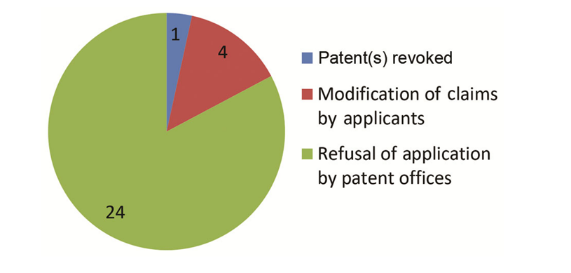
Fig. 1 —TKDL establishing prior art and the fate of some applications in India (2016-2020)67
International impact
Just like TKDL is based on IPC, even IPC has evolved due to TKDL. The Presentation on Traditional Knowledge Resource Classification (TKRC) at IPC Union helped create the WIPO-TK Task Force with USPTO, EPO, JPO, China and India as members for increasing the subgroups in IPC to classify the TK related subject matter and to link TKRC with IPC. Consequently, a new main group called A61K 36/00 with 207 subgroups, regarding ‘Medical preparations of undetermined constitution containing material from algae, lichens, fungi or plants, or derivatives thereof, e.g. traditional herbal medicines’ was also added in IPC’s 2003 revision68.
SHORTFALLS OF TKDL
1. TKDL is confined to established body of Indian Medical Sciences, i.e. TKDL is heavily dominated by Ayurveda, Unani, Siddha Medical Systems and Yoga69.
2. It disregards non-medical traditional knowledge and fails to document Indigenous knowledge in other fields70 like fundamental sciences, chemistry, etc.
3. In an attempt to standardize the composition of the medicines mentioned in ancient texts, it has led to homogenization of the literature, robbing it of the context and intricate preparatory details. Consequently, the TKDL has been criticized on various grounds, that can be related to its attempts to fit a diverse body of knowledge into a one-size-fits-all classification standard71.
4. TKDL is inadequate in countering Digital Biopiracy in the age of Artificial Intelligence, and does not address the issue of extraction and use of Traditional Knowledge by such technology without prior consent72.
5. The TKDL Access Agreements have been signed with only a few countries, many of which are developed countries, excluding developing countries where misappropriation of Traditional Knowledge by biopiracy can take place.
RECOMMENDATIONS
1. TKDL is heavily dominated by Ayurveda, Unani, Siddha Medical Systems and Yoga. However, it needs to expand its horizons to include other forms like tribal TK. It also needs to go beyond only medical knowledge and document Traditional Knowledge from other fields73. The knowledge in oral tradition also needs to be documented74.
2. Indigenous groups should be made aware and assisted to preserve their Traditional Knowledge. Access to legal methods and resources will empower and encourage these communities to safeguard their heritage and TK75.
3. Increasing awareness about Traditional Knowledge by making it accessible to general public should be prioritized76.
4. TKDL needs to be accessible to more and more nations to realise its object of preventing biopiracy.
CONCLUSION
Traditional Knowledge is heritage of a community and needs to be protected as a matter of identity and TKDL is India’s way of doing it. TKDL is a truly welcome step for protection of indigenous rights, preventing misuse of IPR and upholding fundamental spirit of innovation. However, some improvements are needed, and Delhi is still a bit far!
*****
Footnotes
1. Fredriksson, M. India’s Traditional Knowledge Digital Library and the Politics of Patent Classifications. Law Critique 34, 1–19 (2023).
2. Prashant, Reddy T., and Sumathi Chandrashekaran. Create, copy, disrupt: India’s intellectual property dilemmas. New Delhi: Oxford University Press (2017).
3. Supra Note 1.
4. Id.
5. Simeone Tonina, “Indigenous traditional knowledge and IPRs.” www.parl.gc.ca/information/library/PRBpubs, (Viewed on 14th March 2026).
6. Gupta V. K. “Traditional knowledge Digital Library”, Sub-Regional experts Meeting in Asia on Intangible cultural heritage, Bangkok, Thailand, 13-16 December 2005. (Conference Proceedings) http://www.accu.or.jp/ich/en/pdf/c2005sub_reg_Ind/pdf, (Viewed on 14th March 2026).
7. Martin van Ameijde, “Biopiracy: The need for a protective solution?” http://www.jur.lu.se/Internet/Utbildning/kurser/JCA803.nsf/43e828219552/ (Viewed on 11 March 2026)
8. V.K. Ahuja: Intellectual Property Rights In India 1 (2nd edition) (2015).
9. Overview of the Activities and Outcomes of the Committee, Intergovernmental Committee, WIPO/GRTKF /IC/5/12-2003, pp. 20-21).
10. R.V. Anuradha, “Biopiracy and Traditional Knowledge” available at http://www./ hinduonnet.com/ folio /fo 105/01050380.htm (visited on 16th March 2026)
11. Elements Of A Sui Generis System For The Protection Of Traditional Knowledge, World Intellectual Property Organization, Intergovernmental Committee On Intellectual Property And Genetic Resources, Traditional Knowledge And Folklore, 3rd Session., 2002, WIPO/GRTKF/IC/3/8.
12. Action Group on Erosion, Technology and Concentration (ETC Group), available at http://www.etcgroup.org/ issues/patents-biopiracy.
13. Supra Note 1.
14. Kaur, Harkiran, Biopiracy in Intellectual Property Rights Regime A Legal Study with Special Reference to the Rights of Indigenous People, 4: 90-140, (2017). (http://hdl.handle.net/10603/260761)
15. Gupta, V.K., An approach for establishing a traditional knowledge digital library, Journal of Intellectual Property Rights, 5: 307–319. (2000).
16. Pankaj Kumar & Ameeta Sharma, Impact of TKDL on Patent Applications in the Field of Bio-resources and the Associated TK, Journal of Intellectual Property Rights Vol 29, 133-140, (March 2024).
17. M. Hirwade, Protecting traditional knowledge digitally: A case study of TKDL, In: National Workshop on Digitization Initiatives and Applications in Indian Context, DNC, Nagpur, 3 January 2010.
18. Supra Note 1.
19. Chandra, M., & Shabran, R.P., The Role of Traditional Knowledge Digital Library in Protection of Indian Traditional Knowledge: A Critical Analysis, ShodhKosh: Journal of Visual and Performing Arts, 4(2), 3900–3907, (2023).
20. Jeroshini Reena, Traditional Knowledge Protection And The Role Of Traditional Knowledge Digital Library, The Indian Journal For Research In Law And Management, Vol. 3, Issue 4, (January 2026).
21. Supra Note 17.
22. Subbiah Sumati. “Reaping what they sow. The Basmati rice controversy and strategies for protecting TK” http://www.bc.edu/schools/law/lawreviews/meta-elements/journals/bciclr/27/12FMS.htm (Viewed on 13 March 2026).
23. Supra Note 19.
24. Supra Note 2.
25. Supra Note 1.
26. Id.
27. Id.
28. Press Information Bureau, Traditional Knowledge Digital Library, September 1, 2022, RU-30-02-0175-010922/FACTSHEET, https://static.pib.gov.in/WriteReadData/specificdocs/documents/2022/sep/doc20229199001.pdf
29. Supra Note 1.
30. Supra Note 16.
31. Supra Note 19.
32. Id.
33. Supra Note 14.
34. Supra Note 16.
35. The Patents Act, 1970, § 2(j).
36. The Patents Act, 1970, § 2(ja).
37. The Patents Act, 1970, § 2(ac).
38. The Patents Act, 1970, § 3(p).
39. The Copyright Act, 1957, § 13(1)(a).
40. The Copyright Act, 1957, § 13(1)(b).
41. The Copyright Act, 1957, § 13(1)(c).
42. The Copyright Act, 1957, § 13(3).
43. Supra Note 13.
44. Supra Note 19.
45. The Protection of Plant Varieties and Farmers’ Rights Act, 2001, § 28.
46. The Protection of Plant Varieties and Farmers’ Rights Act, 2001, § 24.
47. Supra Note 14.
48. The Protection of Plant Varieties and Farmers’ Rights Act, 2001, § 2(j).
49. The Protection of Plant Varieties and Farmers’ Rights Act, 2001, § 28.
50. The Biological Diversity Act, 2002, § 4.
51. The Biological Diversity Act, 2002, § 6.
52. The Biological Diversity Act, 2002, § 3.
53. The Scheduled Tribes And Other Traditional Forest Dwellers (Recognition Of Forest Rights) Act, 2006.
54. The Scheduled Tribes And Other Traditional Forest Dwellers (Recognition Of Forest Rights) Act, 2006, Preamble.
55. The Scheduled Tribes And Other Traditional Forest Dwellers (Recognition Of Forest Rights) Act, 2006, § 3.
56. Supra Note 1.
57. Convention on Biological Diversity (opened for signature May 22, 1992, entered into force Dec. 29, 1993), U.N.T.S. 79.
58. Id. at 80.
59. Manya Agarwal, Protecting Traditional Knowledge Through Intellectual Property Rights, Indian Journal of Integrated Research in Law, Vol. V Issue I, 501-512, (2025).
60. Convention on Biological Diversity, https://www.cbd.int/abs/about.
61. The Biological Diversity Act, 2002, Preamble.
62. Id.
63. The Patents Act, 1970, § 66.
64. Supra Note 16.
65. Supra Note 28.
66. Supra Note 16.
67. Id.
68. Suwapan Janyarak, Traditional knowledge digital library: What could we learn from India? Naresuan University Law Journal 9 (1): 81–109, (2016).
69. Supra Note 1.
70. Id.
71. Id.
72. Supra Note 20.
73. Seemantani Sharma, Traditional knowledge digital library: ‘A silver bullet’ in the war against Biopiracy, The John Marshall Review of Intellectual Property Law, 214: 214–231, (2017).
74. Supra Note 1.
75. Supra Note 59.
76. Supra Note 19.