
INTRODUCTION
Conflicts have existed since time immemorial and will continue to exist as long there is competition for basic requirements. Since dispute resolution is an integral aspect of any legal system, ensuring the enforcement of rights and obligations1. Generally, methods like mediation, arbitration and conciliation to resolve disputes instead of traditional court litigation, which is crucial for the successful implementation and acceptance of ADR mechanisms within a society, requiring targeted efforts educate individuals about the benefits and processes involved2.
Public perception of ADR is influenced by several socio-legal factors, including a lack of understanding about its procedures, doubts regarding enforceability about its procedures, doubts regarding enforceability, and misconceptions about impartiality3. While arbitration has gained credibility in commercial disputes mediation and conciliation in commercial disputes, mediation and conciliation still face skepticism, particularly in jurisdiction where litigation remains the default option. 4Furthermore, the absence of robust regulatory frameworks and inconsistencies in ADR processes create apprehension among litigants and legal practitioner5s.
The survey of Dispute Resolution in India 2023’is a pioneering initiative conducted by the Federation of India Corporate Lawyers (FICL)6 in collaboration with the Centre for Trade and Investment Law (CTIL). This survey marks the first attempt to assess the recent developments and amendments in Alternative Dispute Resolution (ADR) mechanisms and court litigation across major cities in India. The ‘Survey of Dispute Resolution in India, 2023’ aims to explore how the business community in India has embraced and utilized various modes of ADR mechanisms and court litigation7. The field of Alternative Dispute Resolution (ADR), encompassing modes such as arbitration, mediation, and conciliation, is inherently dynamic. It is characterized by its flexibility and adaptability8. In recent times, there has been an increased focus on drivers of change, including diversity, technology, environmental considerations, and information security. Additionally, the COVID-19 pandemic has presented challenges to the way the international arbitration community interacts9. The survey seeks the perspectives of a diverse group of participants, including in-house counsel from public and private sectors, arbitrators, senior advocates, advocates, representatives of arbitral institutions and trade associations, academics, and experts.1011
Definition of ADR Under section 89 of the Code of Civil Procedure, 1908 12
Settlement of disputes outside the Court:
Where it appears to the Court that there exist elements of a settlement which may be acceptable to the parties, the Court shall formulate the terms of the settlement and give them to the parties for their observations and after receiving the observations of the parties, the Court may reformulate the terms of a possible settlement and refer the same for Arbitration; Conciliation; Judicial settlement including settlement through Lok Adalat; or Mediation13 and Statistics on general public.
Lack of Knowledge and Understanding
Limited Knowledge of ADR Mechanisms: Many people, especially in developing countries like India, are unfamiliar with ADR options such as mediation, arbitration, and conciliation. This lack of awareness leaves them unaware of how ADR can be a more. Accessible, cost-effective alternative to court litigation14. Complex Terminology: The legal language associated with ADR can be intimidating and alienating for the general public. This technical jargon can create a barrier for people to understand ADR processes and their benefits fully15
STATISTICS ON GENERAL PUBLIC AWARENESS OF ADR
India: In the recent “Survey of Dispute Resolution in India 2023” is a pioneering initiative conducted by the Federation of India Corporate Lawyers (FICL) in collaboration with the Center for Trade and Investment Law (CTIL). This survey marked the assess to the recent development in Alternative Dispute Resolution (ADR) mechanisms and court litigation across major cities in India. Where parities mainly prefer Ad-Hoc Arbitration16.
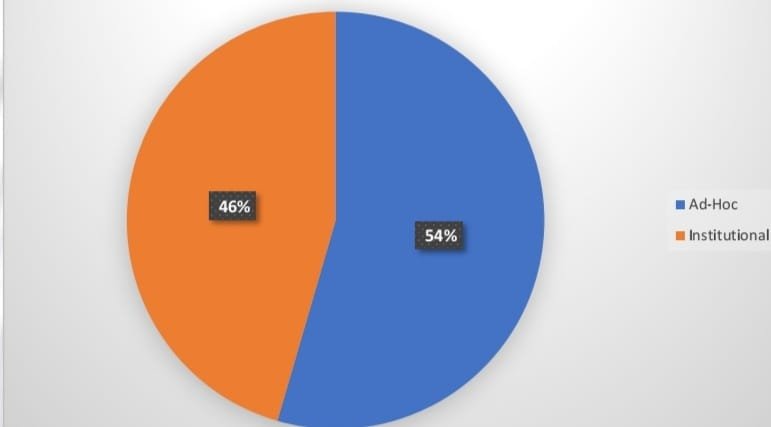
Source: The Survey of Dispute Resolution in India 2023
Factor influencing awareness which include lack government support, India being a developing nation some areas are more developed then other. ADR also got limited support from the government17. Even after 27 years of passing of Arbitration and Conciliation Act, 1996 there is no such enough ADR centers in India18, because the reason behind this is lack of funding. ADR was meant to save the parties from anxiety about the cost of parties but lack of infrastructure defeats the purpose. This is one of the greatest hindrances in the growth of ADR in India19.
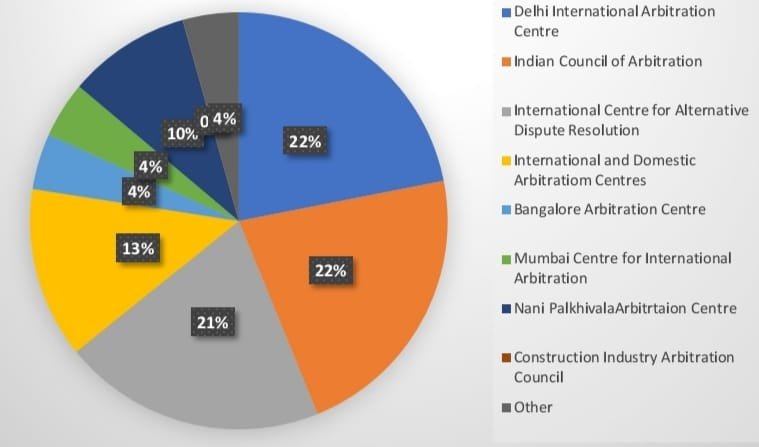
Source: The Survey of Dispute Resolution in India 2023
This are the major Institution in India where the majority of parties has expressly preferred their interest in Arbitration Institution – Delhi International Arbitration Centre (DIAC)20, Indian Council of Arbitration (ICA), Mumbai Center for International Arbitration (MCIA) and many more. Beside having Arbitration Institution in India people are still not awarded about Alternative Dispute Resolution (ADR)21.
LIMITED EXPOSURE AND ACCESSIBILITY
Underdevelopment of ADR Infrastructure: In some regions, the infrastructure to promote and practice ADR is still in its nascent stages. Many areas lack trained mediators, arbitrators, and ADR centers, meaning the public has limited exposure to ADR methods22. Geographic Barriers: In countries like India, the reach of ADR methods can be limited to urban areas, while rural populations may have little to no access to ADR services23. This leads to a disparity in knowledge and access across regions.
FACTOR INFLUENCING PUBLIC TRUST IN ADR
A. Perception of Fairness and Impartiality
Neutrality of the ADR Process: One of the primary factors that affect public trust in ADR is the perceived impartiality of the process. If parties feel that mediators, arbitrators, or conciliators are unbiased and not influenced by any external forces, they are more likely to trust the ADR system24.
Transparency in Process: When ADR processes are transparent, parties feel more secure in the fairness of the outcomes. If people do not understand how decisions are made, they may feel the process is arbitrary or biased.
B. Public Education and Information
Public trust in ADR increases when there is sufficient information available about the process. The more people understand the ADR mechanisms (such as mediation, arbitration, conciliation), the more likely they are to trust them. Misinformation or a lack of awareness can lead to skepticism about the process.
C. Role of neutral third-party facilitators (mediators and arbitrators)
A neutral third-party facilitator in Alternative Dispute Resolution (ADR) acts as a mediator, assisting disputing parties in reaching a mutually agreeable solution by facilitating communications, exploring underlying interests and guiding the negotiation process without imposing a decision on them. The neutral third-party facilitators provide essential services in resolving disputes in a way that is often quicker, cheaper, and more flexible than going through litigation in courts. Mediation is ideal for parties looking to preserve relationships or find creative solutions, while arbitration is more appropriate when parties need a final, enforceable decision.25
D. Cultural and Societal impact on Trust
The cultural and societal impact on trust in Alternative Dispute Resolution (ADR) is shaped by various factors, including legal culture, social norms, and demographic characteristics. Trust is a foundational element for the adoption and success of ADR methods such as mediation and arbitration. The influence of legal culture and social norms on ADR adoption can vary significantly across different countries and communities, and trust in ADR also fluctuates based on age, education, profession, and other demographic variables.
POTENTIAL GROWTH OF ADR: LEGAL AND COMMERCIAL DISPUTES
The potential for ADR to grow, particularly in the legal and commercial sectors, is significant. The increasing complexity and global nature of business disputes, along with the backlog of cases in traditional court systems, create an environment ripe for ADR methods to expand. ADR is already gaining traction in industries like construction, intellectual property, and international trade, where parties seek quicker and more flexible dispute resolution options.
Commercial Disputes: As businesses continue to expand globally, the demand for efficient dispute resolution methods, particularly arbitration, will increase. Arbitration is already the preferred method in many international contracts, and this trend is expected to grow. International ADR agreements and conventions are likely to further encourage cross-border adoption of ADR.
Legal Disputes: The backlog of cases in traditional courts worldwide is driving the growth of mediation and other ADR techniques. Governments are increasingly incentivizing the use of ADR to reduce the burden on the judiciary. The use of ADR in family law, labor disputes, and consumer issues is expected to grow as more people recognize its benefits.
Future Outlook: The future of ADR looks bright, particularly if transparency, legal safeguards, and public awareness continue to improve. With increasing legal and commercial pressures, ADR is poised to become a mainstream method for resolving disputes across the globe.
BARRIERS TO PUBLIC TRUST
Lack of Awareness: One of the primary barriers is the lack of awareness among the general Public, which is especially seen in rural and underdeveloped region and regarding the availability and benefits of ADR mechanisms like arbitration, mediation and conciliation. Even in many litigations it is views that courts proceeding as the only legitimation from of dispute resolution and legal literacy campaigns even often overlook the ADR education. The misconception that ADR is inferior to formal judicial mechanisms persists.
Infrastructural and Institutional Challenges: India faces significant challenges in infrastructural and institutional structure that effect the implementation of Alternative Dispute Resolution (ADR) mechanisms, particularly outside metropolitan regions. While major cities have established arbitration and mediation centers, such as Delhi International Arbitration Center (DIAC), The International Center for Alternative Dispute Resolution (ICADR), Indian Council of Arbitration (ICA) these institutions support largely the metropolitan region but absent in smaller towns and rural areas26. This lack of access creates a disparity in the availability of ADR services across the country. Additionally, the lack of qualified mediators and arbitrators is inadequate to meet the growing demand. Even among existing ADR institutions, there is a lack of standardized procedures, leading to inconsistencies in the quality and reliability of the resolution process. Furthermore, government support for strengthening ADR infrastructure remains limited, with insufficient funding and policy prioritization. These shortcomings undermine the efficiency and credibility of ADR as a viable alternative to traditional litigation27.
Delay and procedural formalism in ADR: Although Alternative Dispute Resolution (ADR) mechanisms such as arbitration are intended to offer a more efficient and formal alternative to litigation, institutional arbitration in India often suffers from procedural delays and inefficiencies that resemble those in traditional courts28. One of the key issues is the gradual infiltration of procedural formalism into arbitration proceedings, which diminishes the intended flexibility of the process. Arbitrators frequently adopt a judicial approach, placing undue emphasis on procedural technicalities rather than focusing on substantive justice and timely resolution. Moreover, arbitral awards are often challenged under Section 34 of the Arbitration and Conciliation Act, 199629, which permits parties to seek the setting aside of an award on limited grounds. This provision, although designed to safeguard fairness, has been widely used to initiate protracted litigation, undermining the finality and speed of arbitration30. As a result, the promise of arbitration as a swift and effective dispute resolution mechanism remains unfulfilled in many cases31.
Judicial Innervation: Despite the legislative intent to minimize court involvement, judicial intervention remains a persistent barrier to the effective functioning of ADR in India. `Under section 5 of the Arbitration and Conciliation Act 1996 clearly mention the limited scope of the judicial intervention in the arbitral proceeding. Said provision is akin to Article 5 of the UNICIRAL Model Law as well as analogous to provision under English Arbitration32. Section 5 of the Arbitration and Conciliation Act33 begins with a non-obstante clause to give an overriding effect to the provisions of the Act of 1996 over other statutes, thereby making this law extremely special for hassle free, smooth and quick resolution to any dispute by an arbitrator. In Videocon Industries ltd. v Union of India34, the apex court held that the term “no judicial authority” is very wide. Further, words “shall intervene” goes a long extent to ensure that there is no judicial discretion involved.7 Judicial intervention to a certain extent is permitted but even same is to supplement and create healthy environment for arbitral process. Role played by Judiciary is more of administrative framework and help rather than its conventional judicial one. The role played is administrative rather than that of adjudicator in an arbitral proceeding. While doing so, it was ensured that arbitration is not completely aloof from judicial intervention. Same is well explained by words like “except where so provided in this part”.
Setting aside of award and appeal: Courts can set aside the award of arbitration on certain grounds and after of arbitration on certain grounds and after that the dispute will be decided by the courts itself35. It causes more complications and delay in the adversarial process. Moreover, there is a very narrow scope for appeal after the award from the ARD process. The parties have very few remedies36.
Perceived Legitimacy: Perceived legitimacy in Alternative Dispute Resolution (ADR) in India is a multifaceted issue influenced by various factors. While ADR mechanisms like arbitration, mediation, conciliation, and Lok Adalat’s37 are increasingly promoted to reduce the burden on the traditional judicial system and offer speedier, cost-effective, and amicable dispute resolution, their perceived legitimacy is crucial for their widespread acceptance and effectiveness.
PUBLIC EDUCATION AND OUTREACH STRATEGIES FOR ADR IN INDIA
1. Government and Judicial Support for ADR Programs:
National ADR Awareness Campaigns38: The Indian government and the judiciary can play an active role by running nationwide campaigns to inform the public about ADR. This could include advertisements on TV, radio, and social media platforms in multiple languages, highlighting the benefits of ADR over traditional litigation. The Indian government’s promotion of Lok Adalat’s (People’s Courts) has been one such initiative, encouraging citizens to resolve disputes amicably39.
2. Workshops and Training for Local Communities:
Conducting community-based workshops where local mediators and ADR professionals explain how ADR works and its benefits in resolving conflicts40. These workshops can be organized in collaboration with local NGOs, educational institutions, and community centers. The National Judicial Academy in Bhopal often organizes training programs for judges and lawyers, and similar efforts can be made for the public through local outreach programs.
3. Use of Technology and Digital Platforms:
With India’s growing internet penetration, creating online platforms, mobile apps, or websites dedicated to ADR education can be effective. These platforms can host resources such as videos, articles, and FAQs about ADR processes. The e-courts initiative launched by the Government of India can be used to provide information on ADR mechanisms, online mediation services, and guidance for individuals seeking to resolve disputes outside the courtroom.
4. ADR Awareness in Schools and Universities:
Integrating ADR into school curricula and university law courses is a proactive strategy to increase awareness. Students can act as multipliers of knowledge in their communities by understanding ADR mechanisms from an early age. Several law universities in India, like National Law Universities (NLUs), already have ADR-focused courses. Expanding this approach in schools and universities will help raise awareness among younger generations41.
5. Community Outreach and Legal Aid Programs:
Leveraging Legal Aid Clinics to spread awareness of ADR among economically marginalized communities42. Legal aid centers should be equipped with resources to inform individuals about their ADR options and assist them in accessing ADR services. The National Legal Services Authority (NALSA) runs Legal Aid Camps in rural areas and can integrate ADR education into these initiatives43.
6. Collaboration with the Private Sector:
Private companies, especially in sectors like banking, insurance, and real estate, can be encouraged to adopt ADR mechanisms. Public awareness campaigns about ADR options in consumer-related disputes could be implemented by industry associations. The Insurance Regulatory and Development Authority of India (IRDAI) encourages arbitration and conciliation as means of resolving consumer disputes in the insurance sector.
7. Engagement with Media:
Media, including television channels, newspapers, and online portals, can be used to broadcast programs that demystify ADR44. This could include talk shows, panel discussions with experts, and real-life case studies of ADR success stories. Popular news outlets such as NDTV, Times of India, or social media influencers can help spread the message of ADR to a wide audience45.
8. Empowering and Training ADR Professionals:
Ensuring that mediators, arbitrators, and conciliators are well-trained and recognized as credible professionals46. This can be achieved through certifications, accreditation, and regular skill enhancement programs, which will ensure high-quality services. The Institute of Advanced Legal Studies in India offers specialized ADR training programs that can be promoted more widely47.
9. Public-Private Partnerships for ADR Initiatives:
Collaborating with private sector organizations such as the Confederation of Indian Industry (CII) or Federation of Indian Chambers of Commerce & Industry (FICCI) to promote ADR in the business community48. These bodies can help organize conferences and workshops on ADR.49
EFFECTIVENESS OF ADR UNDER ANALYSIS OF CASE STUDIES OR DATA ON ADR SUCCESS RATES
To assess the effectiveness of Alternative Dispute Resolution (ADR), analyzing case studies and data on ADR success rates can provide valuable insights into its real-world application and success. Below is a review of key findings from various case studies and data sources that demonstrate the effectiveness of ADR in different contexts.
1. Case Studies and Data from Mediation:
Family Law Mediation (Divorce and Custody Disputes):
A study by the American Psychological Association (APA) examined mediation outcomes in family law cases, including divorce and custody disputes. It found that:
• Success Rate: About 80% of family disputes resolved through mediation reach a settlement, compared to only about 50% of cases that go to trial.
• Satisfaction: Participants in mediation generally reported higher satisfaction levels (approximately 90%) than those who went through litigation, particularly in terms of the fairness of the process and the maintenance of relationships.50
These findings highlight mediation’s effectiveness in resolving disputes in a way that preserves relationships and produces faster, more satisfactory outcomes for all involved.
Business and Commercial Disputes:
A case study from the International Chamber of Commerce (ICC) on the use of ADR (particularly arbitration and mediation) in commercial disputes revealed:
• Success Rate: Approximately 70% of business disputes resolved through mediation resulted in a settlement, while the figure for arbitration was slightly higher at 80%.
• Time and Cost Efficiency: Mediation and arbitration were found to be far less time-consuming and costly compared to litigation. Arbitration cases, for example, were resolved in an average of 6-9 months, whereas litigation could take years in some jurisdictions.51
The data showed that ADR methods were not only effective in resolving business disputes but also contributed to faster and less expensive resolutions compared to traditional court processes.
2. Data from Arbitration:
The World Bank and International Arbitration Institutions such as the London Court of International Arbitration (LCIA) and the International Centre for Dispute Resolution (ICDR) have published success rate data on arbitration cases:
• Arbitration Success Rate: In general, about 70-80% of arbitration cases result in a final and enforceable award, with a relatively high level of compliance by parties after the award.
• Appeals and Enforcement: Data shows that about 90% of arbitration awards are enforced successfully in countries that are signatories to the New York Convention. This demonstrates the strong legal backing for arbitration as a dispute resolution method, particularly in international disputes.52
These statistics indicate that arbitration is particularly effective for complex international commercial disputes, providing a legally binding resolution with high enforceability.
3. Labor Disputes and Employee Grievances:
Case studies in labor and employment disputes, including those involving unions and employees, have highlighted the role of mediation in resolving workplace conflicts:
• Success Rate: In one study conducted by the Federal Mediation and Conciliation Service (FMCS) in the United States, mediation was found to resolve approximately 85% of disputes between labor unions and employers, avoiding strikes and costly litigation.
• Time and Cost Effectiveness: Labor mediation is often quicker than litigation, with many disputes resolved within 30 days as opposed to the prolonged legal battles typical in labor courts.53
4. Consumer Dispute Resolution
In consumer disputes, ADR mechanisms like online dispute resolution (ODR) and mediation have shown considerable success:
• A study by JAMS (a major provider of ADR services) found that 70-75% of consumer disputes resolved through ODR platforms were settled without litigation.
• Companies that offer ADR as a service, such as eBay and PayPal, report that a significant percentage (over 80%) of their disputes are resolved through online mediation or arbitration, leading to better customer satisfaction and lower legal costs.
5. Government and Court-Annexed ADR Programs:
Many jurisdictions have implemented court-annexed ADR programs to reduce court congestion and resolve disputes quickly:
• A report from the United States District Court showed that their mediation program resulted in a 66% success rate for civil cases.
• The European Union (EU) has implemented several cross-border ADR schemes with high success rates. For example, a study by the EU Commission found that 75% of cross-border consumer disputes were resolved via ADR platforms.
These findings suggest that court-annexed or government-backed ADR programs are highly successful at streamlining dispute resolution processes, especially for civil and consumer cases.
EFFECTIVENESS OF OUTREACH PROGRAMS IN DEMYSTIFYING ADR IN INDIA
1. Increased ADR Utilization Through Lok Adalats:
Lok Adalats, a long-standing ADR initiative in India, have significantly contributed to resolving disputes outside the traditional court system. Research has shown that Lok Adalats have been particularly successful in resolving pending cases in public interest litigation, family disputes, and minor criminal cases. According to the National Legal Services Authority (NALSA), the Lok Adalat system has resulted in the settlement of millions of cases in India, with a notable impact on reducing court backlogs.
2. Case Study on Mediation in India:
In recent years, mediation has gained recognition as an effective ADR method. The Indian Judiciary has increasingly used mediation to settle cases in various courts. For example, the Delhi High Court Mediation Centre has been instrumental in settling civil cases. A study by the Centre for Civil Society found that mediation had a success rate of over 60% in resolving disputes in some Indian cities, helping to reduce the burden on the courts.
3. Impact of Training Programs on ADR Awareness:
A study conducted by Symbiosis Law School highlighted that trained mediators have had a significant impact on increasing the public’s trust in ADR mechanisms. The research suggested that increasing the number of trained mediators would help demystify ADR and encourage more people to use it. Training programs for both legal professionals and the public helped individuals better understand the ADR process, leading to greater adoption.
4. Research on ADR and the Corporate Sector:
Corporate disputes in India have increasingly turned to arbitration and mediation as efficient alternatives to litigation. Studies have shown that businesses that engage in ADR are more satisfied with the process and cost-effectiveness. A report by the Indian Institute of Arbitration and Mediation (IIAM) indicated that a significant proportion of companies prefer arbitration as a dispute resolution method because of its confidentiality and quicker resolution time compared to traditional court proceedings.54
GLOBAL COMPARISON OF ADR TRUST
Public trust in Alternative Dispute Resolution (ADR) methods is deeply influenced by cross-cultural differences, legal frameworks, and institutional support. The perception and effectiveness of ADR vary significantly across regions, with public trust shaped by local cultural values, historical context, and the role of the judiciary. Below is a global comparison of ADR trust, focusing on cultural differences, and includes case studies from different countries that highlight how the public perceives ADR methods.
Singapore: The Global Arbitration Hub
SIAC is an independent, neutral and not for profit global arbitration institution which provides case management services to the international business community. In terms of its international administered caseload, SIAC is amongst the top 5 intuitions in the world and has the highest contribution and support in Arbitration. Singapore has adopted a dual-track legislative system comprising the International Arbitration Act (IAA), 1994 for international arbitrations and the Arbitration Act, 2001 for domestic arbitrations. The IAA is based on the UNCITRAL Model Law, ensuring international conformity and neutrality. Courts in Singapore are known for their non-intrusive role in arbitral proceedings, a principle reflected in decisions such as PT First Media TBK v Astro Nusantara International BV, where the Court of Appeal reinforced pro-arbitration principles55. The Singapore International Arbitration Centre (SIAC) is among the top five arbitral institutions globally. According to SIAC’s Annual Report 202356, the center handled over 1,000 new cases, involving parties from more than 65 countries, reflecting Singapore’s global pull as a neutral seat. Singapore is a signatory to the New York Convention, 1958, allowing for enforceability of arbitral awards in over 160 countries. Its judiciary has emphasized minimal court interference unless awards contravene public policy or due process, in line with Article 34 of the UNCITRAL Model Law.
The Swiss Arbitration Association (Switzerland)
The Swiss Arbitration Center is an independent institution that provides high quality & highest support of arbitration and mediation services worldwide, making it the leading dispute resolution institution in Switzerland. Switzerland regulates international arbitration under Chapter 12 of the Swiss Private International Law Act (PILA)57. The law emphasizes party autonomy, flexibility, and limited judicial review. The 2021 revision of PILA has modernized Swiss arbitration laws to align further with UNCITRAL principles, reinforcing Switzerland’s arbitration friendliness. The Swiss Arbitration Centre (formerly SCAI) is a widely respected institution handling high-value, complex disputes, particularly in the finance, pharmaceuticals, and energy sectors. The institution adheres to the Swiss Rules of International Arbitration, which offer efficiency and transparency. Swiss courts follow a non-interventionist approach, only annulling awards on narrow grounds such as lack of jurisdiction or public policy. The Federal Supreme Court reaffirmed the principle that parties’ autonomy must be respected even if they choose foreign laws or procedures. Switzerland’s neutrality and global reputation make it a natural seat for international disputes. Its arbitral awards are enforceable worldwide under the New York Convention.
United Kingdom (London)
The United Kingdom, particularly London, is a well-established and highly regarded global hub for international arbitration. Several prominent arbitration centers and institution operate within the UK, offering a range of services for resolving domestic and international disputes. Legal Framework, The Arbitration Act, 1996 governs arbitration in the UK. It incorporates the principles of party autonomy, limited judicial intervention, and support for finality of awards. One unique feature of UK arbitration law is Section 69, which permits appeals on questions of law, subject to party agreement, providing a balance between finality and legal oversight. The Arbitration Act 2025 is set to introduce amendments to the 1996 Act to further modernize the process, enhance efficiency, and maintain the UK’s Competitive edge in international arbitration. These reforms include provisions for summary disposal of claims, enhanced powers for emergency arbitrators, and clarifications regarding challenge to jurisdiction. UK arbitral awards are enforceable under the New York Convention and also widely accepted in common law countries due to precedential respect for English legal principles.
India
In India, public trust in ADR is growing, especially with initiatives like Lok Adalats (People’s Courts) and National Legal Services Authority (NALSA). These mechanisms are popular in rural areas, where they provide accessible and low-cost alternatives to traditional litigation. However, skepticism remains regarding the neutrality of mediators and the overall fairness of the process, particularly in commercial disputes. Trust is higher in family law and small claims, but concerns about the effectiveness of ADR in high-stakes cases persist. Research from the Centre for Civil Society and NALSA highlights the positive impact of ADR in reducing judicial backlogs but points to regional differences in its acceptance. India’s arbitration law is governed by the Arbitration and Conciliation Act, 199658, significantly amended in 2015, 2019, and 2021. These reforms aimed to bring Indian arbitration law in line with UNCITRAL Model Lawand boost its effectiveness as an international seat. Key amendments include:
– Section 29A: Imposes a 12-month time limit to complete arbitrations.
– Section 11: Streamlined process for appointment of arbitrators by institutions rather than courts.
– Section 34 & 48: Narrow grounds for challenge and enforcement of awards.
Amendments to the Arbitration and Conciliation Act: The Indian government has progressively amended the Arbitration and Conciliation Act in 2015, 2019, and 2020. These amendments aimed to streamline the arbitration process, ensure arbitrator neutrality, minimize judicial intervention, and enforce arbitral awards efficiently. These changes align Indian arbitration practices with global standards, enhancing its appeal and it’s also Promote Institutional Arbitration where the government is actively promoting institutional arbitration to provide a structured ecosystem for dispute resolution. This is evident in the establishment of institutions like the India International Arbitration Centre (IIAC) and its also mainly focus on Mediation Act, 2023 This act provides a legislative framework for mediation, promoting its adoption by disputing parties, particularly under institutional mediation. It’s expected to foster a culture of amicable dispute resolution outside traditional court settings
Less enthusiastic or underdeveloped Country for Arbitration:
Pakistan:
Pakistan’s arbitration law is largely based on the Arbitration Act, 194059, a colonial-era legislation that is outdated and inconsistent with modern international standards like the UNCITRAL Model Law. Although Pakistan is a signatory to the New York Convention, its implementation under the Recognition and Enforcement (Arbitration Agreements and Foreign Arbitral Awards) Act, 2011 has seen inconsistent application by domestic courts Pakistani courts have historically demonstrated judicial overreach and delays in the recognition and enforcement of foreign arbitral awards. In Hubco v WAPDA60 the Supreme Court refused to enforce an ICC arbitral award, raising concerns over arbitrability and public policy. Pakistan has the lacks of world-class arbitral institutions, and for which arbitration is often viewed as suspicion by domestic parties. Most international contracts involving Pakistan prefer a foreign seat of arbitration like London or Singapore.
Bangladesh:
The Arbitration Act, 2001 governs both domestic and international arbitration in Bangladesh. However, the law has not been significantly updated, and it deviates from the UNCITRAL Model Law in key areas, such as party autonomy and scope of judicial review. Judicial Magnitude: Bangladeshi courts tend to adopt a conservative and interventionist stance in arbitration matters. The judiciary has been criticized for delay in enforcement, excessive procedural scrutiny, and lack of expertise in commercial arbitration. In Bangladesh Jute Mills Corporation v. Biswanath Enterprises (2016)61, the court refused to enforce an award based on procedural grounds Institutional Support: There is no internationally recognized arbitration institution in Bangladesh and most of the international parties opt for foreign arbitration clauses when they are dealing with Bangladeshi entities.
Russia:
Russia had modernized its arbitration law with the Federal Law on Arbitration (2015), aligning with UNCITRAL principles. However, due to the geopolitical tensions and sanctions post-2022, many foreign entities now try to avoid arbitration in Russia. Russian courts have shown pro-state bias in high-profile arbitrations. In Yukos v. Russia, the Russian courts refused to enforce the $50 billion arbitral award, citing procedural and public policy reasons (Hulley Enterprises v. Russian Federation62. The Russian Arbitration Association has existed, but its international influence has waned. Most international contracts involving Russian parties now avoid Russian seats, reflecting distrust in judicial neutrality.
| Country | Legal Framework | Institutional Strength | Court Attitude | Global Recognition | Enforcement Challenges |
|---|---|---|---|---|---|
| Singapore | UNCITRAL- based IAA | SIAC (1000+ Cases) | Strongly Pro- Arbitration | Very High | Global |
| Switzerland | PILA | Swiss Arbitration Centre | Non-interventionist | High | Global |
| UK(London) | Arbitration Act 1996 | LCIA (400+ cases) | Arbitration Friendly | Very High | Global |
| India | ACA 1996 (Amended in 2021) | MCIA, DIAC | Becoming Pro-Arbitration | Medium & rising | Global (NYC) |
| Pakistan | Arbitration Act 1940, 2011 Act | Weak | Interventionist | Low | Delays, Public Policy |
| Bangladesh | Arbitration Act 2001 | Non-existent | Conservative | Low | Procedural Delays |
| Russia | Federal Arbitration Law 2015 | Russian Arbitration Assoc. | Pro-State Bias | Declining | Political Interference |
FUTURE TRENDS AND RECOMMENDATIONS
The future of Alternative Dispute Resolution (ADR) looks promising, particularly in terms of increasing its use in growth both legal and commercial disputes. However, to realize its full potential, public trust and awareness need to be improved. This can be achieved through a variety of strategies aimed at addressing concerns around transparency, fairness, accessibility, and effectiveness. Below are some detailed recommendations for improving public trust in ADR and fostering its.
1. Improving Transparency in ADR Processes
Recommendation: One of the key challenges to ADR,63 especially in arbitration, is the perception that the process can be opaque and biased, particularly in cases where powerful parties are involved. To address this, institutions should adopt clearer, more open procedures and ensure that all parties understand the ADR process, rules, and costs upfront.
Action Steps: Publication of ADR decisions: Publishing anonymized ADR64 decisions, where appropriate, can increase transparency, allowing the public and other stakeholders to see how decisions are made.
Clear procedural guidelines: Ensuring that ADR providers publicly release detailed procedural guides and frequently asked questions (FAQs) will help demystify the process for the general public.
Independent oversight: An independent body could oversee ADR practices to ensure compliance with established standards of fairness and transparency.
Potential Impact: This would reduce the perception of bias or secrecy in ADR processes, making them more acceptable to the public and businesses alike.
2. Increasing Legal Safeguards and Consumer Protection
Recommendation: Strengthening legal safeguards around ADR can enhance public confidence. Legal reforms should focus on ensuring that ADR mechanisms are fair, equitable, and accessible to all parties, particularly vulnerable individuals or groups65.
Action Steps:
Regulation of ADR providers: Establishing national or international accrediting bodies for ADR professionals can help ensure quality and competence. This would also guarantee that ADR practitioners follow a clear code of ethics.
Standardizing ADR processes: National or regional ADR standards could be developed and enforced to ensure consistent practices across various types of disputes (commercial, family, employment).
Ensuring enforceability: Strengthening the enforceability of ADR outcomes, especially in arbitration, can give parties more confidence that ADR will provide a final resolution to their disputes, just as a court judgment would66.
Potential Impact: With these safeguards in place, the public would be more likely to trust ADR methods as reliable, fair alternatives to traditional litigation.
3. Enhancing Public Awareness and Education
Recommendation: Public awareness about ADR and its benefits is still limited in many regions, especially in countries where litigation is the norm. Increasing awareness about the advantages of ADR67—such as its cost-effectiveness, speed, and confidentiality—will help build trust and encourage its use.
Action Steps:
Educational campaigns: Governments, ADR organizations, and legal institutions could launch educational campaigns aimed at informing the public about ADR methods. These campaigns could be conducted via media, workshops, online resources, and partnerships with educational institutions.
Training for legal professionals: Training programs for lawyers, judges, and other legal professionals about ADR can help promote its use and benefits, ensuring that they recommend ADR to clients when appropriate.
Public-facing resources: Creating user-friendly websites or platforms that explain ADR processes in simple terms, and offering free initial consultations for mediation or arbitration, would allow the general public to engage more with ADR68.
Potential Impact: Increased knowledge and understanding will lead to more people opting for ADR as a viable dispute resolution method, thereby growing its use and trust.
4. Leveraging Technology to Improve ADR Access
Recommendation: The use of technology can make ADR processes more accessible, efficient, and transparent. As more people rely on digital tools for everyday transactions, integrating technology into ADR could bridge geographical and financial gaps69.
Action Steps:
Online dispute resolution (ODR): Developing and expanding ODR platforms can allow individuals and businesses to resolve disputes without needing to travel or deal with the administrative burdens of in-person meetings.
Virtual hearings and mediations: Many ADR organizations already conduct virtual hearings for convenience, but expanding this further could make ADR more accessible for people in remote or underserved areas.
AI and data analytics: AI could be used to streamline and expedite the process, suggesting solutions to parties based on previous cases, while data analytics could help identify trends and improve future ADR processes.
Potential Impact: Technology could democratize access to ADR, particularly for individuals and businesses in remote or underserved areas, helping to expand its reach and foster trust in its accessibility70
5. Promoting ADR in Specific Sectors (Commercial, Labor, Family Law)
Recommendation: ADR is already well-accepted in many commercial sectors, but other areas, such as labor disputes and family law, still require greater public acceptance. Developing sector-specific ADR mechanisms could help expand its use and build public trust.
Action Steps:
Labor dispute mediation: In many countries, labor unions and employers are increasingly turning to ADR methods to resolve disputes without resorting to strikes or lengthy litigation. Expanding mediation in labor relations could help resolve conflicts more quickly and equitably71.
Family law mediation: Encouraging mediation in divorce and child custody cases could lead to more amicable outcomes, reducing the emotional and financial toll on families. Awareness campaigns could target divorcing couples to educate them on the benefits of mediation72.
Consumer ADR: Encouraging companies to adopt ADR clauses for disputes with consumers could help resolve conflicts quickly without litigation. This could be particularly useful in industries like telecommunications, insurance, and retail.
Potential Impact: These sector-specific efforts could increase the trust and reliance on ADR by demonstrating its effectiveness in diverse contexts, beyond just commercial disputes.
6. Expanding International ADR Frameworks
Recommendation: International trade and cross-border commercial transactions are increasingly complex, necessitating the use of ADR mechanisms that can handle global disputes efficiently. Strengthening international ADR frameworks can boost public and business trust globally.
Action Steps:
International treaties and conventions: International treaties like the United Nations Convention on International Settlement Agreements (Singapore Convention on Mediation)73, aimed at enhancing the enforceability of mediated agreements, could be promoted more widely.
Regional ADR agreements: Countries could develop regional ADR frameworks to address disputes that arise between businesses from different nations, improving trust in international commerce74.
Potential Impact: The growth of international ADR would streamline dispute resolution across borders, making it easier for businesses to resolve issues without resorting to expensive and time-consuming litigation
CONCLUSION
The evolution of Alternative Dispute Resolution (ADR) mechanisms in India reflects a broader institutional response to the persistent problem of judicial backlog and the need for more accessible justice delivery systems. With the increasing reliance on arbitration, mediation, conciliation, and Lok Adalats, ADR has carved a space within India’s legal landscape, aiming to offer a viable alternative to the often time-consuming and expensive formal litigation process. However, public awareness and trust in ADR, while growing, remain uneven and highly contextual.
On one hand, ADR mechanisms have demonstrated considerable success in addressing low-stakes and community-centric disputes, particularly in areas such as family law, motor accident claims, consumer grievances, and labor-related conflicts. The Lok Adalat system, in particular, has emerged as a grassroots institution that promotes amicable settlements through conciliatory dialogue and is widely recognized for its cost-effectiveness and procedural simplicity. Government institutions such as the National Legal Services Authority (NALSA) have played a pivotal role in raising awareness, organizing legal literacy camps, and promoting ADR mechanisms in rural and semi-urban regions. These efforts have led to a growing sense of trust among the marginalized and socio-economically disadvantaged populations, who see ADR as a quicker and less intimidating path to justice.
However, the application and acceptance of ADR in complex commercial disputes and high-value civil matters present a contrasting picture. A significant portion of the business community, especially small and medium enterprises (SMEs), continue to express skepticism about ADR’s effectiveness in ensuring fair and unbiased outcomes. Concerns persist regarding the impartiality of arbitrators, the informality of procedures, and the absence of robust legal safeguards akin to those available in traditional litigation. This skepticism is often amplified in cases involving asymmetrical power dynamics, where the weaker party fears coercion or manipulation in the name of settlement.
Moreover, while India has made substantial legislative strides—such as through the Arbitration and Conciliation (Amendment) Acts of 2015, 2019, and 2021—to align its arbitration regime with international standards, the general public and even many professionals remain inadequately informed about these reforms. This lack of understanding limits the broader adoption of ADR methods, particularly among urban and semi-urban populations who are otherwise well-positioned to benefit from them.
In sum, while ADR in India has witnessed encouraging developments and success stories at the grassroots level, particularly through Lok Adalats and mediation in family courts, its broader institutionalization, especially in commercial and complex civil matters, still faces structural and perceptual hurdles. Bridging the knowledge gap, enhancing institutional transparency, training neutral third-party facilitators, and building a stronger legal framework with enforceable safeguards will be essential for increasing public trust and mainstreaming ADR into the Indian legal consciousness. Only through such comprehensive efforts can ADR truly fulfill its potential as an effective, trusted, and inclusive mechanism for dispute resolution in India
*****
Footnotes
1. (Ministry of Law and Justice, Government of India, 2022) (Born, 2021)
2. S.K. Chawla, Alternative Dispute Resolution: Arbitration and Conciliation 45 (Eastern Book Co., 2022)
3. Varun Sharma, Public Perception of ADR in India: A Legal Reality Check, 12 Int’l J. L. & Pol’y Rev. 67, 71–73 (2022).
4. Nidhi Saxena, ADR in India: Institutional Framework, Challenges and Recent Developments, 5 Indian J. Arb. L. 88, 91 (2021)
5. Avani Agarwal, Reassessing the Indian ADR Mechanism: A Structural Critique, 41 Delhi L. Rev. 135, 140 (2020).
6. Federation of India Corporate Lawyers (FICL)
7. https://ficl.org.in/reports/survey-of-dispute-resolution-2023
8. Nadja Alexander, Mediation and the Dynamics of Dispute Resolution: A Practitioner’s Guide 59 (4th ed. 2020)
9. José Maria Abascal, Virtual Hearings in Arbitration and the Lessons from the Pandemic, 38 J. Int’l Arb. 212, 215 (2021)
10. Pankaj Sinha & Radhika Rao, Technology and the Evolution of ADR in India: Post-COVID Perspectives, 6 NLS Bus. L. Rev. 102, 108 (2023)
11. Survey of Dispute Resolution in India 2023, page 2
12. Section 89 of the Code of Civil Procedure, 1908
13. Code of Civil Procedure, 1908, § 89, No. 5, Acts of Parliament, 1908 (India)
14. Ajar Rab, The Growth of ADR in India: Challenges and Road Ahead, 7 NLIU L. Rev. 105, 107 (2018)
15. Varun Sharma, Public Perception of ADR in India: A Legal Reality Check, 12 Int’l J. L. & Pol’y Rev. 67, 71–73 (2022)
16. Federation of Indian Corporate Lawyers & Centre for Trade and Investment Law, Survey of Dispute Resolution in India, 2023, at 15, available at https://ficl.org.in.
17. Avani Agarwal, Reassessing the Indian ADR Mechanism: A Structural Critique, 41 Delhi L. Rev. 135, 138 (2020).
18. Ministry of Law and Justice, Government of India, Evaluation of the Implementation of Arbitration and Conciliation Act, 1996, Policy Brief (2021), available at https://lawmin.gov.in
19. S.K. Chawla, Alternative Dispute Resolution: Arbitration and Conciliation 122 (Eastern Book Co., 2022)
20. Nidhi Saxena, ADR in India: Institutional Framework, Challenges and Recent Developments, 5 Indian J. Arb. L. 88, 90–92 (2021)
21. Vidhi Centre for Legal Policy, Dispute Resolution in India: Need for Public Engagement and Legal Reforms, Policy Brief (2022), https://vidhilegalpolicy.in.
22. Pankaj Sinha & Radhika Rao, Technology and the Evolution of ADR in India: Post-COVID Perspectives, 6 NLS Bus. L. Rev. 102, 110 (2023).
23. Ajar Rab, The Growth of ADR in India: Challenges and Road Ahead, 7 NLIU L. Rev. 105, 117 (2018)
24. Nadja Alexander, Mediation and the Dynamics of Dispute Resolution: A Practitioner’s Guide 62 (4th ed. 2020).
25. Program on Negotiation by Harvard Law School. In Harvard.edu com
26. Lok Adalats and the Indian Judiciary: https://nalsa.gov.in
27. Maria L. Fields, ADR in Practice: Mediating Commercial, Labor, and Family Law Disputes (Routledge 2022).
28. Sarah J. Williams, Increasing Transparency in ADR Processes: A Modern Solution for Legal Disputes, 45 J. Disp. Resol. 223, 225 (2023)
29. Arbitration & Conciliation Act, No. 26 of 1996, § 34 (India).
30. Vidya Drolia v. Durga Trading Corp., (2020) 20 SCC 273 (India).
31. BALCO v. Kaiser Aluminum, (2012) 9 SCC 552 (India).
32. Arbitration & Conciliation Act, No. 26 of 1996, § 5 (India).
33. UNCITRAL Model Law on International Commercial Arbitration, Art. 5.
34. Videocon Indus. Ltd. v. Union of India, (2011) 6 SCC 161 (India).
35. Arbitration & Conciliation Act, No. 26 of 1996, § 34 (India).
36. Katherine S. Matthews, Strengthening Legal Safeguards in ADR: Protecting Vulnerable Parties, 50 Int’l J. L. & Econ
37. John D. Marlowe, Protecting Consumers through ADR: Ensuring Fairness and Access in Legal Dispute Resolution
38. National Legal Services Authority, Lok Adalats and the Indian Judiciary: https://nalsa.gov.in
39. Public Awareness and ADR: Strengthening Dispute Resolution Systems (2021)
40. Training Modules and Judicial Education, https://nja.gov.in
41. Promoting ADR in the Legal Profession: Educating Lawyers and the Public
42. Protecting Consumers through ADR: Ensuring Fairness and Access in Legal Dispute Resolution
43. Legal Aid Camps and Rural ADR Initiatives, https://nalsa.gov.in
44. Public Awareness and ADR: Strengthening Dispute Resolution Systems (2021), https://www.justice.gov
45. Increasing Transparency in ADR Processes: A Modern Solution for Legal Disputes
46. ADR Certificate Courses & Professional Training Modules, https://ials.org.in
47. Strengthening Legal Safeguards in ADR: Protecting Vulnerable Parties
48. ADR Mechanisms for Commercial Disputes, https://ficci.in
49. National ADR Awareness Campaigns
50. “Lok Adalats and Indian Judiciary”- A study by NALSA Lok Adalat Report
51. Centre for Civil Society Report.
52. NALSA Lok Adalat Report.
53. Federal Mediation and Conciliation Service (FMCS)
54. Lok Adalat’s and the Indian Judiciary” – A Study by NALSA Lok Adalat Report.
55. PT First Media TBK v Astro Nusantara International BV [2014] 1 SLR 372
56. International Arbitration Act (Cap. 143A, Rev. Ed. 2002) (Singapore); PT First Media TBK v Astro Nusantara International BV [2014] 1 SLR 372; SIAC Annual Report 2023.
57. Swiss Private International Law Act, Chapter 12; BGE 142 III 360 (2016); Swiss Arbitration Centre, Annual Report 2023.
58. Arbitration and Conciliation Act, 1996; BALCO v. Kaiser Aluminum, (2012) 9 SCC 552; Vidya Drolia v. Durga Trading Corporation, (2020) 20 SCC 273; MCIA Annual Report 2023.
59. Arbitration Act 1996 (UK); Dallah Real Estate v Government of Pakistan [2010] UKSC 46; LCIA Annual Report 2023.
60. Recognition and Enforcement (Arbitration Agreement and foreign Arbitral Awards) Hubco v WAPDA (PLD 2000 SC 841)
61. Arbitration Act, 2001 Bangladesh Jute Mills Corporation v. Biswanath Enterprises (2016),
62. Federal Law on arbitration (Hulley Enterprises v. Russian Federation, PCA Case No. AA 226).
63. Michael J. Bierman, The Future of Arbitration: Transparency and Fairness in Dispute Resolution (Harvard Univ. Press 2023)
64. Sarah J. Williams, Increasing Transparency in ADR Processes: A Modern Solution for Legal Disputes, 45 J. Dispute Resol. 223, 225 (2023).
65. John D. Marlowe, Protecting Consumers through ADR: Ensuring Fairness and Access in Legal Dispute Resolution (Oxford Univ. Press 2022).
66. Katherine S. Matthews, Strengthening Legal Safeguards in ADR: Protecting Vulnerable Parties, 50 Intl. J. L. & Econ. 340, 344 (2023).
67. U.S. Dep’t of Justice, Public Awareness and ADR: Strengthening Dispute Resolution Systems, (2021).
68. Richard L. Walker, Promoting ADR in the Legal Profession: Educating Lawyers and the Public, 33 Harv. L. Rev. 1902, 1905 (2023)
69. Lorna A. White, The Digital Age of ADR: Leveraging Technology for Efficient Dispute Resolution (Stanford Univ. Press 2024).
70. Thomas R. Ford, Expanding ADR Access through Online Dispute Resolution, 52 J. Tech. & L. 134, 137 (2023).
71. Maria L. Fields, ADR in Practice: Mediating Commercial, Labor, and Family Law Disputes (Routledge 2022).
72. Laura T. Davis, Sector-Specific ADR: A New Approach to Family and Labor Disputes, 41 Family L. Q. 503, 505 (2023).
73. United Nations, United Nations Convention on International Settlement Agreements Resulting from Mediation (Singapore Convention on Mediation), 58 U.N.T.S. 243, (2019).
74. World Trade Org., Strengthening ADR Mechanisms in Cross-Border Trade Disputes, WTO Doc. WT/GC/W/746 (2021).