
INTRODUCTION
This study aims to investigate the relationship between Green Human Resource Management (GHRM) and Green Performance (GP). The rise in environmental awareness and urgency for sustainable development has periodically shaped organizational plans. Human resource management (HRM) has evolved through practices simply called Green Human Resource Management (GHRM) to take a further step in including some degree of environmental purpose. This is a strategy for human resource policies to align with environmental objectives and create environmentally conscious employees, or sustainability (Renwick et al., 2013; Jabbour et al., 2022). Today, one of the major drivers of corporate sustainability is the concept of “green performance,” which integrates ecological effects as a result of the behaviors of employees and the efficiency of operations (Renwick et al., 2013; Faisal, 2023; Yusoff et al., 2023; Yong 2024). Although several systematic reviews and meta-analyses have examined specific relationships between GHRM practices and sustainability outcomes, there is a few synthesis that maps global research productivity, collaboration networks, influential authors, and thematic concentrations using quantitative bibliometric techniques (Yusoff et al., 2023; Faisal, 2023; Kumari et al., 2023). To address this gap, the present study employs a bibliometric research design to analyse global research output on GHRM and green performance between 2015 and 2025. Specifically, the study examines publication trends, keyword co-occurrence patterns, co-authorship networks, and bibliographic coupling structures to reveal the intellectual foundations, dominant themes, and collaborative structures shaping this field. By providing a structured overview of the existing literature, this study contributes to a clearer understanding of how GHRM and green performance have been conceptualized and interconnected in prior research and highlights potential directions for future empirical inquiry.
Objectives of the Study
Following are the objectives of this study:
1. To analyse the publication trends and growth patterns in GHRM and green performance research.
2. To identify the most influential authors, institutions, and countries contributing to the field.
3. To find out the most cited papers and sources related to GHRM.
4. To explore major keywords and themes in GHRM research.
RESEARCH METHODOLOGY
This study adopts a bibliometric research design to systematically analyse the evolution of research on Green Human Resource Management (GHRM) and Green Performance. The analysis cover publications indexed between 2015 and 2025. Data were collected exclusively from the Scopus database, selected due to its broad coverage of peer-reviewed journals, standardized indexing, and frequent use in bibliometric and systematic review studies related to management and sustainability research.
Data Collection
Data for this study were collected from the Scopus database, a comprehensive database known for its coverage of peer-reviewed literature. The search string that was utilized was (“Green Human Resource Management” OR “GHRM” OR “Green HRM” OR “Green Human Resource Management Practices” OR “GHRM Practices” OR “Green HRM Practices” OR “Sustainable Human Resource Management” OR “Sustainable HRM”) AND (“Green Performance” OR “Sustainable Performance”). The search was limited to English language journal articles published between 2015 to 2025. Conference papers, book chapters, editorials, and non-peer reviewed documents were excluded. The final dataset was exported in CSV format and analysed using bibliometric software tools (Aria et al., 2017).
Analytical Tools
Bibliometric analysis was conducted to generate performance indicators and network visualizations, including co-authorship (authors, institutions, and countries), keyword co-occurrence, citation networks, and bibliographic coupling (documents and sources). Visualization and network analysis were performed using VOSviewer. A minimum threshold of three occurrences was applied for keywords and authors to ensure clarity of network structures. Full counting was used for co-authorship and co-occurrence analyses.
Visualization Technique
The bibliometric maps will produce to visualize the intellectual and collaborative structures as follows:
1. In figure 2, Co-authorship networks by authors, organizations, and countries.
2. In figure 3, Keyword co-occurrence network.
3. In figures 4, Bibliographic coupling by documents and sources.
RESULTS AND DISCUSSION
This section presents the result and analysis in the following sub sections including 1 Publication trend analysis, 2 Co-authorship analysis, 3 Keyword co-occurrence analysis, 4 Bibliographic coupling analysis.
Publication trend analysis (2015-2025)
Using the dataset of 334 publications, the analysis of publication trends from 2015 to 2025 reveals a steady growth in GHRM research, with a noticeable increase after 2020. This growth coincides with a broader rise in academic interest in sustainability-oriented management practices. According to analysis the dataset, the highest number of publications were observed between 2021 and 2024, indicating a strengthening scholarly focus on Green HRM, green employee behaviour, and sustainable organizational systems.
Table 1. Evolution of the Number of Publications per Year
| No | Year | No. of Publication |
|---|---|---|
| 1 | 2015 | 07 |
| 2 | 2016 | 10 |
| 3 | 2017 | 15 |
| 4 | 2018 | 21 |
| 5 | 2019 | 27 |
| 6 | 2020 | 38 |
| 7 | 2021 | 42 |
| 8 | 2022 | 56 |
| 9 | 2023 | 61 |
| 10 | 2024 | 45 |
| 11 | 2025 | 12 |
Source: Prepared by Author
Table 1 and the figure 1 show the year-wise trend in publications from 2015 to 2025. Generally, the number of publications increases steadily over the years, indicating growing research interest in the field. In the early period (2015–2018), publications rise gradually from 7 to 21, showing the initial development of research activity.
From 2019 to 2021, growth becomes faster, with publications increasing from 27 in 2019 to 42 in 2021. This suggests that the topic gained more attention among researchers and institutions. The highest growth is seen in 2022 and 2023, when publications reached 56 and peaked at 61, reflecting strong academic interest and importance of the subject during this period.
After this peak, the number of publications declines to 45 in 2024 and further to 12 in 2025. This decrease may be due to incomplete data for 2025 or a temporary shift in research focus. Generally, the table and figure clearly show a strong upward trend in publications over time, with a slight decline in the most recent years.
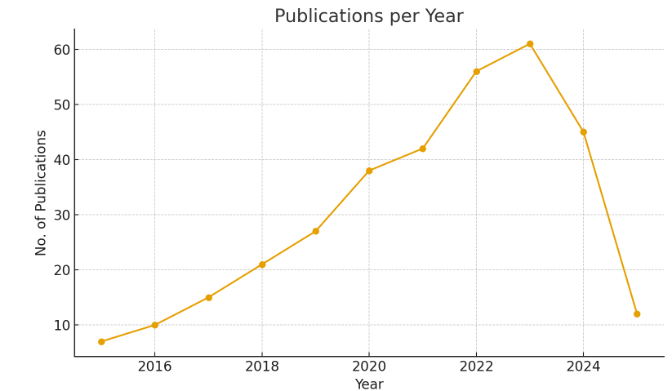
Figure 1 Evolution of the Number of Publications per Year
Source: Prepared by Author
Table 2. Author Affiliation by Country/Region (N = 334)
| Country/ Region | Record Count | % of total | |
|---|---|---|---|
| China | 88 | 26.35 | |
| India | 56 | 16.77 | |
| United States | 44 | 13.17 | |
| United Kingdom | 33 | 9.88 | |
| Saudi Arabia | 26 | 7.78 | |
| Malaysia | 24 | 7.19 | |
| Pakistan | 22 | 6.59 | |
| Australia | 19 | 5.69 | |
| Italy | 16 | 4.79 | |
| Spain | 15 | 4.49 | |
| Germany | 14 | 4.19 | |
| Canada | 13 | 3.89 | |
| South Korea | 11 | 3.29 | |
| Indonesia | 10 | 2.99 | |
| Turkey | 9 | 2.69 | |
| Iran | 8 | 2.40 | |
| Japan | 7 | 2.10 | |
| France | 6 | 1.80 | |
| Other Countries (Combined) | 20 | 5.99 | |
Source: Prepared by Author
Table 2 shows the distribution of author affiliations across 334 publications, emphasising contributions from different countries and regions. China is the largest contributor with 88 publications (26.35%), showing strong research activity in this field. India follows with 56 publications (16.77%), while the United States ranks third with 44 publications (13.17%), indicating major contributions from both developing and developed countries.
Among other regions, the United Kingdom contributes 33 publications (9.88%). Saudi Arabia (7.78%) and Malaysia (7.19%) also show notable participation, reflecting growing research interest in the Middle East and Southeast Asia. Pakistan (6.59%) and Australia (5.69%) further add to the global spread of research output. Several European countries, including Italy, Spain, Germany, and France, together demonstrate Europe’s active involvement in the field.
Additional contributions come from Canada, South Korea, Indonesia, Turkey, Iran, and Japan, each contributing a smaller but meaningful share. The group labeled “Other Countries,” accounting for 5.99% of publications, represents contributions from various nations with limited individual output. Overall, the table highlights a wide international distribution of research, showing that the field has attracted global interest and participation.
Table 3. Highly cited publications
| Title | Authors, Year | Journal | Number of Citation | Subject Area |
|---|---|---|---|---|
| Green human resource management and environmental performance: The role of green innovation and environmental strategy in a developing country | Aftab et al., 2023 | Business Strategy and the Environment | 257 | Business, Management & Accounting; Environmental Science |
| Green intellectual capital and ambidextrous green innovation: The impact on environmental performance | Asiaei et al., 2023 | Business Strategy and the Environment | 173 | Business & Management; Sustainability |
| Employee Green Behavior as the Core of Environmentally Sustainable Organizations | Zacher et al., 2023 | Annual Reviews | 137 | Psychology; Human Resource Management |
| Renewable energy for SDG-7 and sustainable electrical production, integration, industrial application, and globalization: Review | Trinh at al., 2023 | Cleaner Engineering and technology | 100 | Energy; Environmental Science |
| Demystifying the roles of organisational smart technology, artificial intelligence, robotics and algorithms capability: A strategy for green human resource management and environmental sustainability | Ogbeibu et al., 2024 | Business Strategy and the Environment | 70 | Information systems; Sustainability |
| Sustainable Business Performance: Examining the Role of Green HRM Practices, Green Innovation and Responsible Leadership through the Lens of Pro-Environmental Behavior | Liu et al., 2023 | MDPI (Sustainable) | 65 | Business Management; Sustainability |
| When and how the implementation of green human resource management and data-driven culture to improve the firm sustainable environmental development? | Awan et al., 2023 | Sustainable Development | 64 | Management; Environmental Studies |
| Green Human Resource Management—A Synthesis | Faisal et al., 2023 | MDPI (Sustainable) | 56 | Human Resource Management |
| Biobased: Biostimulants and biogenic nanoparticles enter the scene | Tolisano et al., 2023 | Science of the Total Environment | 53 | Agricultural Science; Biotechnology |
| Factors Influencing Green Innovation Adoption and Its Impact on the Sustainability Performance of Small- and Medium-Sized Enterprises in Saudi Arabia | Wasiq et0al., 2023 | MDPI (Sustainable) | 52 | Business; Environmental Management |
| How do GHRM practices influence firms’ economic performance? A meta-analytic investigation of the role of GSCM and environmental performance | Carballo-Penela et al., 2023 | Journal of Business Research | 51 | Strategic Management; Sustainability |
| Green and non-green outcomes of green human resource management (GHRM) in the tourism context | Tandon et al., 2023 | Tourism Management | 50 | Tourism Studies; HRM |
| Green Human Resource Management: Mapping the Research Trends for Sustainable and Agile Human Resources in SMEs | Papademetriou et al., 2023 | MDPI (Sustainable) | 49 | Business; Sustainable Development |
| Green Innovation as a Mediator between Green Human Resource Management Practices and Sustainable Performance in Palestinian Manufacturing Industries | Kanan et al., 2023 | MDPI (Sustainable) | 46 | Business Management; Industrial Sustainability; Environmental Management |
| Examining the influence of employee engagement in supporting the implementation of green supply chain management practices: A green human resource management perspective | Graham et al., 2023 | Business Strategy and the Environment | 45 | HRM; SCM; Sustainability; Environmental Management |
Source: Prepared by Author
CO-AUTHORSHIP ANALYSIS
Co-authorship analysis helps identify collaboration patterns across authors, organisation, and countries. In bibliometric literature, co-authorship is considered strong indicator of intellectual partnership and scientific knowledge exchange (Nurdin et al., 2021).
In Figure 2, the co-authorship network illustrates collaboration patterns among authors contributing to GHRM and sustainability research during the period 2015–2025. The network was generated using VOSviewer based on co-authorship analysis, where author centrality was assessed using indicators such as degree centrality (number of co-authored links), total link strength, and number of published documents. The results indicate that Gazi et al. (2025) occupy a highly central position in the network, as evidenced by a high degree of connectivity and a comparatively large number of publications, reflecting both strong collaborative engagement and research productivity within the GHRM domain. Similarly, Wang et al. (2023) and Gazi et al. (2024) show substantial link strength, forming dense co-authorship clusters that indicate frequent collaboration with multiple researchers. The cluster visualization further reveals that collaboration is predominantly concentrated among Asian scholars, particularly from Bangladesh, Malaysia, and Saudi Arabia. These strong co-authorship ties suggest the presence of sustained institutional collaborations and cross-country research partnerships that contribute to the growing regional influence in GHRM research.
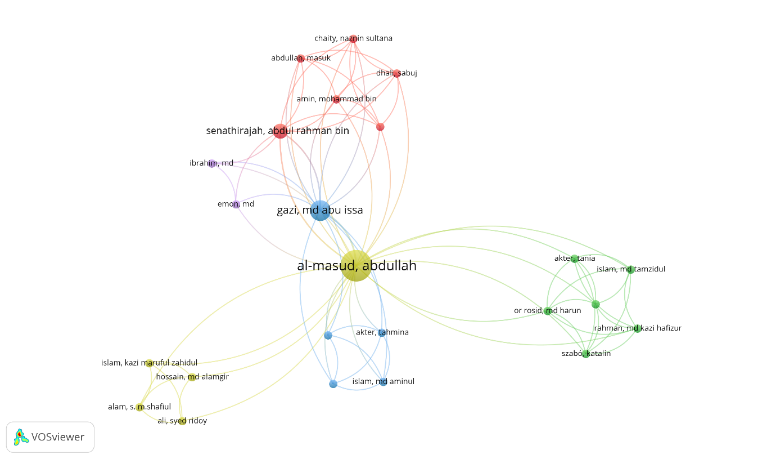
Figure 2 Co-authorship with author
Source: Analysis by vosviewer
In figure 3, Institutional collaboration analysis highlights that King Khalid University (Saudi Arabia) and King Faisal University (Saudi Arabia) are the leading institutions in this domain. Both universities show high research productivity and cross-institutional collaboration with Prince Sattam Bin Abdulaziz University and Imam Mohammad Ibn Saud Islamic University. The figure also reveals emerging participation from Bina Nusantara University (Indonesia) and Hajee Mohammad Danesh Science and Technology University (Bangladesh), signifying a strong regional collaboration trend in Asia and the Middle East. These findings suggest that GHRM research is primarily supported by academic institutions with sustainability-focused agendas.
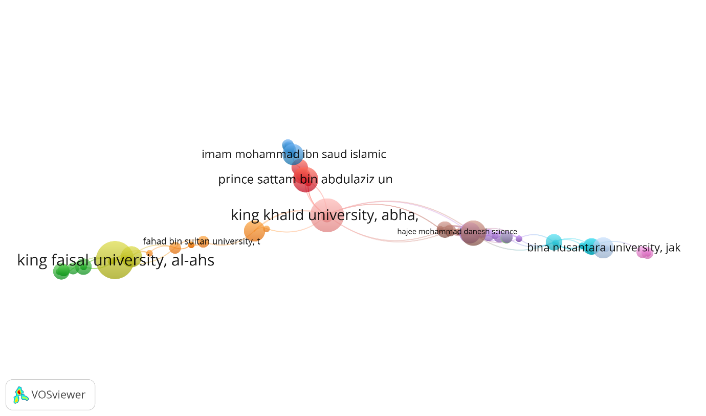
Figure 3 Co-authorship with organisation
Source: analysis by vosviewer
In figure 4, the country-level collaboration map shows that China, Saudi Arabia, India, Indonesia, and the United Kingdom are the most active contributors to GHRM research. China exhibits the highest number of publications and maintains strong research links with Pakistan, Malaysia, and India. The United States and Germany show high citation influence, indicating the global spread of GHRM concepts. Emerging contributions from Vietnam, Poland, and Turkey highlight the growing inclusiveness and cross-regional knowledge exchange within the field.
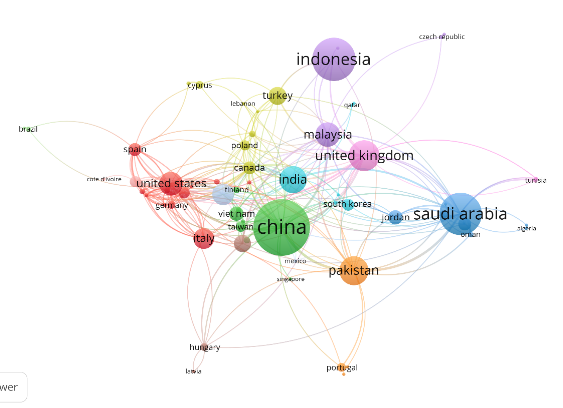
Figure 4 Co-authorship with country
Source: analysis by vosviewer
Keyword Co-occuurence Analysis
The keyword co-occurrence analysis identifies the most frequently used terms in GHRM research between 2015 and 2025 and shows that “human resource” and “sustainable development” are the most dominant and strongly linked concepts. This indicates that sustainability research in the last decade is firmly grounded in HRM-driven approaches. These core keywords demonstrate how organizations increasingly rely on HR practices such as training, recruitment, and performance management to achieve broader sustainability goals. Organizations are adopting HRM as a mechanism to meet SDG-related targets. Generally, the map confirms that Sustainable HRD and Green HRM research integrates social sustainability (HRM) and environmental sustainability (green practices), forming a unified and multidimensional research landscape.
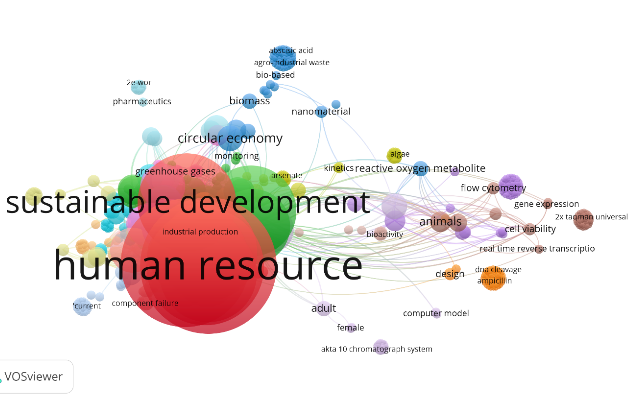
Figure 5 Co-occurance with all keywords
Source: analysis by vosviewer
BIBLIOGRAPHIC COUPLING ANALYSIS
In figure 6 and 7, the bibliographic coupling analysis identifies clusters of closely related documents and journals (Mostafa et al., 2022). Leading sources such as Journal of Cleaner Production, Sustainability, and Business Strategy and the Environment appear as central nodes, showing their pivotal role in disseminating GHRM research. Documents published in these outlets share strong thematic links, particularly around sustainability strategy, employee engagement, and green innovation.
Bibliographic coupling documents
The bibliographic coupling map shows that a few authors particularly Aftab et al., 2023, and Zacher et al., 2023 form the strongest clusters, indicating that their documents share a high number of identical references and therefore contribute major conceptual foundations to the field. These dense clusters highlight how recent studies (2023–2024) are tightly connected and rely on common theoretical frameworks related to sustainability and HRM. Smaller nodes such as Ali (2024), Ren (2023), and Lin (2024) suggest more specialized studies with narrower bibliographic links. Overall, the diagram indicates that the field is dominated by a few central documents that shape the intellectual structure of Sustainable HRD and Green HRM research.
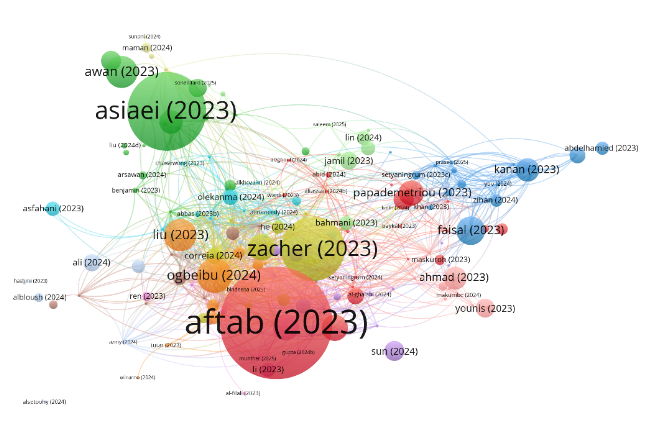
Figure 6 Bibliographic coupling documents
Source: analysis by vosviewer
Bibliographic coupling sources
The bibliographic coupling analysis of sources illustrates the degree of similarity among journals based on shared reference lists. The results indicate that Sustainability (Switzerland) (Djukic et al., 2025) exhibits a relatively high level of coupling strength with other journals in the dataset, suggesting that articles published in this journal share common foundational references with a large number of GHRM-related studies. This reflects a strong thematic alignment within sustainability-oriented human resource and green management research. Other journals, including Journal of Environmental Management, Business and Society, Environmental Research Communications, and Economic Analysis–XXI, form smaller coupling clusters, indicating comparatively lower levels of shared references. Overall, the visualization highlights that GHRM and sustainability research is concentrated across a limited set of interconnected journals, without implying differences in publication volume or journal influence.
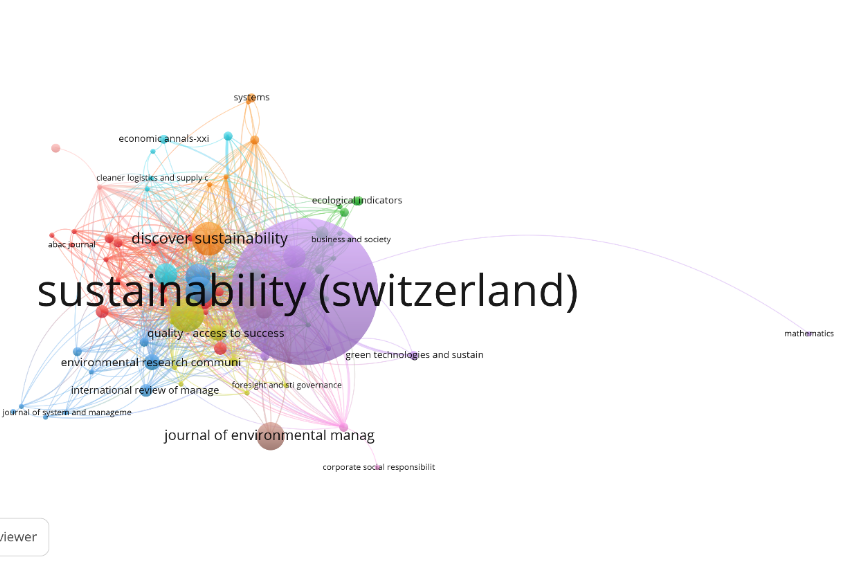
Figure 7 Bibliographic coupling sources
Source: analysis by vosviewer
CONCLUSION AND FUTURE SCOPE
This bibliometric study provides a comprehensive and systematic overview of the evolving research landscape connecting Green Human Resource Management and Green Performance between 2015 and 2025. The increasing number of publications, particularly after 2020, reflects the rising importance of sustainability oriented HR practices in response to global environmental challenges, regulatory pressures, and stakeholder expectations (Jabbour et al., 2022; Yusoff et al., 2023; Faisal, 2023). The keyword co-occurrence and bibliographic coupling analyses identify dominant research themes and thematic linkages within the GHRM and green performance literature, including green innovation, employee green behavior, sustainable organizational performance, and responsible leadership (Zacher et al., 2023; Liu et al., 2023; Aftab et al., 2023). These thematic clusters indicate how sustainability-oriented HR concepts are conceptually interconnected in existing research and how scholarly attention has evolved over time. The findings suggest that GHRM is frequently discussed in relation to organizational sustainability objectives and employee-driven environmental initiatives, reflecting prevailing research orientations rather than causal relationships (Asiaei et al., 2023; Carballo-Penela et al., 2023; Mishra et al., 2024). Overall, this study contributes to the existing literature by offering a structured mapping of the intellectual foundations and research trajectories of GHRM and green performance studies, thereby addressing fragmentation in prior research (Faisal, 2023; Aboramadan et al., 2023; Yusoff et al., 2023). The findings provide valuable implications for scholars seeking to advance theory and for practitioners aiming to design effective green HR systems that enhance long-term environmental and organizational sustainability. Future research should focus on empirical validation of GHRM–performance linkages, cross-country comparative analyses, and the integration of digital technologies and leadership dynamics to further strengthen sustainable human resource practices across diverse organizational contexts (Awan et al., 2023; Ogbeibu et al., 2024; Amjad et al., 2024; Gazi et al., 2025).
Future research should move beyond conceptual and descriptive analyses to empirically examine the linkages between Green Human Resource Management (GHRM) practices and measurable green performance indicators, such as energy efficiency, waste reduction, carbon emissions, and employee green behavior. There is also a strong need to investigate the mediating and moderating roles of leadership styles, organizational culture, and digitalization in strengthening the effectiveness of sustainable HR practices, as these contextual factors may significantly influence GHRM outcomes. Methodologically, scholars are encouraged to adopt hybrid approaches that integrate bibliometric techniques with in-depth content analysis, using tools such as Biblioshiny and VOSviewer, to enable richer thematic mapping and deeper theoretical insights. Additionally, comparative cross-country and cross-regional studies should be undertaken to capture variations in GHRM adoption across developed and developing economies, thus enhancing the generalizability of findings and offering context-specific policy and managerial implications.
This study contributes to the academic understanding of how human resource systems can actively promote environmental sustainability and improve organizational green performance in the long term.