
INTRODUCTION
“Media”, which is the plural form of medium, refers to the forms of mass communication, such as newspapers, magazines, television, radio and the Internet. Before technologies took over New Media Art, there were experimental and Avant–Garde Art Movements, pre-digital forms like film and video, photography, radio, conceptual art, performance art, sound and light art, etc. New media art refers to contemporary artworks that employ emerging technologies, such as virtual reality, computer animation, and the internet. It refers to all forms of contemporary art created, altered, or transmitted through new media technologies. This includes digital, interactive, and virtual art, as well as works made using robotics, video games, biotechnology, 3D printing, and computer animation. New media art is a category that defies static categorisation as the form continues to expand and new media technologies are invented and explored by artists.1
Puspamala N. is known as “the most entertaining artist- reformer of contemporary Indian art”. Through her clever and humorous work as a photo and video performance artist, sculptor, writer, curator, and provocateur, and through her collaborations with writers, directors and filmmakers, she aims to challenge and disrupt the main cultural and intellectual ideas that are widely accepted. She is best known for her Conceptual Photo- Performance in which she appears as the central subject, inhabiting a wide range of constructed personalities. Drawing on cinematic, ethnographic and mythological genres, her works employ masquerade, parody and role play to interrogate representation, authorship and politics of image. 2
Objectives
• To study the new media art through photographic performance.
• To study the photographic performance artworks of Pusphamala N.
Methodology
This is a qualitative research project that examines the artist and the conquest of ideas and artworks in new media art. The research paper is done based on the secondary resources such as academic journals, articles, books, and museum websites. These sources talk about the lifestyle of Pusphamala N. and how she ruled over the new media art by using herself as the subject in her works. It also talks about her works, where she focused mainly on the discrimination that women face.
NEW MEDIA ART
New Media Art is a broad term that encompasses art forms produced, modified, and transmitted through new media technologies, or, in a broader sense, those that make use of “new” and emerging technologies originating in scientific, military, or industrial contexts. In the context of contemporary Indian visual art, new media challenge our very understanding of what constitutes “freshness.” It became a powerful means of questioning identity, gender, politics, memory, and mass media. New media art in India started in the 1990s and early 2000s. New media art in contemporary Indian visual art represents a shift from material – based practices to idea – based, technology-driven, and socially engaged art forms.3 This period also witnessed the rise of pluralism and multiculturalism as defining features of artistic practice. Artists such as Ranbir Kaleka, Shilpa Gupta, Sheba Chhachhi, Thukral and Tagra, and Jitish Kallat have been at the forefront of this movement, seamlessly integrating cutting-edge technology into their artistic vocabularies.4
PHOTOGRAPHIC PERFORMANCE
Photographic performance was founded in the early 1970s through Fluxus movement experiments. Artists like Yoko Ono, Nam June Paik, and Allan Kaprow combined live performance with documentation to challenge traditional art forms. Photography was integrated into artistic creation and communication, and was also analysed to expand the possibilities of conventional art production. Photographic performance combines the temporary aspect of performance art with the lasting quality of photography. It blends conceptual art with technology to challenge conservative awareness. Photographic performance emerged as a practice where artists create performances specifically for the camera. 5
DISCUSSION
Visual Artist Puspamala N., 1956, a photographic performance act called “The Navarasa suite” [Plate 1]. It was a three-year period during which Pusphamala transformed herself into the subject of this work. This work includes nine photographic self-portraits that belonged to her larger “Bombay studio” series. These stylised self-portraits visualise the original rasas or the aesthetic expressions of sringara (love), hasya (the comic), karuna (pathos), Roudra (anger), Veera (courage), Bhayanaka (fear), Bhibhatsa (revulsion), Adbhuta (wonderment), and the ninth rasa, Shanta (quietude). The ‘Navarasa suite’ can be read as evolving from the desires and significances of an artist seeking to recover the long history of rasa aesthetics. The photo here is about “Adbhuta”6. The second act is called “Dressing Up” [ Plate 2]. In this work, the artist has represented herself as Bharat Mata, a four-armed female figure, drawing on Rabindranath Tagore’s painting. In this work, the artist stands against the ground with a soft, glowing, circular yellow halo behind her head, enhancing the divine memory. There are lotus motifs at her feet, strengthening the sacred iconography. In her four hands, she holds symbolic objects that embody the country’s strengths and power. In her right hand, she is holding a rosary, which defines spirituality and devotion. In her right back hand, she holds a cloth, which symbolises purity; in her left back hand, she holds a book, which symbolises knowledge and education; and in her front left hand, she holds a bunch of grass, which symbolises tradition and cultural practices. The attire that she wears is saffron, which indicates the colour of the country. Minimal jewellery and the sindoor on her forehead connect to the Hindu married women. This artwork shows how women are idealised as goddesses but controlled in real life.
The third work is from the series ‘Native women of South India’, titled “Toda” [ Plate 3].
In this artwork, PuspaMala stands as a subject against a background full of checks. Her arm was outstretched and held up by the metal prop that was similar to the one used by Portman. By depicting herself as an expressionless subject framed, pinned and measured against a temporary grid held up by two hands whose owners are hidden from view, Pushpamala mimics and questions the importance and validity of scientific ‘knowledge’ gained from such an artificial process. The fourth work is “Phantom Lady or Kismet” [Plate 4]. In this act, the artist represented herself as the masked female vigilante, a role inspired by fearless Nadia, the first white stunt actor in Indian cinema. By doing this, she honor’s the actor’s legacy while also challenging the patriarchal pacts of film narratives, which typically restrict women to submissive parts.
CONCLUSION
Pusphamala N.’s artworks show how photographic performance has become a key approach in new media art. By blending performance, photography, and Pusphamala N., turns the photographic image into a strong medium. In her artworks, she uses herself as the main subject to reinterpret historical images, cinema, nationalism, and scientific representation. Overall, her work illustrates how photographic performance combines the fleeting nature of performance with the lasting quality of photography. This allows artists to engage with society through visual storytelling. Pusphamala N.’s work plays an essential role in redefining photography as an active, performative, and critical medium in contemporary new media art.
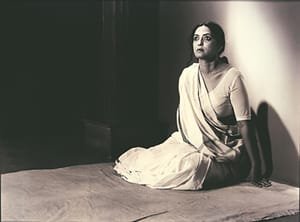
The Navarasa suite
Plate 114: http://www.pushpamala.com/
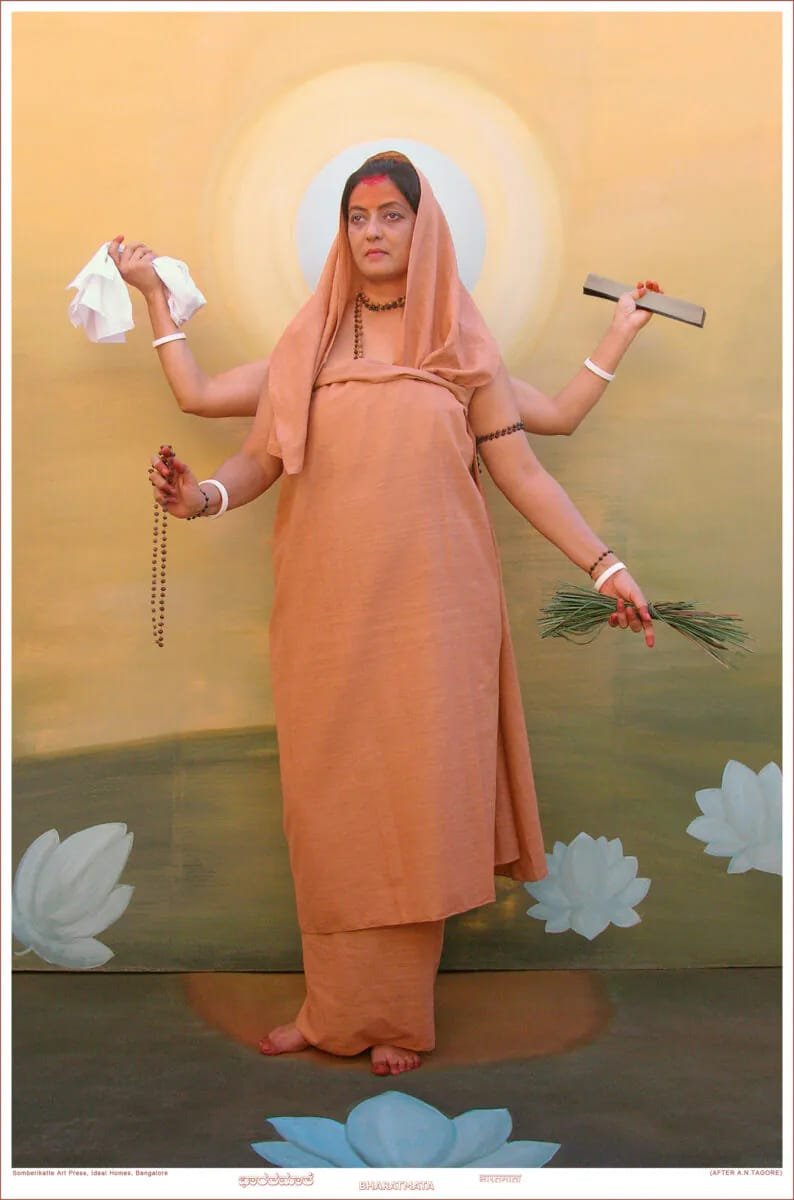
Dressing Up
Plate 215: www.artsy.net
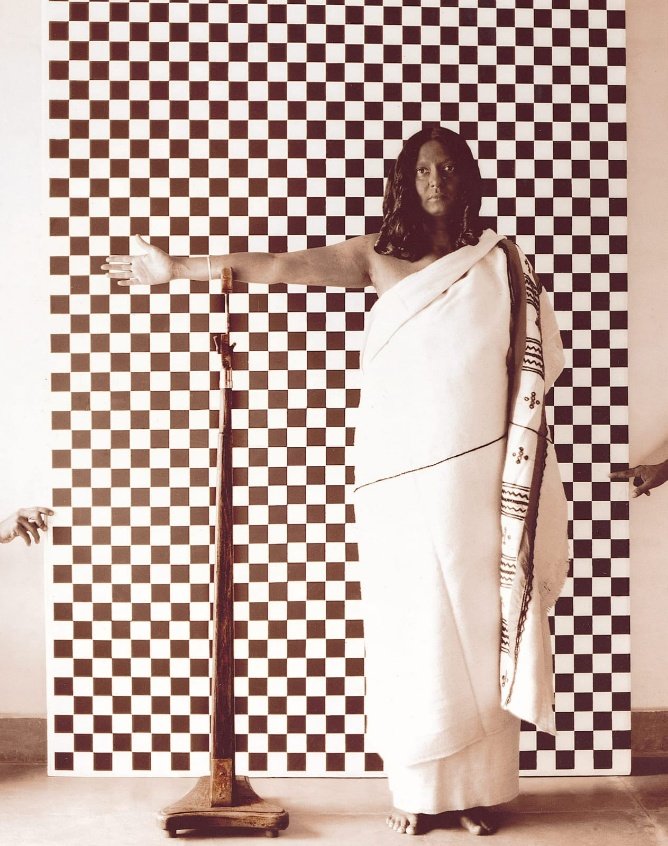
Toda
Plate 316: www.gallerychemould.com
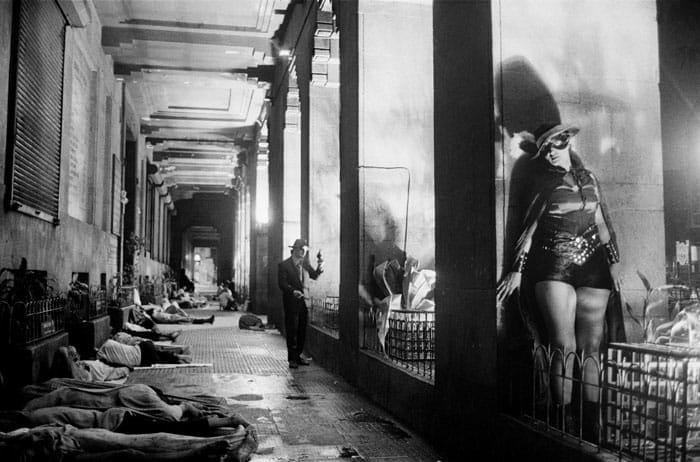
Phantom Lady or Kismet
Plate 417: www.gallerychemould.com