
Introduction
Forensic misconduct, corporate greed, and ethical justice are critical concepts that find intersection within the legal landscape and more so concerning the integrity of global justice systems.
Forensic misconduct means any intentional or deliberate non-compliance with established professional norms during forensic analysis, whereby such action or inaction is significantly detrimental to the reliability of evidence presented in a judicial process. It may be an act of misrepresentation of findings, inappropriate handling of exhibits, or a failure to follow procedures for maintaining objectivity and reliability of results in a forensic investigation.
Corporate greed is unethical and involves acquiring a profit or an advantage through taking advantage of stakeholders' interests; it is often followed by actions where profits override ethics. This also results in what is known as corporate kleptocracy, wherein high-ranking officers become involved in fraudulent activities to siphon off assets from the firm and thus damage the trust and accountability structures that make up a corporate organization.
Ethical justice focuses on fairness, individual rights, and the rule of law. It aims to treat all individuals fairly under legal systems, ensuring that ethical perspectives prevail in decision-making3.
The pertinence of these issues has increased worldwide due to high-profile cases of forensic misconduct and corporate scandals that have resulted in the loss of public confidence in legal systems. With the increasing awareness of these systemic flaws in societies, there is an increasing call for accountability and reform in both forensic practices and corporate governance.
The tension between proper forensic practice and its misuse is often escalated by corporate or institutional motives. Forensic evidence lies at the heart of criminal justice; however, when compromised by misconduct—through negligence or intentional deceit—it may result in wrongful convictions or acquittals. This misuse is often driven by corporate interests to protect reputations or financial standings at all costs.
For example, when forensic laboratories are forced by law enforcement agencies or corporations to bring forth favorable results, a severe conflict of interest is evident. Environments like these foster a culture in which unethical practices flourish, thereby undermining the very foundation of justice.
The following analysis tries to explain systemic flaws of forensic practices and corporate governance and also proposes frameworks for accountability. It attempts to bring to the forefront how such flaws work against individual cases and more broadly erode societal faith in legal institutions.
By analyzing the relationship between forensic misconduct and corporate greed, this study will also look into vital reforms necessary for the establishment of improved ethical standards and mechanisms of accountability within each sphere. There are many research questions based on such analysis:
• What is the role played by forensic misconduct in undermining justice? Misconduct by forensic scientists plays a critical role in undermining the very basis of justice by tainting trial results through unreliable evidence presentation in courts of law. Failure of forensic analysts to observe established protocols or the deliberate manipulation of results can ruin the integrity of trials and even cause miscarriages of justice.
• How does corporate greed fuel unethical behavior? Corporate greed tends to blur the ethical lines. It makes executives more likely to sacrifice ethical considerations for profits, compromising on safety standards, transparency in reporting, and even legal compliance. This not only hurts stakeholders but also leads to a culture of impunity where unethical conduct is ignored or put up with.
• What reforms would bring about accountability? Reforms must be directed toward increased transparency in forensic practices and holding corporate executives accountable for unethical conduct. This may involve increased regulation of forensic labs, required training on ethical standards for practitioners, and whistleblower protection mechanisms that allow reporting of misconduct without fear of retaliation.
Legislative changes may also be necessary to redefine corporate fiduciary duties away from profit maximization to a model incorporating stakeholder interests more comprehensively. This can reduce the negative impact of corporate greed on ethical behavior.
The confluence of forensic misconduct, corporate greed, and ethical justice is a thorny issue challenging legal systems across the world. With these issues being catapulted onto the public stage, it has become very germane for the stakeholder lawmakers, legal practitioners, and corporate leaders—to initiate meaningful dialogue on accountability and reform.
This will require multidimensional intervention one that goes beyond punitive measures against the perpetrators and creates an enabling environment for ethical conduct at all strata of society. Restoring public faith in our legal system and ensuring justice is fairly and equitably served to all parties can only be done by making integrity paramount in forensic practices and corporate governance4.
(A) Literature Review:
Forensic science has been undergoing an unprecedented amount of scrutiny and transformation due to critical reports and high-profile cases bringing to the spotlight systemic problems, leadership issues, and ethical concerns. The following is a literature review of key findings of major publications addressing the current challenges and future reforms facing forensic science: focusing on the leadership issues within forensic science, the consequences of forensic misconduct, and why reform is needed.
Patterson and McGowan (2015) tackled critical leadership challenges for forensic science in "Forensic Science in Transition: Critical Leadership Challenges." They insist that effective leadership becomes very essential for the navigation of the complexities in forensic science amid increased demands for accountability and transparency. These authors note the need for leaders to initiate a culture of integrity and implement strong training curriculums, equipping forensic scientists with technical competency and an ethical framework for guiding their practice. They urge the need for movement away from the traditional hierarchical structures and towards models that emphasize collaboration, innovation, and flexibility to adapt to newly emerging scientific challenges.
The National Academy of Sciences (2009) report "Strengthening Forensic Science in the United States: A Path Forward" is a landmark document that details the critical need for reform within the forensic science community. The major shortcomings of the present system include a lack of standardization across laboratories, inadequate training, and insufficient oversight. It calls for the creation of a National Institute of Forensic Sciences to encourage research, set standards, and ensure the accreditation of forensic laboratories. The report highlights that many forensic practices are not empirically validated, which raises questions about their reliability in criminal justice proceedings. This seminal work underlines the requirement for systemic changes in order to increase the credibility of forensic evidence.
The Annie Dookhan scandal epitomizes the dire consequences of misconduct in forensic science. Driscoll (2014) analyzed this case in "Lessons on the Confrontation Clause from the Annie Dookhan Scandal," discussing how, through her, thousands of prosecutions were undermined by the falsification of drug test results. The scandal poses crucial questions about the efficacy of cross-examination in revealing errors in laboratories, indicating that procedural protections may prove ineffective in ensuring reliability in forensic testing. Driscoll argues, therefore, that independent re-testing of evidence as a better means of securing justice.
Similarly, Sayahg (2020) examines negligence in the collection of evidence during the Amanda Knox case, contamination of improper handling, and analysis leading to wrongful convictions. This case reflects broader problems in forensic practices: contamination and failure to follow appropriate protocols can and have compromised the integrity of evidence. These instances underscore the necessity for rigid standards and accountability within forensic science.
High-profile cases like those of the Ford Heights Four and David Camm demonstrate how botched forensic evidence can result in wrongful convictions and shake the public's trust in the criminal justice system. As Tracker Products (2023) puts it, these cases demonstrate systemic failures impacting not just individual lives but also the public's trust in forensic methodologies. The juncture between racial discrimination and flawed forensic practices demands urgent reforms sensitive to both ethical concerns and scientific rigor.
Taken together, the literature suggests a clarion call for comprehensive reforms within forensic science on the foundation of effective leadership, standardized practices, and ethical accountability. The tension between high-profile misconduct cases and systemic challenges becomes even more relevant as there arises an increasing need for a culture that prioritizes scientific integrity above expediency within the criminal justice system. If these discussions continue to evolve, all stakeholders—government officials, forensic scientists, legal professionals—will need to be collaborative in finding solutions to these critical issues to help restore public confidence in forensic evidence.
(B) Methodology:
This section details the methodological framework for analyzing the intersection of forensic misconduct, corporate greed, and ethical justice. The approach will follow a qualitative analysis of case studies, a comparative legal analysis, and an examination of existing reforms and policy recommendations. These methodologies are applied in the hope that the research findings will present wide-ranging implications regarding systemic flaws in forensic practices and offer concrete suggestions for change with respect to accountability.
a. Case Study Methodology:
The case study methodology will be an important one in the analysis of specific instances of forensic misconduct and corporate influence within the legal system. This approach will enable us to go into great detail regarding real-world examples, capturing the complexities and nuances of each case.
• Selection Criteria: Cases will be selected based on their relevance to forensic misconduct and corporate greed in forensic science, taking into consideration such criteria as the severity of the misconduct, its consequences (e.g., wrongful convictions), and the role of corporate interests in driving the forensic practices of concern.
• Data Collection: Data will be gathered from various sources, including court documents, media reports, academic articles, and interviews with legal professionals. This multi-source approach ensures a well-rounded perspective on each case.
• Analysis Framework: Thematic analysis of each case will be performed with regard to the types of misconduct (e.g., fraudulent testing, negligence), the corporate involvement, and implications for justice that follow. The analysis will highlight patterns of behavior that are indicative of systemic problems within forensic practices.
b. Comparative Legal Analysis:
A comparative legal analysis will be performed in order to contextualize the findings from the case studies within broader legal frameworks. This will entail a review of various jurisdictions and their approach towards the regulation of forensic science and corporate accountability.
• Jurisdictional Selection: A range of jurisdictions will be selected for comparison, including those with robust forensic oversight mechanisms and those with notable deficiencies. This selection aims to identify best practices and areas needing reform.
• Legal Frameworks: The discussion will center around current laws governing forensic science and corporate conduct. Among the key areas of focus will be regulations on forensic laboratory oversight, conflict-of-interest policies, and ethical standards for forensic professionals.
• Outcome Evaluation: Through comparing outcomes across jurisdictions, this analysis will determine which of the legal frameworks is most effective in preventing misconduct and ensuring ethical practices within the justice system.
c. Assessment of Reforms and Policy Suggestions:
The final component of the methodology involves evaluating existing reforms aimed at addressing forensic misconduct and corporate greed. This evaluation will inform the development of policy recommendations designed to enhance accountability in the legal system.
• Review of Current Reforms: There will be a review of recent legislative changes or initiatives undertaken to improve forensic practices or reduce corporate influence in judicial processes. This review will include both successes and failures.
• Stakeholder Perspectives: Interviews with stakeholders, including legal experts, ethicists, forensic scientists, and corporate representatives, will help to identify the perceived effectiveness of current reforms. Understanding diverse perspectives is crucial for identifying barriers to reform implementation.
Based on the case study findings, comparative analysis, and stakeholder input, a framework of accountability will be put forward that will outline particular reforms needed in oversight of the forensic laboratories, abatement of undue corporate influence within the justice system processes, and promotion of training in ethics within the professionals making use of the forensic sciences.
d. Integration of Technology:
The methodology also acknowledges the role of technology in both facilitating advances in forensic science and posing risks related to misuse or overreliance on flawed techniques.
• Technological Assessment: An assessment of current technological tools used in forensic science will be performed to identify potential areas for improvement as well as risks associated with their application.
• Impact Analysis: The impact of technological development on ethical norms as well as accountability mechanisms of forensic practices will be evaluated. This entails an assessment of how technology may strengthen or weaken the framework of ethical justice.
By taking a holistic approach combining case studies, comparative legal analysis, evaluation of reforms, and technological assessment, the research is able to expose systemic problems in current practices about forensic misconduct and corporate greed while offering pragmatic solutions that prove grounded in ethical principles of justice. This structured approach ensures findings are academically rigorous yet practically relevant to the involved stakeholders in legal processes.
Analysis and Discussion
(A) Forensic Misconduct and its Consequences:
Forensic science plays a crucial role in the criminal justice system by providing very important evidence that can change the course of trials. However, forensic misconduct such as fraudulent testing, negligence, and bias has led to wrongful convictions and miscarriages of justice. This paper looks at the different kinds of misconduct, its real-world implications, the role of corporate greed, and the requirement for ethical standards to act as a counterbalance to these problems.
(B) Breakdown of Types of Misconduct: Fraudulent Testing, Negligence, Bias;
Forensic misconduct can be categorized into three primary types:
• Fraudulent Testing: This is the intentional manipulation or falsification of forensic results. An example is the case of Annie Dookhan, a former forensic chemist in Massachusetts who admitted to falsifying test results on drug samples that led to thousands of wrongful convictions5.
• Negligence: This occurs when forensic professionals fail to adhere to established protocols or standards. A notable case is that of Amanda Knox, where mishandling and contamination of DNA evidence significantly compromised the investigation's integrity. The negligence in evidence collection and analysis ultimately contributed to her wrongful conviction6.
• Bias: This can be in the form of confirmation bias or racial bias in the interpretation of evidence. A case that best illustrates this is the Ford Heights Four, in which racial discrimination and reliance on faulty serology testimony led to the wrongful conviction of four Black men for a crime they did not commit7.

The consequences of these types of misconduct are profound, often resulting in wrongful convictions that can take years or even decades to rectify. According to research by Dr. Jon Gould, faulty forensic science has been a contributing factor in numerous wrongful convictions, highlighting the urgent need for reform in forensic practices8.
a. Real-World Implications: Case Examples and Judicial Failures;
The consequences of forensic misconduct go beyond individual cases; they undermine public confidence in the justice system. High-profile cases illustrate how systemic failures can lead to tragic outcomes:
• The David Camm case: Camm was wrongly convicted based on faulty blood spatter analysis by an expert with falsified credentials. He was finally exonerated only after new DNA evidence pointed to a different suspect, an event that highlights the destructive consequences of depending on untrustworthy forensic testimony9.
• Cameron Todd Willingham Case: Willingham was executed based on discredited arson investigation techniques that were later deemed unreliable. This case raises critical questions about the validity of certain forensic methodologies and their role in capital punishment cases10.
These examples show a pattern of judicial failures where courts have placed undue reliance on forensic evidence without sufficient scrutiny. The lack of accountability for forensic professionals further exacerbates these problems.
b. Corporate Greed as a Catalyst:
The intersection of corporate interests with forensic misconduct cannot be ignored. Profit motives can compromise the integrity of forensic laboratories:
• Profit-Driven Motives: The corporations that engage in forensic testing are driven by the motive of making a profit. This may lead to hurried analyses or even compromising on the handling of evidence. The profit motive can create conflicts of interest where financial incentives overshadow ethical obligations11.
• Influence on Litigation and Justice Systems: Corporations often wield significant power in litigation through financial resources that allow them to settle cases out of court rather than face public scrutiny. This dynamic raises concerns about whether justice is genuinely served when corporations can effectively "buy" their way out of accountability12.
The corporate model applied to forensic science creates an environment in which ethical lapses are more likely to occur, as financial pressures may encourage misconduct.
c. Interplay Between Misconduct and Greed:
Systemic corruption within the justice system breeds a culture of impunity for those involved in forensic misconduct.
• Systemic Corruption: When regulatory oversight is weak or compromised by corporate interests, it creates an environment conducive to unethical behavior among forensic professionals. The lack of stringent checks and balances allows misconduct to flourish unchecked.
• Corporate Pressure and Ethical Lapses: The interaction between corporate pressure and ethical lapses is a common theme in the tainting of forensic integrity. For example, when private organizations with vested interests in specific outcomes fund laboratories, objectivity can be grossly vitiated.
This systemic corruption does not impact individual cases only; it undermines public trust in the whole judicial process.
d. Ethical Justice: A Counterbalance;
Strong ethical standards need to be established within forensic science in order to mitigate the negative impacts of forensic misconduct and corporate greed.
• Importance of Ethical Standards: Upholding integrity and objectivity is crucial for maintaining public trust in forensic evidence. Forensic scientists must adhere to strict ethical guidelines that prioritize accuracy, reliability, and impartiality.
• Integrating Accountability Mechanisms: Some proposals for accountability mechanisms include regular audits of forensic laboratories, mandatory training programs on ethics, and independent review boards to monitor forensic practices. Such measures would help ensure that ethical standards are not only set but also upheld.
Addressing forensic misconduct requires a multifaceted approach that includes recognition of its various forms, understanding of its real-world implications through case studies, acknowledging the influence of corporate greed, and implementation of strong ethical standards. By fostering a culture of accountability within forensic science, we can work towards restoring public trust in the justice system and preventing future miscarriages of justice13.
(C) Comparative Case Studies:
Analysis of Forensic Misconduct, Corporate Interference, and Ethical Frameworks;
The intersection of forensic science, judicial integrity, and corporate influence is a complex landscape ridden with ethical dilemmas and instances of misconduct. This discussion focuses on a few highly publicized cases in order to develop an understanding of forensic misconduct and corporate interference with judicial processes through the ethical systems that have failed or succeeded in protecting justice.
a. Examples of Forensic Misconduct:
Forensic misconduct has become one of the major contributors to wrongful convictions. High-profile cases, such as the Amanda Knox case and the Central Park Five, demonstrate how mistakes in forensic procedures could result in devastating consequences;
Amanda Knox Case:
The Amanda Knox case showed major forensic missteps while investigating the murder of Meredith Kercher. The crime scene was compromised by police officers who entered without protective clothing, thus risking contamination of evidence. Some of the important items were moved at the scene, which further distorted the integrity of the evidence collected. This wrongful conviction of Knox and her co-defendant Raffaele Sollecito emphasizes the importance of strictly adhering to forensic protocols14.
Central Park Five Case:
Similarly, the Central Park Five case exemplifies egregious forensic errors. Five young men were wrongly convicted based on coerced confessions and flawed forensic analyses. Notably, DNA evidence collected from the scene did not match any of the suspects but was misrepresented as "inconclusive," misleading jurors and contributing to a miscarriage of justice. The dependence on discredited hair analysis techniques further exponentially worsened the situation, stating a systemic failure in forensic practices that led to years of wrongful imprisonment15.
Brandon Mayfield Case:
Another cautionary tale regarding forensic reliability is the Brandon Mayfield case. Mayfield was wrongfully arrested due to a misidentification in fingerprint analysis related to the Madrid train bombings. This incident prompted significant reforms in fingerprint examination procedures within law enforcement agencies. This, of course, represents how reliance on flawed forensic methodologies can result in extremely serious consequences for innocents16.
Corporate Interference in Judicial Processes:
Corporate interests often intersect with judicial processes, creating ethical dilemmas that can compromise justice. A prime example is the Duke Lacrosse case, in which prosecutorial misconduct was compounded by corporate influence.
Duke Lacrosse Case:
Here, in this case, three members of the Duke University lacrosse team were falsely accused of rape. The unethical behavior of the District Attorney included the suppression of exculpating DNA evidence that could have cleared the defendants. His collaboration with a private laboratory to manipulate evidence further illustrates how corporate interests can interfere with judicial proceedings. This case only served to prolong the suffering of innocent people but also to erode public confidence in both the legal system and corporate entities involved in forensic analysis17.
b. Ethical Frameworks: Successes and Failures:
The effectiveness of ethical frameworks in the prevention of misconduct is important for safeguarding integrity within the justice system. A number of cases depict the success and failure of ethical practices.
Successful Ethical Frameworks:
Successful ethical frameworks often result from rigorous oversight and accountability measures. For example, after thousands of forensic failures were reported in Massachusetts, including those related to Annie Dookhan, a woman who falsified lab results, causing more than 20,000 convictions to be overturned, reforms were put in place to increase oversight in forensic laboratories. The changes were supposed to help regain the public's trust and ensure that justice is fairly served18.
Failed Ethical Frameworks:
On the other hand, several cases present failures of ethical constructs in forensic science. The case of Cameron Todd Willingham is one that illustrates how failed forensic science techniques can result in wrongful convictions. Willingham was executed based on flawed arson science that has since been discredited. This tragedy strongly points out an important failure in ethical oversight that allowed unreliable evidence to dictate life-and-death decisions.
Moreover, the actions of forensic chemist Sonja Farak, who compromised thousands of drug cases due to her drug addiction and theft from evidence lockers, expose systemic failures in ethical governance within forensic laboratories. Her misconduct led to widespread miscarriages of justice and points out the need for strong ethical standards and mechanisms for accountability.
Specific case analysis reveals a disturbing pattern of forensic misconduct, corporate interference in judicial processes, and fluctuating degrees of success with ethical frameworks put in place to ensure justice. Highly publicized cases like those of Amanda Knox, the Central Park Five, Brandon Mayfield, and Duke Lacrosse clearly depict the importance of keeping high standards of integrity in forensic practices by law enforcers and the judicial system.
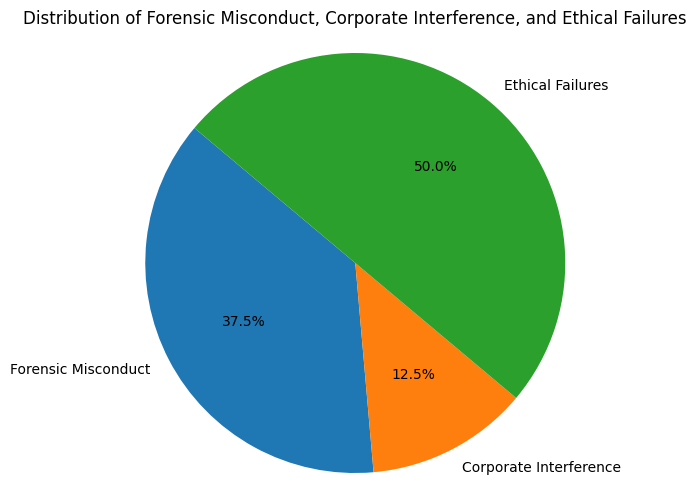
As these problems continue to plague our society, the most necessary next step will be to implement reforms in the systemic failures found in forensic science and legal processes. Stronger ethical standards and oversight will go a long way toward preventing miscarriages of justice in the future and reestablishing trust within the system of justice.
(D) Challenges in Addressing Forensic Misconduct and Corporate Greed:
The confluence of forensic misconduct and corporate greed is a thorny area of ethical dilemmas, systemic barriers, and legal inadequacies. This paper critically considers these challenges, including institutional resistance to reform, legal and regulatory gaps, cultural impediments, and the role of technology.
a. Systemic Barriers to Reform
Institutional Resistance to Change:
Institutional resistance to reform in forensic science and corporate governance often arises from entrenched practices and vested interests. Economic benefits may trump ethical considerations, resulting in organizational cultures where misconduct is ignored or tolerated. For example, forensic laboratories are often housed within law enforcement agencies, which can generate conflicts of interest. Pressure to produce favorable results for investigations can compromise the integrity of forensic evidence.
In addition, the bureaucracy of institutions leads to inertia. Attempts at reform often receive skepticism or outright resistance from individuals and groups fearing the loss of power or resources. This resistance becomes even more pronounced in the absence of mechanisms for accountability that could otherwise motivate good behavior and transparency within these same institutions.
Balancing Economic Interests with Ethical Obligations:
This is quite a challenge for corporate environments in particular. It is the place where companies must balance economic interests with ethical obligations—where the two often clash. Companies will, for instance, compromise on ethical practices for increased revenues. Firms offering forensic services may cut corners to reduce costs or expedite processes, but this only yields flawed evidence, which may, in turn, affect judicial outcomes.
As such, a profit-oriented approach may normalize unethical behavior, in which stakeholders find themselves caught in a dilemma to toe an unethical line or risk being victimized by what is increasingly looking like an ethical norm within corporate culture19.
b. Legal and Regulatory Gaps
Weaknesses in Existing Laws:
The existing legal frameworks governing forensic science and corporate conduct are often inadequate. For example, many jurisdictions lack comprehensive regulations that guarantee the integrity and reliability of forensic evidence. Thus, the lack of standardized protocols for forensic analysis might result in huge discrepancies in the handling and interpretation of evidence across different laboratories.
Moreover, corporate laws may not be strong enough to deal with fraudulent practices or misconduct in organizations. Weak penalties in case of corporate malfeasance can encourage unethical behavior because companies will weigh the financial benefits of such misconduct against potential penalties.
Lack of International Standards:
The lack of international standards in forensic practices adds to the complexity of accountability. Admissibility and handling of forensic evidence vary across countries, resulting in inconsistencies that can undermine justice internationally[1][4]. This inconsistency is not only an obstacle in cross-border investigations but also opens loopholes for corporations to avoid accountability.
c. Cultural and Ethical Impediments
Societal Normalization of Profit-Driven Practices:
Many societies have a cultural normalization of profit-driven practices at the expense of public welfare. It can be in the fields of health, environment, and criminal justice. Forensic science is no exception; as technology advances and new opportunities for profit arise, there is a risk that ethical considerations will be overtaken by financial gain.
This normalization can result in desensitization toward unethical practices. If society normalizes the placing of profit over ethics, it then becomes very difficult for individuals within organizations to champion change without experiencing backlash or ostracism20.
Ethical Dilemmas Faced by Professionals:
Forensic professionals face some of the most compelling ethical dilemmas because of the conflicting pressures from their employers and the justice system. They are often put in situations where they are compelled to produce results that favor their organization rather than strictly adhering to scientific integrity.
Moreover, corporate stakeholders may be faced with similar dilemmas while making decisions that involve choices between ethical obligations and financial imperatives. Fear of career repercussions or loss of business may silence whistleblowing and hinder the reporting of misconduct.
d. Role of Technology
Benefits and Risks of Advanced Forensic Technologies:
Advanced forensic technologies bring major benefits to crime solving but also come with risks if misused. Technologies such as DNA analysis and digital forensics have revolutionized the investigative process, helping law enforcement agencies to solve cases more efficiently. Reliance on these technologies without appropriate supervision, however, may lead to false conclusions based on flawed data or improper handling.
Further, the rapid rate of change in technologies means that regulatory frameworks set up to oversee their use are always playing catch-up. This lag creates opportunities for misuse or overreliance on techniques that are not fully validated or understood21.
Issues of Misuse or Overreliance on Flawed Techniques:
The misuse or overreliance on flawed forensic techniques may have devastating consequences for the outcome of justice. Many wrongful convictions due to faulty forensic evidence have shown the critical need for rigorous standards and supervision within forensic science.
As more organizations embrace advanced technologies without adequate training or knowledge, more and more errors creep in. This situation calls for comprehensive rules, which control the use of forensic technologies while ensuring that professionals are properly trained in using them.
There is no single solution to the challenges posed by forensic misconduct and corporate greed; rather, fixing them will require multidimensional solutions that include systemic reforms, enhanced legal frameworks, cultural transformations, and management of technologies. The interplay between economic interests and ethical imperatives should be clearly understood by stakeholders who must make sure that integrity becomes a more compelling imperative than economic interests. Most importantly, comprehensive regulation and international standards will be essential to ensure accountability in both the fields of forensic science and corporate governance. Cultivating a robust culture of ethics will be central to minimizing misconduct and gaining the trust of citizens in justice systems around the world22.
(E) Recommendations for Policy and Legal Reforms in Forensic Science
The integrity of forensic science is central to the pursuit of justice in the legal system. The following recommendations are intended to improve the reliability, transparency, and ethical quality of forensic practices and to address the critical areas of oversight, corporate influence, education, accountability, and public engagement.
a. Strengthening Oversight in Forensic Laboratories
Effective oversight is essential for maintaining high standards in forensic laboratories. Establishing independent state forensic science commissions can significantly improve communication and collaboration among crime laboratories. These commissions should focus on:
• Standardization of Practices: Implementing national accreditation standards to ensure consistency across laboratories.
• Resource Allocation: Organizing state or federal funding to target specific needs within laboratories, which helps to strengthen their operational capabilities.
• Misconduct Investigations: Establishing protocols for investigating allegations of misconduct or negligence within forensic practices.
Research has shown that states that have established oversight bodies have experienced improvement in the quality and integrity of forensic evidence submitted to the courts[1]. The commissions can thus facilitate training and promote best practices in order to further professional development for forensic scientists.
b. Laws to Curb Corporate Influence in Judicial Processes
Corporate influence can undermine the integrity of judicial processes, particularly when financial interests intersect with legal outcomes. To mitigate this risk, the following measures should be implemented:
• Conflict of Interest Rules: Implementing strict regulations that avoid any undue influence by corporate entities over forensic experts and legal professionals.
• Transparency in Funding: Require disclosure of the sources of funding for expert witnesses and forensic analyses to ensure impartiality in testimony.
• Whistleblower Protections: Stronger protections for those reporting unethical practices or conflicts of interest in the forensic community.
Such reforms are very important to maintain the objectivity of forensic evidence and ensure that judicial decisions are based solely on facts and not financial motivations.
c. Educational and Ethical Training
Mandatory ethics training for both forensic experts and lawyers is vital to uphold integrity within the legal system. This training should focus on:
• Ethical Standards: To acquaint professionals with ethical standards prescribed by professional bodies such as the American Academy of Forensic Sciences (AAFS).
• Ongoing Education: Implementing continuous professional development programs that include updates on ethical practices and emerging trends in forensic science.
• Peer Review Mechanisms: Encouraging peer review of forensic methodologies to ensure adherence to ethical standards and scientific rigor.
Education is a critical determinant in the way professionals conduct themselves within the field. By instilling a strong ethical foundation, we can enhance public trust in forensic evidence.
d. Transparency and Accountability Mechanisms:
The establishment of open data systems for forensic results and corporate filings is fundamental in promoting transparency and accountability. Top initiatives include:
• Public Access to Forensic Data: Building databases with easy access to forensic analysis results for stakeholders to scrutinize the findings independently.
• Corporate Disclosure Requirements: forcing companies to publicly disclose their financial dealings related to forensic investigations, thus minimizing chances of manipulation.
• Regular Audits: To institute routine audits of forensic laboratories to determine compliance with established standards and ethical guidelines.
Transparency not only builds public trust but is also a preventive measure against malpractice by the forensic community.
e. Advocacy and Public Awareness
Civil society has a very important role in holding entities responsible for their actions. In order to empower public engagement, it is necessary to:
• Forensic Evidence: Promote Awareness Campaigns. Organize campaigns to enlighten the citizens on their rights over forensic evidence and the legal process.
• Promote Community Engagement: Encourage alliances between civil society and legal institutions to push for reforms that strengthen accountability in the justice system.
• Support Whistleblower Initiatives: Encourage individuals to report unethical practices by providing them with safe channels for disclosure without fear of retaliation.
By mobilizing public support and awareness, we can build a culture that values justice and accountability within forensic science.
The above recommendations represent a holistic approach to the reform of policy and legal frameworks in forensic science. Stronger mechanisms for oversight, limitation of corporate influence, better education, greater transparency, and fostering public advocacy all go a long way toward enhancing the reliability and integrity of forensic evidence. Such reforms are essential for the simple idea of justice, and they're crucial for the public's perception of the legal system at large. Implementation of the recommendations will entail a concerted effort on the part of policymakers, legal practitioners, educators, and civil society to come together to build strong structures that uphold ethical behavior and accountability within each aspect of forensic science.
Conclusion
The intricate relationship between forensic misconduct and corporate greed poses a serious challenge to the integrity of justice systems around the world. This paper has highlighted some of the critical dimensions of this issue, showing that systemic barriers, legal inadequacies, cultural norms, and technological influences all come together to create an environment where ethical lapses can be perpetrated.
First and foremost are the systemic barriers to reform within the institutions responsible for forensic science and corporate governance. Institutional resistance to change often arises from the reluctance to move away from standard operating procedures and policies that give greater weight to economic gain compared to ethical consideration. This resistance is made stronger by stakeholders who fear losing any of their status, power, or resources with the implementation of changes. Every forensic laboratory normally operates under inherent conflicts of interest because of being housed under law enforcement agencies or other entities looking to get favorable outcomes. The onus to generate favorable results at times leads to complacency, or at worst, conscious malfeasance—acts totally contrary to principles of justice.
Furthermore, it has pointed out some critical gaps in laws and regulations that increase these challenges. Existing laws governing forensic practices and corporate conduct often lack comprehensiveness and rigor. Most jurisdictions lack standardized protocols for forensic analysis; thus, there is no uniformity in handling and interpreting evidence. Such non-uniformity is not only a problem at the domestic level but also makes international cooperation in criminal investigations very difficult. Additionally, corporate laws may be too lenient in cases of fraudulent practices or conflict of interest, thus letting corporations work with impunity to the detriment of public welfare.
Culturally, there is a disturbing normalization of profit-driven practices that puts financial gain over ethical behavior. Such acceptance of unethical conduct in society creates an environment where individuals within organizations feel compelled to conform to practices that might be harmful or unjust. Forensic professionals themselves are no strangers to ethical dilemmas in the face of conflicting pressures from employers and the justice system. The fear of career repercussions or loss of business can stifle whistleblowing and discourage individuals from speaking out for much-needed change.
Technology cannot be discounted in this landscape. While advancements in forensic technologies have the potential to greatly improve investigative processes, they also pose risks if misused or over-relied upon. The speed with which technology changes often outpaces regulatory frameworks devised to guide its use. Wrongful convictions that have occurred based on flawed forensic evidence have been cited as examples of why such strict standards and oversight are needed in forensic science. When organizations embrace new technologies without adequate training or knowledge, error risks increase and efforts to arrive at justice become even more difficult.
The problems are manifold, and hence, comprehensive reforms are in order. Step one towards guaranteeing that the integrity and reliability of evidence are secured is to strengthen the oversight mechanisms at forensic laboratories. New legislation that limits the corporate influence over judicial processes is needed to check the unethical practices that lead to no accountability. Also, laws requiring ethics training for professionals in both forensic and corporate fields will ensure a culture of integrity and responsibility.
Transparency measures are equally important: open data systems for forensic results and corporate practices can be put in place in order to win public trust and allow much-needed scrutiny of both institutions and individuals involved in the process of justice. This is where civil society organizations play a crucial role in holding entities accountable and raising public awareness of the implications of forensic misconduct and corporate greed on public welfare.
Finally, attaining ethical integrity in justice systems is not a choice but a must for the protection of the welfare of the public. This would be accomplished through active steps in which the stakeholders will be able to ensure a fair and just society by challenging the systemic flaws that permit forensic misconduct and corporate greed to prosper. This study recommends proactive steps that have ethical standards at the forefront, coupled with promoting accountability to ensure the foundational principles of justice are safeguarded for the protection of public trust in the institutions of justice.
In a nutshell, these challenges demand concerted efforts by policymakers, lawyers, forensic scientists, corporations, and civil society. Only through the creation of an environment in which ethical issues are paramount and accountability mechanisms are strongly enforced can we mitigate risks arising from forensic misconduct and corporate greed. Only through such comprehensive reforms can we hope to see faith restored in our legal systems and justice equitably served to all members of society.
*****
Footnotes
3. Patterson, David W., & McGowan, Michael A. "Forensic Science in Transition: Critical Leadership Challenges." ResearchGate, 2015. ↑
4. National Academy of Sciences. "Strengthening Forensic Science in the United States: A Path Forward." National Institute of Justice, 2009. ↑
5. Driscoll, Sean K., Lessons on the Confrontation Clause from the Annie Dookhan Scandal, 56 ARIZ. L. REV. 707 (2014). Available at: https://arizonalawreview.org/pdf/56-3/56arizlrev707.pdf. ↑
6. Sayahg, Veteran Forensic Scientist Examines Negligence in the Collection of Evidence Against Amanda Knox, AMU EDGE (Aug. 24, 2020). Available at: https://amuedge.com/veteran-forensic-scientist-examines-negligence-in-the-collection-of-evidence-against-amanda-knox/. ↑
7. The Ford Heights Four: Discrimination and Mishandled Evidence, TRACKER PRODUCTS (2023). Available at: https://trackerproducts.com/cases-where-forensic-evidence-was-mishandled-exploring-the-repercussions/. ↑
8. Junk Science and the Execution of an Innocent Man, New York University Journal of Law & Liberty (2014), https://scholarlycommons.law.case.edu/cgi/viewcontent.cgi?article=1100&context=faculty_publications (accessed Jan. 20, 2025). ↑
9. David Camm: A Case Study of Forensic Misconduct, Tracker Products (2024), https://trackerproducts.com/cases-where-forensic-evidence-was-mishandled-exploring-the-repercussions/ (accessed Jan. 20, 2025). ↑
10. David Grann, The Texas Forensic Science Commission and the Willingham Case, The New Yorker (Sept. 14, 2010), https://innocenceproject.org/the-texas-forensic-science-commission-and-the-willingham-case/ (accessed Jan. 20, 2025). ↑
11. T.B.P.M. Tjin-a-Tsoi, Trends, Challenges and Strategy in the Forensic Science Sector (Mar. 2013), https://www.nist.gov/system/files/documents/oles/trends-challenges-and-strategy-in-the-forensic-science-sector-march-2013-_tcm120-494231.pdf. ↑
12. Jennifer A. Daskal, The Supreme Court and the Pro-Business Paradox, 135 Harv. L. Rev. 1925 (2022), https://harvardlawreview.org/print/vol-135/the-supreme-court-and-the-pro-business-paradox/. ↑
13. Ding et al., Ethical Challenges in Forensic Accounting: Balancing Professional Responsibilities and Legal Obligations, 11 J. Forensic & Investigative Accounting 1 (2023), https://www.scirp.org/journal/paperinformation?paperid=133643. ↑
14. Brian Grill, How Wrongful Convictions Happen by Looking at The Central Park Five, 2021, available at https://soar.suny.edu/bitstream/handle/20.500.12648/11164/0161_Brian_Grill.pdf?sequence=1&isAllowed=y. ↑
15. Colby Duncan, Justifying Justice: Six Factors of Wrongful Convictions and Their Solutions, 2021, available at https://soar.suny.edu/bitstream/handle/20.500.12648/11164/0161_Brian_Grill.pdf?sequence=1&isAllowed=y. ↑
16. Unveiling Forensic Misconduct: High-Profile Cases That Shaped Justice, Simply Forensic (2024), available at https://simplyforensic.com/unveiling-forensic-misconduct-high-profile-cases-that-shaped-justice/. ↑
17. The Duke Lacrosse Case: A Scandal of Misconduct and Media, Vintti (2024), available at https://www.vintti.com/blog/the-duke-lacrosse-case-a-scandal-of-misconduct-and-media. ↑
18. Brian Grill, How Wrongful Convictions Happen by Looking at The Central Park Five, 2021, available at https://soar.suny.edu/bitstream/handle/20.500.12648/11164/0161_Brian_Grill.pdf?sequence=1&isAllowed=y. ↑
19. Bhasin, Madan Lal. "Corporate Governance and Forensic Accountants' Role: Global Regulatory Action Scenario." International Journal of Accounting Research, vol. 1, no. 1, 2013. Available at: https://www.walshmedicalmedia.com/open-access/corporate-governance-and-forensic-accountants-role-global-regulatory-action-scenario-IJAR-101.pdf ↑
20. National Academy of Sciences. "Strengthening Forensic Science in the United States: A Path Forward." National Criminal Justice Reference Service, 2009. Available at: https://www.ojp.gov/ncjrs/virtual-library/abstracts/strengthening-forensic-science-united-states-path-forward ↑
21. Chisum, L. J., & Turvey, B. E. "Roadblocks: Cultural and Structural Impediments to Forensic Science Reform." Houston Law Review, vol. 56, no. 4, 2019. Available at: https://houstonlawreview.org/article/12193-roadblocks-cultural-and-structural-impediments-to-forensic-science-reform ↑
22. Kirk, Alan. "The Scientific Reinvention of Forensic Science." PubMed Central, 2023. Available at: https://pmc.ncbi.nlm.nih.gov/articles/PMC10576124/ ↑