
The invisible squeeze
Consider a patient brought to a hospital with a medical emergency. Ten years earlier the same patient had been treated in the same hospital for another emergency, and on the second visit the difference is visible from the moment the ambulance arrives until the doctors reach the patient in the emergency department. There are far fewer staff in the emergency department and the intensive care unit: where there were once two nurses and three support technicians with each doctor, only a few remain, and they are visibly overstretched.
Suppose the patient dies. The death is not attributable to delay in reaching the hospital, to any fault of the doctor, or to anything within the family’s control. The question this article asks is whether ownership plays a part, for the hospital has recently been acquired by a private equity firm.
The illustration is not fanciful. A study of 49 hospitals in the United States acquired by private equity, compared with 293 matched control hospitals, found that after acquisition the hospitals reduced their full-time employees by 11.6% and their salary expenditure by 16.6%, relative to the control hospitals.1 Over the same period, Medicare patients in the emergency departments of the acquired hospitals experienced 7.0 additional deaths per 10,000 visits, a 13.4% increase; the authors, while acknowledging potential unmeasured confounding, suggest that the reduced capacity to deliver care may explain the rise in emergency-department mortality.2 Cuts often extend to the benefits of the employees who remain. A nursing assistant at a New Jersey nursing home taken over by an operator backed by a private equity firm reported that her paid holidays were reduced and her monthly health insurance costs more than tripled; the operator also stopped contributing to the employee pension and withdrew vision insurance.3
On this account, a death of the kind imagined above is neither random nor unforeseeable. It is, the author argues, a predictable consequence of a business model built on cutting labour costs, and one of which patients and the public are rarely told when private equity arrives in their city.
Fundamentals of private equity operations
A private equity firm can resemble a spider’s web: it is hard to see where it begins, where it ends, and how it catches its target. In simple terms, however, a private equity firm is an alternative investment vehicle that works in four steps:4
1. It collects money from investors such as pension funds, insurance companies and wealthy individuals.
2. It uses that money to buy a private company, either outright or by taking a large ownership stake.
3. It holds that company for several years and tries to make it more valuable.
4. It then sells the company, or lists it through an initial public offering (IPO), to realise a profit.
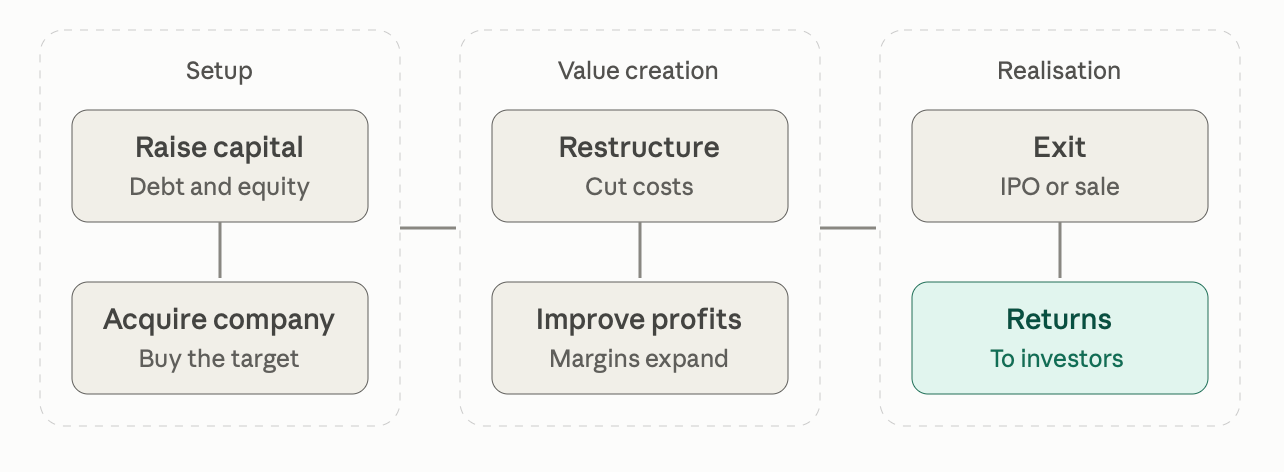
Figure 1: How a private equity firm makes money: set-up, value creation and realisation (author’s illustration)
The process described above appears simple and does not by itself explain how such large returns are made. The missing element is the leveraged buyout (LBO), which makes the model far more attractive and generates real value for the fund’s shareholders. “Leverage” means the use of debt: a private equity firm does not pay the full purchase price from its own funds, but contributes part of it and borrows the rest, and the acquired company’s assets support the loan.5 The best-known example of the model is the takeover of the tobacco and food company RJR Nabisco by KKR, a leading private equity firm.6
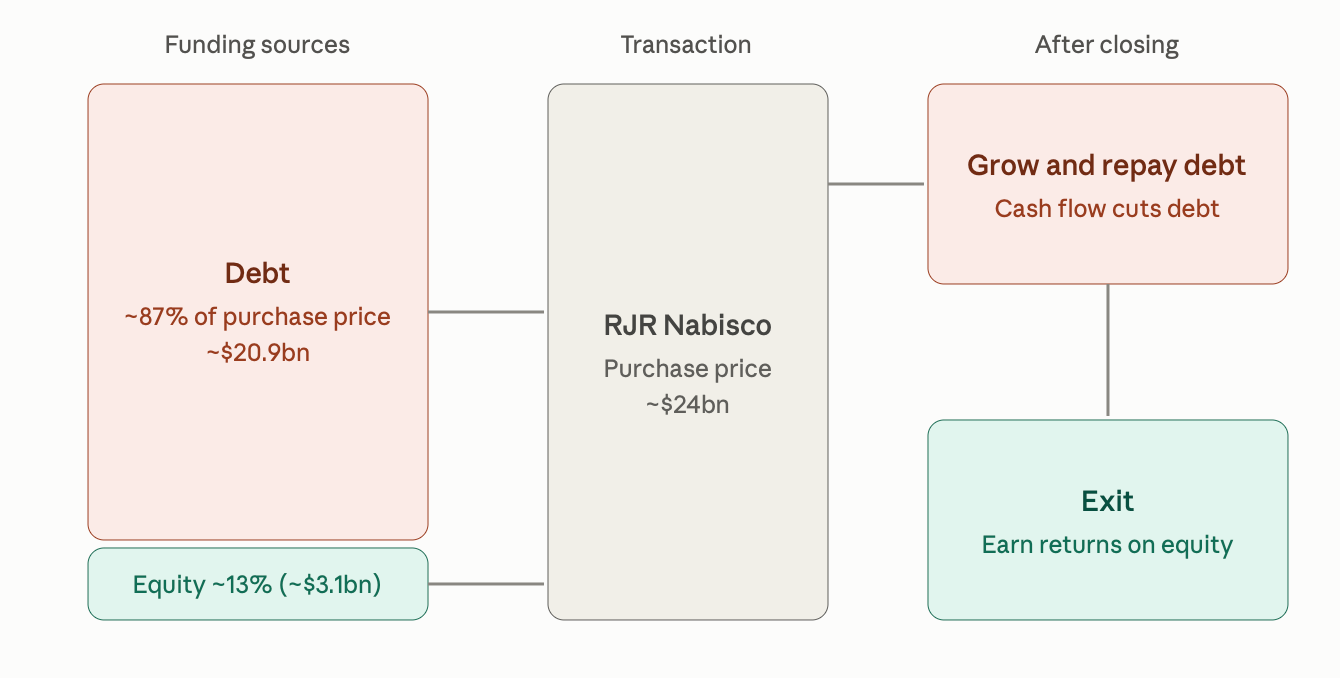
Figure 2: Financing structure of KKR’s leveraged buyout of RJR Nabisco, 1988–89 (author’s illustration). The dollar amounts in the chart are the author’s approximations derived from the 87% debt share; Lentati (note 7) puts the price at roughly $25 billion (about $31 billion including assumed debt), reports that roughly 87% of the purchase price was debt, and puts KKR’s equity at about $2 billion, mostly supplied by its limited partners.
The deal, which closed in April 1989, was valued at roughly $25 billion, or about $31 billion including assumed debt. Roughly 87% of the purchase price was debt, while KKR’s equity was only about $2 billion, much of it supplied by its institutional limited partners.7
A private equity firm normally holds a business for a few years, during which it seeks to improve the company’s EBITA (earnings before interest, taxes and amortisation), a measure of operating profitability.8 Once the firm believes the company has become more valuable, it exits by selling the company to another buyer or through an IPO. While this model can improve efficiency, it can also create pressure to reduce labour costs, cut staff and increase the workload of the employees who remain.
The mechanism of work intensification
Work intensification does not always begin with an employer instructing staff to work longer hours. After a private equity acquisition it often works differently: the employer does not direct the employee, but narrows the employee’s options until the only option left is one that cannot be refused. The chain may be represented as follows:
1. The private equity firm buys the company, mostly with debt.
2. The company needs cash to pay the interest on that debt.
3. Management sets aggressive cost and profit targets.
4. Staff, schedules and benefits are cut back.
5. The remaining employees absorb the extra work.
6. Output targets stay the same or rise.
7. Workers experience stress, insecurity, longer effective hours and declining job quality.
The chain is the author’s synthesis, but the cuts at its centre are documented: the Private Equity Stakeholder Project reports that private equity firms have sought to reduce wages, benefits and staffing at the firms they acquire.9 The changes workers typically experience are fewer colleagues, more tasks per person, higher targets, tighter monitoring, less flexibility, lower job security and reduced benefits.
A practical illustration is St. Joseph’s Home for the Aged in Richmond, Virginia, a nursing home bought in 2021 by the Portopiccolo Group, a private equity firm. According to an account in The New Yorker, within two weeks of the change of ownership management laid out plans to cut nurse staffing significantly, and that on some mornings only two nursing aides were working at the seventy-two-bed facility; a Portopiccolo spokesperson denied that any staffing cuts were made during the transition. The account describes the reduction in staff, the removal of amenities and declining care that followed, and a COVID-19 outbreak, handled with reduced staff, in which six people died in the first four months of the new ownership.10
When profits depend mainly on cutting labour costs, work intensification can become a concealed cost-saving strategy. Shareholders and investors may capture gains in the short term, while workers absorb longer effective hours, heavier workloads and weaker protections.
The evidence in India
The evidence does not show that every private equity buyout harms workers or leads to their exploitation. Some deals improve efficiency, rescue weak businesses or redirect resources to more productive operations. Research nevertheless finds that private equity ownership can reduce employment, weaken job quality, lower wages and intensify work. In the United States, a 2019 study found average job losses of 4.4% in the two years after a company was bought by private equity, relative to control companies,11 although the story is not uniform, and there is also evidence of private equity investment helping companies to flourish. The two Indian examples below concern private equity-backed hospital groups at which labour disputes arose.
A. Manipal Hospitals
• In 2015 TPG, a private equity firm, agreed to invest ₹900 crore for a significant minority stake in Manipal Health Enterprises.12
• In April 2023 Temasek agreed to acquire an additional 41% stake in Manipal Health Enterprises, alongside the 18% stake already held by Sheares Healthcare Group; TPG announced that it would exit, while retaining an 11% interest through its new Asia fund.13
• Between 31 March 2024 and 31 March 2026, the network grew from 33 hospitals with 9,520 licensed beds to 49 hospitals with 13,037 licensed beds.14
• In August 2026 the company listed on the Indian stock exchanges after an initial public offering of about ₹9,275 crore.15
According to the company’s offer documents, its revenue from operations rose from about ₹4,840 crore in FY2023 to ₹10,335.75 crore in FY2026, and its profit for the year more than doubled over the same period.16 Figure 3 compares FY2023 with FY2025.17
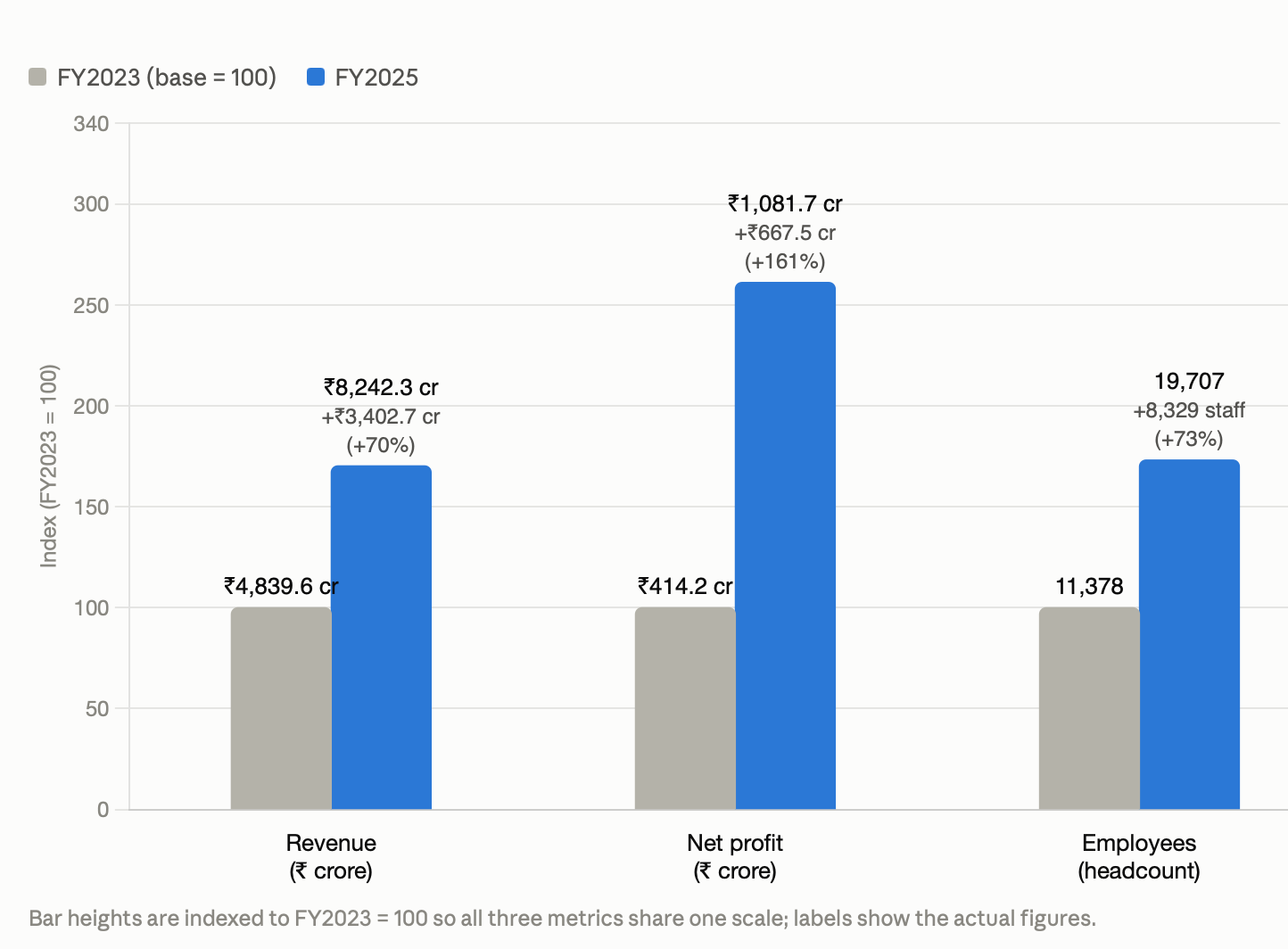
Figure 3: Manipal Health Enterprises: revenue, net profit and employee headcount, FY2023 and FY2025 (bars indexed to FY2023 = 100). Source: author’s compilation from the company’s draft red herring prospectus (March 2026) and abridged prospectus (July 2026).
Labour disputes nevertheless accompanied this growth. In Manipal Hospital v. Joint Commissioner of Labour, the Assistant Inspector of Labour at Mettur found on inspection that the group’s hospital at Salem had not paid 36 employees the minimum wages fixed by a Tamil Nadu Government Order of 2 March 2018 for the period November 2021 to March 2022, and the Joint Commissioner of Labour, Salem, directed the hospital to pay the difference; the hospital, through its industry association, had contested the 2018 rates as too high.18 On 4 November 2025 the Madras High Court allowed the hospital’s writ petition and quashed the order, because the 2018 Government Order had since been superseded by a fresh Government Order of 26 May 2025. The Court also noted that the employees had raised no objection to the wages paid and that no material proving the actual wages had been produced, and it left the employees to take appropriate steps if minimum wages had not been paid. Separately, the company’s draft red herring prospectus discloses that one of its subsidiaries filed a writ petition before the High Court of Orissa in July 2024 against the enforcement of a Labour Court award directing it to reinstate a former employee who alleged that he had been unfairly dismissed.19
The Madras case does not establish that the hospital underpaid its staff, since the order against it was quashed. It does show that, while the group’s financial results rose sharply, a minimum-wage claim concerning 36 of its hospital employees was contested for several years and left unresolved on its merits. In the author’s view, the episode illustrates the tension between rapid financial growth under institutional investors and the protection of workers’ wages, a tension that is not confined to the United States.
B. Baby Memorial Hospital
The case of Baby Memorial Hospital (BMH) shows how a labour dispute can unfold at a hospital group after a private equity investment. BMH is a hospital group in Kerala, founded in 1987. At the time of the investment described below, it was reported to have a capacity of 1,000 beds across hospitals in Kozhikode and Kannur,20 and its Kozhikode hospital alone now has 490 operational beds.21
• In July 2024 KKR, a private equity firm, announced that it had acquired a controlling stake in BMH. KKR did not disclose the amount, but the stake was reported to be around 70% and the investment about ₹2,500 crore.22
• On 9 March 2026, as part of a statewide strike called by the United Nurses Association (UNA), more than 600 nurses at BMH boycotted duty, demanding minimum wages and better working conditions.23
• The nurses demanded a minimum basic pay of ₹40,000 a month.24
• Two supervising nurses were terminated by the hospital, which the union alleged was for supporting the strike; the termination notice stated that they had failed to fulfil the obligations in their employment contracts. The union also alleged that newly recruited nurses were confined inside a hall, and The Hindu reported that the terminations had been kept on hold for the time being.25
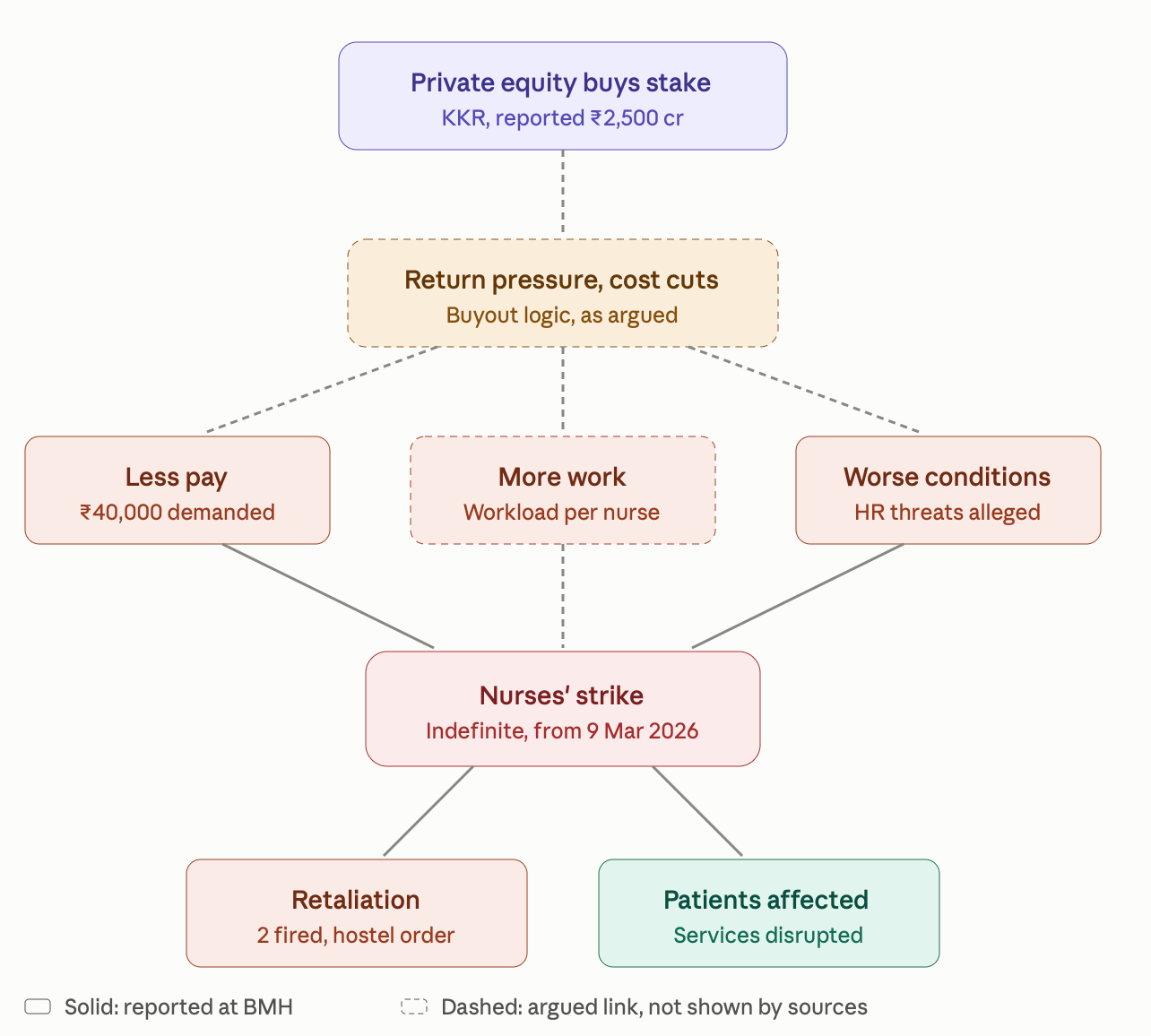
Figure 4: The KKR investment in Baby Memorial Hospital and the 2026 nurses’ strike. Solid boxes show events reported at BMH; dashed boxes show the link the author argues for, which the sources do not establish; “retaliation” is the author’s label: the union alleged that the two nurses were terminated for supporting the strike, while the termination notice cited failure to meet contract obligations and the hostel notice cited residents’ absence from duty. Source: author’s illustration from the reports cited in notes 20–26.
The hospital management also directed striking nurses living in the staff hostel to vacate it within 24 hours if they were not reporting for duty.26 The reports do not attribute these measures to KKR, and the strike formed part of a statewide dispute over nurses’ pay that affected many private hospitals in Kozhikode. In the author’s view, however, the episode is consistent with the pattern described above, in which pressure on labour follows a private equity acquisition.
Rights and law at stake
Work intensification is not merely an issue of productivity or company profit. It affects basic rights to which workers are entitled at their workplace. When a private equity-led restructuring reduces staff while seeking to maintain or increase output, the remaining employees face unpaid overtime, loss of rest, job insecurity and unsafe workloads, and their freedom to raise concerns shrinks as their colleagues are cut. These outcomes engage fundamental labour rights: fair wages, safe and healthy working conditions, reasonable working hours and the right to organise and form unions.
The first right at stake is the right to fair wages. Under the Code on Wages, 2019 and the Occupational Safety, Health and Working Conditions Code, 2020, both in force since 21 November 2025, work beyond the prescribed hours must be paid at not less than twice the normal rate of wages, and the latter Code makes overtime subject to the worker’s consent.27 Indirect overwork, however, such as after-hours messages, unrealistic demands and a workload greater than a worker can handle, may not be recorded as overtime. Workers and employees therefore work extra hours without receiving what they are owed.
The second right at stake, made pressing by digital technology, is the right to rest and to reasonable working hours. Digital tools have blurred the boundary between home and office. An employee may finish work at the office and go home, yet remain on call, checking messages, taking calls from superiors and working on a laptop, so that the employee is never truly off duty.
The third, and most important, right is the right to a safe and healthy working environment. In 2022 the International Labour Organization added a safe and healthy working environment to the fundamental principles and rights at work in its 1998 Declaration.28
Where private equity ownership leads to excessive workloads, understaffing and constant pressure, the result can be mental stress, workplace injuries and burnout. In the healthcare sector in particular, reductions in staff may also endanger patients.29
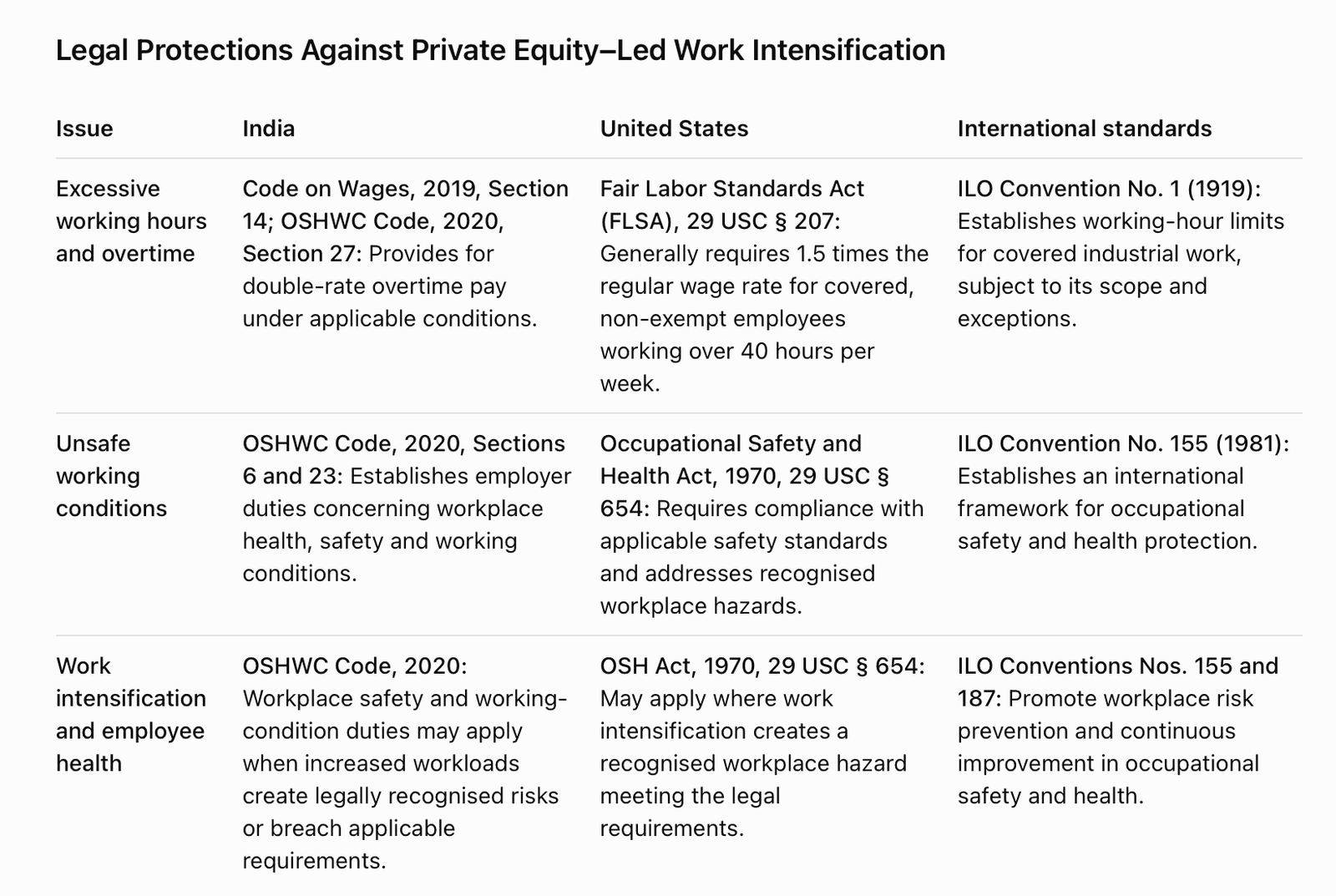
Figure 5: Legal protections against private equity-led work intensification in India, the United States and international standards (author’s compilation from the statutes and ILO conventions named)
Work intensification is not named in any statute. It operates indirectly, through targets, digital connectivity, deadlines and understaffing. Labour law needs to evolve from protecting only clocked working hours to protecting workers from the quieter forms of overwork that follow them beyond the workplace, or that increase the pressure of work within it after a private equity firm acquires the company.
Structural remedies
Proposals for reform are easily made in general terms; the aim here is narrower. Private equity has shown that its model can be damaging to workers, and the response should be laws or guidelines that do not prohibit private equity firms from restructuring or improving efficiency, but that prevent the exploitation of workers and unchecked work intensification.
First, India has a strong culture of constant availability, at home as well as in the workplace. India needs a statutory right to disconnect, so that once the working day is over employees cannot be compelled to take calls or to work on their laptops from home. India also needs to recognise digital overtime, to introduce workload assessment and to regulate the algorithmic surveillance that technology companies are rapidly adopting. A Right to Disconnect Bill, 2025, introduced in the Lok Sabha by Supriya Sule, would give employees a statutory right to ignore work-related calls, emails and messages after working hours. It is, however, a private member’s bill, and such bills have historically had a low probability of becoming law.30
Second, a workload assessment regime should be introduced, in particular for companies acquired by private equity. Its purpose would be to ensure that no employee is given work beyond a defined limit. There should be specific categories setting how much work may be assigned to an employee according to experience and skills, and the factors considered should include the physical intensity of the work and the stress that an excessive workload can cause.
Third, pay should be protected after an acquisition. Private equity owners have been reported to cut the pay and benefits of existing employees after acquiring a company.31 In the author’s view, every employee should continue to receive pay and benefits at least equal to those given earlier; they may be altered, but should not be reduced below the industry level.
The question is not whether companies should become more efficient through restructuring. It is that, where workers are involved, real efficiency cannot be achieved simply by squeezing them and extracting the most from them. Greater efficiency comes from genuine innovation, better technology and improved management, not from converting workers’ sweat into profit.
*****
Footnotes
1. Dave Muoio, Staffing Cuts, ED Mortality Increases Follow Private Equity Hospital Acquisition, Study Finds, Fierce Healthcare (Sept. 23, 2025), https://www.fiercehealthcare.com/providers/staffing-cuts-ed-mortality-increases-follow-hospitals-private-equity-acquisition-study.
2. Sneha Kannan, Joseph Dov Bruch, José R. Zubizarreta, Jennifer Stevens & Zirui Song, Hospital Staffing and Patient Outcomes After Private Equity Acquisition, 178 Annals Internal Med. 1529, 1529 (2025), https://doi.org/10.7326/ANNALS-24-03471.
3. Gretchen Morgenson, Working for Companies Owned by Well-Heeled Private-Equity Firms Can Mean Lower Wages for Employees, NBC News (Oct. 9, 2021), https://www.nbcnews.com/business/personal-finance/working-companies-owned-well-heeled-private-equity-firms-can-mean-n1281146.
4. Pamela Espinosa, How Does Private Equity Work?, Moonfare (last updated Sept. 15, 2026), https://www.moonfare.com/pe-masterclass/how-does-pe-work.
5. Leveraged Buyout (LBO): Definition & Process, Carta, https://carta.com/sg/en/learn/startups/exit-strategies/mergers-acquisitions/leveraged-buyout/ (last visited Oct. 16, 2026).
6. Rhea Puri, KKR’s $34 Billion Acquisition of RJR Nabisco, M&A Watch, https://mnawatch.com/legal-retrospectives/wvsw3gyyqtkgr3we892kw7pohg9srp (last visited Oct. 16, 2026).
7. Alexis Lentati, KKR’s $31 Billion RJR Nabisco Buyout That Nobody Won, IB IQ (May 17, 2026), https://ibinterviewquestions.com/case-studies/rjr-nabisco-lbo.
8. James Chen, Understanding EBITA: A Key Profitability Metric, Investopedia (updated May 8, 2026), https://www.investopedia.com/terms/e/ebita.asp.
9. Private Equity Stakeholder Project, Effects of Private Equity Investments, https://pestakeholder.org/private-equity-risks/effects-of-private-equity-investments/ (last visited Oct. 16, 2026).
10. Yasmin Rafiei, When Private Equity Takes Over a Nursing Home, New Yorker (Aug. 25, 2022), https://www.newyorker.com/news/dispatch/when-private-equity-takes-over-a-nursing-home.
11. Private Equity Stakeholder Project, supra note 9 (citing a 2019 study by researchers at Harvard Business School and the University of Chicago).
12. TPG, TPG to Invest in Manipal Health Enterprises (Feb. 26, 2015), https://www.tpg.com/news-and-insights/tpg-invest-manipal-health-enterprises.
13. TPG, Manipal Health Enterprises Announces Agreement for Temasek to Acquire 41% Stake (Apr. 10, 2023), https://www.tpg.com/news-and-insights/manipal-health-enterprises-announces-agreement-temasek-acquire.
14. Manipal Health Enterprises Ltd., Abridged Prospectus 11 (July 2026), https://www.sebi.gov.in/sebi_data/commondocs/jul-2026/Manipal%20Health%20Enterprises%20Ltd%20-%20Abri_p.pdf.
15. Urvi Dugar, Surbhi Misra & Vivek Kumar M, India’s Manipal Health Jumps on Market Debut, Valuing Hospital Chain at $9 Billion, Reuters (Aug. 5, 2026), https://www.reuters.com/business/healthcare-pharmaceuticals/indias-manipal-health-jumps-105-trading-debut-after-960-million-ipo-2026-08-05/; Pawan Kumar Nahar, Manipal Health Enterprises Makes Solid Stock Market Debut; Shares List at 11% Premium, Business Today (Aug. 5, 2026), https://www.businesstoday.in/markets/stocks/story/manipal-health-enterprises-makes-solid-stock-market-debut-shares-list-at-11-premium-547257-2026-08-05.
16. Manipal Health Enterprises Ltd., Draft Red Herring Prospectus 150 (Mar. 23, 2026), https://investmentbank.kotak.com/kib-cms/sites/default/files/offer-documets/Manipal%20Health%20Enterprises%20Ltd%20DRHP.pdf (fiscal 2023 revenue from operations of ₹48,396.10 million and profit for the year of ₹4,142.04 million); Manipal Health Enterprises Ltd., Abridged Prospectus, supra note 14, at 10 (fiscal 2026 revenue from operations of ₹103,357.51 million and profit for the year of ₹9,165.19 million); see also Manipal Hospitals, Financial Reports, https://www.manipalhospitals.com/financial-reports/ (last visited Oct. 16, 2026).
17. Manipal Health Enterprises Ltd., Abridged Prospectus, supra note 14, at 10, 12; Manipal Health Enterprises Ltd., Draft Red Herring Prospectus, supra note 16, at 150, 242.
18. Manipal Hospital v. Joint Commissioner of Labour, W.P. No. 7253 of 2024, ¶¶ 2–3, 5 (Madras H.C. Nov. 4, 2025) (India), https://indiankanoon.org/doc/169576259/.
19. Id. ¶¶ 6, 8–9; Manipal Health Enterprises Ltd., Draft Red Herring Prospectus, supra note 16, at 607.
20. KKR Acquires Controlling Stake in Kerala-Based Baby Memorial Hospital, Moneycontrol (July 1, 2024), https://www.moneycontrol.com/news/business/companies/kkr-acquires-controlling-stake-in-kerala-based-baby-memorial-hospital-12759644.html.
21. BMH Kozhikode, Baby Memorial Hospital, https://www.babymemorialhospitals.com/hospitals/bmh-kozhikode (last visited Oct. 16, 2026).
22. KKR Acquires Controlling Stake, supra note 20.
23. Nurses’ Strike Escalates in Kozhikode as Private Hospital Terminates Two Staff, Protesters Allege Confinement of New Recruits, Onmanorama (Mar. 9, 2026), https://www.onmanorama.com/news/kerala/2026/03/09/nurses-strike-una-escalation-kozhikode.html.
24. Nurses’ Strike Affects Private Hospitals in Kozhikode, The Hindu (Mar. 9, 2026), https://www.thehindu.com/news/national/kerala/kerala-private-sector-nurses-strike-disrupts-hospital-services-in-kozhikode/article70721559.ece.
25. Nurses’ Strike Escalates in Kozhikode, supra note 23; Nurses’ Strike Affects Private Hospitals, supra note 24.
26. Nurses’ Strike Escalates in Kozhikode, supra note 23.
27. The Code on Wages, No. 29 of 2019, § 14, India Code (2019); The Occupational Safety, Health and Working Conditions Code, No. 37 of 2020, § 27, India Code (2020); Press Information Bureau, Welfare of Organised and Unorganised Sectors (Dec. 8, 2025), https://www.pib.gov.in/PressReleasePage.aspx?PRID=2200433 (the four Labour Codes in force from Nov. 21, 2025).
28. Int’l Lab. Org., ILO Declaration on Fundamental Principles and Rights at Work (adopted June 18, 1998, amended June 10, 2022), https://www.ilo.org/ilo-declaration-fundamental-principles-and-rights-work.
29. Kannan et al., supra note 2, at 1529.
30. Shravan Anande & Hari Priya Murarikar, Right to Disconnect in India: Addressing Digital Overwork and Employee Well-Being, Vidhi Centre for Legal Policy (Dec. 15, 2025), https://vidhilegalpolicy.in/blog/right-to-disconnect-in-india/.
31. Morgenson, supra note 3; Private Equity Stakeholder Project, supra note 9.