
Introduction
A. Background and importance of the issue in contemporary times
India has no uniform family law; each community has its own.1 Hindus, Muslims, Christians, Parsis and others are governed differently in matters of marriage, divorce, maintenance, adoption, guardianship and succession, alongside secular laws such as the Special Marriage Act, 1954.2 This arrangement is defended as a matter of religious autonomy, the freedom of each community to determine its members’ rights and obligations through its personal law. Because those rights are not always equal for women and men, however, critics argue that it sits uneasily with the guarantee of equal protection in Article 14. The guarantee of equality is arguably most fragile where citizens are most vulnerable, and in particular where the personal law of a community applies; the traditional, religious and cultural subordination of women to men in this sphere has long been noted.
The framers of the Constitution recognised the issue. Article 44, a Directive Principle of State Policy, requires the State to endeavour to secure a Uniform Civil Code for all citizens throughout the territory of India. It is not a window-dressing measure: it expresses the constitutional principle that civil rights should not depend on the community to which one belongs. More than 70 years on, however, it has yet to be implemented, because a single code does not fit easily into a religion-based system of personal law.
Maintenance is one of the clearest, and therefore most illustrative, points of divergence between the personal laws. It concerns the basic survival of a divorced woman who cannot support herself, of neglected children and of deserted parents. The secular provision in Section 125 of the Code of Criminal Procedure, 19733 aims to prevent destitution and vagrancy by requiring a person with sufficient means to maintain his wife, children and parents. It has not, however, produced uniformity: the right to maintenance, and the validity of the marriage on which it rests, still depend on the parties’ personal law. Indian maintenance law is thus harmonious in form but heterogeneous in content, which makes it a suitable arena for a UCC.
The case law shows how difficult it has been to maintain a common standard of protection. In Shah Bano (1985), the Supreme Court held that a divorced Muslim woman was entitled to maintenance under Section 125, and it cited Article 44.4 Parliament then passed the Muslim Women (Protection of Rights on Divorce) Act, 1986,5 which was read as restricting the husband’s liability to the iddat period. In Danial Latifi (2001), a five-judge Constitution Bench upheld the Act but held that it requires a reasonable and fair provision for the divorced wife’s future, extending beyond the iddat period.6 In Mohd. Abdul Samad (2024), the Court held that the 1986 Act does not displace the woman’s remedy under Section 125: the two remedies exist in parallel.7
The question has also moved to the State level. Uttarakhand has enacted the first State uniform civil code since Independence, which, among other things, prohibits marriage where either party has a spouse living and fixes minimum ages for marriage.8 Goa continues to apply the Portuguese Civil Code of 1867 that it inherited, and the Assam Legislative Assembly passed a similar Bill on 27 May 2026. This paper takes Uttarakhand, as the first State to give Article 44 effect on the ground, as its central example.
B. The research problem and the gap in the existing work
The coexistence of multiple personal laws raises issues of gender equality, women’s rights and equal access to justice. Article 44 calls on the State to strive for a Uniform Civil Code, but it remains contested on legal, social and religious grounds, and Uttarakhand’s code has once again raised questions of religious freedom, constitutional rights and the place of existing personal laws. Discussion of a UCC has largely concerned its constitutionality, its capacity to protect gender equality and religious freedom, and the problems of implementing and applying it uniformly, with Goa and Assam as examples. What is missing is an empirical enquiry into public knowledge of, and concerns about, the law’s implementation, especially with reference to Uttarakhand, and an examination of how gender equality and uniformity relate to religious freedom and diversity. This paper attempts to address that gap by surveying a purposive sample of respondents on the UCC and Article 44, setting Uttarakhand’s code beside those of Goa and Assam, and examining judicial interpretation and the obstacles to implementation.
C. Research questions, objectives and hypothesis
The main research question is: to what extent would a Uniform Civil Code promote gender equality while ensuring religious freedom and addressing the problems of implementing a UCC, in the case of Uttarakhand? Four subsidiary questions support it:
• Do the existing personal laws lead to gender discrimination, particularly against women?
• How can Article 44 be reconciled with the religious freedoms guaranteed by Articles 25 and 26?
• What part has the judiciary played in highlighting the need for a UCC?
• What are the major social, legal and constitutional problems in adopting a UCC in Uttarakhand?
The study has five main objectives. First, it investigates gender inequality under the existing personal laws. Second, it examines whether Article 44 can be reconciled with the rights guaranteed in Articles 25 and 26. Third, it investigates the role of the judiciary from Shah Bano to Mohd. Abdul Samad. Fourth, it identifies the problems in implementing the UCC in Uttarakhand. Finally, it examines public awareness and perceptions of the UCC’s impact on personal and religious rights. The working assumption is that a UCC could promote gender equality without interfering excessively with religious freedom if it were properly drafted and implemented, but that low public awareness of Article 44 and of the content of the statute, together with social and administrative opposition, would limit its effectiveness in Uttarakhand.
D. Scope and limitations
Geographically, the doctrinal analysis centres on Uttarakhand, with Goa and Assam as comparative cases and national developments as background. In time, it runs from the Hindu Code Acts of 1955 and 1956 to the Uttarakhand code of 2024 and the State codes that followed in 2026, with particular attention to the period from 1985 to 2024. The empirical part rests on a purposive sample of 162 respondents, principally university students from several States, rather than on a sample of Uttarakhand’s residents. There are three limitations: Article 44 is non-justiciable, so the paper evaluates policy rather than an enforceable right; the Uttarakhand code is recent, so its long-term effects cannot yet be analysed; and findings based on perceptions hold only for the respondents surveyed, not for the population of Uttarakhand or of the country.
Research methodology
A. Combining doctrinal analysis with empirical testing
The study adopts a doctrinal-cum-empirical (socio-legal) design. The doctrinal component provides the legal framework: it examines the Constitution, the personal laws and the Supreme Court’s judgments on the UCC. The empirical component tests that framework against social reality: it was designed to measure respondents’ awareness of Article 44 and their opinions on personal-law reform. The design is descriptive and analytical rather than experimental: it describes the present state of the law and of public understanding, and analyses the gap between the two.
B. Doctrinal component
The doctrinal component works in three layers. The constitutional layer analyses Article 44 in the light of Articles 14, 15, 21 and 25,9 drawing on the doctrine on the relationship between personal laws and Fundamental Rights. The statutory layer analyses the maintenance provisions across systems: the Hindu Adoptions and Maintenance Act, 1956; Section 125 of the Code of Criminal Procedure, 1973 and its successor in the Bharatiya Nagarik Suraksha Sanhita, 2023; the Muslim Women (Protection of Rights on Divorce) Act, 1986; and the Uniform Civil Code, Uttarakhand, 2024, with the Goa Civil Code, Assam’s UCC Bill and the Gujarat Uniform Civil Code, 2026 as statutory comparators.
The judicial layer traces the maintenance trajectory from Mohd. Ahmed Khan v. Shah Bano Begum (1985) to Mohd. Abdul Samad v. State of Telangana (2024).10 Statutes and judgments are the primary sources; commentaries, Law Commission papers and academic articles are secondary sources.
C. Empirical component: population and sample
The empirical component was not confined to Uttarakhand. The questionnaire was circulated as a Google Form, and respondents came from different States and districts; the paper does not report how many of them live in Uttarakhand or in any other State, or their occupations. Uttarakhand nonetheless frames the questionnaire, as the first jurisdiction to enact a full statutory UCC.
A total of 162 complete responses were received. Purposive rather than random sampling was adopted, because the study required respondents with some exposure to the subject rather than a statistically generalisable cross-section. The acknowledged trade-off is that the findings cannot be projected onto the population of India or of any State, including Uttarakhand.
D. Analysis of data
Responses were collected through Google Forms, coded and tabulated in Excel, and analysed by simple percentages. Written answers, including those given to questions such as “Do you believe that the existing personal laws create inequality especially against women?”, “Do you agree that existing personal laws and customary practices need to be codified and that doing so would benefit the people?” and “What measures should be taken to sensitise society towards a Uniform Civil Code or the codification of personal laws?”, were read for recurring themes. The quantitative findings are presented in pie charts and interpreted alongside the doctrinal findings, so that each statutory or judicial proposition in the analysis is set against the corresponding public opinion.
E. Hypothesis testing
The study proceeds on the hypothesis that public awareness of the Uniform Civil Code and of maintenance law in Uttarakhand is low, and that support for a uniform maintenance code is higher among respondents who are aware of the gender-inequality effects of the existing personal laws.
F. Limitations
Three limitations are accepted. First, Article 44, as a Directive Principle of State Policy, is non-justiciable. Second, the Uttarakhand code is recent, and Assam’s Bill and Gujarat’s code are more recent still, both having been passed in 2026 against Uttarakhand’s 2024; their effects cannot yet be assessed. Third, the sample is purposive, so the findings are confined to the respondents surveyed. The survey records opinion on the UCC in the light of the Uttarakhand code; it does not measure that code’s effectiveness.
Legal framework
A. Statutes, constitutional provisions and rules
The constitutional cornerstone of the study is Article 44, which directs the State to endeavour to secure for its citizens a uniform civil code throughout the territory of India. As a Directive Principle of State Policy, it is not enforceable by any court; it informs legislation and adjudication without conferring an enforceable right.11
The surrounding structure is supplied by the equality provisions (Articles 14 and 15), the guarantee of dignity (Article 21) and the freedom of religion (Articles 25 and 26).
The law against which a uniform civil code must be tested is divided by community. Muslims are governed by the Muslim Personal Law (Shariat) Application Act, 1937.12 Hindus are governed by several statutes, namely the Hindu Marriage Act, 1955, the Hindu Succession Act, 1956, the Hindu Minority and Guardianship Act, 1956 and the Hindu Adoptions and Maintenance Act, 1956; Christians by the Indian Christian Marriage Act, 1872; and Parsis by the Parsi Marriage and Divorce Act, 1936. Alongside these sit secular laws that apply to all communities: Section 125 of the Code of Criminal Procedure, 1973 (now Section 144 of the Bharatiya Nagarik Suraksha Sanhita, 2023) and the Protection of Women from Domestic Violence Act, 2005.13
The Uniform Civil Code, Uttarakhand, 2024, the first post-Independence State code, prohibits polygamy and makes registration of marriages, divorces and live-in relationships compulsory, while excluding the Scheduled Tribes from its application.14 Goa’s Portuguese Civil Code of 1867 remains the inherited model of a common family code; the Supreme Court has described Goa as a State whose civil code applies to all, regardless of religion, subject to certain limited rights.15
In Assam, the Legislative Assembly passed a Uniform Civil Code Bill on 27 May 2026. It makes registration of marriages, divorces and live-in relationships compulsory, prohibits polygamy, fixes minimum ages of marriage (21 for men and 18 for women) and covers succession, giving sons and daughters equal shares, while leaving the State’s tribal communities outside its scope to preserve their customary protections.16 Gujarat, for its part, has enacted the Gujarat Uniform Civil Code, 2026, introduced after a committee chaired by Justice Ranjana Prakash Desai (retd.) submitted its report and passed by the Gujarat Legislative Assembly on 24 March 2026. It too prohibits polygamy, makes it an offence to compel a divorced couple to observe a condition such as marriage to a third person before they remarry (the practice known as nikah halala), and makes registration of live-in relationships obligatory, while excluding the Scheduled Tribes.17
B. Key judgments
In Shah Bano (1985), the Supreme Court held that a divorced Muslim wife unable to maintain herself could claim maintenance under Section 125 beyond the iddat period, and it invoked Article 44, observing that a common civil code would help the cause of national integration by removing disparate loyalties to laws with conflicting ideologies.18
In Danial Latifi (2001), the Court upheld the 1986 Act but read it to require a reasonable and fair provision for the divorced wife’s future, extending beyond the iddat period, rather than overhauling the statutory framework.19
In Sarla Mudgal (1995), the Court held that a Hindu husband who converts to Islam and marries again without dissolving his first marriage contracts a void second marriage and is liable for bigamy under Section 494 of the Indian Penal Code, 1860 (now Section 82 of the Bharatiya Nyaya Sanhita, 2023), and it again called for a fresh look at Article 44.20,21
In John Vallamattom (2003), the Court struck down Section 118 of the Indian Succession Act, 1925 as violative of Article 14, and again regretted that Article 44 had not been given effect.22
C. Overview of the debate
In the authors’ reading, the debate on India’s Uniform Civil Code begins with Article 44, a non-justiciable Directive Principle meant to guide the legislature and the judiciary rather than to create a right enforceable in court. Opinion is divided on where it stands in relation to the guarantees of equality and dignity (Articles 14, 15 and 21) and the freedom of religion (Articles 25 and 26). Family law remains community-based, resting on the Hindu statutes of the 1950s, the Muslim Personal Law (Shariat) Application Act, 1937, the Indian Christian Marriage Act, 1872 and the Parsi Marriage and Divorce Act, 1936, alongside secular laws that apply to all communities, namely Section 125 of the Code of Criminal Procedure (now Section 144 of the Bharatiya Nagarik Suraksha Sanhita) and the Domestic Violence Act, 2005. The judicial contribution is the most developed: Shah Bano (1985), Sarla Mudgal (1995) and John Vallamattom (2003) each called for a UCC,23,24,25 and in Danial Latifi (2001) the Supreme Court read the 1986 Act so as to secure a divorced Muslim woman a fair provision beyond the iddat period.26 These judgments, however, only call for a UCC; in each, the relief came from reinterpreting the existing law. The policy position is also divided: the Law Commission’s 2018 consultation paper concluded that a uniform civil code was neither necessary nor desirable at that stage and that the discriminatory aspects of the existing personal laws should be reformed instead.27 Attention has more recently turned to State-level codification: Goa has its inherited 1867 code, Uttarakhand its 2024 code, Gujarat its 2026 code, and Assam’s Bill was passed on 27 May 2026. The three recent codes prohibit polygamy, require registration of marriages and live-in relationships, and exempt tribal communities;28,29,30 Goa’s 1867 code, by contrast, contains no provision on live-in relationships and no tribal exemption of this kind. This raises questions of federalism, of how uniform these codes really are, and of privacy under Article 21. In the authors’ view, the main gaps lie in empirical study of how the State codes work in practice and in comparative analysis of those codes.
Data analysis and interpretation
This part analyses the data collected to test the study’s hypothesis that a Uniform Civil Code can promote gender equality without hampering religious freedom, but that in Uttarakhand low awareness of the UCC and resistance from social and administrative quarters restrict its effectiveness.
The primary data were collected through a structured questionnaire sent to students across various universities, to which 162 respondents replied. It covered awareness of Article 44 and opinion on gender justice, religious freedom and the implementation of a UCC. The respondents’ States of residence and occupations are not reported, so the results describe this sample and cannot be read as the views of the population of Uttarakhand.
The multiple-choice items are analysed by percentage, and the opinion-based items are grouped into themes illustrated by representative answers. Both are interpreted in the light of the research aims. The results apply only to those surveyed and are not nationally representative.
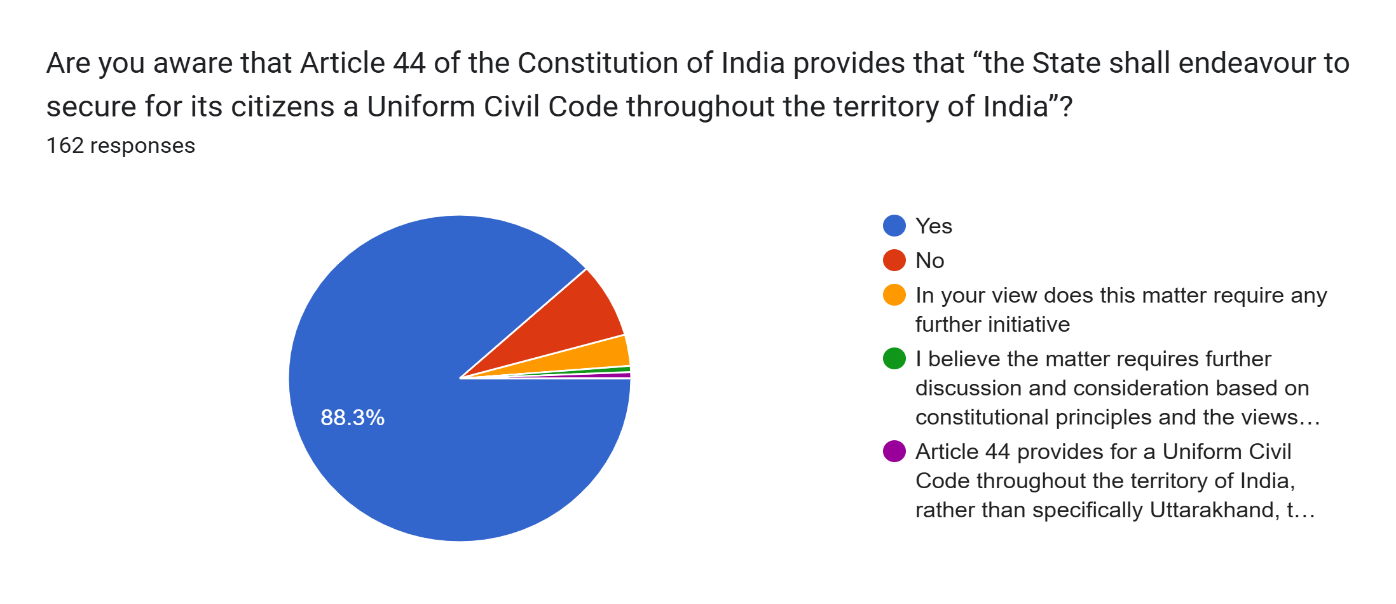
Figure 1: Awareness of Article 44 of the Constitution of India (162 responses). As administered to respondents, the question quoted Article 44 as securing a uniform civil code throughout the territory of Uttarakhand. The heading shown in this chart gives the correct wording (“territory of India”), but the responses were given to the misquoted question.
Respondents were asked whether they knew that Article 44 of the Constitution of India obliges the State to endeavour to secure a Uniform Civil Code for its citizens. As administered, however, the question misquoted Article 44 as referring to the territory of Uttarakhand; the Article in fact speaks of “the territory of India”. The chart heading reproduced in Figure 1 shows the corrected wording, but the responses were collected under the misquoted wording. Of the 162 respondents, 88.3 per cent (143) answered yes and 7.4 per cent answered no; the rest chose other options or wrote their own answers, one of them pointing out that Article 44 refers to the territory of India rather than to Uttarakhand.
Because respondents affirmed a misquoted provision, the 88.3 per cent figure cannot be read as awareness of the actual wording of Article 44. At most it suggests that most respondents were familiar with the general idea of a constitutional commitment to a UCC. Nor does it say anything about knowledge of the Uttarakhand code itself: awareness of a constitutional provision is distinct from awareness of legislation, and the survey did not separately test knowledge of the Uttarakhand Act.
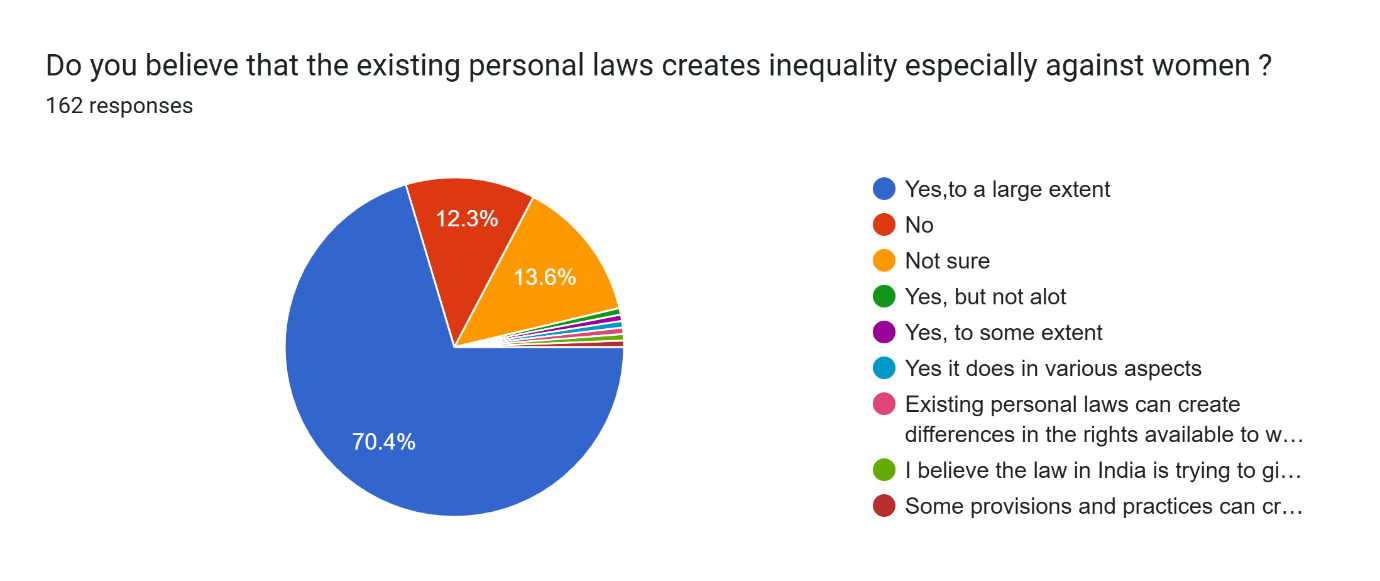
Figure 2: Whether the existing personal laws create inequality especially against women (162 responses)
In all, 70.4 per cent of respondents consider that the existing personal laws create inequality against women to a large extent, which indicates a high level of social awareness of gender differences in matters such as marriage, inheritance and divorce. Only 12.3 per cent chose “No”, while 13.6 per cent were “Not sure”, a sizeable minority whose answers may reflect uncertain legal understanding.
The remaining responses (under 4 per cent) are qualified opinions, such as “to some extent”, “in various aspects” and “provisions can create differences”. They suggest that even respondents who see inequality regard it as context-dependent. Overall, the data indicate broad agreement that personal-law reform, and with it uniformity, deserves consideration.
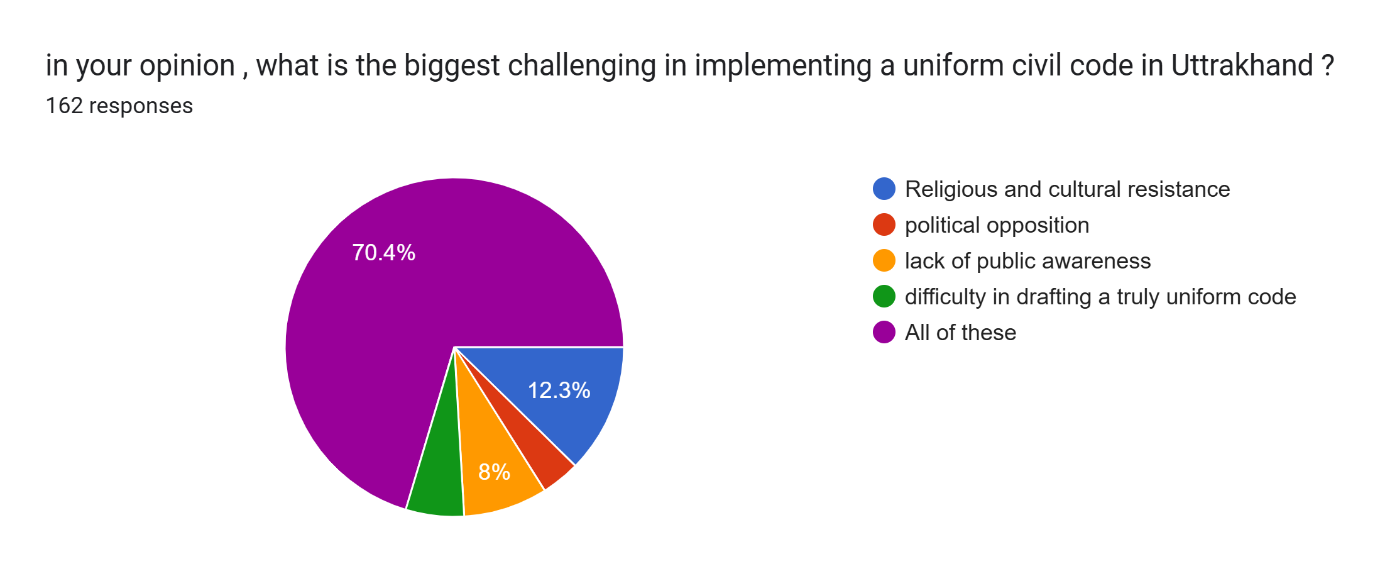
Figure 3: The biggest challenge in implementing a Uniform Civil Code in Uttarakhand (162 responses)
A clear majority (70.4 per cent) chose “All of these” as the biggest challenge in implementing a Uniform Civil Code in Uttarakhand, which indicates that respondents see the obstacles as interrelated rather than independent. Religious and cultural resistance is the most frequently chosen single obstacle at 12.3 per cent, followed by lack of public awareness at 8 per cent. Only a small proportion, around 4 to 6 per cent each, chose the difficulty of drafting a truly uniform code or political opposition. The data suggest that a comprehensive approach is needed: sensitive engagement with communities, wider public awareness, careful drafting and the building of political consensus.
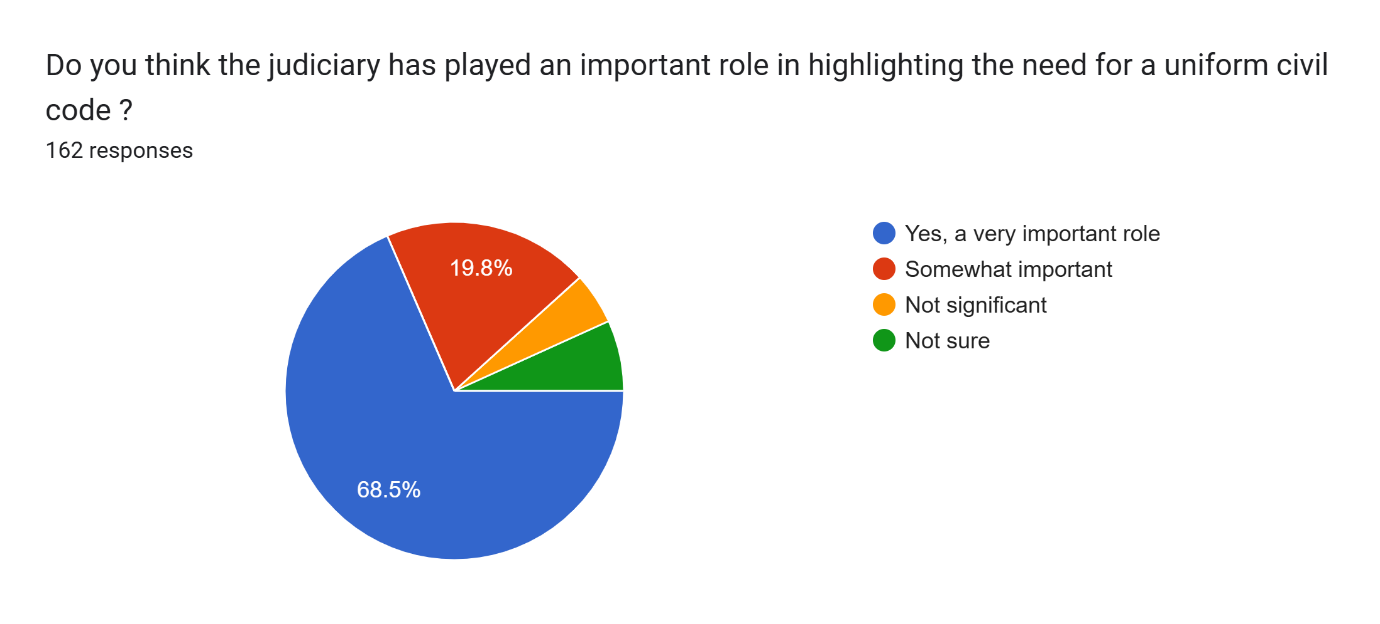
Figure 4: Whether the judiciary has played an important role in highlighting the need for a Uniform Civil Code (162 responses)
The responses show considerable confidence in the judiciary’s role in advancing the Uniform Civil Code debate, which may reflect the prominence of landmark cases such as Shah Bano and Sarla Mudgal. A clear majority (68.5 per cent) believe the judiciary has played a very important role, and a further 19.8 per cent consider its role somewhat important, so that about 88 per cent regard it as important. Some 6.8 per cent are not sure, and a small proportion (about 5 per cent) consider its role not significant. Overall, the data indicate that judicial pronouncements are seen as a significant force in keeping the UCC debate alive.
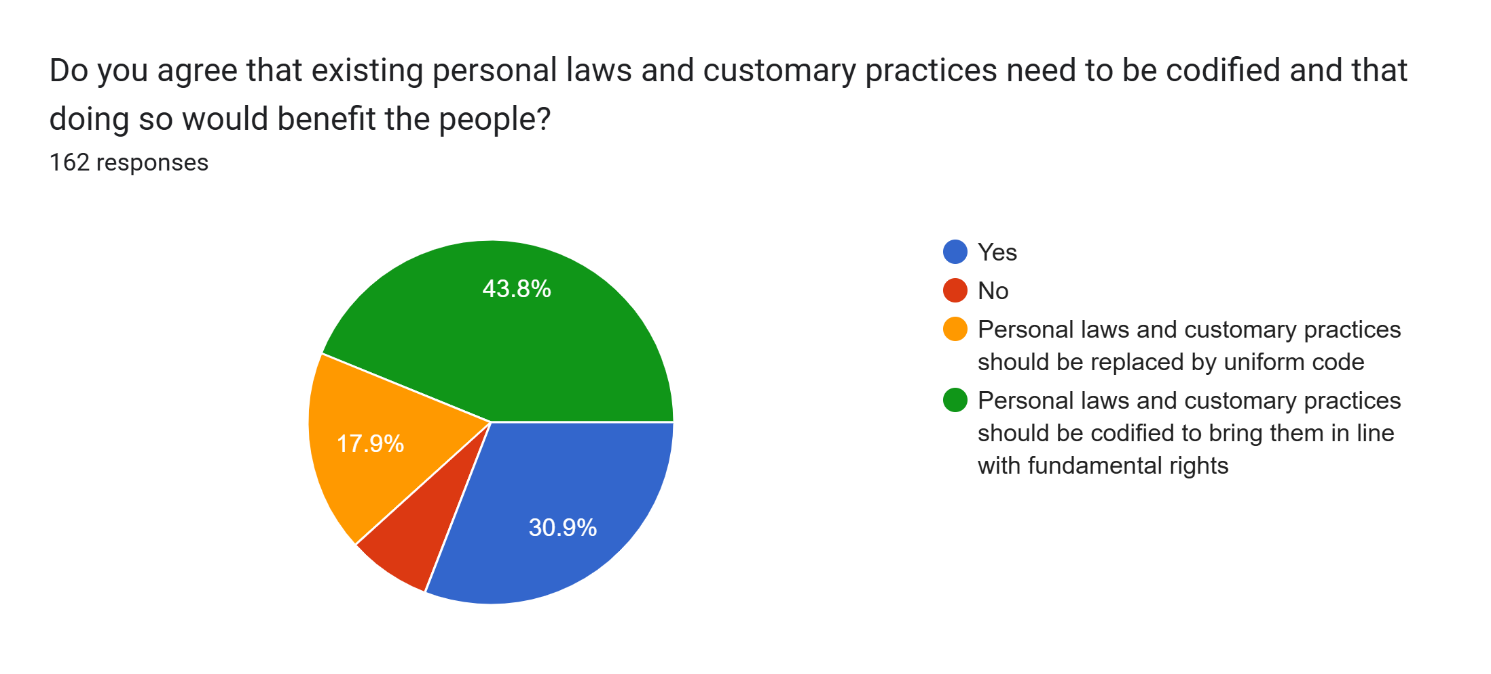
Figure 5: Whether existing personal laws and customary practices need to be codified (162 responses)
Should personal laws be codified? Respondents preferred reform to replacement. The largest group, 43.8 per cent, favoured codifying personal laws and customary practices to bring them in line with fundamental rights, and a further 30.9 per cent answered simply that codification was needed and would benefit the people; together, 74.7 per cent (121 of 162) favoured codification. Fewer than one in five (17.9 per cent, 29 respondents) wanted personal laws replaced by a uniform code, and 7.4 per cent (12) were against codification. Respondents thus want reform rather than replacement, a position that balances Article 25 against Articles 14 and 15, with Article 44 in the background. The results are for the surveyed group only.
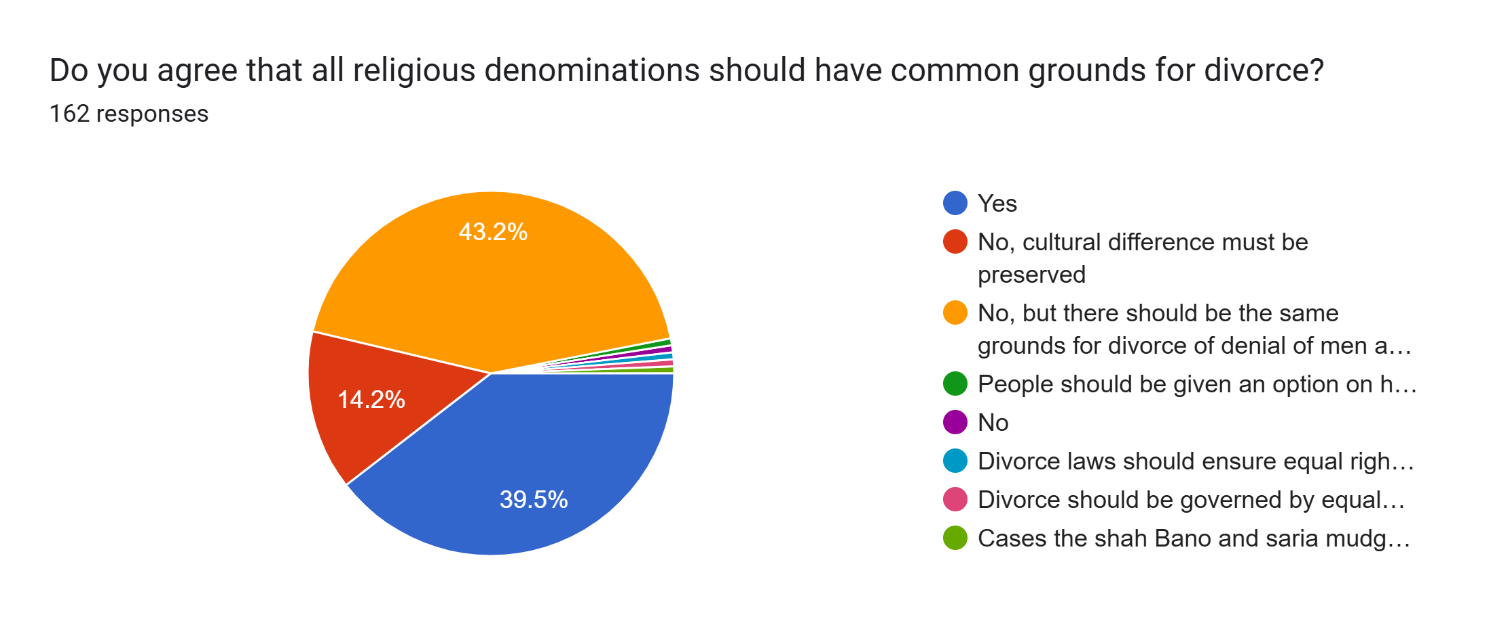
Figure 6: Whether all religious denominations should have common grounds for divorce (162 responses)
Should all religions have the same grounds for divorce? Most respondents favoured some uniformity. Of 162 respondents, 43.2 per cent (70) answered “No, but there should be the same grounds…” (a qualified no) and 39.5 per cent (64) answered yes, together 82.7 per cent. Only 14.2 per cent (23) answered that cultural differences must be preserved, and the remaining 3.1 per cent gave written answers, some favouring an optional approach. Respondents therefore support common, or broadly similar, grounds rather than full harmonisation, which reflects the tension between gender equality and the freedom of religion under Article 25. These findings relate only to the sampled respondents.
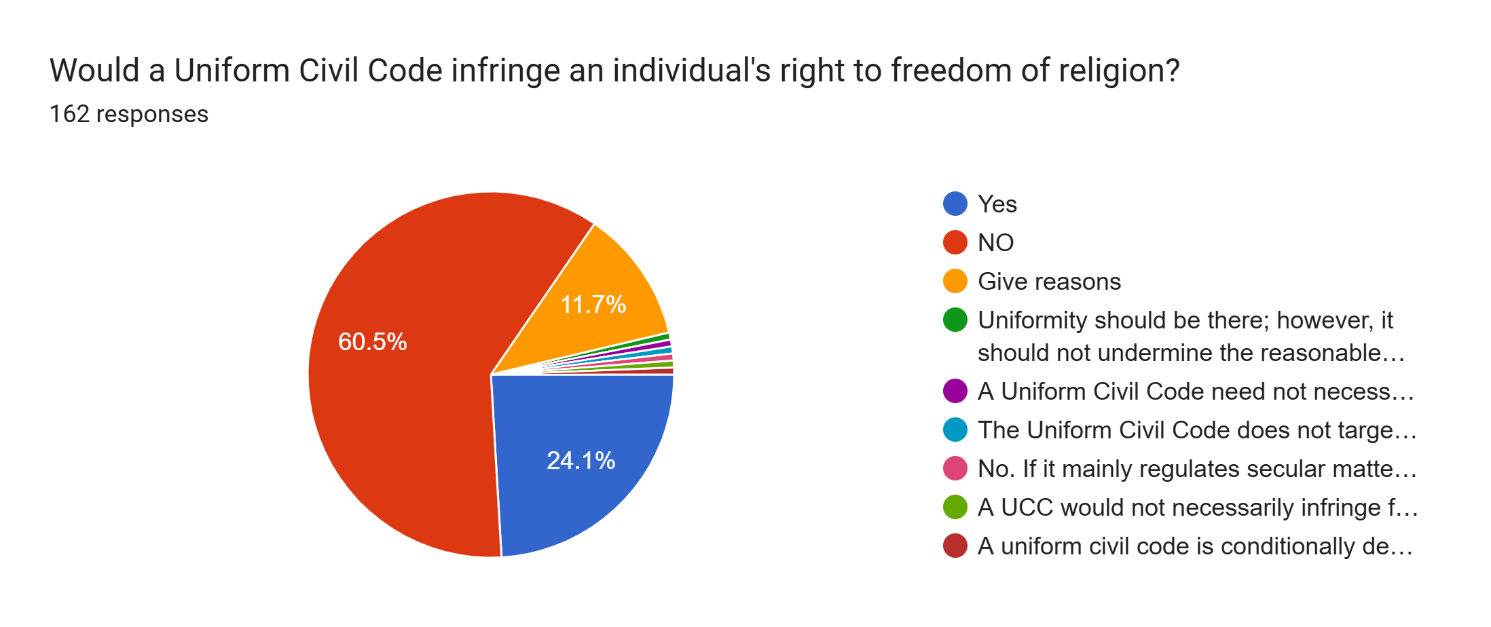
Figure 7: Whether a Uniform Civil Code would infringe an individual’s right to freedom of religion (162 responses)
Would a UCC limit freedom of religion? Most respondents thought not. Asked whether a UCC would infringe an individual’s right to freedom of religion, 60.5 per cent (98 of 162) answered no, 24.1 per cent (39) answered yes, and 11.7 per cent (19) chose “Give reasons” without taking a position. The remaining 3.7 per cent gave written answers, mostly favouring uniformity with safeguards. Most respondents therefore see a UCC as compatible with religious freedom, though nearly a quarter see a conflict. This mirrors the constitutional balance between Article 25, which protects the freedom of religion subject to public order, morality and health, and Article 44. These results are for the surveyed group only.
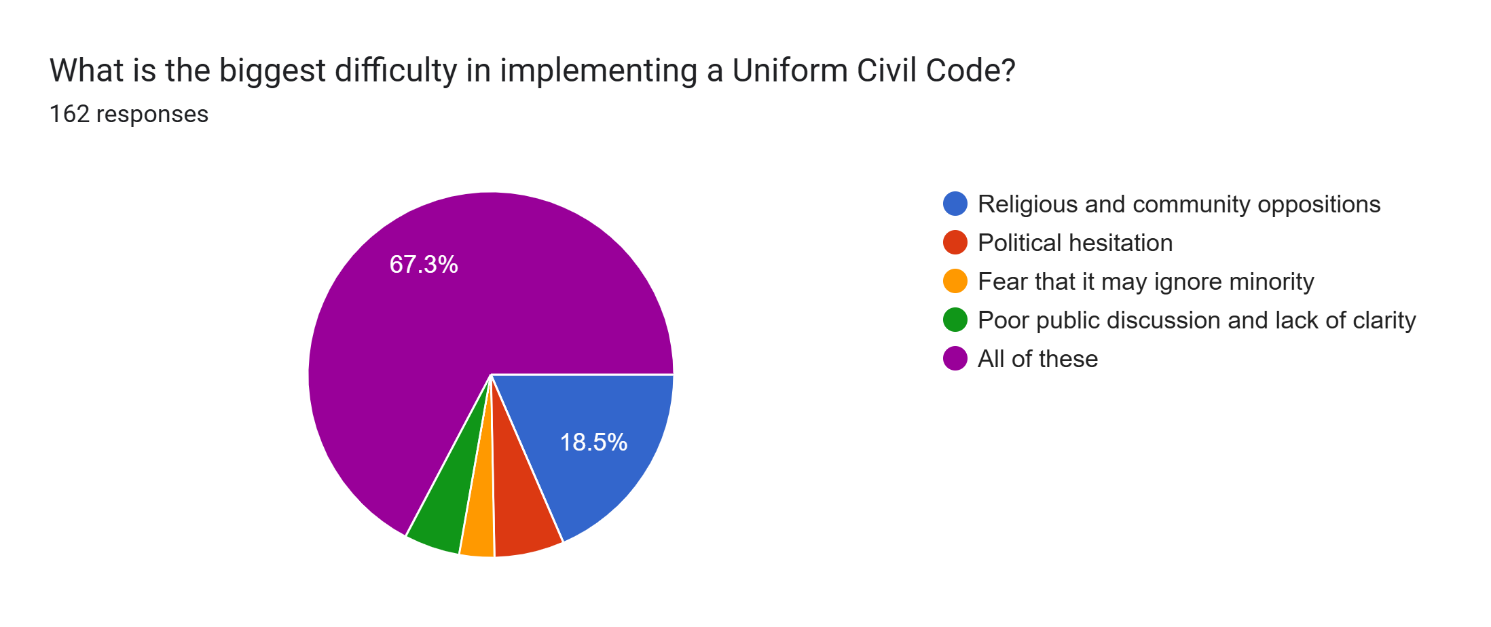
Figure 8: The biggest difficulty in implementing a Uniform Civil Code (162 responses)
Most respondents regard the enactment of a Uniform Civil Code as a multi-faceted problem rather than a matter of a single obstacle. Of the 162 respondents, 67.3 per cent (about 109) chose “All of these”, indicating that religious, political, social and informational barriers are seen as working together. Religious and community opposition drew 18.5 per cent (about 30 respondents) as a single choice. Political hesitation, the fear that a code may ignore minorities, and poor public discussion and lack of clarity each drew roughly 3 to 6 per cent. Because the bundled option was so dominant, the survey cannot show which factor matters most; the results reflect general opinion.
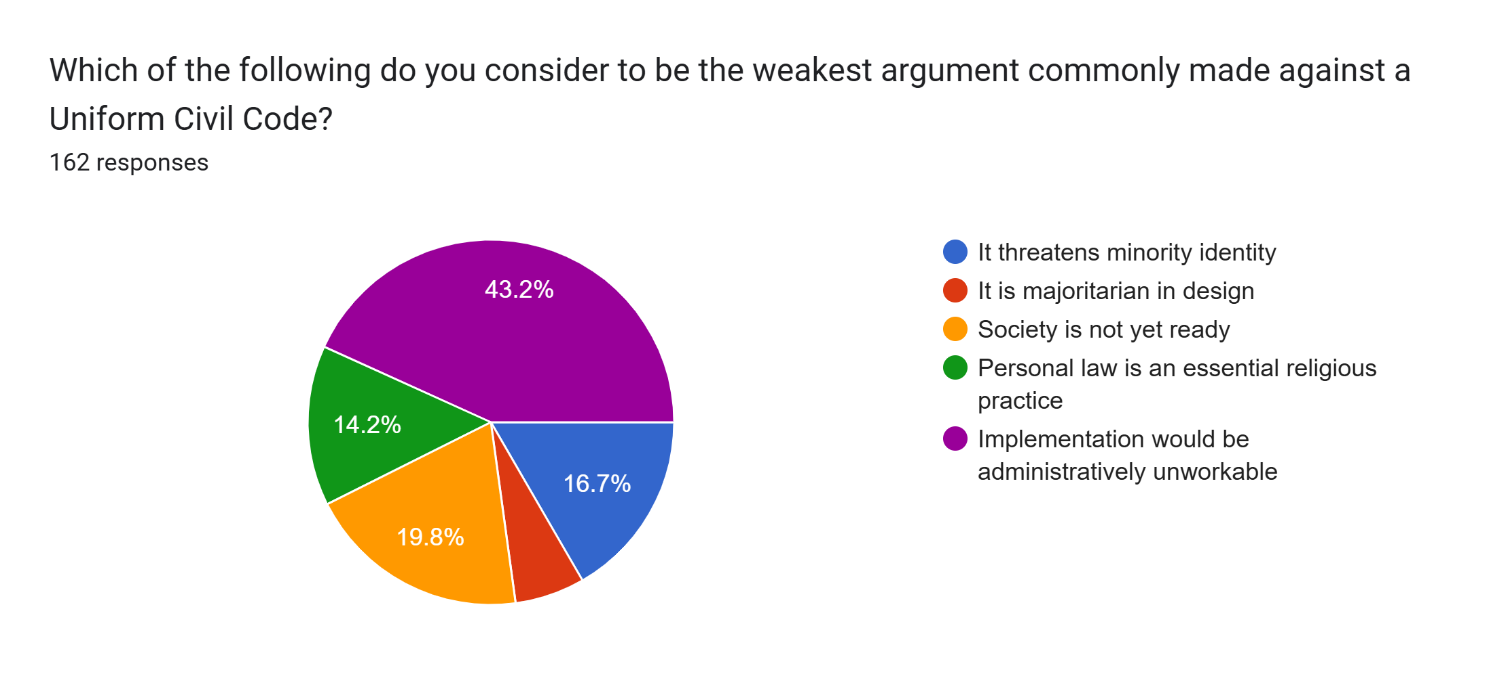
Figure 9: The weakest argument commonly made against a Uniform Civil Code (162 responses)
Respondents were asked which of five arguments commonly made against a Uniform Civil Code they considered the weakest. The largest group, 43.2 per cent, chose “implementation would be administratively unworkable”. A further 19.8 per cent chose “society is not yet ready”, 16.7 per cent “it threatens minority identity” and 14.2 per cent “personal law is an essential religious practice”. The unlabelled red slice, roughly 6 per cent, represents the small number who regard the argument that a UCC is “majoritarian in design” as the weakest. Respondents thus appear to take arguments about fairness and design more seriously than those about logistics or timing. Because the question measures perceived weakness, the results are not a measure of support for a UCC.
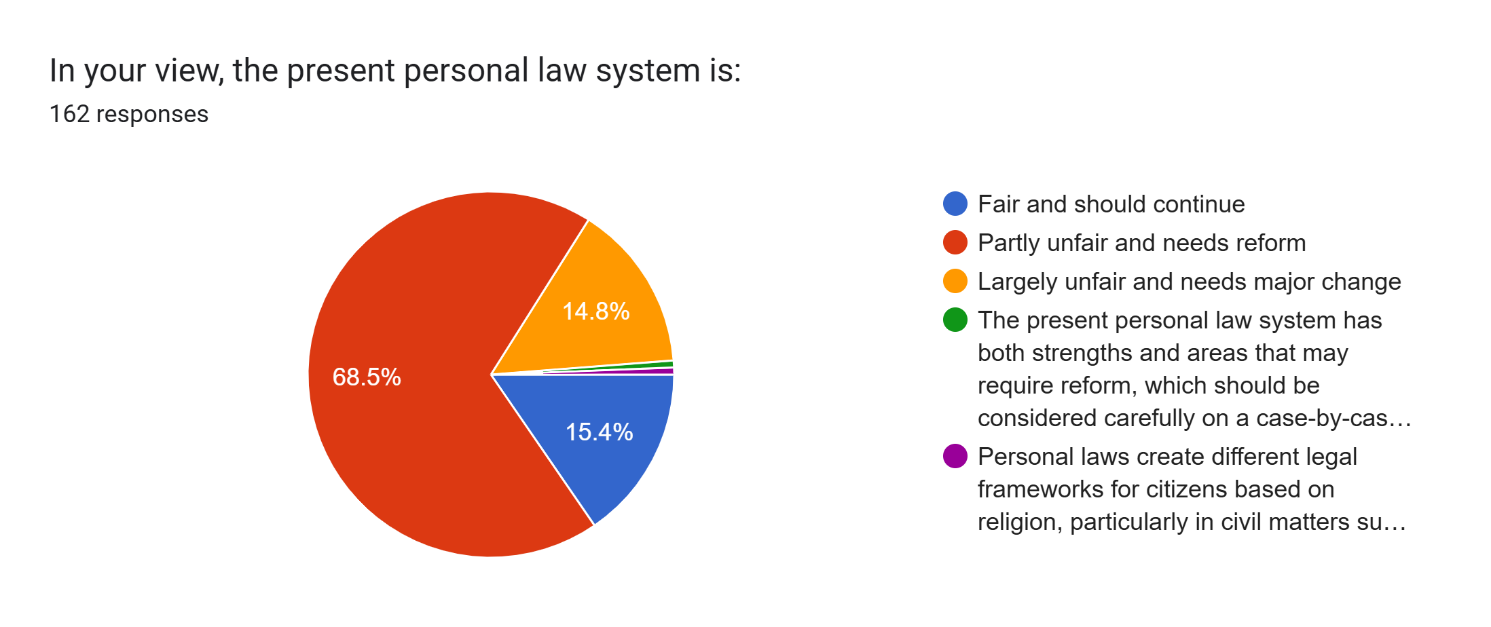
Figure 10: Views on the present personal law system (162 responses)
A clear majority of the 162 respondents (68.5 per cent) consider the present personal law system “partly unfair and needs reform”. A further 14.8 per cent consider it “largely unfair and needs major change”, while 15.4 per cent consider it “fair and should continue”. Combined, about 83 per cent think some change is needed, and only a minority want the status quo to remain. The remainder, about 1 per cent, gave written answers, among them one noting that the system has both strengths and areas that may require reform. Overall, the data indicate a preference for incremental and targeted reform, rather than either leaving personal law untouched or seeking a complete overhaul.
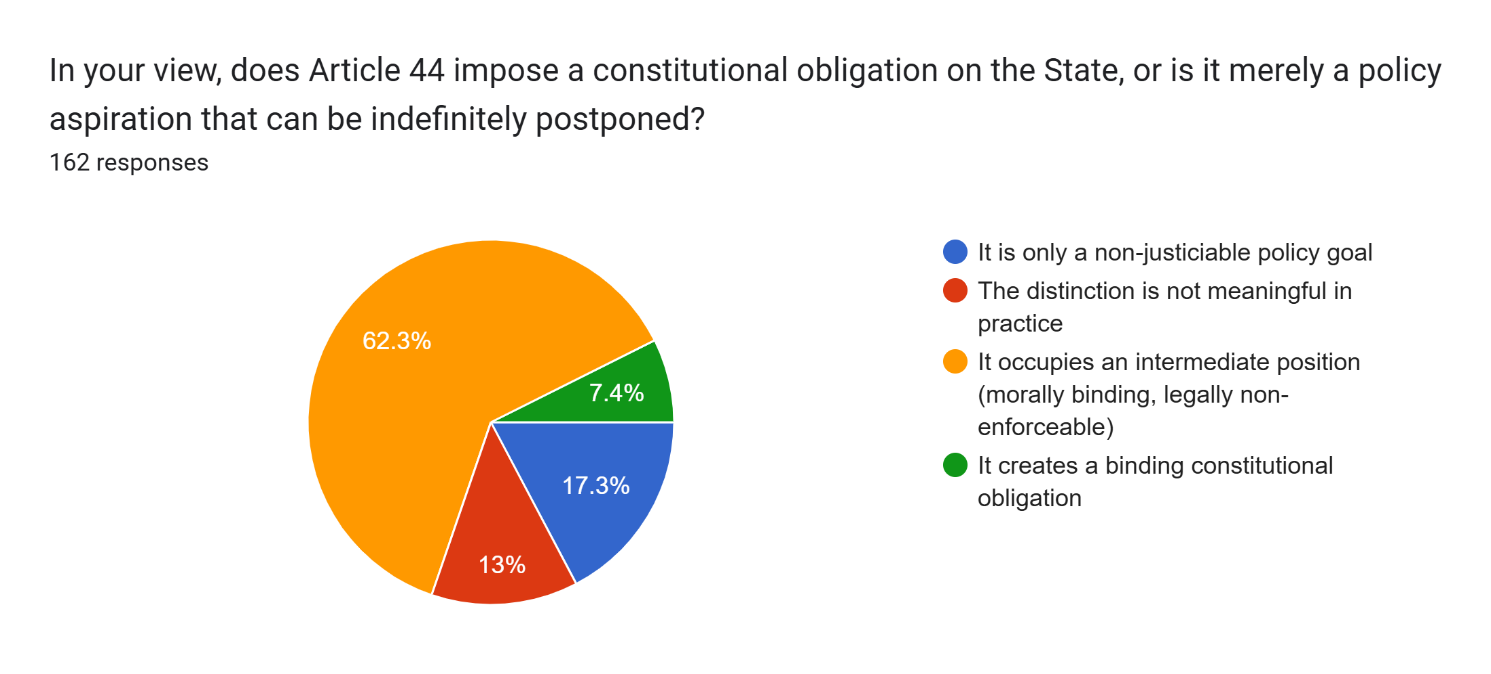
Figure 11: Whether Article 44 imposes a constitutional obligation on the State (162 responses)
Respondents clearly prefer a middle-ground reading of Article 44. About 62.3 per cent see it as occupying an intermediate position, morally binding but not legally enforceable, consistent with the character of the Directive Principles under Article 37. Another 17.3 per cent regard it as only a non-justiciable policy goal, and 13 per cent consider the distinction not meaningful in practice, possibly because of decades of legislative inaction. Despite the judicial observations in Shah Bano and Sarla Mudgal, only 7.4 per cent think it creates a binding constitutional obligation. Overall, about 80 per cent consider that Article 44 cannot be enforced directly; the disagreement concerns how much moral and political weight the Article should carry.
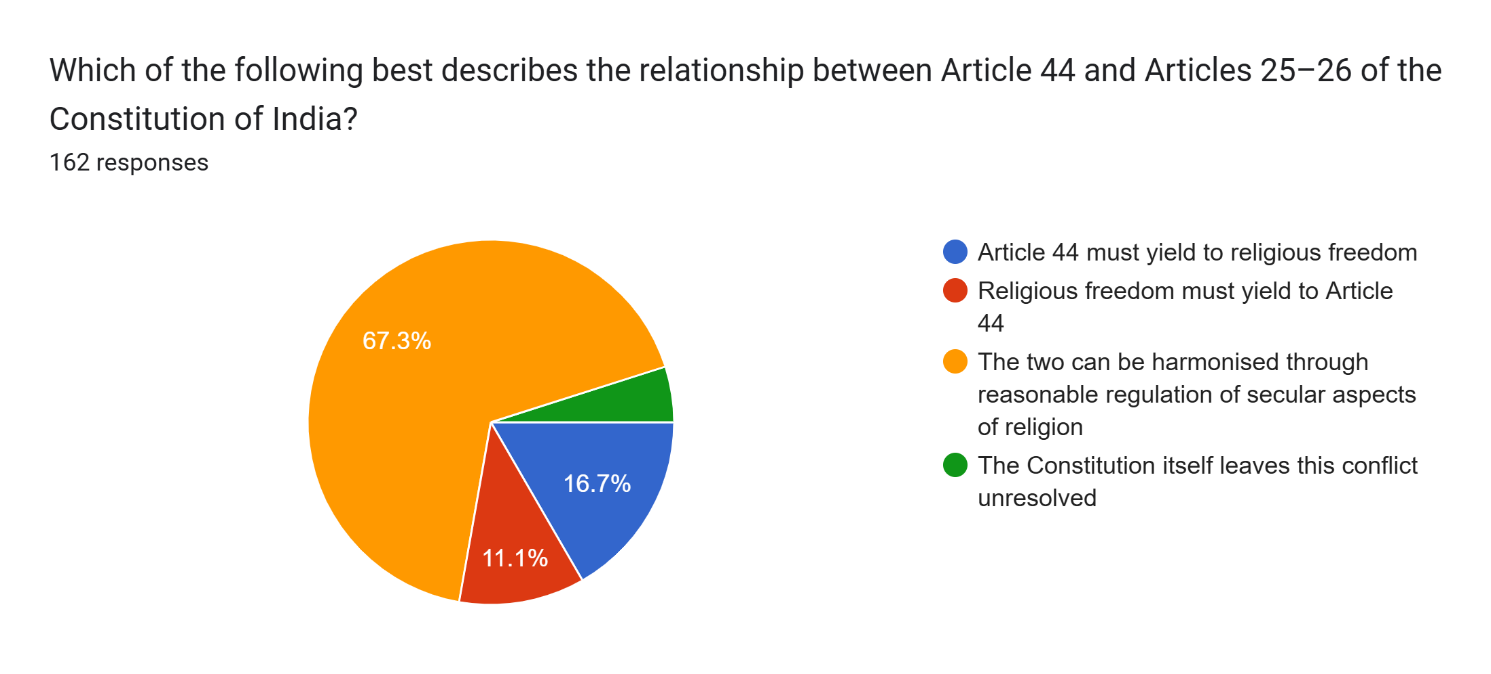
Figure 12: The relationship between Article 44 and Articles 25–26 of the Constitution of India (162 responses)
A clear majority of respondents (67.3 per cent) consider that Article 44 and Articles 25–26 can be harmonised through reasonable regulation of the secular aspects of religion, a view consistent with the judicial reasoning in Shah Bano and Sarla Mudgal. Some 16.7 per cent consider that Article 44 must yield to religious freedom, presumably because Articles 25–26 are justiciable Fundamental Rights whereas Article 44 is a non-justiciable Directive Principle. Another 11.1 per cent consider that religious freedom must yield to Article 44, perhaps because of the importance they attach to gender justice and equality. About 5 per cent consider that the Constitution itself leaves the conflict unresolved. Overall, the data indicate strong support for reconciling competing constitutional values rather than ranking them; a sample of 162 limits generalisation.
In addition to the multiple-choice questions, the survey included three open-ended questions that allowed participants to express their views. These answers were read, coded for recurring themes and counted, and representative answers are reported anonymously. They reveal the reasoning behind the positions recorded above, and are analysed here in relation to the research objectives and the constitutional framework set out in the earlier parts. Like the quantitative results, they show only the views of the people in the sample and are not representative of the national population.
Question 1: Please share your overall opinion on the Uniform Civil Code in one or two sentences.
The UCC is seen as a desirable constitutional objective in terms of equality, gender justice and national integration, but there is a strong view that it must be introduced very gradually, through extensive public consultation and with due regard to India’s religious and cultural diversity. A number of answers are identical or almost identical in wording, which may indicate copying or the use of a template; the authors note this as a limitation on the independence of these responses. A smaller number support the UCC outright (“should be implemented”). Others highlight practical difficulties, problems of enforcement and the concerns of minorities. A significant number are blank or non-answers (“NA”, “no opinion”, “nil”). A few make specific points, for example that Article 44 is a Directive Principle and that Uttarakhand’s code leaves out the Scheduled Tribes and LGBTQ+ relationships.
Question 2: What measures should be taken to sensitise society towards a Uniform Civil Code or the codification of personal laws?
Most of the 162 responses focus on one theme: a gradual process of building awareness. The most common suggestions are public awareness campaigns, legal education in schools and universities, and engagement with religious and community leaders. There is a strong emphasis on promoting gender equality in a culturally sensitive way, and on transparency in publishing draft legislation before it is passed. A number of responses refer to Articles 14, 15, 25 and 44.
Question 3: Do State-level Uniform Civil Codes, such as the one in Uttarakhand, strengthen or weaken the idea of a national Uniform Civil Code under Article 44 of the Constitution of India? Please give reasons for your answer.
Most of the 162 respondents consider that State codes, with Uttarakhand’s as the prime example, reinforce the idea of a national code under Article 44: they provide practical experience, act as a laboratory, and expose problems of implementation before any national roll-out. A significant number add that differences between State codes could themselves threaten uniformity, and that wider consultation and constitutional safeguards would be required. A small number consider that State codes work against a national code by creating conflicting laws. Others answer only “Maybe”, “Not sure” or “Idk”. As with Question 1, much of the wording is near-identical across responses, which the authors record as a limitation on the weight these answers can bear.
Conclusion
This paper explored whether Article 44 can be given operational content through a Uniform Civil Code that promotes gender equality without unduly restricting religious freedom, and whether public awareness, as measured in a purposive survey of 162 respondents, could aid that project. The difficulty is sharpest in maintenance. Articles 14, 15 and 21 of the Constitution call for a uniform and secular standard, yet entitlement has always depended on the personal law of the parties, in conflict with that requirement.
The doctrinal findings indicate that convergence has been driven by the judiciary rather than the legislature. In Shah Bano (1985), the Court treated Section 125 as a secular remedy that does not end with the iddat period, and invoked Article 44. The Muslim Women (Protection of Rights on Divorce) Act, 1986 was then read as restricting the husband’s liability to the iddat period. Danial Latifi (2001) required a reasonable and fair provision extending beyond it, and Mohd. Abdul Samad (2024) confirmed that the 1986 Act does not displace Section 125. Together these decisions have laid a secular foundation beneath each personal law, built up over nearly 40 years through reversal and reinterpretation. Adjudication, not legislation, has harmonised maintenance, leaving the law uncertain.
On the research questions, 70.4 per cent of respondents considered that the existing personal laws create inequality against women to a large extent, and 68.5 per cent considered the present system partly unfair and in need of reform. This is perception evidence; the doctrinal analysis makes the point on its own. On Article 44, 67.3 per cent believe it can be harmonised with Articles 25 and 26 through regulation of the secular aspects of religion. The judiciary is seen as having led the debate: 68.5 per cent thought it had played a very important role. On obstacles, about two-thirds chose “All of these”, so the data do not allow the obstacles to be ranked, although religious and cultural resistance was the largest single choice.
The hypothesis can be tested only in part. The survey did not examine awareness of the Uttarakhand Act or of maintenance law, and the second limb of the hypothesis was not cross-tabulated. The one awareness question, on Article 44, misquoted the Article as administered (Uttarakhand for India); the 88.3 per cent who answered yes therefore cannot be taken as awareness of the Article’s actual wording, still less of the statute. The survey thus neither confirms nor refutes the hypothesis that awareness is low.
The present system offers a remedy but not a cure. Any woman may invoke Section 125, but it is judicial interpretation that brings the personal-law rights into line. Few respondents saw Article 44 as legally enforceable: only 7.4 per cent regarded it as creating a binding obligation, while 62.3 per cent chose “morally binding, legally non-enforceable”. Article 44 cannot compel legislation, but it can legitimately inform it, and inform the reading of Articles 14 and 21.
The strongest counter-argument is that uniformity weakens minority identity, and that Article 44 is non-justiciable while Articles 25 and 26 are enforceable. The concern is real: 24.1 per cent of respondents thought a UCC would infringe freedom of religion, and 82.7 per cent favoured common or similar, but not necessarily identical, grounds for divorce. The study, however, proceeds in a spirit of reconciliation. Maintenance is not a matter of religious doctrine in this sense, and the courts have already treated the secular remedy as consistent with religious freedom. Only 17.9 per cent of respondents preferred wholesale replacement of personal laws, while 74.7 per cent favoured codification, including the 43.8 per cent of all respondents who chose codification in line with fundamental rights. The case is for incremental codification, not uniformity for its own sake.
Several recommendations follow. Any code should spell out its relationship with Section 144 of the Bharatiya Nagarik Suraksha Sanhita, 202331 and the 1986 Act, so that entitlement under them does not depend on the forum chosen. Drafting should be consultative, and drafts should be published. Awareness efforts should focus on statutory content and remedies rather than constitutional abstractions. A representative study of the Uttarakhand Act is needed, since the present sample is purposive and cannot be generalised. Courts should apply the personal-law provisions consistently with Articles 14 and 21, and practitioners should make use of Section 144 (formerly Section 125) as a concurrent remedy.
The impact of the Uttarakhand Act cannot yet be judged, as it is very new, and the survey results apply only to the respondents surveyed. Within these limits, there is some indication that respondents see a UCC as administratively feasible: 43.2 per cent regarded administrative unworkability as the weakest argument against it. Feasibility, however, is not legitimacy. Article 44 will be vindicated not by any code, but by a code that is gender-inclusive in its content, consultative in its making and intelligible to those it governs.
*****
Footnotes
1. Law Commission of India, Consultation Paper on Reform of Family Law (Aug. 31, 2018). Google Scholar ↑
2. The Special Marriage Act, 1954, No. 43, Acts of Parliament, 1954 (India). ↑
3. The Code of Criminal Procedure, 1973, No. 2, Acts of Parliament, 1974, § 125 (India); now The Bharatiya Nagarik Suraksha Sanhita, 2023, No. 46, Acts of Parliament, 2023, § 144 (India). ↑
4. Mohd. Ahmed Khan v. Shah Bano Begum, (1985) 2 SCC 556 (India). ↑
5. The Muslim Women (Protection of Rights on Divorce) Act, 1986, No. 25, Acts of Parliament, 1986 (India). ↑
6. Danial Latifi v. Union of India, (2001) 7 SCC 740 (India). ↑
7. Mohd. Abdul Samad v. State of Telangana, 2024 INSC 506, ¶ 37 (India). ↑
8. The Uniform Civil Code, Uttarakhand, 2024, Uttarakhand Act No. 3 of 2024, §§ 2, 4, 6, 8, 378 (India). ↑
9. India Const. arts. 14, 15, 21, 25, 44. ↑
10. Abdul Samad, supra note 7. ↑
11. India Const. arts. 37, 44. ↑
12. The Muslim Personal Law (Shariat) Application Act, 1937, No. 26, Acts of Parliament, 1937 (India). ↑
13. The Protection of Women from Domestic Violence Act, 2005, No. 43, Acts of Parliament, 2005 (India). ↑
14. The Uniform Civil Code, Uttarakhand, 2024, supra note 8. ↑
15. Jose Paulo Coutinho v. Maria Luiza Valentina Pereira, (2019) 20 SCC 85, ¶ 21 (India). ↑
16. Scroll Staff, Assam Passes Uniform Civil Code Bill, Scroll (May 27, 2026), https://scroll.in/latest/1093157/assam-passes-uniform-civil-code-bill; Open Bureau & Agencies, Assam Clears Uniform Civil Code Bill 2026, Bans Polygamy, Mandates Registration of Marriages, Live-ins, Open (May 27, 2026), https://openthemagazine.com/india/assam-clears-uniform-civil-code-bill-2026-bans-polygamy-mandates-registration-of-marriages-live-ins; Alfreza Ahmed, Uttarakhand, Gujarat, Now Assam: How the 3 States’ UCC Models Compare, from Marriage to Succession, ThePrint (May 29, 2026), https://theprint.in/judiciary/uttarakhand-gujarat-now-assam-how-the-3-states-ucc-models-compare-from-marriage-to-succession/2945153/. ↑
17. Gujarat Uniform Civil Code Bill, 2026, Gujarat Bill No. 17 of 2026, cls. 2, 4, 36(2), 38(1)(e), 384 (as published in Gujarat Government Gazette, Extraordinary No. 17, Mar. 17, 2026) (India); see also LiveLaw News Network, Gujarat Becomes Second State to Pass Law on Uniform Civil Code, LiveLaw (Mar. 25, 2026), https://www.livelaw.in/amp/news-updates/gujarat-becomes-second-state-to-pass-law-on-uniform-civil-code-527740; Outlook News Desk, Gujarat Gets President Murmu’s Nod for UCC Implementation, Becomes Second State After Uttarakhand, Outlook (Oct. 2, 2026), https://www.outlookindia.com/national/gujarat-gets-president-murmus-nod-for-ucc-implementation-becomes-second-state-after-uttarakhand. ↑
18. Shah Bano, supra note 4. ↑
19. Danial Latifi, supra note 6. ↑
20. Sarla Mudgal v. Union of India, (1995) 3 SCC 635 (India). ↑
21. The Indian Penal Code, 1860, No. 45, Acts of Parliament, 1860, § 494 (India); now The Bharatiya Nyaya Sanhita, 2023, No. 45, Acts of Parliament, 2023, § 82 (India). ↑
22. John Vallamattom v. Union of India, (2003) 6 SCC 611 (India). ↑
23. Shah Bano, supra note 4. ↑
24. Sarla Mudgal, supra note 20. ↑
25. John Vallamattom, supra note 22. ↑
26. Danial Latifi, supra note 6. ↑
27. Law Commission of India, supra note 1, ¶ 1.15. ↑
28. The Uniform Civil Code, Uttarakhand, 2024, supra note 8. ↑
29. Gujarat Uniform Civil Code Bill, 2026, supra note 17. ↑
30. See Scroll Staff, supra note 16. ↑
31. The Bharatiya Nagarik Suraksha Sanhita, 2023, supra note 3, § 144. ↑