
Introduction
The advancement in legal education in many countries goes along with the reforms in higher education, social practices and the progression of national legislations. The main objectives of educating law professionals have been growing at an unprecedented pace with the vision to efficient granting of rights to people and attaining manageable skills required in future employment. If we take a look on one of the challenges in the European law education apprehensions are there in learning effective legal communication in which problems are not rare due to different legal cultures. The role of linguistics and translation related to communicative feature of education is important and necessitate analysis and discussion in educational communities. The need to train law professionals and judges in n languages poses the problem of integration language courses into law education.
Conceptual Analysis
The use of language is essential to any legal system and the lawmakers use language to make laws to provide for the authoritative decision of arguments over the effects of that use of language. Philosophy of law can gain from the good philosophical account of the meaning and use of language and from a good philosophical account of the institutionalized resolution of disputes over language. Philosophy of language can gain from studying the stress-testing of language in legal regulation and dispute resolution. And philosophers of language can gain from the reminder that their task is not only to account for what people share in virtue of the mastery of a language; they also need to account for the possibility of disagreements over the meaning and use of language and for the possibility that there might be good reason for resolving those disagreements in one way rather than another.
Over a period of time all the legal systems develop certain linguistic characteristics that differ from those of ordinary language. Lawyers and judges may develop language that is entirely different from ordinary speech. Normally, legal professionals use languages that include substantial amount of technical words and a number of divergent characteristics. As a matter of fact, the speech to a greater extent, the texts produced by such legal systems may be difficult for the lay public to understand. The emphasis will be also on the history of the world's major legal languages, focus on the two most widely dispersed legal traditions around the world: the civil law system that arose in continental Europe and the common law which developed in England. After considering the legacy of Roman law, it discusses the influence of Latin and French on legal language, the jus commune and the survival of indigenous law, codification, legal language around the world and the globalization of legal language.
European Law
The exploration of legal education in the European Union, carried out within the Menu for Justice Project and provided in Legal Education (Piana et al, 2013), outlined the most important aspect of law education as the effective granting of rights to European citizens within legal jurisdictions. Here the problems appear due to different legal traditions and heritage pertinent to the different national systems European citizens come from. The main problems have been found in legal communication, particularly in procedural law, often communicative failures were due to lawyers or other law specialists not quite competent in peculiarities of national laws. Hence one of the most important aspects of the improvement of legal education is related to development of communicative skills. Effective communication requires not only deep knowledge of law and language skills or confidence in languages, but responsiveness that majority of citizens live in different legal cultures. Pedagogical methods to expand skills of legal communication have been demarcated over a period of time including participation in academic discourses, the progression of clinical legal education and institutional exchange programme in institutions, multi-disciplinary approach, the use of e- environment and also the technological advancement in learning approaches. The need to train professionals in our country comprises of having specialization in a particular domain, competence in another jurisdiction and preparation of judges in foreign languages. Another significant aspect of legal education deals with the preface of non-legal and interdisciplinary courses. Taking into consideration, the importance of learning different legal traditions in law education and the fact that learning distant languages has been integrated practically in all law programmes the inquiry of effective use of language courses in developing legal communication skills seem to be appropriate and requires consideration. In There is particular significance of language and legal culture in International and Comparative Law. These programmes connect with research and developments and contemporary practice in international and foreign law and international relations, skills in foreign language are mandatory and the focus is to develop translation skills. With regard to the skills significant to law professionals, it can be perceived that skills in legal communication, legal culture, foreign languages and legal translation are inter related and interdependent. Translation and Comparative law studies show specific type of interrelation, representing uniformly corresponding techniques: translation as a means of learning foreign or international law and comparative law as a translation method, comparing various legislative systems to identify differences or similarities in the word or term meanings.
The Main Characteristics of Legal English Discourse
Legal English is now a global phenomenon and is the major language of international business. It has a significant role because it is used by lawyers and other legal professionals in the course of their work. Legal language contains a number of unusual features which are related to terminology, linguistic structure, linguistic conventions and punctuation.
The development of Legal English is closely connected with the history of Great Britain the legal tradition of which is based on common law. For several centuries following the Norman invasion, English remained the spoken language of the majority of the population, while almost all writing was done in French or Latin. The English-speaking nations (especially the U.S., the UK, Canada, Australia, New Zealand, and South Africa) inherited the system of common law, the main feature of which is that laws are not codified. Among the consequences of such tradition we can name the drafting of many important legal documents with the use of archaic linguistic forms.
During the history Legal English was influenced by Latin and French. Following the Norman invasion of England in 1066, Anglo-Norman French became the official language of England. For a period of nearly 300 years, it was the language of legal proceedings. As a result, many words using in modern legal English are derived from Anglo-Norman, for example: property, estate, chattel, lease, executor, and tenant. Its influence may be illustrated by some of the complex linguistic structures employed in legal writing.
From Norman Conquest of 1066, Latin was the language of formal records and statutes but it was not the language of legal pleading or debate. The Statute of Pleading, which was enacted in French in 1356, stated that all legal proceedings should be in English, but recorded in Latin. However, the use of French in legal pleadings
continued into the seventeenth century in some areas of the law.
The influence of Latin can be seen in a number of words and phrases such as Ad hoc, De facto, Bona fide, Inter alia, and Ultra vires, which still remains in current use. English was adopted for different kinds of legal documents at different times. Wills or testaments began to be written in English in about 1400. Statutes were written in Latin until about 1300, in French until 1485, in English and French for a few years and in English alone from 1489. According to the Proceedings in Courts of Justice Act 1730 Latin was replaced by English. As a result new branches of law such as Commercial law began to develop entirely in English.
During the Medieval period lawyers used a mixture of Latin, French and English. The usage of pairs of words from different languages led to the emergence of mixed language doublets in legal language. Among the examples of mixed language doublets are: "breaking and entering" (English/French), "fit and proper" (English/French), "lands and tenements" (English/French), "will and testament" (English/Latin). Examples of English-only doublets are: "let and hindrance", "have and hold."
For written forms of legal English is used the term legalese which is characterized by verbosity, Latin expressions, nominalizations, embedded clauses, passive verbs and lengthy sentences.
The Main Characteristics of Legal English Are as Follows:
Frequently, Sentences have peculiar structures, for example, the provisions for termination hereinafter appearing or will at the cost of the borrower forthwith comply with the same. The influence of French grammatical structures is a contributory reason for this factor.
• Punctuation is used insufficiently. Particularly in conveyances and deeds we can observe the conspicuous absence of punctuation. Historically, there was an extensive idea among lawyers that the meaning of legal documents was contained only in the words used and their context. In modern legal drafting punctuation is used to clarify their meaning.
Foreign phrases are sometimes used instead of English phrases (e.g. Inter alia instead of among others where both are appropriate).
Older words like hereof, thereof, and whereof (and further derivatives, including -at, -in, -after, -before, -with, -by, -above, -on, -upon) are used in legal English primarily to avoid repeating names or phrases. For example: the parties hereto instead of the parties to this contract.
Use of modifiers such as the same, the said, the aforementioned etc., in legal texts is remarkable, because very frequently they are used as adjectives to determine the noun, but not replace them. For example: the said Vijay Prasad.
Legal English contains some words and titles, such as employer and employee; lessor and lessee, in which the reciprocal and opposite nature of the relationship is indicated by the use of alternative endings: -er, -or, and –ee.
Phrasal verbs are often used in a quasi-technical sense. For example, parties enter into contracts, put down deposits, serve [documents] upon other parties, write off debts, and so on.
Legal language is sometimes difficult to understand, because of the usage of a large number of difficult words and phrases. Legal English employs a great deal of technical terminology which is unfamiliar to the layman (e.g. waiver, restraint of trade, restrictive covenant, promissory estoppel). Much of this vocabulary is derived from French and Latin. These terms of art include ordinary words used with special meanings. For example, the familiar term consideration refers, in legal English, to contracts, and means, an act, forbearance or promise by one party to a contract that constitutes the price for which the promise of the other party is bought (Oxford Dictionary of Law). Other examples are construction, prefer, redemption, furnish, hold, and find. There is a curious historical tendency in legal English to string together two or three words to convey what is usually a single legal concept. Examples of this are null and void, fit and proper, (due) care and attention, perform and discharge, terms and conditions, dispute, controversy or claim, and promise, agree and covenant. This was originally done for the sake of completeness.
Nowadays the linguistic theories which investigate legal English are forensic linguistics and legal discourse. Forensic linguistics is a field of applied linguistics involving the relationship between language, the law, and crime. Its purpose is the application of linguistic knowledge, methods and insights to the forensic context of law, language, crime investigation, trial, and judicial procedure. Discourse is the term that describes written and spoken communications. Legal Discourse analysis focuses on the investigation of legal texts: written codes and the textual records of the judicial proceedings. Legal documents (contracts, licences, etc); court pleadings (summonses, briefs, judgments, etc.); laws ( Acts Of Parliament and subordinate legislation, case reports) and legal correspondence constitute the sources of linguistic researches.
Comparative Analysis
Language and Translation perspectives in Law Education
Learning languages for specific purposes (LSP) is an approach to language learning in different professional environments, which first presumes studying terminologies and special discourse genres. LSP in law education focuses on communication in legal sphere and various types of translation. The role of legal translation in the domain of law has gained importance and established as a profession. Legal Language educators often give emphasis to verbal communication, language, terminology and basics of translation meaning thereby they teach how to stay connected to your cultures. Lawyers need knowledge of foreign language to communicate in legal environment beyond national legislation or to use other country’s legislation in their work; they have to explain or to communicate the subtleness of foreign law. Language in Law is a profession of words. It is a well- known fact that translation has been one of effective methods of learning and teaching foreign languages for centuries and now the interest in this method has been revived. Legal translation is not only a translation between languages but also a translation of various legislations differing in social and cultural aspects.
A legal concept or notion or idea which serves as a category of legal thought or classification, the title given to a set of facts and circumstances which satisfies certain legal requirements and has certain legal consequences.
Research Landscape in Legal Discourse Studies
Over the past quarter of a century, research work on legal language and communication has progressed speedily drawing awareness amongst scholars, philosophers, linguists and other academicians from diverse research backgrounds. For linguists, especially, there is a distress about the usage of language in the law, its demonstration of social action, social performers and social practices have presented systematic insights into the meaning and functions of text, discourse or talk realized in academic, professional and institutional sites of communication and generated different data for analysis, method and theory. Additionally, legal language focuses on different features of texts and the structural and lexico-grammatical features represented in specific written genres of legal discourse. Recent studies of courtroom interaction indicated how the analysis of a particular genre of spoken discourse discloses the distribution of power between the lay and expert participants in the legal process or reveals the centrality of narrative as a discourse activity in trial contexts. In spite of the fact that other significant research on written legal genres has pointed out that legal language is intrinsically indistinct and undefined and that legal meaning is a sum of the parallel formulations existing in different language versions analyzing language for its social relevance to the law has also recently provided timely new insights on the practices and attendant discourses of 'legal communities' alongside their elaboration of identities, roles and cultures. Fundamentally, to these motivating works has been the expression of a set of concerns which reinforce major alternate disputes resolutions processes at workplaces, where immigration of adjudication discourse and practices by litigation has substantial significance in the area of today's international, inter-linguistic and inter-cultural social actions motivated by gradually more globalized economies. Basically, analyzed as an action brought in court to enforce a particular right, litigation has thus provided the important locus for interdiscursivity and unbalanced power relations in the professional practice of law and accompanying systems, processes and procedures and the variety of textual, discourse and ethnographic analytical data have pointed out how the discursive genre of multilingual arbitration awards "is not immune from litigation contagion" or expanded on the 'integrity' of arbitration principles" adopted in international commercial arbitration practice. In addition to describing how the law itself and the actors within the legal system envisage of relations between discourse, power and ideology, the approach language is used by the law professionals for the negotiation of justice and to the diverse and complex features of legal discourse production where socially informed aspects of language use are inherently negotiated by professional practices. Moreover, surrounded by the culturally and jurisdictionally diverse world, the increased internationalization of law, the problem of translation have also been expansively addressed in theory and practice where the authoritarian system of legal language characterizes a wide array of legal texts including legislation, regulations and agreements in national and international jurisdictions and initiating from the most influential legal families account for specific syntactic, semantic and pragmatic rules behind the process of linguistic and cultural (un) translatability of legal texts. Undoubtedly, the interrelatedness of legal language and culture and its implications for translation still forms part of the cultural identities that are negotiated in the translatability process. On the other hand, it also poses a sequence of challenges to legal discourse which mirrors the organization of society and its institutions and the roles and power structures inherent consequently brings up new forms of 'reconstruction' of disciplinary discourse in legal translation processes and practices. It, therefore, becomes apparent that the official list of legal language and discourse-based study in the evaluation above, although is comprehensive but appropriate to highlight how the disciplines of applied linguistics and law can work jointly to acknowledge interdisciplinary research areas in terms of knowledge traversing methodological boundaries of language and law. Most prominently, the list of studies is important to explain for the complexity of legal discourse (both written and verbal) in a variety of socio-cultural and socio-interactional perspectives, where linguistic constructs are strongly rooted in the production of reality and its representations. The legal discourse is enclosed and based on the social constructionist theories considering at societal life as socially constructed effect of discourses, however, shape the values, discursive resources and structures of social practices themselves through a range of situated discursive practices. In creating this case a digressive, social practice of the law relevant to “the defining work of a specific community” a (genre-based) legislative discourse compare to a legal discourse that is fake with its confrontational social and institutional/professional practices (people represent to themselves and each other what they do in terms of activities enacted in the particular discourse) and is unified and distinguished by its own background of legal culture. Culture, largely viewed as a set of customs and homogeneous social practice in the existing discourse, is not exempt from the reproduction of this community's ideology and power in socially appropriate customs, morals/ethics, goals and principles that define the everyday activities of the professional community itself. By the same token, the use of this type of discourse is contingent upon the role assigned to the law in society where it is generated by moral, political and economic arguments and therefore filtered through the peculiarity of legal language use in this form of communicative practice. Under these conditions for uptake of research paradigms, however, it is undeniable that analytical confines as well as procedures for a useful investigation of legal discourse remain wide open from the increasingly compound and dynamic places of legal profession and institutional communication and may provide further opportunities for interpreting and explaining the ways in which legal discourse as the product of institutional introduction structure within a social context and practice through the agency of language.
The Purpose of Law
Law is defined as ‘a body of rules of action or conduct prescribed by a controlling authority, having binding legal force.’ It must be obeyed and followed by citizens subject to sanctions or legal consequence. Further, Law as per its principle is a system of social convention defined by legislation that controls the orderly living together of people within their culture. It has been created and developed in history. All aspects of life – in dealing with offence and crime, in trade, in family affairs, in administration, in education, etc. – are governed by law and legislation. The fields where such rules apply are both national and international. And today, there is even global interaction in economy and in the upcoming of hybrid societies, and various concepts of law confront each other. We cannot translate “law” as such. What we can do at first is to compare legal systems. Comparative law is an important field of research today and it concentrates on the differences in the legal concepts. At first sight, the human values seem to be the same for all peoples in the world: internal peace, justice, equality of persons, public order, freedom of speech and of religion, recognized education, punishment of crimes, etc. But the respective ideas are not identical everywhere and their legal treatment is different, according to the cultural background. The difference between existing legal systems is mainly visible in the central concepts regarding those values. The link between both areas of research – Comparative Law and Translation Studies – is the fact that law is deposited, handed down and interpreted within texts, by language. “The law is alive in language” and this is the link to other questions regarding translation. There are texts in various fields of law such as civil, penal, trade, administrative, family, international, European law, etc. We find legal language in all the areas and the translator will approach texts with a double perspective: regarding law and regarding linguistic features. The legal backgrounds in different cultures are decisive.
Functions of Law
As per the Constitution of India, the law serves many purposes and functions in society. The most important four principal purposes and functions are establishing standards, maintaining order, resolving disputes and protecting liberties and rights.
Establishing Standards
Law is an emblem for minimally acceptable behaviors’ in the society. For instance, some actions are considered
illegitimate or crimes because society (through a legislative body) has indomitably confirmed that it will not tolerate certain behaviors that injure or damage persons or their property. Under a typical state law, it is a crime to cause physical injury to another person without justification—doing so generally constitutes the crime of assault.
Maintaining Order
This is an offshoot of establishing standards. Some semblance of order is necessary in a civil society and is therefore reflected in the law. The law—when enforced—provides order consistent with society’s guidelines.
Resolving Disputes
We can always avoid disputes in the society comprising of persons with different desires, requirements, principles and vision. The law presents a formal means for resolving disputes —the court system. There is a federal court system and each state has its own separate court system. There are also various less formal means for resolving disputes—collectively called Alternative Dispute Resolution (ADR).
Protecting Liberties and Rights
The Constitutions of India and its constituent states provide for various liberties and rights of the citizens. A function and purpose of the law is to defend, protect these various liberties and rights of the citizens from breaches or perverse intrusions by persons, organizations or government.
Fundamental Rights (Articles 14-18, 19-22, 23-24, 25-28, 29-30, 32)
Fundamental Rights are individual rights such as equality before law, freedom of speech and expression, and peaceful assembly, freedom to practice religion and the right to constitutional remedies for the protection of civil rights by means of writs such as habeas corpus.
Classification of Fundamental rights
Originally Constitution provided for seven Fundamental Rights viz.
1. Right to equality (Article 14-18)
2. Right to freedom (Article 19-22)
3. Right against exploitation (Article 23-24)
4. Right to freedom of religion (Articles 25-28)
5. Cultural & educational rights (Articles 29-30)
6. Right to Property (Article 31)
7. Right to constitutional remedies (Article 32).
8. Right to Privacy
i. Right to Equality (Articles 14-18):
Article 14 (Equality before law):
Article 14 says that state shall not deny to any person equality before the law or the equal protection of the laws within the territory of India.
Art. 14 is available to any person including legal person’s viz. statutory corporation, companies, etc.
Art. 14 is taken from the concept of equal protection of laws has been taken from the Constitution of USA.
Right to Freedom (Articles 19-22):
Article 19 (Protection of certain rights regarding freedom of speech, etc.): Article 19 says that all citizens shall have the right
to freedom of speech and expression.
To assemble peacefully and without arms.
To form associations or unions.
To move freely throughout the territory of India.
To practice any profession or to carry on any occupation, trade or business.
Article 20 (Protection in respect of conviction for offenses):
Article 21 deals with Protection of life and personal liberty. Article 21A states that that state shall provide free and compulsory education to all children of the age of 6-14 years. Article 22 deals with protection against arrest and detention in certain cases.
The Three Descriptive Lenses - Knowledge Communication Perspective
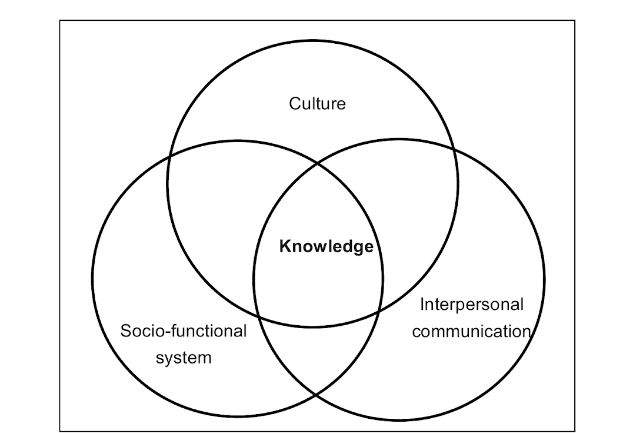
The three lenses that include culture, socio-functional system and interpersonal communication represent three different sets of factors influencing the emergence of differences and the endangering of development in legal concepts. These legal linguistics lenses study legal concepts as specialized knowledge but from different vintage points and provide the adequate description of these concepts, their similarities and the differences.
The Cultural Lens
The lens of cultural focuses upon the influence from stable elements of national culture outside the realms of
the groups of legal experts. An important factor influencing the national versions of a legal concept. Apart from constituting together a methodological approach inside the disciplines of legal Linguistics, the three disciplines may be subsumed under the general heading of studies of Knowledge Communication. The Knowledge is thus conceptualized and the approach is to study it from the fact that knowledge as shared knowledge emerges from communicative interaction.
The Socio-Functional Lens
The lens of socio-functional system focuses upon system factors inside the group of legal experts as a closed system. An important factor influencing the national versions of a legal concept is the socio-cultural context. The important factor influencing the culture is by observing legal concepts and their development through the lens of comparative law, with an emphasis on the socio-cultural specifications. The most scaffolding and delimiting function stems from the assumption that the way an individual understands a legal concept is in important ways inherited. Culture is carried mainly by language due to the characteristics of language to deliver the shared basis for communication and understanding within a society.
Source: Girolamo Tessuto, Legal Discourse and Social Practices, 2016
Interpersonal Communication
One of the supplementary values from uniting the lenses is that the lens of interpersonal communication is engrossed in the dynamic procedures at the level of individual performers leading to steadiness and modification in meaning and knowledge. The term discourse might refer to the ways in which people engage each other in communication at the face-to –face level or it might refer to the much broader set of concerns involving social interaction or a much broader socio-political –cultural analysis of the relationships with the society. Therefore, discourse is a powerful tool for the understanding interpersonal communication at the organizational and institutional level.
The Socio-Functional Systems Lens
For approach for studying the sociology of self-referential socio-functional groups is to study the theoretical approach in comparative law (Lehmann, 1997). The fundamental idea is that social groups are autonomous symbolic organizations that comprise a precise part of the public, specified by the societal functions they perform. This process is called autopoiesis meaning the community members create their own realities among the members reacting with the outside environment that differentiates it from surrounding surroundings.
Legal Discourse in Internet Enabled Communication
The progression of the Internet confronts traditional commencement of information rights including freedom of speech, copyright, universal access, cultural, lingual and minority diversity, and privacy. The communication surrounding these rights typically deals with each right in isolation. As well, these discussions strive to adapt long established understandings of each right to the new technological environment. It is our contention there is a need to address information freedoms within a comprehensive human rights framework that has evolved along with the universalization of electronic communication, specifically, a right to communicate.
Communication, human rights, and communication technologies are inextricably linked. Communication is a fundamental social process necessary for individual expression and for all social organization. The ability to communicate is the essence of being human. Human rights are inalienable rights one has by the very nature of being human. Communication, then, is a basic human right.
Throughout history, humans have used ever more sophisticated technology to expand their ability to communicate. Therefore, technology joins with communication in a complex inter-relationship with human beings. As communication technologies evolve into increasingly sophisticated global networks, communication rights are evolving from specific rights expressed as negative freedoms to a comprehensive and positive right to communicate.
To assure that Internet is a communication space accessible not only as an economic market but to gather the full range of socio-cultural and political necessities of individuals and groups, Internet public policy must be formulated within a right to communicate framework. However, since it was first enunciated in 1969, the implementation into policy of a right to communicate has been hampered by the lack of an agreed upon definition of such a right. This lack of a definition undermines efforts to generate the political support required for a right to communicate movement. And without grassroots political support there is little possibility of translating a right to communicate into public policy.
New Media Technology and Social Change
The communication technologies bring significant information and facilitate interpersonal communication between people who are involved with wired community, their function as the primary information source for society remains crucial in keeping these communities engaged in civic discourse but the materialization of new media is considered as a valuable asset to a democratic society. The electronic news media have become the prime source for people to learn about existing actions and to examine their surroundings. Internet medium knows no boundaries of time, distance and location in its operational domain as it is a 24/7 medium founded on the notion/conception that as the world turns, but it never falls asleep. As media-savvy audiences take their cues from the messages produced by the large media conglomerates, the younger generations – including generation X, Generation Y also seek out interactive infotainment from a wide range of online sources that are dominated by the same group. For instance, one may access entertainment oriented news and informative sites, download music, videos or films from any corner, watch sports or live telecast of matches, live performances and get engage in any interactive activities, live chat shows and so on. On the contrary, although online media offers us so much in terms of creative and constructive ways, be it commercial and non commercial but also pose public health threats stemming from internet use addiction, pornography etc. At the worst, as research indicates younger segments of our society who are the heaviest internet users are the most exposed groups in terms of addiction and health hazards. Hence, we are risking the danger of “amusing our self to death” through peer cultures formed around certain patterns.
Conclusion
This paper presented an attempt to construct the legal discourse that connects the socio-cultural aspects of learning with modern forms of pedagogy, helping shape our social and cultural imagination.
The above discussion covers almost all the diverse and complex range of areas for linguistic investigations. It is evident that language is a tool for social action in establishing social identities, social relations, shared values and ideologies, influences and maintains social processes and structures through specific disciplinary communities. Language should be focused and taught on the multidimensional and multiperspectival platform so that it takes its readers a step further in making them aware of the most recent advancement in language discourse and communication in the field of law. Although we always appreciate more research and pedagogical tools to be more user friendly so that we can make the teaching –learning process more simple and comprehensible. The association between language and culture is an intricate one and it is always relatively challenging to fully comprehend people’s cognitive processes when they communicate. Language proficiency does not only include the knowledge of grammatical ethics and sentence formation, but also the understanding of the norms that connect language to social and cognitive context. Many scholars seem to misplace view of the fact that understanding of grammatical systems has to be accompaniment with culture-specific meanings. It is therefore, necessary for language educators to approach language learning keeping in mind the understanding of this association that is central to the acquisition of linguistic and cultural competency.
*****