
Introduction
While interpreting the Fundamental Rights for the Indian Constitution which originated through the International human Rights.2The supreme court for example has made copious references to the Universal Declaration of Human Rights, 1948 and observed:
“The applicability of Universal Declaration of Human Rights and principles therefore many have to read, if need to be, into the domestic jurisprudence.”3. Coming to India, the main party congress had been wanting and demanding their rights from the British rule. During the British Rule in India, human rights violation was practiced on a very wide scale. Therefore, the farmers of the constitution, many of whom had suffered long incarnation during the British rule, had a very positive attitude towards these rights. There are many reasons in the conceptualization of fundamental rights. Mainly due to the diverse culture of India. India is fragmented into different types of religions, cultural and linguistic groups. Due to this long-standing diversity, a sense of security and confidence was necessary to be invested in the citizen of India for which fundamental rights were proposed. Secondly it was necessary for the citizens of India to have a right that can be enforced against the government.
Part III of the Constitution consists of Fundamental Rights, these fundamental rights protect substantive as well as procedural rights.4 Article 12 to 35 of the constitution pertain to Fundamental Rights of the people, apart from guaranteeing certain basic civil rights and freedom to all it also protects minorities against any kind of discrimination, it protects and safeguards the minorities, religious freedoms and cultural rights. The Fundamental rights are a basic structure of the constitution.5 The Fundamental Rights are divided into 7 Heads as follows:
I. Right to equality comprising of Articles 14-18.
II. Right to Freedom comprising of Articles 18-22
III. Right against exploitation comprising of Articles 23 and 24.
IV. Right to freedom of religion comprising of Articles 25 to 28.
V. Right to property is now very much diluted and is secured to some extent in 30A, 31(A-C).
VI. Right to constitutional remedies is secured in Articles 32 to 35.
This research paper will focus on the Right to Freedom which is defined in Article 19, from which the most important one being Right to Freedom of Speech and Expression. The word “freedom” in Article 196 of the constitution means absence of control by the state. In all matters specified in Article 19(1), the citizen has the liberty to choose, subject only to restrictions in Article 19(2) to (6). Whereas, clauses (a) to (g) guarantee to the citizens of India six kind of Freedom. 19(1)(a)7 defines freedom of speech and expression. Freedom of speech and expression in a democratic country is very important for transparent discussion if issues. Though freedom of speech and expression is not absolute it is governed or restricted by reasonable restrictions, which is important to safeguards a group or individual’s privacy from fake or defaming news.
What Is Freedom in Law?
Freedom is the state of being liberated or free. It can also be a political right. The term freedom in a broader sense includes:
• the condition of being free of restraints, liberty of a person from slavery, detention, or oppression;
• political independence and exemption from the arbitrary exercise of authority in the performance of a specific action;
• a civil liberty, that is a guaranteed protection against interference with the interests and rights held dear and important by large classes of civilized men, or by all the members of a state. Such liberty is coupled with an effectual share in the making and administration of the laws;
• exemption from an onerous and unpleasant condition;
• the ability or capacity to exercise choice or free will, ease or facility of movement;
• right of enjoying all of the privileges of membership or citizenship;
• and; a right or the power to engage in certain actions without control or interference.8
Freedom is the power or right to act, speak, or think as one wants without hindrance or restraint, and the absence of a despotic government. The philosophical concept of freedom is person's potential ability to freely choose an alternative, as an opportunity to think and act following ideas and desires, and not because of internal or external coercion, gives the person the opportunity to acquire spiritual freedom, the acquiring of a person by himself. Freedom is the possibility of choosing the option of unfreedom.
In India, The preservation of the democratic life is essential for the people to express their feelings for making their views to celebrate the freedom. The press, a powerful medium of mass communication, should be free to play its role in building a strong viable society. “Denial of freedom of the press to citizens would necessarily undermine the power to influence public opinion and be counter to democracy.”
Article 19 (1) (a)
Article 19(1)(a) of the constitution deal with such one right to freedom which is extremely important and is repeatedly been spoken about in this research paper. This right is called as “RIGHT TO FREEDOM OF SPEECH AND EXPRESSION”9, the word freedom in this is what makes it powerful and wider for interpretation. Freedom of speech and expression includes the right to express one’s views and opinions at any issue through any type of medium for example by words spoken by mouth, writing, printing, picturing, filming etc. It has a wide scope. It thus includes freedom of communication and the right to propagate or publish opinion to the general and public at large. Free right to expression cannot be confused with or equated with the free license to make unfounded allegation against the judiciary. 10
As mentioned before, The section of Fundamental rights have been inspired by the US Constitution, the Article 19(1)(a) corresponds to the first Amendment of the US constitution which included freedom of press in the right of freedom of speech and expression11, which was then taken into consideration by Indian Courts. Though everyone should have the right to freedom of speech and expression, it does have a few reasonable restrictions.12
In a leading case a bifurcation was made to the freedom of speech and expression of a citizen and a member of a legislative body. The case named Alagaapuram R. Mohanraj v. Tamil Nadu Legislative Assembly13, two very important question were laid down, which are as follows:
I. When a member of a legislative body participated in the proceedings of the house does is come under the umbrella of 19(1)(a)?
II. Whether restricting someone from taking part in the parliamentary proceeding whether permanently or temporarily is a violation of 19(1)(a)?
The Supreme Court held that the scope and amplitude of the freedom of speech and expression inhering in a citizen and available to a member of the legislative body are totally different. No citizen has the right to enter the legislative body and exercise its freedom of speech unless he first gets elected as a member of the same in accordance with law. The phrase freedom of speech and expression used in 19(1)(a) has a broad connotation. The right to paint, sing or dance also comes under this right.14 Not only this but also the usage of National Anthem, National Flag and National Song are secular symbols of Nationhood which showcases expression of commitment and loyalty to the nation as well as patriotism for the country. 15
Freedom of speech and expression also includes Right to receive information and disseminate the same. It includes right to communicate the information through any available media whether print or electronic or audio visual. This freedom includes the freedom to communicate or circulate one’s opinion without interference to as large a population in the country, as well as abroad as is possible to reach. The court also expressed that expression can be done also without words and would still amount to expression. Communication of emotion and display of talent is also sort of expression. The court expressed that the ballot is the instrument by which the voters express their choices between candidates.16
Limitations upon the Above Freedom
While it is necessary to maintain and preserve this fundamental right it is also very necessary to control it in the right manner, to maintain social and public order. No freedom can be absolute or completely unrestricted.17, therefore to support the fundamental right and to place some curbs the state made Article 19(2) which imposes reasonable restrictions on the exercise of right to freedom of speech and expression. The text of the constitution provides eights types of restriction i.e “the sovereignty and integrity of India,] the security of the State, friendly relations with foreign States, public order, decency or morality, or in relation to contempt of court, defamation or incitement to an offence”18. These restrictions are supposed to be reasonable in nature and should restrict only what is necessary. In a broad perspective all the restriction come under the umbrella of national security, being the utmost priority. None of the rights are completely absolute or unlimited. Restriction can only take place with the help of a law made in place.The Supreme Court in Papnasam Labour Union v. Madura coats Ltd19has laid down the reasonability of the restrictions under Articles 19(2) to 19(6).
1. The restriction in order to be reasonable must not be excessive that is, it should not go beyond the need to avoid the mischief or injustice. It should not be arbitrary.
2. The restriction should have a direct or proximate or reasonable connection or link between itself and the object sought to be achieved.
3. While interpreting the term reasonable, the court should keep in mind the complex issues of the society and the intention of the legislature of the statute in question.
4. The term reasonable is of dynamic nature and hence the judiciary should keep an elastic and practical approach while interpreting the term.
7. For the interpretation of term reasonable, it is necessary for the court to examine the social welfare and the need of prevailing social norms and values.
8. The word reasonable has to satisfy the test of procedural reasonability as well as substantive reasonability.
9. For a restriction to be reasonable must be in conformity with the test of Article 14 of the Constitution. It means the restrictions should not be excessive or discriminatory.
The main ones are discussed below:
1. Security of state and public order: Article 19(2) uses two types of restrictions, which appears to be similar in nature but are different, “Public order” and “Security of State”. The concept of the concept of “public order” is wider than of the later. 20 Public order is virtually synonymous with public peace, safety and tranquillity. The term public order covers small riots, breaches of peace etc.Whereas security of state means the security of the whole country and an example of such restriction can be Terrorism. The aggravated form of disturbance of peace will come under the purview of “security of state”. While considering the laws with the problem of public order the Supreme Court adopted a broader view in earlier cases. In Ramji Lai Modi case, the Supreme Court interpreted the words 'in the interest of public order' as wider than 'for the maintenance of public order' and, therefore, a law providing for curbing the activities which have a tendency to cause public disorder, is valid.21
2. Incitement to an offence: Incitement and abetment of any crime is punishable. Encouraging serious and heinous crimes and cause a lot of disturbance and fear. The term offence has not been specifically described in the text of the constitution but in general clauses it means any act or omission made punishable by law.
3. Contempt of court: In a democratic society, freedom of speech and expression is of utmost importance. But at the same time, it is important to maintain the integrity of the judiciary and public confidence in the administration of justice. Therefore, it is necessary to draw a line between the balance of two values. The Supreme court and High court have been given the power under Article 129 and Article 215 of the constitution respectively to punish in if not followed court mannerism.
4. Decency and Morality: This is a very wide restriction. It does not have any fixed meaning towards it. Every person has a different mindset about decency and morality. It varies from society to society. IPC lays down some sections namely 292 and 294 of selling obscene material. This is a valid as it promotes decency and morality according to a reasonable person i.e as per contemporary community standards.22 A case named Ramesh Yeshwant Prabhoo v Ptabhakar Kashinath Kunte23, has somewhat given a wider meaning to “decency and morality”, it laid down that it is not confined to sexual morality alone. The ordinary meaning is actions must be in conformity with the current standards of behaviour or proprietary.
5. Defamation: Defamation is both a tort and a crime. According to Winfield defamation means “Defamation is the publication of a person which reflects on a person’s reputation and tends to lower him in the estimation of right thinking members of society generally or tends to make hem shun or avoid him”24
Scope of Freedom of Press under Article 19 (1)(A)& Landmark Judgements
Freedom of speech and expression has a very wide area of interpretation. This article has been made broader due to many important case laws. Freedom of Speech and expression Includes the right to fly national flag and sing national anthem25, Right to silence26, Right to receive information27 and other aspects of freedom of speech and expression. Just like the above another very important domain under freedom of speech and expression is “FREEDOM OF PRESS”.
In USA, the first amendment specifically protected freedom of press. The view of US supreme court laid down that freedom of press includes more than merely serving as a ‘neutral conduit of information between the people and their elected leaders or as a neutral form of debate’, the prime purpose of press it to monitor and keep a check on the three official branches – executive, legislative and judiciary.28The American Press Commissionhas said, “Freedom of press is essential to political liberty. When man cannot freely convey their thoughts to one other, no freedom is secured, where freedom of expression exist the beginning of free society and means for every retention of liberty are already present. Free expression is therefore unique among all liberties”.
In India freedom of press is an implied right that has come from freedom of speech and expression. The freedom of press is nowhere mentioned in the text of the constitution. There is no provision as such in the text of the constitution which ensures the freedom of press. Supreme court in many cases have laid down the importance of freedom of press in a democratic society. The Judicial decisions, however, have made it amply clear that it is guaranteed under Article 19(1)(a) of the Constitution. The ambit of the freedom of press largely depends upon the judicial approach. The press seeks to inculcate the public by providing them with facts an opinions. Press is one of the biggest critics. It published news and articles and reveal weaknesses of the government, this then leads to suppression of freedom of press by the government which needs to be safeguarded. Denial of freedom of the press to citizens would necessarily undermine the power to influence public opinion and be counter to democracy. Freedom of press is not specifically mentioned in article 19(1) (a) of the Constitutionbut only freedom of speech and expression are mentioned there. It was made clear. In the Constituent Assembly Debates by Dr. B.R. Ambedkar, Chairman of the Drafting Committee.He expressed that the freedom of press means the freedom for the press and an individual or a citizen. It was the same the right of expression. The framers of the Indian Constitutionconsidered that freedom of the press is an essential part of the freedom of speech and expression which is guaranteed in Article 19 (1) (a) of the Constitution.
The supreme court has emphasised on the fact that freedom of the press is not for the individual or benefit of the press company but for the benefit of the general public and community as the community has the right to be supplied with information and it’s the duty of the government to educate the people within the limits of its resources. Freedom of speech and expression includes the propagation of such ideas and regulating the same unreasonably is restriction in freedom of speech and expression. Therefore, ban on any publication or circulation of any journal within the state is a restriction.29 To understand the concept of freedom of press and its circulation under freedom of speech and expression it is of utmost importance to shine some light on important cases.
In Romesh Thapper v State of Madras30and Brij Bhushan v State of Delhi31, the Supreme Court took it for granted the fact that the freedom of the press was an essential part of the right to freedom of speech and expression. It was observed by Patanjali Sastri J. in Romesh Thapper’s case that freedom of speech and expression included propagation of ideas, and that freedom was ensured by the freedom of circulation. It is clear that the right to freedom of speech and expression carries the right to publish and circulate one’s ideas, opinions and other views with complete freedom and resort all available means of publication.
The first important case is the Indian Express case32, in this case a lot of newspaper Publishing companies filed a case challenging the constitutional validity of the notification dated 1st March 1981, which specified and regulated the customs duty on the newsprint imported by different newspaper. The customs duty was increased which made the import of the newsprint very expensive, which lead to curtailment of publishing papers. The expensive newsprint lead to the increase in the charge of per newspaper. This crippled the freedom of speech and expression of the newspaper publishing companies and also carrying out business and trade due to less circulation of the said newspaper. The Supreme court accepted the petitions of the companies and observed that “that this policy overburdened that newspaper companies and that levying custom duty disturbs the knowledge and would virtually amount to a burden on a man of being illiterate.”33, The supreme court also held that this was a direct and indirect curtailment of freedom of speech and expression and that the newspaper publishing company can sell and print paper according to their economic budget. The fundamental right is the “People’s right to know”34, therefore everyone should support the participation of public in administration. The supreme court being the utmost part of the judiciary did not want to take an executive decision so it just recommended the government to modify and reconsider their notification. Bhagavati J., in Express Newspaper's case developed a new approach of "direct and inevitable effect test”, in order to test the validity of a law imposing restrictions upon the freedom of press. The Court opined that, "All the consequences which have been visualized in this regard by the petitioners viz. the tendency to curtail circulation and thereby narrow the dissemination of information fetters the petitioners freedom to choose the means of exercising the right, likelihood of independence of the press being undermine by having to seek alternative media etc. would be remote and depend on various factors which may or may not come into picture. Unless these were the direct and inevitable consequences of the measures enacted in the impugned Act, it would not be possible to strike down the legislation as having that effect and operation."35
The Second important case is Sakal Papers case36, the case was regarding an Act37 and an government order38 of regulating the number of pages according to the price charged , according to number of supplements to be published, and regulate the size and area of the advertisements in relation to other matter in a newspaper. Thus, the number of pages published by a newspaper depended upon the price charged to the readers. The Supreme Court held that this provision is invalid and it makes the newspaper unattractively higher for the readers also reduction in the advertisement section in the paper would lead to less revenues for the publishing company which will also affect its circulation. This directly affected the freedom of speech and expression of the newspaper company. It was laid down that the Article not only gives freedom of the information to be published but also volume of circulation. The freedom of trade and commerce is also being hampered, as their freedom to carry out their own kind of business was curtailed. This test of 'direct and inevitable effect' was followed in Sakal Newspaper's Case.
The next important case is Bennett Coleman & Company V UOI 39, The petitioners are media conglomerates involved in the publication of newspapers. They challenged the restrictions on the import of newsprint under Import Control Order 1955 and on the manner in which this is used by newspapers under the Newsprint Order 1962. Further, the Newsprint Policy of 1972-73 placed further restrictions based on four features: first, no new newspapers may be started by establishments owning more than two newspapers if at least one of which is a daily; second, the total number of pages may not exceed ten; third, the increase in number of pages may not be more than 20% for newspapers that are under ten pages; and, finally, no-interchangeability of newsprint may permitted between different newspapers of the same establishment or between different editions of the same paper. Therefore, the petitioners were not allowed to make adjustments in circulation, etc., under these newsprint policies even within the quota limit. This was challenged for violation of Article 19(1)(a) of the Indian Constitution. The Supreme Court of India accepted petitioners’ challenges that certain restrictions and regulations on newspapers affected the right to freedom of speech and expression. The petitioners challenged the restrictions on the import of newsprint under Import Order 1955; the regulation of sale, acquisition, and use of newsprint under Newsprint Order 1962; and the direct regulation of size and circulation of newspapers under the Newsprint Policy of 1972-73. The Court found that because the freedom of the press involved both qualitative and quantitative dimensions, the Newsprint Policy was unconstitutional as its quantitative restrictions were not justified by a shortage of newsprint; the Newsprint Order and Import Control Order were not struck down.
The other significant case that should be looked into is the Hindustan times case, 40, This case laid down that advertisements in newspaper play an important role in the matter of revenue of the newspaper and have a direct nexus with the circulation of the particular newspaper by making newspaper available to the readers at the price which they can afford and that they have no other way to earn funds but by publishing commercial in the newspaper.
Not only newspapers but the word press also includes Advertisements and films and they are protected under Article 19(1)(a). The question of advertisements was considered in the case named Hamdard Dawakhana v UOI41, The case was regarding the control of drug usage. The supreme court made a distinction between commercial advertisements and other advertisement by finding out “what it seeks to promote and what its main objective is?”, it was said that the main objective if this advertisement was not only about indecency and morality but it was encouraging self-medication by prohibiting the usage of drugs. But advertisement of trade and commerce promoting business no longer falls within the concept of freedom of speech and expression.
Therefore, A democratic political society or government which rest on the consent of the people and the contribution of their ideas to public questions can rest on only the free debate and free exchange of ideas amongst the people. There cannot be any collective decisions after mature deliberation upon any issue unless there is an opportunity for free exchange of views amongst the participants, which in representatives assembled in Parliament.
Restriction Laws
Censorship means the control of speech, information and images that are going to be viewed by the public and it is usually exercised by the government or governing bodies. Freedom of Speech and expression is important However, the media can do both good and damage in terms of the information, images ideas and speech which it relays to the public if it is left unchecked; hence the need for censorship.
However, the media has been made an avenue for political influence whereby the government uses its power in the appointment of media controlling houses which then serve to create a form of political influence on the content of the media. The view that censorship should not be left to the government alone is one that could lead us out of this silent form of dictatorship because a free press leads to modern democracy. If the government is given too much power to control information then it is prone to abuse that power. This research paper examines the government's excesses in censoring the media; and, while recognizing that media regulation and censorship is necessary in this modern era, it explores other approaches to censorship that do not necessarily lead to media oppression.42. The word censorship is generally used with films but can also be used in a general sense to reasonably restrict freedom of press in common terms. Media in India is mostly self- regulated. The existing bodies for regulation of media such as the Press Council of India which is a statutory body and the News Broadcasting Standards Authority, a self-regulatory organization, issue standards which are more in the nature of guidelines. Recently, the Chairman of the Press Council of India, former Justice of the Supreme Court, Mr. M. Katju, has argued that television and radio need to be brought within the scope of the Press Council of India or a similar regulatory body. The main restriction for media is the Press Council of India.
(A) THE PRESS COUNCIL OF INDIA
The PCI was established under the PCI Act of 197843 for the purpose of preserving the freedom of the press and of maintaining and improving the standards of newspapers and news agencies in India. The PCI consists of a chairman and 28 other members. The Chairman is selected by the Speaker of the Lok Sabha, the Chairman of the Rajya Sabha and a member elected by the PCI. The members consist of members of the three Lok Sabha members, two members of the Rajya Sabha , six editors of newspapers, seven working journalists other than editors of newspapers, six persons in the business of managing newspapers, one person who is engaged in the business of managing news agencies, and three persons with special knowledge of public life.
The functions of the PCI include among others
(i) helping newspapers maintain their independence;
(ii) build a code of conduct for journalists and news agencies;
(iii) help maintain “high standards of public taste” and foster responsibility among citizens; and
(iv) review developments likely to restrict flow of news.
The PCI has the power to receive complaints of violation of the journalistic ethics, or professional misconduct by an editor or journalist. The PCI is responsible for enquiring in to complaints received. It may summon witnesses and take evidence under oath, demand copies of public records to be submitted, even issue warnings and admonish the newspaper, news agency, editor or journalist. It can even require any newspaper to publish details of the inquiry. Decisions of the PCI are final and cannot be appealed before a court of law. Though the powers of the PCI are restricted in two ways which are given below:
(1) The PCI has limited powers of enforcing the guidelines issued. It cannot penalize newspapers, news agencies, editors and journalists for violation of the guidelines.
(2) The PCI only overviews the functioning of press media. That is, it can enforce standards upon newspapers, journals, magazines and other forms of print media. It does not have the power to review the functioning of the electronic media like radio, television and internet media.
(B) CENTRAL BOARD OF FILM CERTIFICATION (CBFC)
For screening films including short films, documentaries, television shows and advertisements in theatres or broadcasting via television the Central Board of Film Certification (CBFC)44 sanction is required. The role of the CBFC is limited to controlling content of movies and television shows, etc. Unlike the PCI, it does not have the power to issue guidelines in relation to standards of news and journalistic conduct. Program and Advertisement Codes for regulating content broadcast on the television, are issued under the Cable Television Networks (Regulation) Act, 199545. The District magistrate can seize the equipment of the cable operator in case he broadcasts programs that violate these Codes. Certain standards have been prescribed for content accessible over the internet under the IT Rules 201146. However, a regulatory body such as the PCI or the CBFC does not exist. Complaints are addressed to the internet service provider or the host. Radio Channels have to follow the same Programme and Advertisement Code as followed by All India Radio. Private television and radio channels have to conform to conditions which are part of license agreements. These include standards for broadcast of content. Non-compliance may lead to suspension or revocation of license.
Today news channels are governed by mechanisms of self-regulation. One such mechanism has been created by the News Broadcasters Association. The NBA has devised a Code of Ethics to regulate television content. The News Broadcasting Standards Authority (NBSA), of the NBA, is empowered to warn, admonish, censure, express disapproval and fine the broadcaster a sum up to Rs. 1 lakh for violation of the Code. Another such organization is the Broadcast Editors’ Association. The Advertising Standards Council of India has also drawn up guidelines on content of advertisements. These groups govern through agreements and do not have any statutory powers.
In 2006 the government had prepared a Draft Broadcasting Services Regulation Bill, 200647. The Bill made it mandatory to seek license for broadcasting any television or radio channel or program. It also provides standards for regulation of content. It is the duty of the body to ensure compliance with guidelines issued under the Bill.
Article 21
(A) WHAT IS PRIVACY?
According to Black’s Law Dictionary “right to be let alone; the right of a person to be free from any unwarranted publicity; the right to live without any unwarranted interference by the public in matters with which the public is not necessarily concerned”.
Privacy is the ability of an individual or group to seclude themselves or information about themselves, and thereby express themselves selectively. When something is private to a person, it usually means that something is inherently special or sensitive to them. Broadly privacy means the right to be left alone. or freedom from interference or intrusion. Information privacy is the right to have some control over how your personal information is collected and used.
With speed-of-light technological innovation, information privacy is becoming more complex by the minute as more data is being collected and exchanged. As the technology gets more sophisticated (indeed, invasive), so do the uses of data. And that leaves organizations facing an incredibly complex risk matrix for ensuring that personal information is protected. Privacy also includes one’s own image and personality in front of public.
The intersection between privacy and reputation was identified some time ago by Cory J in Hill v Church of Scientology of Toronto: “reputation is intimately related to the right to privacy which has been accorded constitutional protection.”48As noted in the Overview section above, there are different layers to this study; namely, privacy, the intersection between defamation and privacy; data protection. The starting point will be privacy because it is viewed as an umbrella term that will be dissected into subsets; for these distinctions. Privacy is needed to safeguard oneself from defamation.
(B) RIGHT TO PRIVACY UNDER ARTICLE 21
Right of privacy is also included in the Indian Constitution under Article 2149. This scope of right to privacy has been added in the Article 21 by a very famous case named K.S. Puttaswamy (Retd) vs Union of India50,The judgment's ringing endorsement of the right to privacy as a fundamental right marks a watershed moment in the constitutional history of India. The one-page order signed by all nine judges declares: “The right to privacy is protected as an intrinsic part of the right to life and personal liberty under Article 21 and as a part of the freedoms guaranteed by Part III of the Constitution.”
The strategy adopted by the Supreme Court with a view to expand the ambit of Art. 21 and to imply certain right there from, has been to interpret Art.21 along with international charters on Human Rights. The Court has implied the right of privacy from Art.21 by interpreting it in conformity with Art.12 of the Universal Declaration on Human Rights and Art.17 of the International Covenant on Civil and Political Rights, 1966. Both of these international documents provide for the right of privacy.
(C) International Concepts of Privacy
Article 12 of Universal Declaration of Human Rights (1948) states that “No one shall be subjected to arbitrary interference with his privacy, family, home or correspondence nor to attack upon his honour and reputation. Everyone has the right to protection of the law against such interference or attacks.”
Article 17 of International Covenant on Civil and Political Rights (to which India is a party) states “No one shall be subjected to arbitrary or unlawful interference with his privacy, family, home and correspondence, nor to unlawful attacks on his honour and reputation.” Article 8 of European Convention on Human Rights states “Everyone has the right to respect for his private and family life, his home and his correspondence; there shall be no interference by a public authority except such as is in accordance with law and is necessary in a democratic society in the interests of national security, public safety or the economic well-being of the country, for the protection of health or morals or for the protection of the rights and freedoms of others.”
A lot of cases recognised Right to privacy in General in India. 51
Yellow Journalism
Yellow journalism is also a concept related to press and media. Yellow journalism or the yellow press is a type of journalism that does not report much real news with facts. It uses shocking headlines that catch people's attention to sell more newspapers. Yellow journalism might include exaggerating facts or spreading rumours.
The term came from the American Gilded Age of the 1890s when new technology made newspapers cheaper. Two newspaper owners in New York fought to get more readers and sell more newspapers than the other. These were Joseph Pulitzer with the New York World and William Randolph Hearst with the New York Journal. The most important part of this fight was from 1895 to about 1898. When people talk about "yellow journalism" in history, they are often talking about these years.
Yellow journalism is very widespread in India too. Some of the examples can be live extensive coverage of Taj Mumbai terror attack (may be at the cost of national security issues), extensive coverage of Aarushi murder issue (may be at the cost of breach of privacy laws), extensive coverage of Nirbhaya rape issue (may be at the cost of conducting a media trial and prejudice to the accused), etc. To curb this rot presently there are only some self-styled/self-regulatory mechanisms in place [like the Broadcasting Content Council, News Broadcasting Standards Authority (NBSA), etc] and a toothless Press Council of India. There is a need for a single, external, and strong statutory regulator for all modes of media which can order penal actions, if the any media resorts to yellow journalism. Fake news about anyone or anything not only creates a ruckus in the country but also does personal harm to the individuals, about whom such fake and hoax news are spread.
The Media in India has time and again crossed the solemn boundary of the privacy laws. In Rajagopal v. State of Tamil Nadu52 the Supreme Court has observed that a citizen has a fundamental right to safeguard the privacy of his own, his family, marriage, procreation, motherhood, child bearing and education. None can publish anything concerning the above matters without his consent. This law is presently not followed by the media. Hence, the facade of self-regulation and liberty of the media cannot be allowed to provide a shield to the media to infringe the rights of the others. The Media is called the Fourth Estate. If it has the de-facto right to act as the Fourth Estate, it must also abide by the responsibilities of being the Fourth Estate. Media in India, without a real and independent external regulator, is against the interest of its readers who may be misled by its resort to the yellow journalism.
In Sahib Singh Mehra v. State Of Uttar Pradesh53 (A.I.R 1965 S.C 1451) the Supreme Court has cautioned that reckless comments are to be avoided . In a free society, the press enjoys an important position and plays a vital role. It may articulate the yearnings and aspirations of the inarticulate and give voice and visage to them. A muffled or muted media cannot discharge the trust that it holds. But, the liberty of press, by its history and connotation must be deemed to have certain limitations. It has to keep within these bounds, and not transgress frontiers of decency and propriety. Vituperative exercises, or yellow journalism, cannot pass muster under the guise of freedom of press, no more than shilling shockers, or salacious prose can masquerade, as literary works. The freedom of press is no more important, than the good name of the press. It must set the right tune. The Supreme Court in many cases has ordered the Press council of India to take necessary action on anyone who indulges in yellow journalism. 54Sheena Bora case is one of the important cases of yellow journalism, where an aggressive, hyperventilated coverage was performed with concocting theories, speculating motives, questioning friends, ex-spouses and even neighbours. The privacies were being invaded, with no restriction. Another important case is The Arushi Talwar murder case, it was the most recent filicide case when media reportage was microscopic. In fiercely competitive journalism, sensational-style reporting is a surefire way of transfixing the public and invading privacy.
Link Between Media and Privacy
The main link between Media and privacy that Freedom of speech and expression should be given to press but not at the cost anyone’s privacy. Due to excessive journalistic competition a reasonable man’s reputation should not be curbed by yellow journalism and reasonable restriction should be made and should be implemented. Today, it is being witnessed that the over- inquisitive media, which is a product of over- commercialization, is severely encroaching the individual’s “Right to Privacy” by crossing the boundaries of its freedom. There is a need to maintain balance between the freedom of speech & expression of Press and right to privacy of the individuals. It is necessary to keep a check on the extent of its role and when it starts to forget the thin line between public and private interest. Since balancing of the right to privacy against freedom of press is a complex process and demands sensitivity to both interests, it requires a clear precision. Therefore, while exercising such rights of speech and expression, one should keep in mind the fundamental right to dignity and privacy of the individual concerned as guaranteed under Article 21 of the constitution of India.
Research Question and Hypothesis (Findings and Interpretations)
In India seeing the boom of the emerging technological advancements and the potentially growing importance of social media and press the researcher is interested in knowing how media and press are affecting the privacy of individuals.. The researcher has conducted a primary survey to prove the below given research questions. The researcher has used the format of questionnaire to do the primary survey. The research would also like to present statistical data to showcase the hypothesis for some questions. The majority of target audience was mainly law students and people from law background.
Fig 1 & 2 in the appendix, showcases that 77.8% of the target audience agree that restrictions should be put on freedom of press, and Fig 2 showcases that “reasonable restriction is acceptable”. The researcher also focused in finding out the reasons as to why do does the target audience want to regulatethe freedom of press. It is observed that main reasons for the regulation are as follows (Refer Fig 3):
• Fake news being published.
• Disturbance caused due to fake news published. (maintenance of Public order)
• Defamation caused of irrelevant reasons.
There were some people who voted against regulating the freedom of press. The two main reasons were as follows which were the most voted for (Refer Fig 4):
• Wanting full transparency and full information.
• Consideration to public view point.
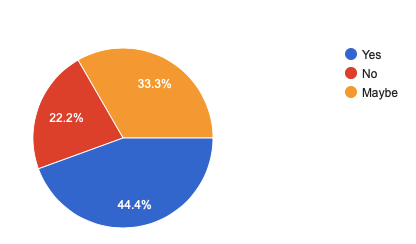
It was also noticed by doing a primary survey that people 66.7% people think that right to privacy is curtailed by freedom of press and misuse of the same. (Refer Fig.5), on the other hand the audience are not even sure if reasonable restriction of press will help them maintain their price 44.4% expressed that it will help maintain right to privacy which is a low percentage, the same percentage of people think that protecting privacy but reasonable restrictions curtails freedom of press, though there is 100% confirmation that fake journalism affect right to privacy of an individual.
The below Fig 6. answers all the research questions questioned by the researcher:
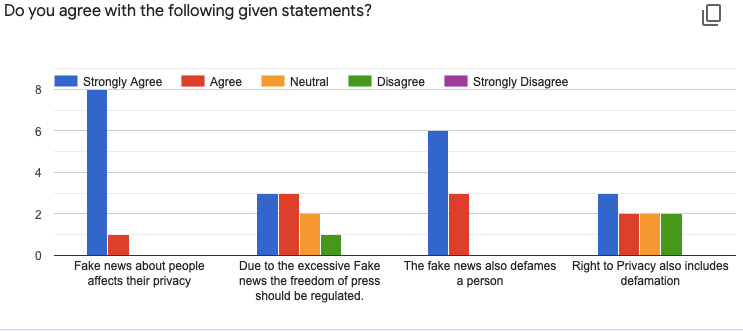
(A) DOES PROTECTION PRIVACY LEAD TO CURTAILMENT OF FREEDOM OF PRESS?
It is very well answered that protection of privacy does lead to curtailment of freedom of speech and expression of press.
(B) DOES RIGHT TO PRIVACY INCLUDE DEFAMATION?
According to the primary survey taken the target audience feels that defamation doesn’t come under the domain of privacy but if gone by judgments and texts of law the law, defamation does come under the domain of privacy
(C) DOES YELLOW JOURNALISM AFFECT PRIVACY?
Yes, it is proved that yellow journalism does affect privacy of an individual and group of individual.
Conclusion
In recent times, there have been spates of incidents which required the Courts to step in and restrain newspapers and other media from intruding into individual privacy. Whenever, such matters of invasion of privacy reach the court, journalists put forward a common defence that the disclosure was privileged because it was newsworthy and try to cover it with the ‘public interest’ blanket defence. There is no doubt that newspapers do a commendable job in bringing certain long buried issues to the forefront. However, it needs to be realized that even while reporting those news, some amount of restraint must be exercised. Every titbit of information or surmise about individuals cannot and should not be forced into the category of ‘news’. The advice of the Court to the masses is ‘to approach the court when the loss or damage has already been occurred to the individual.’ But, prevention is better than a cure. Hence, the Government should come up with a specific law, clearly laying down the guidelines for press while dealing with such threshold issues as soon as possible. All this mandates for a specific law on privacy, but still this law is nowhere near to reality.
“A citizen has a right to safeguard the privacy of his own, his family, marriage, procreation, motherhood, child bearing and education among other matters. No one can publish anything concerning the above matters without his consent - whether truthful or otherwise and whether laudatory or critical. If he does so, he would be violating the right to privacy of the person concerned and would be liable to action for damages. Position may, however, be different, if a person voluntarily thrusts himself into controversy or voluntarily invites or raises a controversy”.
Appendix
Fig 1
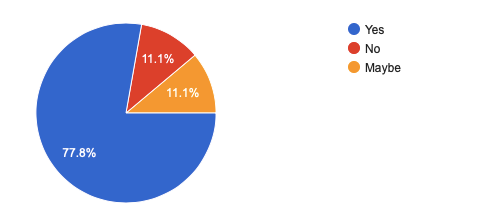
Fig. 2
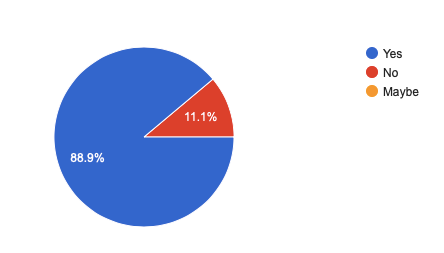
Fig. 3
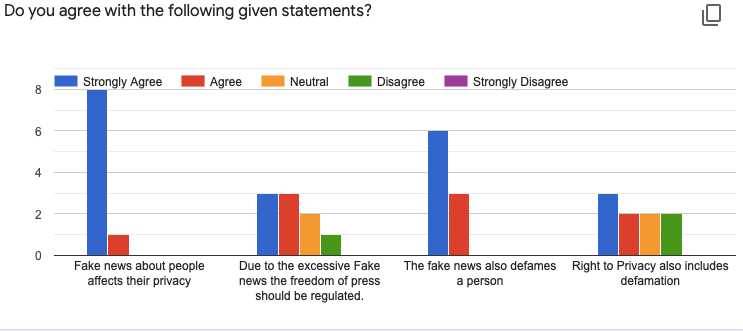
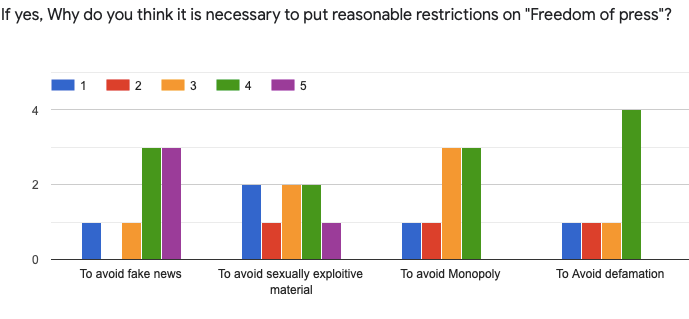
Fig. 4
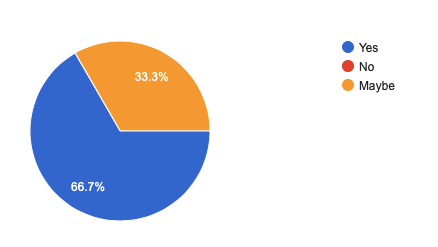
Fig. 5
*****
Footnotes
2. Supreme court of India has frequently drawn from the declaration of Human rights to define the scope and extent of the Fundamental rights India See For Example: Maneka Gandhi V UOI, AIR 1978 SC 597;Vishakha v State of Rajasthan (1997) AIR SCW 3043. ↑
3. Chairman, Railway Board V Chandrima Das, AIR 2000 SC 988 at 997: (2000) 2 SCC 465. ↑
4. Pratap Singh v State of Jharkhand (2005) 3 SCC 551: AIR 2005 SC 271. ↑
5. Kesavananda Bharati Sripadagalvaru and Ors. v. State of Kerala and Anr. (case citation: (1973) 4 SCC 225); State of West Bengal v Committee for protection of Democratic Rights, (2010) 3 SCC 57. ↑
6. Article 19, Constitution of India. ↑
7. Art 19, cl.1, sb.cl (a), Constitution of India. ↑
8. UsLegal Dictionary, https://definitions.uslegal.com/f/freedom/. ↑
9. Art 19, cl.1, sb.cl (a), Constitution of India. ↑
10. Radha Mohanlal v Rajasthan High Court, (2003) 3 SCC 427. ↑
11. Art 19, cl.1, sb.cl (a), Constitution of India. ↑
12. Art 19, cl.2, Constitution of India. ↑
14. Maneka Gandhi V UOI, AIR 1978 SC 597; Usha Uthup v State of West Bengal, AIR 1984 Cal.268. ↑
15. Union of India v Naveen Jindal, (2004) 2 SCC 510. See also, VK Naswa v Union of India, (2012) 2 SCC 542(545) ↑
16. PUCL V Union of India, (2003) 4 SCC 399. ↑
18. Ins. by the Constitution (Sixteenth Amendment) Act, 1963, s. 2 (w.e.f. 5-10-1963). ↑
19. Papnasam Labour Union v. Madura coats Ltd,AIR 1995 SC 2200. ↑
20. Romesh Thapper v State of Madras, A.I.R. 1950, S.C. 124. ↑
21. Ramji Lai Modi v State of UP, AIR 1957 SC 620. ↑
22. Ranjit Udeshi v State of Maharashtra, AIR 1965 SC 881: 1965 (1) SCR 65 ↑
23. Ramesh Yeshwant Prabhoo v Ptabhakar Kashinath Kunte, AIR 1996 SC 1113. ↑
24. Winfield and Jolowicz on tort, 274 (1979). ↑
25. Union of India v Naveen Jindal, (2004) 2 SCC 510. See also, VK Naswa v Union of India, (2012) 2 SCC 542(545) ↑
26. Re Noise Pollution (V), (2005) 5 SCC 733: AIR 2005 SC 3136. ↑
27. See also, PUCL V Union of India, (2003) 4 SCC 399;Mairembam Prithviraj v Pukhrem Singh, (2017) 2 SCC 487 ↑
28. New York times v Sullivan, 376 US 254; New York Times company v US, 403 US 713 (1971) also known as Pentagon Paper case. ↑
29. Brij Bhushan v Delhi, AIR 1950 SC 129. ↑
30. Romesh Thapper v State of Madras, AIR 1950 SC124. ↑
32. Indian Express Newspaper (Bombay) Pvt.Ltd V Union of India, AIR 1986 SC 515 at 539. ↑
33. Indian Express Newspaper (Bombay) Pvt.Ltd V Union of India, AIR 1986 SC 515 at 539. ↑
36. Sakal Papers v UOI, AIR 1962 SC 305. ↑
37. The newspaper (price and page) Act, 1956. ↑
38. The Daily Newspaper (price and page) Act, 1960. ↑
39. Bennett Coleman & Company V UOI, AIR 1973 SC 106. ↑
40. Hindustan times v State of UP, (2003) 1 SCC 591. ↑
41. Hamdard Dawakhana v UOI, AIR 1960 SC 554. ↑
42. Otieno, Sophie Awino, The Effect of Censorship Laws on Media Freedoms (July 26, 2011). Available at SSRN: https://ssrn.com/abstract=1895352 or http://dx.doi.org/10.2139/ssrn.1895352 ↑
43. The Press Council of India Act, 1978. ↑
44. Central Board of Film Certification (CBFC) ↑
45. Cable Television Networks (Regulation) Act, 1995 ↑
46. Information Technology Rules, 2011. ↑
47. Broadcasting Services Regulation Bill, 2006. ↑
48. [1995] 2 S.C.R. 1130, [121]. ↑
49. Art 21,The constitution of India. ↑
50. K.S. Puttaswamy (Retd) vs Union of India ↑
51. Govind v. State of Madhya Pradesh, Smt. Maneka Gandhi v. Union of India & Anr.,(1978) Naz Foundation Case (2009) ↑
52. Rajagopal v. State of Tamil Nadu [(1994) 6 SCC 632] ↑
53. Sahib Singh Mehra v. State Of Uttar Pradesh (A.I.R 1965 S.C 1451). ↑