
Introduction
The development of human society leads to the development of the risk. Here the human society means when humans have developed the thinking capacity. So, to remove the risk so they collected funds which will indemnify when there occurs any loss. The origin of insurance can be found in Babylonia but there is no authentic information, Greek and also in Hindu religion, we can found in Rig Veda the word “YOGAKSHEMA” means security, prosperity, and well-being of people, which can be termed as Insurance. Insurance is also mentioned in Arthashastra, Manusmriti, and Dharmashastra.
Life insurance didn’t come first because everyone regarded that birth and death are natural. First Life Insurance was given to Sir William Gibbson for 12 months. In 1699, Mutual Life Insurance was a legally organized Life Insurance Company. In 1818 Oriental Life Insurance Company was set up by England in India. In Post- Independence period in India that is in 1956, the 245 Life Insurance Companies are nationalized by the Indian Government.
Today, insurance companies consist of 57 insurance companies where 24 are life insurance businesses and 33 non-life insurance businesses. The insurance sector in India is life insurance, health insurance, commercial, vehicle, two-wheeler, four-wheeler, travel insurance, home insurance, and marine insurance.
In India, IRDA stands for Insurance Regulatory and Development Authority and its role is to protect the interest and better treatment to the insured. It encourages a systematic growth in the Insurance business to bring benefits to the insured and also economy of the country. It helps to create clarity, transparency, and accountability towards the insured. It takes important steps to face uncertain circumstances. It regulates the day-to-day activities of the Insurance businesses.
Concept of Insurance
The insurance may be called as a device to manage the risk of life and property. The insurance is created between two parties like a contract. One party is called the insurer, who undertakes to help in exchange for some money called a premium to another party called the insured, who seeks help against a risk. In the case of Sumitra Devi v. LIC,3 it was held that the insurance policy is a contract between the insurers and the insured. The insurance aims to provide help to those who happen to suffer a loss. In the commercial and industrial world, it is said that “one without insurance is like a car without shock absorber”.4
Illustration: In an area, there are 500 car owners and each car value is Rs.3, 00,000. Every year one car is lost due to theft. If all the 500 car owners come to agree come together and each can contribute Rs. 600 annually, therefore common fund is Rs. 3, 000 a year. It would be sufficient to pay Rs. 3, 00,000 if a car owner is lost due to theft.
(A) Definitions
The definitions of insurance can be divided into three heads-
General Definitions
1. According to John Magee, it is a plan by which a large number of people associate themselves and transfer to the shoulders of all risks that attach to individuals.5
2. According to Sir William Bevridges, insurance is the collective bearing of risks.6
Functional Definition
According to H.S. Hansell, it is a communal mechanism that provides monetary funds to indemnify the loss, the loss is indemnified from the collection of payment made by the insureds’ that enter into the project of insurance.7
Contractual Definitions
Justice Tindall expresses that insurance is an agreement where payment is made to the insured in exchange for the insurer’s indemnifying the risk by payment of the sum of money in happening of events.8
(B) Characteristics of Insurance
a) The governing principle of insurance law is indemnified.
b) Bearing and protecting of risk is the subject matter of the contract of insurance.
c) Payment of premium by the insured is an essential feature of the contract of Insurance.
d) The insurance company is bound to make good the loss to the insured on the happening of the event specified.
e) Insurance is not a wagering contract, which means a bet. The subject matter may be anything.
(C) Principles of Insurance
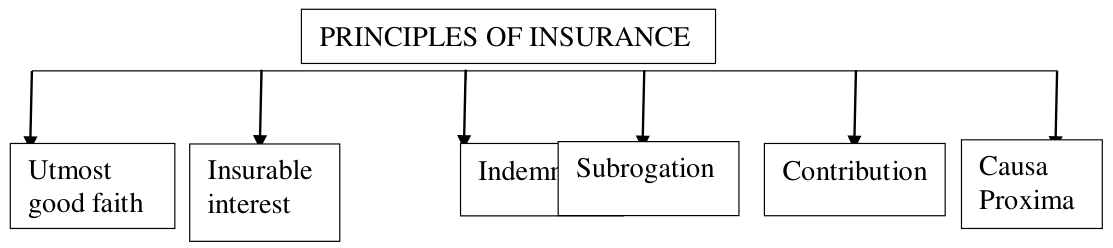
CHART 1: PRINCIPLES OF INSURANCE
(D) Insurance Scenario in India
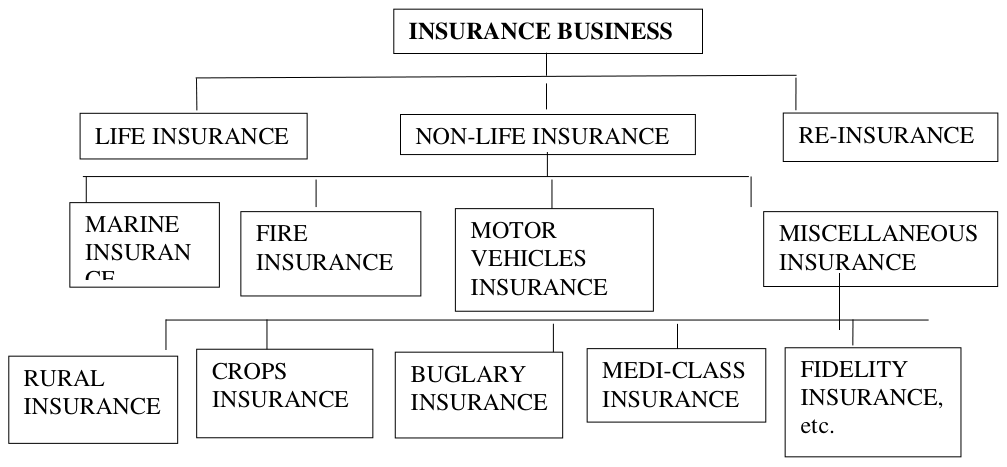
CHART 2: INSURANCE BUSINESS IN INDIA
Conceptual Study on Life Insurance
A contract to pay a certain sum of money to the nominee of the policy in the matter of insured death or to pay a certain sum to the insured in the matter he survives after a certain fixed period is called Life Insurance.9 It is any contract where one party pays on happening of a particular event contingent on human life. It is a business that is insurance on human life.
In the case, Dalby v. ILLAC10 held that insurance is an agreement for payment of assured funds on the specific assured person’s death instead of paying a premium for assured life counted according to following mortality term.
Section 2(11), Insurance Act, 193811 defines Life Insurance Business which refers business affecting insurance contract on human life that includes any contract whereby money is paid assured on death (except death by accident only) or the happening of any contingency dependent on human life, and any contract subject to payment of premiums for a term dependent on human life and shall be deemed to include-
Granting of disability and double or triple indemnity accident benefits, provided on the insurance contract.
Granting of annuities on human life.
Granting of superannuation allowance and annuities payable out of any fund applicable solely to the relief and maintenance of persons engaged in any particular profession, trade, or employment or the dependents of such person.
(A) Characteristics of Life Insurance
1. It is a contract.
2. Relating to human life.
3. On payment is a premium.
4. The amount is paid on the death of the insured, or
5. The amount is paid after the expiry of a certain period.
(B) Kinds of Life Insurance
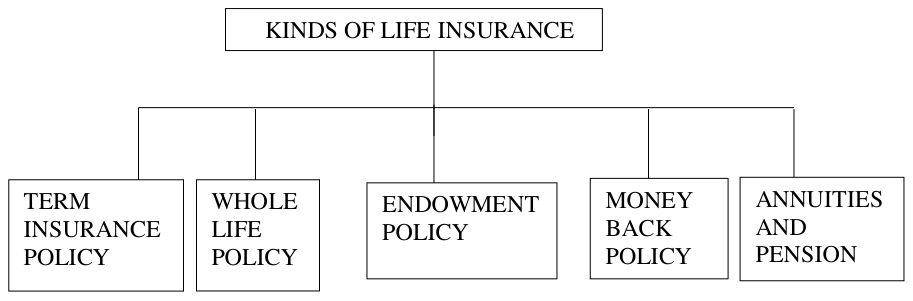
CHART 3: KINDS OF LIFE INSURANCE
1. Term Insurance Policy
It’s an insurance policy that covered risk for a definite period which means that the sum assured is payable when the policyholder dies within that definite period.12 For example, if a man buys a policy of 15 lakhs for 10 years, his nominee or beneficiary will be able to get the sum assured if the policyholder dies within 10 years. If the policyholder survives that 10 years then the insurance company will keep the whole premium as the premium are non-refundable.
2. Whole Life Insurance
It’s an insurance policy that covered risk against death and pays regular premiums until his death, following the money is handed to legal representatives but this policy fails to address the needs of the insured as a person’s needs increase over time.13
3. Endowment Policy
It’s an insurance policy where the sum assured in the policy is payable even if the policyholder survives the period of the policy. It’s a form of financial savings though the cost of the policy is higher.14
4. Money Back Policy
It’s an insurance policy where a portion of the sum assured is payable at regular intervals and if the insured person remains alive the duration of the policy the remaining money will be paid but on death, within the duration of the policy, the whole money is given.15 Premium is payable for a particular period.
5. Annuities and Pension
It’s an insurance policy where the policyholder’s risk is covered and he also gets a stipulated sum of money periodically by the insurer which is like a pension.16
(C) Risk Covered Under Life Insurance
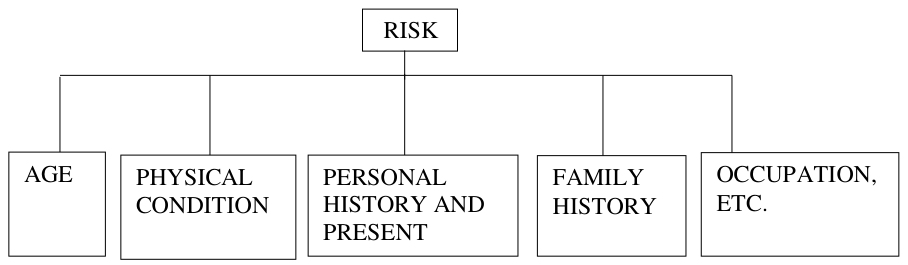
CHART 4: RISKS OF LIFE INSURANCE
(E) Principles of Life Insurance
There are six principles of Insurance but all are not the governing principles of Life insurance. The two governing principles of Life Insurance is described below:
a. Principle of Utmost Faith1. Principle OF UBERRIMAE FI
1. Both the parties i.e. the insured and the insurer should have a good faith towards each other.
2. The insurer must provide the insured with complete, correct, and clear information on the subject matter.
3. The insurer must provide the insured with complete, correct, and clear information regarding the terms and conditions of the contract.
4. This principle applies to all contracts of insurance i.e. life, fire, and marine insurance.
b. Principle of Insurable Interest
1. Insurable interest is important, which is the most important point of Life Insurance.
2. In marine insurance insurable interest is considered to be important on happening of loss.
3. Insurable interest should be there when the policy is bought and in the occurrence of loss in Fire and General insurance.
4. The insured should have an insurable interest.
5. Applied to all insurance contracts.
(D) Benefits of Life Insurance
The Life Insurance merits are:
1. Cover of Risk – Provisions of risk coverage to the insured’s family-like financial compensation in place of premium in Life Insurance.17
2. Plans and its uses-Life Insurance companies provide different plans to the insured according to the need and more benefits come from more premiums paid by the premium.18
3. Cover for Health Expenses-Life Insurance policies covers health issues like hospital expenses and critical illness.19
4. Promotes Savings-Life Insurance policies to promote savings.20
5. Guaranteed Income-Life Insurance policies come with a guaranteed sum assured amount which payable to the insured on happening of the event.21
6. Loan Facility –Life Insurance companies also provide the insured with the facility to take loans.22
7. Tax Benefits- Premium of Life Insurance is not deductible, Section 80 C, ITA, 1961.23
(E) Life Insurance Corporation of India
On 19th June 1956, the Indian Parliament passed the Life Insurance of India Act. LIC India on 1st September 195624 is formed. Its objectives are to spread life insurance more widely and touch insurable persons in village places for monetary coverage at a good price.25
Life Insurance of India Act, 1956, nationalized the insurance business in India. It consolidates 245 private Life Insurance businesses and other Life Insurance businesses. The Life insurance Corporation's main attraction was the “sovereign guarantee” of the Government of India that means the State will take the responsibility which is provided under section 37 of the LII act, 1956. Section 7 of the LII Act, 1956 explains that the sum mentioned in the policies along with the interest will be guaranteed by the Central Government.26 Life Insurance Corporation of India is a statutory corporation because it is established under law. The main motto of LIC of India is “Yogakshemam Vahamyaham”. Till 2000, there was a monopoly and after the year 2000, many private institutions were allowed to provide Life insurance and continue their business though they don’t have the sovereign guarantee.
Claims
The phenomena where on the occurrence of an event which is given in the agreement, in exchange for premiums paid, a payment is paid by the insurer to the insured or claimant is called a claim. The easy and timely settlement of a valid claim is an important function of an Insurance company. The insurer validates the claims and after approving it pay the money payable under the insurance contract to the insured or any interested person appointed by the insured. Insurance claims cover every claim from death claim under the Life Insurance to medical claims, etc. The third person on behalf of the insured usually makes a claim under the insurance policy of the insured but a claim can be made by the person whose name is mentioned in the insurance policy.27 The insurance claim is paid to indemnify a policyholder against financial loss. The Insurance claim which is being filed based on the damage caused by the insured himself, the rates will almost rise but if the fault is not done by the insured, the rates may or may not increase.28
The important needs of Life Insurance claims need like the claim form along with the death certificate and original policy. Costly policies require interrogation of the insured’s death and so that it doesn’t fall under the grounds excluded under the contract that is a suicide, criminal act death, etc.
(A) KINDS OF CLAIMS
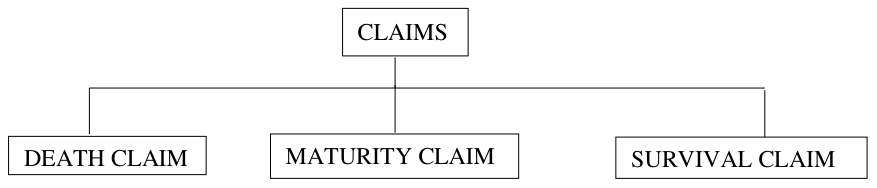
CHART 5: KINDS OF CLAIMS IN LIFE INSURANCE
DEATH CLAIM
The amount of money payable to his family when the policyholder dies is called Death Claim. There is always a minimum sum assured which is payable to the nominee on death of the life insured. In such a case, death intimation is important. In this case, the requirement of data and documents, etc. is needed. Section 45, IA 1938, when the death happened during two years from the date of formation of contract then it requires interrogation before the settlement of claim to find out if the data given are right or no misleading of data. If data stated are not found right, then the claim will get rejected and no payment is made to the nominee or assignee.
MATURITY CLAIM
The settlement of the Maturity Claim amount against the insured is done when the contract accomplished the period stated in the contract completes its tenure. It is a calm way to settle the claim in which the insured filling up the discharge form of contract and the payment of the money is made without in a hurry. The money is usually paid out before the maturity date once the policy discharge paper is duly filled and submitted long before the date of maturity. It usually comes as a post-dated cheque.
SURVIVAL CLAIM
When the sum assured is due to the insured before the maturity of the policy and he is surviving, are Survival Claim and the same as a Maturity Claim. It occurs in contracts of Money Back Plans and the sum of money comes back to the insured in certain gaps of time like five to ten years. It is taken as Protection material for the family’s monetary needs. In the insured’s death, the sum assured is paid to run the family’s daily basic needs.
(B) Settlement of Claims
A claim in an insurance contract is a request formally made by an insured to an insurer for risk coverage. 29After that, the insurer accepts the claim and if it is accepted money is paid to the policyholder or nominee/ assignee.30The claim arises when the policyholder dies before the maturity date or after maturity date which means after the expiry of the endowment period mentioned in the insurance contract when the sum assured in the policy is payable.31 The claim is payable to the nominee or assignee or the legal successor, but if there is no nominee or assignee or no Will made by the policyholder, then the claimant is payable to the holder of succession certificate or such evidence of title from a court of Law.32Conditions to satisfy-
1. During the claim, the policy must be in force.
2. The policy must cover the insured.
3. The policy must cover the claim.
4. The claimant is the nominee or assignee of the policy.
5. All the premiums should be paid.
6. The insured event should take place.
DEATH CLAIM
During the death claim, the death of the life assured has to be intimated in writing to the insurer. The claimants can be like the heirs, assignee, or nominee under the policy or from a person representing such assignee or nominee or when there is no nominee or assignee by a relative of the life assured the employer, the agent, or the development officer.33 When the assignee is bank or creditor then intimation of death has to be received from such assignee.34
If the insured dies after three years from the contract’s date the essential conditions are “Claim Form A” the claimant statement is required, “Death Certificate” of the life assured given by the “Municipal Death Registry” or “Public Record Office” that keeps the births and deaths records in that particular area.35If the policy runs for five years then along with “Claim Form A” they should also issue a “Discharge Form”.36If the policy run for like two years then the following requirements asked by the corporations-
a) If the assured was an employer, a certificate in “Claim Form E”
b) “Claim Form B” statement of doctor who has taken the case of the insured, if the insured is not an employer he gives the statement of “Claim Form B” and “Claim Form C” certificate of cremation from an independent person who has attended the funeral and “Claim Form D” certificate of identity by a reputed human.
INTIMATION OF DEATH
Particulars contained in the intimation of the death of the life assured by the claimant-
a) His/ Her relationship with the deceased.
b) Name of the policyholder
c) Policy number
d) Date of death
e) Cause of death
f) Sum Assured, etc.
Two conditions-
Properly establishing the identity of the deceased person whose life is assured under the policy.
It is from a concerned person.
Documents which are required-
Death certificate
Proof of age of the life assured
Deeds of assignments/ reassignments
Policy document
Form of discharge
Additional Documents which are required-
Hospital Statement if the deceased is admitted to Hospital.
Certificate from the medical attendant.
Certificate of cremation or burial from known character.
Certificate from the employer if the deceased is an employee.
Certificate from the airline authorities if the deceased died in an air crash.
Certified extract from the logbook of the ship if the deceased died in a ship accident.
SETTLING CLAIM
When the submission of the particulars is done the sum assured is calculated by the insurer. A Policy Ledger sheet is being prepared which gives reference to the form need to be filled up that contains the particulars like the policy, assignment, nomination, bonus, etc. If there exists any loan then the details of the loan and interest amount are being deducted from the gross policy amount to calculate the net payable claim amount. 37According to the current LICs Endowment Policy, the regular payment of premiums if lapsed for at least two years and provided if at least premiums are paid for two years before the default, the policy will become paid-up for a proportionately reduced amount which will be payable.38
MATURITY CLAIMS
The basic sum assured in the policy is being payable if the life insurance survives the term mentioned in the policy. The maturity payment is the payment that is paid by the insurer to the insured when the policy is matured. The intimation is sent by the insurer to the insured with bank discharge and the insured has to the send with signed and returned by affixing one rupee revenue stamp to the office along with the original policy document, age proof (if not been submitted), assignments/ reassignments (if any). 39Nothing is paid when the premiums have lapsed or life assured dies within 3 years of the beginning of the policy.40
SETTLEMENT CLAIM
After completing all the processes, the claim amount will be paid by the account payee cheque. If the life assured dies after the date of the maturity but before the receipt is discharged, the claim is regarded is the maturity claim and paid to legal heirs. For a mentally retarded person, a certificate under the Indian Lunacy Act, and a person is appointed as a guardian of the life assured who manages the claim.41
(C) Person Entitled for the Claim
On the happening of the event, in life insurance, the payment is made to the person assured or the nominees or the assignees. The claim amount is payable to-
PAYEE
The payee can be the policyholder or persons whose name is mentioned in the benefits schedule, who receives benefits or payments of the scheme.
ASSURED HIMSELF
If the policy survives the term mentioned in it, then the assured himself gets the payment. If the creditor takes a policy in the life of the debtor then the creditor gets the money.
ASSIGNEE
The policy can be assigned when it is informed to the insurer that the policy has gone through an assignment. Section 38 of the Insurance Act, 1938, provides for the transfer or assignment of a policy of life insurance. It can be through an endorsement on the insurance contract or by the discrete tool. It should be signed by the transferor or assigner or by an authorized agent and attested by one witness set.42
NOMINEE
Section 39 of the Insurance Act, 1938, explains about the nomination that means a right given to the insured to appoint a person or persons to get the claim money in the claim by death of the insured.43
LEGAL HEIRS
The claim is paid to the nominee or assignee or the legal heirs. If the deceased policyholder has not nominated or assigned the policy or if he or she has not made a Will, the claim will be paid to the holder of a Succession Certificate or some evidence of title from the court.
APPOINTEE
When the nominee is a minor, the appointee last recorded will get the claim.
(D) Case Laws
In the case of Satwant Kaur Sandhu vs. New India Assurance Co. Ltd.44, the Supreme Court held that the insured was under the commitment for full true disclosure of data within his knowledge in the policy and stating misstatement was a fraudulent act and therefore it is a violation principle of utmost good faith and the insurer was correctly justified in repudiating the claim under Section 45 of the Insurance Act, 1938
In the case Life Insurance Corporation of India vs. Mani Ram45, the appeal was allowed by Apex Court. The orders of the three Commissions were set aside. The learned counsel of the appellant stated that the insured died in 1996 and the District Forum took the complainant claim in December 2000. He expressed that the amount was not high and has also been paid and the Insurance Company was not so serious about the amount, but the Insurance Company approached this Court to decide the question of law that was wrong. Therefore, the orders are set aside them and no recovery will be made between respondent and complainant about this order.
(E) Claim Settlement Ratio
The factor that helps a person to choose a Life Insurance Plan from the Life Insurance Market in India is the Claim Settlement Ratio. Claim Settlement Ratio based on benefit/claim amount paid. Illustration: If a life insurer gets 100 death claims and settles claim is 90, the claim settlement ratio is 90%.
| Sl. No. | Life Insurance Companies |
|---|---|
| 1. | TATA AIA |
| 2. | HDFC Life |
| 3. | Max Life |
| 4. | ICICI Prudential Life |
| 5. | LIC |
| 6. | Reliance Nippon |
| 7. | Kotak Life |
| 8. | Bharati Axa |
| 9. | Aditya Birla Sunlife |
| 10. | Exide |
Insurance Regulatory Development Authority (IRDA) provides an annual report of the 2018-19 year. According to the IRDA annual report of claim settlement ratio of the year 2018-19, the ten excellent Life Insurance Companies are-
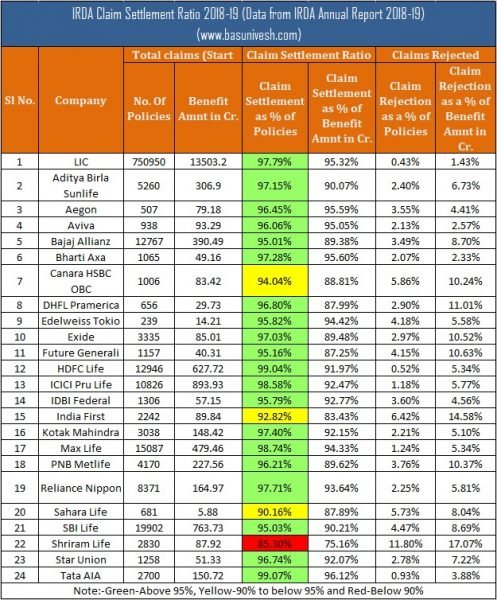
FIGURE 1: IRDA CLAIM SETTLEMENT RATIO 2018-19
The claim settlement ratio of well-known Life Insurance companies is shown in the graph prepared below by the data of 2018-2019:
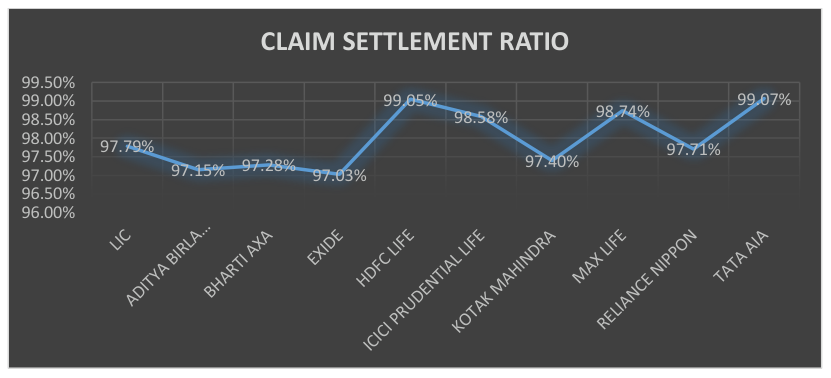
CHART 6: CLAIM SETTLEMENT RATIO OF SOME WELL-KNOWN INSURANCE COMPANIES
(F) Individual Death Claims of LIC of India
The life insurance companies had settled 8.43 lakhs claims on individual policies in the year 2018-19 and the total bring in was Rs 17,365 crores.46 The number of claims which were denied was 6,372 for a sum of Rs 539 crores. 47The number of claims rejected was 3,697 for a sum of Rs 25.18 crores.48 India is at 10th rank out of 88 countries in the Life Insurance business by Swiss Re.
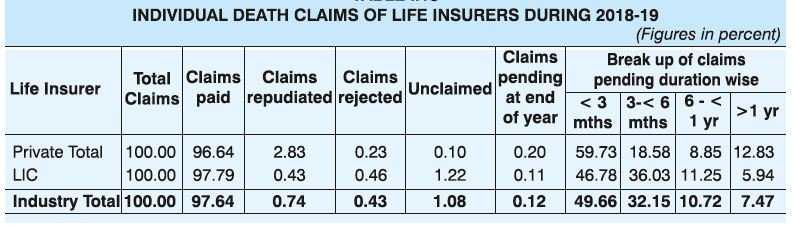
FIGURE 2: INDIVIDUAL DEATH CLAIMS OF LIFE INSURANCE CORPORATION OF INDIA
Ombudsman
An insured can complain to many authorities if the insurance claim filed by the insured is being rejected by the insurance company. If the insured fine unfairly of being rejected and has supporting documents like policy wording, premium receipt, etc. then he can file a complaint. In India IRDAI, which stands for the Insurance Regulatory and Development Authority of India, regulates the insurance companies and businesses in India. An insurer can file a claim by the insurer for the delay in claim settlement by the insurer, the insured is not satisfied by the claim settlement, or the insurer doesn’t comply with the policy terms.
An Insurer can file a complaint in the following authorities-49
1. The Grievance Redressal Officer of the concerned insurance company (Mandatory)
2. Integrated Grievance Management System (Optional)
3. Ombudsman
4. Consumer Court or Civil Court
OMBUDSMAN
The word “Ombudsman” is a Swedish word that means the right of individuals against public authority.50 The Malhotra committee also recommended setting up the institution of Ombudsman to lessen the work of the court and to safeguard consumer’s interest.51
The Union Government under IA, 1938 shaped the Redressal of Public Grievances Rules, 1998.52Rule 5, Redressal of Public Grievances Rules, 1998, explained about the Insurance Council governing body, consisting of 1 representative from each insurance companies and appoint one or more persons as an ombudsman, who have experience or have been exposed to the civil services, administrative services, etc. and also from judicial service.53
Appointment and Procedure for Settlement of Complaints
Rule 6 of Redressal of Public Grievances Rules, 1998,54 the governing body consisting of the Chairman of Insurance Regulatory Authority- Insurance, two representatives of Insurance Council, one from the Life Insurance Business and other from General Insurance Business respectively, and one representative of the Central Government- member, appoints one or more person as Chairman. Rule 7 of Redressal of Public Grievances Rules, 1998,55 Ombudsman is appointed for three years and can be re-appointed but Ombudsman cannot hold office after 65 years of age.
The procedure are-Firstly, the insured should first make a written representation to the insurer and if it is rejected by the insurer, or had not got any reply within one month, the complaint can be instituted. The complaint can be instituted by the insured or the legal heirs to the Ombudsman under whose jurisdiction complaint can be initiated, as the insurer is located.
Secondly, Rule 13 of Redressal of Public Grievances Rules, 1998,56 the complaint shall be made in writing with duly signed by the insured and the legal heirs and should also provide particulars like name and address of them and also of the insurer and define loss and the relief needed. The insured shall not file a complaint to the Ombudsman after one year after the insurer has rejected the claim and its complaint should not be pending in front of the court or forum of the arbitrator.
Thirdly, Rule 16 of Redressal of Public Grievances Rules, 1998,57 provides about the award that should be passed by the Ombudsman within three months on the receipt of the complaint and which should be in writing and a copy will be sent to the complainant and insurer. The complainant shall furnish the acceptance letter within one month and the insurer shall comply within 15 days with the acceptance letter.
(A) Ombudsman Rules 2017
It came into force from the publication date in the Official Gazette. The aim of the Ombudsman Rules, 2017 is to sort out complaints of the personal area of insurance and other policies and micro-enterprises related to insurance companies and its agents in productively and impartially. It applies to the Insurance Companies and their agents about the personal complaints relating to insurance and other insurance policies and micro-enterprises related to insurance companies.
Rule 7 of the Ombudsman Rules, 2017, explains about the establishment of Insurance Ombudsman confined to such territorial jurisdiction specified by the Executive Council of Insurers to perform their duties and functions prescribed.58 He shall be a person who has experience of judicial service, the insurance industry, civil service, or administrative service. He is selected by a Selection Committee consisting of—IRDA Chairperson, Selection Committee Chairman; 1 representative from Life Insurance Council and 1 representative General Insurance Council from the Executive Council of Insurers and they are members; Government of India representative not below Joint Secretary or equivalent rank, Ministry of Finance, Department of Financial Service and he is a member. Section 8 of the Ombudsman Rules, 2017, he is appointed for three years term and eligible for reappointment.59 He shall not hold office as Ombudsman after seventy years.
Rule 13 of the Ombudsman Rules, 2017, he shall consider complaints or disputes delay of time in settlement of claims, the time specified under the Insurance Regulatory and Development Authority of India Act, 1999; claims repudiation by insurer; premium disputes; misrepresentation of terms and conditions policy; etc.; and matter relating to a breach of Insurance Act, 1938 provisions or any regulations of IRDA.60 He shall be a counselor and mediator relating to matters specified. The Central Government or IRDA may, at any time refer any complaint or dispute to the Insurance Ombudsman and such complaint or dispute shall be entertained by the Insurance Ombudsman. Rule 14 of the Ombudsman Rules, 2017, explains about the manner of the complaint. Any aggrieved person may himself or his legal heirs, nominee or assignee, etc. make a complaint in writing to the Insurance Ombudsman having territorial jurisdiction where the branch or office of the insurer is situated.61 The complaint should be in writing and signing of the complainant insured, legal heirs, nominee, etc. and stating name and address of the complainant, the name of the branch or office of the insurer, the facts, documents supported, loss caused to the complainant and the relief sought. The complainant insured should provide written complaints to the Insurer. If the insurer rejects the complaint or the complainant insured has not received an answer from an insurer during a one-month duration after the insurer received the complaint or the complainant insured is aggrieved from the answer given by the insurer. The complaint is made to the Ombudsman during one-year duration after the order of rejecting of the insurer; or after receiving the insurer answer which doesn’t satisfy the complainant or after the expiry of one-month duration from the date giving the written representation to the insurer if the insurer fails to answer the complainant insured. Rule 15 of the Ombudsman Rules, 2017, Insurance Ombudsman to act fairly and equitably. 62
Rule 17 of the Ombudsman Rules, 2017, provides an award. The Ombudsman shall pass an award based on the pleadings and evidence.63 The award shall be in writing and stating the reasons. If the award is in favor of the complainant, compensation is granted to the complainant. The ombudsman shall pass an award within 3months from the receipt of the complainant. An award copy is sent to the complainant and the insurer. The insurer shall abide by the award within 30 days from receipt of the award. The Insurance Ombudsman award is binding on the insurer.
(B) Settlement of Complaints by Ombudsman
In Ombudsman Bhubaneswar reference no. 21-002-0217, Insurer alleged that materials were suppressed during buying of policy but cannot prove beyond doubt the insurer was directed to settle the claim within one month from the date of the receipt of the consent letter.
In Ombudsman Ahmedabad reference no. 21-001-0314, the respondent that is insurer was directed to pay the amount as the insured has already disclosed his health status.
Litigation
The issue brought to Insurance Grievance Redressal can be brought to civil courts or consumer forums. If the Insurer refuses or delays in claim settlement then the insured can pursue aid from consumer court or civil court.
(A) Consumer Court
Consumer Court is a court in India that concerns with consumer disputes and injury. The Consumer court is divided into three Consumer Disputes Redressal Agencies and if any complaint is pending before the Insurance Ombudsman then the complainant has to hold back for the result before going to the consumer or civil court. The procedure is to complaint stating all the facts and mentioning the compensation or relief. The complaint should be submitted in the concerned consumer forum under whose jurisdiction the case falls.
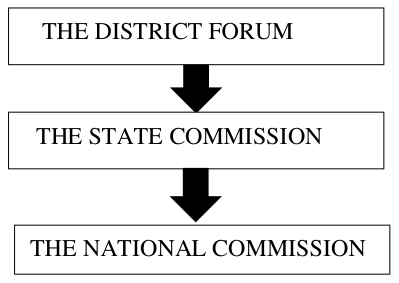
CHART 7: TIER-TIER CONSUMER GRIEVANCE REDRESSAL FORUM
DISTRICT FORUM
In District Consumer Disputes Redressal Forum64, the complaint can be made when the value of goods and services along with the claim doesn’t exceed 20 lakhs.
STATE COMMISSION
In-State Consumer Disputes Redressal Forum,65 the complaint can be made when the value of goods and services along with the claim is more than Rs. 20 Lakhs and less than Rs. 1 crore.
NATIONAL COMMISSION
In the National Consumer Disputes Redressal Forum,66 the complaint can be made when the value of goods and services along with the claim is more than Rs. 1 crore
CASE LAW
In Life Insurance Corporation of India vs Jaswinder Kaur67, it is held that as per Section 45 of the Insurance Act, 1938, when the proposal Policy was made and taken, repudiation Insurance Policy cannot be done after two years on the grounds of concealment or suppression of facts. The amendment to Section 45 of the Insurance Act, 1938 providing 3 years came in later2014. The present case is under the section before amendment and the deceased died after more than two years nine months after Policy. The orders are confirmed of the State Commission and the District Forum is and the Revision Petition dismiss. The District Forum ordered Petitioner to pay Rs.5, 00, 000 being death claim of the deceased and Rs.25, 000/- as Compensation for service deficiency, unfair trade practice, and mental agony of the Respondent along with Rs.10, 000 litigation cost. They are accountable for interest at 12% per annum from the Complaint date of institution.
In Life Insurance Corporation of India vs. Vimal Kumar68 it has held that as per the policy clause, the claimant was not eligible for a suicidal death claim within 1 year. The insurance policy was provided on 15 Sept 1990 but risk commencement was 28 May 1990 and the first premium was received and death occurred because of suicide on 29 May 1991. So, death occurred after one year from the date of risk. The Claim cannot be denied by LIC to pay full benefit with 9% interest.
(B) Civil Court
In India, to hear civil disputes there is a three-tier hierarchy of courts. There is the Supreme Court of India at the top, 24 high courts in the middle, and approximately 600 district courts at the lowest. The high courts of Delhi, Mumbai, Chennai, and Kolkata have original jurisdiction to perceive affairs relating to certain pecuniary value69. So, the civil courts and judges under them do not hear matters involving values higher than the limit. In other cases, district courts and the competent courts of the first instance have jurisdiction of unlimited pecuniary to perceive any insurance dispute. 70Section 6, Code of Civil Procedure Code, 1908 explains the pecuniary jurisdiction meaning that this act will not give authority to the court to sort out subject matters exceeding the pecuniary limits of its original jurisdiction. 71 Section 9, Code of Civil Procedure Code, 1908 explains that Courts shall try all civil suits unless barred meaning the Courts shall have jurisdiction to try all civil suits except suits that are expressly barred or impliedly barred. 72 Section 15, Code of Civil Procedure Code, 1908 explains every suit is to be instituted in the court of lowest grade capable to try.73Section 16, Code of Civil Procedure Code, 1908 explains that subject matter relating to pecuniary limits the suit shall be instituted to the court under whose jurisdiction the property is situated.74Section 19, Code of Civil Procedure Code, 1908 explains when the location of the plaintiff and defendant varies the suit should be instituted on the court on the option of the plaintiff.75
Current Scenario of Life Insurance
The business statement of Life Insurers for the Period ended 31st December 2019 was released by IRDA for FY 2018-2019. Some of the well-known Insurance companies’ data is being provided below:
FIRST YEAR PREMIUM FY 2018-2019
| SN | INSURER | FIRST YEAR PREMIUM | ||||||
|---|---|---|---|---|---|---|---|---|
| DEC 2018 |
DEC 2019 |
GROWTH % | UPTO DEC 2018 |
UPTO DEC 2018 |
GROWTH % | MARKET SHARE | ||
| 1. | ADITYA SUN LIFE | 417.31 | 318.55 | -23.67 | 2685.33 | 2519.36 | -6.18 | 1.30 |
| 2. | BHARTI AXA | 83.02 | 75.27 | -9.34 | 617.05 | 615.50 | -0.25 | 0.32 |
| 3. | HDFC LIFE | 1421.04 | 1503.95 | 5.83 | 9939.74 | 12276.83 | 23.51 | 6.32 |
| 4. | ICICI PRUDENTIAL LIFE |
957.81 | 1112.32 | 16.13 | 6827.84 | 8172.53 | 19.69 | 4.21 |
| 5. | LIC | 10992.15 | 16861.98 | 53.40 | 94140.79 | 137034.91 | 45.56 | 70.52 |
NO. OF POLICIES OR SCHEMES FY 2018-2019
| SL NO. | INSURER | FIRST YEAR PREMIUM | ||||||
|---|---|---|---|---|---|---|---|---|
| DEC 2018 |
DEC 2019 |
GROWTH % | UPTO DEC 2018 |
UPTO DEC 2018 |
GROWTH % | MARKET SHARE | ||
| 1. | ADITYA SUN LIFE | 30292 | 26833 | -11.42 | 186195 | 189921 | 2.00 | 0.92 |
| 2. | BHARTI AXA | 14524 | 15278 | 5.19 | 100838 | 165628 | 62.25 | 0.80 |
| 3. | HDFC LIFE | 88012 | 84622 | -3.85 | 665015 | 639799 | -3.79 | 3.11 |
| Sl no. | INSURER | FIRST YEAR PREMIUM | ||||||
| 4. | ICICI PRUDENTIAL LIFE |
86018 | 80296 | -6.65 | 626361 | 556552 | -11.15 | 2.70 |
| 5. | LIC | 1786114 | 1889248 | 5.77 | 13211034 | 15564458 | 17.81 | 75.64 |
NO. OF LIVES ASSURED UNDER GROUP SCHEMES FY 2018-2019
| SN | INSURER | NO. OF LIVES ASSURED UNDER GROUP SCHEMES | ||||||
|---|---|---|---|---|---|---|---|---|
| DEC 2018 |
DEC 2019 |
GROWTH % | UPTO DEC 2018 |
UPTO DEC 2018 |
GROWTH % | MARKET SHARE | ||
| 1. | ADITYA SUN LIFE | 177643 | 225009 | 26.66 | 2019382 | 2262722 | 12.05 | 1.43 |
| 2. | BHARTI AXA | 16219 | 20755 | 27.97 | 59039 | 83390 | 41.25 | 0.05 |
| 3. | HDFC LIFE | 3999198 | 5767950 | 44.23 | 34153567 | 44153033 | 29.28 | 27.99 |
| 4. | ICICI PRUDENTIAL LIFE |
2156201 | 2616589 | 21.35 | 14185374 | 20690900 | 45.86 | 13.12 |
| 5. | LIC | 10921437 | 1317032 | -87.94 | 44016598 | 23555865 | -46.48 | 14.93 |
SUM ASSURED FY 2018-2019
| S N | INSURER | SUM ASSURED | ||||||
|---|---|---|---|---|---|---|---|---|
| DEC 2018 |
DEC 2019 |
GROWTH % | UPTO DEC 2018 |
UPTO DEC 2018 |
GROWTH % | MARKET SHARE | ||
| 1. | ADITYA SUN LIFE | 37544.22 | 17345.66 | -53.80 | 185899.20 | 150916.85 | -18.82 | 4.35 |
| SL NO. | INSURER | SUM ASSURED | ||||||
| 2. | BHARTI AXA | 2158.89 | 1765.35 | -18.23 | 17943.87 | 19784.17 | 10.26 | 0.57 |
| 3. | HDFC LIFE | 49514.64 | 72209.72 | 45.84 | 406944.35 | 731632.56 | 79.79 | 21.09 |
| 4. | ICICI PRUDENTIAL LIFE |
45574.55 | 53893.19 | 18.25 | 300988.83 | 403082.21 | 33.92 | 11.62 |
| 5. | LIC | 88805.10 | 99673.18 | 12.24 | 726531.39 | 535535.63 | -26.29 | 15.44 |
LIC Initial Public Offering (IPO)
In the budget 2020, our Finance Minister Nirmala Sitharaman said about IPO of LIC. She said that listing companies on stock markets disciplined a company and provided access to financial markets am unlocks its value.
The IPO stands for Initial Public offering which means the operation of offering shares of a private corporation to the public in new stock issuance. IPO of LIC means the Government will trade in a part of its share in the Life Insurance Corporation of India. 10% of LIC’s share is to be offered to the public.
LIC is the largest Financial Institution with total assets of 31 trillion rupees (approximately 31 lakh crore). Where there are 1, 11, 979 employees and approximately 12 lakhs agents. In the Financial Year 2018, the profit of LIC was 48,444 crore.
The Government owns 100% of the LIC and provides a sovereign guarantee that means policyholders’ funds are completely secure and this may be the reason for higher premiums in LIC.
LIC has double-digit stakes in several firms that include Bharat Heavy Electricals Ltd., etc. which together worth is more than 80 billion. Listing of LIC shares in stock exchanges can make it the country’s top listed company in terms of market value.
Benefits of IPO of LIC:
• Disciplines in the company and access to the financial market.
• Retail investors can participate in wealth creation.
• SEBI will have a direct watch on LIC.
• Strengthen corporate governance.
• Increases in Efficiency.
• The influence of the Government will be reduced.
• Disclosures of Investment.
• Better governance with transparency and accountability.
But for the IPO of LIC the Life Insurance Corporation Act, 1956 needed to be amended which will require period because our amending process is slow. Then an inter-ministerial committee needs to set up to decide the roadmap and extent of disinvestment. The target is to bring the IPO by the second half of Financial Year 2020-21. Though IPO will be done to LIC sovereign guarantee will be there because till Government has its share of more than 50%, there will be a sovereign guarantee.
Conclusion
Life Insurance is an insurance that helps the family of the insured after his death whose life is assured under the policy and also it’s like an investment opportunity.
Life Insurance is an agreement between the insurers and insured who accept the terms and policies of the agreement. The agreement is, especially in the standard form.
Premium is paid to the insurer instead of the payment after the death of the life assured under the policy.
Under the amendment of the Insurance act, 1938 in 2014, 3 years is given to pay the premiums of the policy that provides the guarantee to the insurer and after the death of the life assured after three years, the claimants will get the assured sum of money. Before the amendment of 2014, the period was 2 years.
Section 45 of the Insurance Act, 1938 that provides about the disclosure of material facts of the insured to the insured, and if the insured does not abide by this provision, he may not get the sum assured under the policy.
Life insurance provides many benefits like it helps to get rid of tax deductions, it is like an investment, it provides handsome money, it provides loan facilities, etc.
IRDA regulates the Insurance businesses of India. Life Insurance businesses are abiding by the rules and regulations provided by the IRDA.
Life Insurance Corporation is established under the Life Insurance Corporation Act, 1956 and it provides “Sovereign Guarantee” under section 37 of the Life Insurance Corporation Act, 1956.
Settlement claim of Life Insurance is an important part where death claim, maturity claim, and survival claim is included. After the death of the life assured, the claimants or the nominees or the legal heirs apply for death claims to the insurer. If the life assured survives the policy period then it is called the maturity claim.
The fast the claim is settled by the insurer, the better the insurer company is! When the claim is not settled between the insurer and insured, the aggrieved can consult the ombudsman appointed by the IRDA and can also get help from the court.
The current scenario of LIC is that it is going for IPO by Government for raising funds for our country to stabilize the slow pace of the economy.
The IPO of LIC will help to bring more disciplines, transparency, and accountability in LIC.
The settlement of a claim is an important part of the insurance company as it shows how a company deals with the claim procedure and this attracts a person to buy policies from that company if it settles in a less amount of time.
People should always study the terms and conditions of the insurance policy before buying it.
*****
Footnotes
4. PROF. RAM NARESH CHAUDHARY, DR. (MRS.) SUMAN LATA CHAUDHARY, ET.AL, GENERAL PRINCIPLES OF LAW OF INSURANCE. ↑
10. (1854) 15CB365: 139 ER 465. ↑
11. SECTION 2(11), THE INSURANCE ACT, 1938. ↑
12. DR. NARESH MAHIPAL, AN IN TRODUCTION TO INSURANCE LAWS, CENTRAL LAW PUBLICATION (2nd ed.2017). ↑
17. LIFE INSURANCE downloaded from https://cleartax.in/s/life-insurance (11 Dec. 2019, 10:44 P.M.). ↑
26. SECTION 37 LIFE INSURANCE CORPORATION ACT, 1956 ↑
27. Adam Hayes, Insurance Claims downloaded from https://www.investopedia.com/terms/i/insurance_claim.asp Personal Finance Insurance ( 07 feb, 2020, 10:57 p.m.). ↑
35. K S N MURTHY & DR K V S SARMA, MODERN LAW OF INSURANCE (4th ed.5th reprint, 2010) ↑
42. SECTION 38 OF INSURANCE ACT 1938. ↑
43. SECTION 39 OF INSURANCE ACT 1938. ↑
45. [2005] Insc 395 (5 August 2005). ↑
46. SREEKANTH REDDY, CLAIM SETTLEMENT RATIO 2018-19 DOWNLODED FROM https://www.relakhs.com/irda-claim-settlement-ratio-2018-19-irda-data/ (06, FEB, 2020, 11:28 P.M.). ↑
54. RULE 6 REDRESSAL OF PUBLIC GRIEVANCES RULES 1998. ↑
55. RULE7 REDRESSAL OF PUBLIC GRIEVANCES RULES 1998. ↑
56. RULE 13 REDRESSAL OF PUBLIC GRIEVANCES RULES 1998. ↑
57. RULE 16 REDRESSAL OF PUBLIC GRIEVANCES RULES 1998. ↑
58. RULE 7 OMBUDSMAN RULES 2017. ↑
59. RULE 8 OMBUDSMAN RULES 2017. ↑
60. RULE 13 OMBUDSMAN RULES 2017. ↑
61. RULE 14 OF THE OMBUDSMAN RULES, 2017. ↑
62. RULE 15 OF THE OMBUDSMAN RULES, 2017. ↑
63. RULE 17 OF THE OMBUDSMAN RULES, 2017. ↑
64. SECTION 11 THE CONSUMER PROTECTION ACT 1986. ↑
65. SECTION 17 THE CONSUMER PROTECTION ACT 1986. ↑
66. SECTION 21 THE CONSUMER PROTECTION ACT 1986. ↑
69. TULI & CO, JURISDICTION OF CIBIL COURT, DOWNLOADED FROM https://www.lexology.com/gtdt/tool/workareas/report/insurance-litigation/chapter/india( 07 FEB, 2020, 01:55 A.M.). ↑
71. SECTION 6, CODE OF CIVIL PROCEDURE CODE, 1908. ↑
72. SECTION 9, CODE OF CIVIL PROCEDURE CODE, 1908. ↑
73. SECTION 15, CODE OF CIVIL PROCEDURE CODE, 1908. ↑