
Introduction
The coming up of China as a motivating economic force has been bringing about a mix in the global political and economic showground for the past decade and a half. Several countries show immense panic of this uptrend in China, while there is other on the other side who welcome it with much appreciation (KUI, 2014).
Brisk growth in trade and industry in China, supplemented by an 'open door' strategy (Under the open-door policy, the Chinese administration is working day in day out to encourage China’s rendezvous with the rest of the world. It is a is two-way thing, I mean to say it not only persuades outsiders to come to China but also promotes Chinese people to go abroad, for business, Tourism, education, etc.) of Chinese think tank, is posing nations more specifically East Asian countries with huge venture and trading opportunities, I will hurriedly add on here, China's rapidly growing Stature in World Trade and probable future trade escalation rate, brings along with its potential threat in the minds of quite a few. (R., 2014)
In this research essay, the prime consideration has been laid upon to understand the probability of continuation of China’s Rapid economic development, and consequently the apparent threats and the possible opportunities of such expansions for the rest of the globe specifically East Asian Region. The common economic scenario of evidently reveals the interdependency between the US and China. China’s export growth which is nothing short of sensational, looking back , peeping into the past,(it is necessary here to understand the initial trigger points of this China's incredible growth journey), it (China’s growth)would not have been initiated in Late 1970’s and in the 1980’s without the support of US consumer. There is no denying fact that there was a huge reliance on China on the US dollar for lending favour to then "weak" currency of China. At that time, the US got its dependence on China for cheap goods “Made in China” to enhance consumers’ purchasing power. The US also relied a lot on China’s savings surplus to put money back to its own savings shortfall.Gradually, it was evident that the interdependency of US-China was more of was a marriage of convenience and not of love. (Mathews, 2019) .
Conflicts of interest between the two have widened and deepened over a wide range of issues, more importantly including trade, as it was writing on the wall, China has decided to go on its way; While the US under Trump has the protectionist approach (B, 2016).
A practical example of the statement made in the Introduction about China's rapid economic development.
GDP Forecasts to 2030
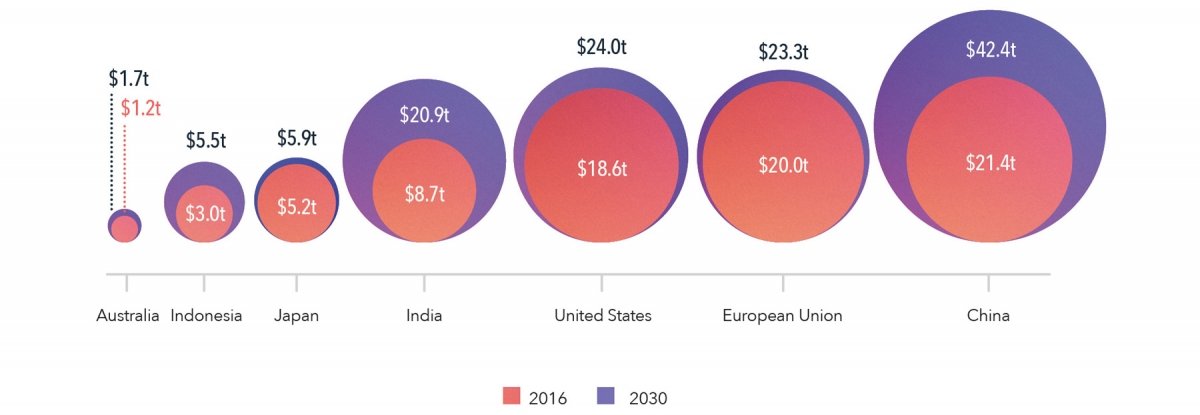
Figure 1: (https://www.fpwhitepaper.gov.au/foreign-policy-white-paper, 2017)
Diagram Explanation
This is one high-flying diagram in the Australian Government's Foreign Policy White Paper (2017), which suggests that by 2030 China's GDP would be larger than the GDP of the US or even Europe for that matter. The diagram enthused up a nest of concerns among security observers in Australia.
Opportunity
• The rapid economic development in China has opened doors of opportunities for other partner countries as well. With the Chinese economic growth, three broad topics stand out, i.e. Consumption, moving towards urbanization of the economy, and the shift towards an automated mode of production. These allow countries like Taiwan, Hong Kong and even Australia to strengthen their already strong trade ties.
• China has been a Magnet for making business investments because of its vast domestic market, more importantly for Cheap and skilled labour last but not the least good infrastructure.
• Newly industrial economies (NIEs) such as Taiwan and Hong Kong which are mainly interested in cost reduction, especially the labour cost. These countries in place of manufacturing and exporting from their home countries can use China as a platform for exporting their assembled/ fabricated products to the western world.
• BRI project will connect the landlocked “Belt” of two of the globes biggest economies none other than China and Europe. The route will come up as a key logistics passageway and will present noteworthy energy and mining opportunities for international Companies along with Chinese companies and thus provides a great investment opportunity for International Companies to make an Investment as a partner, supplier or even advisor to reap its benefits in future. Foreign companies have opportunities to become a supplier of the products to Chinese vendors where environmental norms are higher, or the requirement of the project is for advanced technologies.
• The Belt and Road Initiative (BRI) of China is all set to turn out to be a remarkable expansion program, and for East Asian countries its consequences will be quite profound. It will give a boost to investment and trade within Asia. A big chunk of financing is expected to come from Chinese financial institutions like China Development Bank and a range of government-linked institutions. These ought to help out to improve East Asian regional connectivity. (Chan S. , 2017)
• The BRI initiative will sort out (to an extent) East Asia’s infrastructure problem that will surely boost the trade developmental activities in the region. As most of the East Asian countries are finding it hard to finance such projects by themselves which will result in underdevelopment all across East Asia, thanks to the significant funding done by Chinese financial institutions that will be a boon for South Asian countries trade prospects (jie, 2018).
• The Free Trade Agreement (FTA) between the ASEAN countries in 2014 is a unique initiative between China and East Asian regions. It came into action in 2016, and since then Trade and investment have gone up substantially. The best example is Vietnam; the trade volumes have gone up by 25%, mainly through the outsourcing of electrical and mechanical assembly cost sensitive parts. Myanmar is another example in the field of textiles, which is almost competing with the Chinese textile industry.
• China's Supply Chain linking up has gone up significantly across BRI regions, but the bonding of ASEAN (Association of Southeast Asian Nations) economies has been the strongest like Singapore and Malaysia. Chinese contractors have entered JV’s with foreign partners like China State Construction Engineering’s JV Ssangyong Engineering (of Korea) in the UAE.
• Financing opportunities for foreign banks, as the project grows its financial requirements will also zoom seeking foreign partners for that.
Threats
China's rapid economic growth has made it difficult for Southeast Asia to break the shackles of coming out of the intermediate earnings lock-in.
Cheap Labor: If we look upon at the flip side countries have a great concern that cheap labour costs in China will surely take away their industries and shrink their market shares overall. It is China all the way.
Imbalance in trade: Beyond any doubt, China is a chief trading associate for East Asian countries with trade flow from both sides, which hit a massive US$514.8bn in 2017, the imbalance of trade, is a big headache for East Asian countries. Except for Singapore, rest everybody falls in trade deficit category as far as East Asian Countries are concerned.
Project financing It is evident that the Chinese bankers will require funds from outside, as the project grows in scale, Now the risk here is most of the private Banks do not carry such financial expertise that they could benefit from a strong partner.
Dependence on China for release on loan as a significant funding is done by financial institutions of China the release of funds entirely depends on the sweet will of Chinese financial institutions, any delays in that could cost dearly to the countries where infrastructure projects are already in swing, a good example of it is Jakarta to Bandung infrastructure project, which has been under threat chiefly because of non release of funds from China development bank
Project life cycle We know that Infrastructure projects are many time-consuming projects; during that Governments may change in partner countries, Union representations may change, in such countries, land acquisition will be a difficult task. Managing risks throughout the project tenure will be a stiff challenge.
Timely Repayment of Finance : Another threat for East Asian Countries is that though now the significant funding of their Infrastructure projects is done by China but in due course of time they will have to repay that amount with interest, failing with will attract huge penalties, to the extent of owning that infrastructure by China on for a 99 year long lease live example being Sri Lanka , as recent as 2017,Hambantota port project which was funded by , EXIM Bank of China , Silence failed to repay the loan, as a result ,Hambantota port was given on lease for 99 years to China Merchant Port Holdings Limited (CM Port).
Conclusion
At the end of the day, China is in the middle of a shift in the direction of high-quality growth, which will be more sustainable. Its economy is shifting from “blue-collar” to “open-collar”; from low-tech to high-tech; from rural to urban; from export-focused to domestic consumption-oriented. (Cripps, 2017)
The huge domestic market of China also offers large openings for investment, primarily through connections with their own cultural Chinese businesses in the region. The overall assessment is that the rise of China as an economic giant will benefit Asian Pacific countries to an extent as far as trade import export is concerned, but will have to be vigilant all the time considering the debt-ridden policies of China. All these make China into a significant economic force in the world that could serve as a driver for economic growth in East Asian Countries.
We can conclude by saying, the silver lining for the East Asian Countries is the prospective for development of new trade markets with fresh investors.
*****