
Introduction
The picture of queues lining outside liquor shops has gone viral on social media.3 The incident is a catch-22 for the Government officials as they preach ‘Stay home to beat COVID19’ narrative. But, on the other hand, it would put smirk on Administrative Officers working in the Revenue Department of State Governments. Since, it will help in garnering in revenue stealth to the State finances marred by COVID19 induced lockdown of economic activities.
Plus, alcohol acts as major avenue of revenue support in form of excise revenues which form forms ten-to-fifteen per cent of State’s own tax revenue as reported in a report by the Reserve Bank of India in September 2019 (‘RBI’, for brevity).4
The Government of National Capital Territory (NCT) of Delhi exercising its powers under the authority of the Delhi Excise Act, 2009 (‘Delhi Excise legislation’, for brevity) has labelled a 70% on maximum retail price.5 The ‘Special Corona Fee’ applies to all the categories of liquor sold through retail licensees. In the times, when most of the industrial capacity is shut, the sources of revenue have dried up. The opportunity to ‘cash the cow’ of non-essential alcohol buying acts as an avenue, to fill-in the finance coffers.
The fiscal situation is expected to get restrained and the limits set by the Fiscal Responsibility and Budget Management Act, 2003 (‘FRBM Act’, for brevity), are set to be breached as reported in DBS Bank’s research insights. The combined fiscal deficit is expected to rise up to 12% of GDP for FY21.6
However, there are some positive cues too. From the same picture, we can see people en masse wearing Personal Protective Equipment (‘PPE’, for brevity). Be it mask, gloves, or use of alcohol-based sanitizers before entering supermarkets, The public in general are following the public advisory issued by the Ministry of Health and Family Welfare (‘MoHFW’, for brevity) regarding the use of PPE.7 The topic has been given more light under the sun on in the subsequent section.
(A) Positive Note on Social Distancing enforcement
On the topic of public health, there are cues which the Administrative Officers must take! There are cues which were apparent from the picture. First, the prevalence of use of masks among the public is appreciable. The mechanism of plying two hundred rupees as penalty for not complying with the former has worked.8 The former mechanism also highlights the fact that - how a little nudge in the ‘right direction’ can have positive consequences in the public following the guidelines en masse. The act of facilitating convenience for obtaining positive social outcomes, rather than giving the State a heavy handedness, like in the instance of various ‘Inspector Raj’ provisions is the right way ahead in the field of policy planning. The topic deserves much more of a detailed outlook, and this paper would kindly get back to the ‘second’, and not so happy consequence depicted from the picture.
Second, on a much sombre note, the suggested practice of ‘Social distancing’ norms among the public have left much to be desired. The shop owners have done their part by making loops to facilitate social distancing. However, the general public will need to be much more aware. It was to be expected the case, as in India invading personal private spaces is intrinsic. From the queues at religious sites, to guests lining up to get clicked with the bridegroom, it is intrinsic!
The culture does take its fair share of time to cultivate! On this note, we deal subsequently with the culture which already is reaping dividends for fiscal coffers, multinational spirits establishments, but degrading public health.
(B) Evolving Indian Culture
Something which is not intrinsic to Indian culture! However, becoming an integral part of the ‘celebration’ culture is drinking and smoking. We will limit the contours to ‘drinking’, and categorically to ‘alcohol consumption’ in the Research Paper. The current milieu automatically subjugates our mind to put both, alcohol and smoking in the same bracket.9 However, we will leave it to a future ‘novel’ paper to cover the latter.
The topic under the radar is sensitive and needs much more composed explanations, rather than brushing aside the ‘alcohol abuse’ prevalent in many college campuses.
From peer pressured to trying first time at college. To becoming an integral part of hanging out with friends, and celebrating college festivals. It has become a social symbol amidst men, and much more quintessential for women to express their liberal mindset. However, it has a dark brushed under the carpet facet.
Terming alcohol as a fuel to enjoy is apt. Scientific research studies have found alcohol in ‘easing the nerves’ inside a human body, and it explain the ‘social lubricant’ aspect of alcohol. In the scientific lexicon, it induces in releasing the hormone – ‘dopamine’.
On this note, we explore further the ‘anti-depressant’ nature of alcohol.
(C) Alcohol – an effective Anti-depressant (add research study)
One of the most reported ‘positive’ consequences reported by drinkers is the ‘numbness of feelings’, post-alcohol consumption. It has been reported to be used as a ‘social lubricant’. Sorrows are drowned, arguments avoided with partners, relationships stretched and tough situations evaded as a result of alcohol. It is used widely by the public as an anti-depressant. This is about it, when you analyse its positive effects.
However, it has its fair share of negative consequences. The instances which list on the bottom of the pyramid being, puking, morning sickness and picking up petty fights to list a few. We have been spectator to the above listed instances in our Colle The consumption of alcohol unitarily is not a criminal act, except an individual consuming alcohol before attaining the minimum legal drinking age (MLDA). The consumption of alcohol is tainted due to post-consumption acts which take place in furtherance of influence of the former. The law similarly has been enacted in concurrence with the facts on ground. A totem to elucidate hereby would be - Section 12 of the Indian Contract Act, 1872 (‘Contract Act’, for brevity). It is a provision enacted keeping in mind the adverse consequences in making rational judgment under the influence of alcohol. The illustrations in support of the provision go on further to state lucidly the ground reality. It lucidly illustrates the instance that, when a sane man is under the influence of alcohol, he cannot contract till the drunkenness persists.ge campuses.
On the other, and on more grievous side of the pyramid – deaths relating to drunken driving; rape; unplanned pregnancies are in vogue. On this note, we will define the boundaries of our seminal Paper.
(D) Contours of the Research Work
This paper would cover under its broad ambit, ‘Alcoholism and Criminal Responsibility in India’. In the first stride, we relate data points to float the bridge between Alcohol and criminal activities. In the US, out-of-one in every four cases it is reported ‘being in use’ before the reported criminal act.
In the second chapter, we will define the boundaries of alcoholism with help of judgments of the Supreme Court of the United States of America. The stats illustrated in the chapter will allow us see the track of alcohol problems in the society in the past, and in the present. Any numbers seen unitarily is just a number, however, there are complex reasons behind it as alcoholism as a subject hovers around the implications it has on an individual. The mental stress, physical pain, or even societal pressure to ‘mix in’, rather than stand out.
To put theory into perspective, we use the results of a survey conducted on the topic in ‘Chapter Three’. Under the chapter, we will moot an under-reported facet of the relation between alcohol and crime. It is the ‘Effect of Alcohol on Neural Activity’ in a human body. Our body mechanics uses hormones to function. The release of hormones or chemical activity in our body has a direct strand to the food we consume. Alcohol plays hara-kiri with the hormonal system and is toxin to our body. Last but not the least in chapter 4, we wrap up the Paper with Conclusions.
The authors of the Research Paper are grateful for participation of Lawyers, Professors, and fellow colleagues.
Alcoholism and Crime
(A) Meaning of Alcoholism
The reference to COVID19 caused by the “severe acute respiratory syndrome coronavirus 2” (‘SARS-CoV2’, for brevity) would be ubiquitous throughout the literature. The obsession of mind with the social milieu is sine qua non with Professionals working in the field of social sciences.
The COVID19 induced lockdown has brought variety of issues on to the anvil. A sui generis instance which caught the eye was the rise in ‘may day’ calls to the ‘National Toll Free Drug de-addiction’ helpline number.10 It was widely reported in print media as the helpline saw a rise of two-hundred per cent instances of ‘distress calls’.11 In the week between 15 March – 21 March, the average number of calls of distress per day was ninety. However, it rose enormously to an average of 266 distress calls per day post-enforcement of Lockdown (imposed onwards 25 March 2020). The data was collected by the Social Defence Division, Ministry of Social Justice and Empowerment.
The second instance which caught the glimpse was the reference of rise of mental health crisis by the World Economic Forum (‘WEF’, for brevity).12 It cited a cover story reported in the Outlook, where rise of domestic violence against women was reported. An instance of a domestic help abused by his alcoholic husband made us stand-up and took notice.13
The above dual set of instances were a glimpse of alcoholism. Now, we will venture to a ‘run-of-the-mill’ approach in defining ‘alcoholism’.
(B) Defining ‘Alcoholism’ conventionally
During the current milieu, major research materials and advisories have been published, and advocated. There are two American Institutes behind the critical information circulated with regards to COVID – 19 – the Centre for Disease Control and Prevention (‘CDC’, for brevity) and the John Hopkins University.
In a similar vein, the American Medical Association (‘AMA’, for brevity) was the first major organizations in the field of medical sciences to categorize alcoholism as a disease in the year 1956, Report of Officers (‘Report’, for brevity).14 The Report termed alcoholism as a “major medical problem”, and urged patients to be admitted to hospitals for supervised care. Further, the AMA described alcoholics as, “those excessive drinkers whose dependence on alcohol has attained such a degree that it shows a noticeable disturbance or interference with their bodily or mental health, their interpersonal relations, and their satisfactory and economic functioning.” This description of ‘alcoholism’ was also cited in the judgment Powell v. Texas.15
There is another version of description of ‘alcoholism’ referred in the former judgment cited above. The National Council on Alcoholism described ‘alcoholic’ as, “a person who is powerless to stop drinking and whose drinking seriously alter his normal living pattern”. The gravity of the situation would be well described by tallying the latest numbers reported in the recent times.
(C) Stats speak
Per se the information collected and presented in a booklet in the year 2017 by the Institute of Health Metrics and Evaluation (‘IHME’, for brevity).16 Globally alcohol consumption causes 2.8 millions premature deaths per year. Information associated with India stated on the National Health Portal website states some disturbing figures17 –
✓ Forty-per cent road traffic incidents occur under the influence of liquor;
✓ Ten-to-fifteen per cent individuals having alcohol disorders commit suicide;
✓ Women who drink during their pregnancy have thirty-five per cent to forty-per cent chances of reproducing a baby with defect.
Under the heading coming forth, we refer to the seminal Judgments of the Hon’ble U.S. Supreme Court in due regards to ‘alcoholism’.
(D) Judgments of SCOTUS
The report of AMA cited above was subsequently referred a decade later by the Hon’ble U.S. Supreme Court (‘SCOTUS’, for brevity) in the judgment, Budd v. California.18 The focus of the judgment was around the diameters of powers of State of California in punishing a man who suffers from alcoholism. Section 647(f) of the Californian Penal Code made it a misdemeanour to be ‘drunk’ in public.
The petitioner in instance was charged previously for separate ‘forty’ accounts of alcoholism, and has been known to be ‘alcoholic’ since last thirty years. The pleading from the petitioner was, ‘whether a punishment be constitutionally administered under the Californian Penal Code, upon the petitioner charged with misdemeanour?’ would it not make such a punishment unconstitutional per se the Eighth Amendment to the U.S. Constitution which prohibits infliction of cruel punishments. The Counsel for the petitioner cited the case law, Robinson v. California19 where it was ruled ‘drug addiction’ was not a crime. It was a mere status, condition, or disease rather than a specific act.
The prayer to grant a writ of Certiorari was rejected by the SCOTUS on the grounds that in Robinson v. California, the question was of merely a status of possessing narcotic drugs. However, in the present case the accused was found of being ‘drunk’ in the public space. The same assertion was reiterated in a similar case in Powell v. Texas.
The legal pronouncements of the SCOTUS, Report by AMA, and reference by WEF of domestic violence cases inflicted by unemployed ‘drunk’ husband has shown us varied affects on the society due to ‘alcoholism’. In the next section we explore more via formal research studies the relation between, ‘Alcohol and crime’.
(E) Correlation between Alcohol and Crime
The epitome of formal studies on relation between alcohol and crime is the comprehensive statistics report published by the National Crime Records Bureau (‘NCRB’, for brevity), Ministry of Home Affairs. In its latest avatar released in starting of this momentuous year ‘2020’, the incidence volume of crime related to ‘Liquor and Narcotic Drugs’ came out at 8,63,696, accounting for 65.3 % of the crime rate.
Another data point showing the grave situation at hand is - the percentage share of ‘Liquor and Narcotic Drugs’ related crimes out of total share of Special and Local Law (‘SLL’, for brevity) Crimes stood at 44.5%.The pattern was also replicated in a WHO Study done in collaboration with the year 2006 titled, ‘Burden and Socio-Economic Impact of Alcohol – the Bangalore Study’.20 The prevalence of road traffic accidents, violence, and suicides was twice likely to occur in alcohol-users compared with non-users. However, mental abuse and sexual abuse due to consumption of crime may not be covered in all the studies and data collated. As some people, refuse to report it to the Police to avoid ‘public shame’.
The statistics and study reported are ‘tip of the iceberg’. The study by WHO was done in the year 2006, since then alcohol consumption has risen in India as evidenced by researchers from Technische Universitat, Dresden (‘TU, Dresden’, for brevity). From consuming 4.3 litres per adult per year in 2010, the scale has tipped to 5.9 litres per adult per year in 2017.21
The COVID19 induced lockdown has resulted in a massive lockdown to prevent further spread of the SARS-CoV virus. It has brought under its wrath the loss of livelihood for tonnes of migrant workers, and daily wagers mostly belonging to the poor strata of society. COVID 19 being a force majeure event was unforeseen, and popular opinion en masse was the lockdown would last a mere few days. After which everything will come back to square one!
COVID19 was a force majeure event, however unlike COVID19 reasons for alcoholism do not occur out of the blue! It can be classified. The economic upheaval caused by COVID19 was experienced by migrant workers in its most abysmal shade. This economic factor of ‘being poor’ during COVID19 is an ideal concoction which may induce consumption of liquor. On this wave, we explore the ‘Reasons of Alcoholism’ under the next heading.
(F) Reasons of Alcoholism
The COVID19 was a force majeure event where the whole economic engine went kaput. It was predicted by many agencies and international independent analysts that India’s economy will slide into recession for FY21. And, for a reality check we will take the most negative predictions and state them here to evade the positive bias – Nomura, a financial heavyweight from Japan predicted FY21 growth rate to recede to negative 5.2%.22 The RBI in its off-the-schedule monetary policy meeting predicted growth to be constrained by severe negative downside affects, and as predicted by NOMURA also cut repo rate by forty basis points to 4.0%.23The Central Government with the aid of RBI has options to finance its deficit, use funds out of Prime Minister’s National Relief Fund, and extend its gross market borrowings to 12 lac billion rupees.24
(G) Savings Mismatch
The Central Government can use its might to finance deficit, and channel towards spending. However, the migrant worker working in a metropolitan area puts food on the table for his family through daily wages. He does not have savings of trillions of rupees, nor might to finance his basic needs by printing money. Lockdown has been extended, and meagre savings of migrant workers extinguished. In stressful situations as the present hiatus in economic activity, and mass unemployment – the poor labourer has the avenue of liquor to drown his sorrows for a moment. The public ration allocation for the lockdown period must be appreciated. However, before the recent announcement of PAN India ration card, the Public Distribution System (‘PDS’, for brevity) was allocated based on domiciled based ration card.
The above referred trend of drowning financial restraints through liquor was evidenced in the WHO Study conducted in Bangalore.25 It also found the relationship between volumes of poor consuming alcohol and tobacco was led to borrowing in haste to meet hospitalization costs for treatment originating from consumption of former. This is a start of vicious circle for the migrant labourer!
Several of the most common factors of alcoholism are-
(F) Social Factors:
In the initial segment of this Paper we referred to the ‘peer pressure’ wave engulfing college students. This unhealthy wave is accentuated due to ‘Say, yes’ to senior culture in our Universities. In a sui generis survey conducted covering 1,000 youths aged 16-21 years was conducted under the aegis of Dr. Avkash Jadhav, head of History Department, St. Xavier’s College, Mumbai.26
The survey was conducted across a wide diaspora of students originating from India metros like Mumbai, Delhi, and European countries of Czech Republic; and Hungary. The stats from the survey revealed seventy-five percent of survey participants had tried alcohol before they turned 21, the minimum legal drinking age (MDA) in India. The reasons which influenced them to consume liquor circled around curiosity, peer pressure and easy accessibility.
Psychological Factors
The instance referred in earlier paragraphs of migrant workers using alcohol as recourse to deal with mental pressure of financial pains would classify as a psychological factor. The Outlook cover story referred in the Paper also affirms the assumption of alcohol consumption among unemployed men being handicapped of their earning capability due to COVID19. The aftermath of domestic violence just attenuates the negative effects of alcoholism.27
As evidenced from the St. Xavier’s college survey, consumption of alcohol starts at an early age. Research study has found children experiencing past instances of extreme stress like childhood abuse are more likely to start consuming alcohol at an young age.28 A latest study conducted four years back in rural Puducherry cited achieving relief from stress as a reason influencing consumption of alcohol.29
The instances stated herewith are ‘tip of the iceberg’.
(A) Biological Factors
Travelling to places where you have not been before expands the horizon of a human mind. Transcending cultures, variable weather conditions, and norms of local residents adjusting to their milieu, and getting on with life. Readers who have travelled to the North-Eastern states in India must have noticed the prevalence of tobacco and alcohol use in the former geographic regions. This observation has fascinatingly replicated in studies conducted by research Professionals.
Parents are the first humans who we biologically, and socially come into contact with. They are also the individuals who we spend most of our lives around. The habits, the behavioural traits they possess, we pick up and make it our own. In north eastern India, nearly 15k men were surveyed in the age group ranging from 15-54 years. It was established that substance abuse among men residing in the north-eastern region are significantly higher than from men elsewhere in the country.30
The same study also affirmed our previous assumption of prevalence of alcohol abuse among individuals belonging to poor strata of the society. In the same field, there have been more complex studies conducted which have found relation between genetic dependence on alcohol between parents, and their off-springs. There has been direct contact-tracing established which have noted that adoptees have stronger co-relation to their biological parents in carrying forward alcohol use disorder (‘AUD’, for brevity).31
The harbinger of medicinal research i.e. Europe and the U.S. , collaborative studies conducted in both the first-world continents have also evidenced the above observation. AUD liability has shown to origin due to genetic factors.32
(B) Environmental Factors
An oft repeated precipice used for validating alcohol consumption is the extreme cold temperatures in western countries. The lack of warmth from no sunlight whatsoever is also a complementary reason with the latter. A University of Pittsburgh research has linked increase in cold climatic conditions to relative increase in consumption of alcohol.33 This explains why Eastern Europe at 15.7 litres is termed by numbers as having highest annual per capital consumption.34 In contrast, Middle East and North African (‘MENA’, for brevity) at one litre per person had the lowest per capita consumption of alcohol. This makes it crystal clear the varied scope of reasons influencing consumption of alcohol. It cannot be accessed through a microscopic lens.
This section of the Paper goes into vast depth of exploring factors behind consumption of alcohol. How the factors set up a fertile ground for AUD to emerge? In the next headline chapter, we use the findings of a survey to tally the reasons stated above.
Survey Findings and Observation
‘Learning by heart!’ was the advised concoction to students in school. It brought effective results in form of outstanding grades. However, it has several long-term negative downsides. In his future ahead a pupil may realize the theory prophesied in the book is turned on its head in the real world. The ‘theory based’ schooling does not train young minds to ‘feel’ their instincts and act. This is where things like co-curricular development activities in sports, and music give an edge in learning to students. A student may fail at his/her first step, but the experience of going through it will ‘stick’ to him/her forever. Unlike, in generic books where one has solution to every problem under the tree.
The whole point of drawing a line between theory-based learning, and practical ground-based learning was to channel the literature above. And, measure how the ‘theory’ behind ‘Alcoholism and Criminal Activties’ shapes itself in the real world. The research paper is not a breeding ground for analyzing India’s school education system. The apposite forum for analyzing the former would be reputed annual surveys conducted by the non-governmental organization , ‘Pratham’.35
Reverting back to the survey on the anvil, ‘Alcoholism and Criminal Responsibility in India’, the authors appreciate the participation of Lawyers, Professors and fellow colleagues. The next sub-heading would discuss the questions forming the limbs of the survey.
A. Findings of the questionnaire based Survey
Survey Question I. Please, specify your age

Figure 1 Participants Age in the Survey
The participants under taking the survey were part of two categorized age groups –
i. 15-25 years; and
ii. 26-35 years.
Survey Question II. Please, specify your Gender
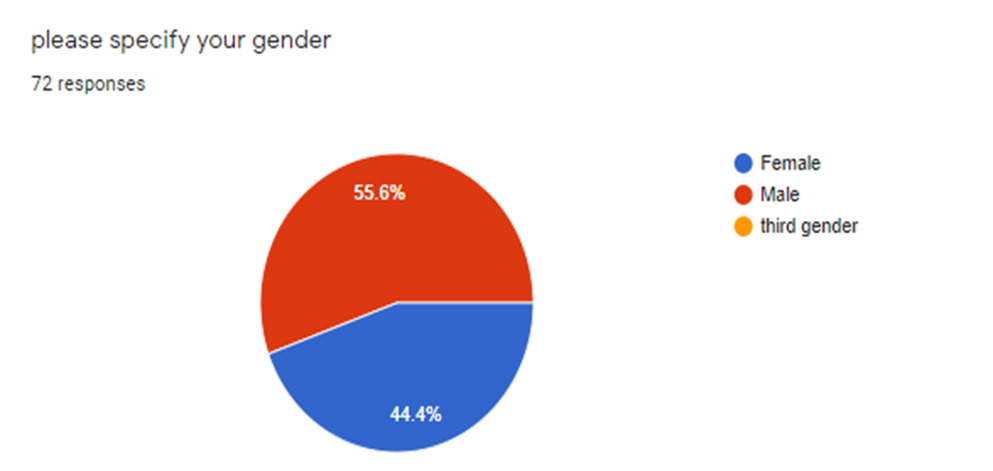
Figure 2 Participants according to Gender
The survey was taken by fifty-six per cent male participants. Female participants formed forty-four per cent of the pie.
Survey Question III. Do you think there is link between Alcohol consumption and crime?

Figure 3
There is overwhelming response from the participants of the survey affirming direct relation between alcohol consumption and crime, as seen in the above pie-chart (Figure 3). A little above two-thirds affirm with the former proposition. On the other end of the spectrum, a little less than one-third of the participants in the survey deny of any direct relation between alcohol consumption and crime.
The pharmacological effects of alcohol in producing hormones in the human body which lead to adverse effects on cognizance, and sparking up aggression is prevalent. Before the 1970’s, there was no existence of research on effect of alcohol on brain activity. This changed with development of neuroimaging tools which enabled documentation of changes is brain due to consumption of alcohol.
The grey matter in the brain is known to control sensory organs and muscular activity in the body. Therefore, has direct relation between cognizance, and in a research study conducted in 1995. It has been found that after a month of abstinence from alcohol, there is increase in grey matter in the human brain.36
The above finding has echoed in responses by participants in the subsequent indexed question in the Survey.
Survey Question IV. If, yes can you explain the reason
One of the extensive answers in the survey (show in Figure 4.) on the relation between alcohol and occurrence of crime was the loss of consciousness. The same has found evidence in Journal of Economic Perspectives which has analyzed data in the state of California from 2000-06 showing increase in crime rates after the age of twenty-one, the minimum legal drinking age in the state.37
The other response also highlighted in responses below is ‘the increase in aggressive behavior in an individual’.

Figure 4
Survey Question V. Which crime do you think is aggravated due to alcohol consumption?

Figure 5
1. Drink and Drive
The criminal act prevalent in opinion of the participants of the survey was ‘drink and drive’. The Motor Vehicles Act, 1988 (‘MV Act, 1988’, for brevity) classifies the former as a punishable offence.38 The specific provision specifies the amount of blood alcohol content (‘BAC’, for brevity), and limits it to not exceeding 30 mg. per 100ml. of blood. The guidelines issued by the Supreme Court in the judgment State of Tamil Nadu v. K. Balu and Another., prohibiting opening of any liquor store in perimeter of 500 m from the outer edge of a National/State Highway also shows the gravity of ‘drinking and driving’.39
The same predilection of ‘drinking and driving’ sparking up in mind of the participants of the survey gains credulity in a study conducted through analyzing victims of road traffic accidents (‘RTA’, for brevity) in Guwahati Medical College and Hospital (GMCH), Assam.40
The study was carried out by the aid of using autopsy reports of victims of RTA brought to Department of Forensic Medicine, GMCH between the period 1 July 2013 - 30 June 2014. It backed the assumption of alcohol reducing the ability to react to road conditions. The total number of autopsies held during the period was 3034. When segregated for victims of RTA, the number was 952 cases. Out of 952 cases, twenty-per cent, or 188 cases emerged in which samples of alcohol in blood were evidenced.
2. Domestic Violence
The participants of the survey have ranked ‘Domestic Violence’ as the second most committed crime post-consumption of alcohol. Two-third participants relate consumption of alcohol to domestic violence. The WEF citing the Outlook’s cover story also shows at minuscule scale the relation of domestic violence against the spouse post-alcohol consumption. 41 The option of divorcing a husband is a go-to option in western countries, if, a spouse commits domestic violence against them. However, in India the social lens through which divorced women are seen skews the grave situation against their welfare.
The dependence for economic survival on men is also seen as a limiting factor in women voicing out violence faced-at-hand of their spouses.42
3. Public Nuisance
The research study which found increase in criminal acts in the state of California from the age of twenty-one and above; has also evidenced causal relationship between public nuisance post-alcohol consumption.43 The participants of the survey nine-years down the line also affirm the view of occurrence of public nuisance, post-consumption of alcohol.
4. Sexual Assault
Incidents of rape post-alcohol consumption has been evidenced in college campuses in the US. The situation is replicated in India as well as the widely circulated incident in one of Pune’s top-most law colleges surfaced. The recent social media posts on Instagram regarding a student facing sexual assault post-alcohol consumption came into the public spotlight. The case of intimate partner violence has been evidenced in the book, Feminist Review.44
Survey Question VI

Figure 6
The trend in Indian youth culture is transforming as alcohol has become a part of college culture. The research study conducted (Baruah, Chaliha, 2015) resonates with the outcome of the survey numbers depicted above in Figure 6. It observes how integral alcohol consumption has become part of the celebration culture. In the research study (Baruah, Chaliha, 2015) nearly one third of the cases, alcohol was consumed pre-accident at a friend’s home; and another one-third was consumed at a relative’s house. This lucidly shows how alcohol has become prevalent in Indian social gatherings.
As stated earlier in the initial sections of this Research Paper, ‘peer pressure’ has its hand in influencing decisions in consuming alcohol. The participants of the survey suffice with the assumption.
Survey Question VII. Do you think minimum legal drinking age stipulated by State is followed?

Figure 7
The majority of the participants affirm with the view that strict regulation by State of MLDA will reduce consumption of alcohol among youth through their teenage years. The point is further illustrated in the subsequent survey question evidenced by a research study conducted in India regarding imperfect enforcement of MLDA.
Survey Question VIII. Do you think ban of alcohol will result in reduction in crime rate?

Figure 8
Carpenter and Dobkin have highlighted through their empirical work that increase in magnitude of alcohol results in destruction at dual levels. There is individual destruction as seen in the SCOTUS case of Budd v. California as it creates a downward spiral for the patient. On, the second level of destruction the state suffers damage in form of public nuisance, larceny et al..45
There is also lucid evidence that alcohol prohibition laws in India are effective in reducing consumption. This was the result even after imperfect implementation of the laws circling prohibition. It also evidenced significant reduction in intimate partner violence, as well as crimes against women.46
Any suggestions
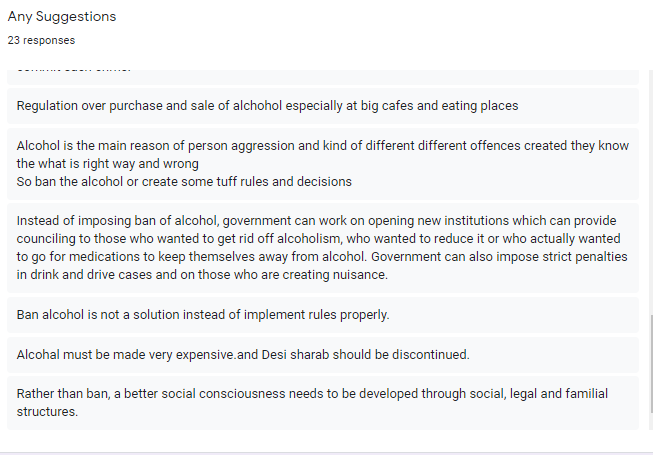
The participants of the survey highlighted the resultant aggressive behavior in post-consumption of alcohol. We have previously stated the fact that there is reduction in grey matter in the brain due to consistent alcohol consumption in the long-term. In the immediate milieu, we have seen in SCOTUS cases where consumption of alcohol reduced human cognitive ability. There have been hints in research studies regarding a possible link with rise in testosterone levels post-consumption of alcohol (resultant rise in aggressive behavior).47 However, there has been no one-to-one link established regarding the same.
Social awareness regarding the ill-effects of alcohol, counseling for AUD patients; levying of increased tax on liquor has been suggested by participants of the survey.
Conclusion and Suggestions
Man’s strong and eternal desire to get high is evident. A recent column in the editorial section of the financial daily, Business Standard relates the former to the invention of screwdriver. The latter originated in France to un-cork a wine, and so it has origins in the French term ‘tournevis’. In the similar way, the MLDA limit and prohibition laws are used to screw around the narrative of ‘prohibition’. Ultimately, the Andhra Pradesh CM, Shri. Jagan Mohan Reddy had to allow sale of alcohol in a restricted way.
State’s fiscal coffers are reliant to an extent of one-fifth on excise duty generated from sales of liquor. Tamil Nadu also charges a ‘VAT’ on the price of liquor. Overnight, if, the sale of liquor is banned – maintenance of national highways, agricultural subsidies; direct transfers to farmers; MGNREGA funds; and most vital, PDS system will start deteriorating. There will also be a challenge in the constitutional courts against such a move to prohibit alcohol totally. As, it would be fair to say, it would violate the right to do business of liquor producers. So, total prohibition of alcohol is a non-starter.
A bridge between total prohibition and swelling state coffers by excise revenues is increasing cess, and levies on liquor consumption. This cash-cow is well milked by the State Governments as seen by the levy of ‘70% tax on MRP’ as a ‘Special Corona Fee’.
(A) Alcohol Packaging
This suggestion is on the line of imposition of 85%. Let the ‘caveat emptor’ principle be turn on its head, and liquor producers be directed to cast the harmful effects of alcohol consumption on the human body. Incentives can be given in form of terming such advertising as ‘Corporate Social Responsibility’ on the part of the firm.
The practice of organizing social awareness depictions in form of drama performance, and organizing camps is akin to kicking the can down the road. It is a form of harboring passive awareness. The initiative of advertising the ill-effects of alcohol can start on a trial basis in states which produce their own liquor, like Tamil Nadu.
(B) Strict enforcement of MLDA
As cited earlier (Luca, Gunjan Sharma, 2015) increasing MLDA has shown positive results in form of – fall in consumption, as well as incidence of crimes post-alcohol consumption. Strict enforcement of validating age through ID Cards should be done at liquor stores. This practice is widely followed by Pubs in England where at the entry of a customer, he/she has to verify his/her eligibility by validating his age through an ID Card.
(C) Unifying Rates via GST
This would help in overcoming the opportunistic rate setting by States that attract large share of tourists. State of Goa, and State of Himachal Pradesh are famous for such opportunistic rate setting behavior. Legislature has the mandate in the field of fiscal laws to enact such provisions, so it is perfectly legal. However, the higher ground of public health is sacrificed.
(D) State induced carrot-and-stick method
Social welfare benefits like PDS; Ujjwala Scheme; DBT to farmers annually; and such benefits can be handicapped for individuals violating the liquor prohibition laws. Additionally, like in the state of California, India can replicate Section 647 (f) of the Californian Penal Code to term people found drunk in public as ‘an act of misdemeanor’.
Further, access to night clubs, and liquor shops shall be prohibited for such an individual for ‘x’ number of months. The act of consuming alcohol is not a crime unilaterally, however, when it influences criminal acts in furtherance of consumption. Then, it becomes a societal problem. The margins are fine, randomized capacity trials should be utilized to target specific geographic areas to fight this battle against Alcoholism.
*****
Footnotes
3. Trends Desk, ‘Memes, videos flood social media as liquor shops reopen in India amid Covid-19 lockdown’, The Indian Express (5 May 2020), < https://indianexpress.com/article/trending/trending-in-india/social-media-posts-liquor-shops-6392963/>; last accessed on 25 May 2020. ↑
4. Reserve Bank of India, ‘State Finances, A Study of Budgets Of 2019-20’ (September 2019). ↑
5. Finance (REV-1) Department, Government of National Capital Territory of Delhi, ‘Notification’ [No. F.3(2)/Fin.(Rev-1)/2020-21/DS-VI/150]. ↑
6. Radhika Rao, ‘India: Fiscal bats for reforms, limited immediate slip’, DBS Research (18 May 2020) <https://www.dbs.com/in/treasures/aics/templatedata/article/generic/data/en/GR/052020/200518_insights_india.xml>; last accessed on 26 May 2020. ↑
7. Ministry of Health and Family Welfare, ‘Advisory on use of Homemade Protective Covers for Face & Mouth’ (03 April 2020). ↑
8. Health & Family Welfare Department, Government of Odisha, ‘Notification’ (No. HFW-SCH-I-EMER-0001-2020, 9695H, 09.04,2020). ↑
9. Sandra L. Decker, Amy E. Schwartz, “Cigarettes and Alcohol: Substitutes or Complements?”, NBER Working Paper Series, Working Paper 7535, February 2000. ↑
10. Helpline number: 1800-11-0031. ↑
11. Subodh Ghildiyal, Ambika Pandit, ‘Covid-19 lockdown: 200% jump in calls from drug users, alcoholics’, TNN (24 April 2020) < https://timesofindia.indiatimes.com/india/covid-19-lockdown-200-jump-in-calls-from-drug-users-alcoholics/articleshow/75335478.cms>; last accessed on 28 May 2020. ↑
12. Ashwin Naik, ‘As India’s lockdown ends, a mental health crisis is just beginning’, World Economic Forum (18 Mau 2020) < https://www.weforum.org/agenda/2020/05/indias-lockdown-ends-mental-health-crisis-beginning/>; last accessed on 28 May 2020. ↑
13. Lachmi Deb Roy, ‘Blame It On COVID-19: Domestic Violence on The Rise, Are Men Putting More Pressure on Women’, Outlook ( 20 April 2020) <https://www.outlookindia.com/magazine/story/india-news-a-monster-at-home/303071>; last accessed on 28 May 2020. ↑
14. American Medical Association, ‘Reports of Officers’ (20 October 1956). ↑
16. Institute of Health Metrics and Evaluation, ‘Global Burden of Disease Study 2017’ December (2018). The latest report published in 2019 was inaccessible by paywall. ↑
17. National Health Portal (under the Ministry of Health and Family Welfare, Government of India), ‘Alcohol Use Disorder’(August 2015) <https://www.nhp.gov.in/healthlyliving/alcohol-use-disorder>; last accessed on 28 May 2020. ↑
20. World Health Organization, ‘Burden and Socio-Economic Impact of Alcohol – The Bangalore Study’ (2006) < https://apps.who.int/iris/bitstream/handle/10665/204856/B0305.pdf?sequence=1&isAllowed=y>; last accessed 31 May 2020. ↑
21. The Lancet, ‘Targets to reduce harmful alcohol use are likely to missed as global alcohol intake increases’ (May 2019) <https://www.eurekalert.org/pub_releases/2019-05/tl-pss050319.php>; last accessed 30 May 2020. ↑
22. Puneet Wadhwa, ‘Nomura predicts Indian GDP to contract by 5.2% in FY21, more rate cuts’, Business Standard (9 May 2020) < https://www.business-standard.com/article/economy-policy/goldman-sachs-nomura-lower-fy21-gdp-estimate-for-india-see-more-rate-cuts-120050800738_1.html>; last accessed 9 May 2020. ↑
23. Reserve Bank of India, ‘Monetary Policy Statement, 2020-21: Resolution of the Monetary Policy Committee (MPC) May 20 to 22, 2020’ [22 May 2020] last accessed 22 May 2020. ↑
24. Ministry of Finance, ‘Revised Issuance Calendar for Marketable Dated Securities for the remaining period of HI (May 11-Septemner 30,2020)’, [08 May 2020] < https://pib.gov.in/PressReleasePage.aspx?PRID=1622168>; last accessed on 31 May 2020. ↑
26. Press trust of India, ‘75% youths consume alcohol before turning 21, claims survey’ (28 September 2019). ↑
28. C Evren ,S Kural S, et al., ‘Clinical correlates of childhood abuse and neglect in substance dependents’, Addictive Behaviors, 2006; 31: 475-485 < https://www.sciencedirect.com/science/article/abs/pii/S0306460305001322>; last accessed 31 May 2020. ↑
29. V. Vijay Ramanan, Suresh Kumar Singh, ‘A study on alcohol use and its related health and social problems in rural Puducherry, India’, Journal of Family Medicine and Primary Care (2016 Oct-Dec), 5(4); pp. 504-508 < ncbi.nlm.nih.gov/pmc/articles/PMC5353818/> last accessed on 31 May 2020. ↑
30. Nandita Saikia, Benjamin Debbarama, ‘The socioeconomic correlates of substance use among men in Northeast India’ (2020), Clinical Epidemiology and Global Health, 8 (2020); pp. 149-157 <https://cegh.net/article/S2213-3984(18)30340-3/pdf last accessed on 31 May 2020. ↑
31. M Bohman, S Sigvardsson, ‘Material inheritance of alcohol abuse. Cross-fostering analysis of adopted women’, Archives of General Psychiatry (September 1981), 38(9); 965-9 <https://pubmed.ncbi.nlm.nih.gov/7283667/>; last accessed on 31 May 2020. ↑
32. RW Pickens, DS Svikis, et al., ‘Heterogeneity in the inheritance of alcoholism. A study of male female twins’, Archives of General Psychiatry (January 1991), 48(1); pp. 19-28 <https://pubmed.ncbi.nlm.nih.gov/1984758/>; last accessed on 31 May 2020. ↑
33. Meritxell Ventura-Cots, Ariel E. Watts, et al., ‘Cold Weather and Fewer Sunlight Hours Increase Alcohol Consumption and Alcoholic Cirrhosis Worldwide’, Hepatology, Volume 69, Issue 5 <https://aasldpubs.onlinelibrary.wiley.com/doi/abs/10.1002/hep.30315>; last accessed on 31 May 2020. ↑
34. S Popova, J Rehm, et al., ‘Comparing alcohol consumption in Central and Eastern Europe to other European Countries’ (September-October 2007), Alcohol and Alcoholism (Oxford, Oxfordshire), 42(5); pp. 465-473 < https://pubmed.ncbi.nlm.nih.gov/17287207/?dopt=Abstract>; last accessed on 31 May 2020. ↑
35. Pratham Education Foundation, ‘Annual Report 2018-2019’, Pratham, <https://www.pratham.org/ar/ar1819.pdf > last accessed on 25 May 2020. ↑
36. A Pfefferbaum et al., ‘Longitudinal changes in magnetic resonance imaging brain volumes in abstinent and relapsed alcoholics’, Alcoholism: Clinical and Experimental Research (1995), 19: pp. 1177-1191. ↑
37. Christopher Carpenter, Carlos Dobkin, ‘The Minimum Legal Drinking Age and Public Health’, Journal of Economic Perspectives (Spring 2011), Volume 25, Number 2; pp. 133-156. ↑
38. the Motor Vehicles Act, 1988, s. 185. ↑
40. Aditya Madhab Baruah, Rituraj Chaliha, ‘A Study of Incidence of Alcohol Use in Fatal Road Traffic Accidents’. J Indian Acad Forensic Med. (Jan-March 2-15), Vo. 37, No.1. ↑
42. Marlene J. Berg, David Kremelberg, et al., ‘The Effects of Husband’s Alcohol Consumption on Married Women in Three Low-Income Areas of Greater Mumbai’, AIDS and Behavior (2010), 14; pp. 126-135 < https://doi.org/10.1007/s10461-010-9735-7>; last accessed on 31 May 2020. ↑
44. Rinki Bhattacharya, ‘Behind Closed Doors: Domestic Violence in India’, Sage Publications (ISBN 0-7619-3239-9, 2004). ↑
46. Luca DL, Owens EG, Sharma “Can alcohol prohibition reduce violence against women?” Am Econ Rev, 2015. ↑
47. C.J. Peter Eriksson, ‘Role of Alcohol and Sex Hormones on Human Aggressive Behavior’, Hormones and Social Behviour, Research and Perspectives in Endocrine Interactions, Springer (ISBN: 978-3-540-79286-4, 2008) < https://doi.org/10.1007/978-3-540-79288-8_13>; last accessed on 31 May 2020. ↑