
Introduction
The Crimean Peninsula is situated in the south of Ukraine. It is completely surrounded by the Black sea and Sea of Azov. It is separated by Russia by a small strait called Kerch strait which joins both Black Sea and Sea of Azov. Crimea is physically connected with Ukraine as well as most of the electricity in Crimea is supplied from Ukraine. Apart form that Crimea is connected with Ukraine through roads and railway lines too. There are three official languages Russian, Ukrainian, Crimean Tatar. According to a report Russian is spoken by the 84% of Crimean inhabitants. Most followed religion in the region is Christianity and rest are Muslims.
Historical background
Ukraine was always under the control of the Russian Empire and for almost 400 years it has been a colony of the Russians, on the other hand, Crimea was under the control of the Ottoman Empire, which ruled the countries like Turkey, Balkan, Egypt, etc.
In 1973, as a result of a war between the Ottomans and the Russians, the Ottoman Empire was defeated by the Russians and Crimea became a colony of them. The Taurida Oblast was created on 2 February 1784 and Simferopol was declared as the center of Taurida in 1984. The oblast was divided into 7 uyezds but later Paul I, the then Emperor of Russian Empire, passed a decree on 12 December 1796, abolishing the oblast and divided the territory into 2 uyezds: Akmechetsky and Perekopsky. In 1799, there were 1,400 villages and 7 towns—Simferopol, Sevastopol, Yalta, Yevpatoria, Alushta, Feodosiya, and Kerch.
By the late nineteenth century, Crimean Tatars kept on framing a slight majority of Crimea's still to a great extent rustic populace yet there were substantial quantities of Russians and Ukrainians just as littler quantities of Germans, Jews (counting Krymchaks and Crimean Karaites), Bulgarians, Belarusians, Turks, Armenians, and Greeks and Gypsies.
The Crimean War
The Crimean war was fought between the Russian empire and an alliance of French, British, Ottoman empires from 1853 to 1856. The main cause of the war was that the Russians were spreading their empire aggressively in different parts of Asia as well as Europe. So to stop Russian empire, the empires of France, Britain and Ottoman formed an alliance and defeated Russia.
The war crushed a great part of the monetary and social foundation of Crimea. The Crimean Tatars needed to escape from their country as a group, constrained by the conditions made by the war, abuse and land seizures. The individuals who endure the trek, starvation and sickness, resettled in Dobruja, Anatolia, and different pieces of the Ottoman Empire. At last, the Russian government chose to stop the procedure, as the agribusiness started to endure because of the unattended rich in fertility farmlands.
Soviet Union (1921-1991)
Following the end of the First World War, Russia faced a civil war, widely known as The Russian Revolution (1917), and on 18 October 1921, the Crimean Autonomous Soviet Socialist Republic was merged with the Russian SFSR which led to the establishment of the new Soviet Union or the Union of Soviet Socialist Republics. Then for the next 70 years Crimea remained the part of USSR.
Atrocities by Joseph Stalin
On 18 May 1944, the whole populace of the Crimean Tatars was persuasively extradited in the "Sürgün" (Crimean Tatar for outcast) to Central Asia by Joseph Stalin's Soviet government.
On 26th June 1944, Armenian, Bulgarian and Greek population was also extraded to the central Asia.
The Crimean Autonomous Soviet Socialist Republic was nullified on 30 June 1945 and changed into the Crimean Oblast (region) of the Russian SFSR. Before world war II, Crimean Tatars constituted 35% of the total population of the Crimean population, but after the actions taken by Stalin, only 0.02% of the total population was shared by the Tatars and a large section was constituted by the Russians.
On 19 February 1954, the Presidium of the Supreme Soviet of the USSR issued a pronouncement on the exchange of the Crimean area of the RSFSR to the Ukrainian SSR.
Why is Crimea important to Russia?
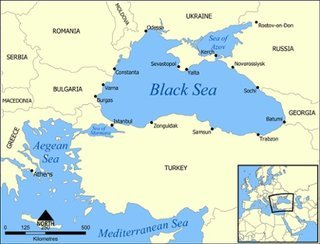
The location of Russia gives it a limited access to link itself from other countries, especially, the western countries. Its limits the globalization policy of Russia, therefore, Crimea becomes a significant region for Russia mainly in case of strategic location, transport, Black sea fleet of NAVY, etc.
The strategic location of Crimea gives a direct and easy access to the Black Sea, Mediterranean Sea, Balkan region of Europe. Sevastopol is strategic importance naval base of Russia, as well as it is the only warm water base of Russia.
The Black sea fleet of Russian Navy has controlled the port of Sevastopol for various centuries. Earlier, the Black sea fleet was rented by the Russian navy but later in 2017, Ukraine passed an order that Russia has to retreat its Navy from Sevastopol. The port of Sevastopol is important to Russia because it is the only warm water port of Russia via which Russia can trade through for the whole year because the water of the port does not freeze the whole year, which help the nation to trade without any problematic condition, unlike the water near the ports like, Murmansk, St. Peteresburg, etc.
Further for the security reason Crimea became significant for Russia. The alliances like, NATO, European Union possessed a big threat to Russia and were spreading their power in the eastern Europe and mainly on the countries which were a part of the Soviet Union. Alike, Latvia, Estonia, etc, Ukraine also wanted to become a member of EU and later NATO, and which could help the US to spread its power on Ukraine and influence the strategic management of Russia.
Annexation of Crimea and its aftermaths
The Crimean Peninsula was attached from Ukraine by the Russia in February– March 2014 and from that point, it has been controlled as two Russian government subjects—the Republic of Crimea and the federal city of Sevastopol. The annexation was done by the military intervene of Russia in Crimea which consequently resulted in a widely unrest in the southern and eastern Ukraine.
On 27 February 2014, the troops of Russia without insignia invaded and tool over the Parliament of Crimea and captured strategic and important sites of Crimea and conducted a referendum and declared Crimea as independent of the Ukrainian rule on 16 March 2014.
Ukraine and numerous world chiefs denounced and condemned the intrusion and annexation and view it as an infringement of international laws and Russian-signed agreements securing the regional trustworthiness of Ukraine, including the Belavezha Accords, the Helsinki Accords, the Budapest Update on Security Affirmations of 1994 and the Bargain on kinship, collaboration and organization between the Russian Federation and Ukraine. This led to the suspension of the Russian federation from G-8 countries. The United Nations General Assembly also declared the referendum and polling as illegal, invalid and rejected the results of referendum, and introduced a non-binding resolution confirming the regional integrity or territorial integrity of Ukraine.
The Russian Federation denied the "annexation" label and suggested that the referendum in Crimea was self-determination of the people. And in July 2015, Dmirty Madvedev, Prime Minister of Russia declared that Crimea is the part of the Russian Federation.
The contention over Crimea and Sevastopol has created in a worldwide domain which, aside from the two specifically included states, included other essential states too. These include the European Union, NATO, OSCE, UN, USA, Germany, France, Poland, and many others. The Russian has for a long time transparently restricted Ukraine's coordination into the monetary, and subsequently political, "West" and
specifically, the likelihood of its NATO participation. This Russian position has been notable however normally disregarded by Western pioneers who demanded each European state's legitimate ideal to choose its relationship with different states openly, incorporating on participation either in EU or NATO. The high agents of the Soviet Union and of its legitimate successor – the Russian Federation – authoritatively perceived this privilege of every European state in a few archives, including the "Charter of Paris for new Europe" (1990). Nonetheless, the executive has been conditional, and the consideration is limited.
Actions taken by UN
1) Security Council
On 15th March 2014, United States of America brought a resolution in the UN security council to profess and vouch that the Ukraine’s Sovereignty independence unity and territorial integrity was infringed by the Russian federation. This resolution went for the process of vote in which 13-member state voted in the favor of the resolution, China abstained and Russia vetoed the resolution.
2) United Nations General Assembly
On 27th March 2014 the UN general assembly passed an non-binding resolution stating that the referendum conducted in Crimea was “illegal” and it was not a self-determined step taken by the people of Crimea, instead due to the pressure and annexation by the Russian military, the people of Crimea were compelled to organize such a referendum. The resolution was titled “Territorial integrity of Ukraine”. The resolution has tried to nullify the referendum held on Crimea and it has no validity.100 countries voted in the favor of the resolution, while 11 nations voted against and 58 nations abstained.
Conclusion
No one would have thought that how a small peninsula is of so much importance to Russia. Although Crimea is a small piece of land, but it is strategically very important to Russia. The city of Sevastopol is an important base for Russian Black Sea Fleet. Not only this, but it is vital for the marine trade too as it connects Russia to Arab and Asian countries.
But many political experts are of view that it fulfills the personal agenda of Vladmir Putin. Being unable to curb rising cost of living and a poor performing economy has had tarnished the political fame of Putin. And as a way of regaining that popularity, Crimea was annexed. Consequently, Putin’s fame skyrocketed, and he got re-elected as President for the fourth time in 2018.
Another reason given by Russia for the annexation of Crimea is that the Crimean Peninsula was ‘gifted’ by Russia to Ukraine as a token of alliance in 1954. But historians regard this as an excuse for the Crimean annexation.
The West’s reaction on this issue was very strong. Not only did they condemn the annexation, but also posed various sanction relating to travel, trade and economy. As a result of which, Russia had to face severe consequences and it completely tarnished the Russia’s status in the contemporary world.
*****