
INTRODUCTION
The most dangerous form of disinformation is the creation of an illusion of being informed while one is really being led away from knowledge. We live in an era where entertainment is equivalent to validity/importance. Now, I am not against entertainment as such, we do not measure a society by the presence of its junk but by what it dignifies as significant or insignificant. The problem is that the form which was designed for entertainment has become a sufficient equivalent to a source of knowledge. We need everything to hold attention, or at least deliver a dopamine rush, however, not all knowledge is meant to amuse us and not all learning is meant to feel pleasurable.
In a setting such as this, actual information gets drowned in a sea of irrelevance. Audio-visual media has become the most dominant form of communication, and in short-form content, there is no context like there is in written formats, wherein one can visibly connect ideas. A user may scroll from a reel about a terrorist attack in one country to a random video of a rabbit chewing carrots, there is no context, and no continuity, just random pieces of information floating around and piled together in a manner that information is lost in irrelevant stimuli. Reading leaves room for thought, and writing carries potential for meaning, inviting us to either question or to accept what is said and then move forward at our own will. If you read “the sky is blue,” there is a moment, however brief, to imagine, or consider its truthfulness, but if you see a picture of a blue sky, it is accepted as it is. This shows how your perception of information and its judgement is narrowed down to almost nothing but accepting what is shown to you.
Online, neutral statements get misinterpreted or reframed, “I don’t support a particular party”, followed by a response like, “wow, so are you anti-national?” Nuance has no importance over threatening narratives anymore. Short-form political content creates a sense of familiarity, making one believe they understand, leading to perceived knowledge exceeding actual understanding. It is this disjunction that the present study seeks to examine. Specifically, it investigates whether sustained exposure to compressed and emotionally saturated political content correlates with inflated self-assessments of political knowledge and reduced capacity to articulate policy detail.
EVOLUTION OF CIRCULATING INFORMATION
In the 19th century, newspapers such as The Amrita Bazar Patrika, and later The Hindu, were the major carriers of the latest news and also arguments. A reader encountering an editorial in The Hindu’s “Leader” section or a nationalist essay in Kesari did not consume it in fragments. He read linearly, he followed premises to conclusions, he paused, considered, and returned the next day, because the medium itself requires deliberation. Public reasoning was slow because print is slow. With the arrival of radio, most prominently the All India Radio, politics acquired voice. Tone, pause, emphasis, emotional cadence became a part of persuasion. The spoken word reached millions simultaneously. When Jawaharlal Nehru delivered his “Tryst with Destiny” speech in 1947, its power lay not only in its language but in its resonance through broadcast. Then came the television. From Doordarshan’s early state-controlled broadcasts to the rise of private news channels in the 1990s, politics became greatly image-conscious. The televised debate focused on presence over prose, a leader’s facial expression, or rhetorical punchline often carried more weight than actual policy details. As 24-hour news cycles intensified, speeches were reduced to clips, clips to soundbites, and soundbites to headlines.
Political speech now circulates as thirty-second reels, meme templates, trending hashtags, and similar witticisms. A parliamentary intervention becomes a viral clip with no context, a complex budget discussion competes on the same feed with celebrity gossip and cooking videos. These platforms reward only outrage and shareability, and virality completely disregards verification. The dominant medium shapes how truth is recognized. In the words of George Orwell, “Who controls the past controls the future. Who controls the present controls the past.” Whoever controls the narrative, holds the most power.
Orwell feared censorship. Aldous Huxley feared excess. Orwell feared that truth would be hidden. Huxley feared it would be drowned in irrelevance.
EMOTION AS POLITICAL CURRENCY
A 2020 computational study1 analysing speeches of eight Indian politicians constructed what it termed the IITG Politician Speech Corpus, 516 segmented speech utterances drawn from publicly available addresses. Each segment was classified into four emotional categories: Angry, Happy, Neutral, and Sad. Using an Attentive CNN+LSTM architecture, the model achieved an average unweighted recognition accuracy of 78.95%.
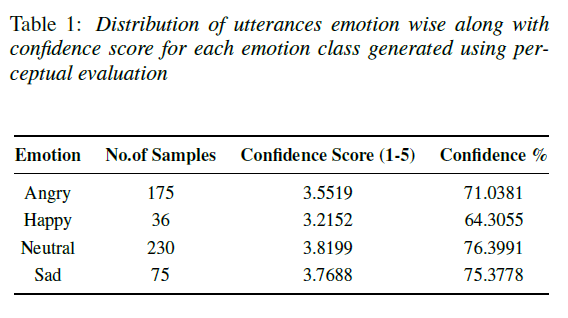
The distribution table (Table 1) shows anger as one of the most frequent emotional categories, while the analysis of electoral outcomes concluded that among the four emotional categories, anger emerged as the most politically potent. Politicians whose speeches were anger-dominant recorded stronger vote shares and larger victory margins. One candidate’s “hugely anger dominated speeches” corresponded with a 69.58% vote share and a 43.32% margin. Another with significant anger content recorded a 56.64% vote share and a 31.07% margin. By contrast, a candidate exhibiting an “extreme lack of emotion” secured only 1.62% vote share.
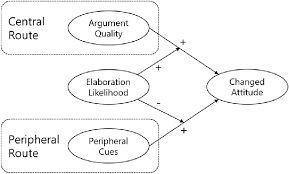
Anger is very obviously contagious. Emotional contagion theory2 shows that affect spreads rapidly through mimicry and reinforcement. In a rally, in a televised debate, on a social media feed, outrage only multiplies itself. Social Identity Theory explains how “us” versus “them” turns disagreement into hostility, which can intensify opinions and reduce systematic information processing while increasing reliance on heuristics and stereotypes. In other words, when individuals are angry, they are less likely to consider evidence carefully and more likely to go with what they already believe, or were taught to believe. Petty and Cacioppo’s Elaboration Likelihood Model3 states that central processing requires effort, whereas peripheral processing requires only feeling. Anger shortens the route between the stimulus and conclusion.
The Affective Intelligence theory4 further proves the point, since anxiety provokes vigilance, and anger provides you with certainty, it tells the citizen “You are right, they are wrong.”
It is easier to divide than to persuade. Propaganda studies like the consolidation of support in 1930s Germany show how emotional conditioning can bind an entire population even when material conditions are deteriorating in plain sight. Psychologically, inducing hatred is efficient, and it strengthens in-group loyalty which reduces counter-arguments. It seems like clarity, and that is its biggest hazard. And so we arrive at the uncomfortable to digest conclusion: emotional intensification in political speech is actually a strategy, and its effective, so it persists.
THE CONSEQUENCE
Entertainment becoming epistemology is dangerous. Citizens circulating memes and repeating viral lines from speeches; such behaviours show that either everything is being taken extremely lightly, or it’s because we feel informed because we have merely encountered information. Encountering information for a few seconds, however, does not equate comprehension of said information. We respond before we reflect because we feel certain before we truly understand. What governs us now may not be censorship at all, as some fear, it could be compression.
*****
Footnotes
1. Goel, S., Pandey, S.K., & Shekhawat, H.S. (2020). Analysis of Emotional Content in Indian Political Speeches. arXiv preprint arXiv:2007.13325.
2. Elaine Hatfield, John T. Cacioppo & Richard L. Rapson, Emotional Contagion, 2 Current Directions Psychol. Sci. 96 (1993)
3. Richard E. Petty & John T. Cacioppo, The Elaboration Likelihood Model of Persuasion, 19 Advances Experimental Soc. Psychol. 123 (1986)
4. George E. Marcus & Michael B. MacKuen, Anxiety, Enthusiasm, and the Vote: The Emotional Underpinnings of Learning and Involvement During Presidential Campaigns, 87 Am. Pol. Sci. Rev. 672 (1993)