
INTRODUCTION
The fintech industry has been recognized as a disruptive agent in the increasingly digitalized financial landscape, radically revolutionizing the provisioning and utilization of financial services (Gomber et al., 2017). New digital services such as artificial intelligence, blockchain, cloud computing and big data analytics, have enabled financial institutions to operate more efficiently, to reduce the costs of transaction and to enhance financial inclusion (Philippon, 2016; Frost et al., 2019). The Indian fintech market has grown more quickly over the last 10 years and from its origin, compared to all other fintech markets in the world, due to the growth in internet connectivity, government policies and inclusive finance schemes (Kshetri, 2021). Through government policy such as Digital India, alternate digital channels such as UPI became accessible, and caused digital disruption of India’s payments ecosystem (National Payments Corporation of India, 2024).
The momentous upscaling of the fintech industry in India has led to bringing banking to the masses and increasing accessibility of financial services to the under-banked and unbanked (Das & Das 2020). Digital modes of payment, mobile bank applications, and online loan systems have brought sweeping changes in the way transactions are carried out giving way to convenience, versatility and high scalable operations (Gomber et al 2017). While technology has undoubtedly made lives simple, it has also increased the threat surface for catastrophic security breaches and system intrusions (Kamuangu 2024). With vast amounts of sensitive personal and financial data being processed by fintech firms, these platforms consequently become prime targets for cybercriminals seeking to infiltrate systems and access personal information (Alharbi & Tassaddiq 2021).
Security breaches in the form of hacking also known as accessing of information systems, networks or databases without permission has become one of the most prominent apprehensions faced by the domain of financial technology (Gai et al., 2018). Cyber adversaries use advanced methods like phishing, malware, ransomware, and social engineering to undermine well-established security of digital infrastructures (Javaheri et al., 2023). Such incursions not only lead to loss of cash, but also bring damage to reputation, disruption of structures and collapse of consumer confidence (Aldboush & Ferdous, 2023). The digitization of businesses in India is the reason behind pervasiveness of digital channels such as UPI; this in turn has heightened the likelihood of cyber threats to an unprecedented level (National Payments Corporation of India, 2024).
In light of the increasing number and complexity of cyber-threats, information assurance is gaining importance to financial technology systems (Kamuangu, 2024). Information assurance deals with measures and processes that can be implemented in a computer system to protect data confidentiality, integrity, and availability (Sahni & Kessler, 2017). The implementation of several security approaches, such as encryption, MFA and AI-based anomaly detection has been common among fintech companies (Ometov et al., 2018; Javaheri et al., 2023). Newer techniques such as the blockchain and the zero-trust network architecture, are also being investigated for improving system security and preventing intrusion (Kamuangu, 2024). Nevertheless, these approaches are subject to constraints, primarily due to the highly volatile nature of cyber-threats (Alharbi & Tassaddiq, 2021).
Apart from technology-based constraints, mechanisms also of regulators are influencing all aspects of cybersecurity within the fintech space (Tiwari, 2024). In the Indian context, regulatory authorities such as the Reserve Bank of India (RBI), the Securities and Exchange Board of India (SEBI) and the Indian Computer Emergency Response Team (CERT-In) have drawn guidelines and policies concerning enhancements in all aspects of cybersecurity (Indian Computer Emergency Response Team, 2024; Reserve Bank of India, 2023). However, regulatory structures in essence tend to be highly fragmented in nature, with varying degrees of compliances observed from sector to sector (Alodhiani, 2023). Also, even though integration of established international standards relating to cybersecurity such as NIST, ISO/IEC 27001 and so on with the domestic regulations have instilled a hybrid model of cybersecurity practices, it often leads to lacunae in respective compliances (Arner et al., 2017; Frost et al., 2019).
Another essential dimension affecting the cybersecurity in finance and fintech is the human dimension (Aldawood & Skinner, 2019). According to studies in this field, most cyber-attacks are caused by human errors and unawareness, while the human factor is heavily targeted and exploited via social engineering techniques (Aldawood & Skinner, 2019). The fact that serious cyber security issues are caused by ‘human error’ over technical designing flaws, and that cybercriminals seek to manipulate human behavior instead of exploiting technical capabilities, advocates ways for focusing on people and more specifically, user training programs (Javaheri et al., 2023). In addition to sophisticated systems, bad cyber security practices and poor user training may cancel out security systems’ effectiveness (Aldboush & Ferdous, 2023).
In addition, the increased dependence on AI and big data has brought about a new set of privacy, ethical and data governance issues in finance (Aldboush & Ferdous, 2023). Although these technological benefits can be used to bring about more sound decisions and reduce frauds, the ineffectiveness in solving privacy and ethical problems can also have detrimental consequences to the image of a fintech firm and its ability to win consumer trust and reputation (Aldboush & Ferdous, 2023; Frost et al., 2019).
The relationship between technology, regulation and human factor is complex and path dependent through a multidimensional system of cybersecurity fintech (Javaheri et al., 2023). Most of the existing studies only concentrated on a separate part of the systems like technological dimension or regulatory dimension, but ignore to build up an integrated management framework according to these separate parts, thus we can then develop a research framework to explore their interrelationship on information assurance as well as cyber intrusions in fintech system.
However, in the Indian fintech system, this gap assumes greater importance because of digital disruption and increasing reliance on digital financial services (Kshetri, 2021). In this regard, the identification of a critical optimum in the integration of technology, regulation and human intelligent awareness is needed for the sustainability of the Indian fintech ecosystem (Arner et al., 2017). As one step in this direction, the current research attempts to study system intrusion risks and evaluate information assurance mechanisms employed by Indian fintech companies following a secondary data based analytical methodology.
This study aims to identify the common varieties of cyber-attacks, examine the reason behind data vulnerabilities and breach impacts, and evaluate the effectiveness of current information security systems (Javaheri et al, 2023). Moreover, the research investigates the influence of government policies and human factors over cybersecurity performance so as to understand factors shaping the security levels of fintech firms (Tiwari, 2024). The article forms a comprehensive understanding of fintech cybersecurity based on academic researches, industry report, and regulatory resources.
The paper points out that a comprehensive framework combining technological innovation, rigorous regulatory oversight, and continuous user education will be essential for delivering effective information assurance in the Indian fintech space (Aldboush & Ferdous, 2023). Such a comprehensive framework would ensure the security of the system from cyber-attacks and build customer trust and the long-term growth of the sector in India (Kamuangu, 2024).
Literature Review
A. Growth Of Fintech and Associated Cyber Risk.
Fintech has really changed the way we do things by bringing together technologies like intelligence and blockchain and cloud computing to make financial services better and easier for everyone to use (Gomber et al., 2017). With this change, we have also seen a rise in cyber threats. Research shows that while fintech innovations can make things better, they also bring risks since we are relying more on technology (Hermiyetti, 2023).
The rapid expansion of digital financial services has seen the volume and frequency of online transactions proliferate in recent years, leading to a widened cyber-attack surface (Kshetri,2021).This development is clearly exemplified by the increase in the volume of transaction for digital payment platforms such as the Unifies Payment Interface (UPI) which has driven the adoption of fintech in India ( National Payments Corporation of India,2024). Whilst this expansion provides benefits in the form of improves financial inclusion and operational effectiveness, it equally contributes to enhanced exposure to cybersecurity risks in the fintech domain. It has been observed that more digitally dependent the system becomes, the more prone it is to cyber security issues such as phishing, fraud and unauthorized entry (Kamuangu, 2024). In essence, the growth of fintech sector has a positive correlation with cyber risk.
B. Types of Cyber Threats and System Intrusions
Fintech systems are prone to various types of cyber attacks including data breaches, phishing, malware and ransomware. These types of cyber attacks take advantage of the flaws in the systems infrastructure (Kamuangu,2024). There are also other cyber attacks which pose a great risk such as DDoS attacks, API exploitation and mass data leakage (Khullar,2025).
The large amount of personal and financial data that these fintechs firms possess makes them a prime target for cyber criminals. Another significant threat that these systems face is due to the lack of stringent cybersecurity regulation sand enforcements, which can lead to data breaches and fraud (Alodhiani,2023)
C. Information Assurance and Cybersecurity Measures
Information assurance has a critical part in ensuring safety for the fintech system as it assures the confidentiality, integrity, and availability of financial information. This means that sensitive financial information can only be viewed by authorized persons, information cannot be modified by unauthorized individuals, and the required data should be readily available when required Consequently, a number of technological solutions have been implanted to secure the fintech systems from cyber-attacks.
Research shows that there are certain technologies like encryption, multi factor authentication (MFA), and blockchain are considered critical for the security of the financial data in fintech systems. Among these, MFA is highly regarded as being effective due to the additional security measures imposed, which minimize the possibility of unauthorized system access (Ometov et aal., 2028).
D. Role Of AI, Big Data, and Privacy Concerns
The combination of AI and Big Data has boosted Fintech functionalities and capabilities in terms of detecting fraud, estimating risks, providing customer’s personalization, among other. But this technological development comes along with ethical and privacy issues, concerns in terms of data protection, transparency and controls for users (Aldboush & Ferdous, 2023).
Mishandling consumer data could have serious reputational impact and result in the loss of customer’s trust. Fintech companies should, thus, maintain a sound consumer data management policy that meets the needs for data protection regulations in order to be ethical (Aldboush & Ferdous, 2023).
E. Regulatory Framework and Compliance Challenges.
To help protect and maintain cybersecurity and data protection in the fintech systems, regulations should be taken into account. However, there is evidence in prior literature showing that fintech companies struggle with regulatory compliance due to their rapidly changing cyber threat environment and heterogenous regulatory structure (Tiwari, 2024). Furthermore, weak regulations on cybersecurity along with the insufficient enforcement makes the fintech system vulnerable for cyber attacks and further confirms the need for stricter regulatory frameworks and coordinated regulation execution (Alodhiani,2023).
F. Human Factor and Social Engineering Risks
One of the most significant factors in managing cybersecurity risk is the human factor. Social engineering attacks target humans instead of weaknesses in technology and are one of the most prevalent types of attack, it’s also hard to combat (Aldawood & Skinner, 2019).
Not enough user awareness and training combined with mistakes of the individual users cause the most security breaches. While technology advancements and defensed grow, cyber-attacks keep occurring as the users are unaware and unable to identify security threats (Aldawood & Skinner, 2019).
G. Impact of Cybersecurity on Consumer Trust
Customer trust is very necessary in the adoption and sustainability in the fintech services. Cyber security breaches, including the data exposure and system intrusions, can effectively damage the consumer confidence. Studies proves that breaches like these may lead to the financial losses, reputational damages, and legal issues, at the end, it is affecting the long-term growth of fintech firms (Khullar, 2025).
Additionally, strong cybersecurity frameworks, transparency and ethical data practices etc.* are very crucial in building and maintaining consumer trust in fintech economy (Aldboush & Ferdous, 2023).
Scope of the Study
The subject matter of this research is focused on the Indian fintech industry, primarily on the cyber security climate therein and on current challenges faced regarding the methods of system intrusion and the risks concerned. Moreover, it analyzes information assurance concept and associated risks in the fintech climate. Furthermore, it provides a comprehensive overview of existing literature and policies concerned with the current and growing cyber security paradigm. As far as the research sources concerned, only secondary data sources are considered, and thus this study is not involved with primary data gathering such a thought survey, etc.
Limitations of the Study
This particular study is however subject to certain limitations as well. Firstly, the data consist of only secondary data, which fails to capture real time issues in fast paced developing fintech cybersecurity world. Secondly, the use of existing academic literature may lead to biases or constraints present in the prior studies. Thirdly, lack of access to sensitive and confidential internal data f fintech forms makes in-depth organizational insight unattainable. Fourthly, rapidly changing and new cybersecurity threats might not fully be available in the existing literature, leading to possible gaps in capturing most recent trends. However, despite these limitations, the study presents a thorough and a solid assessment of the risks of system intrusion and information assurance within Indian fintech organization
DATA ANALYSIS AND INTERPRETATION
The paper seeks to systematically study the patterns of system intrusion and the effectiveness of information assurance mechanisms in the Indian fintech sector. The analysis is derived from secondary data collected from the refereed articles, industry reports, academic literatures, regulatory reports, etc. This section is structured in such a way to present a clear understanding on how quickly the Indian Fintech sector is growing, as well as the associated threats like cyber security, data breach, etc. This section primarily discusses about the rapid rise in the digital payment and online banking leading to the greater exposure to cyber-attack for both fintech firms and the customers.
Further, it discusses on the types and working style of the cyber-attacks like phishing, social engineering, ransomware as it becomes increasingly more advanced and common. It also explains human and technological vulnerabilities, legislative inadequacies contributing to the rise in data breach. This section also discusses about the strengths and weaknesses of present cyber security mechanisms which have been adopted in fintech, such as Artificial Intelligence (AI), Block-Chain technology, and the Multi-Factor Authentication in order to detect threats to the fintech systems.
Finally, this section studies the impact of these cyber-attacks in the fintech firms and the consumers, taking in consideration of the financial losses, reputational damages, trust erosion in the consumers, etc. This is presented both quantitative and qualitative understandings with the help of graphs and tables.
A. Fintech Evolution and Increasing Risk Exposure
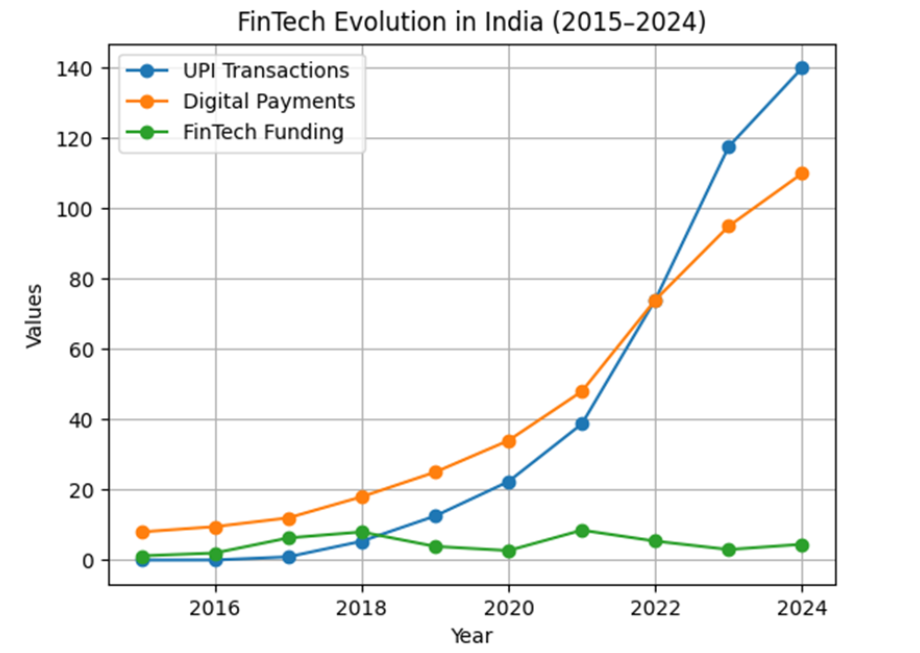
Fig 1. Fintech evolution in India from the year 2015 to 2024
The Indian fintech sector has registered an extraordinary exponential rise reflecting the larger digitalization of the entire financial sector. A particularly remarkable scaling was seen with the Unified Payments Interface (UPI), where, from just 2 crore annual transactions in FY 2016-17, escalated by nearly 12,000-fold over 24, 162 crore transaction, totaling 314 lakh crore transaction value, for FY 2025-26, a substantial annual increase rate of approximately 30 % and 20.59% in volume and value, respectively.
Figure1, showcases an exponential trajectory not only for UPI transactions but also for digital payments volumes and fintech funding levels from 2015 to 2025.Such spectacular growth, despite all benefits related to enhanced financial accessibility and operational efficiency, inevitably resulted in an almost equal amplification of the cyber-attack surface which represents a greater vulnerability to sophisticated system penetration and data compromise (Kshetri,2021; Kamuangu,2024).
Although these trends have triggered unprecedented levels of financial inclusion and operational disintermediation, they have also generated a tremendous enlargement of the cyber-attack surface. The boom in high-volume, high speed digital transaction streams and the consolidation of massive amounts of private personal and financial data make fintech firms particularly attractive targets to sophisticated attackers. It is in fact empirically evident that there exists a significant positive correlation between the concentration of digital transaction and number of cyber-attacks, thus reinforcing the principle that increased system interconnectedness amplifies exposure to asymmetric vulnerabilities.
B. Types and Growth of Cyber Threats in Fintech.
| Cyber Threats | Observed Trend (2018-24) | Impact on Fintech Firms | Impact on Consumers |
|---|---|---|---|
| Phishing attacks. | Rapid exponential growth. | Increased fraud losses and higher compliance costs. | OTP fraud, identity teft. |
| Social Engineering. | Strong upward trend. | Insider risks, credential theft. | User manipulation. |
| Ransomware. | Significant Rise. | Operational disruption, financial loss. | Service failures. |
| Overall Cyber Incidents. | Doubled cases. | Increased cybersecurity investment. | Higer exposure to fraud. |
| Financial Impact. | ₹ 52,000+ crore losses. | Financial and Insurance costs. | Reduced trust. |
Table 1. Integrated Impact of Cyber Threats on Indian Fintech Firms and Consumers (2018-2024).
From 2018-2024, a clear increasing trend in cyber-attacks such as phishing, social engineering and ransomware has been found. Phishing and Social Engineering attacks remain at the top, pointing towards the fact that human nature or human factor is playing an important role instead of the merely technical loopholes (Aldawood & Skinner, 2019; Kamuangu, 2024).
In addition, ransomware attacks pose system-level risks and can cause an outage and financial losses. A sharp upsurge in the cyber incidents confirms that, Overall growth of fintech directly leads to an emerged and intricacy cyber-attacks (Javaheri et al., 2023).
C. Indian Cyber Security Frameworks and Global Framework Alignment.
Indian fintech companies continue to face increased volumes of cyber attacks and have seen a rapid evolution in attack vectors between 2018 and 2025. The major modalities are AI powered phishing, social engineering 2.0, ransomware, DDoS attacks, API intrusions and supply chain attacks.
The table below observes the trend drawn from threat intelligence:
| Category | Global Framework | Indian Adoption | Description | Effectiveness |
|---|---|---|---|---|
| Access Control. | MFA (NIST, ISO). | OTP, biometric, KYC. | Multi-layer security. | Very High. |
| Data Protection. | Encryption (ISO). | RBI encryption norms. | Data protection. | High. |
| Threat Detection. | AI monitoring (NIST). | AI fraud detection. | Real-time detection. | Very High. |
| Governance. | Risk based models. | RBI, SEBI frameworks. | Risk Prioritization. | Very High. |
| Monitoring. | SOC | Mandatory SOC. | Continuous monitoring. | Very High. |
| Architecture. | Zero Trust. | Emerging adoption. | Continuous verification. | Very High. |
| Compliance. | ISO/NIST/GDPR | RBI, CERT-IN. | Hybrid framework. | Moderate High. |
Table 2. Comparative Analysis of Global Cybersecurity Frameworks and Indian Fintech Implementations.
From the above table, it can be inferred that Indian fintech cybersecurity works on the hybrid adoption model. In hybrid adoption model, global standards like NIST and ISO/IEC 27001 are used by regulatory bodies like RBI, SEBI and CERT-In to develop local regulations. (Arner, Barberis, & Buckley, 2017; Frost, Gambacorta, Huang, Shin, & Zbinden, 2019). The level of adoption for most of the areas like, multifactor authentication, AI based surveillance, and security operation center is quite high, which greatly helps to improve security of system and avoid fraud. The adoption for more advance security framework like nil trust architecture and blockchain based systems is at an initial level, which suggests the partial adoption (Zetsche, Buckley, Arner, & Barbies, 2020).
D. Impact of Cyber Threats on Fintech Firms and Customer.
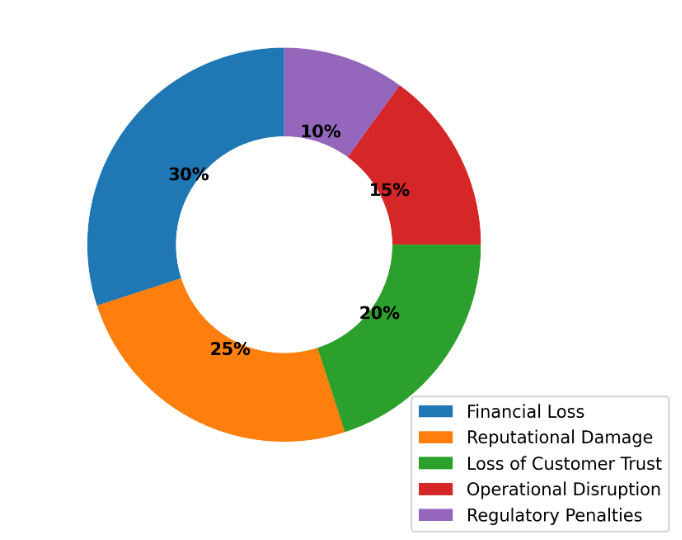
Fig 2. Impact of cyber threats on Fintech Firms and Customer Trust.
From the above donut chart, we can be acknowledged that financial loss (30%) and loss of reputation (25%) are the most serious consequence of cyber threats towards the fintech businesses, it shows that not only financial situation is affected but also the reputation of the firm was also impacted. Meanwhile, the loss of trust (20%) is considered as a behavioral effect since the lack of customers confidence on digital banking in case of the data leakage and safety problems (Aldboush & Ferdous, 2023). In addition, operation disruption (15%) and fine & penalties (10%) refer to the larger systemic and regulatory impact from the cyber-attack (Alodhiani, 2023). As a whole, the data represents the multidimensional impacts of the cyber threats on fintech and highlight the significance of an integrated security system.
E. Integrated Information Assurance Framework of Indian Fintech Companies.
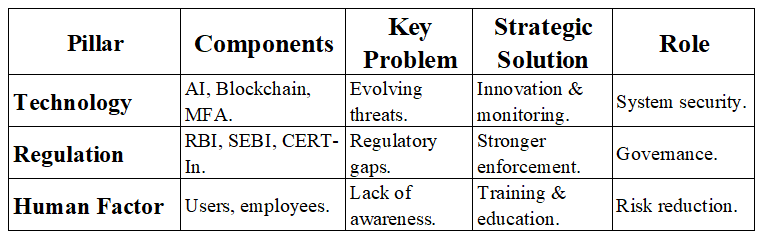
Table 3. Three-Dimensional Information Assurance Framework.
The table clearly indicates how cyber security is viewed in Indian fintech by the interplay between technology, regulation and humans. Technology (AI, blockchain, multi-factor authentication) strengthens the system and detection capabilities, regulation sets down standards for control and governance, and human understanding and behavior is key to successfully integrating and enforcing the measures (Javaheri et al., 2023; Aldboush & Ferdous, 2023).
But given the sustained increase in cyber-attacks, we can clearly observe that regulation and human vulnerability is weakening the whole cyber security posture. Social engineering attacks and lack of user understanding, among other reasons, continues to be the root cause for numerous systems breaches and technological tools alone are not sufficient to solve the problem (Aldawood & Skinner, 2019). Hence, there cannot be a purely technological solution to cyber security in fintech.
DISCUSSION
The results of this study demonstrate a direct correlation between the accelerated growth of the Indian fintech sector and its growing susceptibility to cybersecurity threats. The trend analysis of the growth of fintech indicates that rapid growth in digital payments, UPI transactions, and online financial services have increased the digital attack surface of the Indian fintech ecosystem. While increased financial inclusion and operational efficiency is an inevitable outcome of this surge, the risk of systemic intrusions and data breaches is also increased (Kamuangu, 2024).
In this research, it is discovered that there is a overall increasing trend in number of cyber-attacks such as phishing, social engineering and ransomware in 2018-2024, with phishing and social engineering remaining dominant. This highlights that cyber-attacks focus more on the human behavior and exploit human weakness, rather than technical vulnerabilities (Aldawood & Skinner, 2019). Ransomware attacks are a symptom of system-level vulnerabilities, they caused disruption to services and financial losses. An overall increase in cyber incidents highlights that cyber threats will grow in complexity and number with increased fintech adoption. (Javaheri et al., 2023).
As a measure against these threats, Indian fintech companies have implemented several cybersecurity tools and services in accordance with global standards. Comparison analysis shows a hybrid approach where India incorporates international frameworks, such as NIST, ISO/IEC 27001, into the domestic regulatory and implementation frameworks by organizations such as RBI, SEBI and CERT-In. Highest levels of adoption were found in multi-factor authentication, AI-based monitoring and Security Operations Centers that help enhance fraud detection and system security, however, implementation levels of advanced frameworks such as zero trust architecture and blockchain-based systems remain low, indicating partial alignment with global standards (Arner et al., 2017; Frost et al., 2019; Zetzsche et al., 2020).
A pertinent example reinforcing these findings is the recent regulatory actions taken against Paytm Payments Bank. The RBI, in 2026, cancelled the banking license of Paytm Payments Bank following significant concerns of the bank regarding customer due diligence, regulatory compliance, and weaknesses in technological architecture and governance (Sagarika, 2026). This move follows earlier regulatory interventions in 2022 and 2024 restricting new customer acquisition and freezing deposits due to ongoing non-compliance issues (India News, 2026).
The aforementioned example provides clear insight that cyber and compliance issues related to fintech companies should not be looked at from a solely technological perspective, but also from a governance, regulatory and operational viewpoint. The RBI observed that the nature of business of the bank was ultra vires and against the interest of the customers (ABP live, 2026). The Paytm case also proves that technologically developed fintechs are no exempt from grave consequences if they fail to adhere to stringent compliance & risk management norms.
Growing number of cyber-attacks is evidence that even though cyber security technology as well as regulation applied to it has improved greatly, regulation shortcomings have persisted, based on fragmented legislation, deficient application, and human behavior. The findings reflect that cyber threats have multifarious impacts including loss of money, reputation, operational efficiency, and customers’ trust, loss of trust being significant due to its influence on behavioral aspect (Aldboush & Ferdous, 2023).
The three-dimensional information assurance framework that the study proposes states that cybersecurity in fintech is neither purely technological, nor regulatory, nor solely human based, rather it is a systemic issue which lies in the intersection of all three components. The utilization of advanced technologies enhances detection and prevention, however, the regulatory frameworks guide its implementation, while human behavior is an indispensable element for the success of all security initiatives. The escalating trend of cyber threats is thus an indicator of persistent gaps in the human dimension and enforcement of regulatory frameworks (Aldawood & Skinner, 2019). In sum, growth of fintech has been accompanied by a proportionate increase in cyber threats. Though, adoption of advanced technologies in Indian fintech sector has contributed to strengthening security frameworks; their efficacy is hampered due to evolving cyber threats and shortcomings in regulatory policies and human security. Therefore, achieving sustainable information assurance in the Indian fintech sector necessitates an all-encompassing approach to information security.
CONCLUSION & RECOMMENDATIONS
A. Conclusion
This study conducted a systematic examination of the issue of system intrusions and information assurance within the Indian fintech industry using a secondary-data based analytical approach. The study finds that growth in the fintech industry is rapid because of growth in digital payments, online banking and financial inclusion schemes, this growth is changing the Indian financial landscape. However, this change is also increasing the susceptibility of fintech systems to various cyber threats, increasing vulnerability to system intrusions and breaches (Kamuangu, 2024).
The analysis found that while the volume of various cyber threats such as phishing, social engineering and ransomware has increased over the years, the methods have also evolved over time. Phishing and social engineering attacks have emerged as the most significant threats, reinforcing the view that human vulnerabilities pose an increasing risk in the fintech industry (Aldawood & Skinner, 2019). Ransomware attacks can result in the paralysis of entire financial infrastructure systems and suggest a growing systemic threat to digital financial ecosystems (Javaheri et al., 2023).
While fintech firms are incorporating advanced technologies such as artificial intelligence, blockchain and multi-factor authentication for information security purposes, the study notes that such technologies though effective, are not sufficient to counter current and future risks. Such technologies improve fraud detection, system monitoring and data protection mechanisms but their effectiveness is hampered by issues in implementation, changing attack techniques and the absence of coordinated regulation enforcement (Aldboush & Ferdous, 2023; Tiwari, 2024).
An important contribution of this study is its finding of a hybrid cybersecurity framework in Indian fintech, which integrates global frameworks such as NIST and ISO/IEC 27001 into indigenous regulatory standards by authorities such as RBI, SEBI and CERT-In. Such integration increases flexibility and cultural adaptability but also fragments and lacks consistency, leading to security weaknesses due to poor enforcement of regulations (Arner et al., 2017; Frost et al., 2019).
The case of Paytm Payments Bank provides practical evidence for these claims, with the Reserve Bank of India cancelling its banking license due to weak compliance, governance and operational control processes, demonstrating that system breaches in the fintech sector are a manifestation of deeper issues concerning regulation, organizational governance and risk management (Reserve Bank of India [RBI], 2024).
The impact analysis further identified the multifaceted nature of the consequences of various cyber threats including not only financial losses but also damage to reputation and loss of customer trust (Aldboush & Ferdous, 2023). The loss of user confidence impacts the degree of acceptance for technology-based financial solutions, and, indeed, for the future of the sector.
Finally, this research has found that cybersecurity in Indian fintech is a problem which has many dimensions, i.e. Is a systemic issue and it must involve a solution which has technology, regulation and education all together to be a systemic solution, in order to build the sustainable and strong fintech sector of the future which ensures total information assurance for all stakeholders.
B. Recommendations
1. Improving the RBI Regulatory Framework and Enforcement: The role of regulators like the RBI needs to be enhanced to ensure effectiveness of the cybersecurity frameworks by implementing a strict regulatory regime and constant monitoring. Proactive supervision is of immense importance, as is also real-time compliance structure. (RBI, 2024; Tiwari, 2024).
2. Conduct of Regular Compliance Audit and Independent Investigation: Compliance audits have to be conducted periodically by external entities to ensure that all fintech entities follow stringent regulations. It has been found that regular independent investigations by regulators can effectively bridge the gap in compliance by preventing systemic issues from arising on a larger scale, especially for high-risk fintech companies. (Javaheri et al., 2023).
3. Establishment of a Harmonized Cyber Security Framework: To reduce regulatory fragmentation and improve the effectiveness of enforcement a holistic regulatory framework encompassing the directions from RBI, SEBI and CERT-In should be developed. The proposed framework must be in line with the international standards such as NIST and ISO 27001. (Arner et al., 2017; Frost et al., 2019).
4. Enhancing Organizational Governance: For all fintech entities, robust governance, risk and compliance mechanisms within the organization is paramount. The gaps in the governance mechanism of fintech entities could translate to systemic risks that, technology developments notwithstanding, are still serious to consider. (RBI, 2024).
5. Enhancing Awareness among Humans and Providing them Training: It has been observed that humans are the primary cause of most security incidents in organizations. Fintech companies need to continually provide awareness and security training to employees and users. (Aldawood & Skinner, 2019).
6. Adoption of Sophisticated Security Technologies: It is necessary for the fintech sector to adopt and develop advanced technologies like AI based monitoring, behavioral biometrics, Zero Trust architecture, etc. And that such technological advancements are accompanied by stringent governance policies and regulatory adherence. (Javaheri et al., 2023; Aldboush & Ferdous, 2023).