
Land, Law, and Legitimacy: Constitutionalising Consent in Scheduled Areas Acquisition Processes
Consent in Scheduled Areas is nowadays increasingly justified as a constitutional prerequisite of State intervention rather than a discretionary welfare measure. This paper suggests that the control framework of the Fifth Schedule and the inherent vulnerabilities of Adivasi landholding together make consent a constitutional rights-based bar rather than a mere procedural favor. The doctrinal problem, however, is that land acquisition in Scheduled Areas hardly ever follows a single piece of legislation. Rather, it is at the confluence of the Panchayats (Extension to the Scheduled Areas) Act 1996 (PESA), the Right to Fair Compensation and Transparency in Land Acquisition, Rehabilitation and Resettlement Act 2013 (LARR), and the Scheduled Tribes and Other Traditional Forest Dwellers (Recognition of Forest Rights) Act 2006 (FRA). Each of these instruments endows the Gram Sabha with a legal persona but with different actions and consequences: consultation in PESA, prior consent and special safeguards in LARR, and rights confirmation and protection against displacement in FRA. The piece illustrates how these actions come into conflict in actual acquisition operations, more so in situations where "forest land" is at the same time a source of livelihood, a legal category, and an administrative entry point under forest clearance regimes. After analyzing Supreme Court and High Court decisions, the article points out how the courts have been in a dilemma that in some cases they have seen safeguards as mere policy directives and in others as binding constitutional promises. It further suggests a reconciliation method based on last resort necessity, FRA first sequencing, and a presumption that the consent of the Gram Sabha has to be free, informed, and through verifiable processes. The real world implications are demonstrated through official data sets concerning the demographic of Scheduled Tribes, the implementation of FRA, and the discrepancies in PESA rulemaking, which explain why the issue of the legality of acquisition can hardly be considered apart from the qualification of the institution for obtaining genuine consent. The consent-based principle, in other words, is picked up in the end as a necessary ground for constitutional equality in Fifth Schedule territories.
Introduction
Acquiring land is generally explained through well-known ideas like public purpose, payment, and procedural fairness. These concepts certainly apply to Scheduled Areas, but they are incomplete since acquisition in fact challenges the constitutional promise of Adivasi self-governance. The more profound issue is not simply determining the amount of compensation, but also which authority has the right to consent, based on what information, and what would be the consequences if the answer is no. The matter becomes highly complicated as the land in Scheduled Areas is usually being used for farming, near forest and held as customary tenure at the same time, therefore the land's legal status cannot be equated to a single revenue record.
Considered in doctrinal terms, this article presupposes that consent is the legitimacy threshold in cases of structural inequality. In situations where communities have been historically dispossessed and have limited bargaining power and information, consent should not be taken to mean merely acquiescence. Instead, it should be viewed as an institutional mechanism that formally records the collective choice of a community. A Gram Sabha is thus pivotal as, in constitutional terms, it stands as the representative of a community whose connection with land is not only for the purpose of livelihood but also identity and culture. This stands especially true in the Scheduled Areas and districts governed by the Presidential Order under the Fifth Schedule of the Constitution.[1]
The label tri-junction is warranted because the State often treats PESA, LARR, and FRA as independent checklists for compliance. In reality they constitute a single normative chain. PESA determines the mode of consultation; LARR identifies situations where prior consent is necessary and requires the last resort justifications, and FRA governs whether the rights linked to the forest have been recognized as a prerequisite for any displacement to be lawful. Considering these three pieces of legislation separately results in a facade of compliance where each box is ticked but the overall constitutional duty is not fulfilled.
One of the main reasons for the continuation of Scheduled Areas conflicts despite legislative reforms lies in the repetition of a certain administrative pattern. One of the steps taken for acquisition is through LARR or an enactment mentioned in the LARR Fourth Schedule, at the same time, forest diversion is a separate process, and FRA implementation is the last one to be considered. This kind of sequencing results in consent being very difficult to be denied as the main decisions would look as if they are already made even before a Gram Sabha gets to see them. The article thus, besides the law texts, also brings focus on the timing as rights are usually lost through the procedure even though they are on paper.
The main argument is that consent needs to be constitutionally enshrined as a right in Scheduled Areas by a harmonized reading of the Fifth Schedule, PESA, LARR, and FRA. It does not imply that any project is out of the question, however, the State is held to a higher justificatory standard, and it must be shown that consultation or consent was real, informed, and not a result of deception. The subsequent discussion employs case law to demonstrate how courts may either strengthen or weaken this burden.
Constitutional architecture of consent
This part of the article situates the concept of consent in the constitutional framework that determines Scheduled Areas. It reveals that the Fifth Schedule, when interpreted together with the principles of equality and dignity, alters the legal understanding of development decisions. Consent is offered as a demonstration of a constitutionally safeguarded territorial autonomy, rather than being an optional administrative concession.[2]
A. Fifth Schedule and the Logic of Special Governance
The Fifth Schedule is No Part X's merely symbolic appendage but a governance framework that recognizes that uniform administration can lead to the continuation of oppression in tribal areas. It treats Scheduled Areas as areas where the usual development administration needs to be regulated through protective measures, such as the Governors special responsibilities and the establishment of Tribal Advisory Councils. By this framework, local decision-making becomes the key to sovereignty, as the Constitution foresees that market forces and majority politics could easily override Adivasi land rights considerations.
Article 244(1) implements the Fifth Schedule by designating it as the primary legal instrument for the administration of the Scheduled Areas. The issue from a legal perspective is not merely the classification of areas but the establishing of a special constitutional relationship between the State and Scheduled Tribes. This relationship grants the State recognition of extensive procedural safeguards especially in case of changing land use as land is the essence of the capacity to determine one's own affairs and the basis of one's social existence. Here, consent is a device of the constitution to block the situation where the government turns into an exploiter, especially if it is about resource extraction oriented projects.
B. Property, Dignity, and the Constitutional Floor
Even though the right to property is no longer protected as a fundamental right, constitutional property protection is still important in a society where people losing their homes are at risk of losing their way of life, their culture, and their identity. Article 300A requires the authority of law, but it also doctrinally means that deprivation must not be arbitrary, mere facade, or confiscatory in effect. This is important for Scheduled Areas as a land acquisition can reduce constitutionally protected land relations to insecure monetary substitutes. Once this happens, consent becomes one of the fairness factors because a community’s refusal indicates that the deprivation may not be socially legitimate even if it is legally correct.[3]
Court rulings have also tied acquisition processes with procedural dignity in situations where State power is expropriatory. The debate against the use of urgency clauses in the previous acquisition regimes shows the constitutional value of participation: avoiding the hearing leads to forced development and breaks trust in law. In Scheduled Areas, this argument goes even further because the local communities there are not only affected persons but also constitutional stakeholders. So, consent should be seen as the highest form of participation, which is there to stop the State from turning the predicament of the people into mere administrative convenience.[4]
C. Consent as an Equality Safeguard
A purely formal perspective of equality considers all landowners in the same way; however, Scheduled Areas need a substantive equality reasoning. The idea of substantive equality is that, due to historical dispossession and present socio-economic disadvantage making people less able to bargain, even the same processes can lead to different outcomes. Consent here, is a corrective measure which provides compensation for the State-community power imbalance by obliging the State to seek approval from the community that is most likely to bear the impact of the costs which cannot be reversed. The constitutional value is not only participation but also protection against exploitation that is disguised as development.
The equality function of consent also accounts for the fact that the Gram Sabha enjoys legal recognition over and above other local bodies. Gram Sabha is not merely a platform where grievances are aired; rather it is a constitutionally mandated body for collective decision-making. When the courts consider Gram Sabha proceedings as mere formalities or dismissive, they do in fact throw the equality rationale (which forms the basis of Scheduled Area protections) to wind. On the other hand, if the courts recognize Gram Sabha decisions as final especially in matters that are at the core of the culture and that are linked to forests, they are, in effect, re-asserting the constitutional notion that autonomy is not something that can be exchanged for compensation packages.
D. Constitutional Minimum: Meaningful Local Choice
If consent is to function as a constitutional right, it must be defined in a manner that allows it to be judged by a court. At the very least, it entails being given notice beforehand, having access to information, being genuinely allowed to think it over, and the decision being documented through reliable methods. It also means that the denial of consent should have the legal implication; otherwise, the procedure will turn into a mere mock consultation. The constitutional argument of this part, therefore, is that without the power to enforce them, the allure of self-government is nothing more than rhetoric. The following part demonstrates how the statutory tri-junction delivers these consequences by being interpreted as one whole.
The statutory tri-junction: pesa, larr, and fra
This part looks at the three laws which are most often used to regulate resettlements and rehabilitation related to acquisition of Scheduled Areas and forest areas. It shows that every statute gives the Gram Sabha a different role and shows that the laws are only complied with when these roles are performed in order. The part also discusses how the granting of exemptions and the parallel clearance lead to doctrinal conflict.
A. PESA: Consultation as the Baseline Participatory Rule
PESA carries Part IX institutions further into Scheduled Areas but with various changes that take into account customary governance and community ownership of resources. The major move by PESA is to empower villagers constitutionally to be involved in decision-making processes by declaring the Gram Sabha as the foremost local decision-making body. PESAs wording employs consultation instead of consent in the acquisition context; however, the consultation obligation is far from being insignificant. It aims at preventing acquisition initiation without first hearing the community on matters of need, alternatives, and rehabilitation; this is because displacement in Scheduled Areas mostly results in loss of livelihoods.[5]
Shall be consulted phrase is doctrinally important as it defines the minimum standard of legality through participation. Consultation under PESA has to be real, prior, and aimed at influencing the decision, if not it is just a post facto explanation exercise. If consultation is done after the decisions are pretty much final, it is not participative governance. In the case of tri-junction disputes, PESA acts as the procedural floor: whatever the case, if another law requires the local people's consent, PESA is still the one that determines how the village institutions should be engaged, including the recognition of local customs and the respect of community priorities.[6]
B. LARR: Consent, Last Resort, and Safeguards
LARR came up with a rights-based land acquisition framework designed to replace the old colonial way of land expropriation. It clearly states "consent" as a part of acquisition legality in certain categories like private companies and public private partnership projects. The consent standards for these categories show a legislative assessment that the latter legitimacy increases when the families affected are the ones who make the decision rather than being the ones who receive compensation passively. Even in cases outside the Scheduled Areas, this acknowledgement weakens the premise that consent has no place in acquisition law.
For Scheduled Areas, the LARR Act not only gives SCs and STs their special rights but also says that land acquisition in Scheduled Areas should be the last option. If acquisition happens, it has to be by the State's showing that all other options are exhausted. The legal wording is critical as it changes the responsibility from the community to the government. The government is required to show that it has looked into other options and that acquisition is the only way. This necessity framework links legal safeguards with constitutional proportionality considerations in a protected area.[7]
LARR, in addition to the acquisition of lands by Gram Sabha, Panchayat, or Autonomous District Council consent also requires the local administration obtaining prior consent of these bodies for any further acquisition or alienation of land in Scheduled Area, i.e., including urgency cases. The fact that 'urgency' has been brought into the scope of consent requirement is a very strong textual indication that consent is not a step that can be dispensed with. Consent is the legal condition by which the law prevents urgency from being used as a weapon of compulsion. When courts nullify this requirement by treating it as a mere directory, they, in fact, bring back the old expropriatory logic through interpretation.[8]
C. Section 105 and the Exemption Pathway
The major doctrinal obstacle to a consent-centered regime is the LARR Fourth Schedule mechanism connected with section 105. The Fourth Schedule is a list of several legislations regulating land acquisition and allied processes. When acquisition is done under such legislations, the question of how much the LARR safeguards apply becomes disputed, and the State or the requiring body frequently maintain that consent obligations do not apply. This causes a structural loophole: Scheduled Areas can be hit by special statutes in order to evade the political and legal costs of Gram Sabha consent, unless the safeguards are explicitly extended.
The fact that there is such an exemption path is not just a small technical detail, but a systemic risk. It permits the legal system to create situations of unequal protection in the very place that equality demands the highest level of safeguards. An integrated interpretation would consider the Fifth Schedule and section 41 as creating a Scheduled Areas standard that cannot be lowered by statutory detours. The doctrinal issue is whether courts will interpret Scheduled Area consent as a superadded constitutional condition which still exists after statutory exemptions, or as just a LARR characteristic that ceases to exist when another legislation is applied.
D. FRA: Rights Determination and Anti Dispossession Protection
FRA changes the acquisition discussion because it acknowledges that several forest communities were traditionally left out of tenure systems that got recorded. It sets up a rights determination procedure starting with the Gram Sabha and ending with higher committees. Two elements are particularly noteworthy. Firstly, the Gram Sabha is not merely consulted but it is the very body from which claims and verification originate. Secondly, clause 4(5) disallows eviction or removal of forest dwelling Scheduled Tribes and other traditional forest dwellers from forest land unless recognition and verification processes are entirely carried out. Hence, it gives a statutory hold on displacement which is directly linked to acquisition timelines.[9]
In the context of tri-junction disputes, FRA basically challenges the State in a sequenced manner by asking whether it can undertake land acquisition or land diversion first and figure out rights later. A rights-based interpretation undoubtedly says no, for it is argued that forcible displacement before rights recognition turns the recognition process into a mere post-displacement compensation story. This, in fact, eliminates the remedial objective of the FRA, which is to set the record straight by vesting rights and not by simply paying for the loss. Thus, the first sequencing of the FRA becomes a must for genuine consent: legally, the communities cannot consent socially if their ownership status on the land is not yet clear.[10]
E. Forest Diversion Practice and FRA Compliance Documents
Even if the acquisition is formally done through LARR, diversion of forest is often the real administrative gatekeeper under the Forest (Conservation) Act. The Ministry of Environment and Forests circular of 3 August 2009 tied forest diversion proposals to the evidence of FRA compliance, including the Gram Sabha related documents. That administrative linkage is important because it considers the Gram Sabha processes as a demonstration of rights recognition and community consultation in clearance procedures. In practice, it has also given rise to dispute over fabricated resolutions and incomplete verification, and thus the authenticity of Gram Sabha records has become a major issue in law.
Recent regulatory changes, such as modifications to the Forest (Conservation) Act, have further complicated the consent architecture as they not only redefine the extent of land under forest diversion restrictions but also make exemptions for certain categories. Even if these changes are justified in terms of national security or infrastructure facilitation, they will indirectly impact Scheduled Areas by speeding up forest-related projects and reducing the procedural space for community involvement. The doctrinal point is that changes in forest laws can act as consent diluters even when they do not explicitly target PESA or LARR.
F. A Harmonised Statutory Standard
A practical harmonization solution view PESA consultation as the procedural floor, LARR section 41 consent as the Scheduled Areas condition of an acquisition and FRA section 4(5) as the sequencing prohibition where forest land or forest dependent rights are involved. The blended model thus changes the query from "which legislation is applicable" to "what is the highest level of protection that the facts trigger.” When a number of protections apply, the state has to meet the highest one, because Scheduled Areas are made to be resistant to lowest common denominator governance. The jurisprudence section checks if the courts are heading towards or away from this integrated standard.
Judicial pathways: from consultation to determinative consent
This part focuses on the judicial treatment of the Scheduled Area protections and Gram Sabha participation issues. It points out the significant Supreme Court rulings which brought tribal land protections under the Constitution and the subsequent High Court cases which show the interpretative confusion surrounding LARR section 41 and exemption arguments. The goal is to find ad judicable tests instead of general principles.
A. Samatha and Substantive Limits on Land Alienation
It is common to highlight Samatha for its firm rejection of allowing the transfer of Scheduled Area lands to non-tribals through mining leases and similar methods. At the doctrinal level, it treats protective regulations and the Scheduled Area purpose as imposing substantive limits, not only procedural conditions. The Court’s reasoning strengthens the notion that the State cannot use the mere fact of formal ownership or administrative power as a way to bypass the protective framework, because Scheduled Areas are there precisely to prevent such structural appropriation. This reasoning also reinforces the demand that consent must amount to more than consultation where land is the basis of tribal autonomy.[11]
Samatha is equally important as it changes the way the land and resource disputes are interpreted. It does not only switch the focus of the inquiry from whether a lease or acquisition has followed the formal statutory steps to whether a decision is in line with Scheduled Area protection. This purpose based approach really helps in the cases of tri-junction where the statutes can either be narrowly interpreted to allow the projects or broadly to protect the community’s choice. If courts embrace Samatha’s purposive reasoning, then consent under section 41 and the protections under FRA are seen as strictly binding. On the other hand, if courts move away from that reasoning, the consent is exposed to being circumvented on a technicality.[12]
B. Niyam Giri and the Gram Sabha as Rights Adjudicator
The Niyam Giri case was a landmark judgment in Orissa Mining Corporation Ltd v Ministry of Environment and Forest as it recognized the decision-making authority of the Gram Sabha in deciding whether the proposed mining would have an impact on the cultural and religious rights linked to the forest land. Instead of treating local participation as a mere source of information, the Court mandated that Gram Sabha deliberation should be the channel through which community claims are determined. This is a key doctrinal shift: it acknowledges that issues of identity and cultural existence cannot only be solved by experts or officials. Here, consent is very much linked to the right to decide on how development comes into contact with sacred landscapes.[13]
Niyam Giri also reveals the way in which the Forest Rights Act and forest clearance operations can meet. The Court's methodology signifies that rights recognition is not just done through formalities but is fundamentally about the relationship of the community to the land and forest resources. This corroborates the article's thesis on harmonization: where the Forest Rights Act is triggered, the Gram Sabha processes need to be completed before any project approvals that are irreversible are given, otherwise decision making becomes mere performance. By analogy, for acquisitions in Scheduled Areas, the logic is the same, so that consent is only legally valid if it is the one that takes place before the State has made the project commitments a done deal.
C. Lafarge, Process Legitimacy, and the Risk of “Procedural Satisfaction”
The Lafarge line of reasoning is the one most frequently referred to in discussions about environmental governance, but it can also be seen as shedding light on how courts assess the legitimacy of the process in complex clearance regimes. The judgment made a point of emphasizing structured decision making, regulatory responsibilities, and the role of environmental impact assessment and public participation. Even though it is not a case of a Fifth Schedule acquisition, the court displays a preference for documented processes and institutional accountability in resource projects. This is particularly relevant to the Scheduled Areas because the same administrative trend is observed there; authorities maintain that the process was followed while the communities argue that their participation was not genuine. Courts have the option to either accept the satisfaction of the procedure or to require substantive fairness.
Importantly, Lafarge is one of the examples where courts sometimes balance development and the process through the language of conditions and monitoring rather than through community veto. Such an approach has merit when the issue is technical mitigation. However, in Scheduled Areas, the main problem is rarely mitigation but choice, including whether displacement is acceptable at all. Hence, a consent focused doctrine should make a clear demarcation between procedural participation, which legitimizes regulatory discretion and consent, which legitimizes expropriation. Without making this differentiation, Scheduled Areas protections will be at the risk of being incorporated into general administrative law standards that are too weak to handle structural vulnerability.
D. High Court Uncertainty on Section 41 and “Last Resort”
Recent High Court lawsuits have shown that the wording of LARR section 41, like "as far as possible" and "demonstrable last resort” , is open to different interpretations. One interpretation considers these terms as aspirational and permits acquisition if the State claims development need. Another interpretation sees them as binding standards which demand proof of alternatives, proportionality, and real consent. The distinction is not just a matter of words. It determines whether the protections of Scheduled Areas function as rights or as mere guidelines. The issue becomes more complicated when the evidence is scarce or the Gram Sabha processes are challenged as improperly convened.
Bibol Toppo v State of Odisha is a very enlightening case, in that it deals head on with the question of whether acquisition in a Scheduled Area is a legal one and also looks at the arguments relating to section 41 safeguards. While the judgment may not be agreeable to all, it is nevertheless a good source since it exposes the point of doctrinal pressure: how courts assess the evidence of consent, how they consider the issue of 'last resort,' and what remedy is available in the case of non-compliance. These points of tension are at the heart of any attempt to constitutionalize consent, as rights are in reality behavior only when courts are willing to attach penalties to the infringement.[14]
E. Exemptions, Parallel Statutes, and Litigation Strategy
Dharam Singh Korram v Union of India is an example of controversies arising when projects are given the go-ahead through administrative and legal channels which the local people perceive as bypassing their consent. The litigation narrative reveals the tactical use of exemption arguments and the substantial challenge that communities face when several approvals steps, including forest clearances and acquisitions, are carried out at the same time. Besides, even if communities rely on PESA and section 41, the State and its agencies can still present the conflict as a policy disagreement, national interest, or technical compliance. Consequently, the courts need to determine if the protections of Scheduled Areas should be considered limits that can be enforced or merely factors for the administration to weigh in the balancing of interests.[15]
The doctrinal learning of the High Court on the issue of consent is that the statutory requirement of consent is not only concern of the legislature, but also an issue of evidence and remedy. It is a fact that if the courts demand a strict proof of free and informed Gram Sabha decisions, it will be difficult to fabricate compliance, thus compliance will definitely improve. However, if courts consider defects in consent as being capable of cure or merely representing a remnant of the past, the incentives of the administration will thus be directed towards the achievement of post facto regularization. Thus, the right to consent as a constitutional right should entail a theory of remedy: non-compliance should presumptively render null and void the key steps unless the State can demonstrate genuine participation and the absence of prejudice in a manner that respects the Scheduled Area purpose.[16]
F. Toward Adjudicable Tests
A consent centered doctrine can be implemented effectively if courts reveals clear tests. Firstly, “last resort" should be interpreted as the State being required to provide written evidence of alternative options consideration and the reasons why less intrusive options are not feasible. Secondly, “prior consent" should be interpreted as consent obtained basically before any announcement is made that will lead to the acquisition or before the State gets politically and financially committed through clearances. Thirdly, “meaningful Gram Sabha" should be assessed by means of a checklist for notice, quorum, translation, disclosure of impacts, and absence of coercion. These tests not only align with the protective purpose of Scheduled Areas but also minimize interpretative drifts.[17]
Operational reality, evidence, and data
This part connects doctrinal arguments with administrative practice. It relies on official audit reports as well as government datasets to demonstrate the reasons for consent disputes and the importance of compliance capacity. The section additionally presents tables that may be transformed into graphics, and it describes the way of reading them for legal argumentation on vulnerability and institutional preparedness.
A. Consent Failures as Audit Findings
Performance audit findings are crucial as they help to change the discussion from a mere story to facts. The performance audit of land management in Scheduled Areas by the Comptroller and Auditor General points out the lack of proper procedures for Social Impact Assessment and Gram Sabha meeting, highlighting that the consent of the Gram Sabha is a must for any acquisition in Scheduled Areas and that the meetings should be conducted in a fair manner. This setting is of legal importance as it considers consent not as an optional best practice but as a condition whose violation makes acquisition illegal. Moreover, audit findings illustrate through examples how administrative neglect, such as having incomplete records or holding meetings improperly, provides the factual base for lawsuits.
The audit viewpoint pretty much explains the need for a constitutional framing of consent. Suppose consent is regarded as a mere procedural step, then the slip-ups can be fixed even after the fact through some paperwork, and the institutions will still be weakly motivated. However, if the consent is seen as a constitutional safeguard, then the systemic failure is the governance breach which makes us first to structural reforms, better record keeping, transparent disclosure, and independent verification of Gram Sabha resolutions. In other words, audit data backs up the argument that the issue is not one of the few cases of misconduct but rather a regularly anticipated result of an inefficient institutional framework and high economic stakes.
B. Why Sequencing Determines Whether Consent is Real
Quite often, the arrangement of administrative activities determines the impact of consent as it influences the community's perception of the ability to say no. Communities have every right to feel that there is no point in saying no when the proposal is brought to Gram Sabha meetings only after project announcement, after land survey, or after preliminary clearance steps without their knowledge. This violates the notion of voluntariness which is a pre-condition for consent. Therefore, a rights-based harmonization demands an order of activities such that the FRA recognition status has to be clarified first, the impacts have to be disclosed, the alternatives have to be discussed and only after all this the consent process may be initiated. Such a sequence corresponds to the rationale of a 2009 forest diversion circular that connects the clearance with the production of compliance evidence of the FRA.[18]
Sequencing is also related to the kind of evidence being referred to. For example, an official in charge of a project may produce a record of the Gram Sabha meeting having preceded any decision that could not be undone, in which case the courts would be more disposed to consider the consent given as bona fide. On the other hand, if the resolutions of the Gram Sabha appear to be after the issuing of clearances or after the acquisition notifications, these resolutions are to be regarded by the courts as coming from a doubtful source. This is not a resistance to development but a demand that the government operate according to the constitution. In Scheduled Areas, the State must be made to bear the burden of demonstrating that the community's involvement was not just a formality done as the inevitability was already decided.
C. Scheduled Tribe Population Share in Major Fifth Schedule State’s
This presentation aids in understanding the Scheduled Areas governance is not a marginal one. Regions which have both large Scheduled Tribe populations together with significant Scheduled Areas are also the states, which have the highest number of land and mineral projects, thus the quality of consent processes is of the system wide significance.
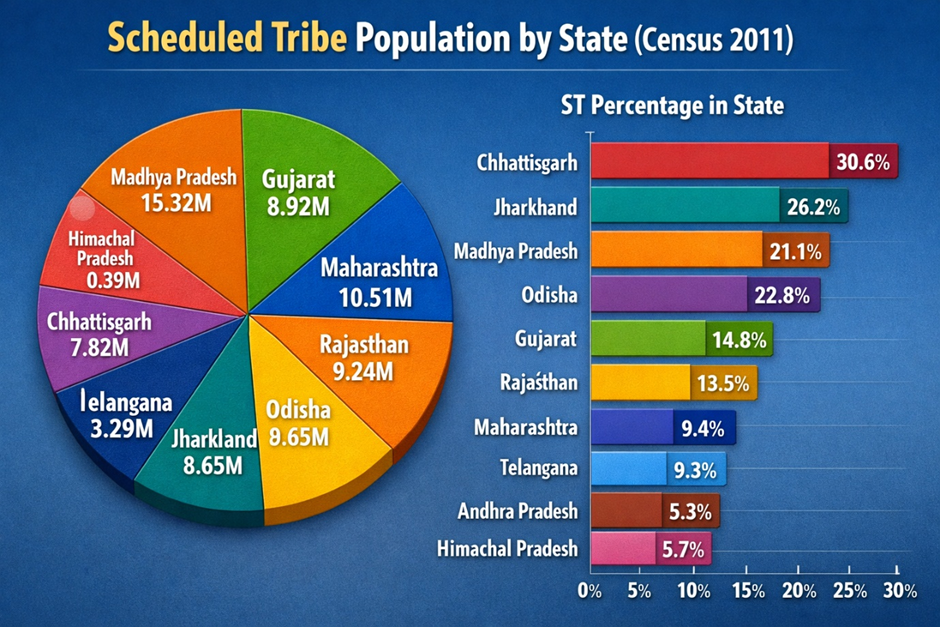
Figure 1. Scheduled Tribe Population by State[19]
D. FRA National Totals, Claims and Titles
This figure 2 helps to visually understand the extent of rights determination under FRA and also to pinpoint the gap between the claims that have been filed and the titles that have been distributed. Besides, it goes hand in hand with pie charts that compare individual and community claims and stacked bars that compare claims and titles. It also explains why acquiring without the completion of FRA can lead to illegality being entrenched.[20]
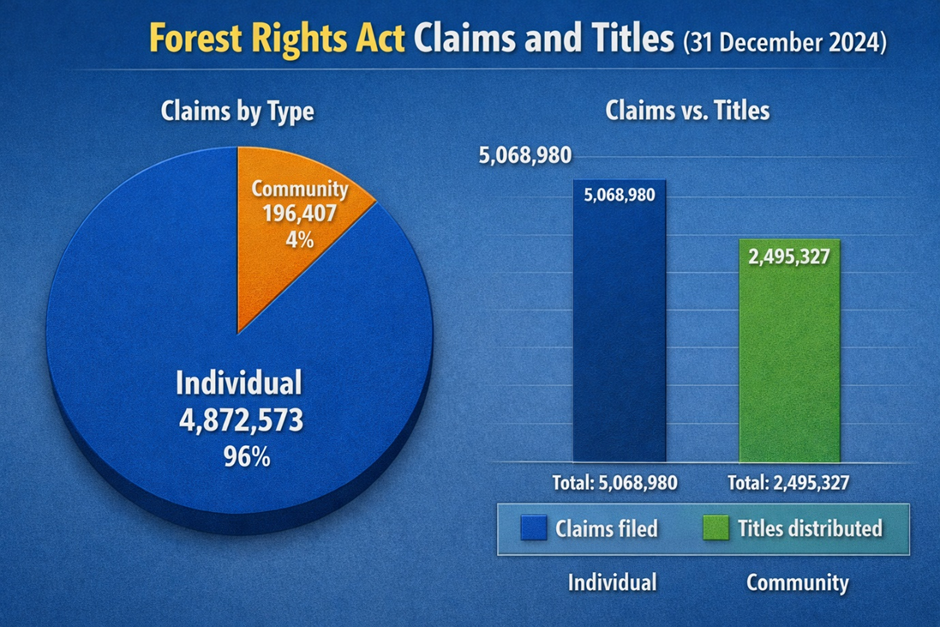
Figure 2: Forest Rights Act Claims and Titles (31 December 2024)[21]
E. FRA State Snapshots, Claims Versus Titles
State-wise patterns matter in Scheduled Areas as projects are concentrated unevenly, and the uneven recognition of rights affects the legality and legitimacy of acquisition. This figure 3 enables one to make a "completion ratio" chart by the state and provides evidence that in states, where recognition is incomplete, displacement is likely to violate 4(5) protection and therefore consent would be only nominal. The selection has been made of major Scheduled Area states only for the purpose of comparison.[22]
Figure 3: State-wise comparison of total claims received and titles distributed under the Forest Rights Act, with completion ratios as on 31 December 2024.
F. PESA Rules Status and the “Capacity Gap”
The degree to which PESA works is largely influenced by state regulations since the state regulations decide the way Gram Sabha meetings are called, the way records are kept, and the way local resource powers are exercised. Hence, this table serves as a proxy for the institutional capacity to implement participatory governance. It is accompanied by a donut chart showing a comparison of states that have formulated rules against those that have not, and it provides an explanation for the wide variation in the consent processes.
|
STATE |
PESA RULES STATUS |
|
Andhra Pradesh |
Rules framed (2011) |
|
Himachal Pradesh |
Rules framed (2011) |
|
Rajasthan |
Act and Rules in place (1999, 2011) |
|
Telangana |
Adopted AP Rules (2014) |
| Maharashtra |
Rules framed (2014) |
| Gujarat |
Rules framed and amended (2017) |
|
Chhattisgarh |
Rules framed (2022) |
|
Madhya Pradesh |
Rules framed (2022) |
|
Odisha |
Yet to frame rules |
| Jharkhand |
Yet to frame rules |
Table 1: State-wise status of PESA Rules as reported by the Ministry of Panchayati Raj.
G. How Data Reinforces the Consent Argument
The tables and figures above alone do not serve as a proof of doctrinal claims, but they indicate the necessity for the doctrine to be aware of the administration reality. In the regions where the share of the ST population is high and the FRA recognition is still far from complete, the acquisition without proper consent and sequencing safeguards might at large result in one type of structural injustice. In the areas where there are no PESA rules yet, the level of procedural quality is likely to be varying, hence increasing the chance of the Gram Sabha processes coming out of the defects. This is in line with a judicial attitude that regards consent requirements as mandatory and evidentiary standards as strict because the loss due to such an error falls heavily on the vulnerable communities.[23]
H. The Forest Law Shift and Indirect Consent Dilution
The Forest (Conservation) Amendment Act 2023 introduces definitional and exemption changes that can influence how quickly forest linked projects proceed and what land categories trigger central approval. Even where the amendment is justified through policy goals such as infrastructure facilitation or national security, its operational effect can be to compress the procedural timeline available for local deliberation. A consent centred approach therefore insists that changes in forest diversion regimes should not be treated as reasons to shortcut Scheduled Areas participation; instead, they heighten the need for sequencing discipline and independent verification of Gram Sabha processes.[24]
Secondary policy analysis also raises doubts about the possibility that these exclusions from the Forest (Conservation) Act's scope may be at odds with the overall judicial approach to 'forest' and deforestation control. Although these discussions are not the same as the ones about Scheduled Areas acquisition, they are significant because they influence the government officials' behavior and the authorization process in areas that frequently overlap with Scheduled Areas. A legally sound method would ensure that exemptions from forest laws do not turn into indirect ways of lessening the effect of the Forest Rights Act (FRA) on participatory requirements and thus make consent a dispensable matter instead of a mandatory one.[25]
I. A Practical Compliance Model for Acquisition in Scheduled Areas
A workable compliance model is more appropriately demonstrated as a flow of approaches rather than a checklist. The initial step is to verify the Scheduled Area status and the differentiation between forest land and non-forest land that supports forest based claims. Next, make sure all FRA-related activities have been thoroughly performed and to the extent required, including verification and recognition, so that the community’s legal position is clear. The third step is to carry out PESA compliant consultation with the community, ensuring full disclosure and translation. Fourth, before making any notifications that create legal momentum, obtain LARR section 41 prior consent. Fifth, it should be ensured that forest diversion proposals are supported by genuine FRA compliance evidence and not fabricated community resolutions. This framework essentially operationalizes consent as a right.[26]
J. Remedies, Enforcement, and Institutional Reform
The last practical problem is about the consequences of defective consent. If courts consider a defective consent a harmless error, the temptation to fabricate or rush procedures will still be there. On the contrary, if they treat it as a matter that undermines the validity of the entire proceeding, the authorities will be more cautious in their compliance. Basically, the audit results indicate that the instances of non-compliance are quite frequent and, therefore, the solution should not only be in legal remedies but in the introduction of institutional reforms such as standardized meeting protocols, public disclosure of Gram Sabha minutes, independent observers, and digital publication of consent records. These reforms are in line with constitutional governance and they make factual record verifiable thus reducing the number of cases brought to courts.[27]
Conclusion
This conclusion summarizes the reasons why consent in Scheduled Areas should be a constitutional right primordially supported by the Fifth Schedule's protective framework. It reiterates the article's approach to harmonizing PESA, LARR, and FRA, and it clarifies how sequencing and remedies decide whether rights exist in fact. The idea of a doctrinal way that courts and administrators can take to lessen conflict while at the same time, keeping the legitimacy is also revealed.
Consent is most effectively warranted as a constitutional right in Scheduled Areas because it is the institutional manifestation of self-governance in a territory meant to be resistant to dispossession. The Fifth Schedule is not just protective in sentiment but protective in structure, and that structure presupposes that the development authority should be locally accountable. If the State acquires land without giving the community a real choice, it makes Scheduled Areas just like any other administrative areas and seriously undermines the constitutional cause for their being given special status. Therefore, the law has to treat the Gram Sabha not as a mere consultative audience but as a rights-bearing institution whose decisions have legal consequences.
The tri-junction analysis reveals that the legal framework already incorporates elements of a consent-based regime, although they are undermined by fragmentation. PESA sets consultation as a minimum and accords primacy to village institutions. LARR section 41, among other things, mandates prior consent and explains the circumstances of last resort. FRA offers rights recognition and anti-dispossession safeguards which, among other things, prohibit the State from displacing first and regularizing later. When read together, these laws back up a unified standard: in cases involving Scheduled Area land and forest-based livelihoods, the legality of acquisition presupposes adherence to FRA first sequencing and prior Gram Sabha consent obtained through verifiable procedures.
Judicial results decide if this blended criterion turns to be real. Samatha and Niyamgiri provide examples of a rights-based approach, which protects Scheduled Area provisions as law and Gram Sabha procedures as decision-making in culturally and livelihood sensitive matters. Recent High Court decisions are divided on the issue of interpretative uncertainty, especially on whether section 41 is obligatory or merely suggestive and whether exemption routes can bypass the consent requirement. A consistent constitutional approach would view Scheduled Area consent as an extra super condition that cannot be undermined by statutory routing and would grant large enough remedies for violation.
The figures clearly illustrate the need for a very rigorous doctrine. There are huge Scheduled Tribe populations in the main Scheduled Area State’s, the experiences of FRA recognition have been uneven, and the rule making for PESA has been delayed with all these factors creating predictable risks of faulty consent. Instead of relaxing standards, the courts should respond to the lack of institutional capacity by insisting on strict evidence and by requiring procedural reforms that make consent verifiable. In short, prioritizing sequencing, disclosure, translation, and public record access is the way to go, for these elements transform consent from mere rhetoric into binding legality.[28]
The constitutional right to consent doesn't imply that Scheduled Areas cannot be developed. It implies that development must be legitimate from a constitutional viewpoint, i.e. it must respect local autonomy, avoid displacement as far as possible, and only continue after the community's informed collective decision is obtained through fair and transparent processes. Consent thus becomes the instrument that connects the Constitution's promise of equality with the State's developmental goals. If that link is loosened, the Scheduled Areas governance may become extractive again, an outcome that the law was formulated to prevent.
*****
Footnotes
[1] The Provisions of the Panchayats (Extension to the Scheduled Areas) Act, No. 40 of 1996, § 4(i).
[2] Constitution of India, art. 244(1), Fifth Schedule.
[3] K.T. Plantation (P) Ltd. v. State of Karnataka, (2011) 9 S.C.C. 1.
[4] Dev Sharan v. State of Uttar Pradesh, (2011) 4 S.C.C. 769.
[5] The Provisions of the Panchayats (Extension to the Scheduled Areas) Act, No. 40 of 1996, § 4(i).
[6] The Provisions of the Panchayats (Extension to the Scheduled Areas) Act, No. 40 of 1996, § 4(i).
[7] The Right to Fair Compensation and Transparency in Land Acquisition, Rehabilitation and Resettlement Act, No. 30 of 2013, § 41.
[8] The Right to Fair Compensation and Transparency in Land Acquisition, Rehabilitation and Resettlement Act, No. 30 of 2013, § 41.
[9] The Scheduled Tribes and Other Traditional Forest Dwellers (Recognition of Forest Rights) Act, No. 2 of 2007, §§ 4(5), 6.
[10] The Scheduled Tribes and Other Traditional Forest Dwellers (Recognition of Forest Rights) Act, No. 2 of 2007, §§ 4(5), 6.
[11] Samatha v. State of Andhra Pradesh, (1997) 8 S.C.C. 191.
[12] Id.
[13] Orissa Mining Corp. Ltd. v. Ministry of Environment & Forests, (2013) 6 S.C.C. 476.
[14] Bibol Toppo v. State of Odisha, W.P. (C) No. 31638 of 2022 (Orissa High Court, Sept. 6, 2024).
[15] Dharam Singh Korram v. Union of India, W.P.C. No. 560 of 2022 (Chhattisgarh High Court, May 11, 2022).
[16] The Right to Fair Compensation and Transparency in Land Acquisition, Rehabilitation and Resettlement Act, No. 30 of 2013, § 41.
[17] The Right to Fair Compensation and Transparency in Land Acquisition, Rehabilitation and Resettlement Act, No. 30 of 2013, § 41.
[18] Ministry of Environment and Forests, Diversion of Forest Land for Non-Forest Purposes Under the Forest Conservation Act, 1980 – Ensuring Compliance of the Forest Rights Act (Aug. 3, 2009), https://forestsclearance.nic.in/writereaddata/public_display/schemes/981969732%243rdAugust2009.pdf (last visited Feb. 20, 2026).
[19] Ministry of Tribal Affairs, ST Statistical Profile at a Glance (2024), https://tribal.nic.in/downloads/Statistics/STsStatisticalProfileAtaGlance_09072024.pdf (last visited Feb. 15, 2026)
[20] Ministry of Tribal Affairs, Monthly Update on Status of Implementation of the Forest Rights Act for the Period Ending 31 December 2024, https://tribal.nic.in/downloads/FRA/MPR/2024/(A)%20MPR%20Dec%202024.pdf (last visited Feb. 14, 2026).
[21] Ministry of Tribal Affairs, Monthly Update on Status of Implementation of the Forest Rights Act for the Period Ending 31 December 2024, https://tribal.nic.in/downloads/FRA/MPR/2024/(A)%20MPR%20Dec%202024.pdf (last visited Feb. 14, 2026).
[22] Ministry of Tribal Affairs, Monthly Update on Status of Implementation of the Forest Rights Act for the Period Ending 31 December 2024, https://tribal.nic.in/downloads/FRA/MPR/2024/(A)%20MPR%20Dec%202024.pdf (last visited Feb. 14, 2026).
[23] Ministry of Tribal Affairs, ST Statistical Profile at a Glance (2024), https://tribal.nic.in/downloads/Statistics/STsStatisticalProfileAtaGlance_09072024.pdf (last visited Feb. 15, 2026).
[24] The Forest (Conservation) Amendment Act, No. 15 of 2023.
[25] PRS Legislative Research, Legislative Brief: The Forest (Conservation) Amendment Bill, 2023 (2023), https://prsindia.org/files/bills_acts/bills_parliament/2023/Legislative_Brief_Forest_(Conservation)_Amendment_Bill_2023.pdf (last visited Feb. 18, 2026).
[26] The Scheduled Tribes and Other Traditional Forest Dwellers (Recognition of Forest Rights) Act, No. 2 of 2007, §§ 4(5), 6.
[27] Comptroller and Auditor General of India, Performance Audit on Land Management in the Scheduled Areas (2024), https://cag.gov.in/webroot/uploads/download_audit_report/2024/PA_Land-Management_English_-Consolidated-066e27b7bd4d854.13659288.pdf (last visited Feb. 17, 2026).
[28] Comptroller and Auditor General of India, Chapter 3: Social Impact Assessment and Conduct of Gram Sabha Meetings (from Performance Audit on Land Management in the Scheduled Areas, 2024), https://cag.gov.in/uploads/download_audit_report/2024/12.-Chapter-3Copy-066e27b7be6eaf4.07509376.pdf (last visited Feb. 16, 2026).