
Conserving Rani-ki-Vav: Law, Management and Ground Reality at a World Heritage Site
Rani-ki-Vav, the eleventh-century Queen's Stepwell at Patan, was inscribed on the UNESCO World Heritage List in 2014, yet the Convention that recognises it creates no enforcement machinery of its own: whatever protection the monument enjoys must come from Indian law. This study combines doctrinal and empirical methods to ask what legal protection the constitutional, statutory, environmental and local regulatory framework confers on the site, and how that framework is operationalised in practice. A field study conducted in July 2026, comprising site observation, photographic documentation and semi-structured interviews, found the monument well conserved, secure and competently presented, but the statutory promise incompletely kept: no heritage bye-laws under Section 20E of the AMASR Act, no site-specific conservation budget, an unassessed railway risk, civic surroundings dependent on authorities owing the monument no duty, and community attachment still shallow. Reforms are proposed for each gap; none requires new legislation, only that existing law be brought to bear on one site.
Introduction
About two kilometres north-west of Patan in Gujarat, on the old course of the Saraswati, lies Rani-ki-Vav, the Queen's Stepwell, commissioned in the late eleventh century by Queen Udayamati in memory of her husband, the Chaulukya king Bhimadeva I. Buried for centuries under the river's silt, the stepwell was excavated and restored by the Archaeological Survey of India in the 1980s,1 inscribed on the UNESCO World Heritage List on 22nd June 2014 at the 38th session of the World Heritage Committee at Doha,2 and has, since 2018, appeared on the reverse of the Reserve Bank of India's (RBI) hundred-rupee note.3
Inscription is commonly treated as the culmination of a monument's career. In law, it is closer to a beginning. The World Heritage Convention, 1972 obliges the State Party to identify, protect, conserve and transmit the property to future generations,4 but it creates no enforcement machinery of its own: it has no inspectorate, no penalties and no remedy beyond the pressure of international scrutiny. Whatever protection Rani-ki-Vav actually enjoys must therefore come from Indian law: the Constitution, the Ancient Monuments and Archaeological Sites and Remains Act, 1958 (the AMASR Act), the rules and authorities constituted under it, environmental legislation, and the administrative practice of the Archaeological Survey of India (ASI). Whether this domestic framework delivers, at this site, the protection the Convention presupposes has not been examined.
This study adopts a two-fold research design in which doctrinal and empirical methods complement each other. The doctrinal component examines not only the international, constitutional and statutory framework protecting the monument but also the relevant environmental laws and the heritage bye-law regime applicable to the site. The empirical component, a field study conducted at the site in July 2026 comprising site observation, photographic documentation and semi-structured interviews, is employed to identify implementation gaps, practical challenges and ground-level realities in the enforcement of that legal framework. The doctrinal analysis thus establishes the protection the law confers on paper, while the empirical study tests how that protection operates on the ground.
The inquiry is organised around two research questions:
• What legal protection is conferred upon Rani-ki-Vav under the applicable constitutional, statutory, environmental, and local regulatory framework?
• How is this legal and regulatory framework operationalised and implemented in practice, and what implementation gaps exist?
The article consists of nine parts. Section I has introduced the monument, the research problem and the two research questions. Section II places Rani-ki-Vav in its historical and architectural context, confined to what the legal analysis requires. Section III reviews the scholarship on stepwells and heritage law, identifies the research gap and sets out the research design. Section IV examines the international framework and the obligations that inscription created in 2014, which supply the benchmark against which domestic protection falls to be measured. Section V maps the domestic framework (constitutional, statutory, environmental and local regulatory) and thereby answers the first research question. Section VI presents the findings of the July 2026 field study, and Section VII analyses the implementation gaps in protection that those findings disclose, together answering the second research question. Section VIII proposes reforms addressed to each of those gaps. Section IX concludes by drawing the answers together and returning to the theme with which the article began.
Rani-ki-Vav in Context
A. Stepwells in India's Water Heritage
The stepwell is a distinctively Indian answer to a semi-arid climate: a flight of steps descends several storeys from ground level to the water table, so that water remains accessible through the dry months while the covered depth limits evaporation and offers shade. Its antecedents lie in the sophisticated water management of the Indus Valley settlements; Mohenjo-daro, in about 2600–1900 BCE, contained roughly 700 wells,5 although the true stepwell, with its architecturally elaborated descent, is a later development. The Sanskrit texts call the form vapi; in Gujarat it is a vav, and in Rajasthan and northern India a baoli or bawdi.6 Stepwell construction flourished from the medieval period under royal and mercantile patronage, above all in Gujarat and Rajasthan, and by the eighteenth century some 3,000 stepwells are recorded across the subcontinent.7 Decline came with colonial piped-water systems, which condemned the wells as insanitary; disuse brought neglect, silting and, in many cases, burial.8
B. Typology and Cultural Role
Art-historical scholarship classifies the Gujarat stepwells into four broad types according to ground plan and the number of entrances, ranging from the straight single-entrance corridor to L-shaped, helical and cross-shaped plans.9 Rani-ki-Vav belongs to the first and simplest type: a straight stepped corridor approached through a single entrance, descending in stages to the well shaft. The stepwell proper is to be distinguished from the kund, the stepped pond built beside temples for bathing and ritual, which is open to the sky and lacks the covered pavilions of the vav.10
The stepwell was never merely hydraulic infrastructure. It served as a resting place for travellers, a meeting point for the community, and a site of ritual, water being associated with purity and life. Its sculptural programmes reflected the faith of its patrons: wells built under Hindu patronage carry images of deities, celestial figures and scenes of daily life, while those of the Sultanate and Mughal periods favour geometric ornament. Commissioning a well was an act of both charity and memory, undertaken by rulers, queens and merchants for public benefit or in honour of the dead.11
C. The Vav: Construction and Significance
Patan, ancient Anahilapataka, founded in the eighth century, was the capital of the Chaulukya (Solanki) dynasty established by Mularaja in the mid-tenth century.12 Bhimadeva I ruled from 1022 to 1064, and after his death his widow Udayamati commissioned the great stepwell in his memory; construction is placed in the late eleventh century.13 Among the hundreds of sculpted panels, one image is generally read biographically: Parvati in penance, praying for reunion with her lord, the widowed queen's own likeness in stone.14 Udayamati's grandson Jayasimha Siddharaja, son of Karnadeva, later built the Sahasralinga Talav, whose remains lie close to the vav.15
The monument's scale explains its pre-eminence. The stepped corridor runs to roughly 64 metres in length and 20 metres in width, descending about 27 metres through seven storeys of columned pavilions to the well shaft at its western end16 (Figure 1). The design has aptly been described as an inverted temple, the ornament growing denser as one descends towards the water; the builders worked each terrace from the top downwards and raised the pavilion walls from the base upwards.17
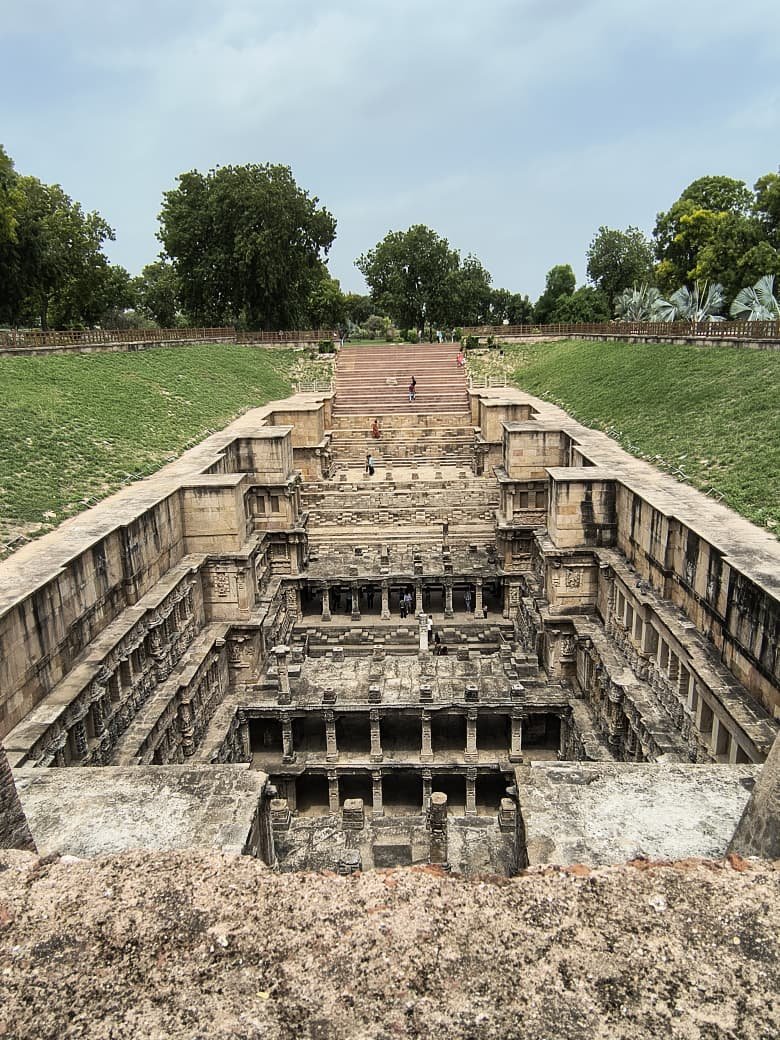
Figure 1: Rani-ki-Vav, Patan - the stepped corridor descending through seven storeys of columned pavilions to the well shaft (Photograph: researcher, 11 July 2026)
The sculpture is the vav's distinguishing achievement. Of the more than 800 principal images originally carved, over 400 survive, along with a much larger number of minor figures. The programme centres on Vishnu, whose ten incarnations appear repeatedly, but Shiva, Parvati, Brahma, Surya, Ganesha and the guardian deities share the walls, an unusually catholic iconography for a single monument18 (Figure 2). Apsaras and scenes of everyday life fill the intervals, and the patterns carved on the walls are still woven today in Patan's patola silks,19 a living link between the monument and the town's textile craft.
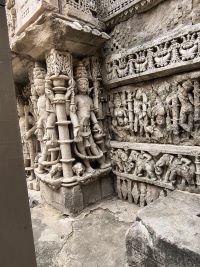
Figure 2: Sculptural panels on the corridor wall - deity figures and attendant images in wall niches (Photograph: researcher, 11 July 2026)
D. Burial, Excavation and Present Status
The vav's location was also its undoing. Floods and the shifting course of the Saraswati filled the corridor with silt, and the structure passed gradually out of use and under the earth.20 Between about 1805 and 1811 the owner of the land removed pillars and structural members to build another stepwell in Patan, the Barot Vav,21 whose fabric still betrays its source. When Burgess and Cousens surveyed the site late in the nineteenth century, little more than the back wall above the shaft was visible.22 The ASI's excavation and restoration in the 1980s recovered five of the original seven storeys; of the 292 pillars that once supported the pavilions, 226 remain.23 Inscription on the World Heritage List followed in 2014, the hundred-rupee note in 2018, and, in March 2026, the commissioning of a permanent projection-mapping and heritage-lighting installation at the site, discussed in Section VI. Table 1 summarises the sequence.
Table 1: Timeline of Rani-ki-Vav24
| Period | Event |
|---|---|
| Late 11th century | Commissioned by Queen Udyamati in memory of Bhimadeva I |
| Later centuries | Flooding and silting of the Saraswati; progressive burial |
| c. 1805-1811 | Pillars and structural members removed to build the Barot Vav |
| Later 19th century | Burgess and Cousens record little beyond the back wall inside |
| 1980s | ASI excavation and restoration; five of seven storeys recovered |
| 22nd June 2014 | Inscribed on the UNESCO World Heritage List (38th session, Doha) |
| 2018 | Depicted on the RBI’s ₹100 note |
| 31st March 2026 | 3D projection-mapping show and heritage lighting inaugurated |
The monument has survived nine centuries of flood, spoliation and neglect. Whether it is secure for the next century is no longer a question of archaeology alone; it is a question of law and management.
Literature and the Research Gap
A. Stepwell Scholarship
The stepwells of Gujarat are well served by art history. Jain-Neubauer's survey remains the foundational account of their typology, epigraphy, and religious significance; Mankodi's monograph on the Queen's Stepwell, with his shorter study published by the ASI, provides the definitive architectural and sculptural documentation of Rani-ki-Vav itself; Livingston documents the ancient stepwells across India and traces dynastic influence on their design; Lautman's photographic survey records the neglected condition of the surviving wells; and Vyas has retold, in Hindi, the history of Udayamati's commission.25 These works establish the origins, typology and cultural role of the form and the pre-eminence of Rani-ki-Vav within it.
A second, more recent strand treats stepwells as a resource for the present. Studies of stepwell conservation and adaptive reuse, of the revival of traditional water-storage systems, and of stepwells as living heritage sustained by community participation have multiplied over the past decade,26 alongside government material promoting the revival of traditional water bodies and architectural studies of the vav itself. The shared limitation of this strand, for present purposes, is that it treats conservation as an architectural, hydrological, and social project. The legal framework on which conservation ultimately depends (who is bound, by what provision, and with what sanction) falls outside its frame.
B. Heritage-Law Scholarship
Legal scholarship supplies the missing register, though it has not yet reached this site. Writing on the AMASR framework examines the working of the 1958 Act, the zoning regime introduced by the 2010 Amendment and the role of the National Monuments Authority, and has been consistently critical of weak enforcement.27 The audit record points the same way. The Comptroller and Auditor General's performance audit of the preservation of monuments and antiquities found conservation works undertaken without monument-wise assessment of need and funding unrelated to the requirements of individual sites.28 The findings are directly relevant to a World Heritage property dependent on general allocations.
A constitutional strand runs alongside. Article 49 directs the State to protect monuments of national importance and Article 51A(f) makes it every citizen's duty to value and preserve the composite heritage; the Supreme Court (SC) has treated the fundamental duties as an interpretive guide, has recognised an affirmative governmental duty to preserve national monuments, and has read the protection of cultural heritage into the guarantee of life under Article 21.29 The recurring question in this case law is enforcement: how programmatic constitutional commitments are to be converted into obligations that bind identified authorities at identified sites.
C. Site-Specific and UNESCO Materials
A third body of material is specific to Rani-ki-Vav but has been used descriptively rather than analytically: the nomination dossier submitted by India, the ICOMOS evaluation, the World Heritage Committee's 2014 decision inscribing the property, and the Operational Guidelines30 under which the World Heritage system is administered. These documents state the property's outstanding universal value (OUV), record the assurances India gave about its protection and management, and define the management standards inscription attracts. They are, in effect, the benchmark against which domestic performance falls to be measured, and they have not previously been put to that use for this site.
D. The Gap
The scholarship, in short, documents the architecture, history and water-heritage value of India's stepwells in depth, and increasingly advocates their revival. The legal literature analyses the monument-protection regime in general terms, and the UNESCO materials set the standard that the site must meet. What no study has done is to bring these together: to ask whether the legal framework that attached to Rani-ki-Vav on inscription (the Convention obligations, the constitutional mandate, the AMASR regime, the environmental and local regulatory framework and the administrative machinery beneath them) in fact protects the monument, tested against its condition on the ground. This article addresses that gap.
E. Methodology
The study is doctrinal-empirical in design: the law on the books is identified first and then tested against the site. The doctrinal component analyses the Constitution of India (Articles 21, 49, 51A(f) and 253, and the relevant legislative entries); the AMASR Act, 1958 as amended by the Amendment and Validation Act, 2010, with the rules framed under it; the heritage bye-law regime contemplated under Section 20E and the local regulatory provisions applicable to the monument's surroundings; the Environment (Protection) Act, 1986 and the Environmental Impact Assessment Notification, 2006; the World Heritage Convention, 1972 and the Operational Guidelines; the nomination dossier, ICOMOS evaluation and Committee decision relating to the property; and the decisions of the Supreme Court on monuments and cultural heritage.
The empirical component is a single-site case study, directed at identifying implementation gaps, practical challenges and ground-level realities in the enforcement of this framework; the site was selected because it is the only stepwell on the World Heritage List,31 is centrally protected, and was inscribed recently enough for the effects of inscription to be observable. The researcher visited Rani-ki-Vav on 11th July 2026 and documented its condition photographically (Figures 1–6; Annexure II). Semi-structured interviews were conducted in July 2026 with the Superintending Archaeologist of the ASI Vadodara Circle, the officer responsible for the monument (7th July); with two long-term residents of Patan, a senior advocate and an academic, both Patan-born and now based at Ahmedabad (3rd and 8th July respectively); and informally with visitors at the site. Selection was purposive for the custodian's officer and by convenience for residents and visitors; responses were recorded in written notes with the participants' consent, and the residents are anonymised here.
The limitations are stated plainly: the interviews are few, the site is one, visitor responses were gathered on a single weekend, and archaeological and engineering questions lie outside the study's legal scope. The findings are indicative, not generalisable. The framework against which they are read has two levels, and the international level comes first.
The International Framework
The World Heritage Convention, 1972, which India ratified in 1977, rests on the idea that certain properties possess OUV,32 a significance so exceptional that it transcends national boundaries and concerns humanity as a whole. The World Heritage List is the Convention's instrument of recognition: properties are nominated by the State Party and inscribed by the World Heritage Committee on the advice of expert bodies, ICOMOS in the case of cultural properties.33
Recognition, however, is the smaller part of the scheme; the larger part is obligation. Article 4 places the duty of identifying, protecting, conserving, presenting, and transmitting the heritage to future generations squarely on the State in whose territory it lies, to be discharged to the utmost of its own resources.34 Article 5 specifies the means, including the taking of "appropriate legal, scientific, technical, administrative and financial measures".35 These two articles supply the yardstick applied throughout: India's obligations at Rani-ki-Vav are measured not by the fact of inscription but by the adequacy of the measures taken under it.
The Convention's supervisory machinery is deliberately light. The Operational Guidelines, the administrative code through which the Committee implements the Convention, expect each inscribed property to have an adequate protective regime and a management plan or documented management system, delineate buffer zones, and provide for periodic reporting and reactive monitoring36 where a property is under threat. The most important instrument is Article 11(4): an endangered property may be entered on the List of World Heritage in Danger and may ultimately be deleted from the List.37 There is no fine and no injunction. The regime disciplines States through scrutiny and reputation and borrows its coercive force entirely from domestic law.
Rani-ki-Vav was inscribed on 22nd June 2014, on India's nomination, under two cultural criteria. Under criterion (i) the Committee found the property a masterpiece of human creative genius, "illustrating a true mastery of craftsmanship and figurative expression"; under criterion (iv), an outstanding example of subterranean water architecture, illustrating the technological and artistic mastery of an age when water was drawn from communal groundwater structures, here combined "with a temple-like structure celebrating the sanctity of water".38
Inscription, therefore, commits India to something concrete: to maintain the attributes of OUV for which the property was listed, to protect its setting, to manage it under a plan or equivalent system meeting the Guidelines' standards, and to report on its state of conservation.39
The Domestic Framework
A. The Constitutional Layer
The Constitution addresses heritage in both its directive and its duty-imposing registers. Article 4940 obliges the State to protect every monument or place of artistic or historic interest declared to be of national importance from spoliation, disfigurement, destruction, removal, disposal or export. Article 51A(f)41 makes it a fundamental duty of every citizen to value and preserve the rich heritage of the country's composite culture. Neither provision is enforceable in itself. In AIIMS Students' Union v. AIIMS,42 the Supreme Court explained the correct position: the fundamental duties, though not enforceable by writ, are a constant reminder and a valuable aid in the interpretation of constitutional and legal issues, and cast a corresponding responsibility on the State. For Rani-ki-Vav, the constitutional text thus supplies the mandate and the interpretive climate for protection, but not the operative rules.
The federal architecture determines who may act. Article 253 empowers Parliament to legislate to implement international agreements (the channel through which the 1972 Convention's obligations enter domestic law), and the legislative entries divide the field: ancient and historical monuments declared of national importance fall to the Union (Entry 67, List I), other monuments to the States (Entry 12, List II), and archaeological sites and remains other than national ones to the concurrent field (Entry 40, List III).43 Roads, sanitation, signage and local planning, meanwhile, are municipal functions, the promotion of cultural and aesthetic aspects being among those devolvable under the Twelfth Schedule.44 This division matters at Patan: the ASI's writ runs over the monument and its statutory zones, but the approach roads, parking, and civic environment on which the visitor's experience depends belong to authorities with no monument-specific obligations.
The Supreme Court has partly bridged the gap between mandate and enforcement. In Ramsharan Autyanuprasi v. Union of India,45 the Court recognised that the right to life under Article 21 embraces the fine graces of civilisation, including cultural heritage. In Rajeev Mankotia v. Secretary to the President of India,46 it directed the preservation of the Viceregal Lodge and articulated an affirmative governmental duty to maintain national monuments. Further, in M.C. Mehta v. Union of India47 (the Taj Trapezium case), it required polluting industries around the Taj Mahal to convert or relocate, establishing that environmental threats to a monument attract constitutional protection and judicial supervision. Each holding is available for Rani-ki-Vav: the first grounds a rights-based claim to preservation, the second fixes responsibility on the State as custodian, and the third supplies the template for addressing the railway line near the site.
B. The Statutory Layer: The AMASR Act
The operative regime is statutory. Building on the colonial Ancient Monuments Preservation Act, 1904, the AMASR Act, 1958 provides for the declaration of monuments more than one hundred years old48 as monuments of national importance and for their protection and maintenance. Rani-ki-Vav stands so declared and is administered by the ASI.49 Declaration has immediate consequences. Under Section 19, no person may construct within a protected area or use the monument in any manner inconsistent with its character,50 and works at the monument require the authority of the Act. This is the provision under which entry to the vav is regulated, works are controlled and the monument is held in the ASI's custody.
The Amendment and Validation Act, 2010 added a zoning regime of general application. Section 20A declares the area within 100 metres of a protected monument a prohibited area, in which no construction may be undertaken, only the repair or renovation of pre-existing buildings with permission; and Section 20B declares the further 200 metres a regulated area,51 in which construction, reconstruction, or repair requires the prior permission of the competent authority. At Rani-ki-Vav the prohibited area is visibly maintained: the vav sits within landscaped gardens kept free of structures, which also serve to hold encroachment at bay (Figure 3). The old goods railway line running near the monument, however, makes the precise mapping of the two zones a live question rather than an academic one, since the answer determines which activities around the site require heritage permission.
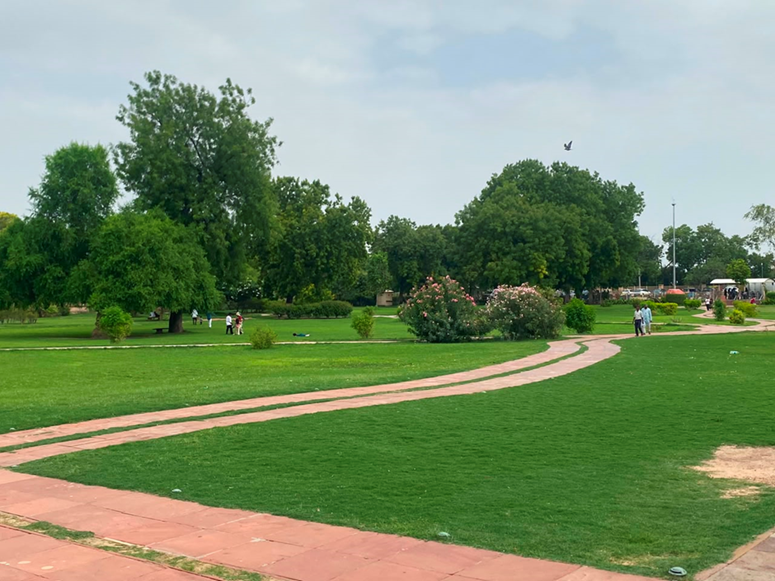
Figure 3: The landscaped gardens around the monument - the Section 20A prohibited area maintained free of construction (Photograph: researcher, 11 July 2026)
The 2010 Amendment also created the machinery for administering these zones. Sections 20C and 20D route applications for repair in the prohibited area and construction in the regulated area through the competent authority, which acts on the recommendation of the National Monuments Authority (NMA), a body of experts constituted under Section 20F52 to grade monuments and oversee the zoning system. Section 30 backs the scheme with penalties extending to two years' imprisonment and fine.53 The scheme's significance at this site is illustrated by the 2026 projection-mapping and heritage-lighting installation: a permanent installation with sub-surface projector housings at a centrally protected monument necessarily engaged this permission machinery,54 yet the route by which it was authorised, and on what conditions, is not part of any published record.
The provision that most directly translates World Heritage management standards into domestic law is Section 20E,55 under which the competent authority, in consultation with expert bodies, prepares heritage bye-laws for each protected monument: site-specific rules on matters such as elevation, façades, building materials and other heritage controls in the surrounding zones, which require the NMA's approval, are laid before Parliament and are made available to the public. Herein lies the finding on which much of this article turns. The NMA's record discloses only a handful of bye-laws so far finalised and laid before Parliament, covering a few dozen of the thousands of centrally protected monuments, and none has been framed for Rani-ki-Vav.56 India's only World Heritage stepwell is administered without the published, site-specific rulebook the statute contemplates.
C. The Environmental Layer
Monument law protects the built fabric itself; environmental law addresses the pollution and harm that reach it from beyond. The Environment (Protection) Act, 1986 (EPA) confers broad powers on the Central Government to take measures for protecting the environment,57 and the Environmental Impact Assessment (EIA) Notification, 2006 issued under it requires prior environmental clearance for scheduled categories of projects.58 Two points matter here. First, the requirement of impact assessment flows from the Notification, not from the Act at large, and railway operations are not among the scheduled project categories, so the goods line near the vav attracts no assessment obligation automatically. Second, the Taj Trapezium case shows that this is not the end of the matter: where pollution or vibration threatens a monument, the Act's general powers, the precautionary principle, and Article 21 together sustain both administrative direction and judicial supervision.59 For Rani-ki-Vav, environmental law thus offers a route to assess and mitigate the railway risk, but it is a route that must be deliberately taken; no provision engages itself.
D. The Administrative and State Layer
The daily custodian is the ASI. Founded in 1861 and functioning today under the Ministry of Culture, the ASI maintains the monuments of national importance and acts as the nodal agency for India's World Heritage commitments.60 Rani-ki-Vav falls within its Vadodara Circle, headed by a Superintending Archaeologist.61 Around this central core lies a state and local layer: Gujarat's own monuments legislation protects monuments of state importance,62 and the municipality and district administration discharge the civic functions (roads, signage, sanitation, traffic and local amenities) on which access to the site depends.63 No provision obliges these authorities to co-ordinate with the ASI in respect of the monument, an omission whose consequences the field study makes visible. Table 2 draws Sections IV and V together and matches each obligation to the position found at the site.
Table 2: The legal framework applied at Rani-ki-Vav
| Provision | Obligation it creates | Position at Rani-ki-Vav | Evidence |
|---|---|---|---|
| AMASR Sec 19 | Restrictions on construction and inconsistent use of the protected area | Enforced; entry and works regulated by the ASI | Officer interview; observation |
| AMASR Sec 20A | Prohibited area (100 m): no new construction | Maintained; landscaped gardens keep the surrounds clear | Officer interview; photographs |
| AMASR Sec 20B | Regulated area (further 200 m): permission required | Zone mapping unclear on the ground; railway line nearby | Observation |
| AMASR Sec 20C-20D, 20F | Permissions through competent authority and NMA | Route taken for the 2026 installation not publicly recorded | Public records |
| AMASR Sec 20E | Site-specific heritage bye-laws | Not framed for Rani-ki-Vav | NMA records |
| AMASR Sec 30 | Penalties for contravention | No enforcement history traced for the site | Public records |
| EP Act 1986 / EIA 2006 | Assessment and control of environmental threats | Railway line unassessed; no clearance requirement engaged | Observation; records |
| Operational Guidelines | Management plan; buffer zone; reporting | No site-specific management plan traced | Officer interview; records |
| WHC Arts 4-5 | Protect, conserve, transmit; adequate legal, administrative and financial measures | Partly met; gaps analysed in Section 7 | Whole study |
How this framework operates at the site is ultimately an empirical question, and it is to the field study that the article now turns.
Field Findings
The field study described in Section III.E examined how the legal and regulatory framework mapped in Sections IV and V is practically implemented.
A. Conservation and Maintenance
Routine conservation appears well organised. The monument is cleaned regularly, with specialist conservation teams engaged through the Government e-Marketplace portal, and materials used on the sculpted stone are selected for compatibility with its preservation. The site lies in a seismically active zone, yet the officer reported no major damage even in the 2001 earthquake,64 a testament to both the original construction and its maintenance (officer interview, 7th July 2026; Figures 1–2; Annexure II, Figures 7–9).
B. Security and Visitor Management
Security and visitor systems are in place and functioning. The premises are monitored by CCTV; ticketing operates at the counter and online, with free entry for children below 15; photography is permitted under the ASI's conditions; entry is channelled through turnstiles; and sanitation facilities include toilets for men, women, and visitors with disabilities. An ASI information plaque carries a QR code giving visitors details of the monument, and the railings at the well carry bilingual warning signage (officer interview, 7th July 2026; observation and photographs, 11th July 2026; Figure 4; Annexure II, Figures 12–16).
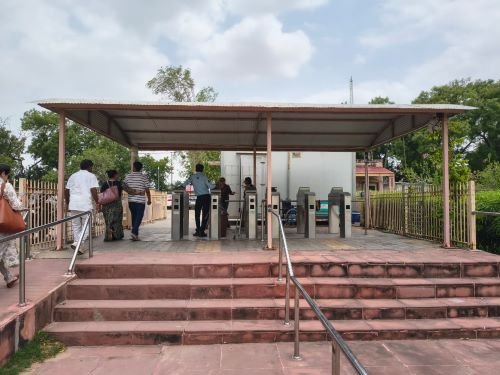
Figure 4: Controlled visitor entry through turnstiles at the site gate (Photograph: researcher, 11 July 2026)
C. Funding
On funding, the officer's account was candid. Central funds for the conservation of Gujarat's national monuments are not earmarked for particular sites; when a monument needs work, the Circle applies, specifying the need, and an allocation follows. Rani-ki-Vav thus has no dedicated conservation budget: it competes for general funds as requirements arise (officer interview, 7th July 2026). The legal significance of this arrangement is considered in Section VII.B.
D. Local Environment and Access
Beyond the ASI's boundary, the picture changes. Both residents described the approach to the monument as poorly marked: signboards are absent or obscured, public transport from the city is infrequent, and parking is inadequate. The feeding of monkeys near the adjacent Sahasralinga Talav creates a persistent nuisance on the approach road, and pigeons soil the monument itself. An old goods railway line runs near the vav; the line has existed for decades, but operations on it resumed only in the last two years, and neither the officer nor the residents reported any noticeable disturbance to the monument from the resumed operations, though their effect has never been formally assessed (officer interview, 7th July 2026; resident interviews, 3rd and 8th July 2026; observation and photographs, 11th July 2026; Figure 5; Annexure II, Figure 14). The researcher's observation matched these accounts: the monument within its gardens is well kept, while the civic infrastructure around it lags visibly behind.
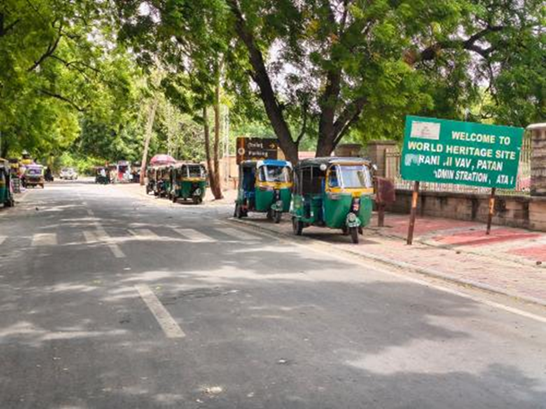
Figure 5: The approach road to the monument, with the World Heritage Site welcome board and autorickshaw stand (Photograph: researcher, 11 July 2026)
E. Interpretation and Public Engagement
The most striking recent development concerns public engagement. A permanent 3D projection-mapping show and heritage-lighting system, commissioned by the Government of Gujarat's tourism department at a reported cost of about ₹18 crore, was virtually inaugurated by the Prime Minister on 31st March 2026. The 24-minute ticketed show (₹30), screened every evening, narrates the history of the vav and of Patan on the monument's own façade;65 by 12th July 2026 it had drawn more than 44,000 viewers, and in July 2026 it won the Gold Award at the 17th WOW Awards Asia in the experiential-technology category.66 The installation is the mature form of the interpretive programming the ASI officer described (officer interview, 7th July 2026; Figure 6), and awareness programming continues alongside it. International Yoga Day was celebrated at the vav and at Modhera on 21st June 2026.67
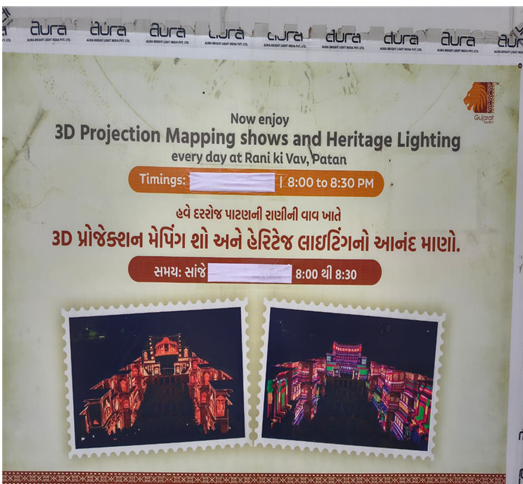
Figure 6: Site signboard announcing the daily 3D projection-mapping show and heritage lighting (Photograph: researcher, 11 July 2026)
Perception is improving from a modest base. Both residents dated a clear rise in local awareness to the 2014 inscription, and one observed that serious protective arrangements around the premises followed the declaration. Yet both considered local attachment thinner than the site's international standing: for many in Patan, the vav remains a picnic spot rather than a living monument. Their suggestions were practical: more frequent transport, better cleanliness and guidance, more events, and, in one view, restoring usable water to the vav so that residents would again see it as serving the town. Visitors expressed satisfaction with the monument's upkeep and asked for more events and interpretation (resident interviews, 3rd and 8th July 2026; visitor responses, July 2026).
Read against the frameworks of Sections IV and V, these findings disclose five implementation gaps.
Analysis: Where Protection Falls Short
A. No Site-Specific Heritage Bye-Laws
The central gap is normative. Section 20E contemplates published, site-specific heritage bye-laws for every protected monument, and the Operational Guidelines expect site-level rules and a management system adequate to sustain outstanding universal value.68 Neither exists for Rani-ki-Vav. The consequence is not that the site is unprotected, as the general prohibitions of Sections 19 and 20A operate regardless.69 Instead, the consequence is that everything the general law does not settle is decided ad hoc. The 2026 installation is the demonstration: a permanent, sub-surface, high-intensity lighting and projection system was added to a World Heritage property without any published site rules governing installations, illumination, fixings or reversibility, on permissions whose terms are not public. A monument of this rank should not depend on the discretion of the moment; it should be governed by rules made in advance, as the statute itself contemplates.
B. Funding Is Not Site-Specific
The officer's account of funding (general allocations, drawn down by application as needs arise) engages Article 5 of the Convention, which requires appropriate financial measures, and echoes what the Comptroller and Auditor General found in its performance audit of monument conservation:70 works undertaken without monument-wise assessment of requirements, and budgets unrelated to the needs of individual sites. An application-based system is inherently reactive, funding the remediation of deterioration after it occurs rather than preventing its onset. While that may be tolerable for an ordinary protected monument, it is not for a World Heritage property: India must report its state of conservation internationally,71 making the absence of a predictable, site-specific budget clash with its treaty obligations.
C. The Railway Line
The goods line near the vav presents the classic configuration of a heritage-environment problem: a continuing, low-visibility source of vibration and pollution acting on sculpted stone, attributable to an authority with no conservation mandate. The line itself is not new; it has run near the site for decades, but operations on it resumed only in the last two years. On this, the field study found no present cause for alarm: both the ASI officer and the residents interviewed reported no significant disturbance or observable adverse impact on the monument attributable to the resumed operations (officer interview, 7th July 2026; resident interviews, 3rd and 8th July 2026). The legal position, however, is unchanged by this reassuring account. Monument law does not reach the line: it predates the zoning regime and is not a "construction" awaiting permission. Environmental law can reach it, but only if invoked. Railway operations attract no automatic assessment under the EIA Notification,72 so the effects of the resumed operations will remain unmeasured unless the ASI or the Ministry seeks an assessment, or a court is moved. The absence of observed disturbance is not the same thing as an assessment: vibration effects on eleventh-century sculpted stone are cumulative and gradual, and without baseline monitoring neither the ASI nor the Railways would know when harm had begun.73 The Taj Trapezium case supplies the template should harm ever emerge: sustained judicial supervision, on precautionary grounds, of polluting activity around a World Heritage monument.74 The present difficulty is anterior: no one has been identified as the duty-holder even for monitoring the risk, the Railways having no heritage obligation and the ASI no authority over railway operations. Until that allocation is made, what the field study records is a risk that is presently dormant but legally unowned; not a present threat, but an unassigned responsibility.
D. The Coordination Gap
The findings on approach roads, signage, transport, parking and animal nuisance share a single legal root. Each concerns a function assigned by the constitutional scheme and municipal law to the district and municipal authorities, not to the ASI.75 The division of competence described in Section V.A means the monument's custodian legally cannot fix the problems that most affect its visitors, yet nothing binds the local authorities to the monument either. No statute, bye-law, or standing arrangement obliges them to maintain the setting of a World Heritage Site to any defined standard. The visitor's experience of India's premier stepwell therefore depends on authorities that owe it no legal duty. The Convention's expectation that a property's setting be protected, and the Twelfth Schedule's recognition of cultural promotion as a municipal function, both point towards a coordination obligation.76 At present none exists.
E. Community Participation
The residents' evidence shows an awareness that has risen since 2014, yet their attachment remains shallow. This dynamic bears directly on the modern understanding of heritage protection, which holds that a monument survives best as part of a community's life rather than as a fenced exhibit. Article 51A(f) casts the citizen's duty, and the living-heritage literature makes participation a condition of sustainable conservation;77 the finding that locals treat the vav as a picnic spot suggests that neither has yet been given practical form at Patan. The 2026 installation is the fair counterpoint: the State is investing imaginatively in public engagement, and tens of thousands of viewers within a hundred days is real uptake. The question it leaves open is whether such initiatives operate within a legal framework that protects the monument while facilitating its public presentation. The remaining irritants recorded in the field study (pigeons, the absence of a cafeteria, souvenir facilities and a children's area, and proposals for a site museum) are not legal gaps but management-plan matters. Table 3 ranks the challenges.
Table 3: Ranked Challenges at Rani-ki-Vav
| Challenge | Norm Engaged | Gravity | Duty-Holder |
|---|---|---|---|
| No Sec 20E heritage bye-laws | AMASR Sec 20E; Operational Guidelines | High | Competent authority / NMA |
| Railway line unassessed | EP Act 1986; EIA regime; Art 21 case law | Medium | Railways / ASI (undefined) |
| Funding not site-specific | WHC Art 5 (financial measures) | Medium-high | Ministry of Culture |
| ASI-local authority coordination | Entries 67/12; municipal law | Medium | State Government |
| Thin community participation | Art 51A(f); living-heritage standards | Medium | ASI / local bodies |
| Minor site amenities | Management plan | Low | Site management |
Each of these gaps admits of a specific legal response.
Recommendations
Heritage bye-laws should be framed for Rani-ki-Vav under Section 20E,78 by the competent authority with the approval of the NMA. The bye-laws should prescribe the heritage controls for the prohibited and regulated areas and, in light of the 2026 installation, lay down published conditions for installations, illumination, fixings and events at the monument. This answers the gap identified in Section VII.A and converts ad hoc discretion into rule-based administration.
The ASI and the Ministry of Culture should adopt a site-specific management plan consistent with the Operational Guidelines.79 This plan is the proper home for the managerial proposals recorded during the field study: it should incorporate the proposed site museum for sculptures recovered from the Sahasralinga Talav, souvenir and cafeteria facilities, audio and digital interpretation, training of craftsmen in traditional repair techniques, a digital documentation database, and disaster-management arrangements. Placing these initiatives within the plan ensures each has a clear timetable and an accountable owner.
The railway-line risk should be assessed and monitored. The Ministry of Culture should seek a vibration and pollution assessment of the goods line in coordination with the Railways, using the powers available under the EPA. If administrative coordination fails, the Taj Trapezium precedent shows that judicial supervision on precautionary grounds is available.80 This answers Section VII.C and, critically, fixes a duty-holder.
The State Government should constitute a standing coordination mechanism comprising the ASI Vadodara Circle, the district administration and the Patan municipality, with defined responsibility for the monument's setting: approach roads, signage, transport, parking, sanitation and the control of animal nuisance. This answers Section VII.D by giving the authorities who control the setting an obligation towards the site.
The Ministry of Culture should either earmark annual conservation funding for the property or publish the criteria on which allocations are made, so that the site's conservation is planned rather than reactive. This answers Section VII.B and aligns budgetary practice with Article 5 of the Convention.81
Community participation should be given a legal hook: awareness and local-engagement obligations written into the Section 20E bye-laws, and a defined role for local bodies and residents in the management plan, including consideration of the residents' suggestion that water be restored to the vav where conservation permits. This answers Section VII.E by moving participation from aspiration to arrangement.
Conclusion
Inscription on the World Heritage List in 2014 placed Rani-ki-Vav under a dual regime. Internationally, Articles 4 and 5 of the Convention oblige India to protect, conserve, and transmit the property through adequate legal, administrative, and financial measures under the management standards of the Operational Guidelines. However, because the Convention is not self-enforcing, these obligations must be discharged through domestic channels, specifically Article 253, the AMASR Act, and the ASI. On paper, and in answer to the first research question, the domestic framework is substantially complete. The constitutional mandate under Articles 49 and 51A(f) is reinforced by a duty to preserve national monuments recognised by the Supreme Court and by the reading of cultural heritage into Article 21. The AMASR Act formally declares the vav a monument of national importance; it restricts inconsistent use, imposes the 2010 zoning regime, and provides the machinery for permissions, penalties, and site-specific bye-laws. Environmental law can reach threats beyond the monument regime's boundary.
On the ground, the picture is more uneven. The field study found the monument well conserved, secure and competently presented, its resilience proven in the 2001 earthquake and its public profile transformed by the 2026 projection-mapping installation. But it also found the statutory promise incompletely kept, disclosing the implementation gaps with which the second research question is concerned: there are no heritage bye-laws framed for the site, no site-specific conservation budget, an unassessed railway risk, civic surroundings dependent on authorities that owe the monument nothing, and community attachment still shallow.
The reforms follow from the findings: bye-laws under Section 20E, a management plan under the Operational Guidelines, an assessment of the railway risk with an identified duty-holder, a statutory coordination mechanism, predictable funding, and participation with legal form. None requires new legislation; each requires only that existing law be brought to bear on one site. Rani-ki-Vav has already survived nine centuries of flood, spoliation, and neglect. Its inscription in 2014 was a beginning, not an end; and the measure of India's commitment to it is not the listing, but the law made to work at the stepwell's edge.
Annexure I - Field Study Particulars
The interview schedule covered conservation practice, security and visitor management, funding, surroundings and access, public awareness, and suggestions.
| Participant | Date | Mode | Consent |
|---|---|---|---|
| Superintending Archaeologist, ASI Vadodara Circle | 7th July 2026 | In person, semi-structured | Recorded in notes |
| Resident of Patan (1): senior advocate, now at Ahmedabad | 3rd July 2026 | In person, semi-structured | Recorded; anonymised |
| Resident of Patan (2): academic, now at Ahmedabad | 8th July 2026 | In person, semi-structured | Recorded; anonymised |
| Visitors at the site | July 2026 | Informal responses | Verbal; anonymised |
Annexure II - Photograph Log
All photographs were taken by the researcher at Rani-ki-Vav on 11 July 2026. Figures 1-6 appear in the main text; Figures 7-16 follow below.
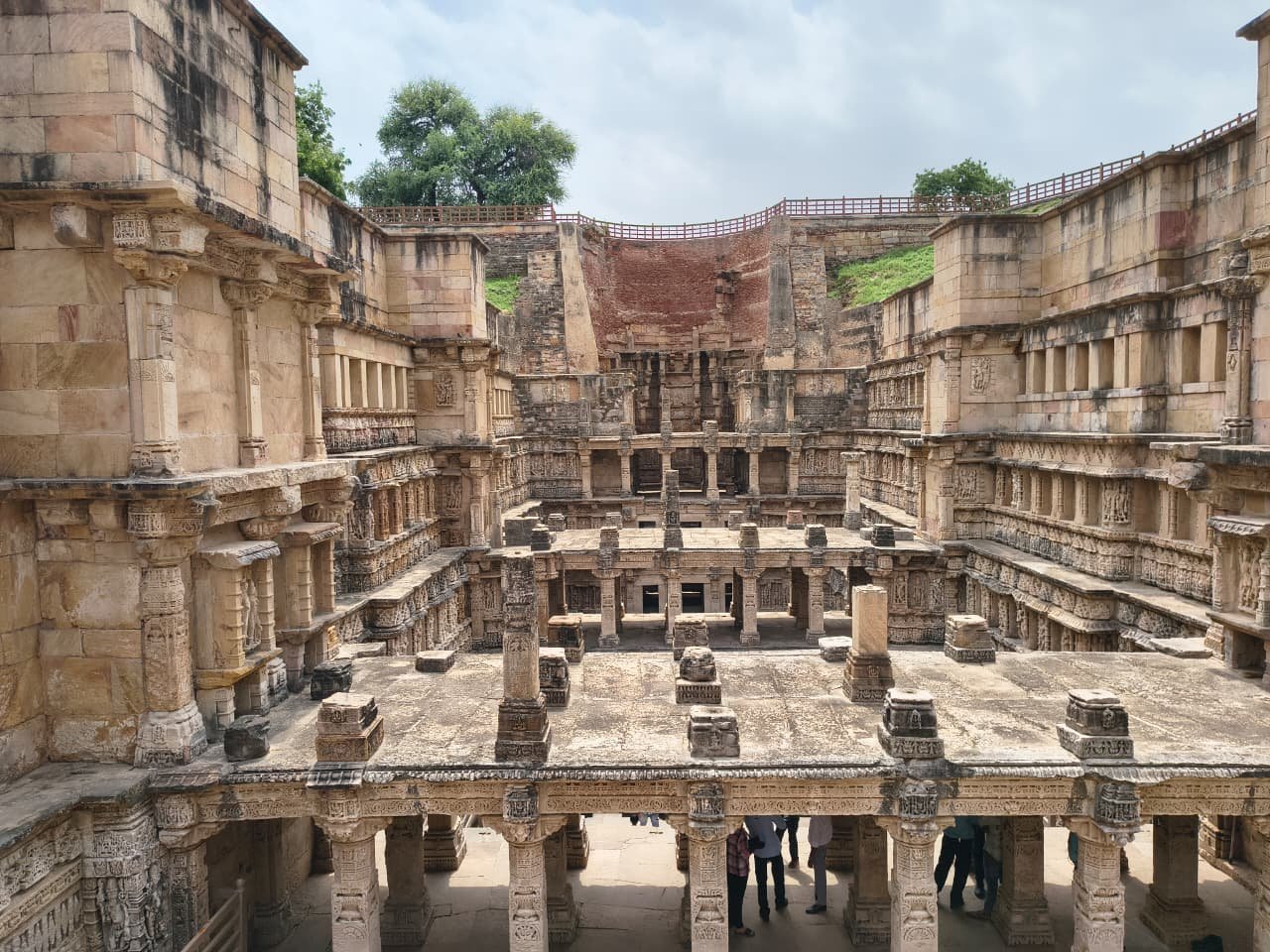
Figure 7: General view of the stepped corridor and pavilion tiers
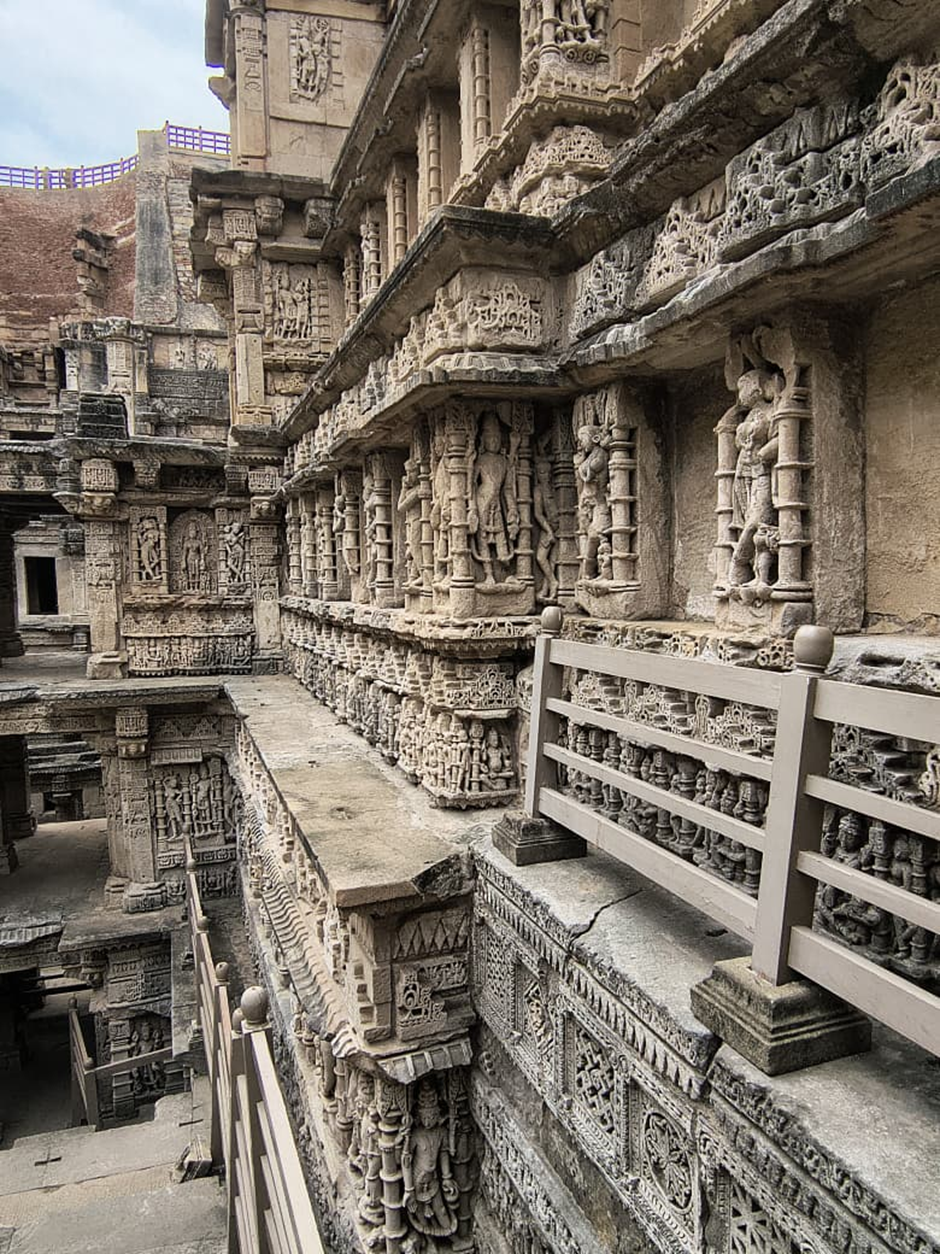
Figure 8: Sculpted side walls and pavilion storeys, with protective railing
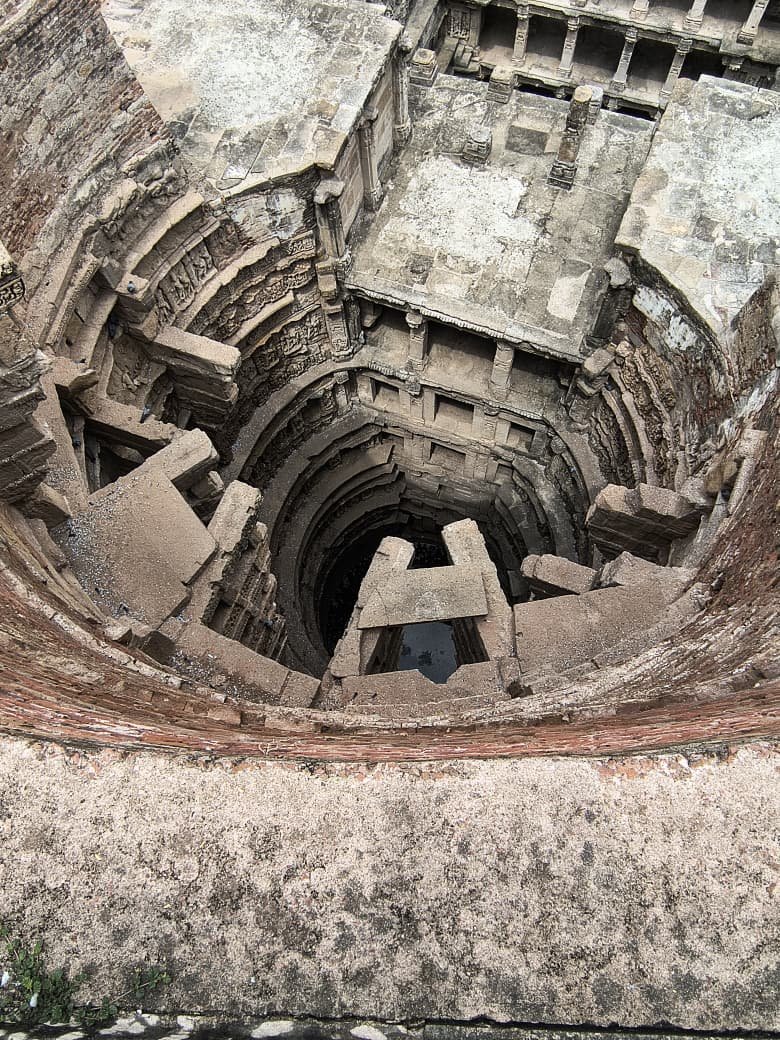
Figure 9: The well shaft viewed from above
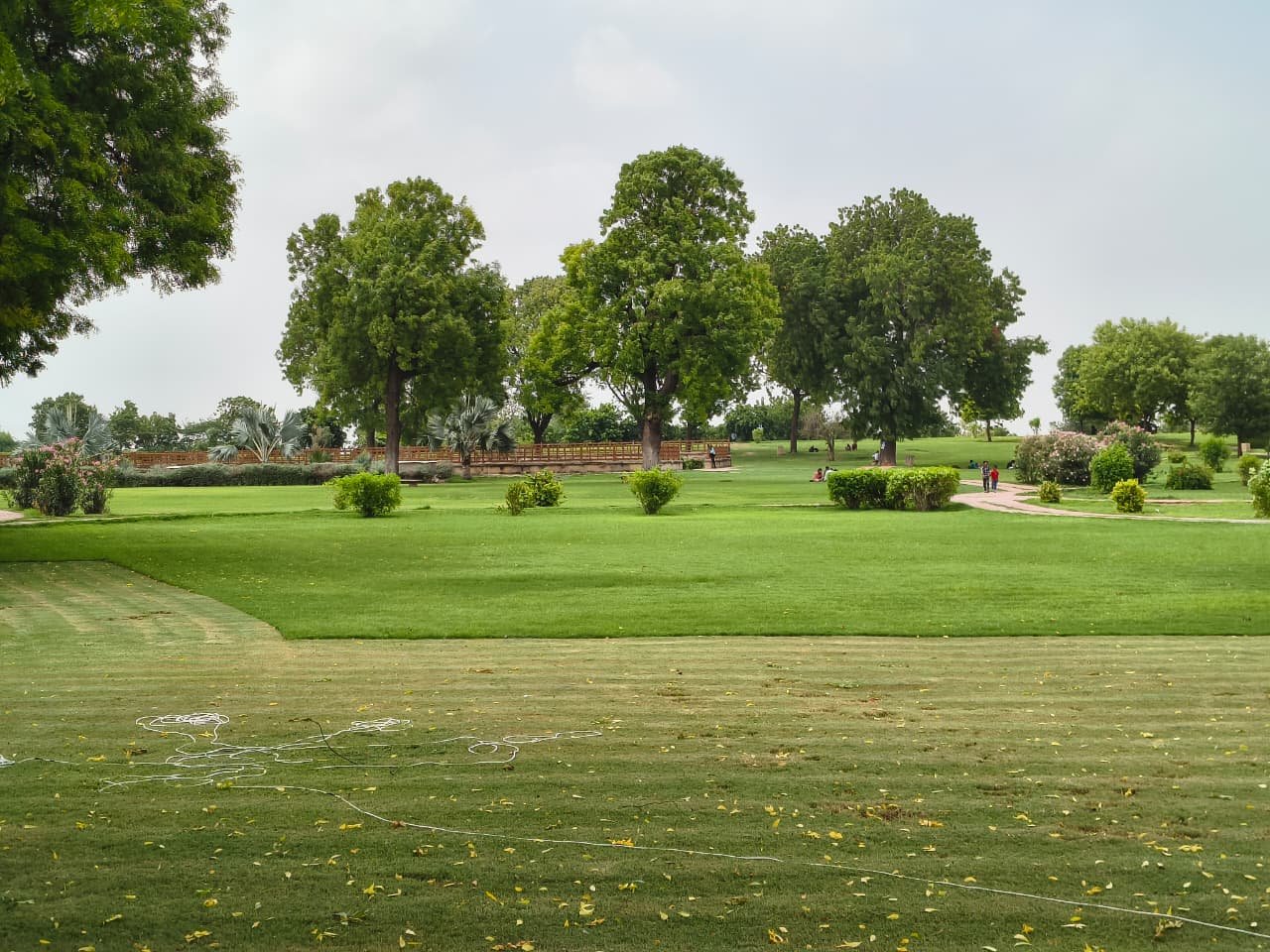
Figure 10: Lawns maintained within the protected area
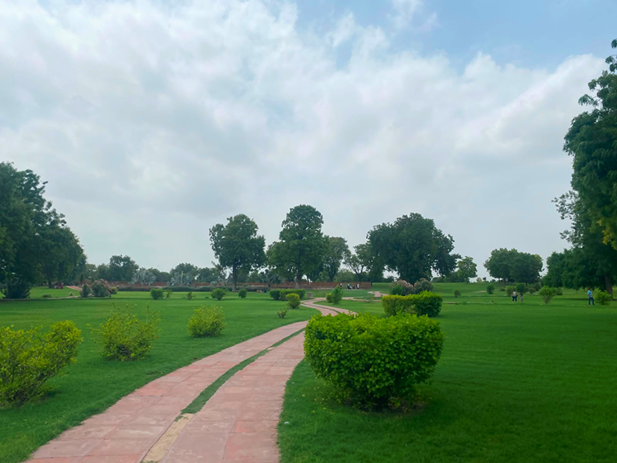
Figure 11: Garden buffer between the monument and the site boundary
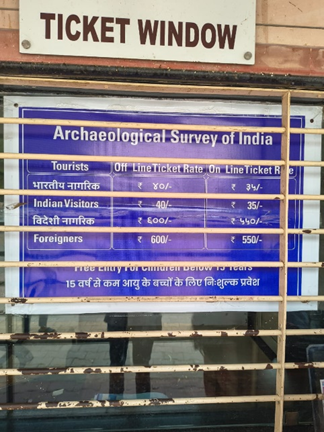
Figure 12: ASI ticket window with tariff board (counter and online rates)
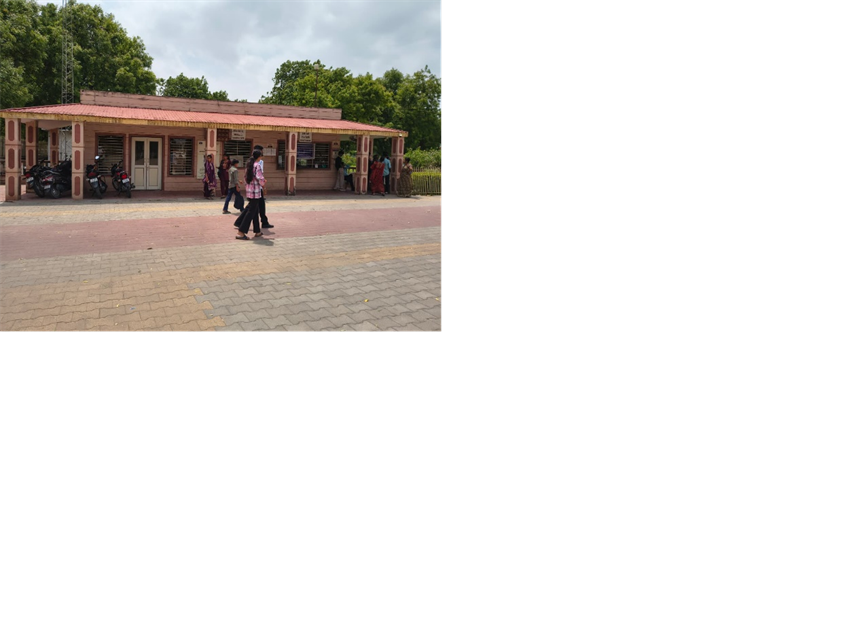
Figure 13: Ticket office and visitor facility building
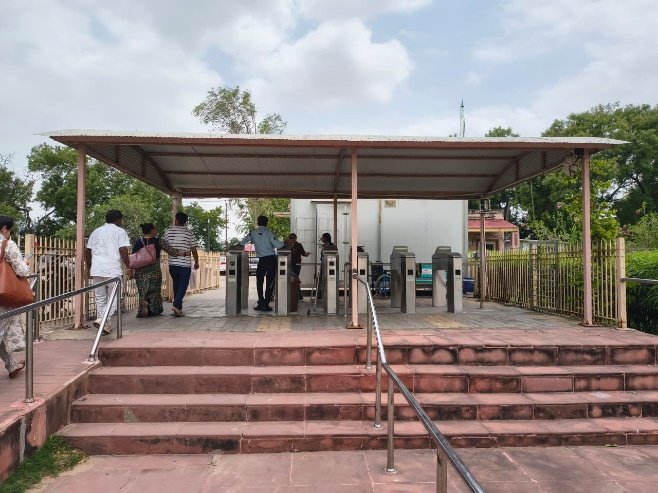
Figure 14: Entrance gate and turnstiles, frontal view
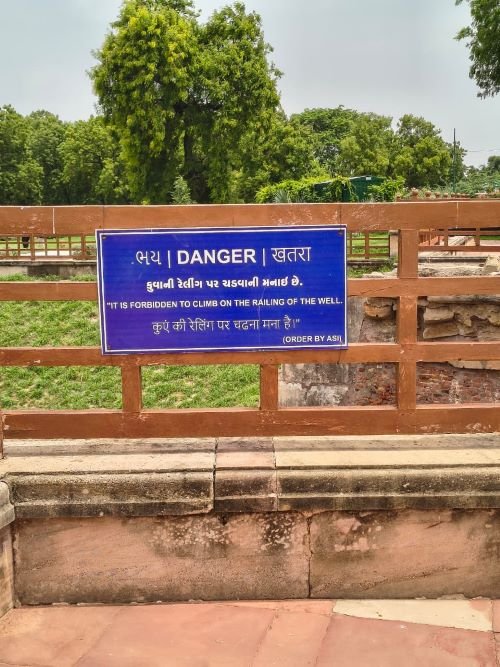
Figure 15: Bilingual warning signage on the railing at the well
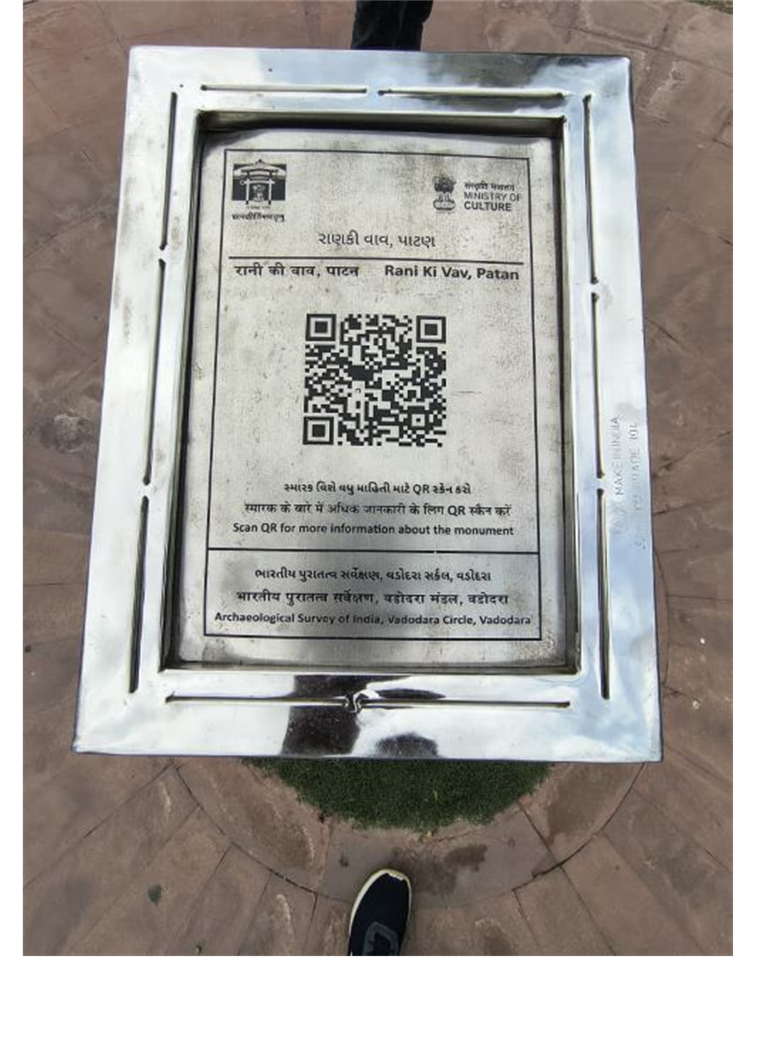
Figure 16: ASI information plaque with QR code for monument details
*****
Footnotes
1. Kirit L. Mankodi, The Queen's Stepwell at Patan (1991); Jutta Jain-Neubauer, The Stepwells of Gujarat: In Art-Historical Perspective (1981); ICOMOS, Advisory Body Evaluation: Rani-ki-Vav (India), No. 922, at 126 (2014), https://whc.unesco.org/document/154599 [hereinafter ICOMOS Evaluation].
2. World Heritage Comm., Decision 38 COM 8B.25: Rani-ki-Vav (The Queen's Stepwell) at Patan, Gujarat (India) (2014), https://whc.unesco.org/en/decisions/6111.
3. Press Release 2018-2019/174, Reserve Bank of India, RBI to Issue New Design ₹100 Denomination Banknote (July 19, 2018), https://rbi.org.in/Scripts/BS_PressReleaseDisplay.aspx?prid=44533.
4. Convention Concerning the Protection of the World Cultural and Natural Heritage arts. 4–5, 11(4), Nov. 16, 1972, 1037 U.N.T.S. 151 [hereinafter World Heritage Convention].
5. Michael Jansen, Water Supply and Sewage Disposal at Mohenjo-Daro, 21 World Archaeology 177, 177 (1989).
6. Jain-Neubauer, supra note 1.
7. Victoria Lautman, India's Forgotten Stepwells, ArchDaily (June 28, 2013), https://www.archdaily.com/395363/india-s-forgotten-stepwells; see also Victoria Lautman, The Vanishing Stepwells of India (2017).
8. See generally Morna Livingston, Steps to Water: The Ancient Stepwells of India (2002).
9. Jain-Neubauer, supra note 1.
10. See generally Livingston, supra note 8; Jain-Neubauer, supra note 1.
11. See generally Livingston, supra note 8; Lautman, supra note 7.
12. See generally Asoke Kumar Majumdar, Chaulukyas of Gujarat (1956).
13. ICOMOS Evaluation, supra note 1, at 126 (memorial built to a king in the 11th century CE); see Majumdar, supra note 12; Mankodi, supra note 1.
14. See generally Mankodi, supra note 1.
15. Majumdar, supra note 12; Sahastra Ling Talav, Patan District, Gov't of Gujarat, https://patan.nic.in/tourist-place/sahastra-ling-talav/.
16. ICOMOS Evaluation, supra note 1, at 125–26, 129 (dimensions of the corridor, tank at 23 m and well shaft at 30 m; stepwell footprint of 70 × 20 m); Decision 38 COM 8B.25, supra note 2 (Statement of Outstanding Universal Value: seven levels of stairs).
17. Decision 38 COM 8B.25, supra note 2 (property "designed as an inverted temple highlighting the sanctity of water"); see generally Mankodi, supra note 1 (construction method).
18. Decision 38 COM 8B.25, supra note 2; ICOMOS Evaluation, supra note 1, at 126.
19. Archaeological Survey of India, Nomination Dossier: Rani-ki-Vav (The Queen's Stepwell) at Patan, Gujarat (2013), https://whc.unesco.org/uploads/nominations/922.pdf [hereinafter Nomination Dossier].
20. ICOMOS Evaluation, supra note 1, at 126.
21. Jain-Neubauer, supra note 1.
22. James Burgess & Henry Cousens, The Architectural Antiquities of Northern Gujarat (1903); ICOMOS Evaluation, supra note 1, at 126.
23. ICOMOS Evaluation, supra note 1, at 125–26.
24. See sources cited supra notes 1–3, 20–23 and infra note 65.
25. Jain-Neubauer, supra note 1; Mankodi, supra note 1; Livingston, supra note 8; Lautman, supra note 7.
26. See, e.g., Thirumalini Selvaraj et al., Review of the Potential of Stepwells as Sustainable Water Management Structures, 14 Water art. 2665 (2022); Karishma Mungona & Kalpana R. Thakre, Reviving the Walls of Times: Stepwell Conservation and Adaptive Reuse of Stepwell, 12 J. Emerging Techs. & Innovative Rsch. m218 (2025).
27. The Ancient Monuments and Archaeological Sites and Remains Act, No. 24 of 1958, India Code (1958) [hereinafter AMASR Act], amended by The Ancient Monuments and Archaeological Sites and Remains (Amendment and Validation) Act, No. 10 of 2010, India Code (2010) [hereinafter 2010 Amendment] (introducing the prohibited- and regulated-area zoning regime, §§ 20A–20B, and constituting the National Monuments Authority, § 20F). On the framework's enforcement, see, e.g., Faraz Farooq, Heritage Management in India and the AMASR Amendment of 2010, 5 Global J. for Rsch. Analysis 56, 56–57 (2016); Dep't-Related Parliamentary Standing Comm. on Transport, Tourism & Culture, Rajya Sabha, Creation of Regulatory Framework for Protection of Historical Sites and Monuments (Feb. 3, 2022).
28. Comptroller & Auditor Gen. of India, Report No. 18 of 2013: Performance Audit of Preservation and Conservation of Monuments and Antiquities ch. 4, ¶ 4.3 & tbl. 4.1, at 68 (2013), https://cag.gov.in/uploads/download_audit_report/2013/Union_Performance_Ministry_Cultures_Monuments_Antiquities_18_2013.pdf [hereinafter CAG Report No. 18 of 2013].
29. India Const. art. 49; id. art. 51A, cl. (f); AIIMS Students' Union v. AIIMS, (2002) 1 SCC 428, ¶ 21; Rajeev Mankotia v. Secretary to the President of India, (1997) 10 SCC 441; Ramsharan Autyanuprasi v. Union of India, 1989 Supp (1) SCC 251, ¶ 13.
30. Nomination Dossier, supra note 19; ICOMOS Evaluation, supra note 1; Decision 38 COM 8B.25, supra note 2; UNESCO, Operational Guidelines for the Implementation of the World Heritage Convention, WHC.24/01 (July 31, 2024), https://whc.unesco.org/en/guidelines/ [hereinafter Operational Guidelines].
31. India, UNESCO World Heritage Ctr., https://whc.unesco.org/en/statesparties/in.
32. World Heritage Convention, supra note 4; India, supra note 31; Operational Guidelines, supra note 30, ¶ 49.
33. World Heritage Convention, supra note 4, arts. 8(3), 11(2)–(3); Operational Guidelines, supra note 30, ¶ 49.
34. World Heritage Convention, supra note 4, art. 4.
35. Id. art. 5(d).
36. Operational Guidelines, supra note 30, ¶¶ 96–97 (protection and management), 103–07 (buffer zones), 108 (management plan or documented management system), 169–76 (reactive monitoring), 199–210 (periodic reporting).
37. World Heritage Convention, supra note 4, art. 11(4); Operational Guidelines, supra note 30, ¶¶ 177–91.
38. Decision 38 COM 8B.25, supra note 2 (Statement of Outstanding Universal Value, criteria (i) and (iv)).
39. Operational Guidelines, supra note 30, ¶ 96; Decision 38 COM 8B.25, supra note 2.
40. India Const. art. 49.
41. India Const. art. 51A, cl. (f).
42. AIIMS Students' Union v. AIIMS, (2002) 1 SCC 428, ¶ 21.
43. India Const. art. 253; id. sch. VII, List I, entry 67; id. List II, entry 12; id. List III, entry 40.
44. India Const. art. 243W & sch. XII, entry 13.
45. Ramsharan Autyanuprasi v. Union of India, 1989 Supp (1) SCC 251, ¶ 13.
46. Rajeev Mankotia v. Secretary to the President of India, (1997) 10 SCC 441.
47. M.C. Mehta v. Union of India, (1997) 2 SCC 353, ¶¶ 30–35.
48. The Ancient Monuments Preservation Act, No. 7 of 1904, India Code (1904); AMASR Act, supra note 27, §§ 2(a), 3–4.
49. ICOMOS Evaluation, supra note 1, at 129–30 (property designated an ancient monument of national importance under the AMASR Act and administered solely by the ASI); Decision 38 COM 8B.25, supra note 2.
50. AMASR Act, supra note 27, § 19.
51. AMASR Act, supra note 27, §§ 20A–20B, inserted by the 2010 Amendment, supra note 27.
52. AMASR Act, supra note 27, §§ 20C, 20D, 20F.
53. Id. § 30.
54. Press Release, Christie Digital Sys., RGB Projectors Illuminate New Light Show at Rani-ki-Vav (Apr. 2026), https://www.christiedigital.com/en-gb/press-releases/2026-rani-ki-vav-light--sound-show/.
55. AMASR Act, supra note 27, § 20E.
56. Monuments Whose Bye Laws Have Been Laid in Parliament, Nat'l Monuments Auth., https://www.nma.gov.in/show_content.php?lang=1&level=1&ls_id=62&lid=54&nma_type=0.
57. The Environment (Protection) Act, No. 29 of 1986, India Code (1986), § 3 [hereinafter EPA].
58. Environmental Impact Assessment Notification, 2006, S.O. 1533(E), Gazette of India, pt. II, sec. 3(ii) (Sept. 14, 2006) [hereinafter EIA Notification] (see the Schedule; railway operations are not a listed project category).
59. M.C. Mehta, supra note 47, ¶¶ 32–34.
60. History, Archaeological Survey of India, https://asi.nic.in/HQ/history-view.
61. ICOMOS Evaluation, supra note 1, at 130.
62. The Gujarat Ancient Monuments and Archaeological Sites and Remains Act, No. 25 of 1965, Gujarat Code (1965).
63. India Const. art. 243W & sch. XII.
64. Officer interview, 7th July 2026; cf. ICOMOS Evaluation, supra note 1, at 129.
65. Gujarat: Rani Ki Vav's 3D Projection Mapping Show Wins Gold at WOW Awards Asia 2026, Social News XYZ (July 13, 2026), https://www.socialnews.xyz/2026/07/13/gujarat-rani-ki-vavs-3d-projection-mapping-show-wins-gold-at-wow-awards-asia-2026/ [hereinafter WOW Awards Report]; Watch: Glimpses of 3D Projection Mapping, Light and Sound Show at Rani ki Vav, DeshGujarat (Apr. 1, 2026), https://deshgujarat.com/2026/04/01/watch-glimpses-of-3d-projection-mapping-light-and-sound-show-at-rani-ki-vav/.
66. WOW Awards Report, supra note 65.
67. 100 Tourist Destinations, 50 Cultural Sites to Mark Yoga Day, DD News (June 2026), https://ddnews.gov.in/en/100-tourist-destinations-50-cultural-sites-to-mark-yoga-day/.
68. AMASR Act, supra note 27, § 20E; Operational Guidelines, supra note 30, ¶ 108.
69. Monuments Whose Bye Laws Have Been Laid in Parliament, supra note 56; AMASR Act, supra note 27, §§ 19, 20A.
70. World Heritage Convention, supra note 4, art. 5(d); CAG Report No. 18 of 2013, supra note 28, ch. 4, ¶ 4.3, at 68.
71. Operational Guidelines, supra note 30, ¶¶ 199–210.
72. EIA Notification, supra note 58, sched.
73. Cf. ICOMOS Evaluation, supra note 1, at 129.
74. M.C. Mehta, supra note 47, ¶¶ 33–35.
75. India Const. sch. VII, List I, entry 67; id. List II, entry 12; id. art. 243W & sch. XII.
76. Operational Guidelines, supra note 30, ¶¶ 103–07; India Const. sch. XII, entry 13.
77. India Const. art. 51A, cl. (f); see generally Laurajane Smith, Uses of Heritage (2006).
78. AMASR Act, supra note 27, § 20E.
79. Operational Guidelines, supra note 30, ¶ 108.
80. EPA, supra note 57, § 3; M.C. Mehta, supra note 47, ¶ 35.
81. World Heritage Convention, supra note 4, art. 5(d).