
INTRODUCTION
Homoeopathy has evolved from a niche therapeutic practice into a widely recognized system of medicine with a significant global and national presence. Originating in Europe in the late eighteenth century under the work of Dr. Samuel Hahnemann, it is today practiced in more than 80 countries and holds varying degrees of legal recognition across jurisdictions. In India, homoeopathy was introduced in the early nineteenth century and gradually gained acceptance due to its perceived affordability, safety, and holistic approach to treatment. Over time, it has become one of the major components of the country’s pluralistic healthcare system, with a large number of registered practitioners and dedicated institutional support.1
The growing prominence of homoeopathy must be understood within the broader context of traditional and complementary medicine. The World Health Organization has consistently acknowledged that a substantial proportion of the global population—particularly in developing countries—relies on traditional systems for primary healthcare needs.2 This reliance is often driven by accessibility, cultural acceptance, and cost considerations. In India, this trend is reflected in the formal recognition and promotion of indigenous and alternative systems under the AYUSH framework, which encompasses Ayurveda, Yoga and Naturopathy, Unani, Siddha, and Homoeopathy. The establishment of the Ministry of AYUSH in 2014 marked a significant policy shift towards integrating these systems into national health strategies and strengthening their regulatory and institutional base.
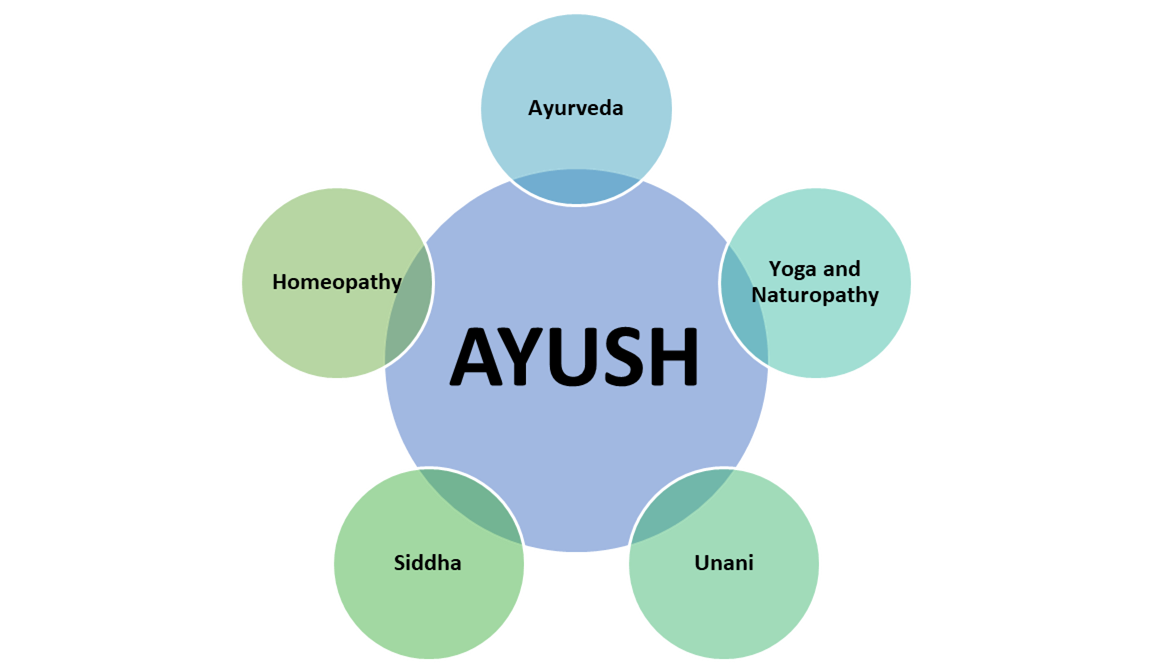
Figure 1: AYUSH Framework
Despite this recognition, the position of homoeopathy remains complex and contested. Its scientific foundations continue to be debated, while its legal and regulatory frameworks have evolved unevenly over time. At the same time, its potential contribution to public health—particularly in preventive care, chronic disease management, and rural healthcare delivery—has not been fully realized.3 This situation highlights the need for an interdisciplinary examination that brings together legal analysis, scientific evaluation, and public health perspectives.
Existing literature often addresses these dimensions in isolation, focusing either on legal provisions, clinical aspects, or policy discussions without integrating them into a cohesive analytical framework. This creates a gap in understanding how these domains interact and influence the role of homoeopathy within the healthcare system. Accordingly, the present study seeks to address this gap by examining homoeopathy at the intersection of law, science, and public health in India. The significance of this inquiry lies in its potential to contribute to more informed policy-making, improved regulatory coherence, and a balanced assessment of homoeopathy’s place in contemporary healthcare.
Research Objectives and Methodology
The present study is guided by a set of interconnected objectives that aim to provide a comprehensive understanding of homoeopathy within the Indian context. First, it seeks to examine the existing legal and regulatory framework governing homoeopathy, including key statutes and institutional mechanisms. Second, it aims to analyse the scientific principles underlying homoeopathy and engage with the ongoing debates surrounding its validity and efficacy. Third, the study evaluates the role of homoeopathy in public health, particularly in terms of accessibility, affordability, and its relevance in preventive and chronic care.
To achieve these objectives, the study adopts a doctrinal research methodology, relying on the systematic analysis of primary and secondary sources. Primary sources include legislative enactments such as the Drugs and Cosmetics Act, 1940, and the National Commission for Homoeopathy Act, 2020, along with policy documents issued by the Ministry of AYUSH. Secondary sources comprise reports of international organisations, academic literature, and scholarly commentaries. The scope of the study is confined to India, and it does not involve empirical data collection, which may limit the assessment of ground-level implementation.
CONCEPTUAL FOUNDATIONS OF HOMOEOPATHY
Homoeopathy is a distinct therapeutic system that originated in the late eighteenth century through the work of the German physician Dr. CSF Hahnemann. The term “homoeopathy” is derived from the Greek words homoios (similar) and pathos (suffering), reflecting its foundational idea that diseases can be treated by substances capable of producing similar symptoms in healthy individuals.4 Introduced in India during the early nineteenth century, the system gradually gained acceptance due to its perceived safety, affordability, and individualized approach to treatment, eventually becoming an integral component of the country’s pluralistic healthcare framework.
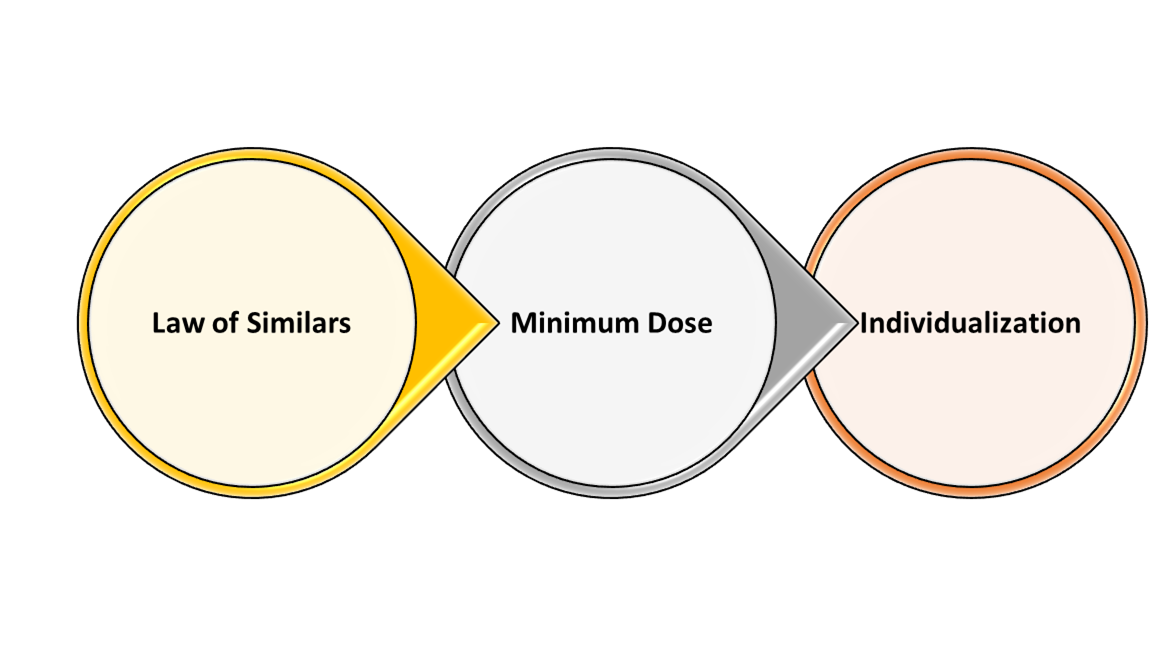
Figure 2: Core principles of Homeopathy
At the core of homoeopathy lie certain fundamental principles that distinguish it from conventional medical systems. The foremost among these is the Law of Similars, which posits that a substance causing symptoms in a healthy person can be used in diluted form to treat similar symptoms in a diseased individual.5 This principle forms the basis of remedy selection and emphasizes symptom similarity rather than disease classification alone. Closely linked to this is the principle of Minimum Dose, which involves administering highly diluted medicines with the aim of stimulating the body’s self-healing mechanisms while minimizing potential adverse effects. The process of serial dilution and succussion is considered central to enhancing the therapeutic potential of these remedies.6 Another defining feature of homoeopathy is individualization, which requires that treatment be tailored to the unique physical, mental, and emotional characteristics of each patient rather than being based solely on a generalized diagnosis.7 This approach recognizes that individuals may respond differently to the same disease condition and therefore necessitates a personalized mode of care.
Together, these principles contribute to a holistic and patient-centered approach, wherein the individual is viewed as an integrated whole rather than a collection of isolated symptoms. Homoeopathy seeks to address not only the physical manifestations of illness but also the underlying mental and emotional dimensions, thereby aligning with broader notions of well-being. Within the wider landscape of traditional and complementary medicine, homoeopathy occupies a unique position, combining individualized therapeutics with a structured philosophical framework, and continues to be an important part of integrated healthcare systems in countries like India.
SCIENTIFIC DIMENSIONS AND CONTEMPORARY DEBATE
The scientific foundation of homoeopathy is rooted in a distinctive methodology that differs significantly from conventional biomedical research. One of its central processes is drug proving, a systematic procedure in which substances are administered to healthy individuals to observe and record the symptoms they produce.8 These observations form the basis of homoeopathic materia medica and guide remedy selection in clinical practice. Unlike animal-based experimentation commonly used in modern pharmacology, homoeopathy traditionally relies on human-based trials, emphasizing subjective and objective symptom expression, including mental and emotional states. This approach reflects its focus on individualized treatment, although it also raises questions about reproducibility and standardization.
A key and often debated concept within homoeopathy is ultra-dilution, where medicinal substances are serially diluted beyond Avogadro’s limit, leaving little or no measurable molecules of the original substance in the final preparation.9 Proponents argue that the process of dilution combined with succussion (vigorous shaking) enhances the therapeutic potential of the remedy by activating its latent properties. Critics, however, question the plausibility of therapeutic effects in the absence of active molecular components, leading to ongoing scientific scrutiny and debate.
In recent years, attempts have been made to explain homoeopathic action through emerging fields such as nano-pharmacology. Some studies suggest that nanoparticles or structural changes in the solvent may carry information related to the original substance, thereby offering a possible mechanism for biological activity even at high dilutions.10 While these findings are still evolving and not universally accepted, they have contributed to renewed interest in bridging traditional concepts with modern scientific frameworks.
Table 1: Scientific Support vs Criticism
| Aspect | Support | Criticism |
|---|---|---|
| Drug proving | Human-based | Lack of standardization |
| Ultra-dilution | Nano-theory | No molecular evidence |
| Clinical results | Positive outcomes | Limited RCTs |
Despite these developments, homoeopathy continues to face scientific criticism and skepticism, particularly from sections of the biomedical community. Concerns are often raised regarding the lack of large-scale randomized controlled trials, variability in outcomes, and challenges in replicating results under standardized conditions. At the same time, supporters point to clinical experiences, patient satisfaction, and observational studies that indicate positive therapeutic outcomes, especially in chronic and psychosomatic conditions.
The contemporary debate, therefore, reflects a tension between empirical evidence and established scientific paradigms. While definitive conclusions remain contested, the growing body of emerging research—including interdisciplinary studies—suggests that further rigorous and methodologically sound investigations are necessary. Such efforts may help clarify the scientific basis of homoeopathy and its potential role within an evidence-informed healthcare system.
EVOLUTION OF HOMOEOPATHY IN INDIA
The development of homoeopathy in India reflects a gradual transition from an introduced foreign system to a formally recognized component of national healthcare. Its entry can be traced to the early nineteenth century during the colonial period, when European practitioners and missionaries brought homoeopathic remedies to the subcontinent. The system gained early visibility through notable clinical successes, particularly among influential sections of society, which helped build public confidence. Over time, Indian practitioners adopted and propagated the system, contributing to its wider acceptance across different regions.11
Following independence, the Indian state began to engage more actively with traditional and alternative systems of medicine, including homoeopathy. Recognizing its growing popularity and potential utility, several committees and advisory bodies were constituted to examine its status and recommend institutional support. This led to the gradual integration of homoeopathy into the broader healthcare framework, marking a shift from informal practice to regulated development.
Institutional growth played a crucial role in strengthening the system. The establishment of the Central Council of Homoeopathy (CCH) provided a statutory mechanism for regulating education and professional standards, while the Central Council for Research in Homoeopathy (CCRH) was created to promote scientific research and evidence generation.12 Administrative support was further consolidated through the formation of dedicated departments for Indian systems of medicine, which were later reorganized under the Ministry of AYUSH. The creation of this ministry in 2014 represented a significant policy step, signaling a more structured and coordinated approach to the promotion and integration of homoeopathy and other traditional systems.
A major recent development has been the transition from the CCH to the National Commission for Homoeopathy (NCH), established under the National Commission for Homoeopathy Act, 2020.13 This reform aimed to modernize regulatory structures, enhance transparency, and align homoeopathic education and practice with contemporary standards. Alongside these institutional changes, several policy milestones—such as the inclusion of homoeopathy in national health initiatives and the formulation of guidelines for education and practice—have contributed to its consolidation within India’s healthcare system. Together, these developments illustrate a continuous process of evolution shaped by legal recognition, institutional support, and policy innovation.
LEGAL AND REGULATORY FRAMEWORK
Homoeopathy in India enjoys formal legal recognition as a distinct system of medicine within the country’s pluralistic healthcare framework. Over time, the State has moved from passive tolerance to active regulation and institutional support, placing homoeopathy alongside other systems under the broader AYUSH structure. This recognition is significant not only for legitimizing practice but also for ensuring standards in education, drug quality, and professional conduct. However, the effectiveness of this framework depends on how coherently laws, institutions, and enforcement mechanisms function in practice.
One of the foundational statutes governing homoeopathic medicines is the Drugs and Cosmetics Act, 1940, along with its accompanying rules.14 Homoeopathic drugs were formally incorporated into this legislation in the 1970s, bringing them within a regulated regime of manufacture, sale, and distribution. The Act provides a definition of homoeopathic medicines, prescribes standards for quality, and lays down requirements for licensing. It also includes provisions relating to labeling, packaging, testing, and compliance with pharmacopoeial standards. The inclusion of homoeopathy within this statute reflects an attempt to ensure that even alternative systems adhere to basic public health safeguards, particularly with respect to drug safety and manufacturing practices. At the same time, enforcement remains largely decentralized, with state authorities playing a key role in issuing licenses and monitoring compliance.
A more recent and significant legislative development is the National Commission for Homoeopathy Act, 2020, which replaced the earlier Central Council of Homoeopathy.15 This Act seeks to reform the governance of homoeopathic education and professional standards by introducing a more structured and transparent regulatory architecture. The National Commission is entrusted with functions such as maintaining a central register of practitioners, regulating educational institutions, and ensuring uniform standards across the country. It also aims to promote accountability and improve the quality of training, thereby aligning homoeopathy with contemporary expectations of professional regulation. The transition to this new framework marks a shift towards modernization and greater institutional oversight.
Licensing and regulation of homoeopathy operate at multiple levels, involving both central and state authorities. Practitioners are required to be registered with recognized boards or councils, and their credentials are subject to verification. Similarly, manufacturers and distributors of homoeopathic medicines must obtain licenses and comply with prescribed standards. While these mechanisms exist on paper, their implementation often varies across states, leading to inconsistencies in regulatory practice.
Regulatory bodies play a crucial role in shaping the system. Institutions such as the Ministry of AYUSH, the National Commission for Homoeopathy, and research organizations like the Central Council for Research in Homoeopathy are responsible for policy formulation, standard setting, and research promotion. Together, they create an institutional ecosystem intended to support both the development and regulation of homoeopathy. However, coordination among these bodies is not always seamless, which can affect policy coherence and execution.
Standards for education and practice have been progressively formalized through statutory regulations. Approved curricula, minimum infrastructure requirements for colleges, and standardized training programs are designed to ensure a baseline level of competence among practitioners. Continuing professional development and ethical guidelines are also emphasized, although their enforcement remains uneven.
Despite the existence of a comprehensive legal framework, several gaps persist in enforcement and regulation. These include variations in licensing practices, inadequate monitoring of drug quality in certain regions, and limited mechanisms for addressing professional misconduct. Additionally, the absence of universally accepted treatment protocols and the ongoing scientific debate surrounding homoeopathy complicate regulatory efforts. Addressing these challenges requires not only stronger enforcement but also better coordination between legal, scientific, and public health institutions to ensure that regulatory objectives translate into effective practice.
HOMOEOPATHY IN PUBLIC HEALTH SYSTEMS
Homoeopathy has increasingly found a place within India’s public health landscape, particularly in the context of primary healthcare delivery. Its inclusion under the AYUSH framework reflects a policy effort to utilize multiple systems of medicine to address diverse health needs. In many regions, especially in rural and semi-urban areas, homoeopathic services are provided through government dispensaries, community health centers, and outreach programs. These services often act as the first point of contact for patients, contributing to the broader objective of strengthening primary healthcare. By offering an alternative therapeutic option, homoeopathy helps reduce the burden on conventional healthcare facilities and expands patient choice within the system.
One of the key factors supporting the role of homoeopathy in public health is its perceived cost-effectiveness and accessibility. Homoeopathic medicines are generally inexpensive to produce and distribute, making them a viable option for low-resource settings.16 For economically vulnerable populations, where out-of-pocket healthcare expenditure remains a significant concern, such affordability can enhance access to treatment. Additionally, the relatively simple storage and administration of homoeopathic remedies allow for wider dissemination through public health infrastructure. These features align with the broader goal of achieving equitable healthcare access, particularly in underserved areas.
Homoeopathy is also commonly used in the management of chronic and lifestyle-related diseases, which are increasingly contributing to the overall disease burden in India. Conditions such as diabetes, arthritis, allergies, and stress-related disorders often require long-term management rather than acute intervention.17 In this context, homoeopathy’s individualized and holistic approach is considered by many practitioners and patients to be suitable for addressing underlying imbalances rather than merely alleviating symptoms. While clinical outcomes remain a subject of debate, the continued demand for homoeopathic care in chronic conditions indicates its relevance within the healthcare ecosystem.
Beyond treatment, homoeopathy has been positioned as a tool for preventive and community health. Public health initiatives have occasionally incorporated homoeopathic prophylaxis during outbreaks and seasonal illnesses, reflecting an attempt to use it as a complementary preventive measure.18 Community-level awareness programs and health camps often include homoeopathic consultations, thereby extending healthcare services to populations that may otherwise have limited access. Such initiatives highlight the potential of homoeopathy to contribute to health promotion and disease prevention at the community level.
The integration of homoeopathy into public health has been further facilitated through various AYUSH schemes and policies. Government initiatives have aimed at co-locating AYUSH services within existing healthcare facilities, promoting interdisciplinary collaboration, and expanding infrastructure for traditional systems of medicine. These measures are intended to create a more inclusive healthcare model that accommodates diverse therapeutic practices. However, the extent of integration varies across regions, and challenges related to coordination, standardization, and resource allocation continue to affect implementation.
Overall, homoeopathy’s role in public health systems is shaped by its accessibility, affordability, and alignment with community-based healthcare needs. While its contribution is evident in certain areas, its full potential depends on more structured integration, evidence-based evaluation, and effective coordination within the broader healthcare framework.
INTERDISCIPLINARY ANALYSIS OF LAW–SCIENCE–PUBLIC HEALTH
Homoeopathy in India operates at a complex intersection where legal recognition, scientific inquiry, and public health needs continuously interact. The legal framework provides formal legitimacy to homoeopathy through statutes and regulatory institutions, thereby enabling its practice, education, and integration into the healthcare system.19 However, this legal recognition does not necessarily imply universal scientific validation. The gap between statutory acceptance and scientific consensus creates a unique situation in which homoeopathy is both institutionally supported and scientifically contested. This dynamic highlights the importance of examining how law and science influence each other in shaping the status of homoeopathy.
The interaction between legal frameworks and scientific validation is particularly significant. Laws such as those governing drug standards and professional regulation establish homoeopathy as a recognized system, allowing practitioners to operate within a defined legal structure. At the same time, scientific debates surrounding ultra-dilution and mechanisms of action continue to challenge its empirical basis. In this context, the law often adopts a pragmatic approach by regulating practice and ensuring safety without requiring absolute scientific consensus. This reflects a broader understanding that healthcare systems may accommodate multiple therapeutic paradigms, especially when they are widely used and culturally embedded.
At the level of public health, a different tension emerges between public demand and scientific skepticism. A substantial number of patients in India continue to seek homoeopathic treatment, particularly for chronic and lifestyle-related conditions, indicating a high degree of social acceptance. This demand is influenced by factors such as affordability, accessibility, and perceived safety. However, sections of the scientific community remain skeptical due to concerns about evidence, standardization, and reproducibility. This divergence creates a policy dilemma: whether to prioritize empirical scientific validation or to respond to population-level healthcare preferences and needs.
The relationship among law, science, and public health is therefore characterized by both complementarity and conflict. On one hand, legal recognition and public demand reinforce each other, supporting the continued presence of homoeopathy in the healthcare system.20 On the other hand, scientific skepticism challenges this alignment by questioning the underlying basis of practice. These tensions do not necessarily invalidate the system but rather indicate the need for a more integrated approach that acknowledges the strengths and limitations of each domain.
In this context, the role of policy becomes crucial in balancing these dimensions. Effective policy-making must ensure that regulatory frameworks safeguard patient safety and maintain standards, while also encouraging rigorous scientific research to address existing gaps in evidence. At the same time, policies should consider public health priorities, including accessibility and affordability, to ensure that healthcare delivery remains inclusive. A balanced approach that integrates legal oversight, scientific evaluation, and public health objectives can help create a more coherent and effective framework for the functioning of homoeopathy in India.
CHALLENGES, GAPS, AND POLICY DIRECTIONS
Despite formal recognition and a wide user base, homoeopathy in India faces a set of persistent challenges that limit its optimal contribution to the healthcare system. One of the most significant concerns relates to scientific acceptance. While clinical experiences and patient-reported outcomes often support its use, sections of the biomedical community remain skeptical due to questions regarding mechanism of action, reproducibility of results, and the limited availability of large-scale, high-quality clinical trials. This ongoing debate affects both professional credibility and the extent to which homoeopathy is accepted within evidence-based medical frameworks.
Another major issue is regulatory fragmentation. Although a comprehensive legal framework exists, its implementation is uneven across states, leading to inconsistencies in licensing, monitoring, and enforcement. Multiple regulatory bodies operate at central and state levels, but coordination among them is often inadequate. This can result in variations in standards of practice and difficulties in maintaining uniform quality control, particularly in the manufacturing and distribution of homoeopathic medicines.
The lack of standardized treatment protocols further complicates integration efforts. Homoeopathy’s emphasis on individualization, while central to its philosophy, poses challenges in developing uniform clinical guidelines. The absence of widely accepted protocols makes it difficult to evaluate outcomes systematically and integrate homoeopathy into structured public health programs that rely on standardized approaches.
Additionally, homoeopathy continues to experience limited integration into mainstream healthcare systems. Although it is included under the AYUSH framework, its role is often complementary rather than fully integrated. Constraints such as limited infrastructure, insufficient interdisciplinary collaboration, and varying levels of awareness among healthcare providers restrict its broader utilization within public health delivery.
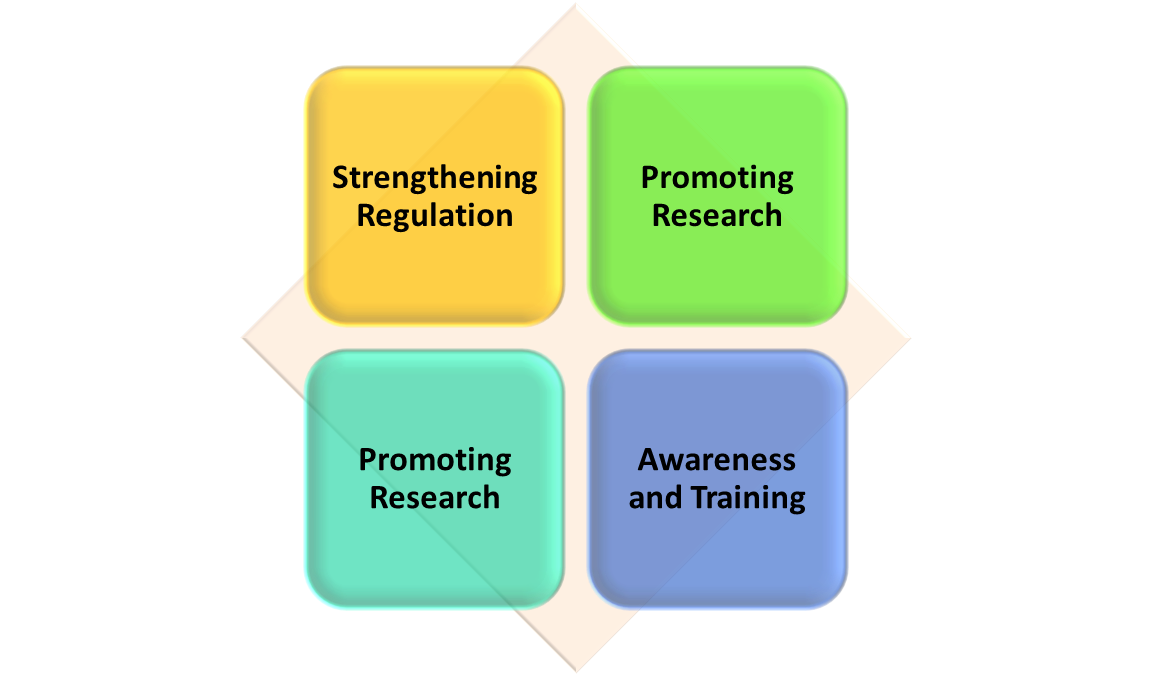
Figure 3: Key Policy Recommendations
Addressing these challenges requires a set of well-designed policy interventions. First, there is a need for strengthening regulatory mechanisms to ensure consistent implementation of laws, improve monitoring systems, and enhance accountability across institutions. Second, promoting rigorous and interdisciplinary research is essential to generate credible evidence, bridge the gap between traditional practice and modern science, and improve acceptance within the wider medical community. Third, better institutional coordination among regulatory bodies, research institutions, and healthcare providers can help create a more cohesive framework for policy execution. Finally, awareness and training initiatives are necessary to improve understanding among practitioners and the public, foster interdisciplinary collaboration, and enhance the overall quality of care.
A balanced approach that addresses these gaps can help unlock the full potential of homoeopathy while ensuring that it operates within a robust, transparent, and evidence-informed healthcare system.
CONCLUSION
This study has examined homoeopathy in India through the interconnected lenses of law, science, and public health, highlighting its complex yet significant position within the healthcare system. It has shown that homoeopathy enjoys clear legal recognition and institutional support, while also maintaining a substantial presence in public health, particularly in primary care and the management of chronic conditions. At the same time, persistent scientific debates and variations in regulatory implementation continue to shape its acceptance and utilization.
A key insight emerging from this analysis is the necessity of adopting a multidimensional approach. Understanding homoeopathy solely from a legal, scientific, or public health perspective provides an incomplete picture; rather, it is the interaction among these domains that determines its practical relevance and effectiveness. Legal frameworks provide legitimacy and structure, scientific inquiry seeks validation and refinement, and public health considerations emphasize accessibility and community needs. Balancing these dimensions is essential for ensuring both credibility and utility.
There is a clear need for stronger and more coherent integration of homoeopathy into the broader healthcare system. This requires improved regulatory enforcement, greater alignment between policy and practice, and enhanced collaboration across disciplines. Looking ahead, the future scope of homoeopathy in India lies in its potential to contribute to inclusive, affordable, and holistic healthcare, provided it is supported by sustained research, policy innovation, and effective institutional coordination.
*****
Footnotes
1. DEP’T OF HOMOEOPATHY, GOV’T OF NCT OF DELHI, Origin and Growth of Homeopathy in India, https://homeopathy.delhi.gov.in/homeopathy/origin-and-growth-homeopathy-india
2. A. Chaudhary & N. Singh, Contribution of World Health Organization in the Global Acceptance of Ayurveda, 2 J. AYURVEDA INTEGRATIVE MED. 179, 179–86 (2011).
3. S. Das, Debating Scientific Medicine: Homoeopathy and Allopathy in Late Nineteenth-Century Medical Print in Bengal, 56 MED. HIST. 463, 463–80 (2012).
4. B. K. Patil & M. A. Gandhi, The Life and Legacy of Samuel Hahnemann: Founder of Homoeopathy and His Medical Philosophy, 16 CUREUS e70489 (2024).
5. Martha Derbyshire, The Law of Similars Similia Similibus Curentur: Like Cures Like (Oct. 17, 2016), https://hpathy.com/homeopathy-papers/the-law-of-similars-similia-similibus-curentur-like-cures-like/
6. Homeopathic Dilutions, SCIENCEDIRECT, https://www.sciencedirect.com/topics/medicine-and-dentistry/homeopathic-dilutions
7. Dr. Parth Aphale et al., The Power of Individualization: Why Your Treatment Is Unique to You (Oct. 28, 2025), https://homoeopathy.dpu.edu.in/blogs/power-of-individualization-in-homoeopathy
8. M. Z. Teixeira, Scientific Evidence for Homeopathy, 78 CLINICS (SÃO PAULO) 100255 (2023).
9. I. R. Bell & M. Koithan, A Model for Homeopathic Remedy Effects: Low Dose Nanoparticles, Allostatic Cross-Adaptation, and Time-Dependent Sensitization in a Complex Adaptive System, 12 BMC COMPLEMENTARY & ALTERNATIVE MED. 191 (2012).
10. D. Ullman, Exploring Possible Mechanisms of Hormesis and Homeopathy in the Light of Nanopharmacology and Ultra-High Dilutions, 19 DOSE–RESPONSE 15593258211022983 (2021).
11. A. K. Ghosh, A Short History of the Development of Homeopathy in India, 99 HOMEOPATHY 130, 130–36 (2010).
12. CENTRAL COUNCIL OF HOMOEOPATHY, About Us, https://nrh.nch.org.in/cch/aboutus
13. NAT’L COMM’N FOR HOMOEOPATHY, Home, https://nch.org.in/
14. Drugs and Cosmetics Act, No. 23 of 1940 (Ind.).
15. National Commission for Indian System of Medicine Act, No. 14 of 2020 (Ind.).
16. T. Ostermann et al., Overview and Quality Assessment of Health Economic Evaluations for Homeopathic Therapy: An Updated Systematic Review, 24 EXPERT REV. PHARMACOECONOMICS & OUTCOMES RES. 117, 117–42 (2024).
17. R. Varanasi et al., Practice, Prescription Habits, Experience and Perception of Indian Homeopathic Practitioners in Treatment of Diabetes Mellitus: An Online Observational Study, 14 J. AYURVEDA INTEGRATIVE MED. 100787 (2023).
18. Dr. Parth Aphale & Dr. D. B. Sharma, Homoeopathy as Preventive Healthcare: A Holistic Approach to Wellness (Jan. 21, 2025), https://homoeopathy.dpu.edu.in/blogs/homoeopathy-preventive-healthcare-boost-immunity
19. H. Kaur et al., Homeopathy in Public Health in India, 108 HOMEOPATHY 76, 76–87 (2019).
20. R. van Haselen et al., Framework for Evidence Synthesis of Traditional, Complementary and Integrative Medicine Systems Incorporating Context and Complexity, Illustrated by the Example of Homeopathy, 14 FRONTIERS IN PUB. HEALTH 1752779 (2026).