
Digital Governance for the Circular Economy: Policy Frameworks, Regulatory Instruments, and Monitoring Mechanisms
As sustainability imperatives intensify, the shift from a linear to a circular economy, designed to maximise the utility of products, materials, and resources while curbing emissions, has emerged as a defining priority in global development agendas. Despite increasing international momentum in designing and implementing policies that foster the circular economy (CE), the role of digital government in this transition remains fragmented and underdeveloped, with no comprehensive framework capturing its interconnection with the CE concept. This paper seeks to address this gap by posing a central research question: how does digital government facilitate the advancement of the circular economy through policy instruments, monitoring mechanisms, and green finance? To investigate this question, the paper reviews and synthesises empirical studies, identifies prevailing research themes, and highlights existing knowledge gaps regarding the digital public sector’s capacity to enable CE transformations. Drawing on these insights, it proposes an analytical framework, grounded in the NATO concept, that conceptualises how digital government can support circular transitions through regulatory and policy design, digitally enabled oversight, and financial instruments that incentivise green investment. The paper concludes by outlining a future research agenda that leverages this framework to advance both theoretical development and empirical inquiry into the role of digital governance in enabling the circular economy.
Introduction
Amid global challenges such as climate change, resource depletion, and environmental degradation, digital government initiatives have become vital to advancing the United Nations’ Sustainable Development Goals (SDGs). By integrating digital technologies across systems of resource management, production, and consumption, governments can enhance governance effectiveness, increase transparency, and accelerate the transition toward circular economic models that emphasise reuse, remanufacturing, and material recovery.
In this transition, the circular economy (CE) is widely recognised as a strategic pathway to decouple economic growth from resource extraction and emissions. The European Union has been a prominent actor in this arena, notably through its Circular Economy Action Plan,[1] which highlights the pivotal role of digitalisation and large-scale data analytics in monitoring green value chains. Likewise, China, whose economy ranks among the world’s largest, incorporated CE into national strategies as early as 2005 and has been intensifying the deployment of digital technologies to manage waste streams, recover critical metals, and develop carbon-accounting systems. These policy trajectories illustrate how digital public administration can serve as a lever for transforming the prevailing linear production, consumption, and disposal paradigm into an interconnected system in which the outputs of one process feed into another as inputs. The United Nations likewise positions CE as an important instrument for achieving several SDGs, with particular relevance to SDG 12 on sustainable consumption and production.
Recent technological advances, such as blockchain-enabled immutable ledgers, the Internet of Things (IoT), and the Physical Internet (PI) for product-level data collection, together with expanded digital infrastructure, platform ecosystems, and advanced analytics, have opened new opportunities for circular governance. International organisations, including the OECD, have repeatedly underscored the decisive role of digital government in designing institutional frameworks, harmonising environmental-data standards, and mobilising green-finance mechanisms. In the context of accelerating climate risks and mounting pressure on finite resources, digital governance is not merely a technical adjunct but a fundamental institutional condition for ensuring transparency, enabling oversight, and regulating the green financial flows that underpin circular transitions.
Green finance constitutes an indispensable pillar of CE implementation. Digital governance can help channel capital toward circular investments through instruments such as green bonds, sustainability funds, and concessional lending, while strengthening investor and public confidence by providing transparent, digitally supported monitoring systems. The EU’s establishment of the EU Green Bond Standard (EuGB) under Regulation (EU) 2023/2631 exemplifies efforts to codify transparency and credibility in green-bond issuance.[2] Similarly, China’s Green Finance Endorsed Project Catalogue, intended to standardise the classification of green financial products, including bonds and loans, is reported to take effect from 1 October 2025.[3]
Despite these advances, significant obstacles remain in implementing coherent CE policies. Challenges arise both from incomplete legal and regulatory frameworks and from heterogeneous levels of digital readiness across countries. Consequently, there is an urgent need for a rigorous and systematic research agenda that interrogates how digital-government instruments, policy design, digital monitoring, and green-finance governance can be coherently combined to accelerate circular transitions. Building such a scholarly foundation will not only inform policy design but also facilitate more effective national and international alignment toward sustainable, circular development.
Literature Review
Within the framework of the United Nations Sustainable Development Goals, state capacity and the deployment of digital technologies have emerged as decisive determinants in the transition from a linear production model to a circular economy (CE). SDG 12, which specifically targets waste reduction through prevention, reuse, and recycling (SDG 12.5) and promotes corporate disclosure of sustainable practices (SDG 12.6), provides a direct policy orientation for efforts aimed at realising circularity. Academically, CE is conceptualised as a regime that minimises the throughput of materials and energy characteristic of linear systems by replacing linear flows with closed material loops and renewable energy sources.[5]
Digital public platforms and technical instruments, ranging from electronic product passports to IoT sensor networks and large-scale analytics platforms, are widely identified as essential enablers for making material flows visible, traceable, and measurable within circular ecosystems. Nevertheless, deployment remains largely experimental, and scholarship highlights persistent issues around data standardisation, interoperability, and independent verification mechanisms.[6] At the macro-policy level, numerous states have articulated concrete circular-economy strategies (for example, the Netherlands’ national CE plan), while supranational actors such as the European Union have developed a suite of legal and financial instruments, including green-bond standards and carbon border adjustment measures, designed to mobilise sustainable capital and to mitigate competitive distortions across markets.[7]
Concomitant with these policy advances are significant implementation risks: inadequate monitoring and enforcement can produce leakage or distortion of intended circular material streams, with attendant environmental and public-health consequences. Empirical field reports illustrate this vulnerability; for instance, studies of used-clothing supply chains report that much exported apparel ultimately reaches landfills rather than being reused, and the fast-fashion model continues to generate substantial waste.[8] Such findings underscore the need for effective state instruments in which digital governance functions not merely as a technical infrastructure but as an institutional mechanism to strengthen transparency, accountability, and data verifiability, thereby supporting producer-responsibility schemes, export controls, and electronic product passporting.
Finally, although the role of digital government in enabling CE is increasingly recognised, the empirical base evaluating the effectiveness of digital policy interventions remains fragmented and insufficiently systematic. Advancing the field therefore requires interdisciplinary inquiry and robust empirical evidence to inform the design and scaling of digital-governance instruments that can reliably support national and international circular transitions.
Theoretical Framework
A. The NATO Framework
This study adopts the instrument-based taxonomy of government action developed by Hood and Margetts[9] to interrogate how public authorities operate in the digital era. Their framework distinguishes four categories of governmental resources that function as policy tools: nodality, authority, treasure, and organisation, a grouping commonly abbreviated as “NATO.” Each category represents a different means by which the state can detect, shape, or compel behaviour in society.
Nodality captures the strategic advantage of occupying a central position within information and social networks. Governments exercise nodality when they exploit their intermediary status to disseminate guidance or to gather intelligence, for example by issuing tax notices to citizens or scanning online spaces to detect tax evasion. Authority denotes legally sanctioned capacities to permit, require, or prohibit behaviour; it underpins coercive or procedural measures such as compulsory inspections, statutory reporting obligations, or enforcement actions. Treasure refers to monetary or quasi-monetary resources that can be deployed to incentivise or induce behavioural change, for instance payments to informants or fiscal subsidies designed to encourage compliance. Finally, organisation consists of material assets and staffed institutional capabilities directly under public control (land, facilities, equipment, and bureaucratic personnel), exemplified by customs officers conducting inspections at ports and airports to collect regulatory information.[10]
Digital technologies alter the affordances of each NATO resource in complex ways: they can amplify a government’s nodal reach through platforms and data analytics, extend the reach of authority via automated compliance systems, mobilise treasure more efficiently through digital financial instruments, and augment organisational capacity by enabling novel forms of service delivery. At the same time, digitisation can undermine these resources; for example, the proliferation of competing online information and misinformation during the COVID-19 pandemic weakened many governments’ nodal effectiveness.[11] Digitalisation should therefore be treated as both an enabling condition and a potential source of disruption for state toolkits.
The NATO framework’s conceptual clarity and parsimony have made it a favoured lens for analysing government action across multiple domains of digital policy, from AI strategy and big-data analytics to e-health, digital border control, and cybersecurity.[12] This paper builds on that precedent to introduce an integrated analytical framework for understanding how digital government shapes CE transitions.
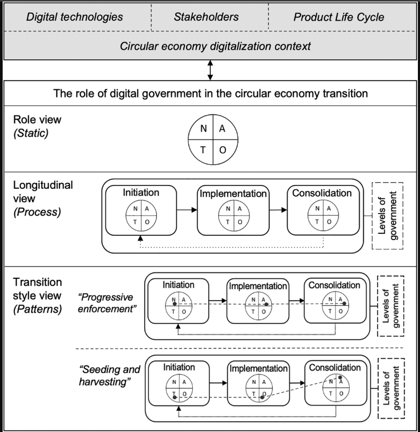
Figure 1: The proposed analytical framework.
The framework articulates three complementary perspectives: a static view that maps digital instruments onto stages of the product life cycle; a processual (temporal) perspective that traces how digital interventions operate over time; and a typological perspective that distinguishes between distinct styles of CE transition. By combining digital-technology affordances, product-life-cycle dynamics, and the typology of governmental resource types, the framework addresses an identified gap in the literature, where scholarship on digital government and CE remains sparse and fragmented. Building on this precedent, the present research applies the NATO typology to map how digital-government instruments can be deployed to support circular-economy transitions, and to identify where digital affordances create new opportunities or governance challenges for CE policy design and implementation.
B. Structured Literature Review
The relationship between digital government and the circular economy has gained increasing scholarly attention as both fields have emerged as central to contemporary sustainability transitions. To address this relationship, it is necessary first to understand the basic concepts. After scanning a total of sixty-one research papers, this study takes digital government (DG) to refer to the strategic use of digital technologies, such as open-data platforms, blockchain, artificial intelligence, and the Internet of Things, to enhance governance, improve service delivery, and enable new forms of participation. The circular economy (CE), by contrast, seeks to shift production and consumption from a linear “take-make-dispose” model to systems that emphasise waste prevention, resource efficiency, reuse, and regeneration. While these two domains initially developed in parallel, recent studies argue that digital government can serve as a crucial enabler of circular-economy goals by providing infrastructures for data management, compliance monitoring, citizen engagement, and transparent policy implementation.
Research consistently portrays government as a multi-role orchestrator of circular transitions, moving well beyond command-and-control regulation toward a blended repertoire of regulatory, market-shaping, informational, and coordinative instruments. As a regulator, the state sets eco-design requirements, extended-producer-responsibility (EPR) obligations, and end-of-life rules that reallocate costs and responsibilities across the chain. As a market shaper, it leverages green and circular public procurement (GPP/CPP) to aggregate demand for repairable, remanufactured, and recycled-content goods, often encoding criteria directly into e-procurement platforms. As an information steward, the government curates shared data infrastructures, open-data portals, product and material registries, and digital product passports that lower transaction costs and enable verification, auditability, and traceability. As convener and investor, it funds pilots, living labs, and regulatory sandboxes, co-designs standards with industry, and aligns ministries (environment, industry, digital affairs) to avoid fragmented mandates. Across all roles, the digital turn of machine-readable regulation, IoT telemetry, automated reporting, and public dashboards amplifies the reach and credibility of circular policy mixes while introducing new demands for data governance and interoperability.
The stakeholder landscape is correspondingly polycentric. Upstream, designers, brand owners, and manufacturers decide the material choices and product architectures that lock in (or unlock) circular options; standards bodies and certification schemes translate these choices into interoperable metadata. Midstream, logistics providers, wholesalers, retailers, and digital-platform intermediaries coordinate flows of goods, data, and incentives; financiers and insurers underwrite circular business models and price risk using traceability signals. Downstream, municipal authorities, producer-responsibility organisations (PROs), waste operators, recyclers, and repair or refurbishment enterprises operationalise collection, sorting, diagnostics, and re-entry into markets; social enterprises often mediate reuse and community repair. Cross-cutting actors, including civic-tech groups, NGOs, consumer advocates, auditors, and academia, supply scrutiny, capacity building, and evaluation. Citizens occupy dual roles as consumers and data contributors, with behaviour increasingly mediated by apps (deposit-return, repair maps, sharing platforms) and by nudges embedded in digital public services. In low- and middle-income contexts, the informal sector is a pivotal yet frequently under-recognised stakeholder whose integration requires tailored data and regulatory arrangements to avoid exclusion.
Along the product life cycle, the literature maps distinct yet interconnected intervention points. In design and sourcing, eco-design directives, repairability and durability scoring, and upstream disclosure rules push producers to adopt modular architectures and safer, recycled inputs; here, digital product passports and materials IDs begin accruing provenance, composition, and repair data that later enable diagnostics and valuation. In manufacturing, resource-efficiency audits, industrial-symbiosis platforms, and real-time monitoring (IoT and MES data) reduce material intensity and by-product waste, and governments catalyse participation by offering data templates, interoperability profiles, and fiscal incentives linked to verified performance. During distribution and retail, labelling, serialisation, and point-of-sale registries allow warranty, repair, and take-back obligations to be tracked to specific units, and e-invoicing and e-logistics data can be repurposed (with safeguards) for compliance analytics. In the use and maintenance stage, right-to-repair measures, access to spare-parts data, and public repair networks shift maintenance from vendor lock-in to open ecosystems, while digital service records and telemetry support predictive maintenance and product-as-a-service models. At collection and reverse logistics, pay-as-you-throw schemes, deposit-return systems, smart bins, and route optimisation improve capture rates and reduce contamination, and EPR registries and clearing-houses reconcile flows and fees among producers, municipalities, and operators. Finally, in remanufacturing, refurbishment, and recycling, quality-assurance data from passports and test benches determine feasible recovery routes and market value, while end-of-waste decisions are increasingly data-driven, using standardised reporting and third-party verification to certify secondary materials.
Synthesising across roles, actors, and stages, digital government is most effective where product-level identifiers, common vocabularies, and interoperable reporting are in place, allowing policies to be enforceable and learnable rather than merely aspirational. Evidence is strongest in sectors with mature standards and strong public-procurement leverage (electronics, batteries, public construction), where unit-level traceability aligns with large, recurring public demand. Yet the literature also flags risks: data monopolies and privacy concerns can dampen participation; uneven municipal capacity creates territorial inequality; rebound effects may offset efficiency gains; and poorly audited dashboards can incentivise metric gaming. Emerging work calls for the governance of data collaboratives (who holds which rights to which data, and under what stewardship models), the inclusion of the informal sector in data and reporting regimes, and robust outcome evaluation that links digital interventions to material circularity, carbon abatement, and distributional impacts. Overall, the research points to a systems view in which government’s digital capabilities, stakeholder incentives, and life-cycle interventions co-evolve: where this alignment is present, circular outcomes scale; where it is fragmented, interventions risk shifting burdens rather than closing loops.
Methodology
This paper uses a case-study and retrospective document-analysis methodology, which consists of scanning sixty-one papers on the role of digital government and analysing them according to the categories provided by the NATO framework. The case-study method is particularly useful for exploring complex, context-specific interactions between government policies, stakeholders, and product-life-cycle stages, which cannot be fully captured through generalised frameworks alone. By focusing on selected countries or regions, such as the Netherlands and the Nordic states, which have been prominent in the literature, the study can analyse the practical implementation of digital tools, regulatory instruments, and collaborative-governance models in real-world settings. This approach allows for a nuanced examination of both successes and challenges, offering lessons that can be transferred to other contexts. Triangulating findings from case studies with the broader literature ensures that the research captures both macro-level trends and micro-level practices, strengthening the validity and richness of the analysis.
Findings
Of the sixty-one papers scanned, a large proportion are cross-national or regional studies, especially focused on the European Union, and several are global or international reviews. The number of countries focused on across the papers is nine.
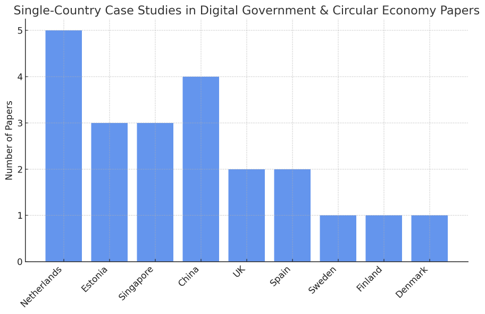
Figure 2: Single-country case studies in digital government and circular economy papers.
As illustrated in Figure 2, the Netherlands is the most researched single-country case study, with five cases. The Netherlands is widely regarded as a pioneer in circular-economy policy: it was one of the first countries to adopt a national circular-economy strategy (2016), with the ambitious goal of becoming fully circular by 2050. This early adoption created a strong body of research evaluating Dutch experiences, making it a natural focus for case studies. Furthermore, Dutch governments at both the national and municipal levels are leaders in circular public procurement (CPP). Many studies analyse how procurement platforms incorporate circular criteria into tenders, because procurement is seen as a systemic lever to stimulate secondary markets. This makes the Netherlands a laboratory for examining the intersection of digital government, procurement systems, and CE outcomes. China follows with four cases; it passed the Circular Economy Promotion Law in 2009 and has recognised the circular economy as a national development goal for more than a decade. Estonia and Singapore each have three cases, trailed by the United Kingdom, Spain, and Sweden, and then a long tail of Nordic countries.
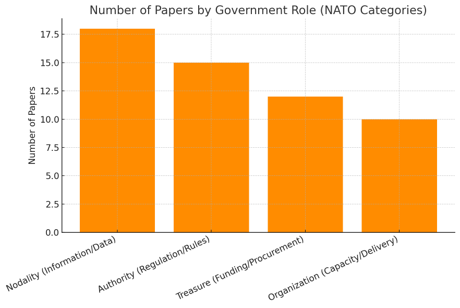
Figure 3: Number of papers by government role (NATO categories).
Figure 3 illustrates the distribution of research papers on digital government and the circular economy according to the NATO framework of government tools. The results show that nodality (18 papers), which refers to the government’s role as an information hub, is the most frequently studied. This suggests that much of the scholarship emphasises the importance of governments as data custodians, developing digital product passports, open-data portals, and monitoring platforms to enable circular practices. The next most common category is authority (15 papers), highlighting how governments use their regulatory power to steer circular transitions, for example through eco-design directives, extended-producer-responsibility (EPR) rules, and waste-reduction mandates. Treasure (12 papers) follows closely, reflecting governments’ role in providing financial incentives, subsidies, and circular-procurement schemes that stimulate market demand for sustainable products and services. Finally, organisation (10 papers) appears least often, indicating that fewer studies focus on the state’s direct involvement in capacity building, piloting circular projects, or delivering services through innovation labs and partnerships.
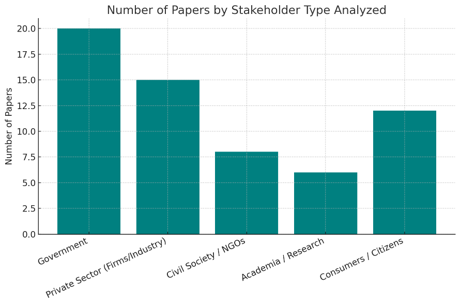
Figure 4: Number of papers by stakeholder type analysed.
Figure 4 highlights the imbalances in how different actors are represented in research on digital government and the circular economy. The results show that governments (20 papers) are the most frequently analysed stakeholders, underscoring their dominant role in setting regulations, providing digital infrastructures, and coordinating transition pathways. This reflects a broader tendency in the literature to adopt a state-centric perspective, in which governments are positioned as the central drivers of systemic change. The private sector (15 papers) emerges as the second most studied actor, emphasising its importance in reconfiguring supply chains, innovating in product design, and responding to regulatory frameworks. Consumers and citizens (12 papers) also feature prominently, indicating a growing scholarly interest in how behavioural change, participation in reuse systems, and acceptance of digital tools (such as product passports and sharing platforms) contribute to circularity. By contrast, civil-society organisations (8 papers) and academic institutions (6 papers) receive relatively little attention: NGOs are often framed as facilitators, watchdogs, or advocates, while academia appears mostly as a source of knowledge or as a partner in innovation pilots. The under-representation of these groups suggests a research gap: while policy and industry receive considerable scrutiny, the roles of grassroots movements, advocacy networks, and knowledge institutions are less systematically examined.
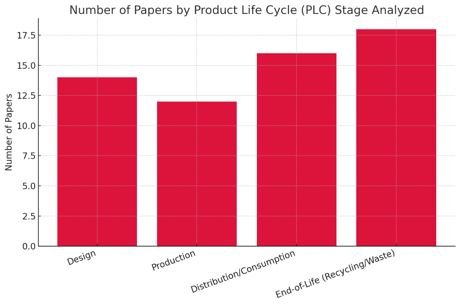
Figure 5: Number of papers by product life-cycle stage analysed.
Figure 5 shows that research on digital government and the circular economy tends to focus most heavily on the end-of-life stage (18 papers), followed closely by distribution and consumption (16 papers). This indicates that scholars have prioritised issues such as waste management, recycling, and consumer engagement when examining circularity. By contrast, the upstream stages of design (14 papers) and production (12 papers) receive comparatively less attention. This imbalance suggests that much of the literature emphasises downstream problem-solving, finding ways to reduce, reuse, and recycle, rather than embedding circularity at the front end of product development.
The imbalance suggests that the field remains biased toward downstream problem-solving rather than upstream prevention. While managing waste and influencing consumer behaviour are important, limiting research to these stages risks overlooking the transformational potential of early interventions, such as modular product design, material innovation, and digital manufacturing systems, that could dramatically reduce waste before products reach the market. Strengthening scholarly focus on design and production, supported by case studies and empirical access to industry practices, would therefore help shift the debate toward preventive strategies that embed circularity throughout the product life cycle rather than treating it as an end-stage challenge.
Discussion
These findings highlight several key lessons for advancing the circular economy through digital government. First, governments are most effective when they combine their roles as information stewards, regulators, market shapers, and conveners, leveraging digital tools to enable traceability, compliance, citizen participation, and innovation. The literature shows that current practice tends to focus on downstream interventions such as waste management and consumer engagement, while the upstream stages of design and production remain under-explored, indicating the need for a more preventive approach embedded early in the product life cycle. Second, the findings underline that digital government should not only provide data infrastructures but also create the institutional conditions for multi-stakeholder collaboration, integrating firms, citizens, NGOs, and academia into circular transitions. Third, an important lesson lies in aligning digital governance with green-finance mechanisms: the purpose of digital government in this area is to build trust and transparency by generating reliable data on material flows, environmental performance, and compliance with sustainability standards. For example, by embedding digital product passports, open-data registries, and automated reporting into financial systems, governments can provide the assurance investors and lenders need to allocate capital to genuinely circular projects and to avoid greenwashing.
Taken together, these insights suggest a framework in which digital government serves as the enabler of systemic circularity: using nodality (information) to ensure data transparency, authority to enforce eco-design and EPR rules, treasure to channel procurement and green finance toward circular solutions, and organisation to coordinate institutional capacity and stakeholder participation. Such a framework positions digital government not simply as an administrative actor, but as a strategic orchestrator of the green-digital transition, ensuring that circular-economy policies are both credible and scalable.
Conclusion
This study culminates in the formulation of an analytical framework and a forward-looking research agenda that synthesises the empirical findings, the literature review, and case-based definitions of different circular-economy (CE) transition styles. The outputs aim to structure subsequent inquiry into the interface between digital government and CE transitions, and to guide both theoretical development and policy-oriented investigation.
A. Theoretical Contributions
Empirically, the analysis identifies two prototypical transition styles, termed here “progressive enforcement” and “seeding and harvesting,” which illustrate differing modes by which governments deploy digital resources across the phases of a CE transition. The delineation of these styles extends theoretical understanding of public-sector innovation and enables targeted investigation into the mechanisms, stakeholders, and success conditions that characterise each style. In sum, the principal theoretical contribution is twofold: the construction of a novel conceptual apparatus that integrates previously disparate strands of inquiry, and the establishment of a research platform for systematically linking digital-governance scholarship with CE theory.
B. Practical Implications
The findings carry several actionable implications for policymakers and public managers. First, the proposed framework provides a comprehensive heuristic for governments to evaluate where and how digital technologies can be deployed across the CE value chain, from eco-design and product-as-a-service models to sharing platforms, reuse pathways, and end-of-life recycling systems. For example, governments can prioritise the development of digital platforms that facilitate repair and product sharing while simultaneously implementing transparent supply-chain monitoring (for example, distributed ledgers) consistent with contemporary EU and advanced-economy CE strategies. Second, the research highlights the inherently multi-level and multi-actor nature of effective CE implementation: central-government initiatives must be complemented by local authorities, private-sector actors, research institutions, and civil-society organisations. This implies policy attention to governance structures that foster cross-sectoral collaboration and public-private-partnership models. Finally, by offering a structured framework and a prioritised research agenda, the study helps practitioners identify policy gaps, such as regulatory frameworks for AI and blockchain in CE contexts, and to allocate capacity-building resources (for example, digital-skills development for public servants) to strengthen the implementation of sustainable-development objectives.
C. Limitations and Directions for Future Research
Several limitations constrain the present study and point to priorities for further work. First, the literature synthesis draws principally on a corpus of eighty-eight published works and two illustrative case studies; this scope risks omitting relevant studies or alternative empirical instances. A more exhaustive systematic review and meta-analysis would be needed to produce a fuller mapping of the research landscape. Second, the typology of transition styles is derived from the analysis of only two cases and therefore may not capture the full diversity of CE transition trajectories across sectors and geographies. Robust testing and refinement would require the collection of primary data and comparative case analyses spanning multiple industries and national contexts.
Future research should pursue at least four interrelated avenues. First, specialised digital architectures: deeper technical and policy research on digital-design choices (for example, blockchain architectures, data-governance models, and standards) and their regulatory trade-offs in CE applications. Second, stakeholder interactions: analytic work that unpacks the interactions between digital government and private firms, research organisations, NGOs, IT vendors, and citizens at each stage of CE transitions. Third, multi-level governance: studies that examine coordination mechanisms among subnational, national, and supranational authorities (for example, municipal-national-EU interfaces), including the alignment of fiscal instruments and regulatory regimes. Fourth, additional transition styles: empirical exploration of further CE transition archetypes and identification of the contextual enabling factors and performance metrics associated with each. Advancing these lines of inquiry will enrich theory and furnish policymakers with empirically grounded guidance to accelerate digitally enabled circular transformations at scale.
*****
Footnotes
[1] European Commission, A New Circular Economy Action Plan for a Cleaner and More Competitive Europe, COM (2020) 98 final (2020).
[2] Regulation (EU) 2023/2631 of the European Parliament and of the Council of 22 November 2023 on European Green Bonds, 2023 O.J. (L 2631) (EU Green Bond Standard).
[3] ESG Today, China Releases New Green Finance Taxonomy (2025), https://www.esgtoday.com/china-releases-new-green-finance-taxonomy/.
[4] See Elsa Estevez & Tomasz Janowski, Electronic Governance for Sustainable Development, 30 Gov’t Info. Q. S94 (2013); Tomasz Janowski, Implementing Sustainable Development Goals with Digital Government, 33 Gov’t Info. Q. 603 (2016); Rony Medaglia, Gianluca Misuraca & Valentina Aquaro, Digital Government and Big Data, 38 Gov’t Info. Q. 101509 (2021); Marcovecchio et al. (2019).
[5] Jouni Korhonen, Antero Honkasalo & Jyri Seppälä, Circular Economy: The Concept and Its Limitations, 143 Ecological Econ. 37 (2018).
[6] See Rukanova et al. (2021).
[7] Regulation (EU) 2023/2631, supra note 2.
[8] See Cobbing et al. (2022); Changing Markets Foundation (2023).
[9] Christopher Hood & Helen Margetts, The Tools of Government in the Digital Age (2007).
[10] Hood & Margetts, supra note 9.
[11] See Margetts et al. (2021).
[12] See Castelnovo & Sorrentino (2021); Ossebaard et al. (2012); Broeders & Hampshire (2013); Li, Guo & He (2022); Depaoli et al. (2021); Taeihagh (2017); Djeffal, Siewert & Wurster (2022).