
INTRODUCTION
Art is a creative way of expressing ideas, emotions, and experiences through different forms like painting, music or sculpture and new media is art that uses modern technology such as digital tools, video, sound, or the internet to create interactive and contemporary. Contemporary art refers to the art being created in the present time, generally from 20th century to today. It reflects current ideas, social issues, and global concerns1. Borders play an important role in defining territories, identities, and political authority between nations and communities. They regulate movement, control resources, and shape social and cultural relations. However, borders also have a deep connection with violence and conflict that is historical, structural and etymological. Historically, borders can be regarded as a tool of founding violence to assert, maintain and spread political power2. While addressing invisible violence, contemporary Indian artists Shilpa Gupta portray borders and violence indirectly at their artworks “100 Hand drawn maps of my country” which shows the political maps drawn by ordinary people through their memory rather than official, correct cartography3 whereas, Reena Saini Kallat’s “Woven chronicles” shows the flows of migrants across the world using electrical wires, asylum speakers and circuit boards. Both artists use installation, sound, text, and mixed media-based mediums to their artworks4.
Objectives
1. To study the artworks on Political map of Shilpa Gupta and Reena Saini Kallat.
2. To study the comparison of artworks style of Shilpa Gupta and Reena Saini Kallat.
Methodology
This research uses a qualitative and visual analysis method to study how borders and invisible violence are represented in the artworks of Shilpa Gupta and Reena Saini Kallat. The study will rely on secondary sources such as academic journals, exhibition catalogues, museum websites, artist interviews, newspaper, and credible online articles. These sources help explain the artists’ ideas about borders, migration, identity, and political divisions. The methodology includes visual analysis (studying materials, symbols, and layout), contextual analysis (understanding historical events like partition, migration, and border conflicts), and comparative analysis (identifying similarities and differences in how both artists represent borders and invisible violence). The research also uses thematic analysis to examine key themes such as displacement, identity, nationhood, and psychological divisions created by borders.
INVISIBLE VIOLENCE AND POLITICAL BOUNDARIES
The border functions as a clear political marker that separates “inside” from “outside” and distinguishes friend from enemy, or “us” from “them.” It is also a site where the contradictions of modern politics become visible: the tension between diversity and unity, chaos and order, and liberty and security. Borders are closely linked with power, which can be both visible and invisible. This power regulates and controls movement, protects some people while punishing others, and constantly monitors and anticipates actions. Even in moments of apparent silence or absence, the presence of power remains, shaping behavior and maintaining authority. A border can be like the wall of a fortress, fencing people out; like wall of a prison, fencing other people in. The border is a palimpsest, signifying different times. It is a place where violence is most and least expected5. Where the condition of its impossibility is also its allure.
New Media art is a form of contemporary art that uses modern digital technologies and electronic media as its primary tools. It includes practices such as digital art, video art, internet art, and computer-generated imagery6. Related new media artists whose work addresses borders, invisible violence, migration, and the unseen impacts of political power and control were – Ricardo Miranda Zúñiga, Hoda Afshar, Ana Teresa Fernández, and Kader Attia.
Borders are also function as forms of invisible violence. This violence is not always physical; instead, it operates through restrictions, surveillance, exclusion, and control over movement and identity. Borders determine who belongs and who does not, often causing displacement, separation of families, loss of cultural connections, and psychological trauma7. They regulate access to resources, citizenship, and safety, creating inequalities that marginalize certain communities. In this way, borders silently enforce power structures and social divisions, producing harm that is subtle yet deeply impactful. Political borders show invisible violence through laws, surveillance, and strict controls that quietly restrict movement and rights. Instead of physical force, this violence works through bureaucracy and exclusion, creating inequality and fear without appearing openly violent1.
DISCUSSION
Installation Art is a form of contemporary art where the artist transforms a space into an immersive environment8. Instead of just looking at an artwork (like a painting or sculpture), the viewer enters and experiences the artwork. It became widely recognized in the late 20th century, especially during the rise of contemporary art movements6. Contemporary art in India is strongly influenced by globalization and technology, allowing artists to reach international audiences and experiment with new forms of expression. Many artists engage in site-specific installations, collaborative projects, and socially engaged art practices, making their work interactive and context-driven rather than purely aesthetic1. In this research the themes of Political boundaries and Invisible violence are explored through the artworks of Shilpa Gupta and Reena Saini Kallat. Both are the contemporary artists: Shilpa Gupta uses text, video and found objects along with drawings, interactive media installations and performance in her practice9. The key concerns of her work are cultural identity, uncritical stereotypes, national borders, urban environments and the process of seeing and receiving synthesized images7, while Reena Saini Kallat works across multiple mediums including drawing, photography, sculpture and video. Her practice reflects on the themes of migration, memory and the constructed narratives of the nation-state. It is deeply shaped by her exploration of nationhood, borders, legal system, bureaucracy, process of memorialization and acts of erasure. They both use their own different perspective to showcase the borders and their violence10.
Analysis of Shilpa Gupta’s artworks – 100 Hand drawn maps of my country
100 Hand Drawn Maps of My Country is an ongoing series begun in 2008 by the Indian artist Shilpa Gupta. In this project, Gupta invited ordinary people to draw the outline of their home country purely from memory, without using any reference. She then layered and superimposed 100 individual drawings to create a single composite map. The final image appears unstable and blurred, showing how differently people imagine the same nation. 100 people were invited to make a hand drawn map of their country – in Mumbai, India [Plate 1]; Cuenca [Plate 2]; Delme [Plate 3]; Gwangju, Seoul, Cheorwon [Plate 4]; Tel Aviv and Jerusalem [Plate 5]; Montreal [Plate 6] and different parts of Italy [Plate7]3.
Through this method, the artwork questions fixed ideas of the nation-state and challenges the assumption that borders are permanent and clearly defined. By focusing on countries where boundaries are disputed or politically sensitive, Gupta highlights how borders are shaped by conflict, history, and power rather than natural divisions. The overlapping lines also suggest that personal memory, lived experience, and cultural identity shape how people understand their homeland. The work shows that a country is not just a fixed shape on a map but an idea shaped by history, politics, and personal perception. It encourages us to think about how national identity is constructed and how borders can be both visible and invisible, especially in regions where histories existed long before modern political boundaries were drawn.
Analysis of Reena Saini Kallat’s Artworks – Woven Chronicle
Reena Saini Kallat’s artistic practice centers on the tension between the idea of boundaries and a world define by constant movement and exchange. Her work investigates varied narratives surrounding national and geopolitical borders, focusing on how they shape identity, self-image and the lived experiences of individuals and their surrounding environments11. Kallat’s artwork, “Woven Chronicle,” was conceived with electric wires to form a drawing that traces global migration patterns where a multitude of actors interact without knowledge of the overall situation. The electric wires in this work function both as conduit and as barrier. While they act as channels of transmission, their linear arrangements also recall barbed wires and various forms of fencing. The map conveys a sense of constant movement and transformation, suggesting the ongoing flow and exchange of data alongside the global circulation of energy and people. The audio element complements this visual language, blending the sounds of high-voltage currents with deep-sea ambience, slow electrical pluses, telecommunications hums, mechanical drones, factory sirens, and ship horns, interwoven with the calls of migratory birds sounds in all12 [Plate 1], [Plate 2] and [Plate 3].
Comparison of artwork style of Shilpa Gupta and Reena Saini Kallat
A comparison between Shilpa Gupta’s 100 Hand Drawn Maps of My Country and Reena Saini Kallat’s Woven Chronicle shows how both artists explore borders, identity and belonging in different ways. Gupta’s artwork presents many hand-drawn versions of India and other parts of the country’s maps, showing that a country’s borders are not fixed but are shaped by people’s memories, politics, and personal understanding. It suggests that national identity can be fluid and open to interpretation. Gupta’s style is minimal yet conceptually powerful, where simple forms. Her installations often create immersive environments that question boundaries between nations, individuals, and systems of control. In Kallat’s Woven Chronicle, electrical wires woven across maps and inscribed with names to represent migration, historical divisions, and the connections between people across nations. Her work shows how borders separate people but also reveal hidden links between histories and cultures. Her artistic style blends aesthetic detail with political commentary, creating layered works that are both visually intricate and conceptually thought-provoking. Gupta focuses on how borders are imagined and subjective, Kallat emphasizes how they affect human lives and create stories of separation and connections. Together, both artworks help us understand that borders are not just lines on a map but powerful systems that shape identity and create invisible forms of violence.
CONCLUSION
The artworks of Shilpa Gupta and Reena Saini Kallat revel that borders are not merely geographical divisions but complex systems of power that shape identity, memory, and human experience. Through Shilpa Gupta’s “100 Hand Drawn Maps of My Country” and Reena Saimi Kallat’s “Woven Chronicle”, both artists highlight how borders produce invisible forms of violence such as separation, exclusion, and psychological impact. While Gupta challenges the fixed nature of political boundaries by presenting them as subjective and shaped by personal memory, Kallat emphasizes the lived realities of migration and interconnected histories. Together, their artworks demonstrate that borders are fluid, contested, and deeply influential in constructing identity and belonging. Ultimately, this study shows that contemporary art plays a crucial role in exposing the unseen effects of political structures and encourages viewers to critically connect beyond imposed boundaries.
Plates
100 Hand Drawn Maps of My Country
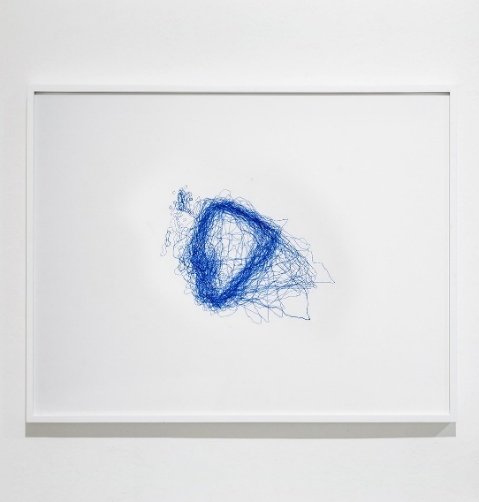
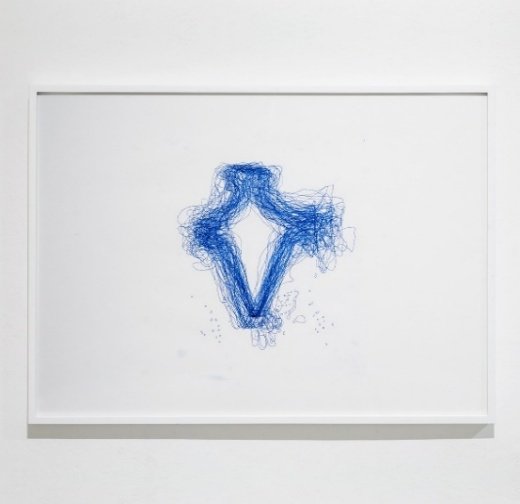
Mumbai, India [Plate 1] Cuenca [Plate 2]
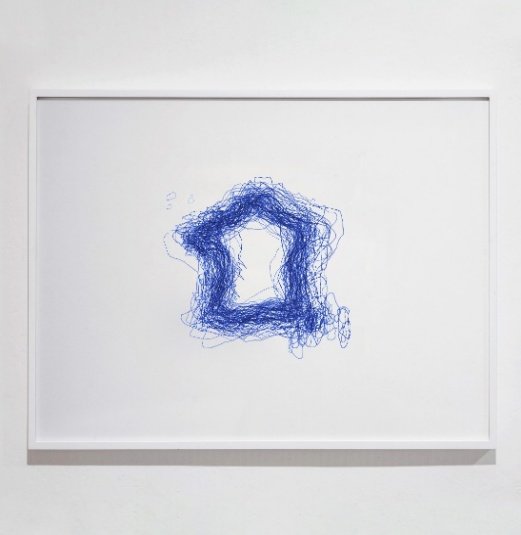
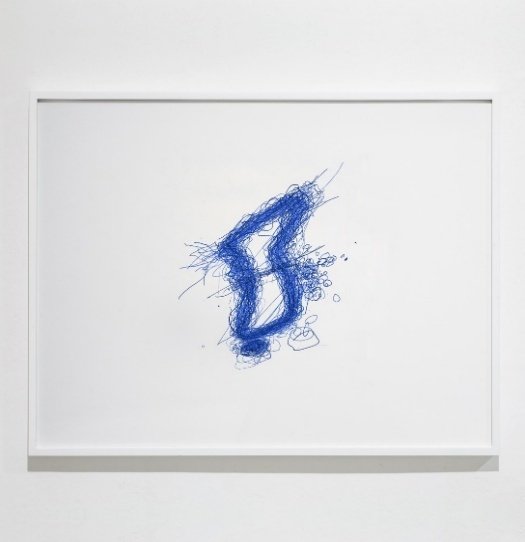
Delme [Plate 3] Gwangju, Seoul and Cheo [Plate 4]
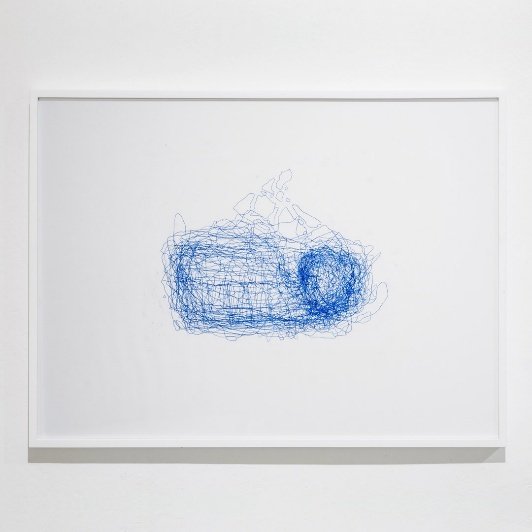
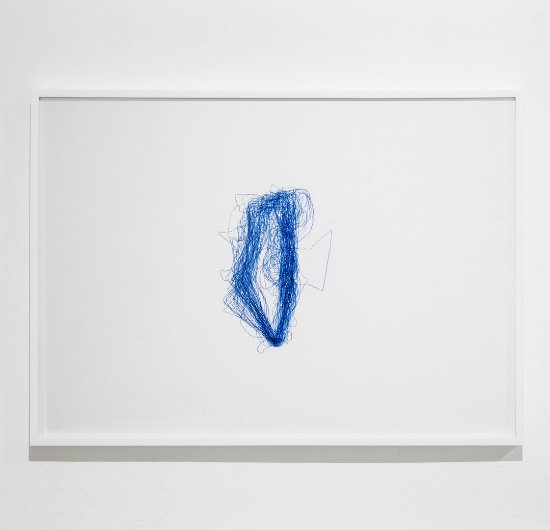
Tel Aviv and Jerusalem [Plate 5] Montreal [Plate 6]
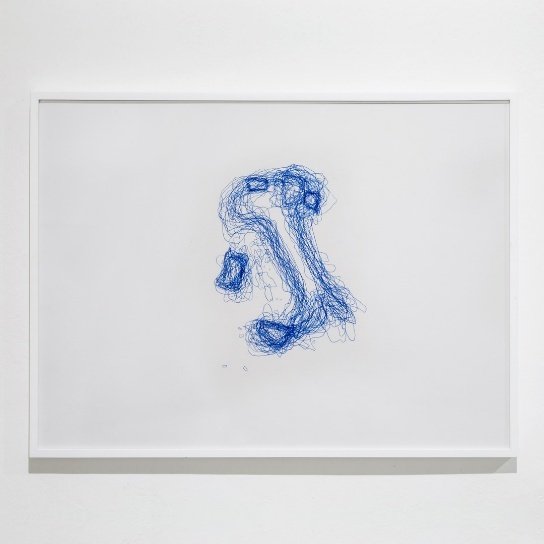
Different parts of Italy [Plate 7]
Source: shilpagupta.com3
Woven Chronicle
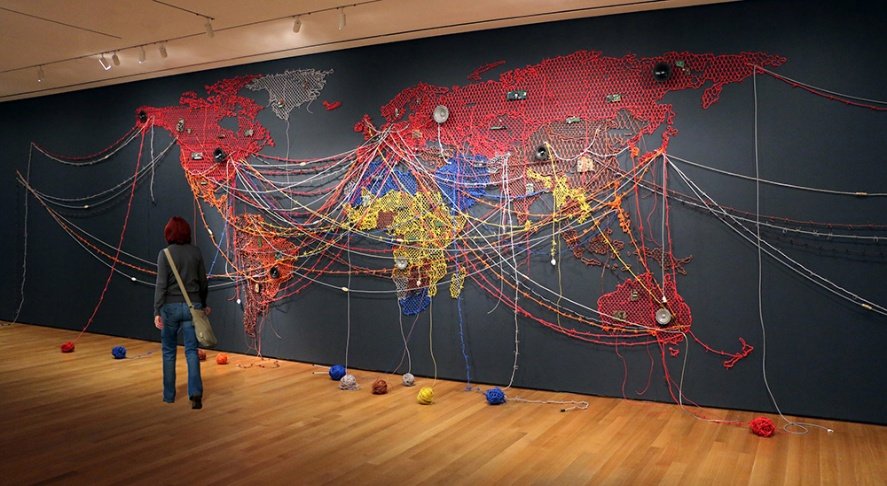
2016 [Plate 1] Source: reenakallat.com13
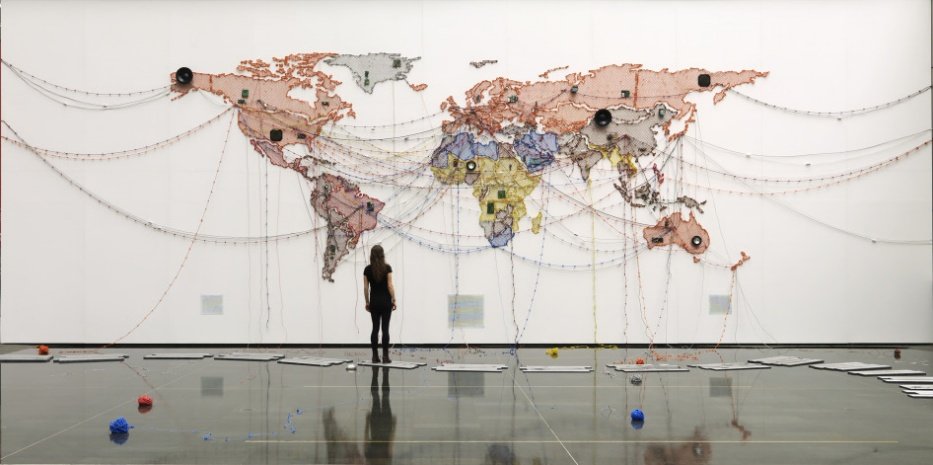
2015 [Plate 2] – Source: reenakallat.com11
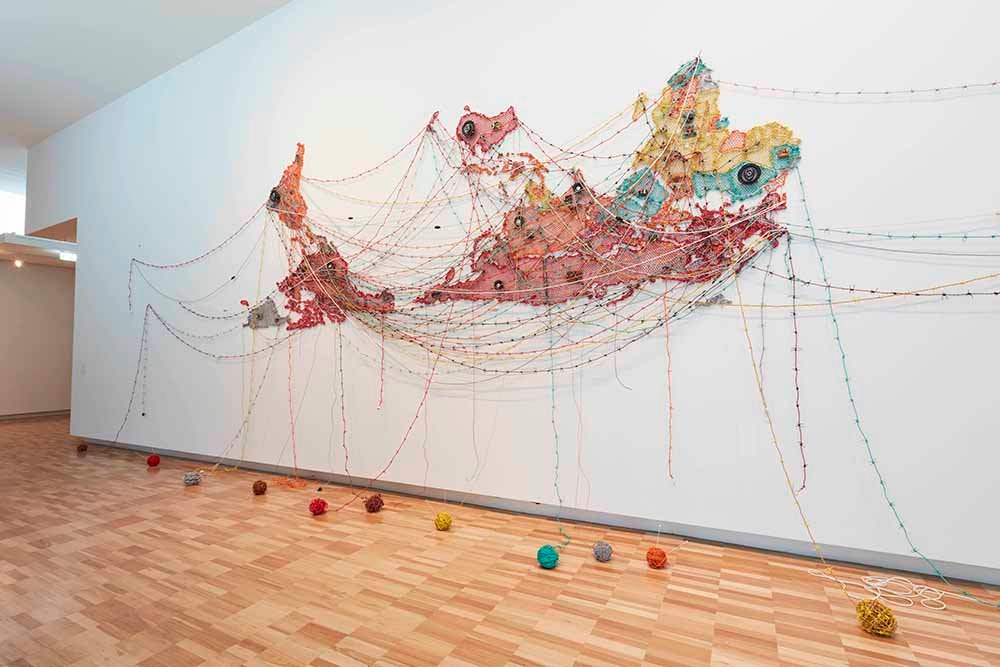
2018 [Plate 3]
Source: reenakallat.com4