
INTRODUCTION
Traditional tattooing among the Naga tribes of Northeast India represents an important form of cultural and artistic expression that reflects identity, social structure, and indigenous belief systems. Among these tribes, the Ao and Konyak Nagas possess distinctive tattoo traditions that function as visual markers of status, maturity, and cultural belonging. Ao tattoos are generally characterized by simpler and rhythmic patterns associated with age, gender, and social roles, whereas Konyak tattoos are widely recognized for their bold facial and body markings symbolizing warrior achievements, bravery, and prestige. These tattooing practices were traditionally performed using hand-tapping techniques with natural pigments and locally made tools, often carried out as communal and ceremonial activities that reinforced collective memory and cultural identity. However, due to modernization and social transformation, these traditions are gradually declining, making their documentation and comparative study significant. This research therefore aims to examine the artistic styles, symbolic meanings, and cultural importance of Ao and Konyak tattoo traditions while highlighting their relevance within the broader context of indigenous visual art.
NAGA TRADITIONS
Naga traditions are a rich expression of the cultural identity and heritage of the Naga tribes of Northeast India, rooted in ancestral knowledge, community values, and close relationships with nature. These traditions are reflected through oral folklore, festivals, shawl weaving, wood carving, tattoo practices, and village rituals that once marked social status, bravery, and belonging. Rather than existing only as historical practices, Naga traditions continue to evolve while preserving symbolic meanings connected to clan identity, spirituality, and collective memory. Elements such as morungs (youth dormitories), log drums, and traditional shawls demonstrate how material culture carries deep social and ceremonial significance. Today, artists and cultural practitioners reinterpret these traditions in contemporary forms, ensuring that Naga heritage remains dynamic while honoring its historical roots.
TATTOO ART
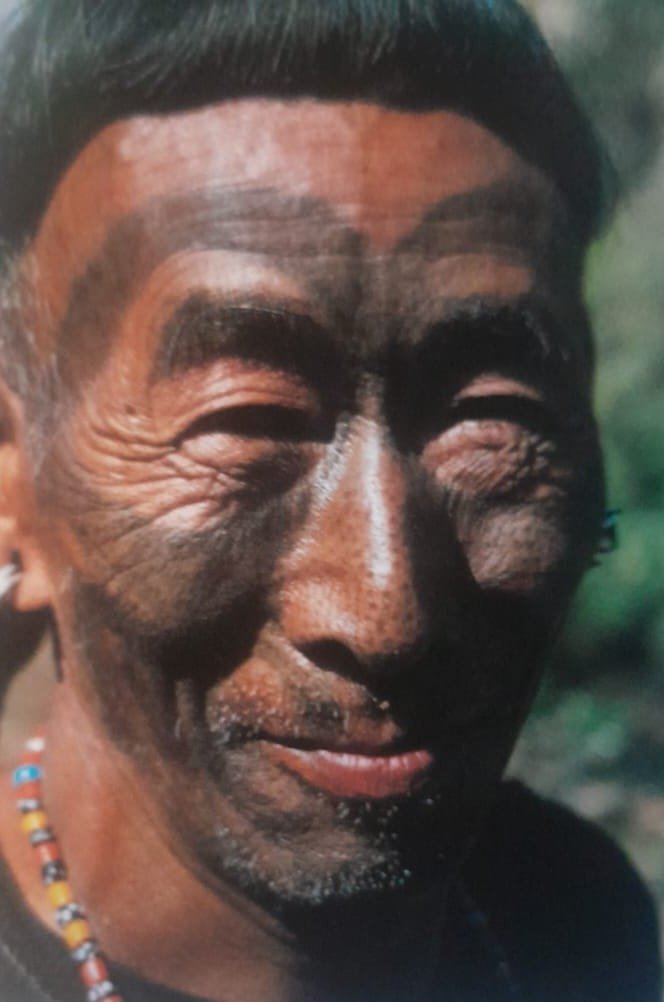
Tattoo art has deep historical roots across many indigenous cultures and has long functioned as a powerful form of visual communication and identity. Traditionally, tattoos were not merely decorative but carried social, spiritual, and cultural meanings, often marking rites of passage, achievements, clan affiliation, and personal status within the community. The main Objective of tattoo is to make statements about membership of groups and status within the groups. The main method is to hammer the skin with a thorn implant and to rub a pigment into the cut. This is undoubtably quite painful but is stoically and willingly undergone because of the high value placed on the resulting patterns. While the method and objective may be similar, there are slight difference between the Ao and Konyak tattoo process, and interpretation. Ao males for instance used to tattoo, but no longer do so, it is said because of the irksome food restriction imposed on men. The Ao women were tattooed on the face, breast (Plate Ⅰ), arms, neck and legs (Plate Ⅱ, Ⅲ). The embellishment on the face is confined to four lines on the chin. In contrast, the Konyak males are tattooed, the Konyak tribe is divided into three divisions, upper Konyak called Thanko, Lower Konyak called Thanto and Wakching area Konyak, slight variations are there in the tattoo patterns on all three divisions. But tattoos on the neck, chest areas are warrior tattoos (Plate Ⅳ, Ⅴ). The Konyak women generally receive tattoos to mark key life-cycle stages and lineage. Their calves are inked when they reach maturity, their knees are inked to indicate when they are betrothed to be married (Plate Ⅵ), tattoos on their arms and neck are restricted to women of noble decent.
DISCUSSION
Anthropologist Lars Krutak’s 2014 fieldwork act called “Sacred Skin” among the Konyak Nagas. During this multi-year expedition, Krutak documented tattoos with elders who were survivors of headhunting eras, divided by generational gaps in a remote village in Nagaland. Krutak’s interactions with the tattooed warriors, wrapped in stories and bearing ritual thorns, represented themes of memory, cultural trauma, and reconciliation with the indigenous Naga spirit. Eche Wangnyu Konyak is the Nagaland-based ethnographic researcher. Eche Wangnyu Konyak left his teaching profession to follow his passion in cultural documentation. Photographs, interviews, multimedia records, fieldnotes, performances, and analyses are all a part of his research practice. Konyak’s works based on social, political, and religious concerns, are profoundly influenced by the hills. Eche Wangnyu Konyak, who calls himself a tattoo chronicler. His recent study presented a visual performative work called ‘Body Aesthetics: Contextualizing the Tattooing Culture of the Konyak Nagas. Body Aesthetics artwork created at Longwa village in Mon district. 20 elders, photographer, and a local guide sat on the border of 500 motif sketches collected for this documentation and installation research practice. and placed in an elliptical shape on the ground to mimic the shape of a warrior shield. During his teaching profession, Eche Wangnyu Konyak developed a connection with the lives of tattooed elders. The circle shape of warrior’s symbolizes and visualize the tiger-spirit painting of the tribal art of Nagaland. Konyak came to see how closely linked elder lives are to the land.
CONCLUSION
Tattooing traditions among the Ao and Konyak Nagas refer to the ability to maintain or restore the vitality of indigenous cultural heritage, identity markers, and spiritual knowledge for future generations. It involves managing the impacts of modernization, Christian conversion, and globalization in ways that minimize harm to traditional practices and promote sustainable cultural continuity. Comparative study of Naga tattoos can play a crucial role in promoting cultural sustainability by using visual, ethnographic, and performative methods to raise awareness about endangered indigenous practices, encourage community engagement, and inspire pride in ancestral heritage.
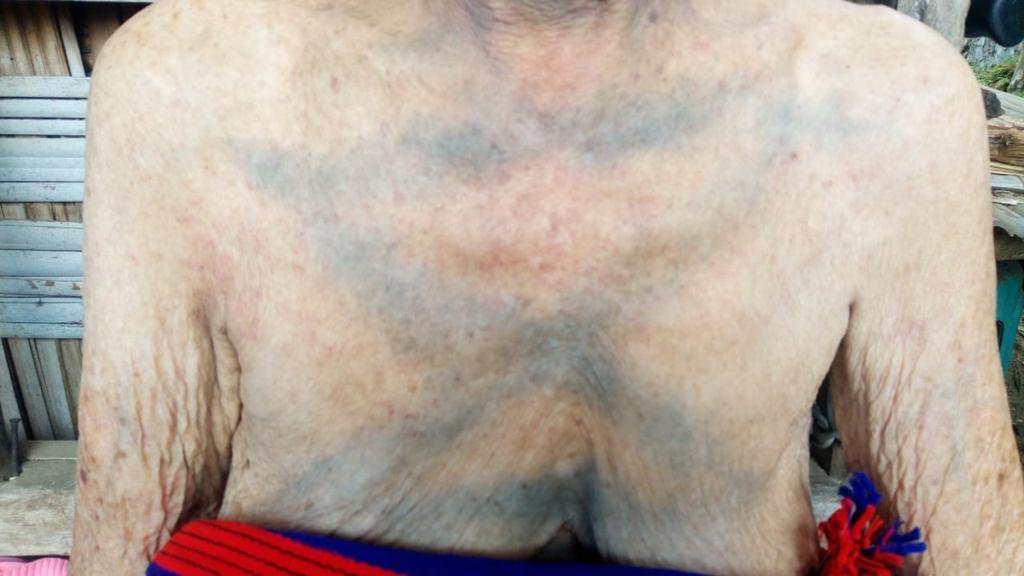
Plate Ⅰ: Ao Female Chest Tattoo
Source: District Culture Office, Mokokchung
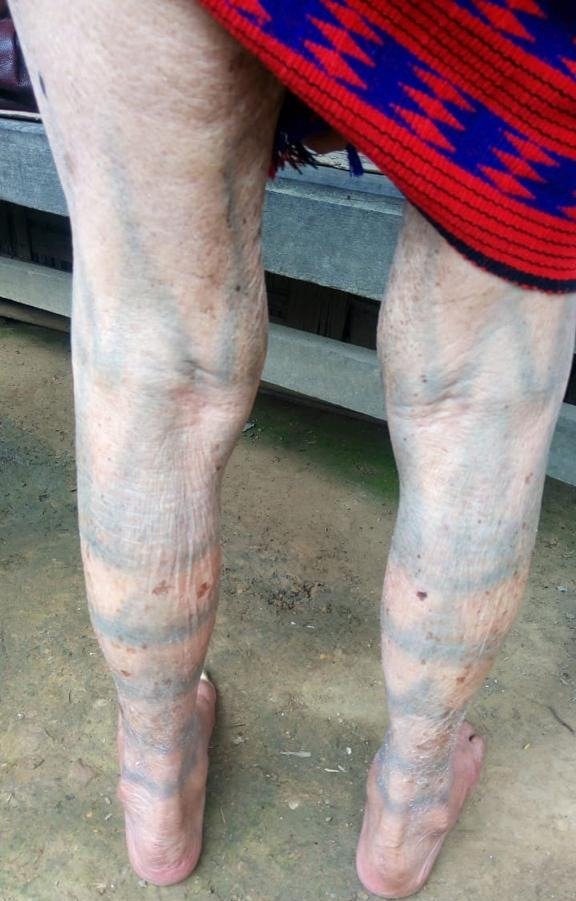
Plate Ⅱ: Ao Female Leg Tattoo
Source: District Culture Office, Mokokchung
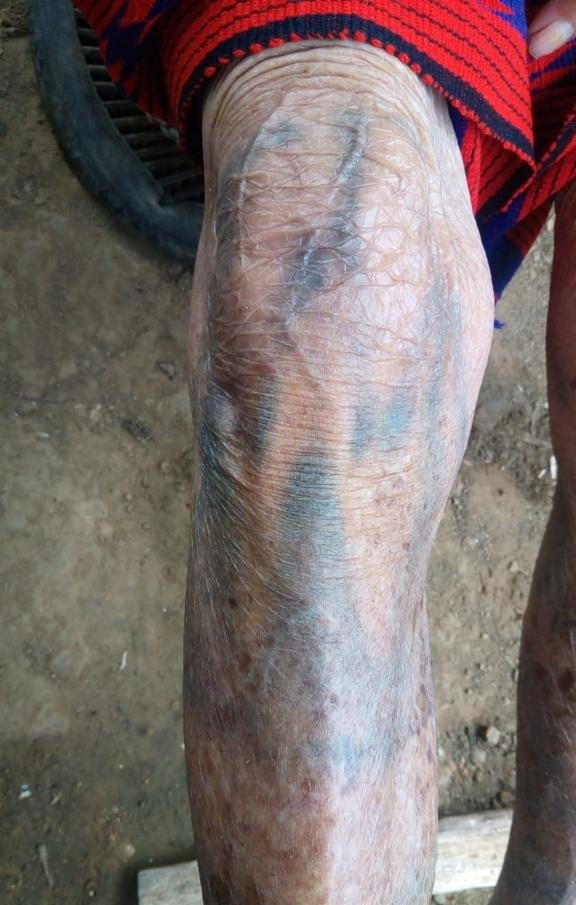
Plate Ⅲ: Ao female leg tattoo
 Source: District Culture Office, Mokokchung
Plate Ⅳ: Konyak Male Face Tattoo
Source: Aglaja Stirn and Peter van Ham
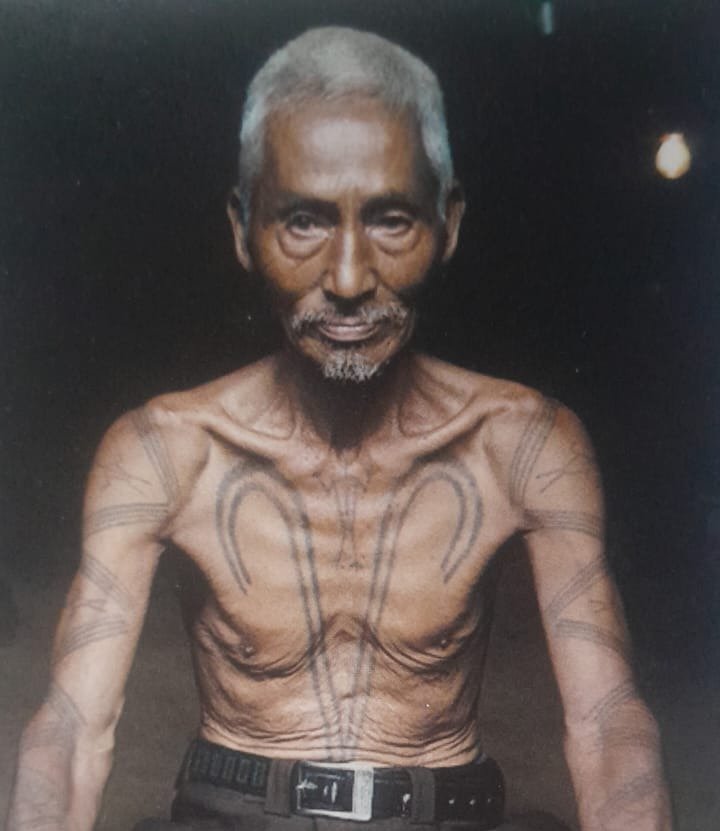
Plate Ⅴ: Konyak male Chest Tattoo
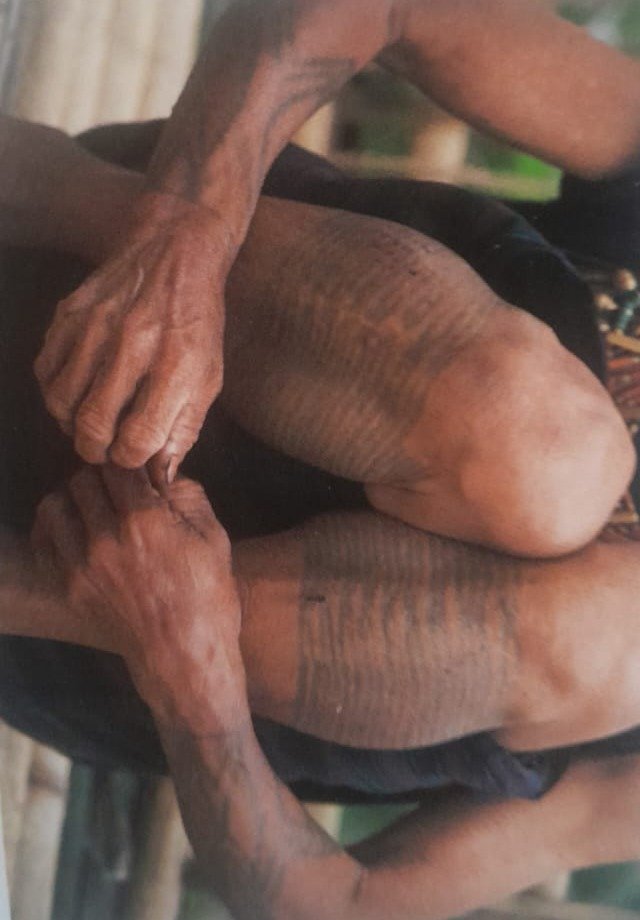 Source: The Konyak Naga by Lemei Konyak
Plate Ⅵ: Konyak Female Leg tattoo
Source: Aglaja Stirn and Peter van Ham