
Introduction
A. The Emergence of the “Haircut” Debate
The recent Subhash Chandra insolvency matter provides a useful contemporary entry point. Media reporting generated the widely circulated figure of a 99.97% haircut, based on a proposed repayment of approximately ₹6.25 to ₹6.5 crore against ₹22,006 crore of admitted claims. Taken at face value, the figure appears to be a catastrophic loss to the banking system: a write-off of essentially the entire exposure of the consortium of lenders holding admitted claims against him.
But a serious legal analysis must immediately deconstruct the arithmetic. The ₹22,006 crore figure represents admitted claims against Subhash Chandra in his capacity as personal guarantor to loans advanced to corporate debtors of the Zee/Essel group. It is not ₹22,006 crore of loans personally borrowed by him. The legal question is therefore considerably more precise than the headline: What exactly constituted the claims against the guarantor? What assets were available for recovery against him? What rights remain against the principal borrowers? Was the settlement, and the court’s acceptance of it, legally and economically justified? This distinction between corporate debt and guarantor liability is the analytical gateway to the whole paper (Shaji & M. L., 2025; Sharma, 2021).
B. Haircuts Are Neither New nor Exceptional
Haircuts long predate the IBC. India’s pre-2016 recovery architecture, comprising SARFAESI, the Debts Recovery Tribunals, Lok Adalats, and the Board for Industrial and Financial Reconstruction, routinely produced partial recoveries, albeit slowly and opaquely (Bose et al., 2020). What the IBC changed was the institutionalisation of the haircut: it made the write-down a transparent, negotiated, time-bound, and judicially supervised event (Gupta, 2019).
C. The Research Puzzle
The paper is organised around a peculiar empirical fact. Through March 2025, 1,194 CIRPs resulting in approved resolution plans involved admitted claims of approximately ₹12 lakh crore, against which lenders recovered approximately ₹3.89 lakh crore, roughly 33% recovery, implying an aggregate haircut of approximately 67%. Yet recovery in those resolved cases stood at approximately 163% of the liquidation value of those companies. In other words: a 67% haircut coexists with a 163% recovery relative to liquidation value. It is this paradox, and the lesson it teaches about how haircuts must be measured, that this paper seeks to explain, test, and translate into a normative framework for evaluating individual cases like Subhash Chandra.
Literature Review
The literature on insolvency law spans five decades and several disciplinary traditions: law, finance, and macroeconomics. This review maps the terrain in seven strands and locates the gap this paper addresses.
A. The Economics of Bankruptcy Design
The theoretical foundations were laid by the law-and-economics literature on optimal bankruptcy mechanisms. Aghion, Hart and Moore’s early work on the economics of bankruptcy reform showed that the central design problem is reconciling efficient exit with the protection of going-concern value, and proposed auction-based mechanisms to achieve both (Aghion et al., 1992). Djankov, Hart, McLiesh and others extended this to cross-country empirics, demonstrating with a standardised enforcement scenario that recovery rates and enforcement efficiency vary dramatically across legal systems, and that creditor-protection architecture shapes debt-market development (Djankov et al., 2008). Puchakayala and Veluchamy’s review of the optimal bankruptcy regime literature consolidates this theoretical field, identifying creditor rights, resolution speed, and value maximisation as the recurring design variables (Puchakayala & Veluchamy, 2023). Mevorach’s analysis of insolvency goals frames the underlying normative tension, between maximising estate value, distributing losses equitably, and preserving the enterprise as a going concern, that runs through every national regime (Mevorach, 2009). Recent quantitative work by Corbae and D’Erasmo models the reorganization-versus-liquidation choice directly, showing that the design of the insolvency regime shifts firms’ borrowing and investment behaviour, not merely their outcomes once distressed (Corbae & D’Erasmo, 2020).
B. Insolvency Law, Credit Markets and Firm Performance
A second strand tests empirically whether bankruptcy law affects the cost and supply of credit. Rodano, Serrano-Velarde and Tarantino provide evidence that bankruptcy reforms alter the cost of bank financing, and that debt restructuring is easier for firms facing more efficient courts, a channel linking court quality to funding decisions (Rodano et al., 2016). Sautner and Vladimirov show across forty countries that stronger debt enforcement reduces the indirect costs of financial distress: firms under stronger enforcement are less exposed to reduced trade credit and forgone sales, partly because restructuring before formal insolvency becomes more likely (Sautner & Vladimirov, 2017). Agrawal, González-Uribe and Martínez-Correa predict and test that increases in creditor control rights during reorganization expand credit supply by reducing creditor concerns about debtor agency costs (Agrawal et al., 2021). Bose, Filomeni and Mallick, studying the Indian reform directly, find that the IBC strengthened creditors’ bargaining power and that distressed firms subsequently improved performance through increased credit supply and reduced cost of borrowing (Bose et al., 2020). Fu, Wennberg and Falkenhall add an entrepreneurship dimension: effective insolvency legislation channels resources from failed ventures toward productive entrepreneurial entry, making well-designed insolvency law a driver of, not a drag on, economic dynamism (Fu et al., 2018).
C. The Indian IBC: Design, Efficacy, Critique
The IBC literature in India splits between doctrinal and empirical camps. Gupta’s early assessment framed the Code as a paradigm shift, from a fragmented, debtor-friendly recovery architecture to a single, creditor-in-control, time-bound process (Gupta, 2019). Kanojia and Gupta’s empirical analysis of ex-post economic efficiency tests whether the IBC’s design objectives translate into measurable outcomes, a question this paper takes further (Kanojia & Gupta, 2024). Rao and Kasture’s sectoral study of 7,567 cases admitted through March 2024 provides the most comprehensive recent snapshot: an overall insolvency rate of 45.23%, only 947 cases resolved through approved plans against 2,476 liquidations, an average haircut of 67.89% and an average recovery rate of 32.08%, the data foundation for the haircut magnitudes this paper analyses (Rao & Kasture, 2024). Kalwani and Sharma correlate recovery with resolution speed, finding that resolutions concluded within the statutory 330-day ceiling yield materially higher recoveries than those that drag beyond 600 days (Kalwani & Sharma, 2025). On the distributive design, Pryor and Garg critique the differential treatment of creditors under the Code’s waterfall and voting structure (Pryor & Garg, 2020), while Vikram and Jhunjhunwala interrogate the sweep of Section 238’s non-obstante clause and its effects on competing statutory claims (Vikram & Jhunjhunwala, 2023).
D. Commercial Wisdom and the Adjudicatory Interface
A further doctrinal strand examines the Committee of Creditors’ near-plenary power. Dasari’s account of the CoC’s role under the IBC describes the committee’s “dharma”, its statutory mandate to balance commercial judgment with the Code’s objectives (Dasari, 2024). Viswajith critically examines the conceptual foundations of the CoC’s commercial wisdom and the limits, or absence of limits, of its deference (Viswajith, 2024). Priyadarshani’s study of the Adjudicating Authority’s role documents the emerging tension between the authority’s statutory gatekeeping function and the judiciary’s repeated insistence that commercial wisdom is not justiciable (Priyadarshani, 2026). This literature supplies the jurisprudential backdrop for the discussion of commercial wisdom below, and for the accountability gap the Five-Factor Test is designed to close.
E. Personal Guarantees and Individual Insolvency
The personal-guarantor literature is newer but fast-growing. Sharma documents the Supreme Court’s affirmation of the 15 November 2019 notification bringing personal guarantors within the IBC, which enabled creditors to proceed against corporate debtors and their personal guarantors simultaneously or sequentially (Sharma, 2021). Raghu Raman’s commentary on Surana Metals confirms the doctrinal anchor: a guarantor’s liability is co-extensive with that of the principal borrower unless contractually limited (Raman, 2022). Sahu examines the operational reach of the personal-guarantor regime (Sahu, 2024), while Sinha critiques the denial of the moratorium’s protection to personal guarantors, an argument that the regime punishes the very sureties who facilitate credit (Sinha, 2023). Shaji and Shilpa map the “transformative and transactional shifts” in the framework, identifying enforcement inefficiencies and due-process concerns in domestic and cross-border contexts alike (Shaji & M. L., 2025). Anand’s analysis of the Supreme Court and NCLAT line of decisions, including Central Bank of India v. Deepen Parekh on procedural rigidity, traces how the individual-insolvency architecture has evolved through adjudication (Anand, 2024). This strand is the doctrinal infrastructure for the Subhash Chandra case study.
F. Comparative and Cross-Border Insolvency
The comparative literature provides the international frame. Chawla, Kumar and Patel’s study of insolvency resolution and doing-business reforms across the BRICS nations situates India among its emerging-market peers (Chawla et al., 2022). McCormack assesses the European restructuring reforms culminating in the restructuring-plan architecture (McCormack, 2016); Tomasic analyses the conceptual structure of China’s corporate bankruptcy law (Tomasic, 2010); and Arner, Booth, Lejot and Hsu examine property rights, collateral, and creditor rights across East Asia (Arner et al., 2007). Kokorin extends the analysis to systemically significant non-financial enterprises, where resolution design interacts with financial-stability concerns (Kokorin, 2021). The consistent comparative finding, that higher-recovery jurisdictions combine creditor-protective design with restructuring rather than liquidation preference, informs the six-jurisdiction analysis below.
G. Macro-Financial Consequences of Restructuring
The final strand connects insolvency outcomes to the macroeconomy. The IMF’s analysis of corporate restructuring and its macro effects emphasises that restoring corporate profitability is the precondition for renewed investment, bank credit, and growth (Shin, 2017). World Bank work on corporate debt and financial stability identifies the systemic risks posed by concentrated corporate leverage and the importance of proactive loss recognition (World Bank, 2018); the IMF’s study of China’s corporate debt crisis makes the same point about burden-sharing and hardening budget constraints (International Monetary Fund, 2016).
H. The Gap: What This Paper Adds
None of these strands, theoretical, empirical, doctrinal, or comparative, directly confronts the measurement problem this paper addresses: the coexistence of an approximate 67% haircut with an approximate 163% recovery relative to liquidation value in the same resolved CIRPs. The literature that treats haircuts as evidence of failure and the literature that treats value maximisation as the Code’s objective speak past each other. This paper’s contribution is to supply the missing analytic bridge, a two-sided transmission model and a factor-based test, by which individual haircuts can be evaluated against the liquidation counterfactual, the statutory timeline, valuation integrity, accountability, and systemic externalities.
Methodology and Research Design
A. Research Design
This study employs a mixed-methods, multi-jurisdictional design combining: (i) doctrinal legal analysis of Indian statutory provisions and judicial decisions; (ii) quantitative analysis of aggregate insolvency outcome data; (iii) functional comparison of six insolvency regimes; and (iv) a structured single-case study of the Subhash Chandra matter. The design is justified by the paper’s central claim: haircut magnitudes can only be interpreted by triangulating legal architecture, empirical outcomes, and the counterfactual of liquidation.
B. Research Questions
• RQ1: What explains the magnitude of haircuts in Indian CIRPs, efficient loss allocation, valuation failure, delay, moral hazard, or promoter misconduct?
• RQ2: Is the size of a haircut, measured against admitted claims, a reliable indicator of resolution efficiency once the liquidation-value counterfactual is controlled for?
• RQ3: How do India’s insolvency outcomes compare with those of the United States, United Kingdom, Singapore, Japan and Germany, and why do different datasets produce divergent pictures of Indian recovery?
• RQ4: What are the identifiable banking, credit, investment, employment and supply-chain consequences of large haircuts, and when does a haircut become economically pathological?
C. Hypotheses
| Code | Hypothesis | Testable implication |
|---|---|---|
| H1 | Haircut magnitude against admitted claims is not a reliable proxy for resolution efficiency once recovery relative to liquidation value is controlled for. | The ~67% aggregate haircut coexists with ~163% recovery over liquidation value; per-resolution variation in the latter predicts economic success better than the former. |
| H2 | IBC recoveries exceed all alternative domestic enforcement mechanisms. | Recovery of 36.6% in FY 2024–25 exceeds SARFAESI (31.5%), DRT (9.5%) and Lok Adalat (2.4%) rates. |
| H3 | Delay beyond the statutory timeline is the most controllable driver of haircut magnitude. | Resolutions within the 330-day ceiling yield materially higher recoveries than those exceeding 600 days (Kalwani & Sharma, 2025). |
D. Data and Materials
• Primary legal materials: the Insolvency and Bankruptcy Code, 2016 (Sections 2(e), 7, 9, 12, 29A, 30, 31, 43–51, 53, 54, 55–58, 60); the Indian Contract Act, 1872 (Sections 126–133); and the decisions in K. Sashidhar, Essar Steel, Maharashtra Seamless, Kalpraj Dharamshi, Ebix Singapore, Vijay Kumar Jain, Surana Metals, and Central Bank of India v. Deepen Parekh (Anand, 2024; Raman, 2022; Sharma, 2021).
• Empirical data: IBBI quarterly and annual publications (1,194 resolved CIRPs with admitted claims of approximately ₹12 lakh crore and recoveries of approximately ₹3.89 lakh crore through March 2025); the Reserve Bank of India’s Report on Trend and Progress of Banking in India, 2024–25 (recovery of 36.6% in FY 2024–25 against 28.3% in FY 2023–24); independent academic analyses of IBBI data (Kalwani & Sharma, 2025; Kanojia & Gupta, 2024; Rao & Kasture, 2024); and the World Bank’s standardised recovery-rate methodology for cross-country comparison (US ~81, UK ~85.4, Singapore ~88.7, Japan ~91.8, Germany ~79.8 cents per dollar; India 71.6 under the older Doing Business measure) (Djankov et al., 2008; Puchakayala & Veluchamy, 2023).
• Policy and institutional materials: UNCITRAL Legislative Guide on Insolvency Law and Model Law on Cross-Border Insolvency; IMF and World Bank studies on corporate restructuring (International Monetary Fund, 2016; Shin, 2017; World Bank, 2018).
• Case-specific materials: contemporaneous media reporting of the Subhash Chandra proceedings. Media sources are used solely to establish the contested facts (₹22,006 crore admitted claims; approximately ₹6.25 to ₹6.5 crore proposed repayment); the analytical frame is doctrinal and economic, not journalistic.
E. Comparative Method
The six jurisdictions are compared functionally rather than formally: each is examined for (i) principal resolution mechanism, (ii) allocation of control between debtor and creditors, (iii) treatment of going-concern value, and (iv) indicative recovery outcomes. The methodological caution governing all quantitative comparison is stated expressly in the comparative sections below: the World Bank measure computes a hypothetical secured-creditor recovery under standardised assumptions, whereas IBBI statistics record actual outcomes across all creditor classes against admitted claims. The two are not directly equivalent, a distinction this paper never conflates.
F. Case Study Protocol
The Subhash Chandra matter is examined against a ten-point checklist (nature of underlying debt; nature of guarantee; amount of admitted claim; guarantor’s asset position; proposed repayment; remaining recovery against principal borrowers; realisable asset value; creditors’ arguments; NCLT determination; appellate status). The case is treated as a stress-test of four competing diagnoses: genuine inability to pay, inadequate asset tracing, creditor failure, and moral hazard, to be resolved by evidence rather than by the headline haircut figure.
G. Limitations
Four limitations are acknowledged. First, cross-jurisdictional recovery data are indicative, not directly comparable, because of divergent methodologies and case assumptions. Second, IBC-era cases are disproportionately legacy NPAs with thin realisable asset bases, which may depress aggregate recovery relative to a steady-state regime. Third, the case-study facts are drawn in part from media reporting and are subject to final adjudication. Fourth, the Five-Factor Test proposed below is a normative-analytic instrument, not a statistical model; its operational indicators require calibration as further IBBI data become available.
Conceptualising the “Haircut”
A. What Is a Haircut?
A haircut is the proportionate shortfall between what a creditor was owed and what the creditor ultimately recovers:
| Haircut = (Admitted/contractual claim − amount ultimately recovered) ÷ Admitted claim |
|---|
Illustration: a creditor holding a ₹100 crore claim who recovers ₹40 crore has suffered a 60% haircut. The concept is symmetric with the recovery rate: a 33% recovery implies a 67% haircut.
The term is financial rather than statutory: the IBC nowhere uses the word “haircut.” It emerges from the structure of Section 30 of the Code, which permits the CoC to approve a resolution plan that pays creditors less than their admitted claims, provided the plan satisfies the prescribed statutory conditions (minimum payment to operational creditors, feasibility and viability assessment, and, as a rule, payment not less than the liquidation value to dissenting creditors).
B. Haircut Is Not the Same as Economic Loss
The crucial theoretical qualification is that a haircut is not, in every case, an economic loss when measured against the counterfactual of liquidation. Consider:
• claim = ₹100 crore
• liquidation value = ₹20 crore
• resolution value = ₹40 crore
The creditor loses ₹60 crore relative to the claim, a 60% haircut, but is in fact twice as well off as it would have been under liquidation. The haircut, measured against admitted claims, overstates the creditor’s marginal loss relative to the realistic alternative. Empirical research on Indian CIRPs confirms that the excess of resolution value over liquidation value is the decisive variable determining whether an insolvent but viable firm is rescued or liquidated (Kanojia & Gupta, 2024). This is where the paper moves beyond newspaper commentary: the appropriate benchmark for judging a resolution is not the face value of the claim but the liquidation-value counterfactual.
A further refinement is necessary for analytical precision. Three distinct senses of “loss” must be separated: accounting loss (claim minus recovery, which the haircut measures); economic loss (recovery minus liquidation value, which measures value destruction or preservation relative to the realistic alternative); and welfare loss (the full transmission of the shortfall through employment, MSME supply chains, tax revenue, and credit-market effects). The abstract’s central proposition, that the true cost of a haircut lies in who bears the loss, is an argument for evaluating haircuts at all three levels, never merely the first.
The Economics of Insolvency Haircuts
A. Why Do Haircuts Occur?
At least eight causes, often operating simultaneously, explain the magnitude of haircuts in Indian CIRPs:
1. Asset deterioration: the erosion of collateral and business value during the period of financial distress;
2. Delay in resolution: the longer a company remains in distress, the more its going-concern value decays (Kalwani & Sharma, 2025);
3. Overvaluation of collateral: credit decisions historically made on inflated security values that do not survive independent valuation;
4. Weak credit appraisal: original sanctioning decisions that mispriced risk and therefore made large future write-downs structurally likely;
5. Promoter diversion and mismanagement: value leakages through related-party transactions and poor governance (Pandey & Gopalan, 2025);
6. Litigation: multiplicity of proceedings and challenges that consume estate value and time;
7. Multiple secured and unsecured creditors: coordination failure among creditors with divergent claims (Pryor & Garg, 2020);
8. Decline in going-concern value: the difference between the value of an operating enterprise and the sum of its parts, which shrinks as distress deepens.
Sectoral analysis of IBBI data through March 2024 (7,567 admitted cases) records an overall insolvency rate of 45.23%, with only 947 cases resolved through approved plans against 2,476 cases sent to liquidation; the average haircut across resolved cases was 67.89% and the average recovery rate 32.08% (Rao & Kasture, 2024). These are large numbers by any standard, and they locate the causes listed above in the empirical structure of the Indian CIRP.
B. The Resolution Value versus Liquidation Value Problem
The central normative question of Indian insolvency economics is: is a 70% haircut excessive if liquidation would have produced only a 15% recovery? The answer, on the logic of the Code itself, is no, because the IBC’s objective is value maximisation for the estate, not the elimination of creditor loss (Arner et al., 2007). Where resolution preserves a going concern that yields more than the break-up value, the haircut is not merely tolerable; it is the price of a superior outcome. The difficulty is that the same arithmetic can conceal value destruction when the resolution value itself is depressed by delay, poor valuation, or strategic gamesmanship by stakeholders. Distinguishing “efficient haircuts” from “pathological haircuts” requires the analytical apparatus developed in the sections below.
The Indian Legal Framework
A. The Insolvency and Bankruptcy Code, 2016: Architecture and Key Provisions
The IBC, shaped by the Bankruptcy Law Reforms Committee, is a creditor-in-control, time-bound resolution framework that consolidated India’s fragmented insolvency laws into a single code. Its key provisions operate as follows:
• Section 7: empowers a financial creditor (individually or jointly) to initiate a CIRP against a corporate debtor on the occurrence of default;
• Section 9: provides the parallel route for operational creditors;
• Section 12: prescribes the time limit for completion of the CIRP, extended (post-amendment) up to 330 days including litigation time; in Essar Steel the Supreme Court struck down the word “mandatorily” in the proviso, holding that the 330-day outer limit is the norm but may be extended in exceptional cases where a resolution is on the verge of completion;
• Section 29A: disqualifies “unsuitable” persons, including defaulting promoters and related parties, from bidding as resolution applicants, an anti-moral-hazard provision central to the Code’s design;
• Section 30: requires the resolution professional to submit the plan approved by the CoC (by vote of at least 66% of financial creditors) to the Adjudicating Authority, subject to the conditions of Section 30;
• Section 31: empowers the Adjudicating Authority to approve the plan if it conforms to Section 30, whereupon it binds the corporate debtor and all stakeholders;
• Sections 43, 45, 49 and 50: the avoidance provisions, enabling the resolution professional to claw back preferential transactions, undervalued transactions, transactions defrauding creditors, and extortionate credit transactions respectively;
• Section 53: the liquidation waterfall, specifying the priority order for distribution of the liquidation estate;
• Sections 55 to 58: the fast-track CIRP for small companies, start-ups and other notified categories of corporate debtor.
B. Section 30: The Statutory Gate for the Haircut
Section 30 is the doctrinal hinge of the entire haircut debate. Section 30 requires that every resolution plan: (i) provide for payment of insolvency resolution costs in priority; (ii) ensure that operational creditors receive at least the amount they would have received in liquidation (and not less than the specified minimum); (iii) provide for management of the affairs of the corporate debtor after approval; and (iv) not contravene any law. Judicial interpretation, culminating in Essar Steel, holds that the CoC’s commercial decision, including the size of the haircut allocated to each class, is entitled to near-complete deference, subject only to the statutory conditions and the fundamental-rights floor applicable to operational creditors.
C. Section 53: The Liquidation Waterfall
If resolution fails, Section 53 governs distribution of the liquidation estate in the following order: insolvency resolution costs; workmen’s dues and secured creditors (in the manner prescribed); unsecured financial creditors; government dues; and equity holders last. The waterfall has been the subject of intense litigation, the Supreme Court’s decision in State Tax Officer v. Rainbow Papers Ltd., and subsequent clarifications in Paschimanchal Vidyut and Sundaresh Bhatt, having tested the priority of statutory and government dues against secured claims (Arora, 2025). The waterfall matters to the haircut debate because it defines the liquidation-value floor: every resolution plan must yield at least what the waterfall would deliver, otherwise liquidation is the legally and economically superior option (Kammela, 2025).
D. Personal Guarantor Provisions: The Frame for the Case Study
The insolvency of personal guarantors to corporate debtors was brought within the IBC by notification dated 15 November 2019, inserting personal guarantors as a distinct category under Section 2(e) of the Code. The Supreme Court upheld the validity of the notification, reading Sections 126, 128, 129 and 133 of the Indian Contract Act, 1872 together with Sections 2 and 60 of the IBC, and thereby permitting creditors to proceed against the corporate debtor and its personal guarantors simultaneously or sequentially (Sharma, 2021). The framework enables a comprehensive view of the debtor’s connected asset base and has been described as improving recovery efficiency for all stakeholders (Sahu, 2024). Two clarifications are indispensable for the Subhash Chandra analysis: first, the guarantor’s liability is co-extensive with that of the corporate debtor, but it is a liability to pay, not a replication of the corporate debt itself; second, the resolution plan approved for the corporate debtor does not, by itself, extinguish the guarantee, and the creditor retains rights against the guarantor (Sinha, 2023). Subsequent jurisprudence, including Vijay Kumar Jain v. Standard Chartered Bank (recognising the personal guarantor’s entitlement to be furnished with the relevant plan documents given the consequences to the guarantor), the line of decisions on Section 60 jurisdiction, and Central Bank of India v. Deepen Parekh (on procedural rigour in individual insolvency), has progressively refined due-process safeguards for guarantors (Anand, 2024).
Is “Haircut” Legally Recognised?
A. A Financial Expression, Not a Statutory Entitlement
“Haircut” is primarily a financial and economic expression rather than a statutory entitlement under the IBC. The Code nowhere mentions it. It is the consequence of a legitimate process: the CoC, exercising its commercial wisdom under Sections 30 and 31, agreeing to a plan that pays less than the admitted claims. The question that follows is whether the CoC may legally decide to accept substantially less than the admitted claim, and the answer, settled across a decade of jurisprudence, is yes, within limits.
B. The Jurisprudence of Commercial Wisdom
The Supreme Court has consistently held that the commercial wisdom of the CoC is not justiciable on its merits:
• In K. Sashidhar v. Indian Overseas Bank, the Court held that the Adjudicating Authority’s scrutiny is confined to whether the plan meets the requirements of Section 30; it cannot substitute its own commercial judgment for that of the CoC;
• In Committee of Creditors of Essar Steel India Ltd. v. Satish Kumar Gupta, the Court affirmed the primacy of the CoC’s business decision, requiring only that the decision be taken after considering: (i) the continuation of the corporate debtor as a going concern; (ii) maximisation of the value of the corporate debtor’s assets; and (iii) the balancing of stakeholders’ interests;
• In Maharashtra Seamless Ltd. v. Padmanabhan Venkatesh and Kalpraj Dharamshi v. Kotak Investment Advisors, the Court reiterated the narrow scope of judicial review, declining to interfere with CoC-approved plans absent illegality, irrationality, or malafides;
• In Ebix Singapore Pvt. Ltd. v. Committee of Creditors of Educomp Solutions, the Court enforced the binding character of duly approved plans while emphasising the CoC’s central role;
• In Vijay Kumar Jain v. Standard Chartered Bank, the Court addressed the personal-guarantor dimension, affirming the guarantor’s procedural entitlement to plan documents given the direct consequences of the CIRP for the guarantor’s own liability.
The doctrinal tension the paper foregrounds is between this near-absolute deference to commercial wisdom and the competing pull of judicial and constitutional accountability where extreme value destruction is alleged. The 2025 IBC Bill, which seeks to further reduce Adjudicating Authority discretion and strengthen CoC authority, suggests that the legislative direction remains firmly pro-commercial-wisdom (Priyadarshani, 2026). The unresolved question is whether a CoC approval that produces a haircut in excess of 99%, without demonstrated effort at asset tracing or recovery from connected parties, can ever be infirm; that is precisely the question the Subhash Chandra litigation now poses.
The Indian Data: How Large Are Haircuts Actually?
A. The Headline Numbers
By FY 2024–25, recoveries under the IBC had risen to 36.6%, up from 28.3% in FY 2023–24, as recorded in the Reserve Bank of India’s Report on Trend and Progress of Banking in India, 2024–25. The IBC’s recovery performance also exceeded the alternative domestic mechanisms: 31.5% under SARFAESI, 9.5% before the Debts Recovery Tribunals, and 2.4% via Lok Adalats. These figures are the strongest available evidence that the IBC has improved creditor outcomes relative to the prior architecture.
Through March 2025, 1,194 CIRPs resulting in resolution plans involved admitted claims of approximately ₹12 lakh crore, against which lenders recovered approximately ₹3.89 lakh crore, a recovery of roughly 33%, that is, an aggregate haircut of approximately 67% on admitted claims. Critically, recovery in those resolved cases stood at approximately 163% of the liquidation value of the enterprises concerned.
B. The Central Analytical Paradox
The juxtaposition of those two numbers, an approximate 67% haircut with an approximate 163% recovery over liquidation value, is the paper’s principal empirical finding and its principal analytical gift:
A large haircut does not necessarily indicate a failed insolvency resolution.
The haircut measures the gap between the claim and the recovery; the recovery-over-liquidation-value ratio measures the gap between the resolution and the counterfactual. Both can be true simultaneously: creditors lose two-thirds of their claims and are more than one-and-a-half times better off than they would have been at auction.
C. Corroborating Datasets
Independent academic work on IBBI data corroborates the scale: a study of 7,567 cases admitted through March 2024 found a 32.08% recovery rate and a 67.89% average haircut in resolved cases (Rao & Kasture, 2024). Earlier assessments tell a broadly consistent story: an Economic Survey analysis reported IBC recoveries of 42.5% of the amount involved against 14.5% under SARFAESI, with average resolution time of 340 days against 4.3 years in the earlier system; a five-year review found lenders absorbing roughly 61% of claims as haircuts. A separate analysis shows recovery rates declining from 43% in 2019 to 32% in 2023, with average resolution time extending to 653 days, far beyond the 330-day ceiling, and resolutions concluding within 330 days yielding materially higher recoveries than those dragging beyond 600 days (Kalwani & Sharma, 2025). The FY 2024–25 improvement to 36.6%, and the 42% rise in approved resolution plans in FY 2024, indicate a partly arrested decline, but delays remain the single most controllable driver of value erosion.
D. A Preliminary Data Table
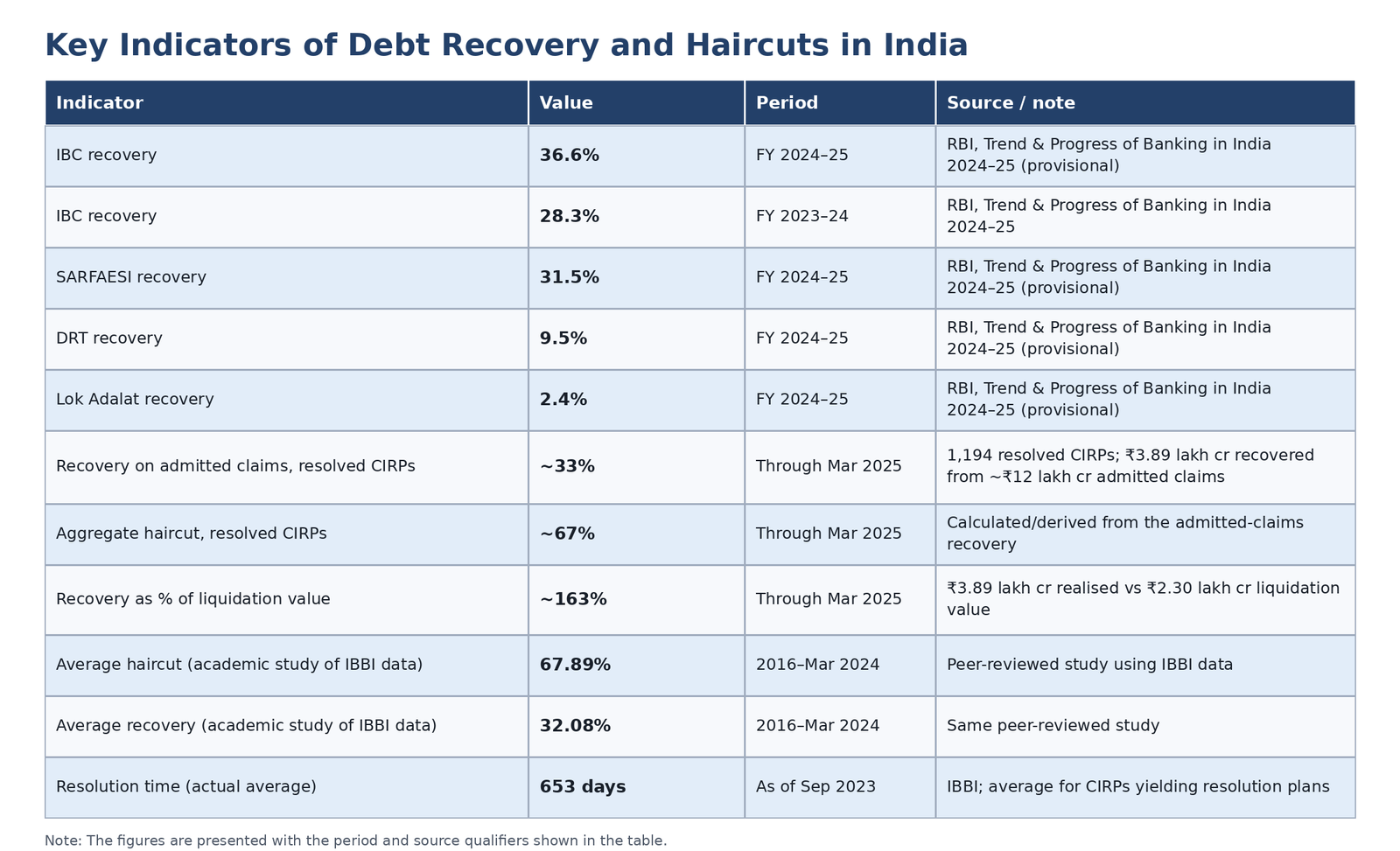
Figure 1: Key Indicators of Debt Recovery and Haircuts in India.
Banking-Sector Consequences
A. The Transmission Chain
From insolvency law the analysis moves to banking economics. Large corporate defaults transmit through the financial system along a well-established chain:
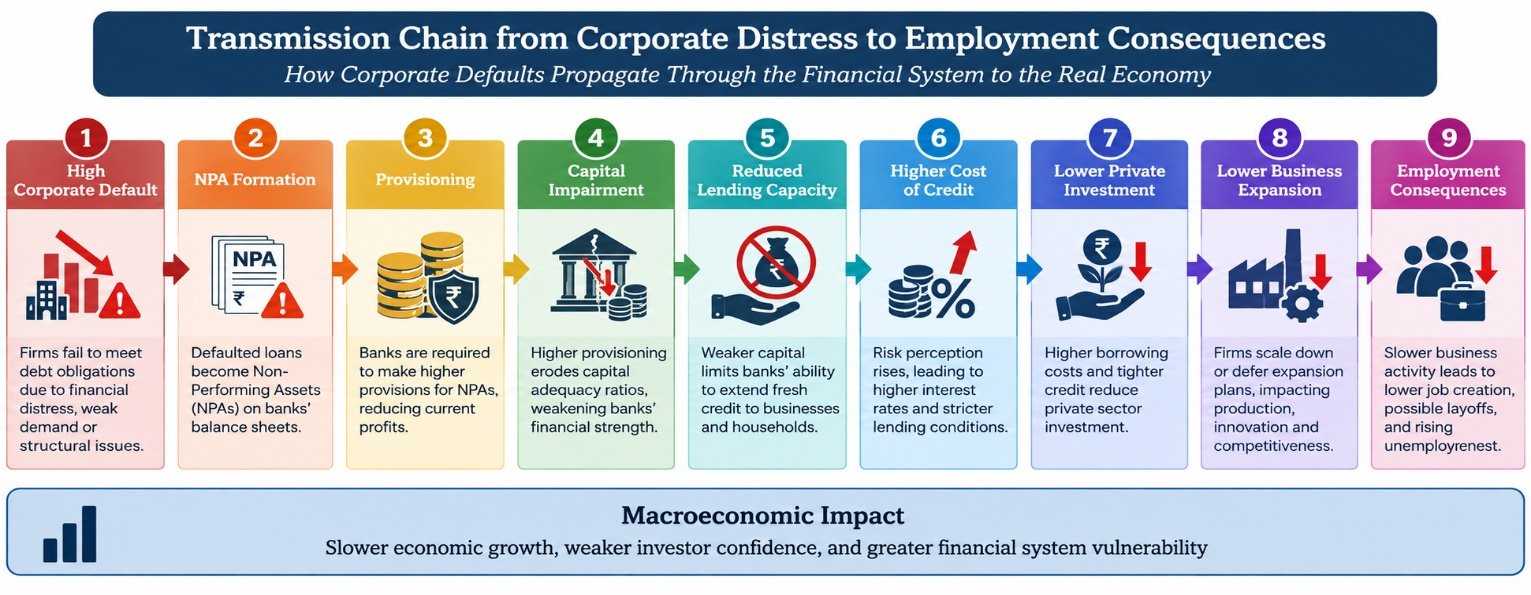
Figure 2: Transmission Chain from Corporate Distress to Employment Consequences.
B. Mechanism by Mechanism
1. Bank profitability: every haircut is, at the moment of recognition, a charge to profit; large haircuts compress net interest margins and require provisioning;
2. Capital adequacy: impaired assets consume regulatory capital; repeated haircuts erode the capital base precisely when credit discipline requires its strengthening;
3. Provisioning requirements: RBI norms require increasing provisions as assets deteriorate, compounding the earnings drag (Vikram & Jhunjhunwala, 2023);
4. Credit growth: capital-constrained banks ration credit, particularly to SMEs and to sectors perceived as risky;
5. Risk pricing: banks re-price risk upward after loss events, raising borrowing costs for all borrowers, including the solvent;
6. Future lending behaviour: repeated large haircuts breed conservative, some would say excessively cautious, credit cultures, with consequences for entrepreneurship (Fu et al., 2018).
The empirical literature is unambiguous that effective bankruptcy law matters for credit markets: the IBC reform strengthened the bargaining power of creditors, improved credit availability to distressed firms, lowered excessive leverage and financial distress, and is reflected in lower credit risk premia and a lower cost of debt capital (Bose et al., 2020; Rodano et al., 2016). The IMF has long emphasised that corporate debt restructuring must be accompanied by operational restructuring, because restoring corporate profitability is a precondition for new investment, access to bank credit, and economic growth (Shin, 2017; World Bank, 2018). Restructuring episodes, while painful in the short term, have typically been associated with more rapid growth afterwards through increased investment and capital productivity.
The Domino Effect: A Two-Sided Model
The original contribution of this section is to model haircuts not as isolated events but as nodes in two competing transmission networks.
A. The Adverse Pathway
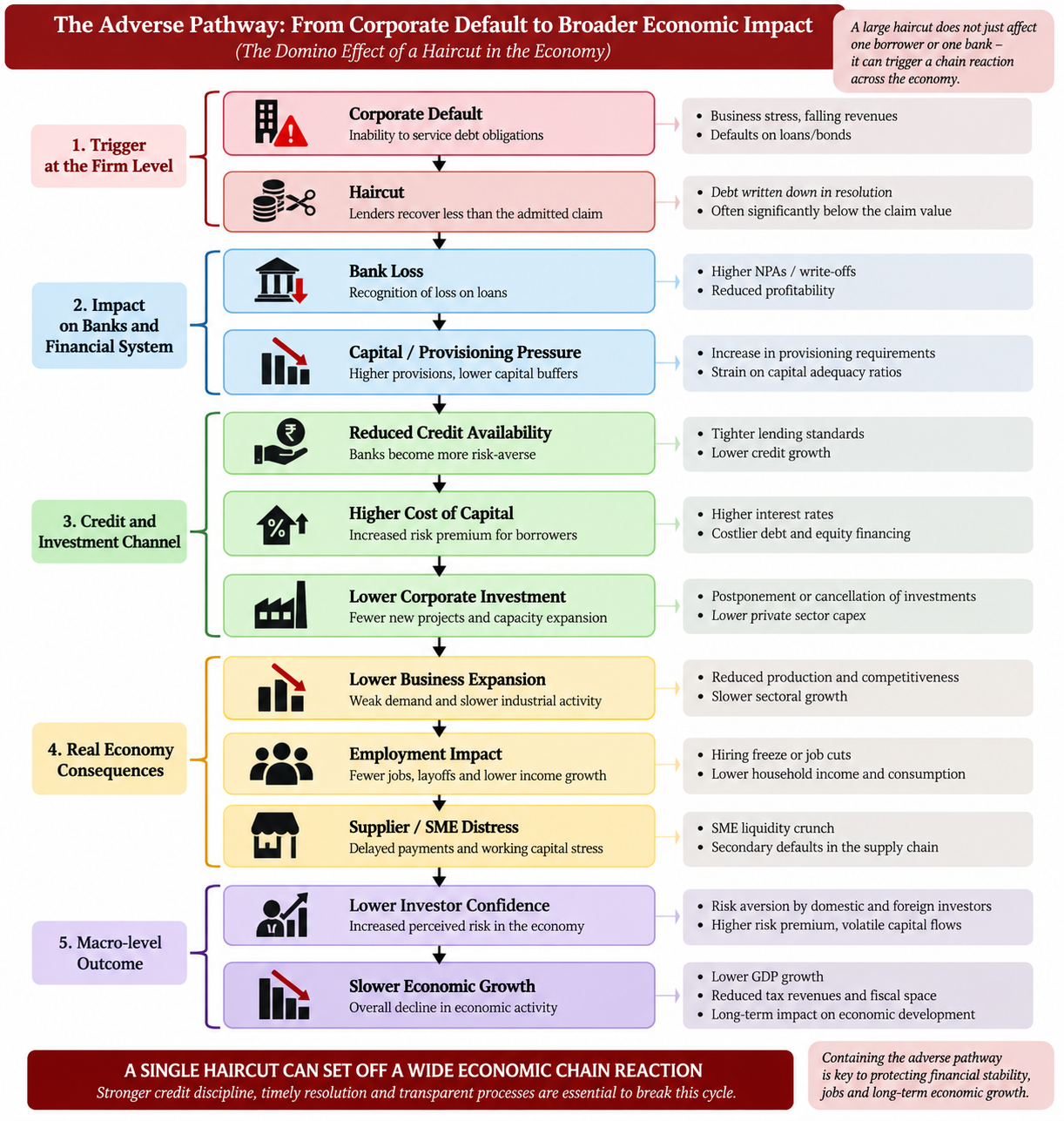
Figure 3: The Adverse Pathway.
B. The Benign Pathway
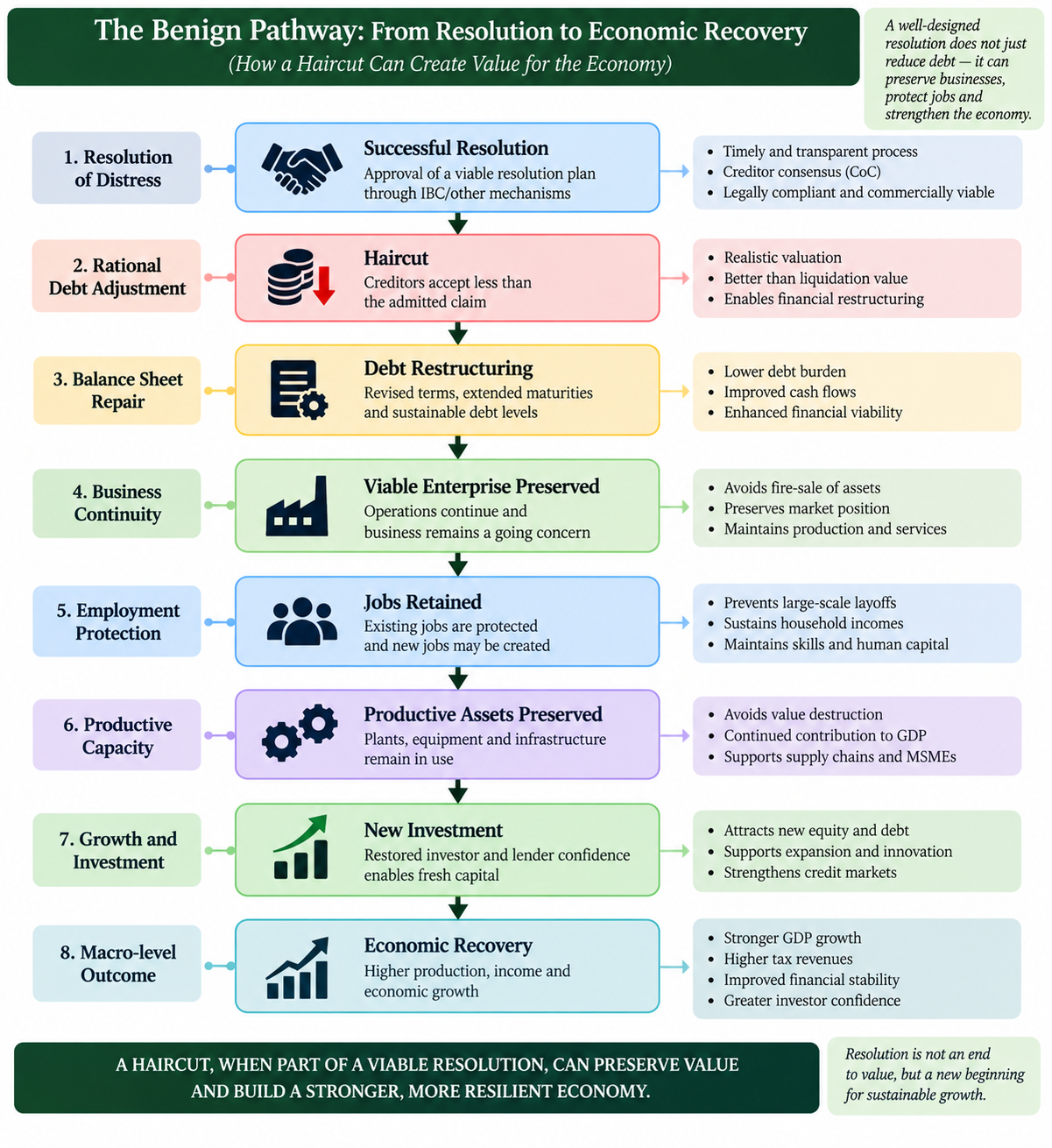
Figure 4: The Benign Pathway.
The policy significance of the two-sided model is that the same instrument, a negotiated write-down, can feed either network depending on the quality of the resolution. A haircut that buys a functioning enterprise, preserves jobs, and returns the firm to the credit market feeds the benign path; a haircut that merely extinguishes debt while assets are broken up, jobs lost, and suppliers destroyed feeds the adverse path. The task of insolvency law is to make the benign path the norm, which is precisely the objective structure that UNCITRAL’s Legislative Guide contemplates.
Impact on Employment
A. The Normative Question
Should insolvency law treat employment preservation as an independent value or merely as an incidental consequence of enterprise preservation? The question matters because the two can diverge: a resolution plan that maximises creditor recovery may involve plant closures, while a plan preserving employment may yield lower creditor returns.
B. The International Answer
UNCITRAL’s Legislative Guide on Insolvency Law expressly seeks a balance between resolving financial distress, protecting creditors, and addressing public-policy considerations including employment and taxation. It also recognises that an effective insolvency regime can preserve employment and increase credit availability (Kokorin, 2021; Tomasic, 2010). The Guide’s nine key objectives, namely certainty for market stability and growth; maximisation of asset value; balance between liquidation and reorganisation; equitable treatment of similarly situated creditors; timely, efficient and impartial resolution; preservation of the insolvency estate; transparency and predictability; recognition and enforcement of foreign insolvency proceedings; and fair treatment of creditors, supply the closest thing to an international consensus on the values an insolvency system must serve (Mevorach, 2009).
The Indian constitutional and statutory framework converges with this position: the IBC’s stated objective of revival of viable enterprises, read with the Directive Principles’ emphasis on securing a just social order, supports the proposition that the economic value of an insolvency resolution cannot be measured solely by creditor recovery. Employment is a measure of the social dividend of resolution. Aggregate Indian data showing approximately 163% recovery over liquidation value in resolved cases are the empirical counterpart: resolution on average preserves substantially more enterprise value, and therefore more employment, than the break-up alternative.
Impact on MSMEs and Supply Chains
A. Secondary Contagion
Corporate defaults ripple outward: large company default → unpaid MSME suppliers → working-capital shortage → secondary defaults → employee layoffs → further insolvencies. MSMEs occupy the most vulnerable node in the Indian supply chain because they typically extend informal trade credit, hold concentrated customer and supplier relationships, and have no access to capital markets as a buffer.
B. UNCITRAL’s Recognition
UNCITRAL specifically recognises that MSMEs can be particularly vulnerable because of limited working capital and concentrated customer and supplier relationships; the failure of one business can therefore cause failures elsewhere in the supply chain. This supply-chain insight directly supports the domino-effect thesis developed above: the social cost of a haircut cannot be computed at the level of the single debtor-creditor dyad, because the loss is transmitted through the productive structure of the economy.
The practical consequence for the Indian framework is that resolution rather than liquidation of systemically connected enterprises carries positive externalities that the CoC’s calculus, focused as it is on creditor returns, may underweight. This is an argument for institutionalising supply-chain impact as a consideration in plan evaluation, without diluting the CoC’s primary commercial mandate.
Investor Confidence and Credit Market Effects
A. The Investor Spectrum
Insolvency outcomes are priced differently by different classes of capital: domestic investors (whose exposure is primarily through bank and corporate-bond channels), foreign portfolio investors (who price jurisdiction risk continuously), foreign direct investors (who evaluate long-term legal certainty), institutional lenders (who underwrite recovery assumptions), and bond investors (who demand coupons that embed expected recovery). Each class reacts to the predictability of insolvency outcomes more than to any single haircut.
B. The Risk-Premium Connection
The central question, whether the prospect of a large haircut increases or decreases the risk premium demanded by investors, has a settled answer at the level of principle. UNCITRAL states that transparency and predictability in insolvency law enable lenders and creditors to assess insolvency risk and can promote lending and investment at lower risk premiums. The converse follows directly: unpredictable insolvency recovery → higher perceived risk → higher risk premium → more expensive capital, for everyone, not just for defaulting firms. The IMF makes the same point in the bank-credit context: a credible, effective insolvency framework restores access to credit for viable distressed firms and disciplines the credit market overall (Shin, 2017).
For India, the evidence cuts both ways. On one side, the IBC’s time-bound, creditor-driven design and its improving recovery data (36.6% in FY 2024–25) signal a maturing regime that should compress risk premia. On the other, headline episodes like the Subhash Chandra settlement and the perception, however imprecise, that guarantors can walk away from enormous liabilities for a token payment, feed exactly the kind of unpredictability that raises the cost of capital.
Comparative International Analysis
A comparison of six jurisdictions is preferable to a superficial survey of fifteen. The comparative method here is doctrinal (mechanisms and philosophy) plus indicative (recovery yardsticks), with an explicit methodological caution at the end.
A. United States: Chapter 11
Chapter 11 is the paradigmatic reorganisation regime: debtor-in-possession management, an automatic stay, debtor financing, classification of creditor classes, and the cramdown power permitting confirmation of a plan over creditor dissent (Aghion et al., 1992). Its philosophy is going-concern preservation: roughly 70% of large public companies seeking to survive through Chapter 11 succeed (McCormack, 2016), and among publicly traded firms entering bankruptcy in the United States, about four in five proceed under Chapter 11 rather than Chapter 7 (Corbae & D’Erasmo, 2020). S&P Global data indicate that 64.45% of U.S. corporate bankruptcy filings in the first half of 2024 were reorganisations, a continuing testament to the centrality of restructuring. The comparative question for India is whether Chapter 11’s debtor-led, court-supervised model distributes losses differently from the IBC’s creditor-led model, and whether the Indian system’s aggressive disenfranchisement of promoters (Section 29A) trades away entrepreneurial re-entry value that Chapter 11 preserves.
B. United Kingdom: Administration and Restructuring Plans
The UK framework centres on administration (a licensed insolvency practitioner, with a statutory purpose hierarchy culminating in rescuing the company as a going concern), Company Voluntary Arrangements, and the newer restructuring plans introduced by the Corporate Insolvency and Governance Act 2020, which permit cross-class cramdown (McCormack, 2016). The UK is traditionally pro-creditor, yet its administration regime is explicitly rescue-oriented. World Bank data placed UK recovery at approximately 85.4 cents per dollar under the standardised insolvency methodology (Puchakayala & Veluchamy, 2023).
C. Singapore: Judicial Management and Schemes
Singapore, now governed by the Insolvency, Restructuring and Dissolution Act 2018, deploys judicial management, schemes of arrangement, and enhanced restructuring tools (including super-priority rescue financing and cross-border recognition under the UNCITRAL Model Law). Its World Bank 2020 recovery figure was approximately 88.7 cents per dollar. Singapore’s relevance to India is structural: an Asian, common-law, creditor-protective jurisdiction that has nonetheless built an effective restructuring culture, and where Djankov-Hart-era data found only about 5% of the estate consumed by enforcement costs (Djankov et al., 2008).
D. Japan: Civil Rehabilitation and Corporate Reorganisation
Japan presents a striking contrast in philosophy: negotiated, bank-led restructuring conducted largely outside formal insolvency, supported by the Civil Rehabilitation Law and the Corporate Reorganisation Law. World Bank 2020 data put Japan’s recovery rate at approximately 91.8 cents per dollar, corroborated by cross-country research reporting that Japan’s insolvency regime delivers roughly 90 cents on the dollar to secured creditors. Japan demonstrates that an insider-oriented, relationship-banking culture can achieve high recoveries and preserve going concerns, a model worth considering for India’s own group-conglomerate economy.
E. Germany: Insolvency Code
Germany’s Insolvency Code is creditor-driven, with mandatory creditor assembly, a strong emphasis on creditor equality (par condicio creditorum), a discharge regime for debtors, and, following the EU Restructuring Directive, a new preventive restructuring framework. World Bank data put German recovery at approximately 79.8 cents per dollar. Germany’s lesson for India is that strict creditor orientation and enterprise preservation are compatible; the EU Directive adds a formal pre-insolvency restructuring tool that India’s informal, pre-IBC settlements only approximate.
F. India: The Comparative Puzzle
The World Bank’s older Doing Business methodology reported India’s recovery rate at 71.6 cents per dollar, above the South Asia average of 38.1 and marginally above the OECD high-income average of 70.2. But contemporary IBC outcome data tell a different story: the aggregate recovery measure for FY 2024–25 was 36.6%, and CIRPs yielding resolution plans had approximately 33% recovery against admitted claims through March 2025.
G. Why Do the Two Pictures Differ?
The resolution of this puzzle is methodological. The World Bank’s measure was a standardised hypothetical case involving a secured creditor, with time, cost, and outcome collapsed into a single comparable index; IBBI’s statistics are actual outcomes of real Indian insolvency cases across all creditor classes, measured against admitted claims (which include unsecured and operational debt). The two numbers must not be treated as equivalent. The genuine comparative finding is therefore not that “India recovers 33% against the world’s 80 to 90%”; it is that India’s actual haircuts are much larger than its standardised recovery index suggested, precisely because the IBC-era cases are dominated by legacy NPAs with thin realisable asset bases.
International Standards
A. UNCITRAL Legislative Guide on Insolvency Law
The UNCITRAL Legislative Guide is the nearest thing to a global constitution of insolvency law. Its key objectives include: certainty in the market to promote economic stability and growth; maximisation of the value of assets; a balance between liquidation and reorganisation; equitable treatment of similarly situated creditors; timely, efficient and impartial resolution; preservation of the insolvency estate; transparency and predictability with incentives for information-gathering; recognition of foreign proceedings; and fair treatment of creditors. The Guide also recognises that keeping an economically viable business together can produce greater value than breaking it into separate assets, and that an effective regime can preserve employment and enhance credit availability (Mevorach, 2009; Tomasic, 2010).
B. UNCITRAL Model Law on Cross-Border Insolvency
The Model Law addresses multinational insolvency through cooperation and coordination between jurisdictions rather than uniform substantive law, providing access, recognition, relief, and cooperation for foreign representatives and proceedings. India has not adopted the Model Law, a significant and identifiable reform gap. For India, whose economy hosts increasing cross-border enterprise groups, adoption and robust implementation of the Model Law would materially improve the predictability of recovery against multinational debtors and their personal guarantors, and directly address the asset-tracing deficits this paper identifies in the Indian framework.
A Comparative Table
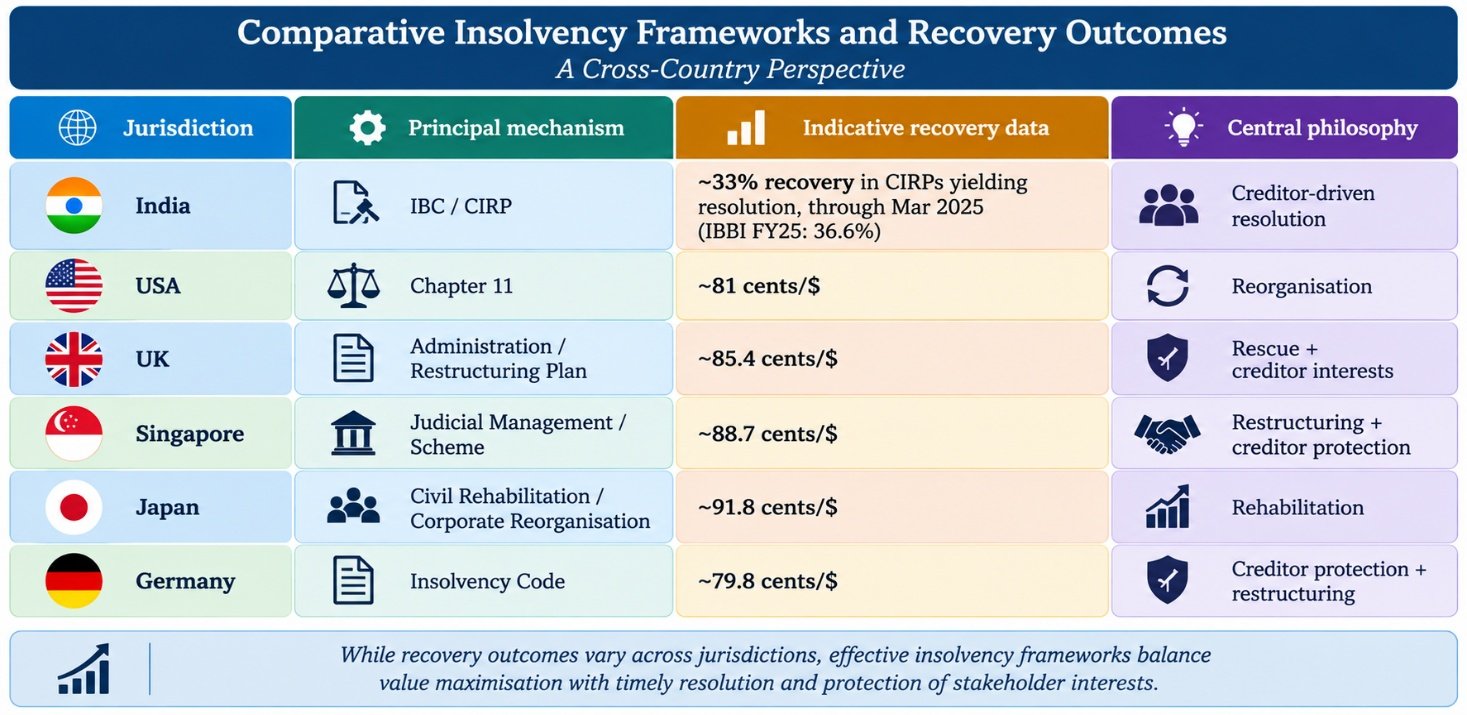
Figure 5: Comparative Insolvency Frameworks and Recovery Outcomes.
Methodological caveat: These figures are indicative and comparative, not directly comparable current national haircut rates, because methodologies and case assumptions differ. The World Bank measure calculates recovery for a standardised hypothetical secured-creditor scenario and incorporates time, cost, and outcome; the Indian IBC figures are real-world averages across all creditor classes against admitted claims. Cross-jurisdictional claims in this paper are therefore framed as philosophical and doctrinal comparisons, with the quantitative data presented strictly as indicative.
The Subhash Chandra Personal Guarantor Case Study
A. The Facts in their Legal Frame
The controversy concerns personal insolvency proceedings against Subhash Chandra as personal guarantor to loans advanced to corporate entities of the Essel and Zee group. The admitted claims against the guarantor stood at approximately ₹22,006 crore; the settlement proposed to be paid by the guarantor was approximately ₹6.25 to ₹6.5 crore, giving rise to the 99.97% “haircut” headline.
B. Deconstructing the 99.97% Figure
The figure is arithmetically accurate but analytically misleading in three respects. First, the admitted claim is the guarantee exposure, the aggregate of corporate debt guaranteed by him as recorded in the CIRP of the guarantor, not debt personally borrowed or consumed. Second, a guarantor’s liability is enforceable only to the extent of his personal assets; the claim and the recoverable estate are distinct quantities, and any settlement must be evaluated against the realisable value of the guarantor’s assets, not against the face value of the guarantee (Sinha, 2023). Third, the settlement must be read against the totality of recoveries available to the lenders: the resolution of the corporate debtors (which itself involved substantial recoveries) and any rights remaining against the principal borrowers. The guarantee is a backstop, not the primary source of repayment.
C. The Analytical Checklist
The case should be examined along the following axis:
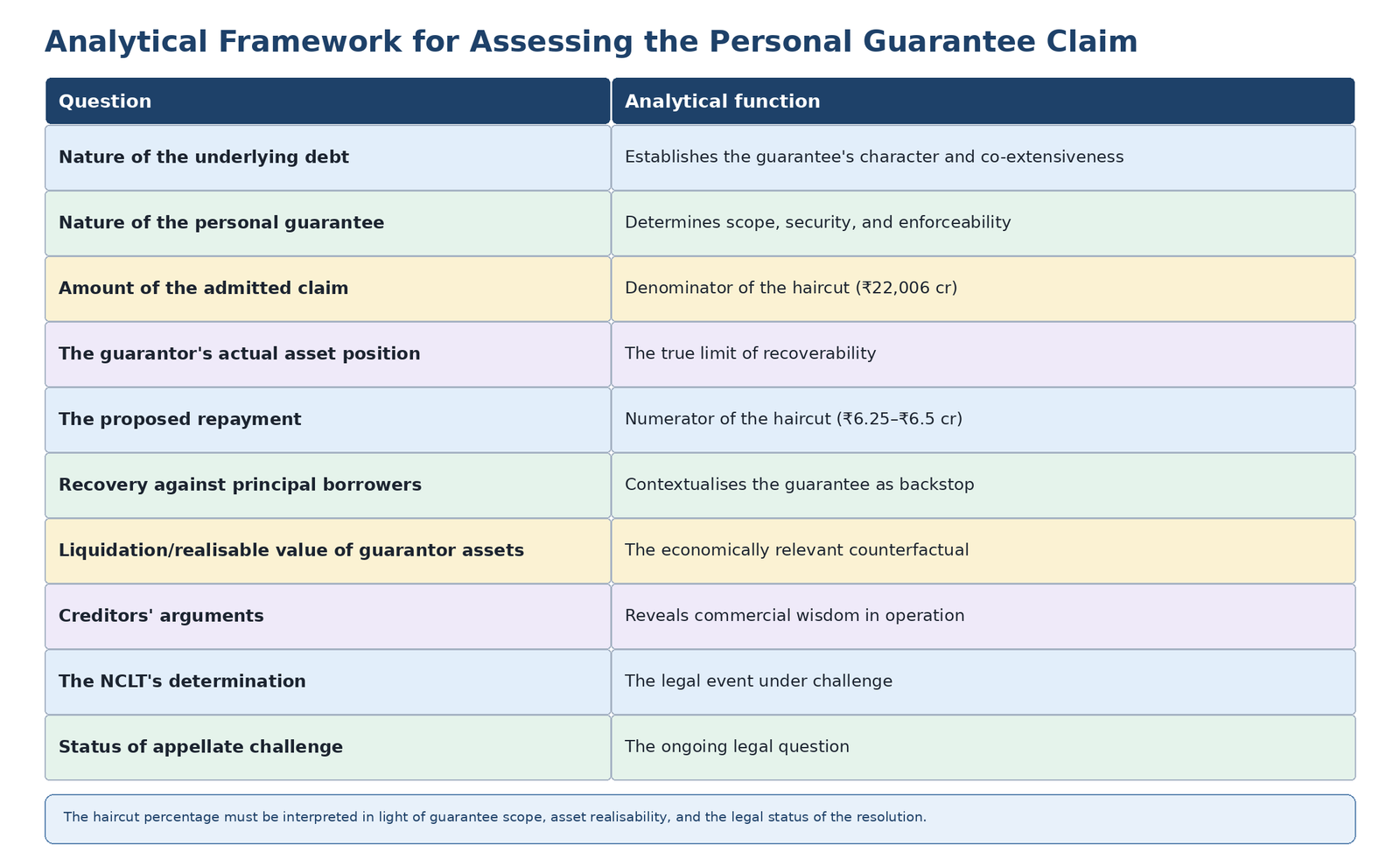
Figure 6: Analytical Framework for Assessing the Personal Guarantee Claim.
D. What the Case Does and Does Not Prove
The case is a genuine stress-test of four possible diagnoses:
• genuine inability to pay (wiped-out personal estate);
• inadequate asset tracing (failure to identify and attach the guarantor’s real assets, the most damaging hypothesis);
• creditor failure (lenders settling cheaply for NPA-resolution targets rather than maximising recovery);
• moral hazard (the settlement price of strategic default).
It is not, in itself, proof that “banks lost ₹22,000 crore”, because the claims against the guarantor were never realistically worth their face value, and because the relevant economic comparison is the settlement against the guarantor’s realisable estate plus remaining recoveries against principal borrowers. The danger of the 99.97% figure is precisely that it reduces a multi-layered insolvency structure to a single misleading percentage, the methodological sin this paper identifies throughout.
Moral Hazard
A. The Incentive Problem
If promoters know that creditors may ultimately accept very large haircuts, and that personal guarantees may settle for pennies on the rupee, does the insolvency framework create incentives for excessive borrowing or strategic default? The question must be asked across the incentive structure:
• Promoter incentives: the prospect of a cheap exit ex post weakens borrowing discipline ex ante; Section 29A’s disqualification regime is the statutory counterweight, but its effectiveness depends on enforcement;
• Creditor incentives: banks facing NPA-reduction targets may prefer quick settlement over value maximisation, a classic agency problem inside the lending chain;
• Bank management incentives: the tension between provisioning pain and resolution-time incentives;
• Resolution applicant incentives: bidders who acquire assets at deep discounts capture windfall gains where the estate was undervalued;
• CoC incentives: a committee dominated by financial creditors may systematically undervalue operational creditor and supply-chain interests (Pryor & Garg, 2020);
• Government and regulatory incentives: the political economy of public-sector bank balance sheets.
B. “Privatisation of Gains and Socialisation of Losses”
The paper does not merely assert this risk; it asks whether the Indian framework contains sufficient safeguards. The statutory answer is partly yes: Sections 43, 45, 49 and 50 claw back preferential, undervalued, fraudulent and extortionate transactions; Section 29A bars defaulting promoters from reacquiring control; and the personal-guarantor regime extends the reach of recovery to natural persons (Sahu, 2024; Shaji & M. L., 2025). The empirical answer is more cautious: the IMF’s work on burden-sharing and hardening budget constraints in corporate-debt crises is directly transferable to India, in that a comprehensive strategy must include proactive loss recognition, burden sharing, governance reform, and the hardening of budget constraints if restructuring is to avoid the de facto subsidy of default (International Monetary Fund, 2016). The unresolved Indian gap is enforcement intensity: asset tracing in personal-guarantor cases, and the audit of related-party transactions, remain the weakest links.
The Other Side: Why Haircuts May Be Economically Necessary
A. The Counterfactual Discipline
A creditor receiving ₹30 crore against a ₹100 crore claim looks, on a headline, to have suffered a catastrophe. But suppose the liquidation value was ₹15 crore and the resolution value ₹30 crore. Then the 70% haircut has doubled the creditor’s recovery compared with liquidation, and done so while the enterprise continues to operate. The recovery-over-liquidation-value metric (163% in aggregate Indian data) is the discipline that headlines lack.
B. The Full Social Dividend of Resolution
Resolution, as distinct from liquidation, may additionally: preserve jobs; retain productive assets in operation; maintain tax revenues; sustain suppliers; maintain competition (avoiding the exit of a market participant); and prevent fire-sale destruction of value. UNCITRAL explicitly recognises that keeping an economically viable business together can produce greater value than breaking it into separate assets (Tomasic, 2010). Where these benefits are real, the haircut is the price of a superior outcome, and the most economically literate reading of the Indian data is that a substantial proportion of IBC-era resolutions belong to this category.
When Does a Haircut Become Problematic? The Operationalised Five-Factor Haircut Test
The Five-Factor Test developed below is this paper’s principal original contribution. It converts the question “is this haircut too large?” from slogan into a falsifiable, factor-based instrument, by evaluating a haircut not by its size but along five dimensions, each with a measurable proxy, an objective threshold, and an evidentiary source.
A. Factor 1: Recovery Efficiency
Question: Does the resolution recover more than the liquidation counterfactual?
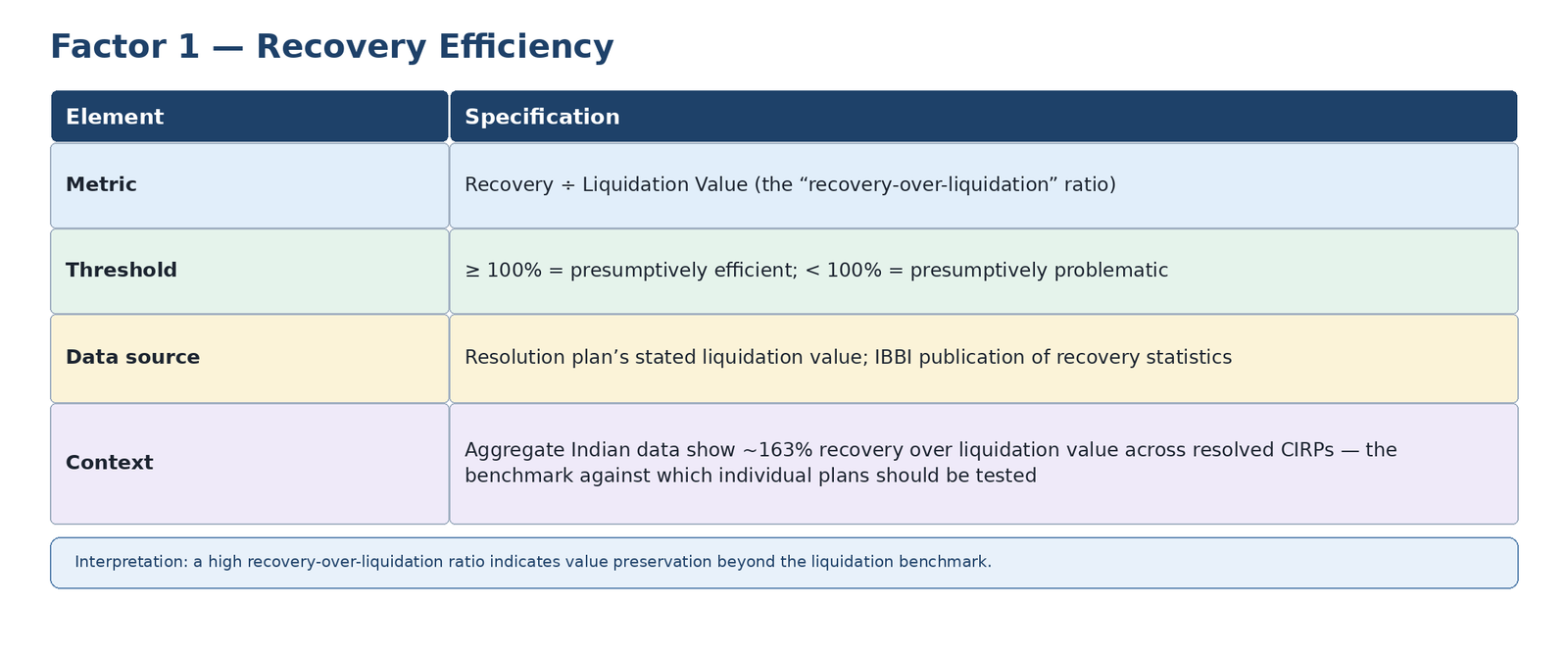
Figure 7: Factor 1 - Recovery against the liquidation counterfactual.
B. Factor 2: Time Efficiency
Question: How much going-concern value was consumed by delay?
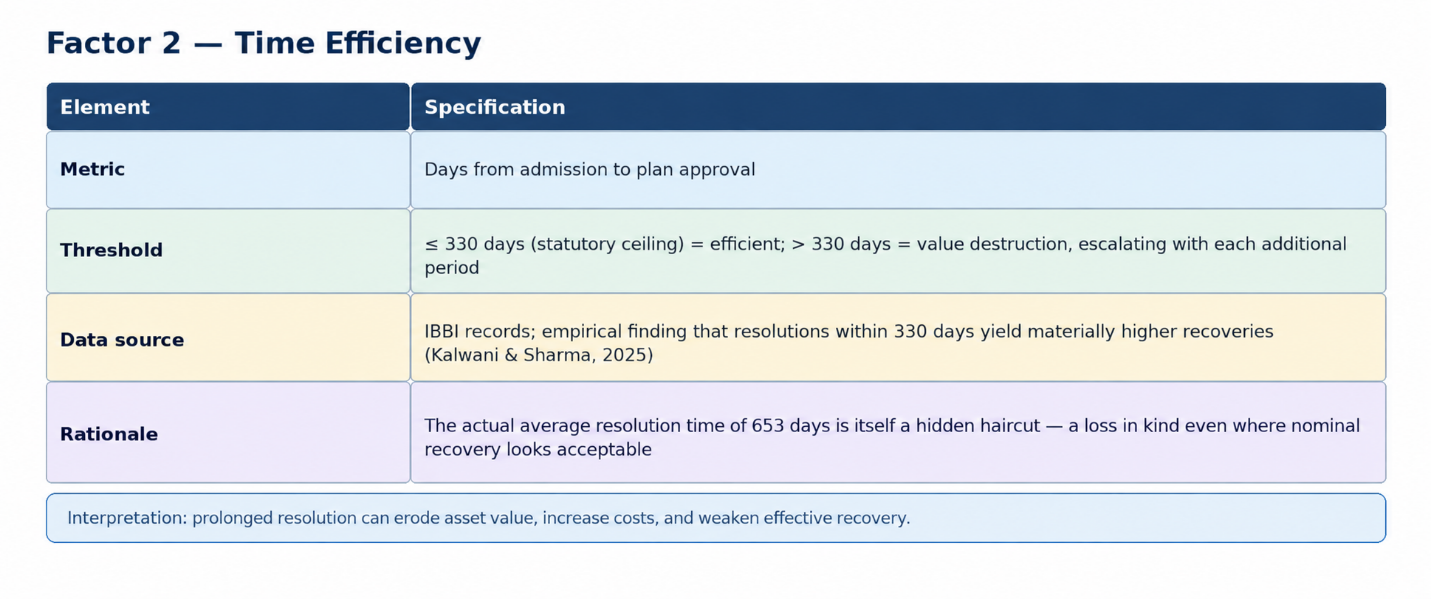
Figure 8: Factor 2 - Going-concern value consumed by delay.
C. Factor 3: Valuation Integrity
Question: Was the value against which the haircut was measured credible?
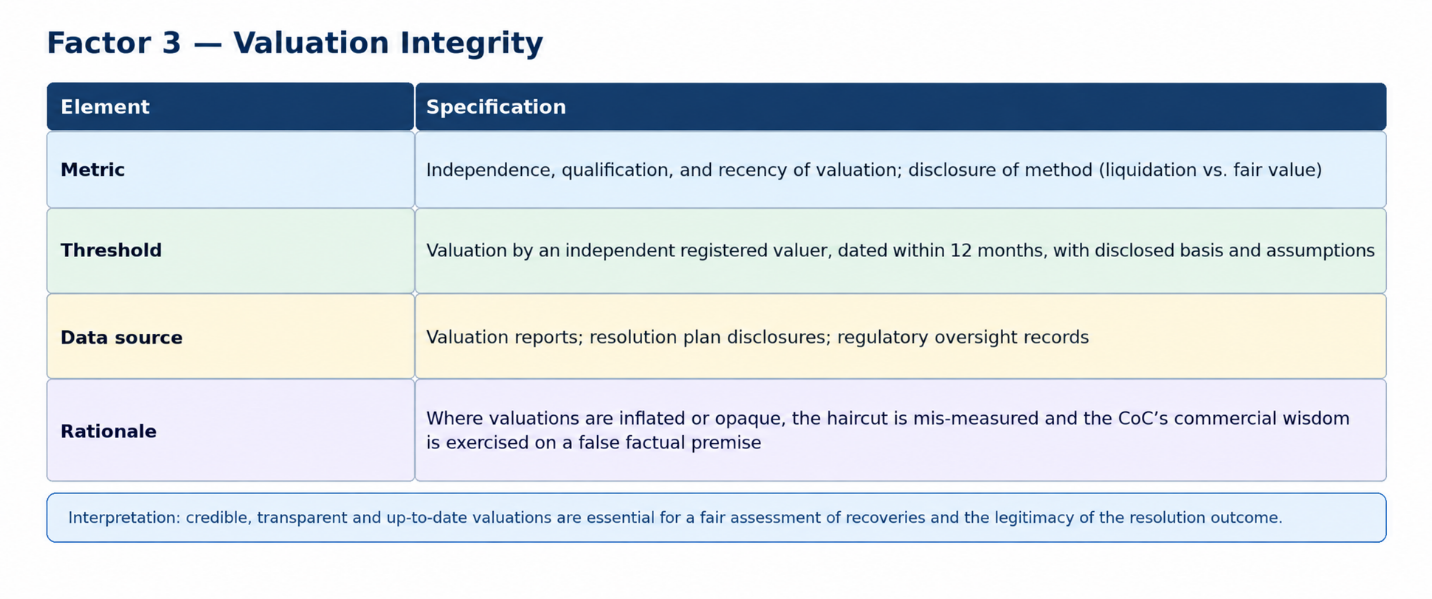
Figure 9: Factor 3 - Credibility of the value against which the haircut was measured.
D. Factor 4: Accountability
Question: Was value leakage investigated before losses were allocated?
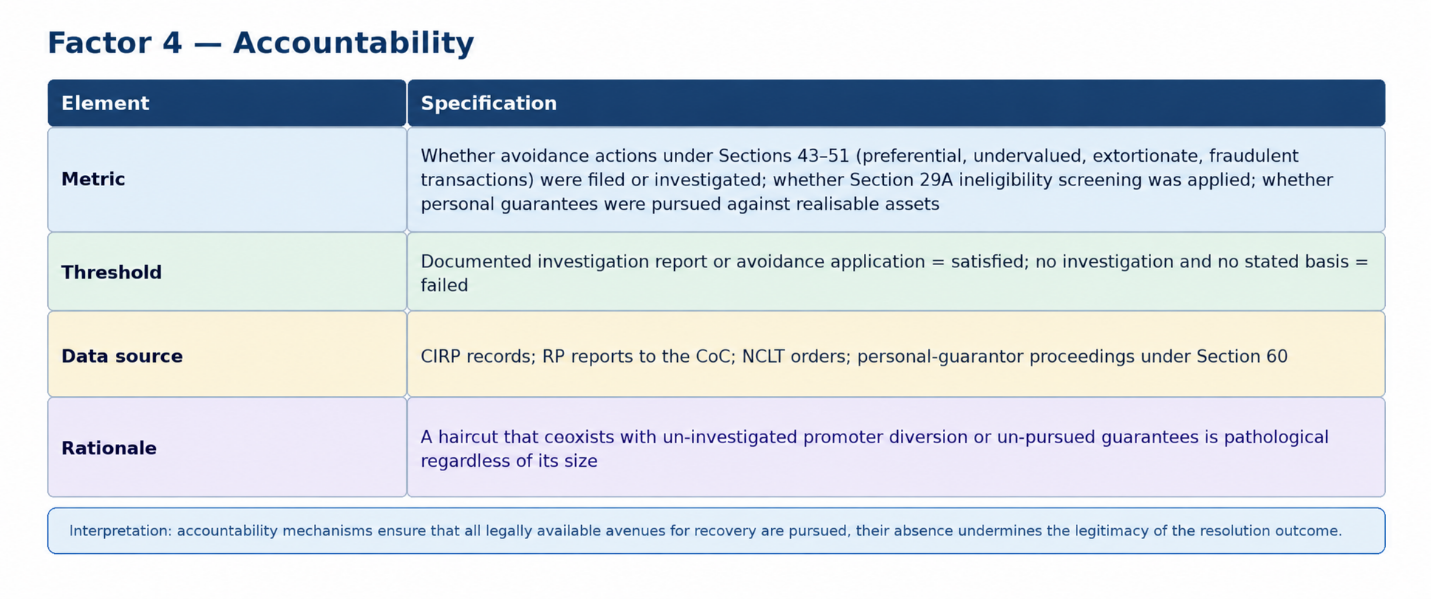
Figure 10: Factor 4 - Investigation of value leakage before loss allocation.
E. Factor 5: Economic Externalities
Question: How were the losses transmitted through the economy?
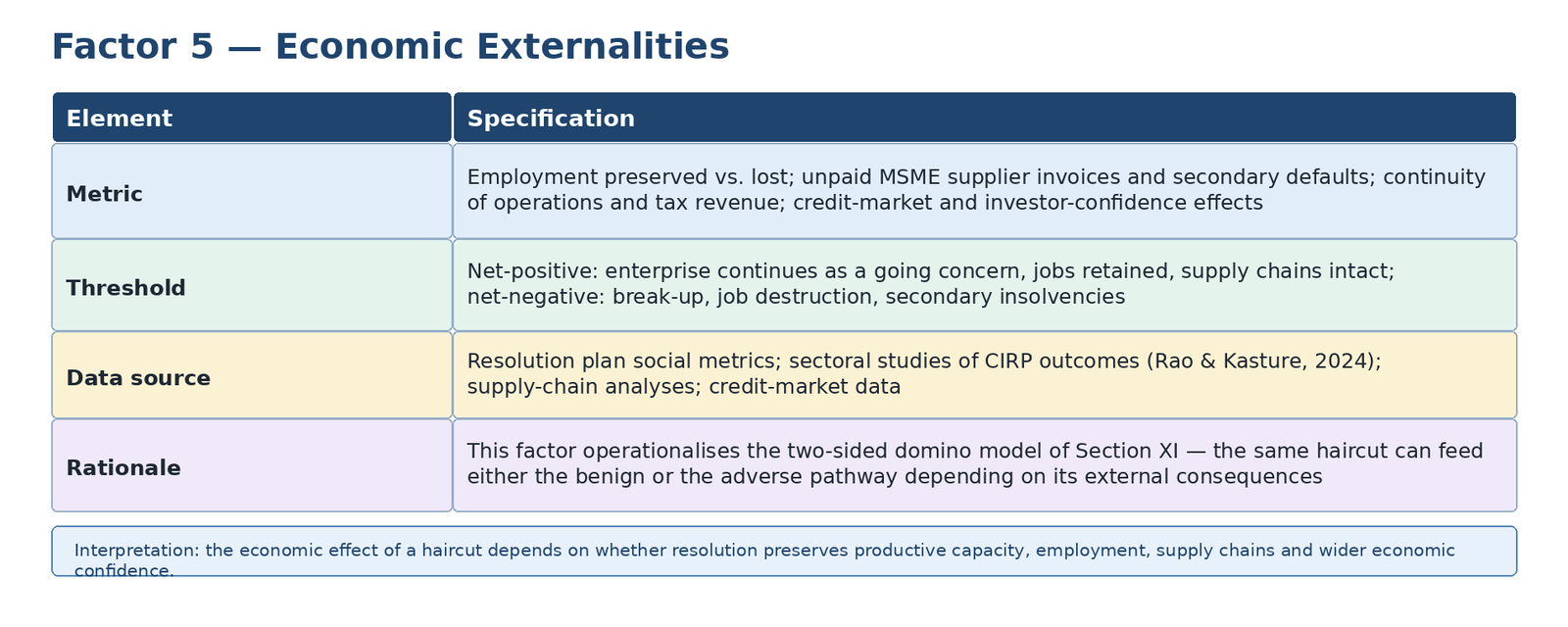
Figure 11: Factor 5 - Transmission of losses through the economy.
F. Application Protocol
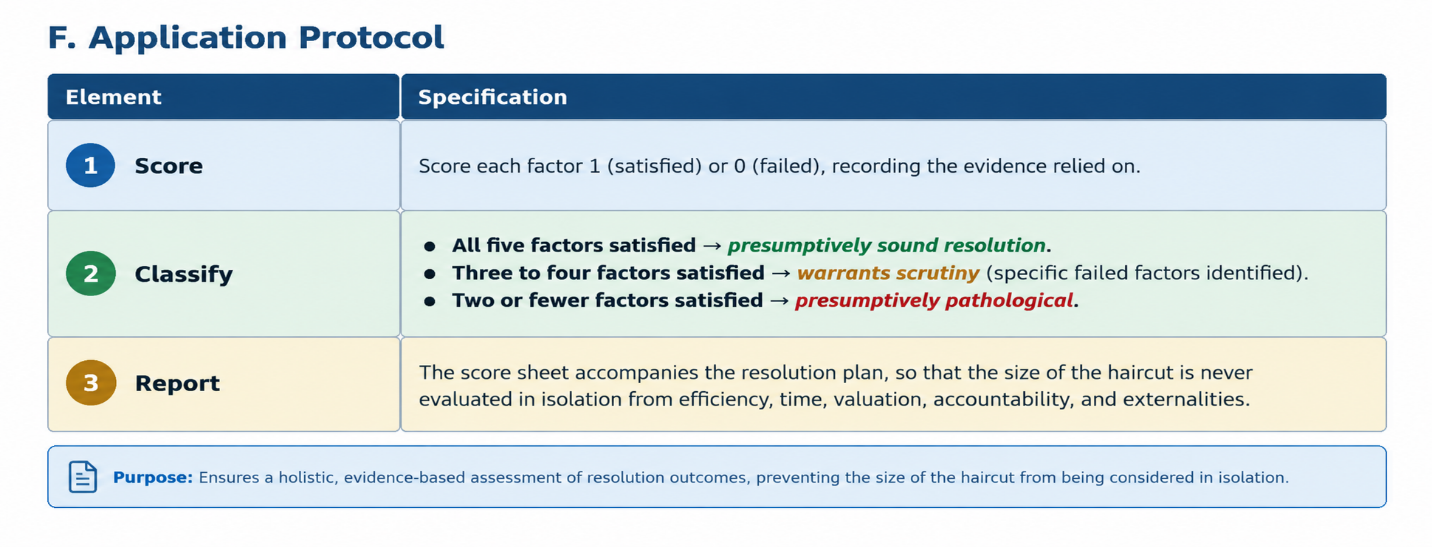
Figure 12: Application Protocol.
Illustration, the Subhash Chandra settlement: the test does not pre-judge the outcome; it directs the inquiry. Factor 2 (time efficiency) and Factor 4 (accountability) are the critical questions: whether the proceedings concluded within a reasonable period, whether asset-tracing against the guarantor’s realisable estate was exhausted, and whether recovery against principal borrowers was preserved. The 99.97% headline answers none of these questions; the test is designed to ensure they are asked.
Recommendations
1. Standardised disclosure of haircut data. Every approved resolution should disclose, in a template format: admitted claims (by class); liquidation value; fair value; resolution amount; recovery percentage; and recovery as a percentage of liquidation value. Comparable exposure of the recovery-over-liquidation-value statistic alongside the 67% haircut would materially upgrade the quality of public debate.
2. Separate reporting of promoter-guarantee recoveries. Aggregate IBC statistics should distinguish corporate-debt recoveries from personal-guarantor recoveries, preventing the sensationalised comparison between corporate claims and guarantor settlements that produced the 99.97% narrative.
3. Mandatory explanation for extreme haircuts. Where recovery falls below a specified threshold (for example, materially below the sector-average recovery-over-liquidation benchmark), the resolution plan should be accompanied by a reasoned explanation addressing the Five-Factor Test.
4. Stronger asset-tracing mechanisms, particularly in personal-guarantor cases, leveraging the statutory machinery now available under Section 60 and the individual-insolvency provisions, with access to banking, property, and beneficial-ownership records (Anand, 2024; Shaji & M. L., 2025).
5. Greater transparency of valuation reports: full disclosure to the CoC and, in sanitised form, to the public, without compromising commercially sensitive information.
6. Better integration of corporate and personal insolvency proceedings, and a structured framework for group insolvency; the IL&FS and Videocon experiences demonstrate the systemic cost of fragmented, entity-by-entity resolution (Kokorin, 2021; Pandey & Gopalan, 2025).
7. Early restructuring. The single most effective haircut-reduction tool is preventing value destruction before formal insolvency, through pre-packaged resolution, fast-track CIRP, and incentives for out-of-court restructuring timely invoked (McCormack, 2016).
8. Stronger protection against strategic default: rigorous enforcement of avoidance provisions and disqualification (Section 29A), without undermining the protection that genuine business failure and entrepreneurship deserve under a well-functioning insolvency system (Fu et al., 2018).
Conclusion
Are haircuts destroying value or saving value? The answer this paper defends is that neither proposition is universally correct. A haircut is not a moral category; it is an instrument of value allocation, the legal and financial mechanism through which an insolvent estate’s insufficiency is distributed among its claimants.
A haircut becomes economically efficient when it maximises recoverable value, preserves viable enterprises, reduces systemic disruption, and distributes losses according to a transparent and legally defensible framework. The aggregate Indian record, an approximate 67% haircut coexisting with an approximate 163% recovery over liquidation value, an improving recovery rate of 36.6% against 28.3%, and double-digit outperformance of SARFAESI, the Debts Recovery Tribunals and Lok Adalats, demonstrates that the IBC has converted insolvency from a chronic, opaque, multi-year value destroyer into a transparent, time-bound process that, on average, recovers substantially more than the liquidation counterfactual.
A haircut becomes problematic when it reflects avoidable delay, weak credit appraisal, inadequate asset tracing, manipulation, poor valuation, strategic default, or an opaque transfer of losses to banks and ultimately to society. The Subhash Chandra controversy is best understood as a test of that second proposition, a reminder that the percentage headline tells us little until the Five-Factor Test is applied to the underlying facts: realisable assets, remaining recovery routes, valuation integrity, accountability, and the human and economic externalities transmitted through the banking, credit, investment, employment, and productive sectors.
The central thesis stands: the true cost of an insolvency haircut cannot be measured by the percentage of debt written down; it must be assessed by examining who ultimately bears the loss and the consequences transmitted through the economy. Measured that way, India’s insolvency regime has not failed, but its next reform phase must close the gaps in asset tracing, valuation transparency, and systemic accountability that episodes like Subhash Chandra expose. That, and not the size of any single haircut, is the measure of the regime’s success.
*****