

Introduction
When employees voluntarily leave their jobs, organizations lose not only human resources but also the knowledge, skills, and capabilities accumulated through experience, potentially undermining organizational competitiveness and overall performance.[1] In the public sector, high turnover rates can disrupt service continuity, reduce organizational effectiveness, and weaken the quality of public service delivery.[2] Consequently, employee turnover has attracted considerable attention from management scholars[3] and remains one of the most extensively studied forms of withdrawal attitudes.[4]
Employee turnover represents more than a reduction in workforce size; it also signifies the loss of strategic investments made through competency development and work experience. When organizations lose employees they intend to retain, they incur substantial costs, including separation, recruitment, and training expenses, as well as productivity losses.[5] Furthermore, turnover generates a range of adverse organizational consequences, such as increased economic costs associated with employee replacement, reduced productivity, disruptions in service quality, missed organizational opportunities, greater administrative burdens, and declining morale among remaining employees.[6]
A growing body of literature suggests that employees’ perceptions of fairness contribute positively to a variety of important organizational outcomes. Folger and Cropanzano argued that distributive injustice may lead employees to reduce their performance, engage in withdrawal behaviours, cooperate less with colleagues, lower the quality of their work, commit theft, and experience stress.[7] Similarly, procedural injustice has been associated with lower organizational commitment, increased deviant behaviours including theft, stronger intentions to leave the organization, poorer job performance, and reduced voluntary employee behaviours.
Previous studies have consistently demonstrated a relationship between employees’ intentions to leave and their perceptions of organizational fairness. Dailey and Kirk identified distributive justice and procedural justice as antecedents of job dissatisfaction and turnover intention.[8] Exmeyer and Jeon highlighted organizational justice as a key determinant of employees’ decisions to remain with or leave an organization.[9] Lambert and colleagues found that both distributive justice and procedural justice were significantly and negatively associated with turnover intention.[10] Likewise, Alyahya and colleagues reported that procedural justice and interactional justice negatively influenced turnover intention.[11]
Aldarmaki and Kasim recommended that policymakers pay greater attention to organizational justice as a means of reducing turnover intention, and called for more research in the public sector, where existing evidence remains limited compared with the private sector.[12] This paper synthesizes empirical evidence on the relationship between organizational justice and turnover intention in public sector organizations through a Systematic Literature Review (SLR). The review examines the various dimensions of organizational justice, the contexts in which studies have been conducted, and the mediating and moderating variables identified in the literature. By integrating existing findings, this study seeks to provide a more comprehensive understanding of the current state of research and to identify directions for future investigation.
Theoretical background: organizational justice and turnover intention
Employee turnover has become an increasingly important organizational issue and has attracted substantial scholarly attention over the past decades.[13] Hom and Griffeth defined turnover intention as an individual’s conscious and deliberate willingness to voluntarily and permanently leave an organization.[14] Similarly, Tett and Meyer described turnover intention as an individual’s conscious and intentional desire to leave an organization.[15] Lacity and colleagues defined turnover intention as the extent to which an employee plans to leave the organization.[16] Within the framework of the Theory of Reasoned Action proposed by Fishbein and Ajzen, turnover intention can be understood as an individual’s behavioural intention, or conation, to resign from their organization.[17] Previous studies have consistently shown that high employee turnover is associated with lower organizational performance and increased organizational costs.[18]
Meta-analytic evidence suggests that perceptions of fairness constitute a significant determinant of turnover intention.[19] Hur and Abner found that public sector employees were less likely to leave their organizations when they were involved in decision-making processes, perceived workplace procedures as fair, and were satisfied with performance evaluation systems.[20] Similarly, Kim and Kao reported that perceptions of fairness and organizational policies exerted a relatively stronger influence on turnover intention than many other organizational factors.[21]
The concept of fairness within organizational settings is commonly referred to as organizational justice. Greenberg defined organizational justice as employees’ perceptions of fairness regarding organizational decision-making processes and the distribution of organizational resources.[22] Concerns about fairness are reflected in various aspects of employees’ work experiences.[23] Employees not only evaluate the fairness of outcomes such as pay, rewards, promotions, and conflict resolutions, commonly referred to as distributive justice,[24] but also assess the fairness of the procedures used to determine those outcomes, known as procedural justice.[25]
Beyond outcomes and procedures, employees also evaluate the quality of interpersonal treatment they receive from supervisors and organizational authorities, a dimension referred to as interactional justice.[26] Together, these dimensions form the broader construct of organizational justice, which reflects employees’ overall perceptions of fairness within an organization. Greenberg subsequently proposed a four-factor model by separating interactional justice into interpersonal justice and informational justice.[27] Interpersonal justice refers to the extent to which employees are treated with dignity, respect, and courtesy, whereas informational justice concerns the provision of relevant, adequate, and truthful explanations, including the quality of communication between supervisors and subordinates. Empirical evidence provided by Colquitt demonstrated that the four-dimensional model offers a better fit than alternative two- or three-factor conceptualisations of organizational justice.[28]
Research questions
Although the relationship between organizational justice and turnover intention has been extensively examined, most existing studies have focused on private-sector organizations, and empirical evidence from the public sector remains relatively limited. This study therefore addresses the following research question: how does organizational justice relate to turnover intention in public sector organizations?
IV. Purpose of the study
This study systematically reviews empirical studies examining the relationship between organizational justice and turnover intention in public sector organizations published between 2016 and 2026. The ten-year period was selected for several reasons. First, the last decade has witnessed substantial developments in public sector human resource management, including bureaucratic reforms, talent management initiatives, employee retention strategies, and the increasing adoption of performance-oriented management systems. Second, focusing on recent studies ensures that the synthesised evidence reflects contemporary organizational conditions and workforce expectations, thereby enhancing the practical relevance of the findings.
Research Methods
A. Inclusion Criteria
Articles were considered eligible for inclusion in this systematic literature review if they met the following criteria: they were published between 2016 and 2026; they examined the relationship between organizational justice and turnover intention; and they were conducted within public sector organizations.
B. Search Strategy
The literature search was conducted using the Scopus database to identify relevant studies published between 2016 and 2026. A structured search query was developed to capture studies examining the relationship between organizational justice and turnover intention. The search was performed using the following query:
TITLE-ABS-KEY ((“organizational justice” OR “procedural justice” OR “distributive justice” OR “interactional justice” OR “informational justice” OR “interpersonal justice”) AND (“turnover intention” OR “intention to leave” OR “intention to quit”))
This search strategy was designed to encompass both the overall construct of organizational justice and its individual dimensions, while simultaneously capturing the most commonly used terms referring to employees’ intentions to leave an organization.
C. Data Collection and Analysis
All articles retrieved from the Scopus database were screened according to the predefined inclusion and exclusion criteria. The literature search was conducted by the first author (MIF), who performed the database search using the specified search query. Subsequently, both authors (MIF and LMJ) independently reviewed the identified articles to assess their eligibility for inclusion in the review.
The selection process began with the identification of articles through the predefined search query. An initial screening was then conducted using the keywords “public” and “government” to identify studies potentially relevant to the public sector context. Articles that passed the initial screening were further assessed through abstract review to ensure their relevance to the research topic, namely the relationship between organizational justice and turnover intention in public sector organizations. Studies meeting these criteria were subsequently subjected to a full-text review. Any discrepancies regarding study eligibility were discussed by both authors until a consensus was reached.
For each eligible article, the following information was extracted: author(s), year of publication, country of study, organizational context, sample size, research design, and findings related to the relationship between organizational justice and turnover intention. The extracted data were analysed descriptively and synthesised to identify research patterns, study characteristics, conceptualisations of organizational justice, and developments in the literature. The processes of identification, screening, eligibility assessment, and study inclusion were conducted in accordance with the Preferred Reporting Items for Systematic Reviews and Meta-Analyses (PRISMA) guidelines.
Findings
A. Results of the Search
The article identification and selection process is illustrated in Figure 1. The literature search conducted in the Scopus database using the predefined search terms yielded 239 articles. An initial screening of abstracts was subsequently performed using the keywords “public” and “government,” resulting in 48 articles potentially relevant to the research topic. In the next stage, the abstracts of these 48 articles were reviewed to assess their relevance to the study focus, namely the relationship between organizational justice and turnover intention within public sector organizations. This screening process identified 22 articles that met the criteria for further assessment through a full-text review. Following the full-text assessment, eight articles were excluded: one article was inaccessible in its full-text form, one study employed a mixed sample of public and private sector employees, and six articles did not focus on public sector organizations. Consequently, 14 articles met all inclusion criteria and were included in this systematic literature review.
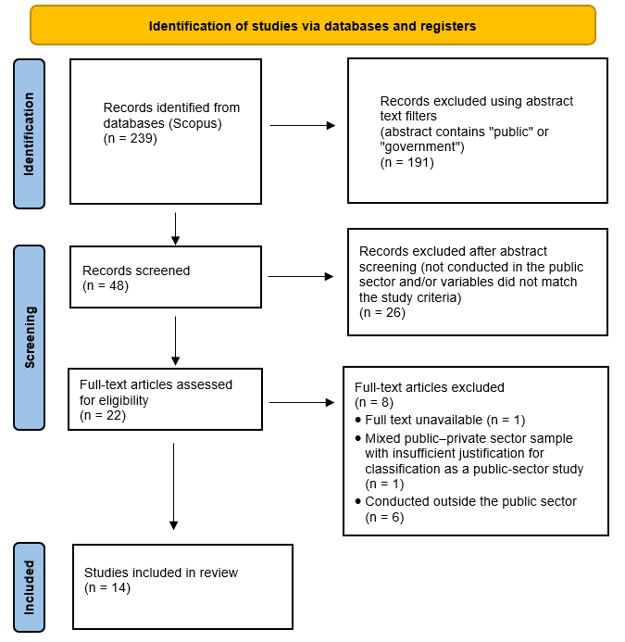
Figure 1. Literature search process for the identification of studies.
B. Included Studies
Table 1 summarises the 14 studies that met the inclusion criteria and were included in this systematic literature review. The table presents information on the authors, year of publication, research setting, sample size, study design, and key findings of the reviewed studies. Of the 14 studies analysed, the majority employed a cross-sectional design, while one study used an experimental scenario-based survey design and another adopted a mixed-methods approach. The included studies examined organizational justice either as a unidimensional construct or as a multidimensional construct encompassing distributive justice, procedural justice, interactional justice, interpersonal justice, and informational justice.
Table 1. Summary of included studies.
|
Authors |
Year | SJR | Study Setting | Sample | Study Design | Results |
|
Al Muala I.; Al-Ghalabi R.R.; Alsheikh G.A.A.; Hamdan K.B.; Alnawafleh E.A.T. |
2022 | Q4 | Public hospitals in Amman, Jordan | 370 public hospital nurses | Cross-sectional quantitative study using a self-administered questionnaire | Organizational justice reduces turnover intention through the mediating roles of employee satisfaction and well-being. |
| Aldarmaki O.; Kasim N.B. | 2019 | Q4 | Public-sector police personnel in Abu Dhabi, UAE | 101 public-sector police personnel | Cross-sectional quantitative study using questionnaires and stratified sampling |
Organizational justice reduces turnover intention. Interactional and distributive justice have significant effects, whereas procedural justice is not significant. Quality of work life mediates the relationship. |
|
Alimansyah M.; Takahashi Y. |
2023 | Q2 | Directorate General of Taxes (DGT), Ministry of Finance, Indonesia | 748 public-sector employees | Quantitative experimental scenario-based survey with causal mediation analysis | Perceived distributive and procedural justice mediate the relationship between talent management and employee outcomes. Higher justice perceptions increase affective commitment and job satisfaction while reducing intention to leave. |
| Exmeyer P.C.; Jeon S.H. | 2025 | Q1 | Full-time federal civil servants in independent federal agencies, United States | 33,138 federal employees (from 99,369 invited) | Cross-sectional quantitative study using the 2021 Merit Principles Survey and stratified random sampling |
Organizational justice negatively affects turnover intention. Higher perceptions of organizational justice increase employees’ likelihood of remaining and reduce intentions to leave. |
|
Mengstie M.M. |
2020 | Q1 | Public and private hospitals in Bahir Dar and Gondar, Ethiopia | 187 healthcare workers (127 public, 60 private) | Mixed-method convergent parallel design (cross-sectional survey and qualitative interviews) | Organizational justice negatively affects turnover intention. Distributive justice is the strongest predictor compared with other dimensions. |
| Mohamad A.R.; Ali K.; Noor K.M. | 2025 | Q3 | Ten public hospitals in the Klang Valley, Malaysia | 380 permanent public hospital physicians | Cross-sectional quantitative study using SEM-AMOS |
Distributive justice negatively affects turnover intention directly and indirectly through organizational citizenship behaviour (OCB). Positive reciprocity strengthens the distributive justice–OCB relationship. |
|
Moon K.-K.; Lim J.; Kim J.-S. |
2024 | Q1 | Central and local government employees, South Korea | 6,170 public-sector employees | Cross-sectional quantitative study using the Korean Public Employee Perception Survey 2022 and a moderated stereotype logistic model | Distributive, procedural, and interactional justice reduce turnover intention. Generational differences strengthen the effect of procedural justice among Generation MZ employees. |
| Moon K.-K.; Lim J. | 2026 | Q1 | Central and local government employees, South Korea | 4,339 public-sector employees | Cross-sectional quantitative study using ordered logistic and OLS regression |
Distributive justice negatively affects turnover intention, whereas goal clarity has no direct effect. Transactional leadership moderates the distributive justice relationship; transformational leadership moderates the goal-clarity relationship. |
|
Oh S.S.; Byeon J.H.; Jung H.; Oh J. |
2026 | Q1 | Central and local government employees, South Korea | 16,747 government employees | Quantitative study using pooled cross-sectional data (2021–2023) | Public service motivation (PSM) reduces turnover intention. Distributive and interactional injustice increase it, while organizational injustice moderates the effect of PSM. |
| Raza M.A.; Ul Hadi N.; Mujtaba B.G. | 2022 | Q3 | Government service-sector employees, Pakistan | 363 government employees | Cross-sectional quantitative study with moderation regression analysis |
Procedural justice negatively affects employee turnover intention. Islamic work ethics and trust in leader moderate the relationship by reducing turnover intention when procedural justice is low. |
|
Supi; Noermijati; Wirawan Irawanto D.; Puspaningrum A. |
2023 | Q2 | Directorate General of Taxes (DGT), Indonesia | 397 DGT employees | Cross-sectional quantitative study using PLS-SEM | Perceived distributive justice and perceived organizational support mediate the effect of talent management practices on turnover intention; increases in both reduce turnover intention. |
| Yang T.; Jin X.; Shi H.; Liu Y.; Guo Y.; Gao Y.; Deng J. | 2021 | Q1 | Nurses in public hospitals, China | 718 public hospital nurses | Cross-sectional quantitative study using SEM and moderated mediation analysis |
Distributive justice negatively affects turnover intention and mediates the occupational stress–turnover intention relationship. Regional role moderates the distributive justice relationship. |
|
Yusoff N.A.; Yusliza M.Y.; Saputra J. |
2022 | Q3 | Five Malaysian public research universities | 277 academic staff | Cross-sectional quantitative study using regression analysis | Procedural justice negatively affects turnover intention. Among job embeddedness dimensions, only sacrifice negatively affects turnover intention; personality does not moderate. |
| Yusoff N.A.; Yusliza M.Y.; Saputra J.; Muhammad Z. | 2021 | Q3 | Five Malaysian public research universities | 277 academic staff | Cross-sectional quantitative study using regression analysis |
Procedural justice negatively affects turnover intention. Lower perceptions of fairness in decision-making increase academic staff’s intention to leave. |
C. Location and Setting
The reviewed studies were conducted across a diverse range of countries, including Jordan (Al Muala and colleagues), the United Arab Emirates (Aldarmaki and Kasim), Indonesia (Alimansyah and Takahashi; Supi and colleagues), the United States (Exmeyer and Jeon), Ethiopia (Mengstie), Malaysia (the two Yusoff studies and Mohamad and colleagues), South Korea (Moon and colleagues; Moon and Lim; Oh and colleagues), Pakistan (Raza and colleagues), and China (Yang and colleagues).[29] The geographical distribution indicates that research on organizational justice and turnover intention in the public sector has been conducted across both developed and developing countries.
The studies encompassed a variety of public sector settings. Several focused on government agencies, including the Directorate General of Taxes in Indonesia, federal government agencies in the United States, government organizations in South Korea, and public service organizations in Pakistan.[30] In addition, one study examined employees in a public-sector police organization in the United Arab Emirates.[31] The healthcare sector was represented by studies involving public hospital nurses in Jordan, healthcare workers in Ethiopia, public hospital doctors in Malaysia, and public hospital nurses in China.[32] Meanwhile, the higher education sector was represented by studies conducted among academic staff at Malaysian public research universities.[33]
D. Participants
All participants included in the reviewed studies were employees working in public sector organizations. The samples comprised government employees, federal employees, police personnel, academic staff at public universities, public hospital physicians, nurses, and other healthcare professionals.
E. The Relationship Between Organizational Justice and Turnover Intention
The 14 reviewed studies revealed three main patterns in the relationship between organizational justice and turnover intention. First, three studies examined organizational justice as an independent variable directly influencing turnover intention.[34] Second, seven studies investigated the relationship by incorporating mediating or moderating variables.[35] Finally, four studies positioned organizational justice as a mediating variable linking other antecedents to turnover intention.[36]
Of the remaining eleven studies, organizational justice was examined alongside various mediating or moderating variables. Interestingly, no single mediator or moderator appeared consistently across multiple studies. Instead, each study tended to introduce distinct explanatory mechanisms, including employee silence, workplace bullying, and work stress; quality of working life; generational differences; organizational citizenship behaviour and a personal norm of reciprocity; goal clarity and leadership styles; Islamic work ethics and trust in leader; personality and job embeddedness; talent management; public service motivation; occupational stress; and perceived organizational support.[37] The absence of recurring mediating and moderating variables suggests that the literature remains fragmented and lacks a dominant theoretical framework explaining how organizational justice influences turnover intention in public sector organizations.
The reviewed studies also differed in their conceptualisation and measurement of organizational justice. One study adopted a four-dimensional model comprising distributive, procedural, interpersonal, and informational justice.[38] Five studies employed a three-dimensional model consisting of distributive, procedural, and interactional justice.[39] One study utilised a two-dimensional model including distributive and procedural justice.[40] The remaining seven studies operationalised organizational justice as a single-dimensional construct or focused on a specific justice dimension.[41] Among studies that focused on specific dimensions, distributive justice appeared most frequently (four studies), followed by procedural justice (three studies), suggesting that these two dimensions have received the greatest attention in public sector research over the past decade.
Despite variations in organizational settings, measurement approaches, and research models, the findings demonstrate a remarkably consistent pattern. Whether organizational justice was examined as a direct predictor of turnover intention, incorporated within models involving mediating or moderating variables, or positioned as a mediator itself, the reviewed studies consistently reported a negative association between organizational justice and turnover intention. This finding suggests that employees who perceive lower levels of fairness within their organizations are more likely to develop intentions to leave, whereas higher perceptions of organizational justice are associated with a reduced likelihood of turnover intention.
Conclusion
The findings of this systematic literature review indicate that research on the relationship between organizational justice and turnover intention in the public sector remains relatively limited. Of the 239 articles initially identified through the search process, only 14 met all inclusion criteria and were included in the final synthesis. This suggests that scholarly attention to organizational justice and turnover intention within public sector organizations remains considerably lower than that devoted to private-sector or business contexts.
Among the 14 studies reviewed, only a small number examined the direct relationship between organizational justice and turnover intention by positioning organizational justice as an independent variable and turnover intention as a dependent variable. Most studies adopted more complex conceptual models incorporating various mediating and moderating variables, including job embeddedness, organizational citizenship behaviour, quality of work life, perceived organizational support, leadership, and public service motivation. As a result, direct comparisons across studies are challenging due to differences in theoretical frameworks and model specifications.
The synthesis also revealed substantial variation in how organizational justice was conceptualised and measured. While some studies treated organizational justice as a multidimensional construct, others focused on specific dimensions such as distributive, procedural, interactional, interpersonal, or informational justice. These differences further complicate efforts to integrate findings within a single analytical framework.
Despite these variations, all reviewed studies consistently reported a negative relationship between organizational justice and turnover intention. In other words, employees who perceive higher levels of fairness within their organizations are less likely to develop intentions to leave. This consistent pattern highlights the importance of fostering organizational justice in public sector organizations through fair decision-making processes, equitable resource distribution, and respectful interpersonal treatment as a means of reducing employees’ turnover intentions.
The present review also highlights several directions for future research. Given the limited number of studies identified, further research is needed across a wider range of public sector organizations and national contexts. Future studies should examine organizational justice both as a multidimensional construct and through its individual dimensions to better understand their distinct effects on turnover intention. In addition, the adoption of more diverse research designs and comparable conceptual frameworks would facilitate stronger cross-study comparisons.
The review also has several limitations. First, only studies indexed in the Scopus database were included, which may have excluded relevant studies indexed elsewhere. Second, the review focused exclusively on published journal articles, potentially overlooking relevant grey literature. Third, the relatively small number of eligible studies limits the generalisability of the findings across all public sector contexts. Despite these limitations, the review provides a comprehensive synthesis of current evidence regarding the relationship between organizational justice and turnover intention in public sector organizations.
*****
Footnotes
[1] M.L. Zorn et al., Cure or Curse: Does Downsizing Increase the Likelihood of Bankruptcy?, 76 J. Bus. Rsch. 24 (2017).
[2] S.H. An, Employee Voluntary and Involuntary Turnover and Organizational Performance, 22 Int’l Pub. Mgmt. J. 444 (2019); S. Lee, Employee Turnover and Organizational Performance in U.S. Federal Agencies, 48 Am. Rev. Pub. Admin. 522 (2018); K.K. Moon, Voluntary Turnover Rates and Organizational Performance in the U.S. Federal Government, 19 Pub. Mgmt. Rev. 1480 (2017); J. Wynen et al., Linking Turnover to Organizational Performance: The Role of Process Conformance, 21 Pub. Mgmt. Rev. 669 (2019).
[3] H. Nadiri & C. Tanova, An Investigation of the Role of Justice in Turnover Intentions, Job Satisfaction, and Organizational Citizenship Behavior in Hospitality Industry, 29 Int’l J. Hospitality Mgmt. 33 (2010).
[4] T.S. Suifan, H. Diab & A.B. Abdallah, Does Organizational Justice Affect Turnover Intention in a Developing Country? The Mediating Role of Job Satisfaction and Organizational Commitment, J. Mgmt. Dev. (2017).
[5] D.P. Moynihan & N. Landuyt, Explaining Turnover Intention in State Government, 28 Rev. Pub. Personnel Admin. 120 (2008).
[6] W.H. Mobley, Employee Turnover: Causes, Consequences, and Control (1982).
[7] R. Folger & R. Cropanzano, Organizational Justice and Human Resource Management (1998).
[8] R.C. Dailey & D.J. Kirk, Distributive and Procedural Justice as Antecedents of Job Dissatisfaction and Intent to Turnover, 45 Hum. Rels. 305 (1992).
[9] P.C. Exmeyer & S.H. Jeon, Employee Perceptions of Organizational Justice Amidst Threats to Civil Service Protections Through the Lens of Turnover Intention, Rev. Pub. Personnel Admin. (2025).
[10] E.G. Lambert et al., The Relationship Among Distributive and Procedural Justice and Correctional Life Satisfaction, Burnout, and Turnover Intent, 38 J. Crim. Just. 7 (2010).
[11] M.A. Alyahya et al., To Leave or Not to Leave: Does Trust Really Matter in the Nexus Between Organizational Justice and Turnover Intention Among Female Employees?, 8 J. Infrastructure Pol’y & Dev. 5077 (2024).
[12] O. Aldarmaki & N.B. Kasim, Organizational Justice and Turnover Intention: The Mediating Role of Quality of Working Life, 8 Int’l J. Innovative Tech. & Exploring Eng’g 3299 (2019).
[13] P.W. Hom et al., One Hundred Years of Employee Turnover Theory and Research, 102 J. Applied Psych. 530 (2017).
[14] P.W. Hom & R.W. Griffeth, Employee Turnover (1995).
[15] R.P. Tett & J.P. Meyer, Job Satisfaction, Organizational Commitment, Turnover Intention, and Turnover: Path Analyses Based on Meta-Analytic Findings, 46 Personnel Psych. 259 (1993).
[16] M.C. Lacity, V.V. Iyer & P.S. Rudramuniyaiah, Turnover Intentions of Indian IS Professionals, 10 Info. Sys. Frontiers 225 (2008).
[17] M. Fishbein & I. Ajzen, Belief, Attitude, Intention and Behavior: An Introduction to Theory and Research (1975).
[18] D.G. Allen, P.C. Bryant & J.M. Vardaman, Retaining Talent: Replacing Misconceptions with Evidence-Based Strategies, 24 Acad. Mgmt. Persps. 48 (2010); J.I. Hancock et al., Meta-Analytic Review of Employee Turnover as a Predictor of Firm Performance, 39 J. Mgmt. 573 (2013).
[19] M.E. Mor Barak, J.A. Nissly & A. Levin, Antecedents to Retention and Turnover Among Child Welfare, Social Work, and Other Human Service Employees, 75 Soc. Serv. Rev. 625 (2001); H. Hur & G. Abner, What Makes Public Employees Want to Leave Their Job? A Meta-Analysis of Turnover Intention Predictors Among Public Sector Employees, 84 Pub. Admin. Rev. 115 (2024); H. Kim & D. Kao, A Meta-Analysis of Turnover Intention Predictors Among U.S. Child Welfare Workers, 47 Child. & Youth Servs. Rev. 214 (2014).
[20] Hur & Abner, supra note 19.
[21] Kim & Kao, supra note 19.
[22] J. Greenberg, A Taxonomy of Organizational Justice Theories, 12 Acad. Mgmt. Rev. 9 (1987).
[23] J.A. Colquitt, J. Greenberg & C.P. Zapata-Phelan, What Is Organizational Justice? A Historical Overview, in Handbook of Organizational Justice 3 (J. Greenberg & J.A. Colquitt eds., 2005).
[24] G.C. Homans, Social Behavior: Its Elementary Forms (1961); J.S. Adams, Towards an Understanding of Inequity, 67 J. Abnormal & Soc. Psych. 422 (1963); J.S. Adams, Inequity in Social Exchange, in 2 Advances in Experimental Social Psychology 267 (L. Berkowitz ed., 1965); M. Deutsch, Equity, Equality, and Need: What Determines Which Value Will Be Used as the Basis of Distributive Justice?, 31 J. Soc. Issues 137 (1975); G.S. Leventhal, The Distribution of Rewards and Resources in Groups and Organizations, in 9 Advances in Experimental Social Psychology 91 (1976).
[25] J.W. Thibaut & L. Walker, Procedural Justice: A Psychological Analysis (1975); G.S. Leventhal, What Should Be Done with Equity Theory?, in Social Exchange: Advances in Theory and Research 27 (K.J. Gergen et al. eds., 1980); G.S. Leventhal, J. Karuza & W.R. Fry, Beyond Fairness: A Theory of Allocation Preferences, in Justice and Social Interaction 167 (1980).
[26] R.J. Bies & J.F. Moag, Interactional Justice: Communication Criteria of Fairness, in 1 Research on Negotiations in Organizations 43 (R.J. Lewicki et al. eds., 1986); J. Greenberg, The Social Side of Fairness: Interpersonal and Informational Classes of Organizational Justice, in Justice in the Workplace 79 (R. Cropanzano ed., 1993).
[27] Greenberg, supra note 26.
[28] J.A. Colquitt, On the Dimensionality of Organizational Justice: A Construct Validation of a Measure, 86 J. Applied Psych. 386 (2001).
[29] I. Al Muala et al., Evaluating the Effect of Organizational Justice on Turnover Intention in the Public Hospitals of Jordan, 7 Int’l J. Pro. Bus. Rev. (2022); M. Alimansyah & Y. Takahashi, How Does Perceived Organizational Justice Mediate Talent Management of Non-High Potential Employees and Their Outcomes?, 20 J. Advances Mgmt. Rsch. 79 (2023); Supi et al., Talent Management Practices and Turnover Intention: The Role of Perceived Distributive Justice and Perceived Organizational Support, 10 Cogent Bus. & Mgmt., art. 2265089 (2023); M.M. Mengstie, Perceived Organizational Justice and Turnover Intention Among Hospital Healthcare Workers, 8 BMC Psych. (2020); N.A. Yusoff, M.Y. Yusliza & J. Saputra, Does the Procedural Justice Affect Turnover Intention of Academic Staff in Malaysian Research Universities?, in Proc. 11th Ann. Int’l Conf. Indus. Eng’g & Operations Mgmt. 3146 (2021); N.A. Yusoff, M.Y. Yusliza & J. Saputra, The Linkages Between Procedural Justice and Job Embeddedness on Turnover Intention: Moderating Role of Personality, 25 Polish J. Mgmt. Stud. 441 (2022); A.R. Mohamad, K. Ali & K.M. Noor, Distributive Justice’s Direct and Indirect Linkages to Turnover Intention: A Structural Equation Modelling Approach, 26 Int’l J. Bus. & Soc’y 386 (2025); K.K. Moon, J. Lim & J.S. Kim, Examining the Effect of Organizational Justice on Turnover Intention and the Moderating Role of Generational Differences, 16 Sustainability (2024); K.K. Moon & J. Lim, Distributive Justice, Goal Clarity, and Turnover Intention: Do Leadership Styles Matter?, 16 SAGE Open (2026); S.S. Oh et al., Tolerance of Injustice? How Public Service Motivation Shapes Turnover Intentions Under Perceived Organizational Injustice, Pub. Personnel Mgmt. (2026); M.A. Raza, N. Ul Hadi & B.G. Mujtaba, Impact of Procedural Justice on Employee Turnover Intention: Assessing the Moderating Role of Islamic Work Ethics and Trust in Leader, 2 SN Bus. & Econ. 164 (2022); T. Yang et al., Occupational Stress, Distributive Justice and Turnover Intention Among Public Hospital Nurses in China, 61 Applied Nursing Rsch. 151481 (2021). For Aldarmaki & Kasim and Exmeyer & Jeon, see supra notes 12, 9.
[30] Alimansyah & Takahashi, supra note 29. Supi et al., supra note 29. Exmeyer & Jeon, supra note 9. Moon, Lim & Kim, supra note 29. Moon & Lim, supra note 29. Oh et al., supra note 29. Raza et al., supra note 29.
[31] Aldarmaki & Kasim, supra note 12.
[32] Al Muala et al., supra note 29. Mengstie, supra note 29. Mohamad et al., supra note 29. Yang et al., supra note 29.
[33] Yusoff et al. (2021), supra note 29; Yusoff et al. (2022), supra note 29.
[34] Exmeyer & Jeon, supra note 9. Mengstie, supra note 29. Yusoff et al. (2021), supra note 29.
[35] Al Muala et al., supra note 29. Aldarmaki & Kasim, supra note 12. Moon, Lim & Kim, supra note 29. Mohamad et al., supra note 29. Moon & Lim, supra note 29. Raza et al., supra note 29. Yusoff et al. (2022), supra note 29.
[36] Alimansyah & Takahashi, supra note 29. Oh et al., supra note 29. Supi et al., supra note 29. Yang et al., supra note 29.
[37] Al Muala et al., supra note 29. Aldarmaki & Kasim, supra note 12. Moon, Lim & Kim, supra note 29. Mohamad et al., supra note 29. Moon & Lim, supra note 29. Raza et al., supra note 29. Alimansyah & Takahashi, supra note 29. Supi et al., supra note 29. Oh et al., supra note 29. Yang et al., supra note 29. Yusoff et al. (2022), supra note 29.
[38] Mengstie, supra note 29.
[39] Al Muala et al., supra note 29. Aldarmaki & Kasim, supra note 12. Exmeyer & Jeon, supra note 9. Moon, Lim & Kim, supra note 29. Oh et al., supra note 29.
[40] Alimansyah & Takahashi, supra note 29.
[41] Mohamad et al., supra note 29. Moon & Lim, supra note 29. Raza et al., supra note 29. Supi et al., supra note 29. Yang et al., supra note 29. Yusoff et al. (2022), supra note 29; Yusoff et al. (2021), supra note 29.