

Introduction
Generative artificial intelligence (AI) is one of the most transformative technological developments in the creative economy, capable of producing text, images, music, software code and other creative assets within a very short time and with minimal human involvement. Tools such as ChatGPT, Midjourney, DALL-E and Adobe Firefly have reshaped creativity and innovation and disrupted the core of intellectual property law. Copyright ownership, authorship, originality, infringement and liability have become pressing legal issues as AI-generated content is increasingly used in professional creative work.
Current Indian and international copyright laws rest largely on the concept of human authorship. Generative AI systems, however, produce output from vast datasets that often contain copyrighted material, raising questions about the ownership of AI-generated works and the legality of using copyrighted material to train these models. The present legal landscape reveals widespread inadequacies in existing copyright laws, which now struggle to accommodate AI-generated creativity. These developments have exposed significant gaps in existing legal frameworks and have prompted courts, lawmakers and international organisations to question the effectiveness of traditional copyright principles in the context of AI-assisted creativity.
The legal landscape surrounding generative AI has been shifting rapidly both within and across jurisdictions, including the United States, the United Kingdom and the European Union, which have adopted a variety of approaches to regulating this technology and protecting the rights of creators. Considerable legal uncertainty remains, however, about the copyright protection of AI-generated works and about how existing intellectual property rights apply to protect creative professionals.
Against this background, the present study analyses the copyright issues emerging in the context of generative artificial intelligence through a combined doctrinal and empirical approach. The doctrinal analysis examines Indian law, the jurisprudence of other nations and emerging case law, while the empirical investigation surveys creative professionals’ perceptions of AI-related copyright issues and their confidence in current copyright protection. The study contributes to the debate on how to strike an appropriate balance in defining a copyright framework for a world in which generative artificial intelligence advances technological innovation while the rights of creative professionals must be respected.
A. Research objectives
• To examine the legal regime governing generative AI and copyright protection through a doctrinal analysis of Indian law, international treaties, comparative jurisprudence and case law.
• To assess, through an empirical study, the effect of AI-related copyright challenges on creative professionals’ confidence in copyright protection.
Review of literature
The development of generative artificial intelligence has transformed the creative industries through its ability to produce text, images, music and audiovisual content with little human intervention. This technological change has generated complex questions concerning copyright ownership, authorship, infringement and the adequacy of existing intellectual property laws. In recent years, scholars have examined these issues from legal, ethical and policy perspectives.
A central research interest is the extension of the traditional copyright framework to AI-generated creations. Chesterman argues that generative AI threatens the notions of originality and authorship, because such models are trained on large volumes of copyrighted material.1 In a similar vein, Abbott and Rothman contend that the copyright system as it stands is incapable of addressing the challenges of AI-driven creativity and call for a rethinking of copyright law.2 The resulting uncertainty over who owns AI-generated content raises important legal questions for content creators, developers and users of generative AI systems.3
Several scholars have addressed copyright issues relating to AI training datasets. Lucchi focuses on the copyright implications of using copyrighted content in machine learning and concludes that current copyright law offers little guidance on machine-learning training data.4 Hayes explains that generative AI operates as a black box, making it difficult to establish copyright infringement or liability because of the lack of transparency in how models are developed.5 Thongmeensuk argues for a balanced interpretation of copyright exceptions that fosters innovation while affording sufficient protection to rights holders.6
Another strand of the literature addresses intellectual property and regulatory issues more broadly. Smits and Borghuis suggest that conventional intellectual property concepts, including machine-generated works and algorithmic creativity, must be reconsidered in light of generative AI.7 Fontana observes that current patent and copyright laws are unable to govern generative AI systems because they are premised on human authorship rather than autonomous creation.8 Lalanda and Roig emphasise the need for ethical approaches to regulation that secure technological progress while safeguarding creators’ intellectual property rights.9
The regulation of generative AI in the creative industries has also attracted academic attention. Shumakova, Lloyd and Titova call for comprehensive legal reform to address copyright, liability and accountability in AI-assisted creation.10 In the Spanish context, Węgrzak and García find that current copyright laws are inadequate to resolve issues relating to AI-generated works and call for a harmonised approach across jurisdictions.11 Together, these studies point to an urgent need to reform copyright law to accommodate the legal implications of generative AI, and reflect a growing international consensus that such reform is required.
The literature demonstrates that generative AI poses novel and unprecedented challenges for copyright law, unsettling established notions of originality, authorship, ownership and infringement. While there is broad agreement that legislative intervention is required, opinion varies widely on how to balance the competing interests of fostering innovation and protecting the rights of creative professionals.
A. Research gap
Although the doctrinal, regulatory and theoretical dimensions of copyright law in this field, particularly authorship and ownership, AI training data and copyright exceptions, have attracted scholarly attention, the existing literature has largely been confined to those topics. There is little empirical work on how these evolving legal challenges affect the perceptions and confidence of creative-industry practitioners who actively use AI technologies. Moreover, few studies combine doctrinal legal analysis with empirical data to assess the current copyright system. To address this gap, the present study adopts a mixed-method approach in which doctrinal analysis is supplemented by an empirical study of creative professionals’ perceptions of AI-related copyright issues and their trust in copyright protection.
Research methods
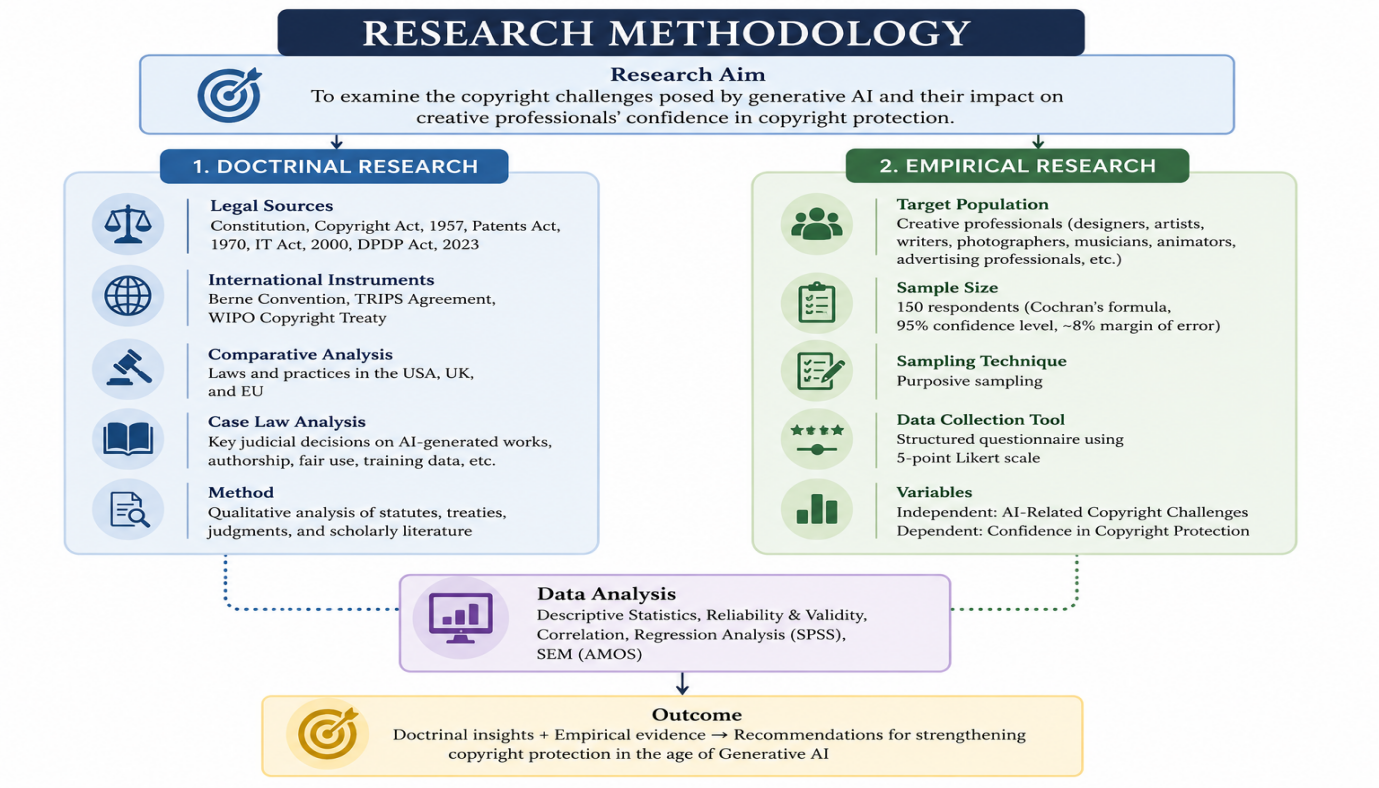
Figure 1: Research methodology
This study adopted a mixed-method approach, combining doctrinal and empirical methods to obtain a comprehensive understanding of the copyright issues arising from generative AI. The doctrinal component involved a thorough examination of primary and secondary legal sources, while the empirical component focused on the attitudes of creative professionals towards AI-related copyright issues and their trust in copyright protection.
The doctrinal analysis covered the Copyright Act, 1957, the Patents Act, 1970, the Information Technology Act, 2000 and the Digital Personal Data Protection Act, 2023. International legal instruments, including the Berne Convention, the Agreement on Trade-Related Aspects of Intellectual Property Rights (TRIPS) and the WIPO Copyright Treaty, were also considered. Existing copyright regimes in the United States, the United Kingdom and the European Union, together with key judicial decisions concerning AI-generated works, copyright ownership, fair use, training data, moral rights and derivative works, were reviewed and analysed to assess the strengths and weaknesses of current law.
The empirical study employed a quantitative design using a structured questionnaire administered to 150 creative professionals in graphic design, digital art, photography, content writing, music, animation and advertising. The sample size was calculated using Cochran’s formula at a 95 per cent confidence level and an approximate margin of error of 8 per cent, which is adequate for statistical analysis. Participants were selected through purposive sampling, as they were required to have hands-on experience in creative work and familiarity with generative AI tools.
The questionnaire comprised two constructs: Creative Professionals’ Confidence in Copyright Protection (CPCP), the dependent variable, and AI-Related Copyright Challenges (AICC), the independent variable. Responses were recorded on a five-point Likert scale ranging from 1 (strongly disagree) to 5 (strongly agree).
The data were analysed using IBM SPSS Statistics and AMOS. Descriptive statistics were used to summarise respondents’ perceptions, and reliability and validity tests were conducted to validate the measurement model. Structural equation modelling (SEM) was then applied to examine the relationship between AI-related copyright challenges and creative professionals’ confidence in copyright protection.
By combining doctrinal legal analysis with empirical evidence, the study offers a comprehensive evaluation of the effectiveness of current copyright laws in the context of generative AI and provides evidence-based recommendations for future legal and policy reform.
Results
A. Doctrinal analysis
The Indian regulatory framework governing AI-generated content and copyright protection is a multifaceted legal issue that engages several statutes and legal principles.
i. Indian regulatory framework
The Copyright Act, 1957. The Copyright Act, 1957 is the principal legislation governing copyright protection in India and provides the foundation for protecting original literary, artistic, musical and dramatic works, as well as cinematograph films.12 Although the Act predates the emergence of generative artificial intelligence, several provisions bear on AI-generated content. Section 13 confers copyright on original works,13 and Section 2(d)(vi) treats the person who causes a computer-generated work to be created as its author.14 The provision leaves ambiguous, however, whether authorship of AI-generated works vests in the developer, the user or another party.
Moral rights are also expressly recognised under Section 57 of the Act, which applies only to human authors.15 Likewise, the exceptions to copyright infringement in Section 52 do not specifically address the use of copyrighted works to train AI systems, so the legality of using copyrighted material for such training remains unresolved.16 The Act offers only limited treatment of authorship and ownership of AI-generated works, and of originality and infringement in that context, indicating a need for further legislative development.
The Patents Act, 1970. While copyright law is the principal regime governing AI-generated creative works, the Patents Act, 1970 is relevant to protecting the technologies underlying generative AI systems.17 The Act protects inventions that satisfy the requirements of novelty, inventive step and industrial applicability. Section 3(k) excludes computer programs, algorithms and mathematical methods from patentability; however, AI algorithms that make a technical contribution may be patentable.
The Patents Act does not yet contain provisions on the ownership of AI-generated creative works, but its emphasis on inventorship reflects a broader principle of Indian intellectual property law, which generally confers rights on human creators rather than on AI.
The Information Technology Act, 2000. The Information Technology Act, 2000 establishes a framework for electronic records, electronic transactions and intermediary liability. Although it does not expressly address artificial intelligence, it provides a safe harbour for intermediaries that meet prescribed due-diligence requirements, which becomes relevant when AI-generated content that infringes copyright is shared or created on AI platforms.18
The Information Technology (Intermediary Guidelines and Digital Media Ethics Code) Rules, 2021 further strengthen platforms’ responsibility to address unlawful online content. Neither the Act nor the Rules, however, expressly allocates liability for content infringed by AI, leaving significant regulatory gaps in respect of generative AI.
The Digital Personal Data Protection Act, 2023. Generative AI is indirectly affected by the Digital Personal Data Protection Act, 2023, which governs the collection and processing of personal data, including data used to train AI models.19 The Act establishes principles of consent and purpose limitation and regulates data processing, thereby affecting the legitimate use of personal information in AI development.
Although the legislation is directed at privacy rather than intellectual property, it has a significant bearing where a copyrighted work contains personal data or where an AI system processes identifiable data. The Act does not, however, define the copyright holder or author of an AI-generated work; it forms part of the broader regulatory landscape without directly addressing copyright.
Taken together, these laws provide some measure of control over generative AI but do not fully address problems of AI-generated authorship, copyright claims and liability. The absence of legislation dedicated to AI underscores the need for a more unified framework capable of balancing technological advancement with the protection of creative professionals.
ii. International legal framework on generative artificial intelligence
Berne Convention for the Protection of Literary and Artistic Works. The Berne Convention for the Protection of Literary and Artistic Works sets out the key principles of international copyright protection, including national treatment, automatic protection and minimum standards for authors’ rights.20 The Convention makes no reference to AI and proceeds on the premise of human authorship. It is therefore unclear whether the Berne principles extend to works produced by AI, particularly where they are created with little or no human involvement. The Convention nonetheless remains influential and continues to shape national copyright laws that protect the interests of human creators in the digital environment.
The TRIPS Agreement. The Agreement on Trade-Related Aspects of Intellectual Property Rights (TRIPS) incorporates the substance of the Berne Convention and sets minimum standards for the protection and enforcement of intellectual property rights among members of the World Trade Organization.21 Although TRIPS contains no specific provisions on generative AI, its emphasis on copyright enforcement may be significant in disputes over AI-generated works, the unauthorised use of copyrighted material in training datasets and cross-border infringement. As AI systems increasingly operate across jurisdictions, TRIPS offers an important international instrument for harmonising copyright protection.
WIPO Copyright Treaty. The WIPO Copyright Treaty (WCT) extends copyright into the digital environment alongside the Berne Convention.22 In particular, the Treaty addresses technological protection measures, communication to the public and digital reproduction, all of which are highly relevant to the use of AI-generated content on online platforms. Although the WCT does not expressly mention artificial intelligence or machine-generated works, its provisions on copyright management and protection provide a sound legal basis for addressing issues arising from generative AI technologies.
Taken together, these international instruments establish the normative framework for copyright protection but contain little that addresses AI authorship, ownership or the use of copyrighted material in developing generative AI systems. The absence of AI-specific provisions has prompted growing calls for international cooperation and legal reform so that copyright law remains effective in the age of AI.
iii. Comparative jurisprudence of generative artificial intelligence and copyright protection
United States. In the United States, copyright doctrine has consistently been interpreted to require human authorship. The Copyright Act of 1976 protects works that are the product of human intellect.23 The United States Copyright Office has maintained that a work created entirely by artificial intelligence is not eligible for copyright protection because it lacks substantial human authorial input. Where human authors make meaningful creative contributions to AI-assisted material, copyright protection may extend only to those contributions. The principal points of debate in the United States concern the ownership of copyright, the copyrightability of works used to train AI and the application of the fair-use doctrine to generative AI.
United Kingdom. The United Kingdom has one of the few statutory provisions expressly addressing computer-generated works. For computer-generated works that have no human author, Section 9(3) of the Copyright, Designs and Patents Act 1988 defines the author as the person by whom the arrangements necessary for the creation of the work are undertaken.24 Although the provision predates generative AI, it has assumed renewed significance in relation to AI-generated content. It does not, however, identify the relevant person, leaving unclear whether ownership vests in the developer, the system’s owner or the user.
European Union. The European Union has adopted a hybrid approach to generative AI, addressing both copyright and AI regulation. The Directive on Copyright in the Digital Single Market provides exceptions for text and data mining under certain conditions while preserving the rights of copyright owners.25 The Artificial Intelligence Act imposes transparency obligations on providers of general-purpose AI models, including obligations to comply with European copyright law and to publish a summary of training data. While the European Union upholds human authorship as the basis for copyright protection, its policies emphasise transparency and accountability in regulation and seek to promote innovation while respecting the rights of creators.
Comparative jurisprudence indicates that human authorship generally remains the source of copyright protection. The United Kingdom grants statutory protection to computer-generated works; the United States bases copyright protection on administrative and judicial interpretations requiring human authorship; and the European Union increasingly addresses generative AI through comprehensive measures. These developments illustrate the international response to AI creativity and offer valuable guidance for future reform of the Indian copyright regime.
iv. Case law perspective on generative AI and copyright protection
Courts and copyright authorities have consistently insisted on human authorship as the basis of copyright protection. Under United States law, the District Court in Thaler v. Perlmutter held that a work generated by AI alone is not protected by copyright.26 Consistently, the United States Copyright Office has declined to register works not created by a human author, reflecting the principle that copyright protects human rather than machine-generated works. These decisions demonstrate the judicial view that AI cannot be regarded as an independent author.
Establishing ownership of AI-generated content is among the greatest legal difficulties. Although it did not directly concern AI, Naruto v. Slater allowed the court to reaffirm that copyright is reserved for human creators and that a non-human entity cannot own copyright.27 That reasoning informs current debates about AI authorship and indicates that an AI system cannot be the sole owner of content unless a natural or legal person contributes sufficient creative input. The courts have not yet defined standards for determining ownership where AI is substantially involved in the creation of a work.
Considerable litigation is pending on the copyrightability of using copyrighted works to train generative AI models. Andersen v. Stability AI Ltd. concerns copyright infringement and the unauthorised use of artists’ images to train image-generation models.28 Similarly, N.Y. Times Co. v. Microsoft Corp. raises comparable questions regarding the use of journalistic work to train large language models.29 These cases are expected to clarify the scope of the fair-use doctrine and whether works may lawfully be used in an AI training set.
Moral rights protect the author’s personality and reputation and include the rights of attribution and integrity. Because artificial intelligence has no legal personality, it cannot hold or exercise moral rights. Where AI is used to reproduce or substantially modify a copyrighted work, however, the moral rights of human authors, particularly the right of attribution, may be infringed. Notwithstanding the limited body of direct judicial authority, the moral rights of human creators remain protected under existing copyright principles.
Because generative AI often produces outputs shaped by prior copyrighted works, concerns arise as to whether such outputs are derivative of, or substantially similar to, protected works. In Andy Warhol Foundation for the Visual Arts, Inc. v. Goldsmith, the Court reiterated that transformative use is not unlimited and that infringement may occur where protected material is used for commercial purposes.30 Although the case did not involve AI, its reasoning has taken on greater significance in assessing whether AI-generated output infringes the protected elements of existing works.
Overall, current case law reflects a copyright jurisprudence that remains focused on human creativity and is grappling with the legal implications of generative AI. Pending disputes over AI training data, copyright ownership and derivative works are likely to have a significant influence on the future of AI copyright law and on the process of global copyright reform.
B. Empirical analysis
i. Demographic analysis of respondents
A total of 120 creative professionals participated in the study. Most respondents were male (56.7 per cent) and female (40.8 per cent), while 2.5 per cent preferred not to answer. The majority of participants were aged between 21 and 30 (35.0 per cent) or between 31 and 40 (32.5 per cent), indicating that the sample consisted predominantly of young and mid-career professionals actively engaged in the digital creative industries.
Respondents’ creative occupations spanned a broad spectrum, with the largest groups being graphic designers (18.3 per cent) and content writers or authors (16.7 per cent), followed by photographers or videographers (13.3 per cent), digital artists or illustrators (12.5 per cent), musicians or composers (10.8 per cent), film or video editors (10.0 per cent), advertising and marketing creatives (10.0 per cent) and animators (8.3 per cent). This diversity enhances the representativeness of the sample by including practitioners from a range of creative fields.
With regard to professional experience, 35.0 per cent of respondents had between five and ten years of experience, followed by 30.8 per cent with less than five years, indicating that the sample comprised mainly established professionals familiar with new digital technologies. In addition, most respondents reported using generative AI tools weekly (38.3 per cent) or daily (34.2 per cent), confirming that they had hands-on experience of AI-enabled creative work and were suitably qualified to assess the associated copyright issues.
ii. Descriptive analysis
The mean scores for the AICC items ranged from 3.85 to 4.19, indicating that respondents generally agreed that copyright problems are a significant concern in relation to generative AI. The highest mean was recorded for AICC1 (uncertainty about the ownership of creative works) (M = 4.19, SD = 1.201), and the lowest for AICC7 (absence of clear legal guidelines) (M = 3.85, SD = 1.287).
The mean scores for the CPCP construct ranged from 3.93 to 4.10, indicating that respondents perceived a relatively high, though not fully sufficient, level of copyright protection. The highest mean was recorded for CPCP2 (the current copyright framework provides sufficient legal protection) (M = 4.10, SD = 1.116), and the lowest for CPCP4 (clear copyright laws enhance confidence in using AI) (M = 3.93, SD = 1.232).
The descriptive results indicate that creative professionals are highly aware of the copyright issues associated with generative AI and hold moderate expectations of the current copyright framework. The standard deviations suggest a reasonable degree of consistency in perceptions across respondents for both constructs.
iii. Hypothesis testing
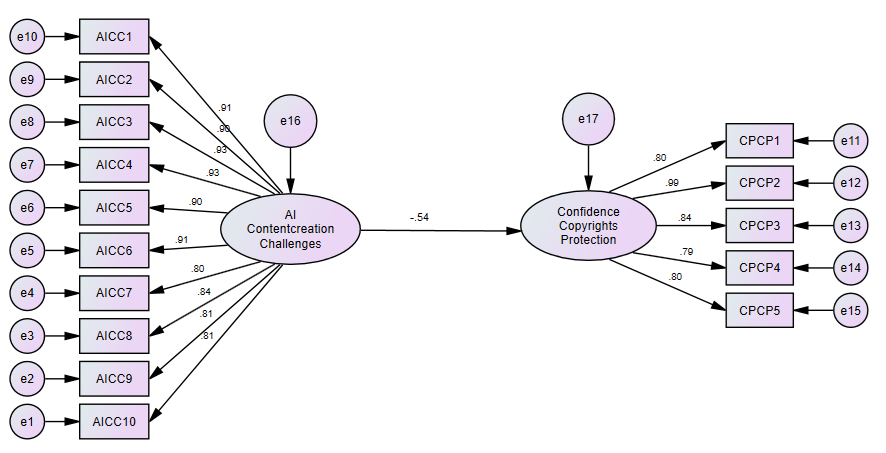
Figure 2: Structural equation model of the relationship between AI-related copyright challenges (AICC) and creative professionals’ confidence in copyright protection (CPCP)
The structural equation model examines the relationship between creative professionals’ confidence in copyright protection (CPCP) and the challenges of AI content creation (AICC). All observed variables have standardised factor loadings above 0.5, indicating that they are good indicators of the latent constructs. For the independent construct, the standardised loadings range from 0.80 to 0.93, with AICC3 and AICC4 showing the highest loadings (β = 0.93), followed by AICC1 (β = 0.91), AICC6 (β = 0.91), AICC2 (β = 0.90) and AICC5 (β = 0.90). The remaining indicators (AICC7, β = 0.80; AICC8, β = 0.84; AICC9, β = 0.81; and AICC10, β = 0.81) all exceed the recommended cut-off of 0.70, indicating acceptable convergent validity.
Similarly, the dependent construct, creative professionals’ confidence in copyright protection, is well represented, with standardised loadings ranging from 0.79 to 0.99. Confidence in the copyright system (CPCP2) has the highest loading (β = 0.99), suggesting that it is the most influential indicator of the latent construct. CPCP3 (β = 0.84), CPCP1 (β = 0.80), CPCP5 (β = 0.80) and CPCP4 (β = 0.79) also demonstrate acceptable measurement reliability.
The structural model yields a path coefficient of β = −0.54 from AI-related copyright challenges to creative professionals’ confidence in copyright protection. The negative coefficient indicates an inverse relationship between the two constructs: as copyright-related challenges associated with generative AI increase, creative professionals’ confidence in the current copyright framework decreases. The magnitude of the coefficient reflects a fairly strong negative effect, indicating that legal issues concerning the copyright of AI-generated works, such as authorship, ownership, infringement of copyrighted material and the treatment of AI training data, significantly erode creators’ confidence in the effectiveness of existing copyright law.
The measurement model proved reliable, as all standardised loadings exceeded 0.70, and the structural model supported the relationship between AI-related copyright challenges and confidence in copyright protection. These findings align with the doctrinal analysis, which revealed numerous deficiencies in current intellectual property law in relation to generative AI. The empirical results therefore reinforce the need for updated and clearer statutory guidance and regulatory reform to strengthen the protection of creative professionals in a rapidly evolving AI environment.
Discussion
The results address both research objectives by combining a doctrinal analysis of the legal framework with the empirical perceptions of creative professionals. The doctrinal analysis showed that, although the Copyright Act, 1957 is the principal legislation governing copyright protection in India, no statute comprehensively addresses AI-generated works, authorship, ownership, training data and copyright infringement. International instruments such as the Berne Convention, the TRIPS Agreement and the WIPO Copyright Treaty provide basic principles of copyright protection but say little about the legal implications of generative AI. The comparative analysis further showed that, although jurisdictions such as the United States, the United Kingdom and the European Union have adopted differing approaches, all maintain the principle of human authorship. This view is evident in judicial rulings, such as the denial of copyright protection to AI-generated works in Thaler v. Perlmutter and the reaffirmation in Naruto v. Slater that copyright cannot attach to non-human actors. Similarly, Andersen v. Stability AI Ltd. and N.Y. Times Co. v. Microsoft Corp. address unresolved questions about the use of copyrighted material for AI training, and Andy Warhol Foundation for the Visual Arts, Inc. v. Goldsmith underscores the need to protect original expression when evaluating derivative works.
These doctrinal observations are supported by the empirical findings. The descriptive statistics revealed that respondents strongly agreed that generative AI has created uncertainty around copyright ownership and infringement and has heightened the need to strengthen current copyright laws. The structural model showed a moderately negative coefficient (β = −0.54) for the relationship between AI-related copyright challenges and creative professionals’ confidence in copyright protection, indicating that, as such challenges increase, creators’ confidence in the current copyright system declines. While respondents recognised the value of copyright protection, they also considered that greater clarity of legal parameters and better protection against AI-related infringement were required.
These results are consistent with earlier research. Chesterman’s contention that generative AI fundamentally undermines traditional copyright concepts, and Abbott and Rothman’s argument that current copyright doctrines are inadequate to accommodate AI-assisted creativity, are particularly pertinent. Likewise, Lucchi and Hayes highlight significant legal uncertainties surrounding training data and copyright infringement in generative AI, while Shumakova, Lloyd and Titova call for greater legal reform to govern generative AI in the creative sector. The present study builds on these doctrinal debates by demonstrating that such legal uncertainties are not merely theoretical but are experienced by creative professionals as reducing their confidence in copyright protection.
Overall, the doctrinal and empirical findings show that copyright law has not kept pace with generative AI technologies. The study therefore underscores the importance of legislative measures to clarify who is the author of an AI-generated work, who owns it and who bears liability for infringement, and to define what is permissible when using copyrighted material to train AI systems.
Conclusion
As generative artificial intelligence establishes itself as a transformative force in the creative economy, copyright law must evolve alongside it, yet the direction of that evolution remains unclear. Legal principles developed for human-generated works are increasingly inadequate to address the complexities introduced by AI-generated creativity. The modern copyright regime should therefore adopt a forward-looking approach to legislative reform rather than rely on the reactive role of the judiciary in interpreting the scope of copyright in the face of new technologies.
The key to future copyright protection lies in developing a coherent and effective regime that balances the rights and interests of creative professionals with the legitimate interests of technological innovation. Legislation should provide an AI-specific definition of authorship and ownership of AI-generated works, establish clear rules for the use of copyright-protected material in training datasets, and clarify liability for infringement as between AI developers, platform providers and users. Any reform should also uphold the moral and economic rights of human creators and ensure that AI does not displace human creativity.
National reform alone is insufficient, however, because the use of generative AI is inherently international. Greater cooperation among states, facilitated by bodies such as the World Intellectual Property Organization, is essential to harmonise national copyright laws, ease cross-border enforcement and reduce inconsistencies. Governments should also foster collaboration among policymakers, AI developers, copyright holders, creators and universities to develop ethical and legally sound frameworks for AI governance.
In sum, copyright should facilitate rather than stifle technology and should enable innovation within an environment of legal certainty and fair, accountable practice. A copyright regime robust enough to safeguard creative professionals while promoting innovation in the age of generative AI must be transparent, adaptive and responsive to emerging technologies. This study accordingly calls for a future-oriented legal framework that allows technological development and intellectual property protection to advance in tandem, so as to continue to safeguard and foster creativity in the digital age.
*****
Footnotes
1. Simon Chesterman, Good Models Borrow, Great Models Steal: Intellectual Property Rights and Generative AI, 44 Pol’y & Soc’y 23 (2025).
2. Ryan Abbott & Elizabeth Rothman, Disrupting Creativity: Copyright Law in the Age of Generative Artificial Intelligence, 75 Fla. L. Rev. 1141 (2023).
3. Ali Razzaq, Syed U. Husnain & Ayesha Rasheed, Redefining Authorship and Ownership: Intellectual Property Challenges in AI-Generated Creative Works, 3 Res. Consortium Archive 417 (2025).
4. Nicola Lucchi, ChatGPT: A Case Study on Copyright Challenges for Generative Artificial Intelligence Systems, 15 Eur. J. Risk Regul. 602 (2024).
5. Charles M. Hayes, Generative Artificial Intelligence and Copyright: Both Sides of the Black Box (SSRN Working Paper, 2023), https://ssrn.com/abstract=4517799.
6. Supattra Thongmeensuk, Rethinking Copyright Exceptions in the Era of Generative AI: Balancing Innovation and Intellectual Property Protection, 27 J. World Intell. Prop. 278 (2024).
7. Jan Smits & Thomas Borghuis, Generative AI and Intellectual Property Rights, in Law and Artificial Intelligence: Regulating AI and Applying AI in Legal Practice 323 (T.M.C. Asser Press 2022).
8. Andrea G. Fontana, Intellectual Property Protection in the Era of Artificial Intelligence and the Problem of Generative Platforms, 28 J. World Intell. Prop. 783 (2025).
9. Philippe Lalanda & Núria Agustí Roig, Ethical and Legal Challenges of Artificial Intelligence with Respect to Intellectual Property, in The AI Revolution: How Technological Developments Affect the Audiovisual Sector 63 (Springer Nature Switzerland 2025).
10. N. I. Shumakova, J. J. Lloyd & E. V. Titova, Towards Legal Regulations of Generative AI in the Creative Industry, 1 J. Digit. Tech. & L. 880 (2023).
11. Marta Węgrzak & Carlos Sánchez García, Intellectual Property Challenges for Works Created by Generative Artificial Intelligence Systems from a Spanish Perspective, 4 Gdańskie Studia Prawnicze 108 (2024).
12. Copyright Act, No. 14 of 1957, India Code (1957).
13. Id. § 13.
14. Id. § 2(d)(vi).
15. Id. § 57.
16. Id. § 52.
17. Patents Act, No. 39 of 1970, India Code (1970).
18. Information Technology Act, No. 21 of 2000, India Code (2000).
19. Digital Personal Data Protection Act, No. 22 of 2023, India Code (2023).
20. Berne Convention for the Protection of Literary and Artistic Works, Sept. 9, 1886, as revised at Paris July 24, 1971, 828 U.N.T.S. 221.
21. Agreement on Trade-Related Aspects of Intellectual Property Rights arts. 9–14, Apr. 15, 1994, 1869 U.N.T.S. 299.
22. WIPO Copyright Treaty, Dec. 20, 1996, S. Treaty Doc. No. 105-17 (1997), 2186 U.N.T.S. 121.
23. Copyright Act of 1976, 17 U.S.C. §§ 101–122 (2018).
24. Copyright, Designs and Patents Act 1988, c. 48, § 9(3) (UK).
25. Directive 2019/790, of the European Parliament and of the Council of 17 April 2019 on Copyright and Related Rights in the Digital Single Market, 2019 O.J. (L 130) 92.
26. Thaler v. Perlmutter, 687 F. Supp. 3d 140 (D.D.C. 2023).
27. Naruto v. Slater, 888 F.3d 418 (9th Cir. 2018).
28. Andersen v. Stability AI Ltd., No. 3:23-cv-00201 (N.D. Cal. filed Jan. 13, 2023).
29. N.Y. Times Co. v. Microsoft Corp., No. 1:23-cv-11195 (S.D.N.Y. filed Dec. 27, 2023).
30. Andy Warhol Found. for the Visual Arts, Inc. v. Goldsmith, 598 U.S. 508 (2023).