
INTRODUCTION
The increasing integration of forensic science into criminal investigations marks a significant shift towards evidence-based adjudication within the Indian criminal justice system. Recent legislative developments, particularly under the Bharatiya Nagarik Suraksha Sanhita (BNSS)1 and the Bharatiya Sakshya Adhiniyam (BSA)2, have emphasized the use of scientific methods in the investigation and evaluation of criminal evidence, especially in serious offences. This reflects a broader policy shift towards strengthening the reliability and objectivity of evidentiary processes.
The importance of scientific investigation within the criminal justice system has long been recognized. The Malimath Committee3 on Reforms of the Criminal Justice System emphasized the need to incorporate forensic science to enhance the accuracy of investigations and reduce reliance on testimonial evidence. Similarly, the Law Commission of India, in its Report No. 271 on DNA profiling4, highlighted the growing significance of forensic techniques while also pointing to the necessity of appropriate institutional and procedural safeguards.
However, the effectiveness of forensic science does not depend solely on its legal recognition, but on its practical implementation across multiple stages of the criminal justice process, including evidence collection, laboratory analysis, and judicial interpretation. The functioning of forensic science is inherently interconnected with various institutional actors such as police personnel, forensic experts, judicial officers, and legal practitioners. Any gap at one stage may influence the overall evidentiary value and its impact on trial outcomes.
In this context, there is a need to examine how forensic science operates at the ground level, particularly within district-level systems where the majority of criminal cases are processed. Existing scholarship has largely focused on doctrinal and policy-level analysis, with relatively limited empirical attention to field-level functioning and stakeholder interaction.
This paper seeks to address this gap by presenting an empirical study conducted in Varanasi district. Based on field interactions with forensic laboratory personnel, judicial stakeholders, police personnel, and practicing advocates, the study examines the practical challenges associated with the use, management, and interpretation of forensic evidence.
The paper argues that while recent legal frameworks have strengthened the mandate for forensic integration, there exists a structural mismatch between legal expectations and institutional capacity, which affects the effective utilization of forensic science in the criminal justice process.
METHODOLOGY
This study adopts an empirical socio-legal research approach to examine the practical functioning of forensic science within the criminal justice system at the district level. The research is based on fieldwork conducted in Varanasi district, Uttar Pradesh.
Data collection was carried out using a combination of qualitative and limited quantitative methods. Primary data was obtained through informal semi-structured interactions with key stakeholders, including forensic experts working in different sections of the Regional Forensic Science Laboratory (RFSL), judicial officers across various courts, and police personnel involved in investigation processes. These interactions provided insights into the operational and procedural dimensions of forensic evidence handling.
In addition, questionnaire-based responses were collected from practicing advocates at the Varanasi District Court to understand their level of engagement with and interpretation of forensic evidence in trial proceedings. The sampling followed a purposive approach, focusing on stakeholders directly associated with the use and evaluation of forensic evidence.
The data collected through field interactions was recorded in the form of observational notes and subsequently organized into thematic categories. Given the exploratory nature of the study, the emphasis has been on identifying recurring patterns and common challenges across different stages of the criminal justice process.
To maintain ethical standards, the findings have been presented in a generalized and anonymized manner, ensuring that no individual respondent is identifiable. The study is limited to the selected district and stakeholders; however, it provides indicative insights into broader systemic trends affecting forensic science in practice.
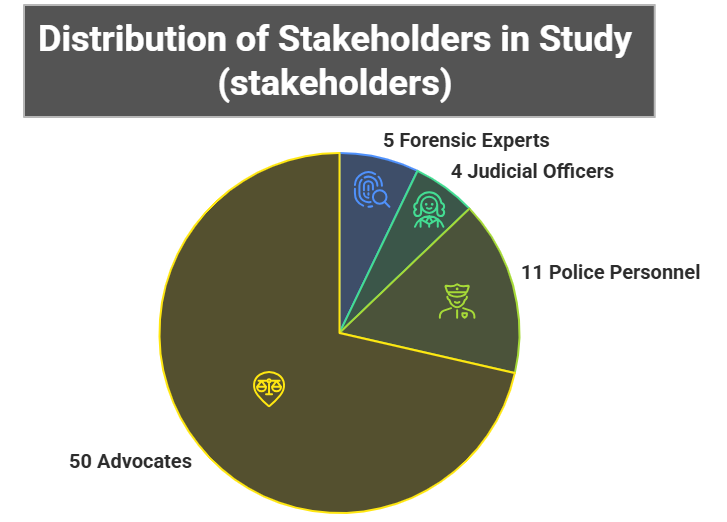
Figure 1: Stakeholder Participation in Study (Made with Napkin AI)
CONTEXTUAL OVERVIEW
The functioning of forensic science at the district level involves multiple institutional actors, including investigating agencies, forensic laboratories, judicial officers, and legal practitioners. In Varanasi, the Regional Forensic Science Laboratory caters to a wide geographical area, handling cases from multiple districts. The use of forensic evidence spans across different types of proceedings, including serious criminal offences, NDPS cases, and civil matters involving scientific examination.
Field interactions indicate that the effectiveness of forensic science is shaped by the coordination between these stakeholders. The following section presents key findings emerging from these interactions, focusing on recurring challenges observed across different stages of the criminal justice process.
FINDINGS
The empirical data collected from Varanasi district reveals a series of interconnected challenges affecting the effective utilization of forensic science across different stages of the criminal justice process. These challenges emerge consistently across forensic laboratories, police personnel, judicial stakeholders, and legal practitioners.
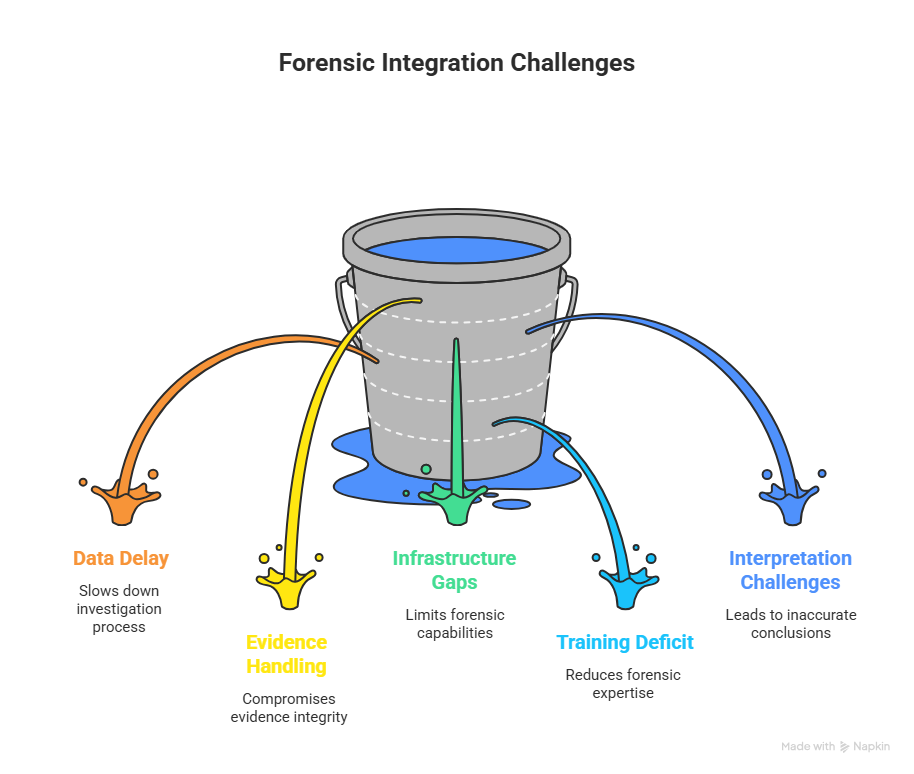
Figure 2 highlights the key challenges identified across stakeholders, with delays and evidence handling emerging as the most prominent issues. (Made with Napkin AI)
A. Delays in Forensic Reporting
A significant finding across all stakeholders is the persistent delay in forensic report generation.
Field interactions with forensic laboratory personnel indicate that reporting timelines often extend to several months, primarily due to high caseloads, limited infrastructure, and resource constraints. This observation is reinforced by judicial stakeholders, who noted that delays in receiving reports directly affect the progress of trials, particularly in sensitive cases such as those under the POCSO framework.
The delay in forensic reporting was also found to impact the evidentiary strength of cases, as prolonged timelines may reduce the practical utility of scientific evidence during trial proceedings.
B. Procedural Gaps in Evidence Collection and Preservation
A recurring issue identified at the investigation stage relates to deficiencies in evidence handling and preservation.
Interactions with forensic experts indicate that samples are often received with issues such as:
• improper sealing
• lack of appropriate preservation
• delays in submission
These procedural gaps may lead to contamination or degradation of evidence, thereby affecting the reliability of forensic analysis.
Observations from police personnel further suggest that such issues may be linked to operational constraints and limited training, particularly in relation to specialized forensic procedures.
C. Infrastructure and Technological Constraints
The study highlights notable limitations in forensic infrastructure and technological capacity.
Laboratory-level observations indicate:
• reliance on older analytical equipment
• limited access to advanced forensic technologies
• shortages of essential reagents and resources
These constraints may affect the ability to detect emerging or complex substances, particularly in cases involving synthetic drugs or advanced chemical analysis.
Such technological limitations were found to contribute to inconclusive or limited findings, which may subsequently influence judicial evaluation.
D. Human Resource and Training Gaps
Across stakeholders, a consistent theme is the presence of capacity and training-related gaps.
Forensic laboratories were observed to operate with limited personnel relative to workload, affecting efficiency and turnaround time. At the investigation stage, police personnel indicated the need for greater training in evidence collection and handling techniques.
Similarly, responses from advocates suggest limited familiarity with the interpretation of forensic reports, particularly in relation to technical terminology and evidentiary weight. This indicates a broader need for capacity building across the system.
E. Challenges in Interpretation and Use of Forensic Evidence in Courts
Judicial and advocacy-level interactions reveal challenges in the interpretation and effective utilization of forensic evidence during trial.
It was observed that:
• forensic reports are often relied upon in written form
• opportunities for expert clarification may be limited
• technical complexity of reports may affect their practical use in arguments
Advocates indicated varying levels of comfort in engaging with forensic evidence, particularly in understanding and presenting technical findings during trial proceedings.
F. Systemic Interdependence and Cumulative Impact
A key insight emerging from the study is that the effectiveness of forensic science is influenced by a chain of interdependent processes, including:
• evidence collection (police)
• laboratory analysis (forensic experts)
• evidentiary evaluation (judiciary)
• presentation and interpretation (advocates)
Challenges at any one stage may have a cumulative impact on the overall reliability and utility of forensic evidence.
G. Transitional Phase in Forensic Integration
The findings suggest that the criminal justice system is currently in a transitional phase, particularly in light of recent procedural emphasis on forensic evidence.
While there is an increased reliance on scientific methods, stakeholders across levels indicated that institutional capacity, training, and infrastructure are still evolving to meet these expectations.
DISCUSSION
The findings of this study reveal a significant gap between the normative framework governing forensic science and its practical implementation at the district level. While recent legislative developments under the Bharatiya Nagarik Suraksha Sanhita (BNSS)5 and the Bharatiya Sakshya Adhiniyam (BSA)6 emphasize the centrality of forensic evidence in criminal investigations, the empirical observations from Varanasi suggest that institutional capacity has not evolved at a commensurate pace. This reflects a broader structural mismatch between legal reform and ground-level preparedness.
The expansion of forensic mandates, particularly in serious offences, indicates a policy shift towards scientific investigation as a foundational component of criminal procedure. However, the study findings demonstrate that such expansion has not been accompanied by proportional improvements in infrastructure, training, or resource allocation. This imbalance risks reducing forensic science to a procedural formality rather than a substantive tool of justice.
From an evidentiary perspective, the Bharatiya Sakshya Adhiniyam recognizes expert opinion as relevant; however, judicial interpretation has consistently cautioned against treating such evidence as conclusive. In State of H.P. v. Jai Lal (1999)7, the Supreme Court clarified that expert evidence is advisory in nature and must be evaluated in conjunction with other evidence. Similarly, judicial reasoning in multiple forensic cases has emphasized that scientific evidence, while valuable, must withstand scrutiny in terms of methodology, reliability, and procedural integrity.
The limitations of forensic techniques themselves have also been acknowledged by courts. In Pritam Singh v. State of Punjab (1956)8, the Supreme Court observed that footprint identification, being a rudimentary science, cannot form the sole basis of conviction and must be corroborated by other evidence . Likewise, in Mohd. Aman v. State of Rajasthan (1997)9, the court highlighted deficiencies in evidence handling and questioned the reliability of forensic conclusions where procedural safeguards were not properly followed, ultimately leading to acquittal.
Further, the importance of proper forensic methodology and expert competence has been underscored in cases such as State of Madhya Pradesh v. Sitaram Gajraj Singh Rajput (1978)10, where inconsistencies in expert analysis and failure to adhere to established scientific procedures weakened the prosecution’s case. These judicial observations reinforce the finding of the present study that the value of forensic evidence is contingent not only on its scientific basis but also on the rigor of its collection, analysis, and presentation.
The study also highlights that procedural lapses at the stage of evidence collection—particularly breaches in chain of custody—can significantly undermine the admissibility and probative value of forensic evidence. Judicial precedents have repeatedly emphasized that improper handling or delayed processing of evidence creates reasonable doubt, thereby benefiting the accused. In this context, the integrity of the evidentiary chain emerges as a foundational requirement for the effective use of forensic science.
Another critical dimension emerging from the findings is the challenge of interpretation and utilization of forensic evidence within courtroom proceedings. Courts have acknowledged that even scientifically valid evidence must be carefully interpreted within the broader evidentiary framework. For instance, in Gautam Kundu v. State of West Bengal (1993)11, the Supreme Court held that scientific tests such as blood group analysis cannot be treated as conclusive proof in isolation. This reinforces the idea that forensic evidence operates within legal constraints and must be evaluated alongside other forms of evidence.
The issue of delay further complicates the role of forensic science in the justice system. Prolonged timelines in forensic reporting not only affect the evidentiary value of scientific findings but also raise constitutional concerns. The right to a speedy trial under Article 2112, as recognized in Hussainara Khatoon v. State of Bihar (1980)13, is directly impacted when forensic processes fail to deliver timely results. Such delays may weaken prosecutions and contribute to systemic inefficiencies.
Taken together, the findings of this study, when read alongside judicial precedents, indicate that the integration of forensic science into the criminal justice system in India remains uneven and transitional. While courts have consistently recognized both the importance and limitations of forensic evidence, the effectiveness of its application continues to depend on procedural integrity, institutional capacity, and stakeholder competence.
The study thus demonstrates that strengthening forensic science requires more than legislative emphasis; it necessitates a coordinated alignment between law, infrastructure, expertise, and practice. Without such alignment, the expanded role of forensic science risks being undermined by the very systemic constraints it seeks to overcome.
CONCLUSION AND SUGGESTIONS
The present study demonstrates that while forensic science has gained increased recognition within the legal framework of the criminal justice system, its effective implementation at the ground level remains constrained by multiple operational challenges. The empirical findings from Varanasi indicate that delays in forensic reporting, procedural gaps in evidence handling, infrastructural limitations, and capacity deficits collectively affect the reliability and timely use of forensic evidence in judicial proceedings.
The study also highlights that the integration of forensic science is not confined to laboratory functioning alone but is dependent on the coordinated role of multiple stakeholders, including investigating officers, forensic experts, judicial officers, and legal practitioners. Gaps at any stage of this process may influence the overall evidentiary value and its impact on trial outcomes.
In this context, the following measures may be considered to strengthen the practical utility of forensic science:
• Infrastructure Development: Establishment of adequately equipped regional and district-level forensic facilities to reduce dependency and delays.
• Capacity Building: Regular training programs for police personnel, judicial officers, and advocates to enhance forensic literacy and technical understanding.
• Strengthening Evidence Handling Protocols: Development and strict implementation of standardized procedures for collection, preservation, and transportation of evidence.
• Improved Expert Accessibility: Facilitating the presence of forensic experts during trial proceedings, including through digital or remote mechanisms where necessary.
• Institutional Coordination: Enhancing collaboration between investigative agencies, forensic laboratories, and courts to ensure smoother integration of forensic processes.
Overall, the study suggests that while forensic science holds significant potential in strengthening evidentiary processes, its effectiveness depends on addressing systemic and operational gaps. Strengthening these aspects would contribute towards a more efficient and reliable criminal justice system.
*****
Footnotes
1. Bharatiya Nagarik Suraksha Sanhita, No. 46 of 2023, India Code (2023).
2. Bharatiya Sakshya Adhiniyam, No. 47 of 2023, India Code (2023).
3. Comm. on Reforms of Crim. Just. Sys., Govt. of India, Report (2003) (Malimath Committee Report).
4. Law Comm’n of India, Report No. 271, Human DNA Profiling—A Draft Bill for the Use and Regulation of DNA-Based Technology (2017).
5. Bharatiya Nagarik Suraksha Sanhita, No. 46 of 2023.
6. Bharatiya Sakshya Adhiniyam, No. 47 of 2023.
7. State of H.P. v. Jai Lal, (1999) 7 S.C.C. 280 (India).
8. Pritam Singh v. State of Punjab, A.I.R. 1956 S.C. 415 (India).
9. Mohd. Aman v. State of Rajasthan, (1997) 10 S.C.C. 44 (India).
10. State of Madhya Pradesh v. Sitaram Gajraj Singh Rajput, 1978 M.P.L.J. 197 (India).
11. Gautam Kundu v. State of West Bengal, A.I.R. 1993 S.C. 2295 (India).
12. The Constitution of India, 1950, art. 21.
13. Hussainara Khatoon v. State of Bihar, (1980) 1 S.C.C. 81 (India).