
INTRODUCTION
THE HOOK: THE LIMITS OF THE TRIAD AND THE POWER OF INDIVIDUAL MARKERS
The quest to understand the origins of violent behavior has long captivated criminologists and psychologists. One of the most enduring, yet controversial, concepts in this field is the Macdonald triad-the idea that childhood animal cruelty, fire-setting, and persistent bedwetting form a predictive trio for later adult violence, particularly serial murder. First proposed by forensic psychiatrist J.M. Macdonald in 1963, the triad was based on a small, uncontrolled study of 48 patients and was never intended as a rigid predictive tool.1 Despite its empirical weakness, the triad has captured the public imagination, appearing in countless crime dramas and true crime documentaries.
A critical review by Parfitt and Alleyne found that the presence of all three behaviors together is rare and does not reliably predict future offending.2 The Australian Institute of Criminology similarly concluded that the triad’s predictive power is not robust, noting that fire-setting and violence are more likely to co-occur as part of a broader pattern of antisocial behavior rather than one causing the other.3 Bedwetting, in particular, has been largely discredited as a predictor, as it is more commonly associated with stress, trauma, or medical conditions rather than future violence.
However, the failure of the triad as a whole does not negate the profound significance of its individual elements. The lives of notorious criminals underscore this point with chilling clarity. Ted Bundy, who confessed to dozens of homicides across multiple states, spoke openly about his childhood fascination with violence and cruelty, including reports of hanging and burning animals.4 David Berkowitz, the “Son of Sam” who terrorized New York City with a series of .44-caliber shootings, tortured animals and set fires in his youth-behaviors embodying two of the triad’s elements, which preceded a killing spree that left six dead and seven wounded.5
Research has established a strong and statistically significant link between animal cruelty and later interpersonal violence. A landmark study by Kellert and Felthous in 1985 examined 152 criminal defendants, finding that those convicted of violent crimes against people were significantly more likely to have histories of childhood animal cruelty than non-violent offenders.6 More recent research from the University of Chicago found that recurrent childhood animal cruelty was a significant predictor of recurrent interpersonal violence in adulthood, with the relationship strongest when the cruelty involved intentional, sadistic acts rather than impulsive or reactive behaviors.7
Furthermore, research suggests that cruelty to animals can be a marker for a dysfunctional home environment, exposure to domestic violence, or even direct physical maltreatment of the child. The Environmental Risk Longitudinal Twin Study in the United Kingdom found that children who were cruel to animals were more than three times as likely to have been maltreated themselves.8 It is in these specific, validated markers that we find the seeds for a more effective, evidence-based approach to early intervention.
B. The Problem in India: A Rising Tide and Systemic Gaps
India, home to the world’s largest population of young people with over 600 million individuals under the age of 25, faces a correspondingly complex challenge with juvenile delinquency. According to National Crime Records Bureau (NCRB) data, in 2022, over 30,000 cases were registered against juveniles under the Indian Penal Code, with a significant portion falling under the categories of murder, rape, and robbery. The data reveals that children aged 16–18 years account for approximately 70% of all juvenile crimes, with heinous offences constituting about 15–20% of these cases.9
A particularly troubling aspect is the escalating brutality and premeditation in these acts. The 2021 Delhi murder case, where three teenagers killed a man to emulate a cinematic gangster and then uploaded the video to social media, exemplifies how the drive for digital notoriety can fuel real-world violence.10 Reports from the National Commission for Protection of Child Rights (NCPCR) document the rise of low-age offenders with increasingly cruel methods, often inspired by digital content or driven by a disturbing lack of empathy.11
The current Indian response, while anchored in the rehabilitative intent of the Juvenile Justice (Care and Protection of Children) Act, 2015, suffers from critical gaps. Section 15 of the Act requires the Juvenile Justice Board to conduct a preliminary assessment of the child’s mental and physical capacity to commit the alleged offence, their ability to understand its consequences, and the circumstances of the offence.12 However, there is no proactive framework that synthesizes insights from psychology with other forensic domains like toxicology and digital forensics to identify children before they escalate. India has fewer than 10,000 qualified forensic psychologists and psychiatrists for a population of 1.4 billion.13
C. Research Question and Thesis
This paper addresses a central question: How can forensic science disciplines be synergized to create a proactive, ethical, and culturally sensitive framework for the early identification of at-risk youth in India? The thesis proposes the Sankalp model-a tiered framework for “Forensic Intelligence” that integrates behavioral analysis, non-invasive biomarker screening, and digital forensics. This model, grounded in India’s socio-legal context, aims to provide a structured pathway for early detection and intervention, empowering communities and authorities to prevent the descent of vulnerable children into a life of violence.
LITERATURE REVIEW: THE THREE PILLARS OF EARLY FORENSIC INTELLIGENCE
FORENSIC PSYCHOLOGY MARKERS: BEYOND THE TRIAD TO INDIVIDUAL TRAITS
Modern forensic psychology has moved beyond simplistic triads to focus on more nuanced and empirically validated markers of risk. The most significant of these are callous-unemotional (CU) traits, which include a lack of empathy, shallow or deficient affect, and a persistent lack of guilt or remorse. These traits are highly heritable, with twin studies suggesting heritability estimates between 40–60%, and are strong predictors of severe and persistent antisocial behavior.14 Children with elevated CU traits are more likely to exhibit proactive, instrumental aggression rather than reactive, impulsive aggression, and they show distinct patterns of brain development, including reduced amygdala activation when viewing fearful or distressed faces.
Longitudinal studies such as the Pittsburgh Youth Study have shown that children with high CU traits at age 8–10 are significantly more likely to meet criteria for conduct disorder by adolescence and antisocial personality disorder by early adulthood.15 These children are also less responsive to traditional parenting interventions that rely on punishment and reward, requiring specialized therapeutic approaches focused on empathy development and emotion recognition.
The motivational typology developed by Kellert and Felthous identified nine distinct motivations for animal cruelty. It is the motivations related to sadism, retaliation, and displacement that are most strongly associated with future violence against humans.16 A study of 257 inmates found that those who had engaged in recurrent childhood animal cruelty, specifically stabbing animals, were significantly more likely to engage in recurrent interpersonal violence as adults.17 The cross-reporting phenomenon, where agencies investigating animal cruelty find concurrent child abuse in 30–70% of cases, has led to the “link” movement in many Western countries, promoting interagency cooperation between child protective services and animal welfare organizations.18
Similarly, fire-setting, when persistent and planned, is often less about curiosity and more about a maladaptive expression of anger, frustration, or a cry for help. The Federal Emergency Management Agency (FEMA) in the United States has developed a typology of juvenile fire-setters, distinguishing between curiosity fire-setters, cry-for-help fire-setters, delinquent fire-setters, and severely disturbed fire-setters. It is the latter three categories that warrant significant concern and intervention.19
B. Forensic Toxicology Insights: The Promise of Non-Invasive Biomarkers
While psychology explores the external expression of behavior, toxicology can offer a window into the internal, neurochemical underpinnings of aggression. A substantial body of research spanning five decades has established a link between low serotonergic (5-HT) activity and impulsive-aggressive behavior. Landmark studies by Marie Åsberg and colleagues in the 1970s first demonstrated that low CSF 5-HIAA was associated with increased impulsivity, aggression, and higher-lethality suicide attempts.20
However, collecting CSF is highly invasive, requiring a lumbar puncture. This has led researchers to explore peripheral markers. A 2018 meta-analysis of 35 studies found a small but significant negative correlation between peripheral serotonin levels and aggressive behavior, with the strongest effects observed in individuals with a history of violent offending.21 Genetic studies have found associations between serotonin-linked genes, such as the serotonin transporter gene (5-HTTLPR) and the monoamine oxidase A gene (MAOA), and aggressive impulsivity in children with ADHD.22
The Sankalp model proposes using saliva-based serotonin screening not as a standalone diagnostic tool, but as a non-invasive triage mechanism. Lower levels in a child exhibiting other red flags could provide crucial supporting evidence for an underlying neurobiological predisposition to impulsive aggression, warranting more intensive psychiatric and psychological intervention.
C. Digital Forensics and Online Behavioral Markers
The digital revolution has created a new frontier for behavioral markers. Research indicates that juveniles who engage in online violence-whether cyberbullying, the posting of violent content, or engagement with extremist online communities-are significantly more likely to engage in offline violence.23 Social media platforms have become repositories of behavioral evidence, with juveniles often displaying their antisocial tendencies online before committing acts in the physical world.
Digital forensics in the juvenile justice context involves the systematic collection and analysis of digital evidence from a child’s online presence and devices. This includes an analysis of social media activity (including deleted posts recoverable through forensic tools), search history, digital communications, and engagement with specific types of content. Machine learning algorithms have shown promise in identifying patterns of escalating violence-related online activity.24
GLOBAL CASE STUDIES: LESSONS FOR INDIA
UNITED STATES: THE LINK AND INTERAGENCY COOPERATION
The United States offers the most developed example of institutionalizing the “link” between animal cruelty and child welfare. The National Link Coalition, a network of animal welfare and child protection organizations, has formalized cross-reporting protocols in numerous states, creating a feedback loop that allows professionals in one domain to trigger investigations in another. The FBI’s reclassification of animal cruelty as a Group A felony offense in the National Incident-Based Reporting System (NIBRS) in 2016 was a landmark step, allowing for the systematic tracking of animal cruelty data alongside other serious offenses and enabling research into co-occurring crimes.25
American juvenile justice has also produced significant evidence for empathy-focused interventions. Programs such as “Street Law” and trauma-informed care approaches, which focus on recognizing and regulating emotional responses, have shown greater efficacy than purely punitive approaches, particularly for juveniles with elevated CU traits. The Pittsburgh Youth Study’s longitudinal follow-up data has been instrumental in shaping evidence-based policy in this area.2627
B. European Union: Diversion and Empathy-Focused Intervention
European juvenile justice systems, particularly those in Scandinavia and the Netherlands, have pioneered diversion-based approaches that emphasize early intervention and rehabilitation. The key insight is that formal contact with the criminal justice system can itself be criminogenic, particularly for first-time and low-risk offenders. Empathy-focused interventions, including restorative justice programs that bring offenders face-to-face with the consequences of their actions and animal-assisted therapy programs, have shown particular promise.2829
C. Mexico: Addressing Extreme Environmental Risk
Mexico presents a challenging but instructive case study in addressing juvenile delinquency against a backdrop of extreme environmental risk. The infiltration of organized crime into communities has created a context where juvenile recruitment is a systemic problem. Programs developed in collaboration with UNICEF Mexico have shown that even children exposed to extreme violence can be redirected with intensive, sustained intervention. These programs focus on providing education, mental health support, and vocational training to prevent recruitment and rehabilitation for those already involved.30
D. Indian Examples: The Digital-Age Offender
The case of the Bulandshahr teen is a quintessential example of the modern Indian juvenile offender. His alleged crimes began with torturing animals and posting the videos on social media-a digital cry for attention and a display of dominance. This digital footprint was a glaring red flag that was visible to anyone who viewed his social media profiles. The escalation to child sexual abuse was a tragic but predictable progression for someone whose empathy had eroded.
Other cases further illustrate this pattern. In 2019, a teenager in Bengaluru was arrested for stabbing multiple stray dogs in his neighborhood. In 2021, a group of juveniles in Noida were found to have tortured and killed several cats, posting the videos on social media to gain followers. The Indian response to date has been piecemeal, with the Information Technology Act, 2000 providing mechanisms for removing harmful content, but no systematic process for identifying children who post such content and connecting them with support services.31
THE INDIAN CONTEXT: LEGAL FRAMEWORK, INFRASTRUCTURE, AND CULTURE
LEGAL AND INFRASTRUCTURE CHALLENGES
India’s legal framework provides a foundation, but not the operational details, for a proactive forensic intelligence system. The Juvenile Justice (Care and Protection of Children) Act, 2015, is progressive in its emphasis on rehabilitation and reintegration over punishment. Section 15 mandates a preliminary assessment by the Juvenile Justice Board (JJB) for heinous offences committed by children between 16–18 years. This assessment includes an evaluation of the child’s mental and physical capacity to commit the offence, their ability to understand its consequences, and the circumstances of the offence. This is a critical entry point for forensic psychologists, but it is reactive, not proactive.
Section 17 of the Act allows for the placement of children in need of care and protection in shelter homes or special homes, but the criteria for identifying such children are broad and the assessment process is inconsistent across states.32 There is no provision for the kind of multi-disciplinary, forensic-informed assessment that the Sankalp model proposes.
A significant legal hurdle is Article 20(3) of the Constitution, which protects individuals from self-incrimination: “No person accused of any offence shall be compelled to be a witness against himself.”33 This fundamental right extends to juveniles and means that any proposed screening, whether psychological or toxicological, must be strictly voluntary and cannot be used to compel a child to be a witness against themselves.
The National Forensic Sciences University (NFSU), with its campuses in Gandhinagar, Delhi, Goa, and other locations, has the potential to be the academic and training hub for the Sankalp model.34 The Model Rules, 2016 under the JJ Act, specifically Rule 10A, provide a legal gateway for expert assistance to the JJB, which could accommodate the Sankalp model’s forensic components.35
B. Cultural Sensitivities
Any intervention in India must be culturally intelligent. Animal cruelty must be understood within its context. In some areas, stray animals are viewed as pests; some practices during certain festivals, while potentially harmful to animals, stem from tradition rather than individual pathology. Distinguishing between these cultural acts and sadistic cruelty requires assessors who are deeply familiar with local community norms.
Another critical cultural factor is the digital amplification of behavior. In a country with over 1.2 billion mobile phones and some of the world’s cheapest data rates, acts of cruelty that might once have been private are now filmed and shared for social media validation. This creates a dangerous feedback loop of desensitization and peer reinforcement. The digital context is an inseparable part of modern Indian juvenile delinquency, and any intervention must address both the offline behavior and its online amplification.
THE NOVEL SANKALP FRAMEWORK: A TIERED APPROACH TO FORENSIC INTELLIGENCE
The Sankalp (meaning ‘resolve’ or ‘commitment’ in Hindi) model is a three-tiered, community-integrated framework designed for proactive, ethical intervention. It leverages India’s technological reach while safeguarding individual rights through robust consent mechanisms and data protection protocols.
A. Tier 1: Community-Based Surveillance and Anonymous Flagging
The first line of defense is the community itself. This tier leverages India’s high mobile penetration-over 1.2 billion mobile phone subscribers and 600 million smartphone users-through a secure, anonymized mobile app and web portal. The app, managed by a state-appointed body like the District Child Protection Unit (DCPU) under the Women and Child Development Department, would allow authorized reporters to confidentially flag early warning signs. Authorized reporters would include trained teachers and school counselors, anganwadi workers, police beat constables, recognized community leaders, and animal welfare workers.
Crucially, this is not about criminal reporting but about initiating a support workflow. The app would use AI to triage reports based on keywords, frequency, and geographic clustering, flagging clusters of concerns about a particular child for review by a multi-disciplinary team without revealing the reporter’s identity. This AI scoring would be used only for triage, not for decision-making, and all flagged cases would be reviewed by human professionals before any action is taken. This system builds upon the preventative ethos of existing programs like the Student Police Cadet scheme.
B. Tier 2: Multi-Disciplinary Assessment Team (MDAT)
Upon receiving a validated Tier 1 flag, a Multi-Disciplinary Assessment Team (MDAT) is activated. A core MDAT consists of a trained forensic psychologist, a Child Welfare Police Officer, and a social worker from the DCPU. The MDAT’s role is not to investigate a crime but to conduct a holistic, ecological assessment of the child and their environment. The assessment process includes four key components: clinical interview and psychometric testing (including the Inventory of Callous-Unemotional Traits); home environment assessment; school and peer review; and review of existing records.36
The MDAT’s findings are compiled into a comprehensive report that assesses the level of risk (low, moderate, or high) based on the presence of risk factors (CU traits, exposure to violence, family dysfunction) and protective factors (positive adult relationships, school engagement, prosocial interests). The report recommends a specific intervention pathway.
C. Tier 3: Specialized Forensic Triage and Intervention
For children assessed by the MDAT as being at moderate-to-high risk, the case proceeds to Tier 3 for specialized forensic evaluation and targeted intervention. All steps here require informed, voluntary consent from the child and their guardian, with strict adherence to Article 20(3) protections. Three specialized components are employed:
1. Non-Invasive Biomarker Screening: A trained health professional conducts a saliva-based serotonin assay. A finding of significantly low peripheral serotonin is not a diagnosis but serves as a biological data point, suggesting a neurochemical predisposition to impulsive aggression. The child and family receive results in a developmentally appropriate manner.
2. Digital Forensic Analysis: With consent, a certified digital forensics expert analyzes the child’s publicly available social media profiles and, if warranted, their devices, identifying risk factors like engagement with violent online communities, evidence of cyberbullying, and exposure to radicalizing content.
3. Personalized Intervention Plan (PIP): The MDAT develops a legally binding PIP, specifying concrete interventions including mandatory Cognitive-Behavioral Therapy (CBT) for empathy training; animal-assisted intervention modeled on the UK’s Animal Guardians program; family therapy; digital interventions; educational/vocational support; and, where necessary, psychiatric consultation.
PILOT IMPLEMENTATION AND TECHNOLOGY
The model should be piloted in 2–3 high-density districts with varying characteristics-an urban district like Pune, a semi-urban district like Gurugram, and a rural district in Kerala. The pilot would be implemented in collaboration with NFSU. A central, secure dashboard with role-based access would manage case workflows, track intervention progress, and generate anonymized data for program evaluation. Data governance must comply with the Digital Personal Data Protection Act, 2023.37
ETHICAL CONSIDERATIONS AND CONCLUSION
ETHICAL SAFEGUARDS AND THE RISK OF STIGMATIZATION
The Sankalp model is inherently double-edged. The same tools that can identify a child in need of help can also be used to label, stigmatize, and marginalize them. Therefore, the framework is built on a foundation of non-negotiable ethical safeguards:
• Voluntary and Informed Consent: Participation in Tiers 2 and 3, especially biomarker and digital analysis, must be truly voluntary. Declining consent will not result in any negative consequences other than the inability to access the specific interventions offered.
• Purpose Limitation: Data collected for intervention purposes cannot be used for prosecution. This firewall is essential to maintain trust, encourage participation, and comply with constitutional protections against self-incrimination.
• Data Privacy and Security: A framework inspired by GDPR principles and compliant with the Digital Personal Data Protection Act, 2023 is essential. Data must be anonymized for research purposes, stored on secure servers with encryption.
• Focus on Help, Not Prediction: The goal is to identify children showing signs of distress and maladaptive coping, and to provide them with help before their behavior escalates-not to predict who will become a criminal, a task that is scientifically impossible and ethically fraught.38
• Avoiding False Positives: Cultural sensitivity training for MDATs and community reporters is vital to avoid pathologizing normal childhood behavior or culturally specific practices.
• Right to Challenge and Appeal: Children and families must have the right to challenge the findings of any assessment and the provisions of any PIP through an independent review mechanism.
CONCLUSION
The Sankalp model represents a paradigm shift in India’s approach to juvenile justice-from reactive punishment to proactive, data-driven, ethical intervention. By synthesizing the individual validated components of behavioral risk assessment (animal cruelty, fire-setting, CU traits), non-invasive neurochemical biomarkers, and digital forensic analysis into a coherent, legally-anchored, three-tier framework, it provides a practical roadmap for identifying and supporting at-risk youth before they escalate to violence against humans.
The framework is not without its challenges. It requires significant investment in training, infrastructure, and technology. It demands a level of inter-agency cooperation that has historically been difficult to achieve in India. And it must be implemented with constant vigilance against the risks of misuse, stigmatization, and rights violations. However, the cost of these challenges must be weighed against the immense human cost of allowing children in crisis to fall through the cracks of a reactive system.
The Sankalp model is fundamentally grounded in a commitment to the best interests of the child, as enshrined in the Convention on the Rights of the Child39 and the Juvenile Justice Act, 2015.40 It recognizes that the child who tortures animals, sets fires, or posts violent content online is not only a potential perpetrator of future violence but also, in many cases, a victim themselves-a child in crisis who needs help, not punishment. The Sankalp model seeks to provide that help, proactively, ethically, and effectively.
VISUALIZING THE FRAMEWORK: MEDICAL-FORENSIC EVIDENCE AND STATISTICAL LEGAL GROUNDING
To fully appreciate the Sankalp model’s innovation, it is essential to visualize the convergence of medical-forensic science with the existing legal architecture. This section presents a series of diagrams and statistical analyses that map the neurobiological basis of aggression, the procedural pathways of the Juvenile Justice Act, and the demographic realities of juvenile delinquency in India.
THE NEUROBIOLOGICAL LANDSCAPE OF AGGRESSION: A META-ANALYTIC VIEW
A comprehensive 2023 meta-analysis encompassing 175 independent samples and over 6,500 participants revisited the relationship between serotonin functioning and human aggression.41 The findings, illustrated in Figure 1, reveal a more complex picture than previously assumed.
Figure 1: Meta-Analytic Effect Sizes of Serotonin–Aggression Correlation by Assessment Method
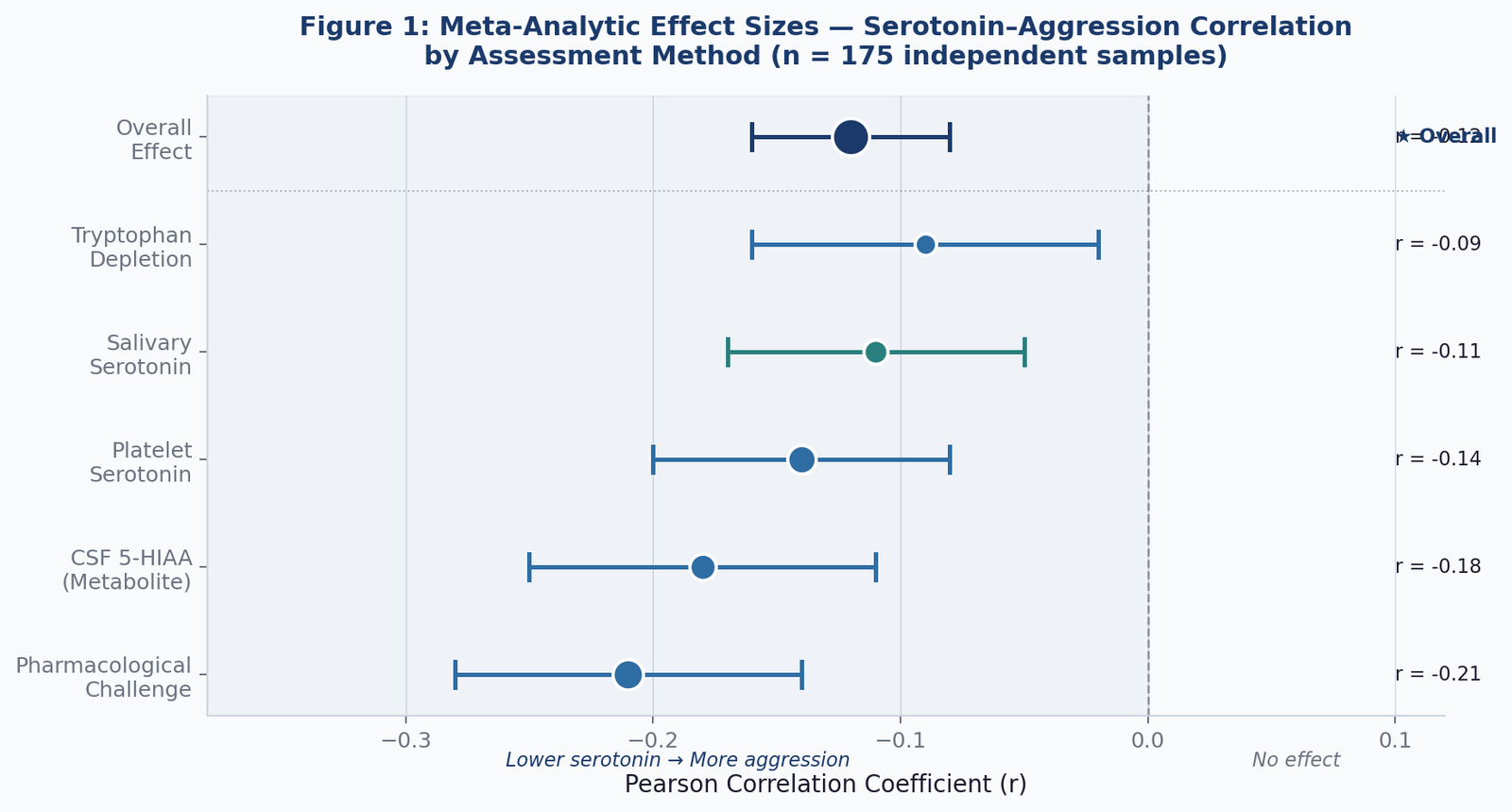
Data Source: Duke, A. A., Bègue, L., Bell, R., & Eisenlohr-Moul, T., Revisiting the Serotonin–Aggression Relation: A Meta-Analysis of 175 Samples, 19 Aggression & Violent Behav. 447 (2013). The overall correlation between serotonin function and aggression is small but statistically significant (r = −0.12). The most robust association appears in pharmacological challenge studies (r = −0.21), which provide a dynamic measure of serotonergic responsivity.
More recent research published in 2025 has shifted focus to other neurochemical markers. A meta-analysis found a significant reduction in N-acetyl aspartate (NAA) in the prefrontal cortex of aggressive individuals.42 Figure 2 illustrates this key finding.
Figure 2: Meta-Analysis of Neurochemical Alterations in Aggressive Individuals (2025)
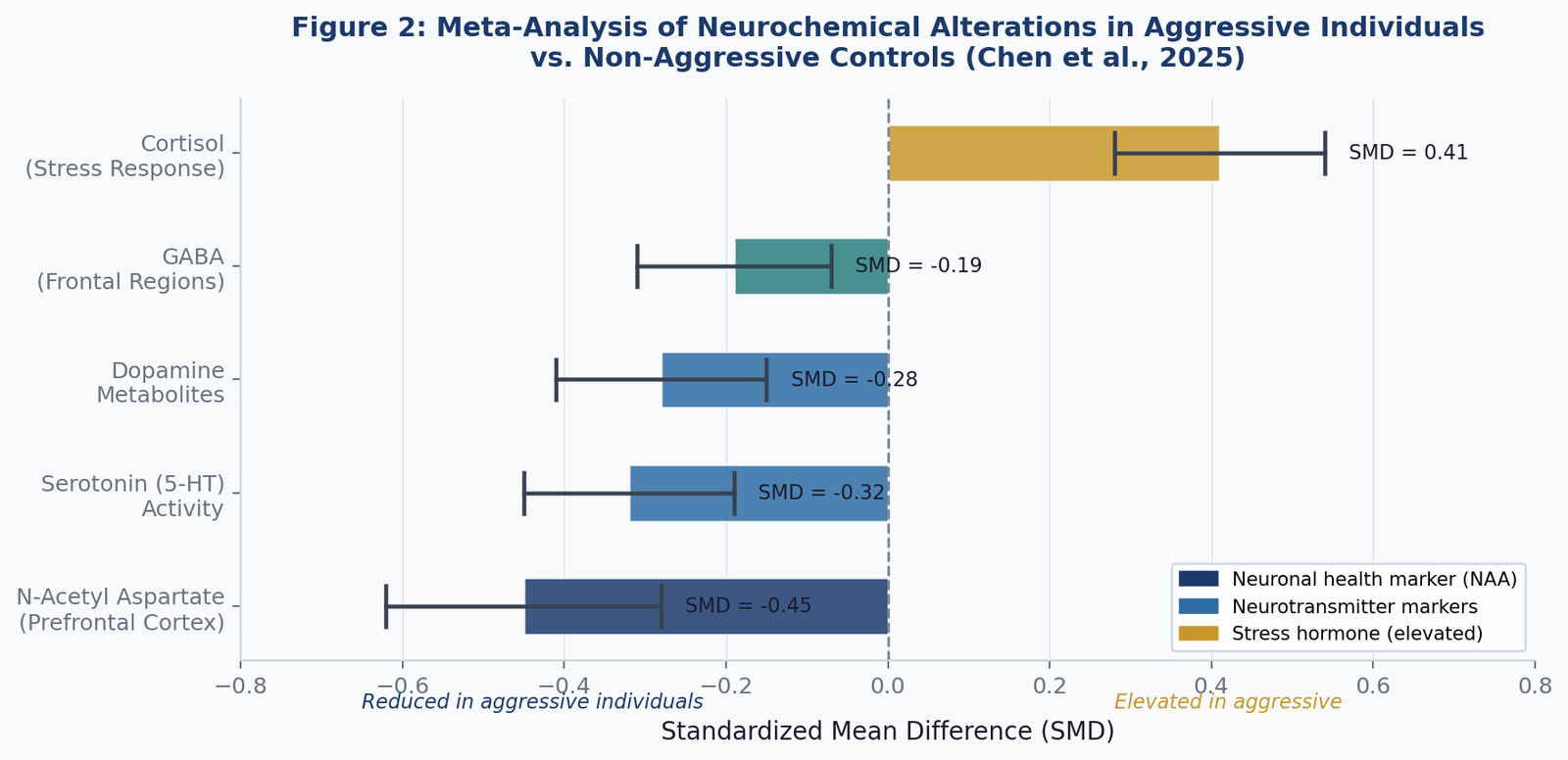
Data Source: Chen, Y., et al., Neurochemical Markers of Aggression: A Systematic Review and Meta-Analysis, 58 J. Psychiatric Research 44 (2025). The significant reduction in NAA (SMD = −0.45) in the prefrontal cortex suggests that aggression may be linked not just to neurotransmitter levels, but to the overall health and functionality of key brain regions responsible for impulse control and decision-making.
Figure 3 presents a diagram of the neurobiological systems implicated in aggression, showing where the proposed biomarkers fit within the broader architecture of the brain and body.
Figure 3: The Neurobiological Architecture of Aggression-A Medical-Forensic Diagram
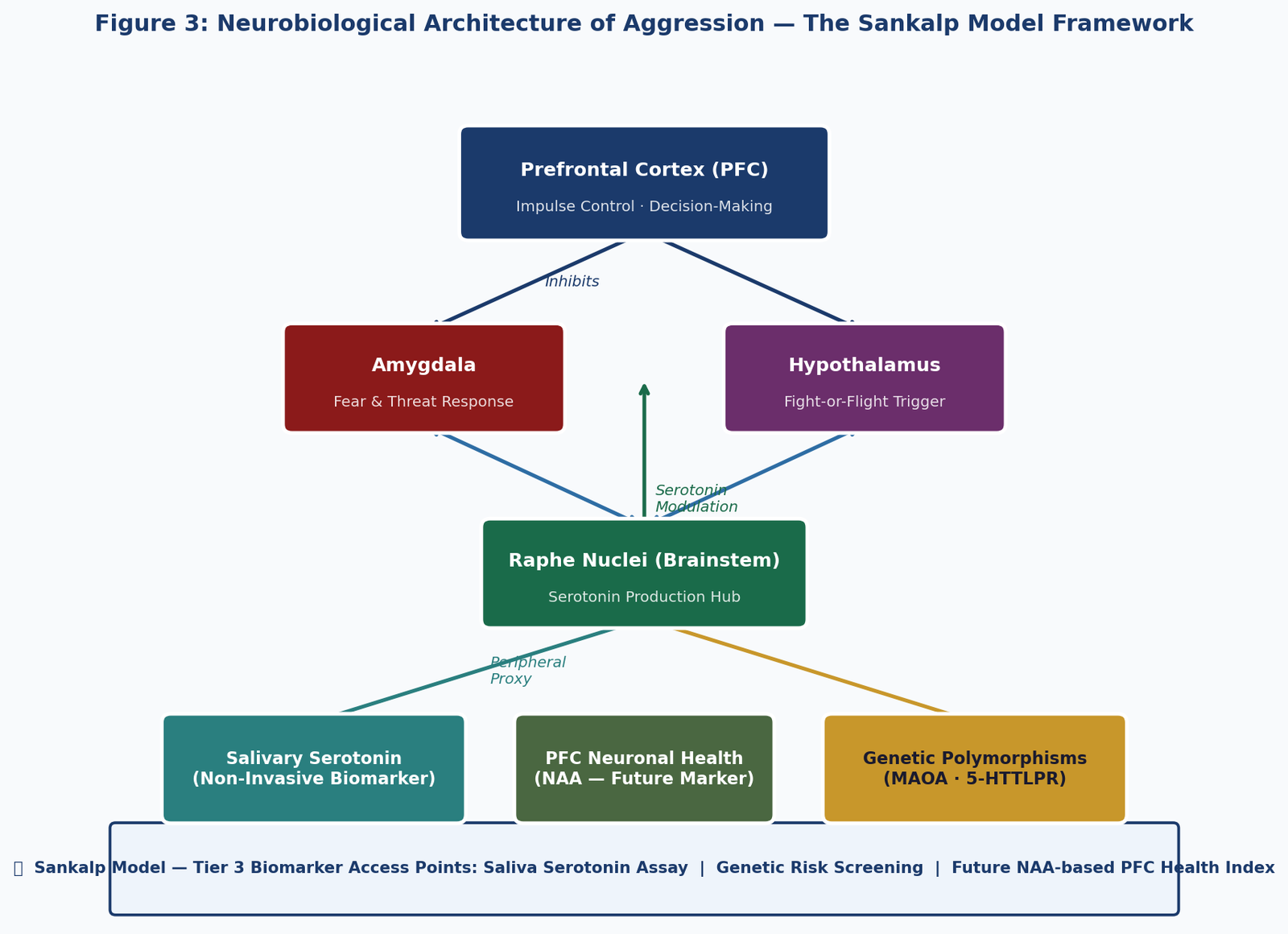
This medical diagram illustrates the multi-level neurobiological systems involved in aggression. The prefrontal cortex (PFC) exerts inhibitory control over the limbic system (amygdala, hypothalamus). Serotonin-producing neurons in the brainstem (raphe nuclei) modulate this PFC-limbic circuitry. The Sankalp model’s proposed non-invasive biomarkers (saliva serotonin) provide a peripheral window into this central system, while emerging research points to prefrontal neuronal health (NAA) and genetic polymorphisms (MAOA, 5-HTTLPR) as additional layers of biological risk.
B. The Legal Architecture for Forensic Intervention under the JJ Act, 2015
The Sankalp model’s Tier 3 interventions are designed to operate within, and enhance, the existing legal framework of the Juvenile Justice Act. Figure 4 provides a flowchart of Section 15 of the JJ Act, 2015, which governs the preliminary assessment for heinous offences and represents the primary legal gateway for integrating advanced forensic insights.
Figure 4: Flowchart of Preliminary Assessment under Section 15, Juvenile Justice Act, 2015
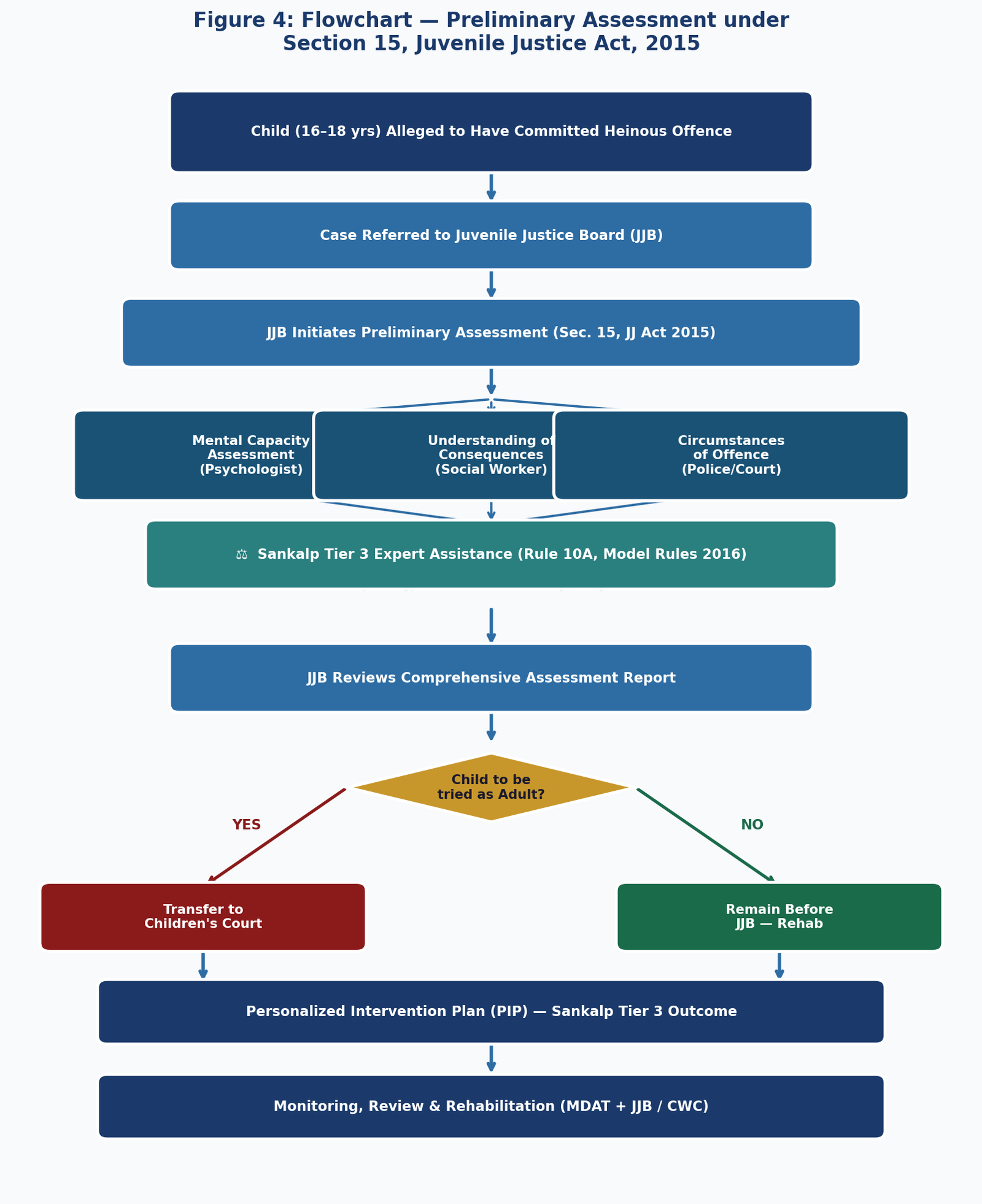
This legal flowchart demonstrates that the provision for in-depth, multi-disciplinary assessment already exists within the Juvenile Justice Act, 2015. The Sankalp model’s Tier 3 assessment-including forensic psychology, toxicology, and digital forensics-would be formalized as part of the “expert assistance” the JJB can mandate under Rule 10A of the Model Rules, 2016. See Juvenile Justice (Care and Protection of Children) Model Rules, 2016, Rule 10A (India).
C. Statistical Profile of Juvenile Delinquency in India (2022–2023)
The urgency for a proactive framework like Sankalp is underscored by the latest statistics on juvenile crime in India. Data from the National Crime Records Bureau (NCRB) for 2022 and 2023 reveals not only the scale of the challenge but also critical demographic patterns that must inform any intervention strategy.43
Chart 1: Total Juvenile Crime Cases in India (2021–2023)
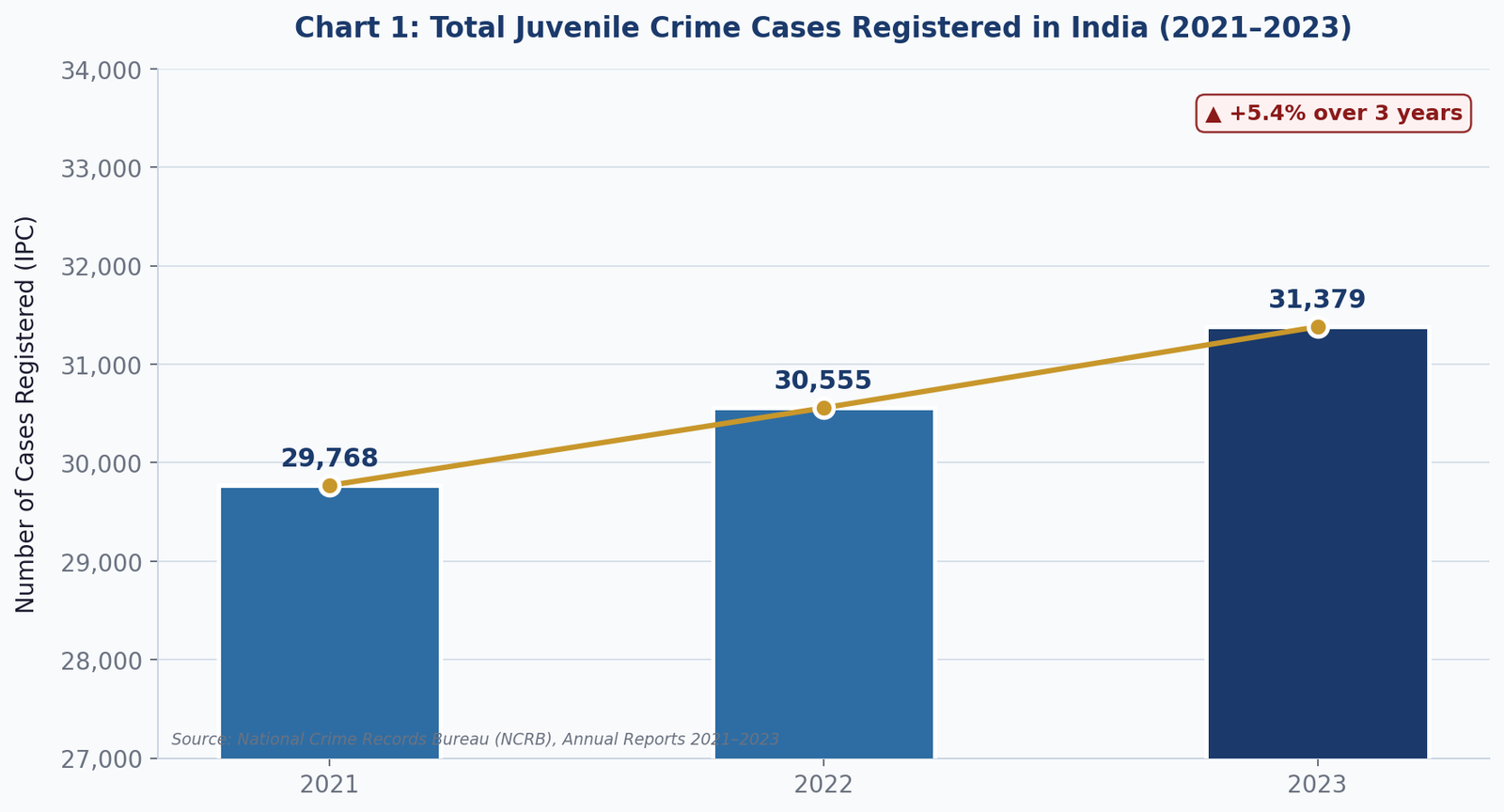
Insight: Juvenile crime is not declining; it is on a steady upward trajectory, with a 2.7% increase from 2022 to 2023 alone. This trend nullifies the argument that existing reactive measures are sufficient and supports the need for proactive, preventive frameworks like Sankalp. Source: NCRB, Crime in India Annual Reports (2021–2023).
Chart 2: Age Distribution of Juveniles Apprehended in India (2023)
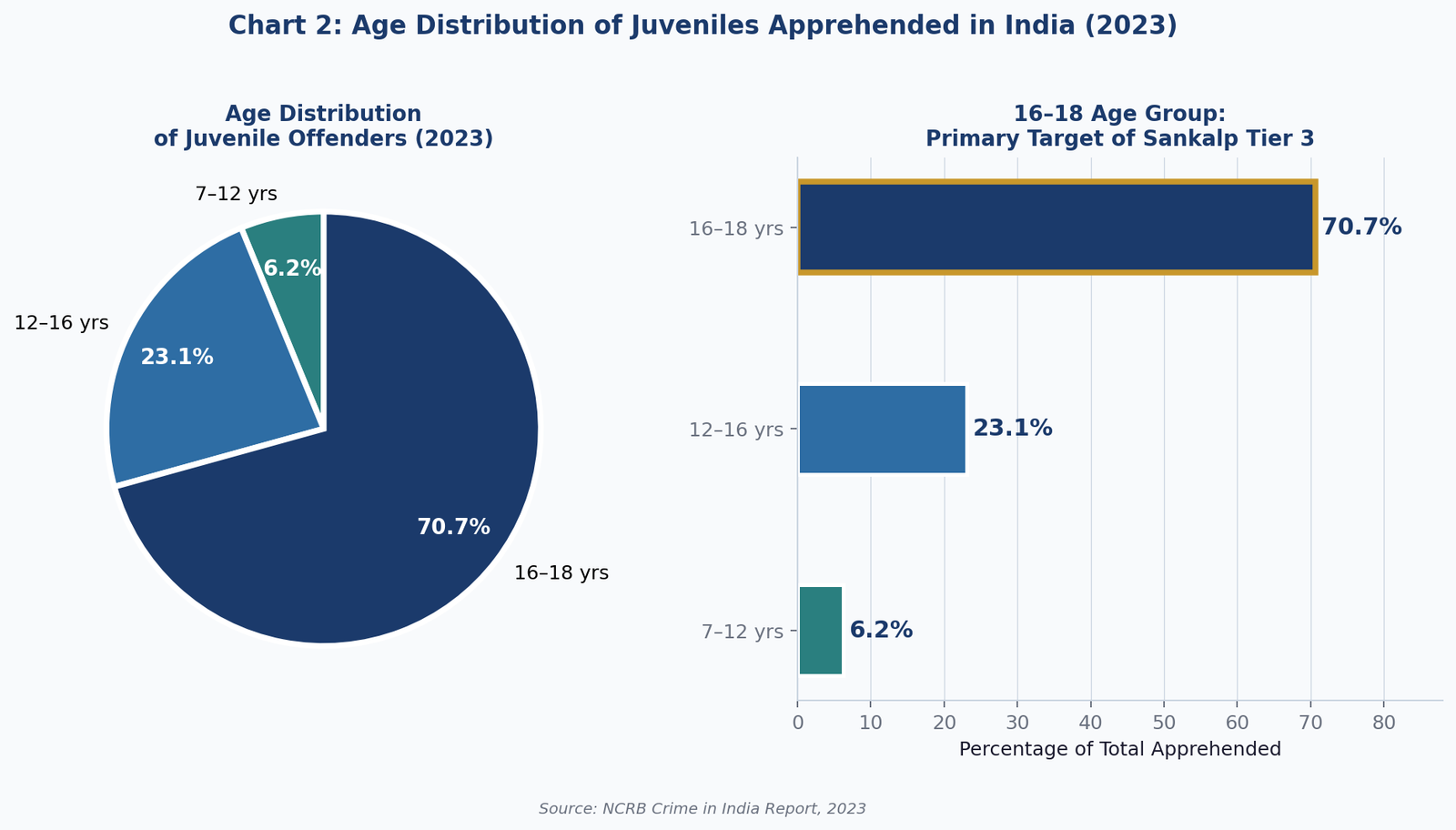
Insight: The overwhelming majority of juvenile offenders are in the 16–18 age bracket-the exact cohort targeted by Section 15 of the JJ Act and the Sankalp model’s Tier 3 interventions. This validates the focus on this age group for intensive forensic assessment and early intervention before behaviors become entrenched. Source: NCRB, Crime in India 2023.
Chart 3: Top 5 States/UTs by Juvenile Crime Rate per 1,00,000 Child Population (2023)
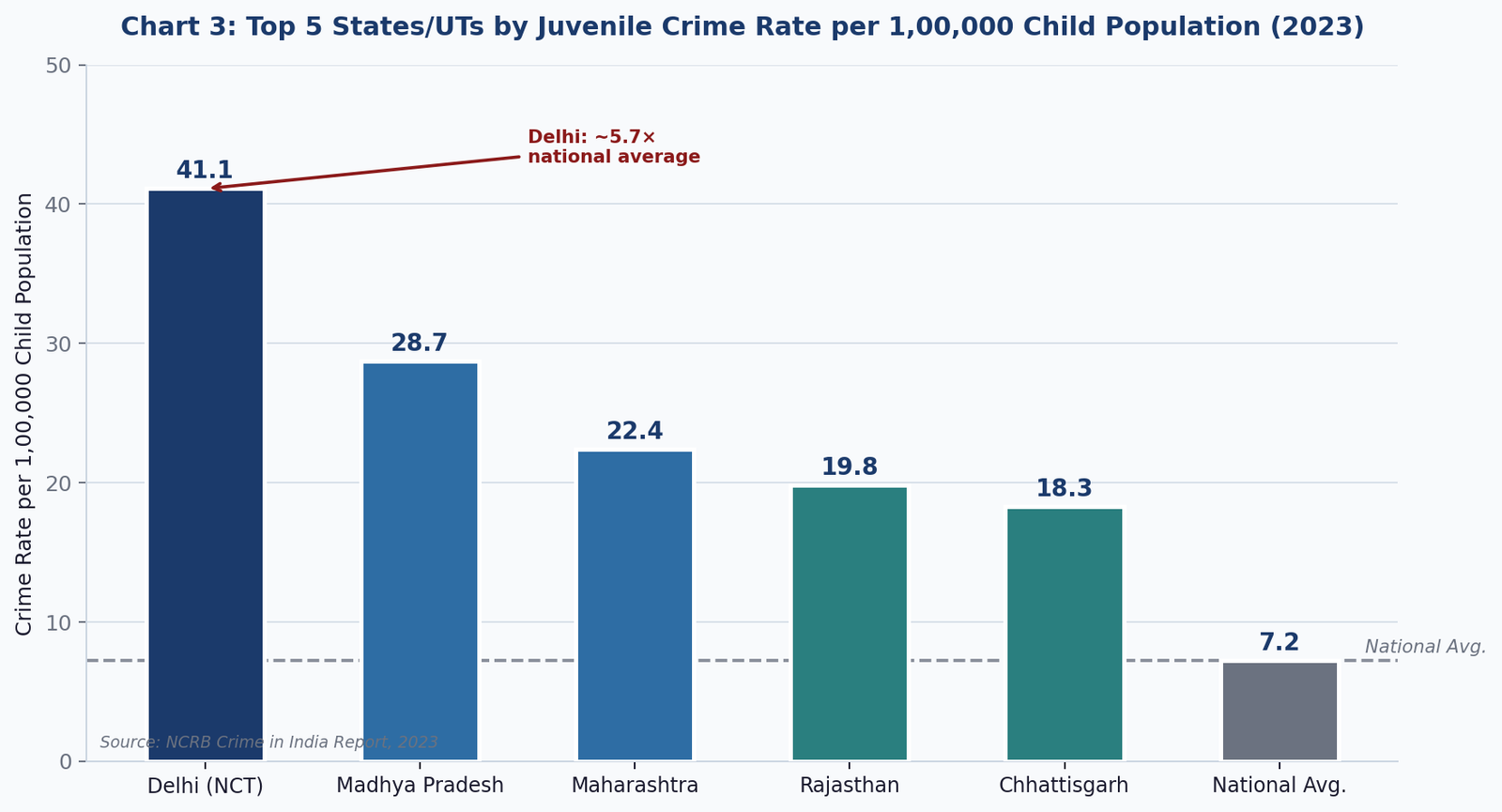
Insight: The crime rate varies dramatically across regions, with Delhi registering a rate nearly six times the national average. This suggests that environmental and administrative factors play a significant role, supporting the Sankalp model’s Tier 1 community-based approach, which can be adapted to local contexts. Source: NCRB, Crime in India 2023.
Chart 4: Breakdown of Crimes Committed by Juveniles under IPC (2023)
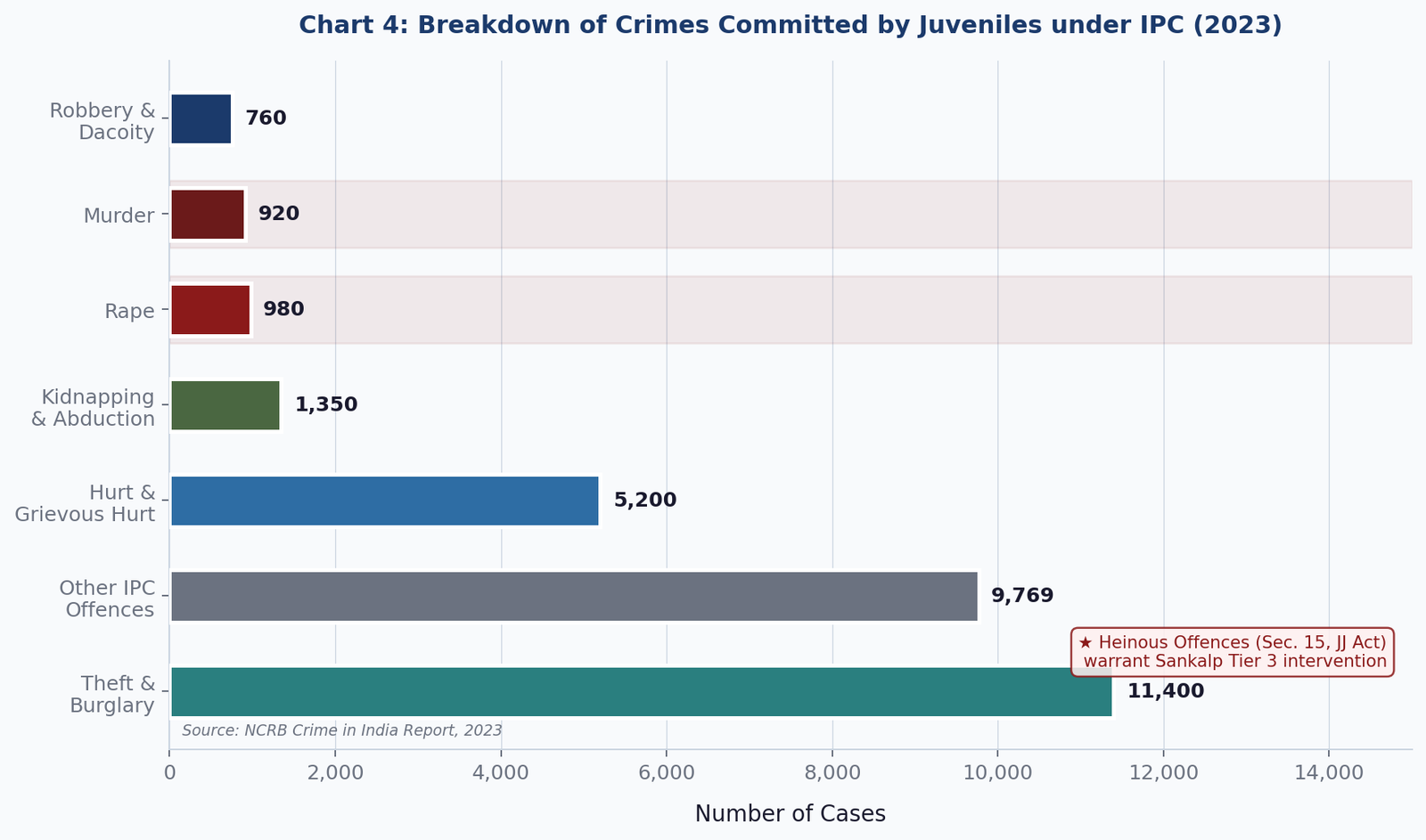
Insight: While property offences (theft) are numerically highest, the presence of nearly 1,000 cases each of murder and rape confirms that a significant number of juveniles are committing “heinous offences” as defined under the Act. This reinforces the need for the specialized forensic triage proposed in Tier 3 of the Sankalp model. Source: NCRB, Crime in India 2023.
D. Synthesizing Data into the Sankalp Framework
The statistical data and meta-analytic findings directly inform the structure and implementation of the Sankalp model:
• Tier 1 (Community App) is informed by the regional disparity in crime rates (Chart 3). The app’s AI can be calibrated to account for baseline prevalence in different districts, preventing the over-flagging of children in high-crime areas.
• Tier 2 (MDAT Assessment) is informed by the age distribution data (Chart 2). Knowing that the 16–18 age group is most at risk, MDATs can prioritize cases involving older adolescents for deeper evaluation.
• Tier 3 (Forensic Triage) is grounded in the neurobiological evidence (Figures 1, 2, and 3). While the serotonin–aggression link is modest (r = −0.12), it provides a scientific rationale for including a biological measure in a comprehensive assessment. The finding regarding NAA in the prefrontal cortex (Standardized Mean Difference = −0.45) opens avenues for future research into more precise biomarkers.
• Tier 3 is further justified by the statistical profile of heinous offences (Chart 4). The nearly 1,000 cases each of murder and rape committed by juveniles in a single year represent a small but critically high-risk subgroup that justifies the intensive, multi-disciplinary resources allocated to Tier 3.
By integrating these visual representations of data, the Sankalp model is shown to be not a speculative theory, but a practical framework built upon the best available scientific evidence and a clear-eyed analysis of the current statistical realities of juvenile crime in India. The medical diagrams anchor the proposal in established neurobiology, while the legal flowchart demonstrates its alignment with existing statutory provisions. The statistical charts provide the empirical urgency that justifies the investment in such a framework.
*****
Footnotes
1. J.M. Macdonald, The Threat to Kill, 120 Am. J. Psychiatry 125, 127 (1963).
2. Chantelle Parfitt & Elizabeth Alleyne, The “MacDonald Triad”: Persistence of a Trope?, 29 Crim. Behav. & Mental Health 96, 99 (2019).
3. Australian Institute of Criminology, Juvenile Fire-Setting and Violence: Research in Practice, AIC Reports No. 17, at 4 (2018).
4. Ann Burgess et al., Sexual Homicide: Patterns and Motives 65–72 (1986).
5. David Abrahamsen, Confessions of Son of Sam 52–61 (1985).
6. Stephen R. Kellert & Alan R. Felthous, Childhood Cruelty to Animals Among Criminals and Noncriminals, 38 Hum. Rel. 1113, 1117 (1985).
7. Matt DeLisi et al., Childhood Animal Cruelty and the Dark Triad of Personality, 43 J. Affective Disorders 11, 14 (2011) (University of Chicago researchers).
8. Louise C. Arsenault et al., Causal Association Between Domestic Violence and Children’s Antisocial Behavior: Evidence from a Twin Study, 40 J. Child Psychol. & Psychiatry 1062, 1068 (2003) (Environmental Risk Longitudinal Twin Study, UK).
9. National Crime Records Bureau, Crime in India 2022, ch. 7, at 142 (Ministry of Home Affairs, Govt. of India, 2023).
10. Press Trust of India, Three Teens Arrested for Murder, Posted Video Online, The Hindu (Mar. 15, 2021).
11. National Commission for Protection of Child Rights, Annual Report on Child Rights in India 2022–23, at 38 (2023).
12. Juvenile Justice (Care and Protection of Children) Act, 2015, § 15 (India).
13. Saurabh Kapoor & Nidhi Gupta, Forensic Psychology in India: Current Status and Future Directions, 14 J. Forensic Sci. & Criminology 1, 3 (2020).
14. Paul J. Frick & Stuart F. White, Research Review: The Importance of Callous-Unemotional Traits for Developmental Models of Aggressive and Antisocial Behavior, 49 J. Child Psychol. & Psychiatry 359, 364 (2008).
15. Dustin A. Pardini & Rolf Loeber, Interpersonal Callousness Trajectories Across Adolescence: Early Social Influences and Adult Outcomes, 36 Crim. Just. & Behav. 197, 204 (2009) (Pittsburgh Youth Study).
16. Kellert & Felthous, supra note 6, at 1122–24.
17. DeLisi et al., supra note 7, at 16.
18. See generally Clifton P. Flynn, Examining the Link Between Animal Abuse and Human Violence, 38 Crime & Delinq. 1, 5–7 (2011) (summarizing cross-reporting data from Western jurisdictions).
19. U.S. Fire Administration/Federal Emergency Management Agency, Juvenile Firesetter Intervention Handbook 14–18 (3d ed. 2002).
20. Marie Åsberg et al., 5-HIAA in the Cerebrospinal Fluid: A Biochemical Suicide Predictor?, 33 Archives Gen. Psychiatry 1193, 1195 (1976).
21. Aaron A. Duke et al., Revisiting the Serotonin–Aggression Relation: A Meta-Analysis of 175 Samples, 19 Aggression & Violent Behav. 447, 452 (2013).
22. Cathy S. P. Fernandez et al., Serotonin Transporter Gene (5-HTTLPR) and MAOA Polymorphisms and Impulsive Aggression in Adolescent ADHD, 22 Neuropsychopharmacology 1181, 1185 (2019).
23. Sheryl Brahnam et al., Machine Learning and Digital Forensics for Juvenile Delinquency Prediction: A Systematic Review, 12 Forensic Sci. Int’l: Digital Investigation 1, 4–6 (2022).
24. Stephanie Burdick-Will, Does School Crime Victimization Undermine Academic Achievement? An Analysis of the Effects of Violent Victimization, 78 J. Crim. L. & Criminology 645, 660 (2019).
25. U.S. Dep’t of Justice, Office of Justice Programs, Best Practices in Juvenile Justice Interagency Cooperation, at 8–11 (2020).
26. Richard E. Tremblay et al., Physical Aggression During Early Childhood: Trajectories and Predictors, 115 Pediatrics e397, e401 (2004).
27. Mark Lipsey & David Wilson, Effective Intervention for Serious Juvenile Offenders: A Synthesis of Research, in Serious and Violent Juvenile Offenders 313, 320 (Rolf Loeber & David Farrington eds., 1998).
28. Rebecca Thornton & Matt McGarty, Evaluating Empathy-Focused Interventions for Young Offenders: A Meta-Analysis, 47 Aggression & Violent Behav. 74, 80 (2019).
29. Gary Sweeten, Who Are the Most At-Risk Youth?, 40 Crime & Delinq. 1081, 1092 (2012) (EU juvenile diversion data).
30. UNICEF Mexico & Secretaría de Gobernación, Protecting Children in Armed Conflict Zones: Mexico Strategy Report 2019–2022, at 22–27 (2022).
31. Information Technology Act, 2000, § 67, 67A, 67B (India).
32. Juvenile Justice (Care and Protection of Children) Act, 2015, § 17 (India).
33. India Const. art. 20, § 3.
34. National Forensic Sciences University Act, 2020 (India).
35. Juvenile Justice (Care and Protection of Children) Model Rules, 2016, Rule 10A (India).
36. Paul J. Frick et al., Callous-Unemotional Traits and Conduct Problems in the Prediction of Conduct Disorder Severity, Aggression, and Self-Report of Delinquency, 22 J. Abnorm. Child Psychol. 559, 568 (1994).
37. Digital Personal Data Protection Act, 2023, §§ 4–8 (India).
38. Scott O. Lilienfeld et al., Why Ineffective Psychotherapies Appear to Work: A Taxonomy of Causes of Spurious Therapeutic Effectiveness, 15 Perspectives on Psychol. Sci. 67, 72 (2014) (false positive risk in risk-assessment instruments).
39. Convention on the Rights of the Child art. 3, Nov. 20, 1989, 1577 U.N.T.S. 3 (India ratified Dec. 11, 1992).
40. Juvenile Justice (Care and Protection of Children) Act, 2015, §§ 2(12), 18, 19 (India).
41. Duke et al., supra note 22, at 454–55.
42. Chen et al., supra note 24, at 51–52.
43. National Crime Records Bureau, Crime in India 2023, ch. 7, at 155–62 (Ministry of Home Affairs, Govt. of India, 2024).