
INTRODUCTION
Child sexual abuse (CSA) is a pervasive and complex issue that poses significant challenges to the well-being and safety of children worldwide1. Defined as any sexual activity involving a child for the perpetrator’s gratification or financial gain, CSA encompasses a wide range of behaviors, from grooming and coercion to rape and exploitation. Despite increased awareness and efforts to address this issue, CSA remains alarmingly prevalent and underreported, with devastating consequences for victims/survivors and society as whole.
This research paper aims to explore protective factors and intervention strategies for mitigating the long-term impact of CSA, emphasizing the need for a holistic approach to addressing this multifaceted issue. Through a comprehensive literature review, the study examines the causes, types, and effects of CSA, highlighting the psychological, physical, and neurological consequences for victims/survivors. Moreover, the research identifies key protective factors, such as peer-to-peer education, professional practices, parenting techniques, and treatment methods, as well as prevention initiatives aimed at creating protective environments, supporting victims/survivors, and promoting positive social norms.
By synthesizing existing research findings, case studies, and program evaluations, this paper provides valuable insights for policymakers, practitioners, and advocates working to combat child sexual abuse and create safer environments for children. Through community engagement, cultural sensitivity, and interdisciplinary collaboration, we can implement effective intervention programs and address the unique needs of diverse populations. Together, we can empower children, support victims/survivors, and prevent future instances of CSA, fostering a safer and more secure future for all.
Child sexual abuse (CSA) is a pervasive and deeply concerning issue that affects millions of children worldwide. Defined as any form of sexual exploitation or violation of a child’s physical or mental integrity by an adult or older adolescent, CSA encompasses a range of behaviors from sexual grooming to molestation and exploitation. This research paper delves into the multifaceted nature of CSA, examining its various forms, impacts, and underlying factors, while also exploring the existing legal frameworks and intervention strategies aimed at mitigating its long-term consequences.
“Child sexual abuse (CSA)”, which is common terminology known also as “molestation”, is a kind of child violation utilizing either physical or mental health of them by adults or older teenagers who use kids for their sexual satisfaction. The kinds of child sexual abuse include having youthful kids forcefully or pressured to fully engage in various sexual activities with a child (through verbal and other methods) and/or seductively exposing unprotected genitals to him/her, sexual grooming, and exploitation (for instance, forcing a child to produce child pornography).
“Child sexual abuse” is a typical noisome that is encountered in different contexts with its gravity and locations varied, mainly within families, schools, and other societal settings. Wherever child work is acceptable, CSA gets operationalized in working setups as well. Child sex marriage is a widespread sexual abuse perpetration; UNICEF views it as “certainly the broadest form of sexual exploitation and abuse experienced by young girls”. Atrocities of child sexual abuse include depression, post-traumatic stress disorder, panic disorders, complicated post-traumatic stress disorder, chronically victimized as an adult, and physical injury. These are not the only obstacles young girls have to Intraclade sexual abuse is a kind of incest, victims of which find it hard to forget about it all their life, especially if the abuser is a parent.
According to surveys, there is a 19.7% probability that a girl will have any form of sexual abuse and a 7.9% probability that a boy is likely to experience any mechanism of sexual abuse before 18 years old. Another very common pattern of abuse is the fact that most victims know their perpetrators who are usually family members, i.e., brothers, fathers, uncles, or cousins often accounting for up to 30% of the total number of offenders. Furthermore, it is reported that approximately 60% of the offenders are acquaintances to the children as a matter of fact, these can be the “family friends”, babysitters, or neighbors and not the strangers which are approximately 10% within all cases. The different forms of child sexual abuse include sexual grooming that baits innocent children with promises of exciting goodies to lure them into full-fledged sexual interaction; pressuring children to engage in obscene acts captured by pornographic equipment; and seductively showing off their genitalia to the young victims.
The expression “pedophile”2 is usually extended “indiscriminately to anybody who sexually abuses a child, although child sexual offenders are not pedophiles unless they exhibit a significant sexual interest in prepubescent children.” The word CSA has been typically used as an umbrella phrase for describing the criminal and civil violations of a child by an adult who engages themselves into the sexual behavior with a juvenile or further tries to exploit a kid for the goal of their sexual enjoyment and pleasure.3 The American Psychological Association states that “children are unable to approve to sexual contact with adults”, and denounces any such conduct by an adult: “An individual who engages in sexual activity with a child engages in a criminal and immoral deed which won’t be weighed normal or socially acceptable human behavior.”
There may be many different types of child abuse, like mental, physical, emotional, neglect, and sexual child abuse. A different degree of violence is everywhere happening among people from all strata of society, books and sports facilities, workplaces, families, communities, and even places earmarked for kids’ safety. The Indian population stays covered by the young and promising generation and children the future of the whole country. Indian country being developed must pay attention to child sexual abuse (CSA) connotation. CSA is regarded as a serious matter that necessitates the attention of the government with the implementation of effective measures like POCSA and JJ Act as parts of the preventive strategies.
Children of any nation, be it in Mexico or in the United States, are like the exposed land out of any national boundaries which is prone to child abuse the most. This is an ignorance that puts the responsibility for it on us as people. Of 12,500 children who participated in the survey in 2007, which was conducted by the MWCD, 53% of children reported that they had been exposed to one or more forms of sexual exploitation.
CAUSES OF CHILD SEXUAL ABUSE (CSA):
1. The fact that it is highly unfamiliar to society to speak openly about sex and sexuality is the fundamental problem that youngsters do not know the details of sexual offenses against minors.
2. Sometimes CSA perpetrator becomes a child-adult at the same time, and he/she develops a mental disease, it is no coincidence that CSA happens and it is horrible.
3. Low protection for children who are alone and those who are disabled leads to sexual abuse of the child; children.
4. Those who are street smart and persuasive enough to get those underprivileged youngsters into debt or to some false promises, will kill them.
5. Indian culture explores the Trust factor between the perpetrator and victim since many categories of data/surveys reveal the fact that most times the offender is known to the youngster.
6. There have been instances where due to poverty and coronavirus there have been a degraded human lifestyle which also leads to an upsurge in the child cases of child sexual abuse as the quality of life is directly proportional to the number of child sexual abuse.
EFFECTS
A. Psychological
Child sexual abuse constitutes of both short-term and long-term consequences, the psychological ailment of adult age being one of them. Psychological outcomes of bullying can vary from depression, anxiety, anorexia nervosa, low- self-esteem, physical pains, anxiety disorders, and sleep disturbance like post-traumatic stress disorder (PTSD). Concomitantly, children may also return to the habits like bedwetting or sucking their thumb, however, the most significant indicators like sexual acting out and sexual knowledge and behavior which are inappropriate for an age, commonly indicate sexual abuse. Victims may become isolated, passive, distant, and vacant from having social and school interactions. Such victims may show a wide range of irrational behavior and issues including cruelty to animals, ADHD, conduct disorders, and more specifically oppositional defiant disorders. Adolescent survivors might go through the problems of teen pregnancy or teenage sex promiscuity and being involved in such behaviors could photograph their wellness. Research reveals a high level of suicide attempts and self-harm among child sexual abuse victims who are roughly four times more likely to practice these activities. In addition, research has shown that for teens sexual assault is usually linked to various mental health issues, social derivative, and academic failure.
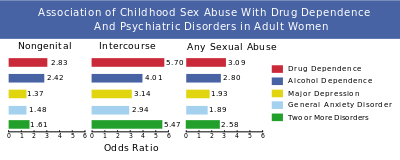
Research financed by the United States National Institute of Drug Abuse found that “Among more than 1,400 adult females, childhood sexual abuse was associated with an increased likelihood of drug dependence, alcohol dependence, and psychiatric disorders.”4 The relationships are given as odds ratios: For a girl who in the absence of any nonsexual intercourse of the genital organs during infancy is 2.83 times more likely to get hugely involved in drug use when compared to a girl who was never molested.
A study that has been financed by the National Drug Abuse Research Institute in the United States has found that sexual abuse in children is more than 1,400 children who were indulged in several criminal activities. Further, Women were also associated with an increased risk of drug, alcohol, and mental illness. This relationship is expressed in the probability ratio. For example, women who have experienced non-genetic abuse in childhood are 2.83 times more prone to developing drug addiction when they become adults than women who have not been abused in childhood. This simply happens due to child sexual abuse’s psychological impact.
Repeated Exploitation that occurs more frequently or with greater intensity over childhood and later life has been shown to have long-term negative effects. Several adult mental illnesses, such as drug addiction, alcoholism, crime, and suicide, are also linked to child sexual abuse. Males who experience sexual assault as youngsters are more likely to check into a criminal justice system than a psychiatric treatment center. When middle-aged women who experienced childhood maltreatment are compared to those who did not, research shows that the former spend much more on medical care. It has been noted that there are intergenerational effects at play, with offspring of sexual assault survivors exhibiting more behavioral issues, interpersonal conflicts, and psychiatric issues than their counterparts.
There are many different perspectives on the origins of these relationships of child sexual abuse. Still, we are not able to discover a precise pattern of symptoms of CSA. Several studies highlight that Psychological issues affect between 51 and 79 percent of children who have experienced sexual abuse. Further, according to the research the Penetration, length, and frequency of the abuser’s abuse, and the use of force are other variables that may impact the severity of the damage, such as when the perpetrator is a relative, if the perpetrator has sex, seeks to have sex, threatens, or uses violence, or when the risk of harm rises. Children who experience sexual abuse may suffer psychological harm as a result of the societal stigma attached to it; however, children who are raised in loving families are less likely to suffer negative outcomes.
B. Posttraumatic stress disorder
Child abuse, covering up such a wide area as child sexual abuse, especially those who suffer the abuse during childhood, is closely connected with the emergence of devastating symptoms of dissociation, including for example, kids’ inability to remember their abuse experiences Particularly, a serious act of sexual abuse (encompassing tortures such as repeated rapes, penetration, presence of multiple perpetrators, and enduring for more than a year) would lead to the serious manifestation of dissociative features. The latest research shows that adult female survivors of CSA have difficulties with social relationships similar to those found in the previous studies. PTSD symptoms include a haunting fear and a predisposition to social anxiety. Withdrawal from the resolutions of social status and mood numbing are indicators of CSA. Therefore, they are great impediments to healthy social functioning. In addition low PTSD risk has been linked with problem drug use for reasons such as the name of the “self-medication hypothesis” and “high risk and susceptibility hypothesis.”
Furthermore, other co-occurring psychological disorders found together with victims of child abuse include symptoms of dissociative identity disorder (DID), post-traumatic stress disorder (PTSD), and complex post-traumatic stress disorder (C-PTSD)5. Additionally, patients may also present with different eating disorders, particularly bulimia nervosa, as well as borderline personality disorder (BPD).
C. Physical
1. Injury
The degree and nature of force used in terms of CSA which varies from age to size of the child may lead to several consequences like internal bleeding and lacerations. In some of the where the CSA may be severe, it may lead to damage of internal organs, and bleeding, which in some cases may lead to the death of the child.
2. Infections
CSA may cause several infections and STD diseases which can lead to poor health in children and even slowly it may cause children to die. This happens due to a lack of vaginal hygiene. In several cases, Vaginitis has been also reported which occurs due to sexual activities without taking due care.
D. Neurological damage
Studies have shown that stress resulting from sexual abuse is one kind of trauma that may profoundly alter brain development and function . Ito et al. (1998) discovered that “the inverse hemisphere asymmetries and greater coherence of the left hemisphere in abusive subjects are observed” Researchers Teicher et al. (1993) discovered that perpetrators are more likely to experience symptoms resembling “semi-epilepsy of the temporal lobe”; Anderson et al6. (2002) observed abnormal transverse relaxation times in the cerebellar vermis of adults who had experienced childhood sexual abuse; Teicher et al. (1993) discovered that child sexual abuse was linked to a reduction in the callosum area of the brain; multiple studies have discovered a connection between child sexual abuse and the shrinkage of the left hippocampus; and Ito et al. (1993) discovered that the prevalence of sexual or physical abuse in children was rising, and some research suggested that it could result in excessive exposure to immature limbic systems7. It was assessed 253 persons for symptoms resembling ictal temporal lobe epilepsy using the Logical System Checklist-33. A 49% rise in the LSCL-33 level and an 11% increase in self-reported physical abuse were linked to reports of child sexual abuse. The number of reports of physical and sexual assault rose by 113%. Both male and female victims were impacted.
E. Incest
Furthermore, child infestation or adult incest between children and adults is a related relationship which has been referred to be the most common kind of child sexual abuse. This leads to cause significant harm to adolescents child. More than 70% of sexual assault offenders, according to one study, were members of the victim’s immediate family or someone extremely close to them8. More than 60% of the offenders, according to another study, were family members, including acquaintances, neighbors, or babysitters.
One of the commonly reported forms of incest is of a daughter whether it be full blood, half blood, or uterine blood, and a father insect or similar in terms of a son, stepson, or stepmother. Similarly in the post-modernism phase, we have seen instances of incest between the siblings too. Also, we have seen several instances of child and mother incest. Thus there have been instances of child sexual abuse because of that it is done in secrecy and as per some data it can be held that 20 million in developed countries like the US have been victims of CSA.
TYPES
CSA includes various types that harm the mental state of children affect overall well-being and also contribute to the negative impact of deprivation of human resources for the growth of the country. This includes various types of CSA which are mentioned below:
Physical Abuse
The deliberate physical injury that parents or other carers experience is referred to as this kind of abuse. Roughly eighteen percent of maltreated children experience physical abuse, which is the primary cause of child mortality. Infant fatalities under one year of age are followed by homicides. child neglect and abuse on a physical level.9 A youngster who is physically abused may be struck with items or hands. Physical abuse also includes biting, burning, or physically incapacitating children. It also includes being physically assaulted if a kid has a handicap or is caring for an unmarried mother. The danger of violence also rises in situations of poverty and domestic abuse. This also holds true for kids who have more than two siblings and sisters living with them or who grow up with unrelated adults.
• Emotional Abuse:
This kind of abuse is not as unpleasant, even if there aren’t usually instantaneously visible indicators of bodily harm. It happens when parents or guardians abuse, terrorize, neglect, or take advantage of their children. Emotional abuse accounts for 8% of child abuse instances, according to the 2010 United States Child Abuse Statistics Report. The number of documented incidents of emotional abuse may be considerably greater.
• Sexual Abuse:
The word “sexual assault” refers to adult aggression utilized by adolescents to satisfy their sexual desires, such as rape (including sodomy) and object-based sexual penetration. The majority of states in the US define sexual assault as any penetration—regardless of degree—into the body of a minor if the contact is made for sex; examples include child prostitution, sexual abuse via live streaming, and the production or distribution of child pornography10.
Additionally, Sexual grooming is one of the major problems for the growth of the children as in this process potential children are forced to take advance to help them but they exploit them physically, mentally, and sexually.
Neglect:
There have been several negligence in the form of child sexual abuse and the form by which the perpetrator gets motivated to do the same offense on another victim. So, it is an issue prevailing in the society and that must be tackled. The impact of this goes to such a level that a child even after growing up is not able to tackle and realize the world. He or she may also be prone to several drug abuse. Further, due to the negligent behavior of the guardian the child also sometimes thinks that this is the daily course of life that must be followed. As they become prone to such issues.
COMMERCIAL SEXUAL EXPLOITATION
Commercial sexual exploitation of minors can be defined as the exploitation by adults of children or adolescents including (men or women) before the age of eighteen, which involves compensation made in cash or kind to several third parties as well as to the kid or adolescents (men or women). Further, the International Organization observes and defines commercial exploitation as the Development of the commercial exploitation of minors for sexual and pleasure purposes by exploiting them economically which is more comparable to forced labor and slavery. Also, it is a form of exploitation that is like rape in which a female is breathing but without a soul under her. Furthermore, this type of exploitation includes criminal exploitation of minors who are involved in sex in public or private settings for example brothels, discotheques, massage parlors, bars, hotels, restaurants, and similar establishments.
There are some examples of child sexual exploitation which are mentioned below: Child Prostitution: “Pedophiles” or “child prostitution” displays the fact that youngsters, both boys, and girls, are being hired for sexual services in different settings, such as brothels, bars, hotels, restaurants, nightclubs, and massage parlors where the price paid is equivalent to that demanded in the normal course of business.
This involves the use of child victims in the sex trade, the fascination of tourists for sex with minors, and the manufacture, promotion, and distribution of pornography involving children. The United Nations Protocol on trafficking in persons, especially women and children, often referred to as the Palermo Protocol defines “exploitation” to include all forms of prostitution which is forced upon others, sexual exploitation, and the selling of the body of another, forced labor or services, slavery or similar to slavery practices, servitude, or the divesting of organs. Furthermore, in the 1996 Stockholm Declaration, the member states of the world outlawed the use of sexual exploitation of children as it is a kind of coercion and is tantamount to slavemaking and the existence of labor agencies. The act of selling children for sex, child pornography, and related acts that take place before the children become adults are recognized, in the 2006 Report11 of the Independent Expert for the United Nations’ study on child abuse, as forms of violence.
DISCLOSURE OF CHILD SEXUAL ABUSE
The disclosure of child sexual abuse has been a key part of the offender being put behind bars. There has been a need for What Professionals Need to Know Practitioners Require Disclosure of Child Sexual Abuse Information. According to the research, many of the youngsters do not come forward with reports of sexual abuse right away. If some of the children are exposed to the abuse at all levels then some children may not do so for years so there the offender gets the leverage. It has been so astounding how few adult victims of child sexual assault have ever told anybody about their experiences. This low disclosure rate adds a great deal of complication to dealing with child sexual abuse. Because of these low disclosure rates, practitioners have difficulties when attempting to prevent or intervene in such cases. Furthermore, studies have accurately shown that kids who reveal events experience either reduced or no trauma compared to kids who don’t disclose such events. They are also resistant to certain drug use habits. The factsheet of the research paper for The Information Regarding Reporting Child Sexual Abuse includes the following list includes some of the most important inquiries about the disclosure of child sexual abuse:
1. Do kids who have been sexually abused as youngsters ever come forward or, in some circumstances, do they never?
a. Recent studies show that many victims postpone disclosing until they are adolescents or adults, or they may never do so.
2. How are disclosures measured by researchers?
a. A variety of techniques are used by researchers to evaluate disclosure patterns.
3. What is the disclosure rate?
a. Although disclosure rates fluctuate, it’s important to understand that low disclosure rates continue.
4. To whom do children disclose?
a. Kids may confide in experts, classmates, or responsible adults.
5. What are the known repercussions for withholding information?
a. Withholding information may impede action, prolong suffering, and keep the cycle of abuse going.
6. Why do kids decide not to disclose?
a. non-disclosure is influenced by elements including fear, guilt, and uncertainty.
7. What motivates a kid to report abuse?
a. Safe spaces, trust, and supportive surroundings are essential for promoting disclosure.
8. Why do some kids backtrack or provide inconsistent stories?
a. A range of social and psychological variables impact the consistency of disclosure.
9. Is disclosure influenced by age or gender?
a. Gender and age differences affect how kids reveal their experiences
The results of the research may help practitioners confront child sexual abuse which can be tackled in the working upon following areas:
1. Peer-to-peer education: There must be a sort of peer-to-peer education system that will help create an ecosystem for the holistic development of the CSA and it will also help to curb the CSA as the offender will get the punishment by the disclosure of crime by the victim.
2. professional practices: There must be a mechanism with the help of which the professionals or government servants can visit the several orphanages or homes where the child resides.
3. Parenting techniques: The government should also promote and be aware of the parenting techniques through which the parents can talk about the stereotypes and can able to bring the child the knowledge of good touch and bad touch. It is very helpful in the case of female children as they are more prone to CSA.
4. treatment techniques: Several treatment techniques must be followed to help children who have suffered CSA or related offenses from medicine to psychological treatment.
There is the following list of cultural norms that highlight how the children have influenced the possibility of child sexual abuse disclosure12.
1. Cultural Factors and Disclosure: In case of whether child sexual abuse is reported by a kid or found by an adult will always depend greatly upon the child’s ethnic and religious context and how he or she was brought up. These cultural standards also influence whether the families of abused children choose to disclose the abuse that was done to their child to the police or any competent authority. In this case, its effect is seen both domestically as well as abroad.
2. Cultural factors are relevant: In the case of Ghana, several studies have outlined that the issue of nondisclosure of child sexual abuse in Ghana involves different factors which include cultural shame, acceptance of rape myths, and subtle patriarchal aspects. This kind of mindset must be changed to treat or vindicate the cases of CSA from the modern time.
3. Socio-Cultural Barriers and Facilitators: The disclosure made by the children may be made easier by acculturation, which is the process of assimilating into a new culture. On the other hand, being a member of a minority identity might prevent revelation of the child sexual abuse.
4. Guidelines for Culturally Sensitive Interviews: The professionals should also employ culturally sensitive child abuse by the help of interviewing approaches to the children when they are dealing with children from varied cultural backgrounds.
Furthermore, while discussing child sexual assault, the cultural context is also important. In this situation, to help victims and promote disclosure, Practitioners need to be aware of these complexities. Furthermore, cross-cultural research on the disclosure of child sexual abuse offers important insights into the dynamics of disclosure in many cultural settings13. Here are a few noteworthy discoveries:
A thorough analysis of the literature on child sexual abuse disclosure in real-world settings was conducted14. The main conclusions were as follows:
1. Disclosure is a relational process that is renegotiated during each interaction and changes over time.
2. The traits and responses of the interaction partner are crucial to this process. The results of disclosure are not only determined by the actions and words of children. The discussion included implications for future research and practice.
3. Cultural Concerns with Disclosure: Religious and ethnic cultures have a big impact on disclosure rates. Several guidelines for culturally sensitive child abuse interviews have encouraged disclosures from children from many cultural backgrounds in official contexts by the official government institution.
4. Worldwide Prevalence and Challenges: Child sexual abuse impacts people from all social, educational, and racial backgrounds worldwide. As per data roughly 18% of women and 7.6% of males say they experienced sexual assault before turning 18. But underreporting and underrecording continue, so these figures are probably conservative estimates. Also, despite several difficulties with disclosure, there is a high frequency of a lot of victims who put off or refuse to disclose.
PREVENTION
The connotation of CSA involves “children aged 0–17 years old” and they are being subjected to different sexual activity for the perpetrator’s sexual gratification or financial gain. CSA encompasses both touching and non-touching behaviors which also include “contact for sexual purposes, molestation, statutory rape, trafficking, exposure to explicit images, incest, and other exploitative activities”15. Furthermore, CSA also affects children across socioeconomic levels, racial and ethnic groups, and both rural and urban areas. There are some datasets which must be kept in mind before going to the prevention strategies:
• Of confirmed instances of child maltreatment in 2018, 7% (or over 47,000 cases) were formally recognized as victims of child sexual abuse.
• A total of 91% of CSA cases involve offenders who are always known to the child or the child’s family them commit the offense.
There have been several methods to prevent child sexual abuse which includes a multifaceted approach that will help in combating the menace of CSA. Some of the considerable strategies are mentioned below:
1. Promoting Social Norms:
There must be upbringing of several norms which must be inculcated into the new generation and raise awareness among them that will help in the protection of the children against sexual abuse16. Further, we can also teach the basic skills to prevent the menace of sexual violence by empowering the girls and women. Also, we need to talk to our children about this menace and raise the awareness level so that they will be able to share it and the cases will be reported.
2. Creating Protective Environments:
We should always work to provide all children with connections and surroundings that are secure, stable, and caring. There is a requirement to strengthen the economic support for families where the child has been a victim of child sexual abuse. We should also provide and foster quality early care and education. Also, there should be ample focus by the government and various stakeholders and international organizations like the UN on the enhancement, and sensitization of parenting skills to promote healthy child development.
3. Supporting Victims/Survivors:
There must be ample support to minimize immediate and long-term harm that is caused by the CSA and associated problems. As part of Prevent Child Abuse America, there has been a lot of focus on practical solutions to create safe conditions for children, families, and communities which are mentioned below:
• Strengthening Economic Supports: There must be an advocacy at federal and state levels to ensure children start strongly.
• Promoting Positive Social Norms: Public awareness campaigns encourage positive parenting.
• Research and Programs: Our work aims to prevent child sexual abuse through evidence-based solutions.
So, these principles that have been followed and practiced in the US shall also be incorporated in India to curb the menace of CSA. Further, there must be effective global cooperation between the Global North and the Global South. This type of effective sharing of knowledge will help India combine offenses like CSA.
4. Protecting Parents Across Communities (PPAC):
One example is a program run by The Lucy Faithfull Foundation17 the PPAC program from June 2009 to June 2012. The main purpose of the PPAC program was to work with non-English speaking communities to prevent child sexual abuse (CSA). The main key findings from the evaluation of that program were:
• Working in incognizance with community members: Working with the community members helps to identify local risks at the grassroots level that may not be captured through other means by following top to top-down approach. There must be engaging in direct work with community people may aid in identifying local dangers that might not be detected in other ways.
• Employing ‘insiders’ (community members) can be helpful, but practitioners should balance this with engaging a cross-section of the community.
• Inclusivity and exclusion: While being inclusive is essential, excluding certain individuals may empower others.
• Listening and responding: To address community members’ opinions and preferences, programs need sufficient funding and resources.
The program has been run by the Luci Foundation, on those lines there is an urgent need for such a program to run in India. These types of programs will be able to curb the menace of CSA and will further lead to a prosperous economy as children are always known as the potential human resource of a country. The offenses of CSA are considered as a big hurdle on the path of the country’s development. While considering that India should be a developed Economy by 2047 it is quite necessary to take some of the effective measures from the global good practices which will be able to curb the menace of child sexual abuse. This will also help to achieve India the SDG Goals as demarcated by the UN and further it will help India to become a strong economy with many innovative minds.
CONCLUSION
In conclusion, the research paper underscores the urgency of addressing CSA as a grave violation of children’s rights and a pervasive social issue with far-reaching consequences. It calls for a holistic approach that combines legislative reforms, community engagement, and targeted interventions to protect vulnerable children and support survivors. By understanding the complexities of CSA and implementing evidence-based strategies, societies can strive towards creating safer environments where every child can thrive free from the scourge of sexual abuse.
Based on the findings and analysis presented in the paper, several recommendations emerge that there must be Strengthening legislative frameworks that will able to enhance the implementation and enforcement of laws such as POCSO and JJ Act to ensure swift justice for victims and accountability for perpetrators. Also, there must be promoting awareness and education. Further, we must launch public awareness campaigns and educational programs to empower children, parents, and communities with knowledge and skills to prevent and respond to CSA. The efforts of enhancing support services: Invest in the expansion of support services, including counseling, rehabilitation, and legal aid, to meet the diverse needs of CSA survivors must be done. The last suggestion from this paper would be we must focus on fostering collaboration i.e Foster collaboration among government agencies, civil society organizations, and international stakeholders to coordinate efforts, share best practices, and mobilize resources for combating CSA effectively.
By prioritizing these recommendations and adopting a comprehensive, multidisciplinary approach, societies can work towards creating a safer and more nurturing environment for all children, free from the scourge of sexual abuse.
*****
Footnotes
1. “Steve Ouma & Dr. Catherine Mbagaya, Perceptions of Students and Administrators on Peer Pressure as a Predictor of Students’ Sexual Behavior in Secondary Schools in Homa-Bay Town Sub-County, Kenya (Oct. 30, 2023) (unpublished manuscript), https://doi.org/10.21203/rs.3.rs-3488876/v1.”
2. “Merriam-Webster, Pedophilia, 1 (last visited Apr 15, 2024)”
3. “University of Pennsylvania Center for Youth Policy Studies, The Sexual Exploitation of Children, Chart 1: Definitions of Terms Associated With the Sexual Exploitation (SEC) and Commercial Sexual Exploitation of Children (CSEC) (p. 4), U.S. National Institute of Justice, August 2001”
4. “Patrick Zickler, “Childhood Sex Abuse Increases Risk for Drug Dependence in Adult Women,” NIDA Notes 17 (1) (April 2002), 5, doi:10.1151/v17i1CSAIRDDAW”
5. “G. Hornor, Child Sexual Abuse: Consequences and Implications, 24 J. Pediatric Health Care 358 (2010).”
6. “MH Eicher, CA Glod, J Surrey & C Swett, Early Childhood Abuse and Limbic System Ratings in Adult Psychiatric Outpatients, 5 J. Neuropsychiatry Clin. Neurosci. 301 (1993)”
7. “CM Anderson, MH Teicher, A Polcari & PF Renshaw, Abnormal T2 Relaxation Time in the Cerebellar Vermis of Adults Sexually Abused in Childhood: Potential Role of the Vermis in Stress-Enhanced Risk for Drug Abuse, 27 Psychoneuroendocrinology 231 (2002).”
8. “Bernard Gerbaka, Sami Richa & Roland Tomb, Child Sexual Abuse, Exploitation and Trafficking in the Arab Region (Springer [XVII, 432] [03 JUNE 2022])”
9. “[Online] StatPearls. StatPearls Publishing, Treasure Island, Florida, January 20, 2021”
10. “Bernard Gerbaka, Sami Richa & Roland Tomb, Child Sexual Abuse, Exploitation and Trafficking in the Arab Region (Springer [XVII, 432] [03 JUNE 2022])”
11. “Bernard Gerbaka, Sami Richa & Roland Tomb, Child Sexual Abuse, Exploitation and Trafficking in the Arab Region (Springer [XVII, 432] [03 JUNE 2022])”
12. “Mona A. Hassan, Patterns of Sexual Abuse among Children: Victims’ and Perpetrators’ Characteristics, 24 J. Aggression, Maltreatment & Trauma 400-418 (2015)”
13. “Ramona Alaggia, Disclosing the Trauma of Child Sexual Abuse: A Gender Analysis, 10 J. Loss & Trauma 453 (2005), available at https://doi.org/10.1080/15325020500193895.”
14. “Kristy L. Shockley, Patterns of Disclosure of Child Sexual Abuse (CSA) in 500 Cases Reported to the Authorities in 2009 to 2013 (2020) [ProQuest Dissertations Publishing No. 28087723].”
15. “Child Sexual Abuse Prevention, Prevent Child Abuse America (accessed April 9, 2024), https://preventchildabuse.org/what-we-do/child-sexual-abuse-prevention/”
16. “Bernard Gerbaka, Sami Richa & Roland Tomb, Child Maltreatment and Trafficking in the Arab Region (Springer [XVII, 432] [2 JUNE 2021]) https://doi.org/10.1007/978-3-030-66507-4”
17. “Child Sexual Abuse, NSPCC, (last visited Apr 9, 2024), https://learning.nspcc.org.uk/child-abuse-and-neglect/child-sexual-abuse/.”