
INTRODUCTION
The advent of digital technology in the global economy has completely changed the form of international trade. Traditionally, the concept of trade was characterized by the physical flow of the physical material over the established territorial boundaries, with the measures of the existing rules of custom and tariffs in place. The arrival of the internet has however created a marketplace that is borderless where businesses can transact immediately between two parties situated at various legal jurisdictions. This has resulted in the cross-border e-commerce exploding and forming an intermediary complex of a cyber borderline, in which the classic international trade laws cannot be applied easily (Prasad, 2023). As this digital transformation provides the business with incomparable opportunities to enter foreign markets, it also leaves substantial loopholes in the existing legal framework, especially in the areas of jurisdiction, consumer protection and data management (Goyal, Sergi and Esposito, 2019).
A. Background and Evolution of Digital Trade
Digital trade is not limited to the involvement of the mere buying and selling of goods online anymore, but it involves a plethora of services, information flows, and digital products. The emergence of digital markets has opened up trade to the Small and Medium-sized Enterprises (SMEs) and even individuals to trade with the world economy alongside multinationals. According to Meltzer (2019), to govern this new type of trade, the traditional trade regulations have to be reassessed, as they were designed to regulate a world of shipping containers, and not data packets.
The physical-digital transformation of trade has left a conflict between the quest to free digital trade and the increasing digital protectionist wave (Azmeh, Foster and Echavarri, 2020). The developing countries, especially, are particularly vulnerable in trying to enter Global Value Chains (GVCs) because of the presence of digital trade barriers that may cripple their economies (Jin and Pan, 2025). What has developed in this environment is a disjointed world legal environment whereby the rate of technological use has surpassed the pace of international law harmonization.
B. Problem Statement: The Legal Lag
The main issue covered by the given research is the so-called legal lag the gap between the dynamism of technologies in cross-border e-commerce and the stagnation of the laws on the national and international levels. Jurisdiction in the physical world is connected to territory. On the online front, though, a buyer in Germany, a site based in the United States, and a vendor in Bangladesh can be involved in a transaction. Defining the jurisdiction of the laws of each country in matters to do with validity of the contract, the rights of the consumer or even the taxation is full of confusion.
Frynas (2002) poses that these issues of law and politics highlight the boundaries of globalization as nation states seek to reclaim their authority over borderless transactions. More so, the absence of a singular international system has given rise to a sense of fragmentation in international digital trade policies where companies must manoeuvre through a mass of contradictory policies (Feng, 2025). This legal ambiguity is a non-tariff barrier which increases the cost of compliance and deters smaller players to participate in the trade across the border.
C. Key Legal Challenges
Four key pillars of legal issues in cross-border e-commerce will be explored in this paper:
1. Jurisdictional Conflicts: The challenge of which law should be applied and which forum should be used to settle the dispute in the international e-commerce contractual agreements (Rosner, 2001).
2. Infrastructure Privacy and Security: The conflict whereby the need to have cross-border data flows to facilitate business processes and the growth in the national legislation of data protection laws e.g. between the security and privacy (Tahir and Tahir, 2024).
3. Intellectual Property Rights (IPR): There is a widespread problem of digital piracy and the difficulties of applying IPR to the digital space where duplication is free and immediate (Chattopadhyay, 2013).
4. Consumer Protection: protection of customers who make purchases with foreign organizations, the local legislation which could provide insignificant protection (Prayuti, n.d.; Sikder and Allen, 2023).
D. Comparative Overview: Traditional vs. Digital Trade Frameworks
Addressing the profoundness of the legal challenge, it is crucial to compare the reality of operation of the traditional trade with the reality of digital paradigm.
Table 1: Structural Differences Between Traditional and Digital Trade
| Feature | Traditional Trade | Digital Trade & Cross-Border E-Commerce | Legal Implication |
|---|---|---|---|
| Border Nature | Physical borders with customs checkpoints. | “Cyber borderlines” (Prasad, 2023); virtual and permeable. | Hard to enforce tariffs or stop illicit digital goods. |
| Product Form | Tangible goods (atoms). | Intangible goods/services (bits) & Data. | Difficulty in applying traditional IP rights (Chattopadhyay, 2013). |
| Delivery | Time-bound logistics (shipping/freight). | Instantaneous delivery (downloads/streaming). | Complicates “place of supply” rules for taxation. |
| Jurisdiction | Clear territorial nexus (Port of Entry). | Ambiguous nexus; server location vs. user location. | Jurisdictional challenges in contracts (Rosner, 2001). |
| Parties Involved | Mostly B2B (importers/exporters). | B2B, B2C, and C2C (platform economy). | Consumer protection becomes a cross-border issue (Prayuti, n.d.). |
E. Research Objectives and Structure
This paper aims to critically examine these legal issues and also determine the usefulness of the existing international legal frameworks including those suggested by UNCITRAL and the WTO. It will also examine how these risks can be mitigated by the harmonisation efforts as postulated by Eiselen (2010).
THE EVOLVING LANDSCAPE OF INTERNATIONAL DIGITAL TRADE LAW
This shift of the physical trading environment to a digital environment has created a requirement to reexamine the international legal systems fundamentally. Although the principles of international trade are still the same since non-discrimination and access to the market, their application to bits and bytes is complicated. This part examines the available literature and regulatory processes and points out that there is a conflict between the need to harmonize policies around the world and the reality of disjointed domestic policies.
A. From Physical to Digital: The Harmonization Challenge
The globalization process has always been predetermined by the decrease in tariffs and physical goods transportation costs. During the digital era, however, regulatory divergent standards are the major obstacles. Eiselen (2010) asserts that as a result of globalization of trade there is need to have a harmonization of the private law to minimize the transaction costs and legal uncertainty. Without mutualized regulations, the companies must operate under a so-called throwback of conflicting compliance obligations which suffocates the cross-border operations.
This harmonization is behind schedule in the case of digital trade. Digital trade does not have a common code of conduct, as opposed to the standardized container shipping codes that aided the physical trade boom. Meltzer (2019) contends that regulation of digital trade is strange due to the fact that it touches on domestic policy sensitivities including privacy, national security and censorship, which are historically sovereign areas. This means that the global trade order is now finding it hard to achieve its “quest of free digital trade” in the wake of increasing digital nationalism (Azmeh, Foster and Echavarri, 2020).
B. The Role of Multilateral Institutions: WTO and UNCITRAL
The global trading policies are mainly designed by the World Trade Organization (WTO) and the United Nations Commission on International Trade Law (UNCITRAL) though they have very different styles of operations.
The WTO and the Classification Dilemma
The WTO structure is divided into General Agreement on Tariffs and Trade (GATT) of goods and General Agreement on Trade in Services (GATS) of services. Digital products are usually too difficult to classify in this binary. Examples include, will a downloaded software bundle be considered a good (to which GATT tariffs apply and zero tariffs) or a service (to which GATS tariffs may apply and market entry barriers may potentially apply)?
• The Moratorium: A temporary moratorium on the imposition of customs duties on electronic transmissions has existed between 1998 and date among members of WTO. Nevertheless, due to the boom of digital trade, developing nations are doubting this moratorium, as they believe that they will lose a source of revenues in the form of tariffs (Azmeh, Foster and Echavarri, 2020).
• The Joint Statement Initiative (JSI): A group of WTO members came to see that the stalemate was caused by a failure to deliver new policies on digital facilitation, launching the JSI on E-commerce initiative which has prompted fragmentation concerns (Feng, 2025).
UNCITRAL’s “Soft Law” Approach
Unlike the hard commitments of treaties of the WTO, UNCITRAL has been keen on developing “Model Laws”- templates that countries may incorporate in their local laws.
• Model Law on Electronic Commerce (1996): The principle of functional equivalence was introduced, according to which, the electronic documents should not be differentiated, but treated in the same way as the paper documents.
• Model Law on Electronic Transferable Records (2017): ALsheyab (2025) emphasizes the fact that this recent advance is essential to the digitalization of cross-border trade since it will allow the legal recognition of electronic bills of lading and promissory notes, which in theory simplify the process of world logistics.
C. The Rise of Regional Trade Agreements (RTAs)
With the slow rate of multilateral development at WTO, countries have gone to regional trade agreements (RTAs) to establish digital regulations. According to Monteiro and Teh (2017), the number of RTAs that provide certain provisions regarding electronic commerce has risen significantly.
Such agreements usually extend beyond WTO rules (WTO-plus), including matters such as:
• Data Localization bans: Banning countries to demand servers to be situated in their countries.
• Source Code protection: Including prohibition of governments to insist on source code of software as a prerequisite to enter the market.
Yet, Feng (2025) cautions that the trend will cause fragmentation of global digital trading rules. The world is not becoming one universal standard but dividing into several digital blocs, including the open data model led by the US and the privacy-centered model (GDPR), the sovereignty-based model of China. This fragmentation makes it expensive in terms of compliance to firms aiming to operate within these blocs.
D. The Digital Divide and Trade Barriers
The other issue highlighted by the literature is that the advantages of digital trade are unevenly distributed. The developing countries offer a critical viewpoint on digital trade barriers by Jin and Pan (2025), who state that Global Value Chains (GVCs) are affected by digital barriers disproportionately. Third world countries are also not usually on the level playing field as they have neither the digital infrastructure nor the legal sophistication to compete.
Moreover, barriers do not only concern tariffs. According to Goyal, Sergi and Esposito (2019), based on the so-called emerging trends in e-commerce, the non-tariff barriers, e.g. tough laws on data protection or intricate consumer protection regulations, can be the major obstacle. To a small business in Bangladesh, it may be too costly to comply with the GDPR of the EU, or US consumer law (Sikder and Allen, 2023).
Table 2: Comparative Regulatory Approaches in Digital Trade
| Feature | Multilateral Approach (WTO/UNCITRAL) | Regional/Bilateral Approach (RTAs) |
|---|---|---|
| Scope | Global, inclusive but slow-moving. | Limited to member states, deeper integration. |
| Enforceability | Dispute Settlement Body (currently impaired). | Specific dispute mechanisms within the treaty. |
| Data Flows | Limited consensus; general exceptions apply. | Often explicit prohibitions on data localization (e.g., USMCA, CPTPP). |
| Key Challenge | Reaching consensus among 164+ diverse economies. | “Spaghetti bowl” effect of overlapping, conflicting rules (Feng, 2025). |
JURISDICTIONAL CHALLENGES AND DISPUTE RESOLUTION IN THE DIGITAL AGE
The issue of determining the jurisdiction is the most direct legal challenge of the cross border e-commerce. On the physical world, geography and jurisdiction cannot be separated: a store in Paris is under the French law. However, in the digital world, transactions take place in a “cyber borderline” and physical presence is not always an issue (Prasad, 2023). When a consumer in one nation buys digital services offered by a company based in a different nation, the question of who has the jurisdiction to decide the issues and what the laws of which nation is applicable becomes a Byzantine legal problem.
A. The Jurisdictional Quagmire: “Long-Arm” Statutes vs. Due Process
The conventional legal systems are based on the doctrine of personal jurisdiction where the alleged offender must possess some physical presence or minimal contacts with the host state. This is challenged by e-commerce whereby businesses are able to communicate with the consumer anywhere in the world without necessarily stepping foot in the country where the consumer is.
Rosner (2001) points out that the internet has posed a challenge on how these territorial concepts can be applied by the courts. The major advancements in this are the use of what is referred to as the Long-Arm Statutes and this enables a court to exercise jurisdiction over an interstate defendant in case he or she has committed a tort or breached a contract in a state.
In order to explain this, in many cases, the courts resort to the analysis of a sliding scale (which is the result of the landmark case Zippo Mfg. Co. v. Zippo Dot Com, Inc. but the same principles are utilized all over the world):
• Active Websites: In case a defendant contracts and knowingly engages in business with the citizens of a foreign jurisdiction, the services of the courts of that jurisdiction apply to the defendant.
• Passive Websites: When a site simply publishes information that can be accessed by anyone (e.g. an advertisement) but does not conduct transactions, no jurisdiction is usually created.
• Interactive Websites: This is the mid-ground where the users communicate with the host computer by exchanging information. The jurisdiction in this case is based on the degree of commercial interactivity.
This uncertainty poses a great danger to e-commerce traders. The inadvertent actions of a small business can force the legal systems of a foreign country on to it by merely making its web site visible in the foreign country.

Figure 1: The “Sliding Scale” of Cyber-Jurisdiction
B. Choice of Law and Party Autonomy
A court that has ruled that it has the power to hear a case (jurisdiction) must then rule on the law to be used (Choice of Law). Party Autonomy is mostly applied in B2B (Business-to-Business) transactions. An International contract usually contains a Choice of Law (e.g., This agreement shall be governed by the laws of New York).
This is however limited in B2C (Business-to-Consumer) e-commerce. Similar to the EU law as Tereszkiewicz (2018) remarks, contractual choice of law clauses are frequently disregarded by the mandatory consumer protection rules. This implies that an American based company would not be able to enter into a contract in the EU with a German consumer to sell them a product, despite the user clicking on the I Agree button to sign the agreement claiming the opposite. This poses a compliance nightmare in which the global platforms are basically obligated to adhere to the stringent local legislation in each of the markets that it operates.
C. The Solution: Online Dispute Resolution (ODR)
Since a case in the local court would cost a lot, it is not viable to sue a seller in a foreign country due to a defective product that costs $50. Online Dispute Resolution (ODR) was brought about by this gap in justice.
According to Duca, Rule and Loebl (2012), ODR is not an alternative but is a necessity as far as expansion of cross-border e-commerce is concerned. ODR systems transfer the whole dispute resolution process including the filing, negotiation, and mediation to the online platform.
Types of ODR:
1. Automated Negotiation: Algorithms (such as “blind bidding”) are used to settle financial disputes by parties without human intervention.
2. Assisted Negotiation/Mediation: This is a third party who mediates a settlement through electronic communication.
3. Online Arbitration: It involves the resolution of a case by a third party judge through digital evidence.
Technical Notes on ODR of the United Nations Commission on International Trade Law: To standardize these systems, the United Nations Commission on International Trade Law (UNCITRAL) has come up with technical notes on ODR. With these guidelines, it is hoped to establish a global ODR system that is easily accessible, quick and affordable to handle low-value cross-border disputes (Duca, Rule and Loebl, 2012). Massive internal ODR systems have already been installed by private platforms such as eBay and Alibaba, handling millions of disputes annually, many more than any system of public courts.
D. Enforcing Judgments Across Borders
As much as a consumer may win a lawsuit or even an ODR adjudication, it is hard to enforce such a ruling on a foreign being. No universal convent on judgments exists today that has the same coverage as the New York Convention on arbitration awards. This implies that the legal value of the judgment of a court in India is not legally binding on a company based in the United States unless a special bilateral treaty is signed. This enforcement loophole highlights why ODR requires self-enforceable measures e.g. Escrow (e.g. PayPal withholding money until customer has received delivery).
DATA PROTECTION, PRIVACY, AND CYBERSECURITY IN CROSS-BORDER TRADE
The concept of data as the new oil has become prevalent in the digital economy as it is the most important resource driving cross-border transactions, targeted advertising, and supply chain logistics. Nevertheless, the international flow of data demanded by international trade is clashing more and more actively with the national laws aimed at safeguarding personal privacy and providing national security. This dispute poses a multifaceted legal environment in which companies have to operate under competing regimes (Tahir and Tahir, 2024).
A. The Strategic Importance of Cross-Border Data Flows
Modern international business can not be based on anything less than cross-border data flows. All e-commerce deals entail the transfer of information, personal details about the buyer, payment and logistics information to ship. In the case of multinational corporations (MNCs), it is important that they have centralized data processing in order to be efficient.
Nevertheless, Tahir and Tahir (2024) believe that the world regulating environment has changed towards a more permissive innovation policy to a compliance-only one. Governments are reclaiming a concept known as Data Sovereignty, or the notion that data produced inside a nation is under the jurisdiction of its laws, and, in certain instances, it must not be moved outside of the nation. This is a fundamental challenge to the quest of free digital trade being promoted by the proponents of globalization (Azmeh, Foster and Echavarri, 2020).
B. The Global Privacy Patchwork: GDPR as the Gold Standard?
The latest and the most important legal change in the field is the General Data Protection Regulation (GDPR) of the European Union. Already known as the Brussels Effect, the GDPR has experienced a significant extraterritorial influence since its adoption in 2018.
• Extraterritorial Reach: Article 3 of the GDPR expressly says that the rule is applicable to any organization that sells goods or services to the residents of the EU in spite of the location of the organization. This implies that a small e-commerce company in India or Brazil has to meet the high-quality privacy requirements of the EU in case it is being sold to one person in France (Sikder and Allen, 2023).
• Adequacy Decisions: GDPR does not allow the personal data to be transferred to another country not located within the EU unless that country guarantees the adequate level of the data protection. This has a whitelining effect of safe countries. Where countries are not included on this list, companies will have to use complicated legal frameworks such as Standard Contractual Clauses (SCCs) or Binding Corporate Rules (BCRs), which makes compliance very expensive.
Opposition to other regimes: The EU is more oriented towards a comprehensive and rights-based approach, but other areas are different:
• The United States: Adheres to a sectorial strategy (e.g. HIPAA on health, GLBA on finance) but has no single federal privacy law comparable with the GDPR. This deviation was the basis of the nullification of the Privacy Shield system, which placed a massive legal uncertainty on trans-atlantic data transfer.
• China: The Cybersecurity Law (2017) and Personal Information Protection Law (2021) give national security and the necessity to localize data a higher priority, compelling the critical information infrastructure operators to store data locally.
C. Data Localization and Digital Protectionism
More and more nations are passing Data Localization laws, which require the data of citizens to be stored and processed on country-physically located server.
Advocates believe this is needed to have access by the law enforcers and national security. But Azmeh, Foster, and Echavarri (2020) refer to these as being digital protectionism. Governments make it more expensive to enter their markets by requiring foreign firms to establish data centers in the country, which indirectly protects their local tech giants against foreign competition.
As an example, the high localization demands in such countries as Russia, Vietnam, and now even India, compel global platforms to subdivide their infrastructure. This division negates the economies of scale on which internet economy is based.
D. Cybersecurity Obligations in E-Commerce
In addition to privacy, cybersecurity is a highly important legal requirement. Cyberattacks, such as data breaches, ransomware, and financial fraud are the most common attacks on e-commerce websites.
According to Kashyap and Chaudhary (2023), it is now becoming a liability to companies not only to misuse their data, but also not to protect it. In India, as an example, Information Technology Act and recent guidelines by CERT-In (Indian Computer Emergency Response Team) contain stringent reporting schedules (Usually, within 6 hours) of cyber attacks.
A lack of a sufficient level of security protection may lead to harsh punishment. The question arises in the context of the cross-border trade: what is the security standard of the country?
• In the event that a US platform has been hacked and Japanese citizens information stolen, does the company have any liability under US law or Japanese law or both?
• According to Sikder and Allen (2023), this overlapping liability compels businesses to follow the maximum level of security in the world market to reduce the risk and in effect, imposes the hardest set of regulations on the rest of the world.
INTELLECTUAL PROPERTY RIGHTS AND TAXATION IN THE DIGITAL ECONOMY
Digital trade is an intangible one, which has special problems to protect intellectual property and collect taxes. Digital products (software, music, e-books, designs) can be copied indefinitely at virtually no cost and delivered to consumers worldwide in real time, unlike the physical goods of this world. This non-rivalrous property of the digital commodities essentially disturbs the conventional legal notions of property and taxable presence (Chattopadhyay, 2013).
A. Intellectual Property in a Borderless Environment
Intellectual Property Rights (IPR) are territorial in nature; a patent or a trademark registered in the United States may not necessarily be recognized in China or India. The internet however is global. This discrepancy provides a fertile environment in the violation.
The Piracy Paradox:
According to Chattopadhyay (2013), copyright infringement has become easy in the digital environment. Digital piracy is not just an activity of people downloading movies, but of organized transnational criminal organizations making a profit off of fake digital products.
• Enforcement Problems: In the case of a data haven, where the rights holder is subject to weak IP laws and where the server used by the infringent entity resides, it is a difficult task to enforce rights. They are forced to go through the maze of the private international law to know where to initiate a lawsuit and how to execute a judgment.
• Intermediary Liability: One of the main areas of the dispute is the degree of actions of platforms (e.g., YouTube, Amazon, Alibaba) in the case of IP infringements of their users. The US “Digital Millennium Copyright Act” (DMCA) established a system of safe harbor, under which platforms are safeguarded in case they promptly take down infringing content in response to notification. Nevertheless, in the recent EU law (Article 17 of the Copyright Directive), the focus has changed to direct liability on the platforms, making them adopt aggressive content filtering technologies.
The Role of TRIPS:
The Agreement on Trade-Related Aspects of Intellectual Property Rights established by the WTO (TRIPS) establishes minimum protection of IP. TRIPS was however written during a pre-internet (1994) age. Although it includes copyright and trademarks, it is not as effective at dealing with contemporary challenges, such as the 3D printing files or the rights of the AI-generated content (Sikder and Allen, 2023).
B. The Taxation Dilemma: Base Erosion and Profit Shifting (BEPS)
Taxation can be considered the most controversial question in digital trade. International tax regulations that date back to the 1920s are based on the notion of Permanent Establishment (PE). The only profits which a country can tax is the profits of a foreign company, which has a physical presence (e.g. a factory, office or warehouse) in the country.
The Digital Reality:
The presence of digital giants in a given market with a large number of users (millions) and a large amount of revenue (billions) with no physical PE can be extremely economical. This gives them the opportunity to realize profits in low-tax jurisdictions (e.g. Ireland, Bermuda) instead of where the value is in fact generated (where the user is located). This is what is referred to as Base Erosion and Profit Shifting (BEPS).
According to Kadikov (2015), the concept of PE has become outdated due to the process of digitalization of commerce. When a company applies algorithms to target its advertisements to French-speaking consumers and gathers information about them, the company is present in France online, despite not having servers there.
C. The Global Response: OECD’s Two-Pillar Solution vs. Digital Services Taxes
To eliminate this disparity, the Organisation Economic Co-operation and Development (OECD) has been on the fore in re-writing tax regulations on a worldwide basis.
• Pillar One: redistributes taxing rights to market jurisdictions (where the users are), whether in the presence of physical presence or not. This is against the biggest and most lucrative multinational enterprises (MNEs).
• Pillar Two: Brings in a global minimum corporate tax rate (15) to stop the race to the bottom in tax competition.
Unilateral Measures (Digital Services Taxs – DSTs):
Due to the sluggish speed of global consensus, a number of countries (e.g., France, UK, India, Italy) have introduced unilateral Digital Services Taxes (DSTs). These are turnover taxes (typically 2-3%) on revenue on digital services such as advertising and data sales.
• Trade Tensions: The US has perceived in the past that DSTs are discriminatory tariffs on its tech firms and has threatened to retaliate with trade sanctions (Section 301 investigations).
• The Fight: This leads to a political climate of poor taxation and trade arguments, and the necessity to entirely have the OECD global solution in place (Kadikov, 2015).
Table 3: The Shift in International Taxation Logic
| Feature | Traditional Tax Law (Physical) | Digital Tax Law (Emerging) |
|---|---|---|
| Nexus (Connection) | Physical Presence (Brick & Mortar). | “Significant Economic Presence” (Digital Footprint). |
| Profit Allocation | Where value is produced (Supply side). | Where value is consumed (Demand/User side). |
| Data Value | Ignored; considered an intangible asset. | Central; user data is a key value driver. |
| Primary Mechanism | Corporate Income Tax. | Digital Services Tax (DST) / OECD Pillar One. |
COMPARATIVE ANALYSIS OF DIGITAL TRADE GOVERNANCE MODELS
With the maturity of cross-border e-commerce, the vision of a worldwide internet without boundaries is being shattered into separate regulatory blocks. Legal academics refer to this as the Splinternet a digital ecosystem that falls along the disputing national legislation and geopolitical ambitions. According to Chen and Gao (2022) there are three major models of digital trade governance: the market-driven model adopted by the United States, the rights-driven model adopted by the European Union and the state-driven model adopted by China. It is essential to comprehend these divergent models to any business which is operating in an international context.
A. The United States: The Market-Driven Model
The US model is based on the principles of laissez-faire economy, with the focus on innovativeness, the freedom of speech, and the free flow of information.
• Regulatory Philosophy: The US government does not typically ex-ante (preventative) regulate digital platforms, but may ex-post (e.g. antitrust breaches) only where particular harms have been inflicted.
• Legal Institution: Section 230 of the Communications Decency Act is one of the pillars of US digital law granting online services a wide-ranging protection against content posted by third parties. The safe harbor has played a significant role in the rise of such giants as Amazon, Google, and Facebook, as it gives them the opportunity to accommodate enormous volumes of user-created content without being afraid of being litigated on a regular basis.
• Trade Strategy: The US in trade agreements such as the USMCA (United States-Mexico-Canada Agreement), is an aggressive advocate of attaining a level of trade limitations that ban information localization provisions and prohibit taxes on digital transmissions (Meltzer, 2019). This is aimed at making sure that American tech companies do not have a high entry barrier in the foreign market.
B. The European Union: The Rights-Driven Model
By sharp contrast, the European Union considers digital economy in the perspective of the key rights, especially privacy and consumer protection. The EU has assumed a role of global regulator exporting its norms by the so-called Brussels Effect.
• Regulatory Philosophy: EU has a stringent ex-ante regulation policy. It does not expect damage to be done, it requires prevention.
Key Legal Mechanisms:
• GDPR: As it is discussed in Section 4, this establishes the privacy standard throughout the world.
• Digital Services Act (DSA) and Digital Markets Act (DMA): Tereszkiewicz (2018) observes that the new legislation places enormous burdens on gatekeeper platforms (primarily, the US technology giants). They require openness in algorithms, more rigorous content regulation, and equitable competition, which in itself is a challenge of the US hands-off attitude.
• Trade Strategy: The EU is not willing to open its markets without adherence to its high standards. Although it facilitates digital trade, it reserves the ability to limit the flow of data in case the privacy is at risk, which is contrary to the US model (Azmeh, Foster and Echavarri, 2020).
C. China: The State-Driven Model
China is a third but different model in which it emphasises on so-called Cyber Sovereignty- the notion the state has complete dominance over its digital space, as it does over its physical space.
• Regulatory Philosophy: The state is at the center of controlling the digital economy. Personal privacy or free market ethos is surpassed by security and social stability.
• Key Legal Mechanisms:
• The Great Firewall: An advanced mechanism of both technical and legal restrictions on domestic access to foreign resources (e.g., Google, Twitter) and limitations on data movement across the borders.
• Cybersecurity Law (2017): Requires extreme data location. The data on the critical infrastructure should be stored in China and it can be inspected by the government.
• Trade Strategy: According to Feng (2025), China countermeasures global fragmentation with creating its own digital ecosystem (the “Digital Silk Road”). Using the Belt and Road Initiative (BRI), China is selling its technology and surveillance standards to the developing countries, developing a Sinosphere of digital trade that is independent of the Western standards.
D. The Impact on Developing Nations and Global Value Chains
This tri-polar world poses a dilemma to the developing countries, which usually have to be stuck in the middle. As noted by Jin and Pan (2025), countries in Africa, Asia, and Latin America are under pressure when they have to decide which party to follow: follow the Chinese model of infrastructure (which is more affordable, but raises the issue of surveillance) or adhere to the Western norm (which is difficult to follow due to high costs).
• Fragmentation Costs: As a small exporter that operates in a developing country, it is simply too costly to conform to three distinct legal regimes: GDPR in Europe, localized data laws in China, and open market in the US. This regulatory heterogeneity is a huge non-tariff protection that cannot allow small players to enter Global Value Chains (GVCs).
• The Spaghetti Bowl Effect: Growth of bilateral and regional trade agreements (RTA) leads to a spaghetti mess of rules. A nation may sign a trade agreement with China requiring it to localize and at the same time sign an agreement with the US prohibiting it and create a legal standstill.
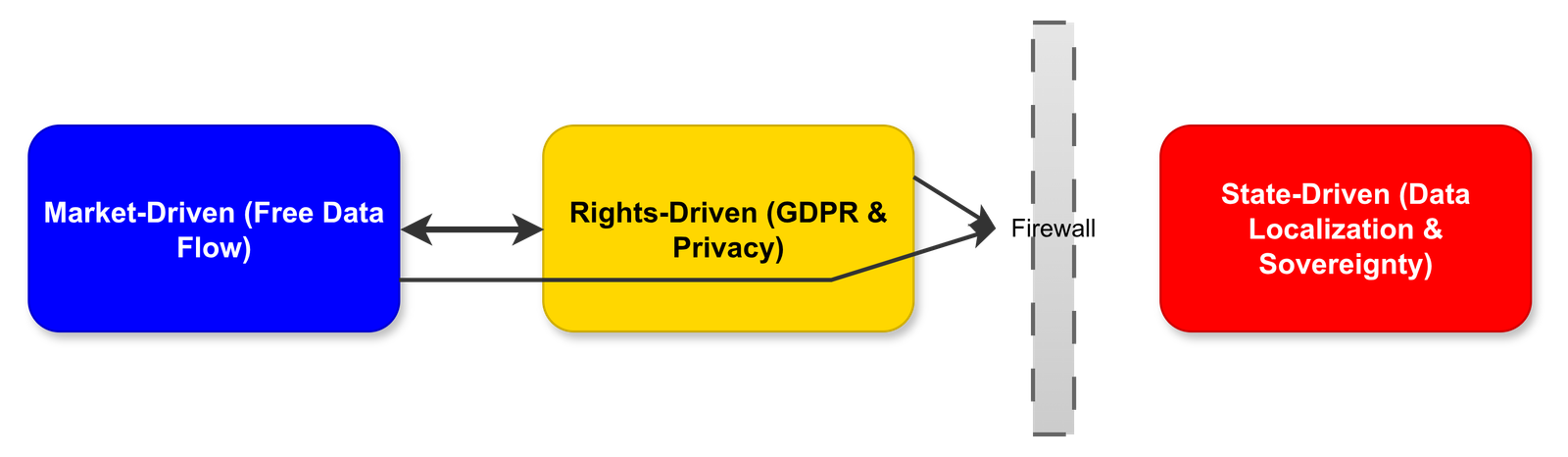 Figure 2: The Global Data Protection Map
FUTURE RECOMMENDATIONS AND CONCLUSION
The digital revolution has largely swept the international business environment to establish a borderless market that runs at the speed of light. Nevertheless, as has been shown in this paper, the legal framework that underpins this trade is still attached to the concept of jurisdiction and sovereignty as understood on earth. The resultant legal lag between technological innovation and regulatory adaptation has created a lot of friction, which has presented itself in the form of jurisdictional uncertainty, disjointed privacy regimes, and tax avoidance strategies (BEPS).
In order to address this gap and create a truly inclusive global digital economy, stakeholders- governments, international organizations and the private sector should shift their focus on piecemeal solutions towards a more integrated approach.
A. Recommendations for Legal Reform
In accordance with the examination of the existing challenges and analysis of the available literature, the following recommendations can be made:
1. Quick-track the Adoption of UNCITRAL Model Laws: Although it is challenging to have high-level political concurrence, technical legal harmonization is possible. The UNCITRAL Model Law on Electronic Transferable Records (2017) should be one of the priorities of governments. According to ALsheyab (2025), it would offer the required legal assurance to paperless trade, lowering transaction costs and controversy since the electronic records would enjoy equal legal authorities to the physical one.
2. Institute a WTO Digital Trade Facilitation Agreement: The WTO has a temporary stop-gap solution regarding e-commerce duties which should be made permanent. The WTO needs to complete the Joint Statement Initiative (JSI) on E-commerce to come up with binding provisions on the data flows, security of the source code, and digital inclusivity. According to Azmeh, Foster, and Echavarri (2020), such agreement should entail the special and differential treatment to make sure that developing countries do not lag behind in the digital race.
3. Adopt Interoperable Privacy Frameworks: The world is unlikely to have a single privacy law given that the EU, US, and China vary in their cultures. Rather, it should be addressed under the term of interoperability. Such mechanisms as the APEC Cross-Border Privacy Rules (CBPR) and Standard Contractual Clauses (SCCs) of the GDPR have to be simplified to enable a smooth flow of data (Tahir and Tahir, 2024). This will demand constant communication among the data protection authorities in order to have a mutual understanding.
4. Enhance the Online Dispute Resolution (ODR) Systems: Since there is no feasibility of pursuing low-value cross-border disputes through conventional courts, the future of e-commerce justice is in ODR. Duca, Rule, and Loebl (2012) suggest the development of a world conscience ODR treaty, similar to the New York Convention on arbitration, to implement the results of mediation digitally automatically.
5. Harmonize Global Tax Rules (Pillar One): At last, the “BEPS” rubric should be resolved. Two-pillar solution by OECD is the only way to avoid global trade war in the Digital Services Taxes (DSTs). According to Kadikov (2015), the digital economy can only be taxed using the principle of profit distribution on the basis of Significant Economic Presence and not on the basis of physical presence.
B. Conclusion
This is the legal issues of cross-border e-commerce, i.e. across jurisdiction, privacy, intellectual property and tax, are symptoms of the more fundamental clash between the diffuse quality of the digital economy and the hardness of the Westphalian nation-state. Prasad (2023) notes that we are working on cyber borders whereby classic sovereignty is being put to the test at all times.
Although the creation of a single global law relating to the internet is a far-fetched reality, the way forward is regulatory interoperability. The international community can minimize the friction of digital trade by striking a balance in technical standards via such organizations as UNCITRAL and trade principles negotiation at WTO. After all, it is not only free digital trade but fair digital trade that can balance economic efficiency and consumer protection and national sovereignty.