
INTRODUCTION
The relationship between material and meaning in contemporary sculpture has undergone a significant transformation, where materials are no longer passive elements but active carriers of conceptual significance. In contemporary art practices, artists increasingly employ unconventional materials and experimental processes to challenge established artistic norms and reflect on broader socio-cultural realities. L.N. Tallur born 1971, Karnataka, India stands out as a key figure in this discourse. He is an internationally recognized contemporary artist known for his interdisciplinary approach, whose sculptural works demonstrate a deep engagement with both traditional craftsmanship and modern technological intervention. Tallur studied at the Ken School of Art in Bengaluru and later at the Winchester School of Art in the United Kingdom which significantly shaped his artistic language. His practice explores themes of values, belief system, history, and globalization through the innovative use of materials such as concrete, coins, terracotta, and organic substances. By doing so, Tallur transforms material into a conceptual language that communicates complex ideas and invites critical reflection.
CONCEPTUAL ART
Conceptual art developed in the mid-twentieth century, focusing on the idea behind the artwork rather than its physical form. It challenged traditional views of art by emphasizing meaning, context, and viewer interpretation. Artists such as Joseph Kosuth and Sol LeWitt played an important role in this movement by showing that the concept itself could be the artwork. This approach also led to the growth of installation and Performance art, where experience becomes central. The practice of L.N. Tallur connects with conceptual arts as his works focus on ideas while using materials to express deeper meanings
MATERIAL EXPERIMENTATION IN TALLUR’S PRACTICE
Material experimentation is central to Tallur’s artistic practice, where the choice and treatment of materials play a crucial role in shaping meaning. His works often combine traditional material such as terracotta and wood with industrial substances like concrete and metal, creating a dialogue between past and present. The juxtaposition reflects the tension between tradition and modernity, recurring theme in contemporary Indian art. In addition to this, Tallur incorporates modern technological processes such as digital scanning and machine-based fabrication, which further complicate the relationship between the handmade and the machine-made. These processes allow him to manipulate form and texture in ways that challenge conventional expectations of sculpture. The materials themselves carry symbolic weight, concrete suggests industrialization and permanence, coins signify economic systems and value, and organic elements evoke mortality and historical continuity. Through these choices, Tallur transforms materials into active agents of meaning, making the process of creation an integral part of the conceptual framework.
DISCUSSION
A close examination of selected works by L.N. Tallur reveals how material experimentation and conceptual meaning intersect in his practice. In Unicode (2011) [ Plate I], the artist reinterprets a traditional Nataraja form using concrete and embedded coins, creating a striking visual contrast between sacred iconography and contemporary materiality. This work reflects on globalization and the standardization of cultural symbols, while the use of coins suggests the pervasive influence of economic systems in shaping value and meaning. In Obituary (2013) [Plate II], Tallur introduce an interactive dimension, inviting viewers to place the coin onto the sculpture. This participatory act transforms the artwork into the site of engagement, where the audience contributes to the construction of meaning, thereby questioning notion of value, ritual, and collective behavior. Another significant work, Fringe (2019) [Plate III], employs materials such as bone and organic substances, evoking themes of mortality, decay, and historical residue. The material itself becomes a metaphor for the passage of time and the persistence of memory. Similarly, Milled History (2014) [Plate IV], utilizes digital technologies to reproduce and alter traditional sculptural forms, raising questions about authenticity, originality, and the ways in which history is mediated through contemporary processes. Across these works, Tallur demonstrates a consistent engagement with the idea that materials are not neutral but deeply embedded with cultural and conceptual significance.
CONCLUSION
The sculptural practice of L.N. Tallur highlights the strong connection between material and experimentation and conceptual meaning in contemporary art. His artworks show that materials are not just physical elements but carry symbolic and cultural significance. By combing traditional techniques with modern materials and technology, Tallur creates sculptures that question ideas of values, history, and identity. His approach highlights the important of process and viewer engagement, where meaning is not fixed but continues to evolve through interpretation. His works encourage viewers to think critically about the role of material in shaping ideas and experiences. Overall Tallur’s practice contributes to contemporary sculpture by showing how innovative use of materials can effectively communicate complex concepts and expand the possibilities of artistic expression.
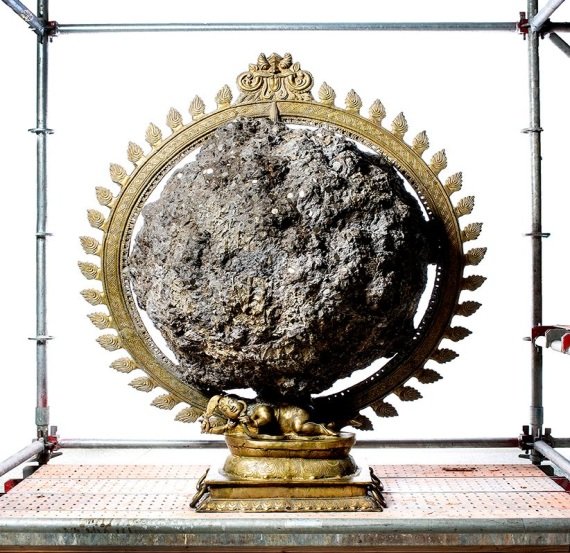
Unicode, 2011 – Plate-I – Source: http://Tallur.com.
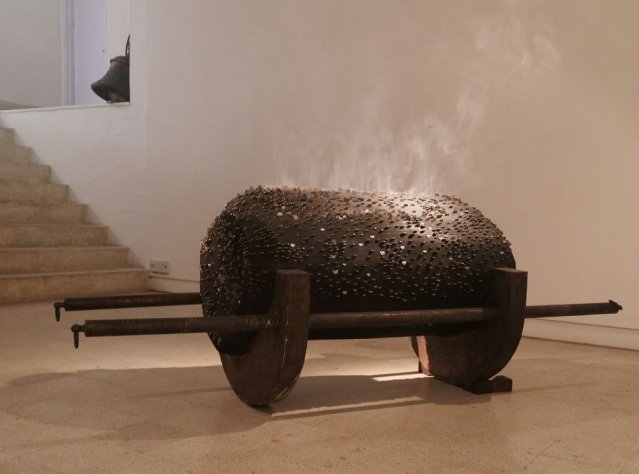
Obituary, 2013 – Plate-II – Source: http://Tallur.com.
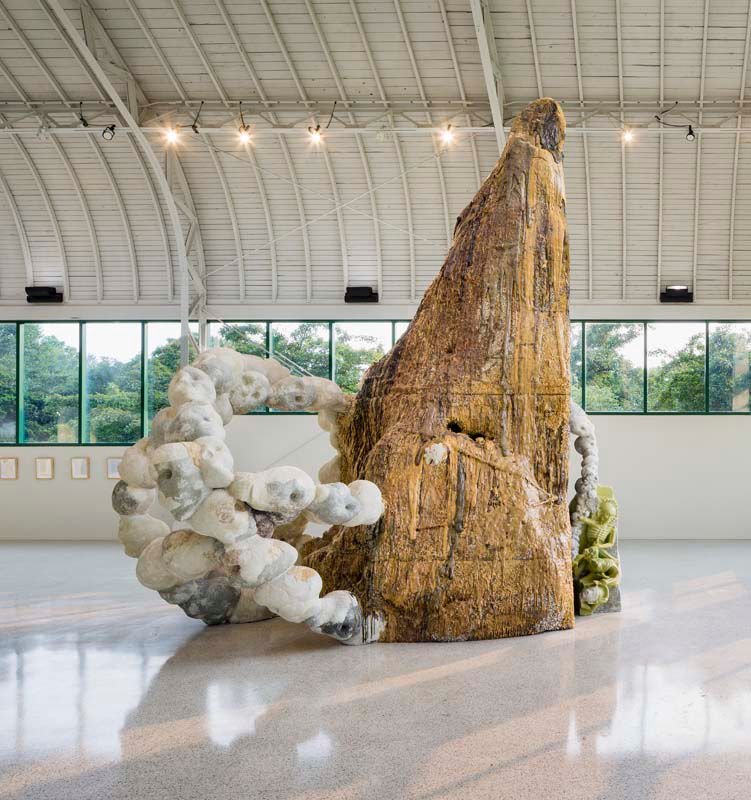
Fringe, 2019 – Plate-III – Source: http://Tallur.com.
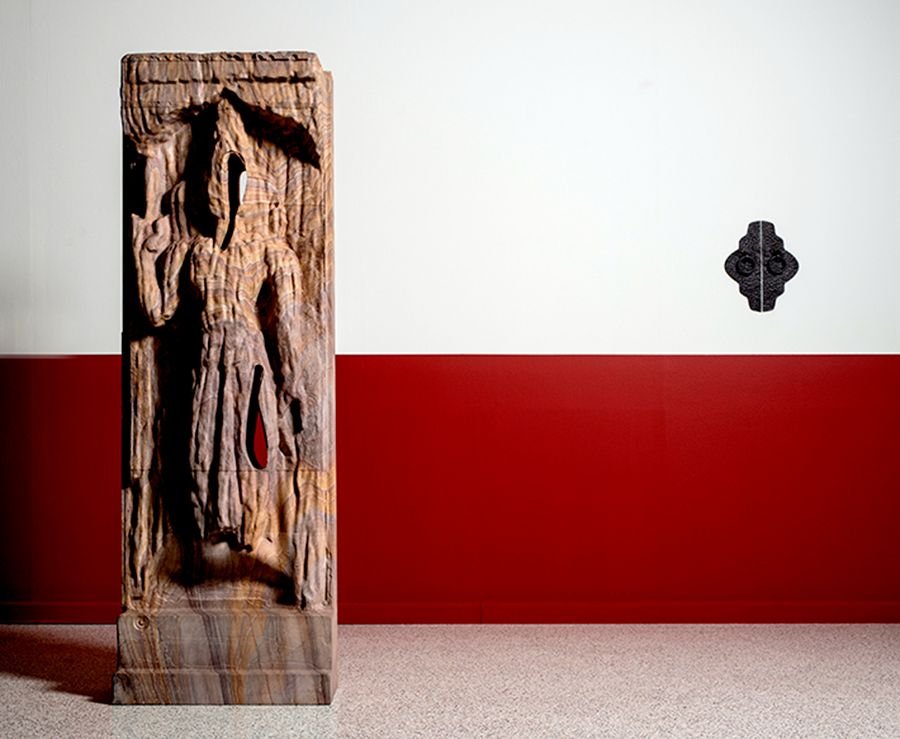
Milled History, 2014 – Plate-IV – Source: http://Tallur.com.