
INTRODUCTION
Any individual who purchases products or services for his personal use and not for manufacturing or resale is called a consumer. A consumer is one who is the decision maker whether or not to buy an item at the store, or someone who is influenced by advertisement and marketing. Advertisement of any product plays a vital role to attract the consumers. Consumers should get a proper idea of their rights against false or untrue advertisements which is safeguarded by law. The loopholes of The Consumers’ Right Protection Act, 2009 should be reduced. Moreover, the consumers’ right related authorities should enhance their activities to stop false or untrue advertisements. Fraud by false advertisements is an offence, so the citizens need to be aware by such a research or findings.
Generally, people are intensely influenced by their favorite sportsmen, singers or in a word, favorite celebrities. When these celebrities perform an advertisement of any product, they start to buy the product. With a view to increasing sale, companies also try to make advertisement by the top celebrities. However, most of the time, celebrities don’t testify the product of which he performed the advertisement. As a consequence, often consumers are being scapegoated by an untrue advertising. Deceptive advertisement is termed as an offence under The Consumers’ Right Protection Act, 2009 hereinafter will be termed as CRPA. This study analyses consumer rights of Bangladesh, investigates Bangladeshi advertisements and their accountability. To some extent, the study investigates some Indian advertisements and their accountability.
A. Research Objectives
There could be a wide area to study CRPA but we need to reduce the number of objectives to conduct the research successfully on time. Therefore, the study sets the following objectives of the study:
• To comprehend the present scenario of accountability in advertisements relating to consumers’ rights in Bangladesh.
• To identify the legal problems concerning the protection of consumer rights.
• To explore the prevailing laws of Bangladesh regarding consumer rights.
• To find out public views concerning advertisement.
RESEARCH QUESTIONS
This study is guided by the following research questions.
• What are the entitled rights for a consumer in Bangladesh?
• Is a celebrity accountable for an advertisement of a product having harmful ingredients?
• What do the authorities think about accountability of advertisements?
RESEARCH METHODOLOGY
To conduct this study, both primary and secondary data sources were utilized. The combination of these sources ensures a comprehensive and reliable analysis.
Primary Data:
Primary information was gathered through:
1. Oral interviews with four relevant authorities (conducted over phone).
2. Examination of The Consumers’ Right Protection Act, 2009 as a foundational legal document.
Secondary Data:
Secondary data were collected from a wide range of credible sources, including:
• Books and scholarly writings by prominent authors.
• Relevant articles available in both print and online platforms.
• Newspaper reports and online news portals.
• Previously published research studies.
• Government and non-government websites.
• The Constitution of Bangladesh.
• Brochures, booklets, and publications produced by consumer organizations.
THE EMERGENCE OF CONSUMERS’ RIGHTS IN BANGLADESH
The following section contains the brief history how consumer rights emerged in Bangladesh. The rights of consumers, safeguarded by law are analyzed in this chapter. Both primary and secondary data resources are used to analyze the rights of a consumer.
A. Emergence of Consumers’ Right Laws
After independence the consumers did not enjoy statutory rights to seek redress of their grievances arising out of the violation of the provisions of these laws before enacting. The Penal Code, 1860 and The Special Powers Act, 1974 contains some provisions about the rights of a customer which were the only prevailing laws then.
In Bangladesh the first draft on consumer protection law was prepared by the ministry of commerce in 1988. The law commission suggested various changes in October 2000. In 2006 a revised draft of Consumers’ Rights Protection Act was framed. In 2008 the non-party care-taker government passed the law through ordinance. The ordinance was not approved by the parliament. The government enacted ‘Consumers’ Rights Protection Act, 2009.’
Constitutional safeguard has been strengthened through promulgation of related laws and regulations so that consumption can be proper and appropriate. Article 15,18,32,38,40,44 should be read with Article 102.
Over a prolonged period of time, consumer rights have acquired consideration in assuring the interest of consumers. That’s why the enactment of the Consumers’ Rights Protection Act, 2009 came into force but unfortunately Bangladesh is still struggling to ensure the minimum rights of a consumer.
B. Consumers’ Rights in Bangladesh Perspective
Consumers’ Rights Protection Act 2009 enunciates some acts which will be considered as malpractices of the consumer rights. Section 2(20) of the Consumers’ Rights Protection Act, 2009 lays down the twelve acts to be considered as anti-consumer right practice.
1. Right against Untrue or False Advertisement
There should be a MRP rate on the packet or label of the product. If the MRP rate is fixed twenty taka, a consumer can buy it giving highest twenty taka. He can buy it at the cost of eighteen-taka, nineteen taka, even twenty taka but the price must not exceed twenty taka. If a seller wants twenty-one taka for the product, it will be an offence under section 2(20). But there are some products in our country which don’t contain any MRP rate on the label. For example – a pen or a sack of rice doesn’t contain MRP rate on its label. This Act declares that taking higher price than the fixed MRP rate is an offence but doesn’t contain any provision where there is no MRP rate at all. Even there is no limit of fixing the MRP rate according to the grade of a product. In this meantime high price is fixed for a low-grade product. High price is a common problem, a topic which is regularly featured in the newspapers. This is because the price of goods and services do not meet the consumer perceived value. The Consumer Rights Protection Act, 2009 doesn’t contain any provision relating to fixing higher price.
2. Right to Coded Maximum Retail Price
When a seller will sell any adulterated goods or medicine with the knowledge that the goods or medicine is adulterated, it will be considered as an offence. The product to be delivered to the consumer should have the feature of authenticity. If a product is adulterated a seller can’t sell it to the consumer knowingly. For instance – when a seller knowingly sells date molasses containing raw sugar, it is an offence under the CRPA 2009. But this Act doesn’t address any section mentioning the offence why the seller bought or prepared such kind of product. Moreover, as per section 72 of the CRPA, Director General of the Directorate of National Consumers’ Right Protection doesn’t have the power to file a case against adulterated medicine despite having the power and responsibility to investigate and discover adulterated medicines. Under this circumstance, case will be filed under section 25C of the Special Powers Act 1974. Various news articles have been published on it. A legal analysis on ‘The legal regime on food safety and human health’1 has been published in The Daily Star newspaper.
3. Right to Protection from Adulterated Goods or Medicine
If a seller tries to sell a product bearing highly injurious or prohibited ingredient under any Act or rules, this very act of the seller will be deemed as an offence. This Act doesn’t permit a seller to sell or offer to sell such product. Banned pesticides that cause serious health hazards have been found in fruits, vegetables, milk and milk products and dry fish, according to a FAO-sponsored test at a government laboratory. The presence of toxic substances in the food samples was three to 20 times the limits set by the European Union, show test results of the National Food Safety Laboratory (NFSL). Forty percent of the 82 samples contained pesticides that had been banned more than one and a half decades ago for high toxicity. The banned pesticides include DDT (Dichloro-diphenyl-trichloroethane), Aldrin, Chlordane and Heptachlor that are extremely harmful to humans. Carrot, bean, tomato, lettuce, capsicum, banana, apple, pineapple and mango were contaminated with highly toxic pesticides. And the presence of banned pesticide Aldrin was found in milk, according to the NFSL tests. A number of agriculturists have blamed lax government monitoring at field level for the use of banned pesticides in food. These pesticides are probably being smuggled into the country, as import of the highly toxic substances has been banned for long, they say. Some 50 percent of the vegetable samples and 35 percent of the fruit samples were contaminated with chemical pesticides, which the lab analysts said are unsafe for humans. Besides food, the technical superintendence of safety for all other consumer products is also imperative. For instance – A study by Environment and Social Development Organization NGO has found that 97% of toys surveyed in the market contained high concentrations of Lead, Bromine, Cadmium, and Chromium. Exposure to high concentration of these metals can be a serious health hazard to children. CRPA does not contain any guideline for the technical monitoring to ensure safety standard for toys and other products.
4. Right to Protection from Selling Goods Containing Injurious and Prohibited Ingredients
Selling or trying to sell by means of deception with counterfeit information about any specific goods will be considered as an offence under the CRPA. In order to sell a product, proclaiming untrue or false advertisement is prohibited. No seller can advertise falsely to the consumer. Suppose, a consumer wants to buy a badminton racket of Yonex company. Yonex rackets which are made in Taiwan are the best. However, there are various kinds of replica of Yonex racket in our country which are utterly the same as the original ones when consumers look at the products. If a seller doesn’t inform which one is original and which one is replica, it is quite impossible to point out as a consumer. If a seller falsely advertises and sells the replica, in almost all of the cases a consumer can’t unfold the false advertisement. So, it is difficult to find out whether the advertisement is untrue. Sometimes, consumers can unfold the untrue advertisement but then proving the fact becomes a matter of concern as proving is so anecdotic. For example – A seller for the purpose of selling mangoes promulgates that the mangoes are from Chapai Nawabganj while the mangoes are from Natore. Naturally mangoes from Chapai Nawabganj is tastier than those of Natore. After eating the mangoes, the consumer may doubt for the taste of the mangoes but he can’t blame the seller certainly for false advertisement. So, it is difficult to find out whether the advertisement is untrue and if he becomes sure of the false advertisement, proving is not easy. In addition, there is no such provision in this Act or no mentionable input about the advertisement of false guarantee and warranty. “Police and RAB foil an attempt at what could have been a dangerous terrorist attack” was a clickbait headline used by a reputed Bangla-language online news portal for a report on March 2, 2017. It was a fake news.
5. Right against Delivering Goods or Services Improperly
A seller must have to sell or deliver goods or services which he promised to sell in consideration of money. Unless a seller sells or delivers the specific goods or services committed to sell in exchange of money, it will be deemed as an offence viz a seller gave a packet of Bidisha Lexus biscuits in place of Olympic Lexus biscuits which he promised to deliver. Olympic is a reputed company in our country. If Olympic Lexus is not available at the moment, the seller must have to seek permission to give something in lieu of it. If Olympic is not a renowned company, the seller has to seek permission as well because he promised to deliver it. After a commitment, a seller has to deliver the exact product in consideration of money taken from the consumer. Products from two different companies are different in quality and sometimes prices are different also. Prices can be same also but basically a product from a newborn company is more profitable than that of the famous company because a newborn company needs publicity. With a view to earning more profit a seller often tries to sell a product from a newborn company. Sometimes a greedy seller doesn’t keep the products of a renowned company rather he keeps the products of a weewaw company so that buyers have to buy the products in case of emergencies and he can earn more profit. CRPA doesn’t provide any provision related to this.
6. Right against Less Quantity of Goods than the Weight Offered
A seller is bound to deliver the exact quantity of goods he offered to the consumers. If any seller sells or delivers less quantity of goods than the weight offered to the consumers in the time of delivering the goods, it is an anti-consumer practice under CRPA. For instance – if a seller offers to deliver a consumer 3 kg of firewood, at the time of delivering the goods he has to deliver exact 3kg. If the seller gives 2kg 800gm firewood while delivering the goods, it will be an offence. After measuring 3kg of firewood, if the seller doesn’t give any of the firewood, it will also be an offence under the CPRA.
7. Right against Showing More Weight
If a seller shows more than the exact weight of a product by using weight measuring instrument while selling it to the consumer, it is an anti-consumer right practice. For instance – a covetous seller shows the consumers that he is conferring the exact quantity of goods offered in consideration of money but indeed his weight or balance is unfair. Usually a consumer doesn’t measure the bought goods again. Moreover, the goods were measured in front of him. Thus, the consumers’ right to get the exact quantity of goods is violated. Suppose – a consumer wants 1kg sugar. Respectively the seller shows the consumer that exactly 1kg weight is being measured by a weight measuring instrument or weight stone. But his weight measuring instrument or weight stone may be unfair. With a view to earning more profit he may show consumers that he is delivering the exact quantity of goods but actually he doesn’t. He shows more weight than the original weight of that very product. It is an offence under the CRPA. But in practice, this offence is committed every day. When a biker goes to the petrol pumps and wants his fuel tanks full, in most of the cases the amount of petrol drawn more than that of the fuel tank size. Generally, a biker or consumer buys petrol in calculation of liter e.g. 1litre / 2 liters/ 3 liters or in round figure e.g. 100 taka /500 taka /1000 taka. Since machine is tempered, it shows but doesn’t deliver the offered amount of petrol. Only when does a consumer want to fill up his fuel tank, he comprehends that the machine is showing more weight than the actual weight. Every bike has a system of reserved fuel. A bike whose tank capacity is 15 liters usually keeps 3 liters of fuel reserved. The time when the biker has to use his reserved fuel to the time when he goes to petrol pump is well-nigh in most of the cases. Instead, say the consumption of fuel of reservation is 1 liter. Then the bike can take 13 liters of fuel. But most of the cases in all over the country, machine shows 16-17 liters. With 2-liter fuel reserved in the tank a 15-liter fuel tank takes 17 liters of fuel! According to the machines’ calculation, fuel tank is of 19 liter which means petrol pump or filling station delivers 760 ml of fuel but shows 1litre. Price of 1-liter petrol is almost 120 taka which means in every actual liter a consumer has to pay 30 taka extra. Under this Act it is an offence nonetheless everyday it happens everywhere in our country.
8. Right against Delivering Less Quantity of Goods than the Promised Amount
A seller is compelled to deliver the exact quantity of goods. A product or goods should not be delivered in less quantity to the consumer. If a seller delivers less quantity of goods than the promised amount while delivering, it will be considered as an offence under the CPRA. For instance – if a seller promises a consumer to deliver 1kg of wheat and delivers 850 grams, it is an offence. Somehow, nowadays mode of this kind of offence is not the same anymore viz a peripatetic sim seller promises to send a certain number of free minutes and data but in some cases the consumer doesn’t get the offered data and minutes received. As the seller is peripatetic, consumers leave their hope to get the minutes and data received. Like other country Bangladesh is also progressing digitally instead CRPA has not included any digital content related provision. UK has made an elaborate provision for Digital content in their newly enacted Consumer Rights Act 2015. Digital content means data which are produced and supplied in digital form.2 Examples of digital content are software, games, apps, ringtones, e-books, online journals and digital media such as music, film and television. Digital content may be supplied in tangible form (for example on a disk), or in intangible form such as downloaded, streamed, or accessed on the web. Consumption of digital content is huge and is growing every day. In this light, reform of the 2009 Act is required to meet the digital age.
9. Right to Protection from Showing More than the Actual Length
If any seller while selling or delivering in a commercial enterprise shows more than the exact length by length measuring gauge or anything else used for measuring length, it must be deemed as an anti-consumer right practice under the CPRA. To receive the original length is the right of a consumer. For example – A consumer wants to buy a 30mitre long rope. The seller agreed to sell 30mitre long rope to the consumer in consideration of money. While measuring the rope, the seller falsely shows that he cut 30mitre while originally, he cut 29 miters. It is an anti-consumer right practice. However, in practice a consumer usually doesn’t re-measure his bought goods and the offence doesn’t come to light. If a consumer finds out the bitter truth, generally he doesn’t complain for his 1 miter loss. Thus, if a seller sells 3000 miter rope, actually 2900 miter rope is sold by him. In order to earn more profit, a covetous seller knowingly deceives a consumer. In this way, the right of a consumer is violated.
10. Right to Protection from Making Fake Goods
Making or manufacturing fake goods or medicine is an anti-consumer right practice under the CRPA. If a person generates counterfeit product, it will be considered as an offence. As per section 72 of the CRPA, Director General of the Directorate of National Consumers’ Right Protection doesn’t have the power to file a case against fake medicine despite having the power and responsibility to investigate and discover fake medicines. Under this circumstance, case will be filed under section 25C of the Special Powers Act, 1974.
Moreover, Directorate of National Consumers’ Right Protection can inspect and detect defects in private health care service but cannot take any remedial measures against them. Director General of the Directorate of National Consumers’ Right Protection can only inform the matter to the Secretary of Ministry of Health and Director General of Department of Health. This limitation makes the process complex and may also give rise to criticisms of lack of transparency of procedure and restriction of access to justice.
11. Right to Protection from Expiry Date
A seller can’t sell any date expired goods or medicine to the consumer. If any seller sells or offers to sell any goods or medicine the date of which has expired, this act will be considered as an anti-consumer practice. Expiry date must be coded on the label or packet of the product. Usually a conscious consumer takes a look at the expiry date. But if we think about a sack of sugar whose weight is 50kg, expiry date is coded on the sack. A general consumer doesn’t look at the sack when he buys 1kg of sugar. Again, it is a question of fact – are all the expiry dates reliable? If we think about the cold drinks, cold drinks company takes back the date expired products from the seller. My question is – what do they do with the expired date products? Why don’t they throw the products in front of everyone or why don’t they let the seller throw the date expired products and refund the money of the seller or re-deliver new products without taking back the date expired products? In Bangladesh, as in many other countries, it is mandatory by law to print the manufacturing and expiry date of a food item on its packaging. The BSTI can penalize food producers for breaching Bangladesh Standards of Weights and Measures (Packaging & Commodities) Rules, 2007. However, the BSTI does not have an independent research facility to determine the shelf life. The organization just looks into the ingredients and the weights declared by producers, and verify if it matches with the product. The companies determine what date to put on their items. Many of them follow traditions and past examples although producers should choose among a few scientific ways to figure out how long their foods are safe to eat. A common international practice for smaller companies is to list a date on their product based on the length of shelf life they have estimated from data of their competitors.
12. Right to Protection from Prohibited Action
Doing a prohibited act which may endanger the life and security of the consumer will be considered as an anti-consumer right practice under the CRPA. No seller is entitled to take any action which may imperil the life or security of the consumer. For instance-sleeping pill is hazardous. Without doctors’ prescription, sleeping pill or tablet shouldn’t be delivered to a consumer. However, in practice without any prescription numerous sleeping pills are being sold to the consumers’ every day. Again, by swallowing poison often incidents of suicides take place. Few years ago, young generation was influenced by a video game called Blue Whale by which they were diverted to commit suicide. Each example is threating to the life of a consumer. Indeed, CRPA is dumb about digital content. We can mention another video game named Pokemon by which security of the consumer is imperiled. In search for Pokemon in the game, a consumer has to take risk and move to and fro physically while playing. Generally video games are being played at night. As a result, to catch Pokemon, consumers have to move outside also which is a threat to their lives and security. The CRPA addresses nothing about making this kind of video games.
ACCOUNTABILITY OF ADVERTISEMENT IN BANGLADESH
This section contains accountability of advertisement in Bangladesh and to some extent in India along with secondary data sources are used to discuss as below.
A. Advertisement as a Weapon for Selling of Goods
An advertisement is a means of communication between the seller of a product and a user of the product, where the seller informs consumers about the product through medium like newspapers, journals, radio, posters, sounds, visuals, etc. Again, a notice or announcement in a public medium promoting a product, service, or event or publicizing a job vacancy can be called as advertisement.
1. Types of Advertising
A successful campaign will spread the word about your products and services, attract customers and generate sales. Whether you are trying to encourage new customers to buy an existing product or launching a new service, there are many options to choose from.
There are different types of advertisements as follows,
• Newspaper: Newspaper advertising can promote the business to a wide range of customers.
• Magazine: Advertising in a specialist magazine can reach the target market quickly and easily.
• Radio: Now-a-days, FM radio is very popular to youngsters which can reach to young generation easily
• Television: Television is the most popular field for advertisement.
• Online: Now-a-days, people spend most of the time on internet.
• Outdoor and transit.
• Direct mail, catalogues and leaflets.
• Directories.
B. Untrue Advertisement
In general, it can be said that the untrue advertisement is the advertisement containing false information which leads to the mistake and cheating the consumer of good or service. Untrue advertisement may directly target the commercial competitors or goods and the provided services. An advertisement is misleading if it deceives or is likely to deceive its audience and affect their economic decision-making. This also applies if it harms or is likely to harm a competitor of the organization placing the advertisement.
1. Differences between Bangladesh and Indian Approaches in Advertisement Act
Consumer Protection Act, 1986 (“CP Act”): The CP Act defines the term ‘unfair trade practices’3 wherein it covers false and misleading representations and facts under the purview of unfair trade practices allowing consumers to file complaints against such representations being made by any trader or service providers. Also, The CP Act while enumerating the objects of Consumer Protection Council, requires them to ensure that, among other things, they protect the consumer’s right to be to be informed so as to protect the consumer against unfair trade practices along with the consumer’s right to the right to seek redressal against unfair trade practices (Section 6 of the CP Act). Additionally, the CP Act also provides District Forums the power to grant punitive damages to discontinue any unfair trade practices. Whereas in Bangladesh (1963) it is expedient to provide for the prohibition of indecent advertisements and the national interest of Pakistan in relation to the achievement of uniformity within the meaning of clause (2) of Article 131 of the Constitution requires Central legislation in the matter.
In India Cable Television Networks (Regulations) Act, 1995 (“CTN Act”): The CTN Act prohibits any person from transmitting or re-transmitting any programme (which includes advertisements as provided in Section 2(g) of the CTN Act) through a cable service unless the same is in conformity with the prescribed advertisement code (provided under the Cable Television Networks (Amendment) Rules, 2006) and also provides authorized personnel, the power to prohibit the transmission or re-transmission of any advertisements which are in violation of its provisions or if the same are likely to promote, disharmony, hatred or ill-will between different religious, racial, linguistic or regional groups on grounds of religion, race, language, caste or community or any other ground, or which are likely to disturb public tranquility.
In Bangladesh Provision under the Cable Television Network (Regulation) Act, 2006: Cable TV technology has become more advanced since the law was enacted, Cable Operators’ Association of Bangladesh (COAB) demanded making the “Bangladesh Cable Television Network Act 2006”, a time-befitting Act through necessary amendments. Cable Operators’ Association of Bangladesh (COAB) made the demand at a press conference at the Jatiya Press Club, reports UNB. They alleged that they are being “harassed” in the name of mobile court drives conducted under the law, and demanded authorities put the mobile court drives on hold until their demand is met.
Prohibition against Persons Advertising, Displaying, etc., Indecent Advertisements
Subject to the provisions of this Act-
• No person shall take any part in the publication of any advertisement which is indecent; and
• No person having the ownership, possession or control of any property or public place shall knowingly allow any advertisement which is indecent to be displayed on such property or place, or to be announced therefrom.
As I mentioned earlier in the previous chapter, Consumer Rights Protection Act 2009 does not permit the DNCRP to file a case against adulterated or fake medicine, although DNCRP has the power and responsibility to investigate and discover adulteration or fake medicines. In such situations, case will be filed under Section 25C of the Special Powers Act 1974.By comparison; in India no such limitation is included in their Act. Section 1(4) of the Indian Act states that the Act applies to all goods and services. Thus, the restriction imposed in the 2009 Act makes the process complex and may deter affordable and quick access to justice in such situations. Thus, the adulterated or fake medicine related limitation is questionable and should be reviewed.
Similar to the above discussion, under the CRPA 2009, DNCRP can inspect and detect defects in private health care service but cannot take any remedial measures against them. DNCRP can only inform the matter to the Secretary of Ministry of Health and Director General of Department of Health. This limitation makes the process complex and may also give rise to criticisms of lack of transparency of procedure and restriction of access to justice. In India no such limitation is included in their Act. Thus, this restrictive provision in the 2009 Act should also be reviewed in light of ensuring effective consumer protection.
Another drawback of the Act is the limited scope of application. The CRPA has defined 12 conducts to be anti-consumer. However, the definition is narrow in scope. For example, the section does not include any provision for restrictive trade practice. It also doesn’t include many aspects of unfair trade practice, such as false representation of goods and service, false representation of warranty and guarantee, etc. to be anti-consumer. There is also a lack of provision for maintenance of quality of all goods and service. By contrast, Section 2(c)(i) of the Indian Consumer Protection Act 1986 states that complaint (of anti-consumer activity) includes unfair trade practice or a restrictive trade practice. Thus, the Indian Act has defined the rights of a consumer broadly. And the elaborate scope ensures better protection of consumers. As for the quality aspect, Section 2(20)(b) of CRPA states that it is an anti-consumer act to sell or offer to sell adulterated goods or medicine knowingly. The definition of adulteration is however limited to food, medicine, hair oil, body soap or other cosmetics.4 Further there is no requirement to maintain quality of service within the Act. Thus, the ambit of protection for violation of quality is narrow. By contrast, Consumer Protection Act 1986 of India has made provisions about quality for ‘all’ goods and service. Thus, from this analysis it can be seen that while the CRPA 2009 provides some protection, but from the above comparison it becomes apparent that further provisions can be included to offer better protection to the consumers.
The circumference of protection of rights to service covered under the 2009 Act is also questionable. Service has been defined in the Act to include “transport, telecommunication, water supply, drainage, fuel, gas, electricity, construction, residential hotel and restaurant and health services, which is made available to its users in exchange of price but does not include the services rendered free of cost.” By contrast, the Indian legislation has defined service to include “service of any description which is made available to potential users and includes the provision of facilities in connection with banking, financing, insurance, transport, processing, supply of electrical or other energy, board or lodging or both, housing construction, entertainment, amusement or the purveying of news or other information, but does not include the rendering of any service free of charge or under a contract of personal service.” This comparison illustrates the narrow definition of service in the CRPA. The definition misses common areas of service such as, banking, financing, insurance, processing, housing, entertainment, amusement, purveying of news or other information, etc. Thus the scope of service should also be expanded to ensure better protection of consumers.
Another vital flaw of DNCRP is their lack of technical capacity to investigate quality. In an interview, the Directorate of DNCRP stated that their investigation is conducted on the observation of physical appearance, for example the expiry date printed on packaging or damaged condition resulting from faulty storage facility. In case of further investigation, reliance is made upon relevant organizations like Bangladesh Standards and Testing Institution (BSTI) or Department of Health. However, BSTI itself has limited technical capacity. There are hundreds of food items in the market but BSTI has the ability to test only 58 types of food products. BSTI also do not have an independent research facility to determine the shelf life of food items. The organization just looks into the ingredients and the weights declared by producers, and verify if it matches with the product. The body relies on the manufacturers for the information of expiry date. However, the information of expiry date provided by the manufacturers could be faulty. This deficiency leaves room for violation of consumer rights by the production of poor-quality goods. Thus, BSTI’s technical capacity to test local and foreign consumer products should be expanded.
C. Impact of Untrue Advertisement in Bangladesh and India Regions
Advertisement is an impersonal way of popularizing products, ideas, concepts, etc. Companies advertise their products to reach out to the consumers. By doing this they sensitize the customers especially the younger ones. In the modern world, with the widespread impact of social media among the youth, advertisements are at an all-time high reaching equally high to the audience. Advertisements have become so common for them that they do not even realize that they are viewing or hearing them. They certainly have a persuasive influence on the youth. In the ever-expanding world of consumerism and advertising, companies are always looking for multiple new ways to sell their products to the youngsters by making their commercials and campaigns more memorable, which would leave an impact on their minds. The younger generation has become the prime target of the advertisers because they have more spending power than ever before, as well as having increased avenues at their disposal. Therefore, companies spend tremendous amounts of money to rope in popular film stars, sportspersons, musicians, etc. to endorse their products. These famous people are usually in such an influential position that their fans follow their lifestyles and their famous personas leave impressions on the lives of their fans too, especially the younger ones – who mostly follow the footsteps of their idols from deciding what to wear to choosing what to eat and drink. These advertisements using famous people not only help to ensure popularity but also early brand loyalty. The big companies target the younger generation because they follow the latest trends and influence the buying behavior of their family. They imitate the celebrities. They dress themselves like them. They like to use those products, which the stars promote. By doing this they try to satisfy their social ego. But sometimes, it becomes detrimental for them.
Overindulgence in such kind of activity can corrupt their thinking ability. Their mind can become perverted or limited to an idea. For instance a lot of television commercials depict celebrities doing difficult stunts quite effortlessly. Many youngsters attempt these stunts at home that too without supervision. There has been numerous incidents where such attempts have gone miserably wrong and has resulted in fatal accidents, even deaths. Majority of ads put disclaimer to make the viewer/consumer aware that the ad shown is just a pictorial representation and the stunt should not be tried at home. However, such messages are so small that they often go unseen.
No doubt that one has the right to live one’s own life but everything should not be followed with a blind eye. Some ads are youth-oriented. They want the young generation to be aware and act for the betterment of the society. The purpose of such ads is to influence the youth so that they can decide what is good and bad for them. Celebrities are also roped in at times so that the message makes an even greater impact. Figure 1 depicts an example of misleading advertisement performed by a celebrity that poses potential risks to consumer health. In 2011 former international cricketer of India MS Dhoni appeared in a liquor brand’s advertisement which became a controversial news that time because it would encourage more youth to take alcohol.
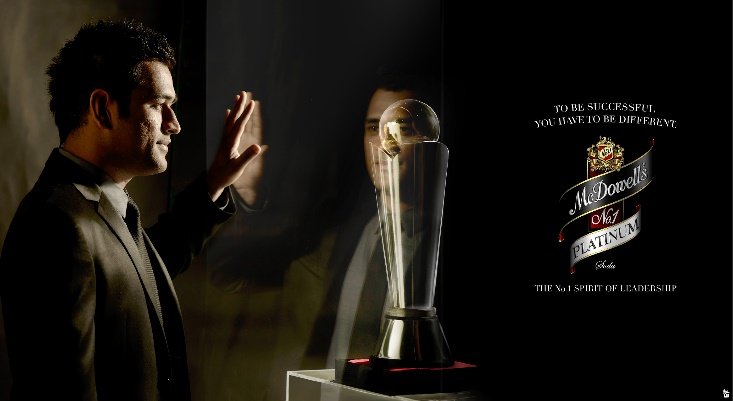
Figure 1: Picture of “Alcohol” advertisement
Therefore, it would be wrong to say that the impact of advertisement on the younger generation is always negative. How the youth perceives the ad and the message, it sends forth makes all the difference. There can be some tips given to stop the negative influences of advertisements from spreading among the youth like cutting down the screen time or trying to download television programs to avoid watching advertisements and more. But in a world full of innovative advertisements, it is very hard to ignore all of them. The best way to eliminate the negativity surrounding advertisements is by educating the youth about the finer concepts of the marketing world.
D. Past Controversies of Indian Advertisement
As shown in figure 2, the advertisement conveys misleading information. In 2015, FIR against celebrities like Madhuri Dixit, Preeti Zinta, Amitabh Bachhan was registered for promoting Maggi as nutritious food after the lab samples showed a high quantity of MSG and lead harmful to human consumption.
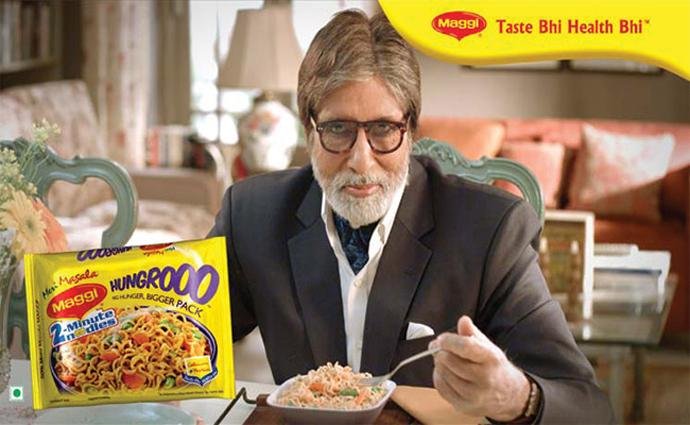
Figure 2: Picture of “Maggi” advertisement
In 2012, FIR was registered against Genelia D’ Souza for making false promises in the brochure of a real estate firm. Jaya Bachchan and Amitabh Bachhan were also involved in legal troubles after they endorsed Tanishq as the only brand which offered true diamond. Figure 3 is a still image from the advertisement.
A criminal case was filed in a district court in Muzaffarpur against officials of ‘Maggi’ noodles-maker Nestle and filmstars Amitabha Bachachan and Madhuri Dixit who are brand ambassadors of the ‘harmful’ food item. The case was filed by lawyer Sudhir Kumar Ojha in the court of Muzaffarpur Chief Judicial Magistrate Ved Prakash Singh. Ojha, who is pleading his own case, said the CJM had transferred the case to the court of Additional Chief Judicial Magistrate (ACJM) Ramchandra Prasad who would hear it. The complainant K. Manavalan claimed that he purchased ‘Maggi’ and that he was taken ill after he ate it. This prompted him to file a case against Nestle, the maker of ‘Maggi’ noodles, and the film stars who are the product’s brand ambassadors. Besides Bachachan and Dixit, the name of another Bollywood actress Preity Zinta also appeared in the case.
The case has been filed under IPC sections 270 (malignant act likely to spread infection of disease dangerous to life), 273 (sale of noxious food or drink), 276 (sale of drug as a different drug or preparation) and 420 (cheating and dishonesty). The advocate said these film stars have earned hefty sums by terming Maggi noodles as healthy in advertisements and alleged “this wrong publicity amounts to malafide intentions and playing with the health of the kids and young people of the country”. While a local advocate filed a separate case against the three cine personalities, another case against Nestle India and five others was filed by the UP food regulator FSDA (Food Safety and Drug Administration. The FSDA said they had collected the samples of Maggi Noodles from the Easy Day store in Barabanki and had sent the consignment for testing, which showed that the quantum of lead present was 17 times more than the stipulated limit, which is considered hazardous.

Figure 3: Picture of “Tanishq” advertisement
Moreover, there were Monosodium glumate in excess of the prescribed limit in Maggi. A. Bachchan said he no more endorses the brand, Madhuri Dixit recently met nestle officials in this regard and said the company has assured her about the quality of the product. Amid the raging row over maggi, Consumer Affairs Additional Secretary G.Gurucharan had said the actors would be liable to action if the advertisements are found to be misleading. “It becomes a misleading advertisement if it is found that the product does not have the attributes that the manufacturer professed. And if the brand ambassador has promoted that product and said specifically that the product has those attributes, they are also certainly liable for action,” Gurucharan said. On the other hand Sai Pallavi rejected to perform the advertisement of Fair & Lovely showing the reason of personal disagreement.
E. Untrue Advertisement in Bangladesh
In Bangladesh, there are numerous products which is consumed because of false advertisement. “Mango juice is made with pure and fresh mango and there is no preservative in it” but the using of high amount of preservatives that have bacteriostatic effect on microbes and cause health hazards to consumers. In this case those companies deceive their customer and sales huge amount of mango juice by giving wrong and unethical advertisement copy. In fact there are companies making profits by selling pure (!) mango juice made of sweet pumpkin, carrots, rotten mangoes, pesticides, preservatives etc. “By taking Nutrient product you will be taller, sharper and stronger” but if every child becomes taller by drinking this product then every person will be taller in this country. There will not be any short people in the country. Maximum respondents experienced that nutrient product is energetic, but it cannot increase the height. ”Get energy and power by drinking Energy Drink” but Energy drinks contain large number of caffeine and an assortment of other hazardous ingredients, which is very harmful for our health and entire society. Companies make prominent musical band members do these energy drink advertisements so that young generation can be influenced to buy their products. “100% hair fall is stopped Within 14 days by using Shampoo & Conditioner” however hair fall problem remains constant. It does not work properly. Dandruff is never removed forever. So the consumers are being cheated due to false and unrealistic advertising copy. ”By using face wash regularly 100% prevent your pimples and make your skin clean, fresh, and glowing within 14 days’’ however, most of these creams are non-prescriptive products and could potentially cause facial skin problems. So the information of their advertisement copy is false, confusing and baseless. The consumer is being cheated due to false and unrealistic advertising copy. All kinds of cosmetics are harmful for our skin. But they never say it in their advertisement copy or make customers conscious about this. Maximum Companies aren’t maintaining the law of the Consumer Rights in our country.
1. Past Controversies relating to Bangladeshi Advertisement
In Nurul Islam v. Government of Bangladesh case,
Rule Nisi was issued calling upon the respondents to show cause as to why section 3 of the Tamakjato Shamogri Biponon Niontroner Jone Pronito Ain 1988 should not be enforced properly. In an application under Article 102 of the Constitution of the People’s Republic of Bangladesh, the Petitioner Professor Dr. Nurul Islam, President, ADHUNIK (Aamra Dhumpan Nibaron Kori) and a National Professor of Bangladesh has stated, Inter alia, that at the present moment all the tobacco related companies are advertising their products in different spheres of media such as newspapers, magazines, television, radio, billboards and various kinds of sponsorship of cultural and sports programme. Section 3(1) of Tamakjato Shamogri Biponon Niyontroner Jonno Pronito Ain provided for a statutory warning “smoking is dangerous for health would be printed on packed or canned tobacco based products sold in the market to the easily readable and understood Bengali on a prominent and distinct space of the said container or packer and similarly section 3(2) of the said Act states “No advertisement of tobacco based products shall be published, broadcast or displayed without having the said warning in easily readable and understood Bengali, engraved, written or printed on a prominent part of the advertisement. Majority of the tobacco related companies printed the said statutory warning on the packets and containers and also broadcast and published in their advertisements but they are committing a fraud by not following the law accurately in breach of section 3(1) of the Statute, tobacco related companies have often been printing the statutory warning on obscure corners of tobacco packets and containers and published the warning in so small size making it barely readable in breach of the statutory provisions. In advertisements with moving images in the movie theatres, broadcast on television the statutory warning is shown so briefly and without any voice which has little or no effect on the viewers or having little effect on them. Similarly, in the most of the tobacco billboards by the side of the streets and the advertisements in the newspapers and magazines, the statutory warning is so small that it is not even readable thereby defeating/violating the spirit of the Act to make awareness about heinous and dangerous nature of the tobacco-based products. It has further been stated that the statutory warning itself does not expressly the extent of the effect of consuming tobacco. It has been accepted not only but the medical researchers by also by the tobacco industry in developed countries that the tobacco consumption leads to fatal diseases such as cancer, lung and heart diseases causing about 3.5 million deaths each year, thereby there is about 10,000 deaths throughout the world per day. It has been asserted that one million of deaths occur in developing countries such as Bangladesh Global tobacco epidemic is predicted to claim premature death of some 250 million children and adolescents, at present a third of these shall occur in developing countries. It has been further asserted that by 2020 it is predicted that the tobacco will become the leading cause of death and disability, killing more than 10 million people annually, 2 million in China alone. Tobacco causes more deaths worldwide than the HIV, Tuberculosis, Maternal Mortality Rate, Motor Vehicle Accident, homicidal and suicidal deaths combined. The petitioner has further stated that the passive smoking also has dangerous effect sudden infant death, respiratory illness and middle ear disease in babies and children and lung cancer, heart disease in adults. Children are put at risk because smoking by their parents increase the likelihood that they themselves will in time take up smoking. The petitioner has further asserted that the statutory warning itself must correspond to the extent tobacco’s harms and accordingly the warnings should be prominently displayed on the tobacco packets and advertisements. As smoking in the developed countries are being gradually marginalized, the international tobacco manufactures have now targeted the underdeveloped countries like Bangladesh for reviving their fortunes. United States recently banned advertisements of tobacco-based products and such bar is presently operating in forty-six States with immediate effect. Smoking in public places more or less is prohibited in both developed and under developed countries with effective measures for penalizing the company for any will full negligence in not disclosing the dangers and consequences of consuming tobacco. He asserted that a worldwide camping ‘Voyage of Discovery’ organized by British American Tobacco Company was trying to promote their product ‘Gold Leaf’ cigarette in Bangladesh within 170 days arriving on Chattogram Port on or about 21 November,1999 at No. 15 Kailaghat. The petitioner in this case sought court orders prohibiting all forms of tobacco advertisement.
AUTHORITIES’ OPINION ON FALSE ADVERTISING
Oral interviews of the authorities are mentioned in this section. Misleading advertising is a serious detriment to consumers and, therefore, to one of the groups of interest of the advertising agencies and the advertiser with whom it is related. In the case of advertising for health products or any others where audiences are more vulnerable, this fact is more reprehensible. Advertisers are aware that today brands, and therefore companies, have to combine their sales objectives with a strategic vision of the organization based on ethics, transparency and CSR. Nowadays, advertising has a twofold function: its role as a commercial activity and, on the other hand, it has a social dimension by directly influencing contemporary ways of life. Advertising represents one of the most regulated activities in Bangladesh, but from a social point of view, its management is more complicated and the consumer is not always protected. Misleading advertising can pose a risk to citizens and consumers. Therefore, it is subject to different laws and regulations that ensure a truthful and ethical message. However, the fact that the message depends on both the advertiser and different professionals within the advertising agency, can lead to a situation where control of the rules is lost. For this reason, it has been considered of great interest to learn the opinion of advertising professionals regarding this situation, in order to explore whether they feel responsible and how this is managed. The main objective of this chapter is to understand the perception.
Table 1: Regulatory Perspectives on Misleading Advertising Practices
| Name of authority | Date | complain | opinion |
|---|---|---|---|
| Pure Food Safety Authority | 15/10/2025 | Food products | Not getting enough complaints from consumers. |
| Directorate of National Consumers’ Right Protection | 19/10/2025 | Haji Biriyani | The consumers are not aware. |
| Directorate of National Consumers’ Right Protection, Rajshahi Office | 18/10/2025 | Apex, up to 70% discount | Suo moto by seen leaflet or banner. |
There is no doubt that the false advertising is really harmful for public. For this we have tried to reach some persons who are actually working against false advertising. Some important opinions and actual scenario of false advertising are given below:
Mehedi Pavel Sweet, Special Magistrate of Pure Food Safety Authority told that there are lots of food products who use appealing tag line in advertisement to attract people. For example, if a consumer uses a specific product of a renowned company, they will be taller, stronger and sharper. If this product made its consumers taller, there would be no short persons in our country. He added that, a ‘tea advertisement’ showed that its consumers will be slim after using it. But in reality, it was a fake advertisement. They got complains about 2 products more apart from these two. A product gave advertisement about controlling diabetic, it was also fake. Another advertisement about pickle which showed it could cure cancer. It was in fact laughable. These are totally baseless. Many people waste money on these products and this is really hurtful. They got complains about these products. He also added that the people of Bangladesh are not aware of their rights. If people are being alert on it and file complain that they got ditched by these products than the authorities could take steps against those companies. By taking legal action, these false advertising could be minimized.
Masum Arefin, Deputy Director of Directorate of National Consumers’ Right Protection shared some experience on misleading advertisement in trade fair of Dhaka, Bangladesh. He mentioned that a food stall who were admitting that they are serving “Haji Biryani” but actually they didn’t. Some of their customers file complain on it.
Many food vloggers of Bangladesh exposed the truth on their YouTube videos. Among them the food vlogger channel on YouTube named “Bangladeshi Food Reviewer” made a video where we can see a massive argument. Then the authority re-checked the matter and found them guilty and they acted against that food stall. He also added that this type of crime should not be forgiven. Hasan Al Maruf, Deputy Director of Directorate of National Consumers’ Right Protection, Rajshahi Office told about New Market, Rajshahi branch “Apex” marketing to attract their customers by offering up to 70% discount on their products. But when they visited they didn’t find 70% discount in any product. It was only about 20-30% discount. And this is against the law. It’s a kind of cheating with customers. After finding Apex guilty he fined Apex with 20,000 taka. He also showed his concern about anti-corona product which shows that by using their product the germ of corona can be minimized approximately 99.99% germ. But the companies never mentioned about 0.01% that will not work. He is anxious about this why they did not highlight this 0.01%. If the product doesn’t work then they may take advantage of this 0.01%. He is not sure about that product is actually working properly or not. If the product is working then it’s a really big achievement in this crucial time. A random view from an authority was, “The celebrities are earning money so why they are performing in advertisements.” He even said, “The concern of the celebrities is whether he is getting money or not. Why do we make a busy celebrity liable for performing in an advertisement?
MAJOR FINDING AND SUGGESTIONS
Bangladesh is a small country with a huge population. Consumers’ are treated as king to marketer. In this study we have tried to find out the impact, awareness and implement of law about false advertisements among consumers. In Bangladesh, the vital exploration of the main rights related to consumer rights is false advertisement. Not only exaggerated but also untrue features of products are showed by the companies. Authorities don’t get complains about those false advertisements though they expect complains about those products from consumers of the products. We have found the rights of consumers are less recognized in consideration to other rights. Consumers are not aware of their rights. There are some loopholes in CRPA. Amendment of this Act is crying need. Section 2(20) of this Act needs some mentionable changes. There is scarcity of enforcement of laws and there is insufficiency of laws relating to consumer rights. To protect and enhance the consumer rights, there must be some changes made in Bangladesh which are mentioned in the following.
• The existing CRPA should be amended.
• A new Act should be enacted for advertising related agreement where illegal and unethical advertisement must be void ab initio.
• With a view to making consumers aware of their rights, seminars, workshop should be arranged.
• Government, Consumers’ rights related authorities, NGO should come forward to hold consumer education programs.
CONCLUSION
It is clear that unethical practices in advertising may often occur in the most areas in Bangladesh. One lesson that we should understand is that most companies seem to be engaged in unethical practices and can therefore misleading the consumer. Many firms even they are assigned to behave ethically, but their practices show irregularities and frauds. According to this, the unethical advertising practices occurrence characteristics in modern society are: the criteria’s of justice, integrity, honesty and the eligibility, noncompliance, the creation of a false impression, the presentation of false and inaccurate facts, the conversion of social values of products, the manipulation of impulsive consumers, the control of sub consciousness, the impact on persons economic behavior or possibility of the impact. Advertising copy is the most important part of any advertising. So, every company or advertising agency should provide correct information to their customers by advertising copy. Advertising copy must be ethical and credible. Informative, correct, creative and beautiful advertising makes a good effect on the economy of the country. The marketer should try to gain the morality and credibility besides gaining the profit. We hope that every company will respect all the advertising rules & regulation and maintain or honor consumer rights. They can gain profit by giving the informative, correct, credible information to consumer and developed the society with morality.
*****
Footnotes
1. https://www.thedailystar.net/law-our-rights/news/the-legal-regime-food-safety-and-human-health-1743355
2. ibid. s. 2(9)
3. ibid. s. 2(r)
4. ibid. s.2(18); Pure Food Ordinance 1959, s.3(1); Special Powers Act 1974, s.25C