
Impunity for Ecocide: Accountability Gaps, Intergenerational Equity, and the Case for Criminalisation
‘Ecocide’ was first used by Professor Arthur W. Galston in 1970 at the Conference on War and National Responsibility, to describe the effects of ‘Agent Orange’, a defoliant chemical. Some 80 million litres were sprayed over 2.6 million hectares of forest during the Vietnam War, causing utmost devastation to human and ecological life, the consequences of which are still felt by generations in Vietnam shaped by that historical exposure. Unlike Agent Orange, where the impact on human and ecological life was intentional during war and localised, ecocide presents itself in various forms, with tendencies of negligence, multinational effects, occurring during peacetime or standard corporate and State practices. The international legal system glaringly lacks an adequate framework to tackle this widespread destruction. Globally, climate change is already crossing multiple tipping points, which would lead to humanity facing a “potentially catastrophic, irreversible outcome”. International environmental law currently relies on soft law, entailing non-legally binding provisions. Various treaties, such as the Paris Agreement, depend on voluntary member cooperation, and on State responsibility providing reparations and compensation. Moreover, the Rome Statute, the fundamental treaty governing the International Criminal Court, addresses environmental harm merely when it is caused by or during armed conflict, thereby neglecting ecocide and devastation caused by factors such as deforestation, oil spills, hydraulic fracturing, water and soil contamination, and industrial pollution. This study argues that the criminalisation of ecocide is essential for addressing the needs of present and future generations, regardless of the challenges such an action may pose.
Introduction
‘Ecocide’ was first used by Professor Arthur W. Galston in 1970 at the Conference on War and National Responsibility.1 The term was used to describe the effects of ‘Agent Orange’, a defoliant chemical. 80 million litres were sprayed over 2.6 million hectares of forest during the Vietnam War, causing utmost devastation to human and ecological life. The disastrous consequences of this act can still be felt by generations in Vietnam whose DNA methylation profiles have been shaped by that historical exposure.2 Unlike Agent Orange, where the impact on human and ecological life was intentional during war and localised, ecocide presents itself in various forms, with tendencies of negligence, multinational effects, occurring during peacetime or standard corporate and State practices.
The international legal system glaringly lacks an adequate framework to tackle the widespread destruction. Globally, climate change is already crossing multiple tipping points,3 which would lead to humanity facing a “potentially catastrophic, irreversible outcome”.4 International environmental law (IEL) currently relies on soft law, entailing non-legally binding provisions. Various treaties, such as the Paris Agreement,5 depend on voluntary member cooperation, and State responsibility providing reparations and compensation.6 Moreover, the Rome Statute (RS),7 the fundamental treaty governing the International Criminal Court (ICC), addresses environmental harm merely when it is caused by or during armed conflict, thereby neglecting ecocide and devastation caused by factors such as deforestation, oil spills, hydraulic fracturing, water and soil contamination, and industrial pollution.
This study argues that the criminalisation of ecocide is essential for addressing the needs of the present and future generations, regardless of the challenges such an action may pose. Without an enforceable crime of ecocide, the gap between environmental damage and the remedy will only broaden. The study introduces the concept of ecocide and its emergence, along with evidence of its transboundary and intergenerational effects. Further, it critically analyses the limitations of the current framework addressing international environmental law, highlighting its inability to provide accountability or deliver deterrence. A discussion of structural, legal and political barriers to criminalisation allows for a multifaceted outlook into the discourse. Lastly, it explores why criminalisation is a necessity despite the discussed challenges through the lens of intergenerational equity and discusses the path forward for enforcement.
Conceptual Emergence of Ecocide
A. Green Criminology
Traditional criminology primarily encompasses an anthropocentric outlook of illegal acts relating to interactions between individuals and the state. The emerging subgenre of green criminology highlights a relatively new stance, adding harms to the environment to the equation.8 The overarching focus is eco-centric justice and safeguarding communities worst affected by environmental injustice. While green criminology presents the theoretical framework for harms to be recognised as criminal, ecocide offers these harms to be considered as legally enforceable crimes that can be prosecuted under criminal law. However, without a binding international crime, the framework remains a mere ambition to hope for.
B. Recognition and Definition of Ecocide
Several activists, scholars and organisations have provided momentum to bring forth the discussion of ecocide internationally. For instance, Polly Higgins and the Stop Ecocide Foundation have played a central role in shaping the legal and public perception of ecocide. Ecocide has been defined inconsistently in various legal frameworks, resulting in an ambiguity regarding its true meaning and scope. In response, the Independent Expert Panel (IEP) in June 2021 formulated a legal definition for ecocide, describing it as “unlawful or wanton acts committed with knowledge that there is a substantial likelihood of severe and either widespread or long-term damage to the environment being caused by those acts.”9 Through a unified understanding of what ecocide entails, disastrous environmental damage can effectively be accounted for as illegal and detrimental to the future of the planet. Environmental crimes consist of established offences and “illegal acts which directly harm the environment”,10 while ecocide pertains to a higher threshold and is not confined to specifically defined illegal practices and instead aims to prosecute “mass damage or destruction to ecosystems”.11 Establishing what ecocide is, provides significant insight into what the current international framework lacks, as discussed below in the chapter on the accountability gap.
Transboundary and Intergenerational Harm
Environmental harms and catastrophes do not respect political bounds, thus extending effects beyond time and space. Severe environmental damage is not limited to war and armed conflict, but instead increasingly created through structural and systematic practices embedded in global economic, political and corporate conduct. Industrial practices such as fossil fuel extraction, mining, large-scale deforestation and pollution are certainly normalised and approved legally throughout the world for economic yield and expansion. Although at times these practices do not directly affect humans, they have lethal consequences for ecological connectivity on the planet, further impacting human life down the line. These can further manifest themselves as anthropogenic climate change, leading to irreversible and rapid changes in the climatic conditions of the planet. It is increasingly being viewed as ecocide, in line with the IEP’s definition and presents transboundary tendencies affecting the world disproportionately.
A. Detrimental Action and Effects on Life
Oil spills and extractions have been proven to be lethal for aquatic ecosystems on our planet and local communities that depend on them for livelihoods. Moreover, the impacts of such spills are persistent for years after the occurrence, reaching far beyond the originating point, due to natural ocean currents and winds. For instance, the Exxon Valdez oil spill, which affected 11,000 square miles of sea,12 led to acute toxic impacts for millions of animals exposed.13 Furthermore, the cleanup for the incident took decades and these effects are still persistent in the wildlife affected.14 Similarly, the Montara spill from a rig operated by the Australian subsidiary of a Thai parent company spread, caused multinational impacts15 in Australia, Indonesia and West Timor, devastating farmers relying on seaweed crops and fishing grounds for their livelihood.16 The Niger Delta has witnessed decades of pollution, leaks, spills and contamination at the hands of Shell and oil companies. With at least 7,000 incidents recorded by the United Nations,17 the inhabitants of the region face severe exploitation and environmental degradation.18 Moreover, studies indicate that the prevalence of chronic obstructive pulmonary disease (COPD) is five times higher in refining communities, and lead concentration in water for crops and consumption has surpassed the safe threshold by 200-300%.19 These cases illustrate how serious the effects of ecocide are, spreading a deep-rooted impact beyond borders; moreover, causing a direct impact on human health, life and livelihoods, rendering locals desolate and vulnerable. Additionally, these disasters occur during peacetime and regular corporate conduct, matters that currently fall outside the scope of the RS, hence creating no criminal accountability.
Similarly, the Amazon rainforest, consisting of ‘1.4 billion acres of dense forests’20 and covering 40% of South America, is reaching a tipping point, making it unable to generate its own rainfall or sustain its ecosystem, due to overexploitation and resource abuse for profit maximisation. Indigenous communities that have contributed least to the crisis, relying on the forest for their livelihoods, are left devastated, struggling for food and water,21 creating a state of emergency for nations like Peru. Thus, aiming for accountability and a remedy to this crisis, youth plaintiffs brought a case22 against the Colombian Ministry of Environment, arguing that the failure of the government to reduce deforestation and meet net zero targets for conservation of the Amazon denies their fundamental human rights. The court ruling in favour of the plaintiffs stated that fundamental rights are inextricably linked to the health of the environment and ecosystems. Nonetheless, one of the most essential ecosystems of the planet is still on the verge of destruction by capitalistic rampages for profits by various wealthy corporations,23 leaving ecosystems permanently scarred and communities struggling to survive.24 This Colombian case provides significant insight into the detrimental effects of ecocide on multiple generations of communities, their present as well as their future. The irreversible destruction of the Amazon directly threatens indigenous stewardship and the very existence of future generations, as it depends directly on the forest. Furthermore, it threatens the futures throughout the world due to its disastrous consequences for climate regulation. Furthermore, in each case discussed, remedies were provided after the loss and irreparable damage to the environment had occurred, causing no beneficial alteration in the state of the planet.
White argues that climate change is not just a personal problem but a structural issue linked to dominant forms of production, consumption and pollution.25 Despite the immediate threat posed, climate change has not been readily integrated or addressed appropriately through criminology due to its narrow scope.26 The inequality between experiences and culpability of the Global North (GN) and Global South (GS), in the climate context (levels of emissions and the impact), makes it evident that social inequality and environmental injustice will undoubtedly be the drivers of continuous conflict for many years to come.27 For instance, while the GN is responsible for “92% of excess global carbon emissions,”28 poorer and vulnerable countries in the GS, such as Bangladesh, are responsible for producing 0.3%29 of global emissions yet stand at the 11th most vulnerable according to the world risk index.30 Similarly, due to the rising sea levels in the Pacific islands, islanders have been displaced from their homes, leading to the creation of climate refugees.31
B. Effects on Children and Unborn Generations
A common victim of all such tragedies is the generations, those who have not yet been born, yet “will bear the full force of climate change impacts as they advance through life”.32 The consequences they will have to encounter range beyond massive food, nutrition and water insecurities, climate displacements. The effects of this environmental crisis are already being observed in children today, according to UNICEF.33 Climate change and related disasters, such as flooding, tend to increase the prevalence of waterborne diseases,34 adversely affecting the health of children whose immune systems are underdeveloped. Accordingly, more than 1,000 children under five die every day from water, sanitation and hygiene-related diseases.35 If not physical manifestations, such as insufficient diets and diseases, psychological and emotional stressors may have a huge impact. For instance, it is common to note PTSD and depression36 in children and adolescents, along with climate anxiety, considering the adverse state of the planet will have implications for their future. Thus, it is not surprising that 88%37 of the global health burden associated with climate change is borne by children under five, “who had nothing to do with creating this problem but it will impact them for their whole lives.”38 Furthermore, due to intense heatwaves, floods and droughts in the Global South, countries such as Bangladesh and the Philippines resorted to shutting down schools to protect children.39 Additionally, from 2016 to 2021, 43.1 million children were displaced40 owing to extreme weather catastrophes, therefore, disrupting their lives and education, exposing them to exploitation, malnutrition, labour and trafficking. As the conditions worsen, diseases and long-term health conditions will have a serious influence on the likelihood of parents who have suffered these consequences to reproduce healthy offspring.41 Research surrounding the effects on pregnant women residing close to the site of the Bhopal gas leak concluded that “43.8% of these pregnancies did not lead to the birth of a live baby”,42 and males exposed to the leak while still in the womb suffered from a higher risk of disabilities and cancers.43 Therefore, disproportionately creating repercussions for future generations who bear no fault in these atrocities. This harm to the young and unborn generations is the core of the argument advocating for ecocide, as discussed in the chapter on the necessity for criminalisation below.
The Accountability Gap
The existing international legal mechanisms present a serious accountability gap for addressing the most crucial threats of the 21st century. While climate change is owed to the “systemic and organisational crimes of the powerful”,44 international frameworks negligently provide no mechanisms to hold individual actors responsible for the damage they cause. Instead of deterrence from ecocide and similar harms of a lower threshold, actors are allowed to compensate after the damage has occurred.
A. International Treaties and State Responsibility
Treaties and directives governing IEL implement soft law which is not legally binding on parties; moreover, presenting ambiguous, vague and flexible language. For instance, the EU’s Water Framework Directive45 is riddled with exemption clauses,46 providing member States with excessive discretion for achieving planetary goals that cannot wait any longer.47 Such international covenants rarely bring corporate and individual practices into account, who “prioritize profit over human rights, ecological integrity”48 and “remain among the principal drivers of ecological destruction.”49 Environmental crimes, often the result of economic systems and supply chains are, in most cases, dealt with fines and penalties. However, studies regarding corporate behaviours evidence that “environmental penalties had little effect on slowing the treadmill of production and the forms of green crimes corporations commit through behaviours that expand ecological additions.”50
Although States enjoy sovereignty over natural resources within their jurisdiction, the ‘no harm’ principle of customary international law aims to make the State responsible for controlling and preventing the risks of damage to the environment in another State’s jurisdiction. Various international treaties and conventions have confirmed its existence for preserving the natural environment in different jurisdictions. States hold the power to bring their case to the international court, in case of a breach, and can demand reparations or compensation for the damage incurred. However, this framework fails to provide individual accountability for detrimental activity. For instance, in the Trail Smelter Arbitration51 case between the United States and Canada, although the sulphur dioxide fumes were emitted by a corporation, responsibility in international law ran to Canada alone, and the company itself answered only through the State. This indicates a significant flaw in the “no harm” doctrine, as corporations causing transboundary harm are allowed to shield behind the state. On the other hand, “climate change does not fit the traditional legal and factual conception of transboundary pollution”52 and does not provide an obvious causal-effect impact, making it extremely tough to trace back to a specific perpetrator. Although States are required to ensure their actions or inactions do not affect areas beyond national boundaries, i.e. the global commons, including the atmosphere, high seas, Antarctica and space. Treaties concerning the impact on the commons are merely voluntary, allowing countries like the United States and Canada to pull out according to their wishes.53 Given that the primary remedies for transboundary harm are reparations and compensation,54 there is a central weakness in the prevention of transboundary harm, enabling nations to essentially pay out of the harm they cause.
B. Rome Statute and Article 8(2)(b)(iv)
The RS governs the ICC regarding 4 established international crimes, and “primarily focuses on safeguarding the integrity of human life and property,”55 leaving most matters related to the environment out of scope. However, the only exception that it makes falls under Article 8(2)(b)(iv),56 criminalising “clearly excessive” environmental damage, in relation to the military advantage expected. As the first genuinely ecocentric war crime,57 it places criminal liability for damage to the natural environment without the need to evidence human injury. However, its limitations make its use extremely narrow for providing justice regarding ecocide. Firstly, it can only be invoked in the context of international conflicts, making it impossible to address damage in a non-international context, posing a significant drawback considering that the vast majority of armed conflicts in the modern era are non-international.58 Evidently, between 1989 and 1997, 97 out of 103 conflicts were non-international.59 Secondly, the provision is only applicable in circumstances relating to war, hence “neglecting the fact that severe environmental destruction could also occur during peacetime.”60 In fact, environmental crimes certainly do occur outside of war, creating a “widespread, long-term, and severe” impact on the environment. Practices, misconduct and reckless activity relating to industrial processes, for instance, disasters such as Chernobyl arising out of routine industrial activity, lead to sustained, long-lasting consequences for human health and the natural environment, such as severe water contamination61 and radiation in forest ecosystems.62 Thirdly, the actus reus element of the provision is highly problematic because the terms ‘widespread’, ‘long-term’, and ‘severe’ remain undefined in the RS, making it extremely tough to navigate what action would fall under this definition. Additionally, Article 22(2)63 of the Statute provides that in case of ambiguity regarding the meaning of the terms, the definition must be construed in favour of the prosecuted, therefore creating significant issues for claimants to succeed. Fourthly, the requirement of mens rea for the harm perpetuates a tough situation for conviction due to the complexity in determining whether the perpetrator was aware of the potential damage and intended it. Furthermore, the ‘anticipated advantage’ echoes significant subjectivity depending on the perpetrator’s expectations. Evidently, no action has been brought under this provision.64 These limitations demonstrate that the RS is structurally unable to tackle the most regular forms of ecocide that occur during peacetime, within borders and during corporate practices.
C. Empirical Testing of the Accountability Gap: An Ecocide Risk Index
Previous sections have demonstrated the accountability gap qualitatively. To assess the gap quantitatively, an original risk index has been applied to 50 countries. According to Lynch et al. (2017),65 the green criminological framework discussed above lacks quantitative evidence. They estimate that less than 10% of green criminological studies use quantitative evidence as compared to 90.7% of studies (Buckler 2008)66 published in mainstream criminology journals. Responding to this deficit, this section tests if there is any correlation between a country’s domestic law score and its environmental risk profile.
The risk index is composed of 4 indicators. These are: CO2 emissions per capita,67 Natural resource depletion as % of GNI,68 Deforestation rate (annualised change in forest cover, from 1990 to the latest)69 and the World Risk Index,70 as discussed above (climate and disaster vulnerability). The 50 countries that were chosen for this spread include post-Soviet States with inherited “ecocide” articles such as Kazakhstan, EU member states bound by the Environmental Crime Directive (ECD), natural resource-dependent countries like Norway, and countries with high deforestation rates such as Indonesia. Each of the 4 indicators has been reduced to a score between 0 and 1, calculated relative to other countries in the sample. This has been done to ensure that each variable has equal weight and does not dominate the aggregate score due to a higher magnitude. The final average of the 4 indicators gives each country an Ecocide Risk Index score between 0 and 1. The index combines countries responsible for a high concentration of environmental harm with countries which suffer a high amount of environmental harm; therefore, a country can score high on the index for either of the two reasons. This has been deliberately retained in order to highlight the disparity between causation and consequence as previously established in the discussion of Global North emissions versus Global South harm.
The domestic environmental criminal law strength for each country has been scored from 0-3. These numbers have the following meanings: 0 = No specific environmental criminal provisions beyond civil or administrative fines; 1 = General environmental crime statute exists but no severe/mass-damage threshold; 2 = Aggravated environmental crime provisions with custodial sentences (including countries transposing the EU ECD 2024/1203);71 3 = Dedicated ‘ecocide’ offence in the criminal code. This coding approach follows the leximetrics tradition72 (Cooter & Ginsburg) to assign a numerical value to legal systems in order to run a comparative analysis. This original scale, designed specifically for this study, is grounded in Stop Ecocide International’s registry of current and prospective ecocide legislation73 and the Directive. Since this scoring method quantifies complex legal systems into a single number, two countries having drastically differing legal structures may produce the same score.
The Pearson correlation, Spearman correlation and Kendall’s tau for the correlation between the Ecocide Risk Index and the Law Strength Score across the 50 countries were calculated to be -0.069, -0.198 and -0.161 respectively.74 Since p>0.05 in all cases, all three values are non-significant. For this study, the Spearman test is the most appropriate, since the law strength score follows an ordinal distribution rather than falling into intervals. At 95% Confidence, the confidence interval for the Pearson coefficient is [-0.34,0.21]. Since n=50, only a correlation of |r|>= 0.39 can be detected reliably. Therefore, there is not sufficient evidence to support the presence of a strong relationship between the two variables. When the composite index is broken down into its 4 sub-components, CO2 per capita has a strong and statistically significant correlation with law strength score (Spearman ρ = +0.376, p = 0.007). This means that countries with higher CO2 emissions are associated with stronger law strength scores. On the other hand, resource depletion and vulnerability both correlate negatively with law strength score (ρ = −0.105 and −0.169, respectively). This pull of variables in opposite directions is partially responsible for the null value of the correlation of the law score with the composite score. A Kruskal-Wallis test comparing the risk index across the 4 law strength score categories found a statistically significant difference: H = 10.25, p = 0.017 (df = 3). The result follows a non-linear, zig-zag pattern: mean risk rises from 0.326 (law=0) to 0.347 (law=1), then drops to 0.220 (law=2), and finally rises to 0.415 (law=3). The Pearson and Spearman tests are only able to detect linear relationships. Since this relation follows a non-linear pattern, both tests result in a near-null value. An issue with this test is that it relies on 4 uneven groups with one of them being particularly small (n=4); therefore, the result of this test cannot be trusted on its own. Figure 1 shows a scatterplot representing the Ecocide Risk Index versus the Law Strength Score. The distribution is widely spread. At each value of the Law Score, the risk index score of countries tends to span a large range. Due to the equal spread of countries at each Law Strength Score and absence of any linear pattern, the data follows a near-zero correlation as mentioned previously.
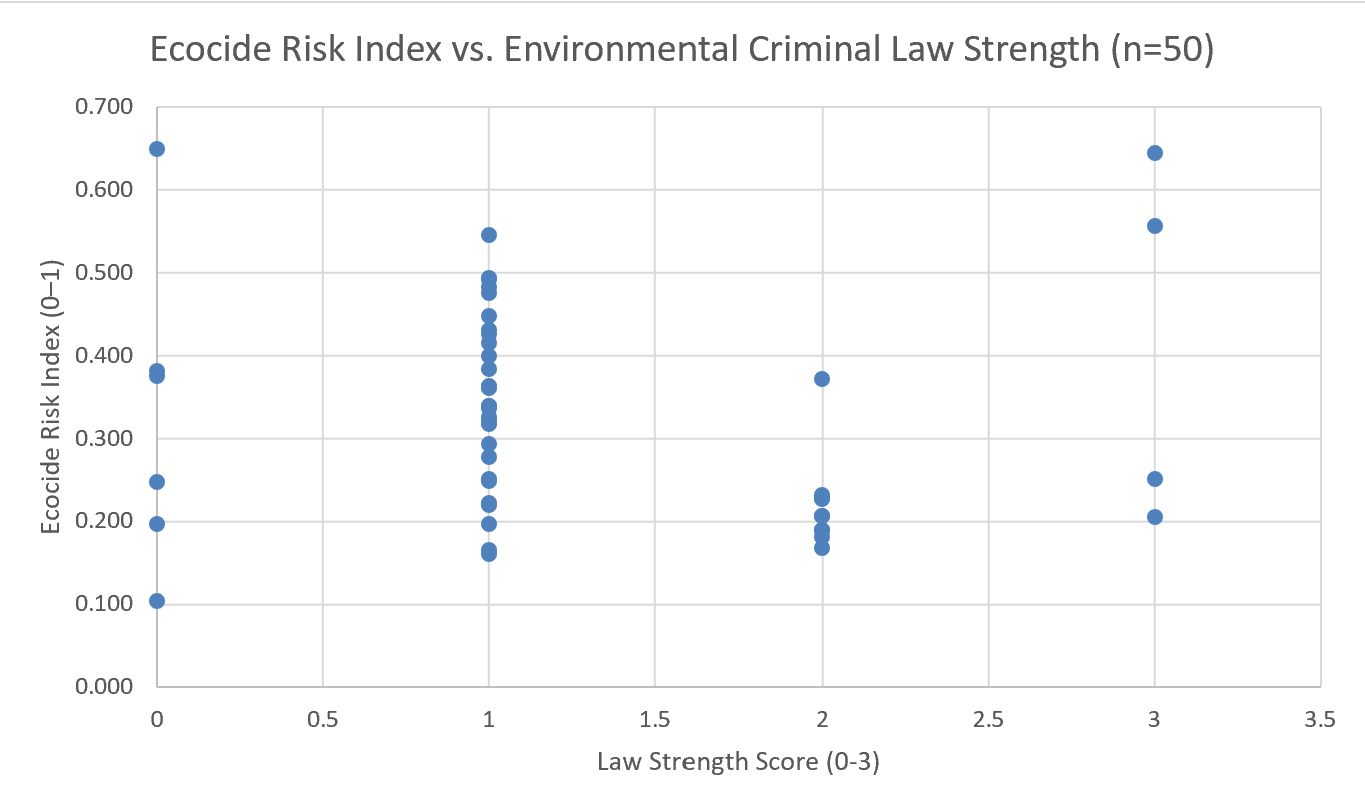
Figure 1: Ecocide Risk Index versus Environmental Criminal Law Strength (n = 50).
Russia and Kazakhstan criminalized ecocide within one year of each other. Russia under Criminal Code Article 358 (1996, 12–20 years),75 while Kazakhstan did so under Article 161 (1997, 10-15 years).76 As post-Soviet states, both followed a near-identical legal structure and framework. Despite Russia carrying a harsher legal penalty, judicial records show that there have been zero convictions under Article 358 since at least 2016 (UWEC Work Group),77 despite neither of these countries being low-risk or a priority. Russia has the second highest composite score of 0.645,78 whereas Kazakhstan’s score of 0.557 is well above the sample mean. Both have a law-strength score of 3. These countries highlight a pattern which the composite index is unable to capture alone. Despite having high environmental risk and maximum formal criminalisation, there is zero accountability. This highlights a gap between legal framework versus law in practice.
Saudi Arabia holds the highest composite Ecocide risk index score in the dataset of 0.650, yet it has a law-strength score of 0. The high-risk index score is primarily due to a CO2 emissions rate of 20.379 tonnes per capita (2024, Our World in Data) and a natural resource depletion rate of 8.19%, both being the highest in the sample data. Although Saudi Arabia’s general Environmental Law (2020)79 governs environmental protection domestically, it is primarily enforced through administrative channels rather than criminal channels. While the previous 2 countries have harsh criminal law on paper but absence of penalties, Saudi Arabia demonstrates the opposite. A complete absence of environmental criminal law despite having the highest risk in the dataset. This issue is also highlighted above, regarding the limited deterrent effect of corporate penalties on the treadmill of production.80
Belgium possesses the most advanced domestic ecocide law in the dataset. It was the first EU state to criminalize ecocide under Penal Code Article 94,81 adopted 22 February 2024, with penalties up to 20 years of imprisonment and corporate fines up to 1.6 million euros. Although this law was adopted in February 2024, it only came into force on 8 April 2026,82 two years post publication in the Belgian Gazette. This law only applies to matters within federal jurisdiction, primarily the North Sea and nuclear waste management. Although most environmental authority is held by regional governments (Flanders, Wallonia, Brussels), this federal provision does not apply to them.83 Despite having the highest domestic law strength score possible, Belgium’s Ecocide Risk Index score is 0.251,84 below the dataset mean of 0.325. Thus, Belgium highlights a different mechanism of the same underlying problem seen in Russia and Kazakhstan. While Russia and Kazakhstan show non enforcement, Belgium demonstrates narrow jurisdictional scope. All three Countries lead to the same result: strong legal systems on paper but weak in practice.
Several countries in the dataset score extremely low on domestic legal accountability yet, at the same time, they are among the most active supporters of criminalizing ecocide internationally. Specifically, Vanuatu and Fiji, which have both scored 0 on the domestic law score, are among the sponsors of the proposal to amend the Rome Statute85 to include ecocide as the fifth international crime: it was submitted by Vanuatu on 9 September 2024, with Fiji and Samoa as co-sponsors, for circulation to the States Parties. Vanuatu scored a 0.19786 on the risk index, whereas Fiji scored a 0.104, the lowest in the entire 50-country dataset. Despite ranking among the countries with the least environmental risk, they are active supporters of international criminalisation. Rather than being explained as an anomaly, this is consistent with the argument that countries like these, with limited domestic legal and institutional capacity, may see international criminalisation as the only route to accountability, as they lack the resources to develop strong legal frameworks domestically.
Hence, it can be observed that domestic law scores, rather than tracking environmental risk, indicate a country’s wealth and emissions in various cases. It is also an indicator of which legal family a country belongs to. For instance: Russia (law=3), Ukraine (law=3) and Kazakhstan (law=3), all post-Soviet countries, exhibit near-identical legal systems descending from the common CIS Model Criminal Code of 1996.87 Various countries with a law strength score of 2 are EU members following the same 2024 directive.88 This is clear evidence of a bloc pattern rather than a coincidence. This trend is consistent with the legal origins theory,89 emphasising that a country’s legal system is largely the product of historical inheritance and adapts slowly to local conditions. Since domestic law is inherently territorial, even the relatively stronger legal systems found in high-emitting countries cannot reach the environmental harm their emissions cause elsewhere, meaning domestic law alone cannot provide an adequate solution to ecocide. This emphasises the need for international criminalisation of ecocide. Consistent with the transparency maintained throughout this analysis, several limitations should be acknowledged: small sample size (n=50) and non-random selection of countries; the compression of complex legal systems into ordinal values; differences between enforced law versus law on paper and the blending of vulnerability and culpability in the risk index. Despite these limitations, the core finding that legal strength does not track environmental risk still stands. Therefore, without international criminalisation, ecocide is likely to persist. However, there are various challenges to criminalising ecocide.
Challenges to Criminalising Ecocide
The challenges presented in this chapter are not drawbacks of criminalisation, due to which the notion must be discarded. Instead, it presents the barriers, aiming for a deliberate understanding of the discourse, to build an informed case for criminalisation.
Although the need for criminalisation has been voiced and advocated for by many scholars in the context of IEL, the process remains extremely complex. Similarly, Killean and Short note that although they are in favour of criminalisation, they realise that there are numerous political and operational barriers to the criminalisation, along with legal limitations, making the “systemic change needed to protect and restore our ravaged ecosystems”90 a complex feat to achieve.
Firstly, the proposed definition of ecocide by the IEP in 2021 incorporates the term ‘wanton’, garnering substantial criticism due to its proposed cost-benefit analysis relating to what acts can be punished. Similarly, Minkova notes that “The IEP’s definition allows those instances of environmental damage that do not ‘clearly’ exceed the benefits to society to escape the reach of the law.”91 Additionally, it reflects an anthropocentric view of environmental harm, sending out the message that “it’s fine to cause ‘severe and widespread or long-term damage to the environment’ as long as humans benefit enough from the destruction.”92 Furthermore, the use of ‘unlawful’ in the definition limits the scope of what acts can be prosecuted and deemed as ecocide, mainly due to most detrimental practices being legal in many domestic territories. Similarly, environmental harm is often State-supported and systemic, as evidenced by the situation in the Niger Delta, where corporations have exploited the natural resources of the region for capital with little effective restraint.93 Therefore, the definition, while attempting to balance protection of the environment and economic growth, gives rise to loopholes that can be used and taken advantage of to continue committing egregious acts of ecocide.
Secondly, the use of the term ‘knowledge’ to denote the mens rea for ecocide poses significant confusion when interpreted with the meaning given in the RS. Firstly, the Statute in Article 30(3)94 provides that knowledge is “awareness that a circumstance exists or a consequence will occur in the ordinary course of events.” Similarly, in Prosecutor v. Jean-Pierre Bemba Gombo,95 knowledge was interpreted as ‘virtual certainty’, a very high threshold; most acts are unable to meet this standard. Regarding the definition of ecocide, the IEP intended that knowledge indicates the need for a substantial likelihood96 or “probability of that result.”97 Aiming for a lower threshold as compared to the requirement of ‘virtual certainty’, the IEP definition instead creates a confusing mismatch between terminology and meaning, hence posing complexity for judges when trying to balance between interpreting the definition that poses a lower threshold and protecting the rights of the defendant by upholding the meaning of “knowledge” strictly.98
Thirdly, the process of amending the RS, which is largely anthropocentric, requires a “political buy-in”99 from the major nations involved and those in power. According to Greene, domestic courts are vulnerable to political tension and corruption involving those at higher levels who exert significant influence, hence likely to make the present claims regarding corporations committing environmental harm complex and unfair.100 An amendment to the RS must be made under Article 121,101 by a State Party to the Statute, and will be adopted if 2/3 of States Parties are in favour; adoption is not the end of the matter, since an amendment to the list of crimes enters into force only for those States Parties that accept it. However, not all States are parties to the RS, for instance, the US, China, Russia and India, who are among the top greenhouse gas (GHG) emitters in the world.102 The lack of support from top nations, can mainly be attributed to their concern regarding economic and trade disruptions, proves to be extremely challenging for the successful criminalisation of ecocide, especially considering that “The ICC’s activities are somehow influenced by political factors, such as diplomatic relations between States and international interests, being often shaped by realpolitik.”103 Similarly, large polluting corporations engaged in oil and fossil fuel extraction certainly find it profitable to keep their practices untouched by environmental law and responsibilities to protect the environment. Hence the oil lobby has structurally resisted regulation and “vehemently opposed the emerging environmental concern.”104
Additionally, another significant problem arising is the lack of a unified response to ecocide in domestic laws across various nations. Although countries such as Vanuatu, Fiji, Samoa105 and the Maldives106 have advocated for the adaptation of a fifth international crime, ecocide, none have incorporated ecocide laws into their domestic legislation. However, it is worth noting that this step signifies a much larger idea shared by the nations, that the crime of ecocide is much larger than something that can be handled at a domestic scale and must be recognised at an international level to address the transboundary harms it poses.
The Necessity for Criminalisation: Protecting the Future and the Path Forward
A. Intergenerational Equity and the Precautionary Principle
“Activities of man and state are not only posing serious threats to the fragile ecosystem but also to the existence of entire human race, including future generations.”107 The consequences of environmental destruction create long-lasting damage and insecurity for multiple generations ahead of us. Climate change, resource depletion and loss of biodiversity are issues that cumulate over decades. Evidently, the climate challenges we face today are repercussions of destructive activity decades ago, and likewise, the decisions we make now will shape the environmental conditions for future generations. The future generations are a “hypothetical and unidentifiable” cohort of unborn individuals who will inherit the planet and various resources from the current generations. The interests of future generations are increasingly being considered in various legal frameworks, such as the Brundtland report,108 which defined sustainable development as meeting the needs of the present without compromising the ability of future generations to meet their own needs. A concept arising from the discussion is the principle of intergenerational equity, positing the moral responsibility of a balance between the present and future generations. However, this theory has been a tough concept to implement into legal statutes. The primary reason being future generations constitute a non-identifiable group who cannot represent themselves legally, hence posing challenges for policy making and protective laws. Consequently, intergenerational equity has remained a guiding principle rather than a legally enforced right. However, diminishing the discourse regarding future generations and their emancipatory powers109 seriously risks “potential for reshaping international law based on a vision of justice and solidarity across time and space”.110 Although it is true that the future generations’ discourse is not straightforward, it cannot be overlooked. A Pakistani case111 appropriately highlights that an intergenerational outlook allows the scope of legal imagination to be broadened and enables representation and justice for the vulnerable communities of the present, coupled with the long-term effects on future generations. Similarly, the precautionary principle in IEL operates as the legal underpinning for the protection of future generations. It ensures that precaution is taken for decisions relating to the environment, posing certain irreversible harm, despite a lack of scientific evidence.112 Furthermore, this principle provides an additional benefit to holding defendants accountable based on mens rea. According to Gillett, in cases where the direct intention of environmental harm cannot be proved, the precautionary principle ensures that defendants are unable to use the lack of determined scientific evidence as a defence, provided that they were aware the risk was likely to occur due to their actions.113 This principle plays an important role in addressing the definitional constraints of knowledge as highlighted in the preceding chapter.
B. The Need for Criminalisation
There is a dire necessity to establish stricter consequences and deterrents for environmental crimes, as well as make adequate changes in the current framework, suffering from ineffectiveness. While treaty-based environmental regulation can aid in providing uniform transnational agreements regarding environmental concerns, it fails to provide the provision of strict accountability, deterrence or enforcement, aspects essential for preserving the planet. Unlike soft law and international treaties, which are mostly inadequate in deriving successful change,114 criminal law and sanctions posit acceptable societal limits ensuring “citizens observe common standards of conduct”,115 aiding in the deterrence of unacceptable activity. Moreover, it provides the essential accountability and foundation for deterrence that the current system cannot. Adopting a crime of ecocide is most beneficial for changing attitudes regarding grave environmental catastrophes and crimes. Establishment of punishments and norms at the highest level could lead to domestic crimes, usually going unnoticed, to be dealt with efficiently, hence “transform ‘ecocide’ from a rarity to a new international norm.”116
Smith notes that international law could go beyond political and corporate shields and provide individual accountability for those involved in environmental crimes.117 Similarly, Appel has found evidence of a deterrent effect associated with the ICC, with leaders of States that have ratified the Rome Statute committing lower levels of human rights abuses than the leaders of non-ratifying States.118 Deterrence is the most essential and necessary aspect that criminalisation of ecocide can provide, given that we are “faced with a climate crisis and an age of mass extinction, we must use all the tools at our disposal, including diverse legal pathways to protect and repair the natural world.”
Therefore, providing intervention at the right time, i.e. before irreversible harm has occurred, is essential, instead of compensating for it after the loss has been incurred by the planet and communities.
C. The Path Forward
Throughout the last decade, numerous efforts have been made to catalyse this discourse regarding ecocide internationally. The first major step was the publication of IEP’s definition of ecocide, providing a unified international consensus regarding the crime. Moreover, the adoption of several policy initiatives on accountability for environmental crimes119 is beginning to pave the way for environmental crime to gain the importance it deserves in the justice system. For instance, the European Parliament (EP) and the Council in 2024 adopted the ECD,120 aiming at establishing criminal offences and penalties regarding the environment; it entered into force on 20 May 2024 and Member States were required to transpose it into national law by 21 May 2026. Although the directive does not include ecocide, it mentions offences that are comparable, implying a potential international recognition. Similarly, in 2023, Baroness Boycott introduced the Ecocide bill in the United Kingdom, aiming at closing “an existing gap in UK criminal law which allows perpetrators of the most severe environmental harms to escape accountability”.121 However, it has not yet proceeded past the initial introductory stage. Scotland, on the other hand, has voted to advance the ecocide bill and recognised the need for stricter criminal penalties. The proposal by the Pacific States in 2024 to criminalise ecocide has certainly played a pivotal role in encouraging and opening up the ecocide discussion to the international fora. The inclusion and consideration of ecocide on an international level, although it provides normative momentum for change, lacks attention and certainty for implementation, especially when pitted against the challenges previously outlined. Translating this moral necessity to criminalise ecocide into an enforceable global law is extremely complex. The issue at the heart of this problem is finding the perfect balance between action that attends to the needs of the planet and its vulnerable population, while retaining the ability to be adopted among a broad range of the ICC’s coalition of States.
Conclusion
The course of this dissertation has provided crucial insight into the historical, political and legal dimensions surrounding ecocide and its potential criminalisation. Ecocide occurs beyond rare occasions, limited to areas of conflict, posing a real threat to the likelihood of the planet succeeding in sustaining human life for longer, much less itself. Exploring the emergence of the concept of ecocide through green criminology sets the stage to realise that environmental crimes, especially those that are made routine occurrences, are significantly neglected by the State and other international actors, as well as the broader field of traditional criminology. Despite its undying effects lasting generations and spreading rapidly from one part of the world to another, ecocide remains a common occurrence through malpractices such as deforestation, oil spills, and chemical leaks. It further manifests its effects in the most common form of anthropogenic climate change, drastically impacting the lives of vulnerable communities, notably young people, children and future generations. Evaluating the accountability gap between the large-scale occurrence of ecocide and the lack of effective international regulations in place reveals the blatant disregard for environmental crimes, especially when the economic return is the priority. Furthermore, despite this accountability gap, the argument for criminalisation provides a weak front due to the legal, definitional and political challenges part of the trajectory to criminalisation. However, analysing the discourse regarding future generations and the principle of intergenerational equity reveals that the criminalisation serves beyond the needs of the present generations. Instead, it is an essential adaptation for safeguarding the interests, health, livelihoods and mere existence of future generations. Ultimately, the goal of this dissertation has been to convey that the examination must not be regarding whether ecocide must be criminalised. Considering the climate refugees, water contamination, health conditions arising out of ecocide and similar acts, there is inadequate time left to consider whether this is a viable option. Instead, the challenges must be tackled despite their existence and complexity. Establishing ecocide as a crime provides a boundary that corporate and State practices must not cross, creating a clear balance between economic expansion and environmental preservation. Thus, shifting the burden on actors to ensure their practices are not detrimental, enabling intervention before the harm becomes irreversible and further wounds the planet at such a vulnerable stage.
*****
Footnotes
1. Anja Gauger et al., Ecocide Is the Missing 5th Crime Against Peace (Human Rights Consortium, Sch. of Advanced Study, Univ. of London, July 2012), https://sas-space.sas.ac.uk/4686/1/Ecocide_is_the_missing_5th_Crime_Against_Peace.pdf.
2. C. Giuliani et al., First Evidence of Association Between Past Environmental Exposure to Dioxin and DNA Methylation of CYP1A1 and IGF2 Genes in Present Day Vietnamese Population, 242 Env’t Pollution 976 (2018), https://doi.org/10.1016/j.envpol.2018.07.015.
3. Global Tipping Points Report 2025 (Timothy M. Lenton et al. eds., Univ. of Exeter 2025), https://doi.org/10.5281/zenodo.18163977.
4. Global Tipping Points Report 2025, supra note 3, at 6.
5. Paris Agreement, Dec. 12, 2015, T.I.A.S. No. 16-1104 (entered into force Nov. 4, 2016).
6. House of Commons Library, Climate Change at the International Court of Justice (Research Briefing No. CBP-10354, Oct. 8, 2025), https://commonslibrary.parliament.uk/research-briefings/cbp-10354/.
7. Rome Statute of the International Criminal Court, July 17, 1998, 2187 U.N.T.S. 3 (entered into force July 1, 2002) [hereinafter Rome Statute].
8. Rob White & Diane Heckenberg, Green Criminology: An Introduction to the Study of Environmental Harm ch. 1 (2014), https://www.taylorfrancis.com/chapters/mono/10.4324/9780203096109-1/introduction-rob-white-diane-heckenberg.
9. Stop Ecocide Found., Independent Expert Panel for the Legal Definition of Ecocide: Commentary and Core Text (June 2021), https://static1.squarespace.com/static/5ca2608ab914493c64ef1f6d/t/67f539d588e9544792700921/1744124385734/SE%2BFoundation%2BCommentary%2Band%2Bcore%2Btext%2B2025.pdf.
10. Env’t Investigation Agency, Environmental Crime: A Threat to Our Future (2008).
11. Stop Ecocide Int’l, FAQs: Ecocide Law, https://www.stopecocide.earth/faqs-ecocide-the-law.
12. Exxon Valdez Oil Spill – In Pictures, Guardian (Mar. 24, 2014), https://www.theguardian.com/environment/gallery/2014/mar/24/exxon-valdez-oil-spill-in-pictures.
13. Mace G. Barron et al., Long-Term Ecological Impacts from Oil Spills: Comparison of Exxon Valdez, Hebei Spirit, and Deepwater Horizon, 54 Env’t Sci. & Tech. 6456 (2020), https://doi.org/10.1021/acs.est.9b05020.
14. Jeff Chen & Michael S. Denison, The Deepwater Horizon Oil Spill: Environmental Fate of the Oil and the Toxicological Effects on Marine Organisms, 21 J. Young Investigators 84 (2011).
15. Australia Blames Thai Oil Rig Firm for Timor Sea Spill, BBC News (Nov. 24, 2010), https://www.bbc.co.uk/news/world-asia-pacific-11826522.
16. Ben Doherty, “Very Hard Life Now”: 12 Years After the Montara Oil Spill, Indonesians Are Still Fighting to Be Heard, Guardian (Jan. 16, 2022), https://www.theguardian.com/environment/2022/jan/16/very-hard-life-now-12-years-after-the-montara-oil-spill-indonesians-are-still-fighting-to-be-heard.
17. Simi Jolaoso, Nigeria Oil: Shell Ignored Warnings of Spill Clean-Up “Scam”, Whistleblower Tells BBC, BBC News (Feb. 12, 2025), https://www.bbc.co.uk/news/articles/c0rqe85q1jno.
18. Faithwin Gbadamosi & Jared Aldstadt, The Interplay of Oil Exploitation, Environmental Degradation and Health in the Niger Delta: A Scoping Review, 30 Tropical Med. & Int’l Health 351 (2025), https://doi.org/10.1111/tmi.14108.
19. Gbadamosi & Aldstadt, supra note 18.
20. World Wide Fund for Nature, Amazon, https://www.worldwildlife.org/places/amazon/.
21. Rainforest Found. US, A Rainforest Without Rain: Communities in the Amazon Grapple with the Impacts of Extreme Drought and Fires (Sept. 25, 2024), https://rainforestfoundation.org/communities-in-the-amazon-impacted-drought-and-fires/.
22. Lozano Barragán v. Presidency of the Republic of Colombia, STC4360-2018 (Corte Suprema de Justicia, Sala de Casación Civil, Apr. 5, 2018) (Colom.).
23. Olivia Lai, 13 Major Companies Responsible for Deforestation, Earth.Org (Jan. 29, 2023), https://earth.org/major-companies-responsible-for-deforestation/.
24. Rob White, Imagining the Unthinkable: Climate Change, Ecocide and Children, in C Wright Mills and the Criminological Imagination: Prospects for Creative Inquiry 219 (Jon Frauley ed., 2016).
25. White, supra note 24.
26. White, supra note 24.
27. White, supra note 24.
28. Rishika Pardikar, Global North Is Responsible for 92% of Excess Emissions, Eos (Oct. 28, 2020), https://doi.org/10.1029/2020EO150969.
29. Int’l Energy Agency, Bangladesh: Emissions, https://www.iea.org/countries/bangladesh/emissions.
30. Bündnis Entwicklung Hilft & Inst. for Int’l L. of Peace & Armed Conflict, WorldRiskReport 2025: Focus: Floods (2025).
31. Lagipoiva Cherelle Jackson, “Humanitarian” Visa Must Be Created for Pacific Islanders Displaced by Climate Crisis, Experts Say, Guardian (Oct. 9, 2025), https://www.theguardian.com/world/2025/oct/09/climate-crisis-humanitarian-visa-displaced-pacific-islanders.
32. UNICEF, Children Displaced in a Changing Climate: Preparing for a Future That’s Already Underway (Oct. 2023), https://www.unicef.org/reports/children-displaced-changing-climate.
33. UNICEF, The Climate-Changed Child: A Children’s Climate Risk Index Supplement (2023), https://www.unicef.org/media/147931/file/Theclimage-changedchild-ReportinEnglish.pdf.
34. Press Release, UNICEF, Triple Threat: Water-Related Crises Endangering Lives of 190 Million Children (Mar. 20, 2023), https://www.unicef.org/press-releases/triple-threat-water-related-crises-endangering-lives-190-million-children-unicef.
35. Press Release, UNICEF, supra note 34.
36. Save the Children UK, How Climate Change Affects Children, https://www.savethechildren.org.uk/what-we-do/global-issues-hub/climate-change/how-climate-change-affects-children; see also Francis Vergunst & Helen L. Berry, Climate Change and Children’s Mental Health: A Developmental Perspective, 10 Clinical Psych. Sci. 767 (2022), https://doi.org/10.1177/21677026211040787.
37. Rebecca Geldard, 3 Ways Climate Change Is Affecting Kids’ Health, World Econ. F. (Sept. 30, 2024), https://www.weforum.org/stories/2024/09/children-climate-change-impact-health/.
38. Geldard, supra note 37 (quoting Kitty van der Heijden, UNICEF Deputy Executive Director for Partnerships).
39. UNICEF, Learning Interrupted: Global Snapshot of Climate-Related School Disruptions in 2024 (Jan. 2025).
40. UNICEF, supra note 32.
41. Pauline Mendola & Sandie Ha, Beyond the Infant in Your Arms: Effects of Climate Change Last for Generations, 118 Fertility & Sterility 224 (2022), https://doi.org/10.1016/j.fertnstert.2022.06.007.
42. D.R. Varma et al., Catch-Up Growth in Males Affected by the Union Carbide Disaster of 1984 in Bhopal, India, 22 FASEB J. 1137.1 (2008), https://doi.org/10.1096/fasebj.22.1_supplement.1137.1; the quoted finding is reported in D.R. Varma, Epidemiological and Experimental Studies on the Effects of Methyl Isocyanate on the Course of Pregnancy, 72 Env’t Health Persp. 153, 154 (1987).
43. Amnesty Int’l, Bhopal: 40 Years of Injustice, AI Index ASA 20/7817/2024 (Mar. 28, 2024), https://www.amnesty.org/en/documents/asa20/7817/2024/en/; see also G.C. McCord et al., Long-Term Health and Human Capital Effects of In Utero Exposure to an Industrial Disaster, 13 BMJ Open art. e066733 (2023), https://doi.org/10.1136/bmjopen-2022-066733.
44. Rob White, Climate Change, Ecocide and the Crimes of the Powerful, in The Routledge International Handbook of the Crimes of the Powerful 231 (Gregg Barak ed., 2015), https://doi.org/10.4324/9781315815350-26.
45. Austin Jenish, Lessons for COP30: 3 Reasons Why Environmental Treaties Consistently Fail, Earth.Org (Sept. 8, 2025), https://earth.org/lessons-for-cop30-3-reasons-why-environmental-treaties-consistently-fail/.
46. Blandine Boeuf, Oliver Fritsch & Julia Martin-Ortega, Undermining European Environmental Policy Goals? The EU Water Framework Directive and the Politics of Exemptions, 8 Water art. 388 (2016), https://doi.org/10.3390/w8090388.
47. Chris Dragisic, The World Can’t Wait: Climate Targets Must Match the Urgency of the Moment, Audubon (Sept. 9, 2025), https://www.audubon.org/news/world-cant-wait-climate-targets-must-match-urgency-of-moment.
48. FIAN Int’l & Friedrich-Ebert-Stiftung, Time to Act: Securing a Sustainable Future Through Corporate Accountability 3 (Mar. 2026), https://www.ciel.org/wp-content/uploads/2026/03/ENG_FES_FIAN-Briefing-Paper_March-2026_FINAL.pdf.
49. FIAN Int’l & Friedrich-Ebert-Stiftung, supra note 48, at 3.
50. Michael J. Lynch, Michael A. Long & Paul B. Stretesky, Green Criminology, in Handbook of Environmental Sociology 355 (Beth Schaefer Caniglia et al. eds., 2021), https://doi.org/10.1007/978-3-030-77712-8_17.
51. Trail Smelter Arbitration (U.S. v. Can.), 3 R.I.A.A. 1905 (1938 & 1941).
52. Legal Response Initiative, “No-Harm Rule” and Climate Change 3 (Briefing Paper No. 42, July 24, 2012), https://legalresponse.org/wp-content/uploads/2025/07/BP42E-Briefing-Paper-No-Harm-Rule-and-Climate-Change-24-July-2012.pdf.
53. Deena Robinson, Explainer: What Is the Tragedy of the Commons?, Earth.Org (Sept. 5, 2021), https://earth.org/what-is-tragedy-of-the-commons/.
54. Int’l L. Comm’n, Draft Articles on Responsibility of States for Internationally Wrongful Acts, U.N. Doc. A/56/10, ch. IV.E.1 (2001).
55. Int’l Crim. Ct., Off. of the Prosecutor, Policy on Addressing Environmental Damage Through the Rome Statute ¶ 5 (Dec. 2025), https://www.icc-cpi.int/sites/default/files/2025-12/2025-env-eng.pdf.
56. Rome Statute, supra note 7, art. 8(2)(b)(iv).
57. Polly Higgins, Damien Short & Nigel South, Protecting the Planet: A Proposal for a Law of Ecocide, 59 Crime, L. & Soc. Change 251 (2013), https://doi.org/10.1007/s10611-013-9413-6. The description of art. 8(2)(b)(iv) as the first ecocentric environmental war crime originates with Jessica C. Lawrence & Kevin Jon Heller, The Limits of Article 8(2)(b)(iv) of the Rome Statute, the First Ecocentric Environmental War Crime, 20 Geo. Int’l Env’t L. Rev. (2007).
58. Michael Bothe, Carl Bruch, Jordan Diamond & David Jensen, International Law Protecting the Environment During Armed Conflict, 92 Int’l Rev. Red Cross 569, 579 (2010).
59. J. William Futrell, Security Forces and International Treaties and Issues, SG056 ALI-ABA 57 (2002). The underlying count is reported in Peter Wallensteen & Margareta Sollenberg, Armed Conflict and Regional Conflict Complexes, 1989-97, 35 J. Peace Rsch. 621 (1998).
60. Liana Georgieva Minkova, The Fifth International Crime: Reflections on the Definition of “Ecocide”, 25 J. Genocide Rsch. 62, 66 (2023), https://doi.org/10.1080/14623528.2021.1964688.
61. Int’l Atomic Energy Agency, Environmental Consequences of the Chernobyl Accident and Their Remediation: Twenty Years of Experience, STI/PUB/1239 (2006), https://www-pub.iaea.org/MTCD/Publications/PDF/Pub1239_web.pdf.
62. Int’l Atomic Energy Agency, supra note 61.
63. Rome Statute, supra note 7, art. 22(2).
64. Damien Gayle, What Is Ecocide and Could It Become a Crime Under International Law?, Guardian (May 28, 2025), https://www.theguardian.com/environment/2025/may/28/what-is-ecocide-and-could-it-become-a-under-international-law.
65. Michael J. Lynch, Kimberly L. Barrett, Paul B. Stretesky & Michael A. Long, The Neglect of Quantitative Research in Green Criminology and Its Consequences, 25 Critical Criminology 183 (2017), https://doi.org/10.1007/s10612-017-9359-6.
66. Kevin Buckler, The Quantitative/Qualitative Divide Revisited: A Study of Published Research, Doctoral Program Curricula, and Journal Editor Perceptions, 19 J. Crim. Just. Educ. 383 (2008), https://doi.org/10.1080/10511250802476210.
67. Our World in Data, CO2 and Greenhouse Gas Emissions (2025) (data sourced from the Global Carbon Project), https://ourworldindata.org/co2-and-greenhouse-gas-emissions.
68. World Bank, Adjusted Savings: Natural Resources Depletion (% of GNI) (World Development Indicators), https://data.worldbank.org/indicator/NY.ADJ.DRES.GN.ZS.
69. Food & Agric. Org., Forest Area (% of Land Area) (World Bank, World Development Indicators), https://data.worldbank.org/indicator/AG.LND.FRST.ZS.
70. Bündnis Entwicklung Hilft & Inst. for Int’l L. of Peace & Armed Conflict, supra note 30.
71. Directive (EU) 2024/1203 of the European Parliament and of the Council of 11 April 2024 on the Protection of the Environment Through Criminal Law and Replacing Directives 2008/99/EC and 2009/123/EC, O.J. L, 2024/1203, 30.4.2024.
72. Robert Cooter & Tom Ginsburg, Leximetrics: Why the Same Laws Are Longer in Some Countries Than Others (Univ. of Ill. L. & Econ. Rsch. Paper No. LE03-012, 2003), https://home.uchicago.edu/~tginsburg/pdf/workingpapers/Leximetrics.pdf.
73. Stop Ecocide Int’l, Existing & Proposed Ecocide Laws, https://ecocidelaw.com/existing-ecocide-laws/.
74. Author’s own calculation, based on the Ecocide Risk Index and Law Strength Score dataset described above, supra notes 67-70. Full dataset, normalisation formulas, and statistical outputs available in the accompanying supplementary spreadsheet.
75. Craig Kauffman et al., Russian Criminal Code (1996): Ecocide, Eco Jurisprudence Monitor (V2, 2026), https://ecojurisprudence.org/initiatives/criminal-code-russian-federation/.
76. Craig Kauffman et al., Kazakhstan Criminal Code (1997): Ecocide, Eco Jurisprudence Monitor (V2, 2026), https://ecojurisprudence.org/initiatives/penal-code-kazakhstan/. The offence now appears at art. 169 of the Criminal Code of 2014, with the same penalty range.
77. Alexej Ovchinnikov, On the Path to International Recognition of Ecocide (Jennifer Castner trans.), Ukraine War Env’t Consequences Work Grp. (Sept. 4, 2023), https://uwecworkgroup.info/on-the-path-to-international-recognition-of-ecocide/.
78. Author’s own calculation, based on the Ecocide Risk Index and Law Strength Score dataset described above, supra notes 67-70. Full dataset, normalisation formulas, and statistical outputs available in the accompanying supplementary spreadsheet.
79. Royal Decree No. M/165 (Issuing the Environment Law), 1441H/2020 (Saudi Arabia).
80. Lynch, Long & Stretesky, supra note 50.
81. Code pénal art. 94 (Belg.), as inserted by Loi du 29 février 2024 introduisant le livre II du Code pénal, M.B. Apr. 8, 2024 (adopted by the Chamber of Representatives on Feb. 22, 2024); Julien Haverals, Belgium, the Brand-New EU Leader in the Fight Against Ecocides, Norton Rose Fulbright (Mar. 2024), https://www.nortonrosefulbright.com/en-in/knowledge/publications/c8fe0599/belgium-the-brand-new-eu-leader-in-the-fight-against-ecocides; Stop Ecocide Int’l, supra note 73.
82. Bruno Garcia da Silva & Guillaume Croisant, Belgium Introduces the Offence of Ecocide, Sustainable Futures (Linklaters, Feb. 28, 2024), https://sustainablefutures.linklaters.com/post/102j15x/belgium-introduces-the-offence-of-ecocide.
83. Haverals, supra note 81.
84. Author’s own calculation, based on the Ecocide Risk Index and Law Strength Score dataset described above, supra notes 67-70. Full dataset, normalisation formulas, and statistical outputs available in the accompanying supplementary spreadsheet.
85. Stop Ecocide Int’l, Mass Destruction of Nature Reaches International Criminal Court (ICC) as Pacific Island States Propose Recognition of “Ecocide” as International Crime (Sept. 9, 2024), https://www.stopecocide.earth/2024/mass-destruction-of-nature-reaches-international-criminal-court-icc-as-pacific-island-states-propose-recognition-of-ecocide-as-international-crime. The proposal was submitted by Vanuatu to the depositary under art. 121(1) of the Rome Statute and circulated to the States Parties; it remains pending and has not been adopted.
86. Author’s own calculation, based on the Ecocide Risk Index and Law Strength Score dataset described above, supra notes 67-70. Full dataset, normalisation formulas, and statistical outputs available in the accompanying supplementary spreadsheet.
87. Stop Ecocide Int’l, supra note 73.
88. Directive (EU) 2024/1203, supra note 71.
89. Rafael La Porta, Florencio Lopez-de-Silanes & Andrei Shleifer, The Economic Consequences of Legal Origins, 46 J. Econ. Literature 285, 288, 307-08 (2008), https://doi.org/10.1257/jel.46.2.285.
90. Rachel Killean & Damien Short, A Critical Defence of the Crime of Ecocide, Env’t Pol. (advance online publication, Apr. 24, 2025), https://doi.org/10.1080/09644016.2025.2492441.
91. Minkova, supra note 60, at 74.
92. Kevin Jon Heller, Skeptical Thoughts on the Proposed Crime of “Ecocide” (That Isn’t), Opinio Juris (June 23, 2021), http://opiniojuris.org/2021/06/23/skeptical-thoughts-on-the-proposed-crime-of-ecocide-that-isnt/.
93. Amnesty Int’l UK, The Niger Delta, https://www.amnesty.org.uk/latest/the-niger-delta/.
94. Rome Statute, supra note 7, art. 30(3).
95. Prosecutor v. Bemba Gombo, ICC-01/05-01/08-3483-Red, Public Redacted Version of Appellant’s Reply to “Prosecution’s Response to Appellant’s Document in Support of Appeal” (Jan. 23, 2017) (a defence filing). For the Court’s own articulation of the standard, see Prosecutor v. Lubanga Dyilo, ICC-01/04-01/06-803-tEN, Decision on the Confirmation of Charges, ¶¶ 351-52 (Jan. 29, 2007); Prosecutor v. Bemba Gombo, ICC-01/05-01/08-424, Decision Pursuant to Article 61(7)(a) and (b), ¶¶ 362-63 (June 15, 2009).
96. Stop Ecocide Found., supra note 9.
97. Stop Ecocide Found., supra note 9.
98. Stop Ecocide Found., supra note 9.
99. Rachel Killean, The Benefits, Challenges, and Limitations of Criminalizing Ecocide, IPI Global Observatory (Mar. 30, 2022), https://theglobalobservatory.org/2022/03/the-benefits-challenges-and-limitations-of-criminalizing-ecocide/.
100. Anastacia Greene, The Campaign to Make Ecocide an International Crime: Quixotic Quest or Moral Imperative?, 30 Fordham Env’t L. Rev. 1 (2019).
101. Rome Statute, supra note 7, art. 121.
102. European Comm’n Joint Rsch. Ctr., GHG Emissions of All World Countries: 2025 Report (2025), https://edgar.jrc.ec.europa.eu/report_2025#emissions_table.
103. Rinata Kazak, Ecocide in International Law: A Geopolitical Perspective, in Handbook on the Geopolitics of Sustainability 236 (Björn-Ola Linnér, Therese Bennich & Henrik Carlsen eds., 2026), https://doi.org/10.4337/9781035342549.00033.
104. Stephan J. Hauser et al., Early Knowledge but Delays in Climate Actions: An Ecocide Case Against Both Transnational Oil Corporations and National Governments, 161 Env’t Sci. & Pol’y art. 103880, at 5 (2024), https://www.sciencedirect.com/science/article/pii/S1462901124002144#sec0055.
105. Fiona Harvey, Pacific Islands Submit Court Proposal for Recognition of Ecocide as a Crime, Guardian (Sept. 9, 2024), https://www.theguardian.com/law/article/2024/sep/09/pacific-islands-ecocide-crime-icc-proposal.
106. Stop Ecocide Int’l, Maldives Calls for a Fifth International Crime of Ecocide (Dec. 5, 2019), https://www.stopecocide.earth/press-releases-summary/maldives-calls-for-a-fifth-international-crime-of-ecocide-.
107. K.I. Vibhute, Environment, Present and Future Generations: Intergenerational Equity, Justice and Responsibility, 39 J. Indian L. Inst. 281 (1997).
108. World Comm’n on Env’t & Dev., Our Common Future (1987).
109. Margaretha Wewerinke-Singh, Ayan Garg & Shubhangi Agarwalla, In Defence of Future Generations: A Reply to Stephen Humphreys, 34 Eur. J. Int’l L. 651 (2023), https://doi.org/10.1093/ejil/chad033.
110. Wewerinke-Singh, Garg & Agarwalla, supra note 109, at 651.
111. Maria Khan v. Federation of Pakistan, W.P. No. 8960 of 2019 (Lahore High Ct., order of Feb. 15, 2019) (Pak.).
112. Didier Bourguignon, European Parliamentary Rsch. Serv., The Precautionary Principle: Definitions, Applications and Governance, PE 573.876 (Dec. 2015), https://www.europarl.europa.eu/thinktank/en/document/EPRS_IDA(2015)573876.
113. Matthew Gillett, Ecocide, Environmental Harm and Framework Integration at the International Criminal Court, 29 Int’l J. Hum. Rts. 1009 (2025), https://doi.org/10.1080/13642987.2024.2433660.
114. Steven J. Hoffman et al., International Treaties Have Mostly Failed to Produce Their Intended Effects, 119 Proc. Nat’l Acad. Sci. art. e2122854119 (2022), https://pmc.ncbi.nlm.nih.gov/articles/PMC9372541/#s7.
115. Andrew Cornford, The Aims and Functions of Criminal Law, 87 Mod. L. Rev. 398 (2024), https://doi.org/10.1111/1468-2230.12846.
116. Greene, supra note 100, at 45.
117. Tara Smith, Creating a Framework for the Prosecution of Environmental Crimes in International Criminal Law, in The Ashgate Research Companion to International Criminal Law (William A. Schabas, Yvonne McDermott & Niamh Hayes eds., 2013), https://www.taylorfrancis.com/chapters/edit/10.4324/9781315613062-4/creating-framework-prosecution-environmental-crimes-international-criminal-law-tara-smith.
118. Benjamin J. Appel, In the Shadow of the International Criminal Court, 62 J. Conflict Resol. 3 (2018), https://doi.org/10.1177/0022002716639101.
119. Press Release, Int’l Crim. Ct., Off. of the Prosecutor, ICC Office of the Prosecutor Launches Second Public Consultation on a Policy Initiative to Advance Accountability for Environmental Crimes Under the Rome Statute (Dec. 18, 2024), https://www.icc-cpi.int/news/icc-office-prosecutor-launches-second-public-consultation-policy-initiative-advance.
120. Directive (EU) 2024/1203, supra note 71, art. 3(3).
121. Stop Ecocide Int’l, UK “Ecocide Bill” Introduced in House of Lords (Nov. 30, 2023), https://www.stopecocide.earth/breaking-news-2023/uk-ecocide-bill-introduced-in-house-of-lords.