
Introduction
There is a fundamental tension at the heart of modern criminal adjudication that legal systems have never fully resolved. On one side stands the classical conception of criminal responsibility as intentional, voluntary, and therefore deserving of punishment. On the other stands the accumulated weight of two centuries of behavioural, neurological, and social science, which persistently demonstrates that the acts human beings commit cannot be disentangled, without distortion, from the biological substrates, psychological histories, and environmental circumstances that preceded them. The criminal trial, in its current form, occupies an increasingly uncomfortable position between these two poles.
This discomfort is not merely philosophical. It has concrete, daily consequences for the many accused persons who appear before criminal courts carrying histories of childhood adversity, psychiatric illness, substance dependence, neurological difference, and social disadvantage, and who receive legal responses calibrated almost entirely to the objective seriousness of their conduct rather than to the personal reality that shaped it. Punishment delivered without forensic understanding of context is frequently disproportionate, rarely rehabilitative, and seldom productive of lasting public safety.
The forensic sciences offer a path through this impasse, but only if they are treated as an integrated explanatory system rather than as a collection of unrelated technical silos. Presently, a forensic psychiatrist may testify about mental state without reference to toxicological findings. A trauma specialist may interpret injury without engaging the accused’s developmental history. A digital forensics expert may present media exposure evidence without psychological context. Each report is methodologically sound in isolation and collectively misleading in practice. Courts, presented with these fragments, are left to construct explanatory accounts that the evidence was never organised to support.
This article proposes a solution: a defence-oriented constitutional-forensic framework that synthesises evidence from forensic psychology, psychiatry, toxicology, genetics, serology, trauma science, and digital forensics into a structured three-stage analytical model, governed throughout by the constitutional principles of dignity, equality, liberty, privacy, due process, and proportionality, with particular grounding in Articles 14, 19, and 21 of the Constitution of India and their evolving judicial interpretation. The framework does not propose to excuse criminal conduct. It proposes to explain it, with sufficient rigour and constitutional fidelity that courts can respond to it with accuracy, proportionality, and justice.
What makes this framework novel, and the question of novelty deserves direct engagement, is not any individual disciplinary contribution, all of which are well established in their own literatures. Rather, the originality lies in three things: the systematic integration of seven forensic disciplines within a single operable analytical model; the explicit subordination of that model to constitutional constraints expressed with reference to specific constitutional provisions and landmark judicial decisions; and the differentiated application of the model across four offender categories whose forensic profiles are meaningfully distinct. No prior scholarship traced by this author has accomplished all three simultaneously.
The research problem: fragmentation, determinism, and constitutional silence
The structural problems that motivate this study are three, and they reinforce one another in ways that make any partial solution inadequate.
The first is disciplinary fragmentation. When forensic experts testify in criminal proceedings, they do so as representatives of their individual specialisations. The forensic psychologist reports on cognitive functioning and behavioural regulation. The toxicologist reports on substance levels and pharmacological impairment. The trauma specialist reports on injury patterns. The digital forensics analyst reports on browsing history and media consumption. Each of these accounts is technically accurate, professionally defensible, and narratively incomplete. Taken together, they might explain an offending event with considerable precision. Presented separately, often at different points in a trial and without any framework connecting them, they generate an evidentiary mosaic that courts lack the conceptual tools to assemble.
The second problem is the determinism risk. When scientific evidence enters criminal proceedings without appropriate conceptual boundaries, it tends, in practice, to be used in one of two equally problematic ways. It is either dismissed as irrelevant, because courts trained in volitional legal categories find behavioural science explanations difficult to translate into the language of mens rea and actus reus, or it is accorded excessive weight, implying that the accused’s biology, psychiatry, or developmental history somehow predetermined the conduct. The former wastes evidence. The latter violates constitutional principle. A framework is needed that exploits the explanatory value of forensic science while resisting both errors.
The third problem is constitutional silence. There is, in both Indian and comparative jurisprudence, a conspicuous absence of systematic thinking about the constitutional constraints that should govern the use of multidisciplinary forensic evidence in criminal proceedings. Article 14 of the Constitution of India guarantees equality before the law and prohibits arbitrary classification, which should preclude the use of genetic or psychological profiles to assign individuals to presumed-dangerous categories. Article 21 protects life and personal liberty against arbitrary state action, which should require that forensic evidence be used proportionately and with adequate procedural safeguards. The right to privacy, confirmed as a fundamental right in K.S. Puttaswamy v. Union of India,1 has profound implications for the collection and use of genetic and digital evidence. Yet none of these constitutional principles has been systematically applied to the use of forensic science evidence in criminal adjudication. This article undertakes that application.
Literature review and the identification of the research gap
A. The forensic psychology literature
Research in forensic psychology has, over several decades, constructed a robust empirical account of the behavioural, cognitive, and developmental factors associated with criminal offending. The risk-needs-responsivity model, developed by Andrews and Bonta,2 remains a dominant framework for understanding the dynamic criminogenic factors, including antisocial cognition, peer associations, impulsivity, and substance use, that interventions should target. Separately, the adverse childhood experiences literature, initiated by the landmark study of Felitti and colleagues,3 has established dose-response relationships between cumulative childhood adversity and adult outcomes including criminal justice involvement. What the psychological literature has not produced is a constitutionally bounded framework for translating these findings into criminal court practice, particularly in the Indian context.
B. The forensic psychiatry literature
Forensic psychiatric research has consistently documented elevated rates of mental disorder in criminal justice populations. Fazel and Danesh,4 in a systematic review of 62 surveys covering approximately 23,000 prisoners, identified substantially elevated rates of psychosis, major depression, and personality disorder. More recent systematic reviews have extended and refined these findings across diverse jurisdictional contexts.5 The literature is equally emphatic, however, that psychiatric diagnosis does not determine criminal responsibility, and that the relationship between mental illness and offending is mediated by individual circumstances, situational factors, and contextual variables that resist categorical analysis. This nuance is frequently lost in criminal proceedings that treat diagnosis as a proxy for reduced culpability.
C. Toxicology, genetics, and serology
The toxicological literature has established associations between alcohol, controlled substances, and violent offending, while simultaneously demonstrating that the inference from biological sample to behavioural state is far more complex than courts typically appreciate.6 Individual tolerance, timing, metabolic variation, and polysubstance interaction all mediate outcomes in ways that require expert contextualisation. The behavioural genetics literature, surveyed in the collection edited by Beaver, Barnes and Boutwell,7 has moved decisively beyond simplistic claims about crime genes toward a nuanced understanding of gene-environment interaction, acknowledging probabilistic biological contributions to temperamental traits while rejecting deterministic inference. The contribution of Caspi and colleagues8 on MAOA polymorphism and childhood maltreatment exemplifies this complexity. Forensic serology, by contrast, functions primarily as an event-reconstruction discipline, and its constitutional profile is correspondingly different, governed primarily by lawful collection requirements rather than by concerns about behavioural determinism.
D. Digital forensics and media exposure
The relationship between digital media exposure and aggression-related cognition has generated a substantial and genuinely contested literature. Anderson and colleagues9 reported meta-analytic associations between violent video game exposure and aggressive outcomes across a large body of experimental and correlational research. Ferguson and Kilburn10 offered a methodologically detailed rebuttal, arguing that effect sizes are inflated by publication bias and that laboratory aggression paradigms have limited ecological validity. The scholarly debate remains unresolved, and the framework proposed in this article takes a position consistent with the weight of evidence: media exposure is a potentially relevant environmental factor, not a proximate cause of criminal conduct.
E. The research gap
What the literature collectively lacks is integration. Each discipline has its own sophisticated internal literature; none has produced a framework that connects all seven disciplines within a constitutional structure. Indian scholarship presents an additional specific gap: the constitutional provisions most directly relevant to forensic evidence use, namely Articles 14, 19, and 21, the right to privacy confirmed in Puttaswamy, and the proportionality doctrine developed through decisions including Modern Dental College and Research Centre v. State of Madhya Pradesh,11 have not been systematically applied to the question of forensic science evidence in criminal proceedings. This article addresses both gaps simultaneously.
Research objectives and questions
The study pursues five interconnected objectives. The first is to develop a constitutionally grounded multidisciplinary framework for understanding offending pathways that can function as a practical tool for defence counsel, forensic experts, and courts. The second is to evaluate the legal relevance and constitutional limits of evidence from each of the seven forensic disciplines addressed. The third is to identify, with specificity, the constitutional principles that should govern the integration of multidisciplinary forensic evidence in Indian and comparative criminal proceedings. The fourth is to demonstrate the differentiated application of the framework across four meaningfully distinct offender categories. The fifth is to propose a model that accommodates rehabilitative, diversion-oriented, and treatment-based legal responses alongside, and sometimes in preference to, conventional punitive approaches, within constitutional limits.
The guiding research questions are these. How should multiple forensic disciplines be integrated into a coherent, constitutionally defensible legal framework? Which constitutional provisions and judicial decisions demarcate the permissible uses of forensic evidence? Can a structured analytical model improve the fairness and accuracy of criminal adjudication across the four offender categories examined? What risks attend the misuse of scientific evidence beyond its proper evidentiary limits? And does the proposed framework make a genuinely original contribution to the literature?
Methodology
This study employs a doctrinal and interdisciplinary methodology. The doctrinal component undertakes an analysis of constitutional provisions, landmark judgments, and criminal law doctrine relevant to the use of scientific evidence in Indian and comparative criminal proceedings. Constitutional provisions examined include Article 14 (equality before law), Article 19 (freedom of expression, relevant to digital evidence), Article 20(3) (protection against testimonial compulsion, relevant to biological sampling), and Article 21 (right to life and personal liberty). Key decisions analysed include K.S. Puttaswamy v. Union of India12 on the right to privacy; Selvi v. State of Karnataka13 on involuntary scientific investigation; Modern Dental College14 on proportionality; and comparative common law decisions on forensic evidence admissibility from the United Kingdom and the United States.
The interdisciplinary component relies upon a structured review of peer-reviewed literature identified through searches of PubMed, PsycINFO, ScienceDirect, HeinOnline, and Google Scholar. Search terms combined discipline identifiers with criminal justice and constitutional law terms. Scientific evidence is evaluated not as a predictive instrument but as a source of contextual explanatory indicators. The study explicitly rejects biological determinism, predictive policing rationales, and pre-crime intervention logic. It supports individualised, evidence-based assessments governed by proportionality and due process.
A conceptual framework approach organises the analytical contribution. The framework is not a hypothesis to be tested but a model to be constructed and evaluated against both its internal coherence and its practical operability in the contexts where it is intended to apply.
Theoretical foundations of the constitutional-forensic model
Three theoretical premises underpin the framework. The first is the multifactoriality of behaviour. No single discipline, whether neuroscience, psychiatry, or toxicology, adequately explains human conduct in isolation. Criminal behaviour, where it occurs, emerges from the interaction of biological endowment, psychological history, environmental context, situational pressure, and individual decision-making operating in real time. An explanatory framework adequate to the complexity of human action must reflect that complexity.
The second premise is the non-deterministic character of scientific evidence. The fact that genetic polymorphisms may probabilistically influence temperamental traits, that childhood adversity is statistically associated with later offending, or that chronic substance use produces measurable neurobiological changes does not mean that any individual was predetermined to offend. Scientific evidence identifies influences and probabilities, not destinies. Courts that conflate association with causation, or probability with necessity, commit an error that is simultaneously scientific and constitutional.
The third premise is the lexical priority of constitutional principle. In a constitutional democracy, the admissibility and use of evidence in criminal proceedings must satisfy constitutional requirements before it may influence legal outcomes. Scientific sophistication is not a constitutional passport. A genetically derived risk profile, however methodologically sophisticated, cannot be used in a way that violates Article 14. A digital investigation, however technically exacting, cannot be conducted in a manner incompatible with the right to privacy under Article 21 as elaborated in Puttaswamy. This priority is not a constraint on the utility of science; it is the condition under which science may legitimately operate in legal contexts.
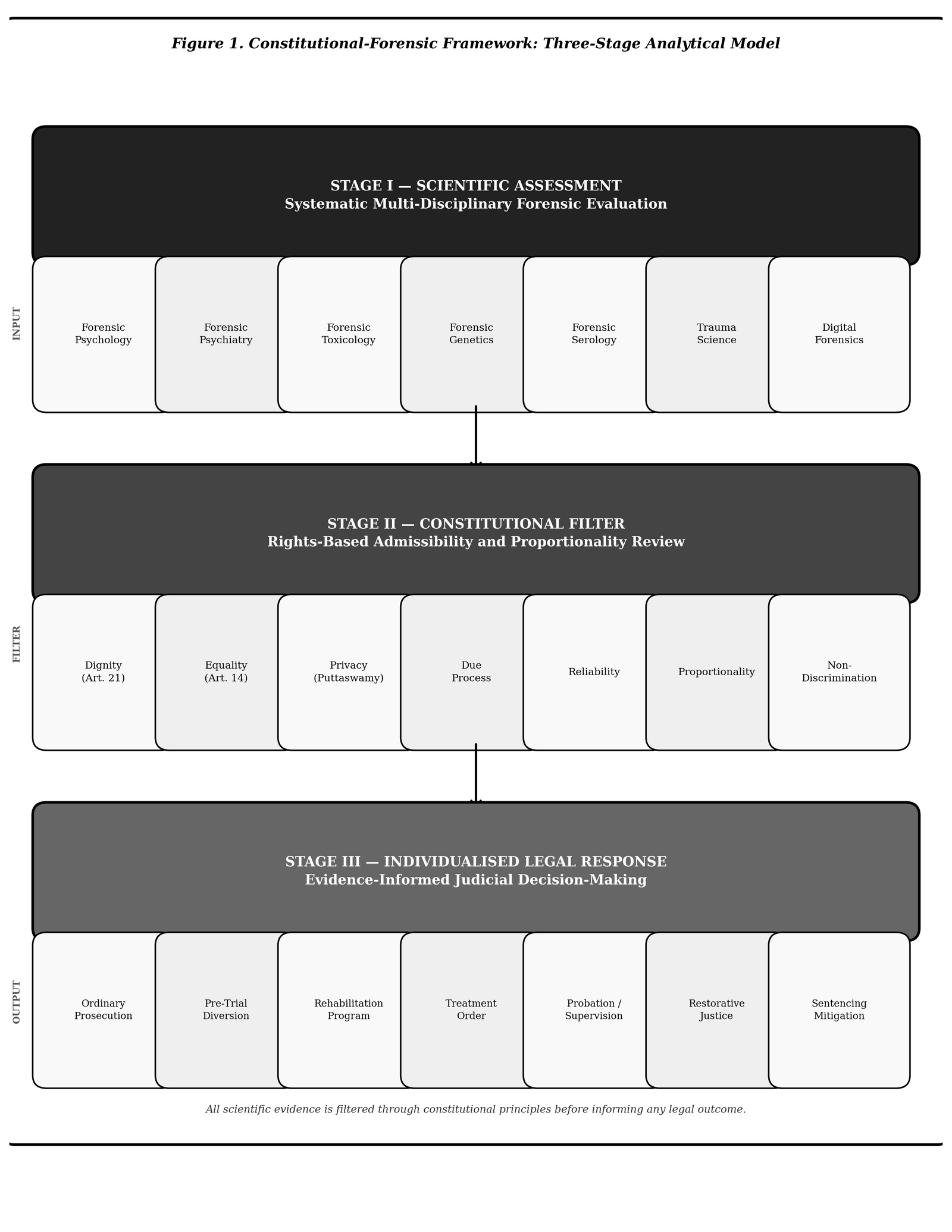
Figure 1. Constitutional-Forensic Framework: Three-Stage Analytical Model. The model ensures that multidisciplinary forensic input is subjected to constitutional scrutiny before informing any individualised legal response. Indian constitutional provisions are noted at Stage II.
Constitutional and evidentiary limits of multidisciplinary forensic evidence
A. Dignity and the guarantee of personal liberty
The constitutional protection of life and personal liberty under Article 21 has been interpreted by the Supreme Court of India as encompassing a guarantee of human dignity that extends deep into the criminal trial process. The accused is not a specimen to be assessed, a profile to be constructed, or a danger to be managed; the accused is a legal subject entitled to the full procedural and substantive protections of the constitutional order. This principle has direct implications for how forensic evidence may be used. Psychiatric labels, genetic profiles, and risk scores cannot substitute for individualised judicial analysis. The dignity principle, as developed through the line of cases including Francis Coralie Mullin v. Administrator, Union Territory of Delhi,15 requires that every person brought before a criminal court be treated as autonomous and not reducible to their biological, psychological, or environmental characteristics.
B. Equality before the law
The equality guarantee of Article 14 operates as a direct prohibition on the use of group-level statistical findings as proxies for individual assessment. If forensic genetics establishes that a certain polymorphism is statistically associated with elevated impulsivity in populations exposed to childhood maltreatment, that finding cannot be applied to an individual accused person as though it established something specific about that person. Article 14 requires that distinctions in legal treatment be founded on intelligible differentia bearing a rational nexus to a legitimate object, not on probabilistic inferences drawn from population data. Actuarial risk tools, genetic profiles, and group-level epidemiological statistics all require individual contextualisation before they may permissibly influence legal outcomes.
C. Privacy and the Puttaswamy principle
The unanimous nine-judge bench judgment in K.S. Puttaswamy v. Union of India16 confirmed the right to privacy as a fundamental right protected by Article 21. This has direct and largely unexplored implications for the collection and use of biological and digital evidence in criminal proceedings. Genetic sampling, without adequate legislative authorisation and proportionality review, may constitute an impermissible invasion of biological privacy. Digital forensic investigations that sweep broadly across an accused person’s electronic communications, media consumption patterns, and online associations implicate the informational privacy dimension of Puttaswamy in ways that require both lawful authorisation and proportionate scope. The framework proposed in this article builds the Puttaswamy privacy standard into Stage II constitutional filtering as a non-negotiable requirement.
D. Proportionality and the anti-determinism rule
The proportionality doctrine, elaborated in Indian constitutional jurisprudence through decisions including Modern Dental College17 and applied more recently in Anuradha Bhasin v. Union of India,18 requires that state action pursue a legitimate aim through suitable, necessary, and proportionate means. Applied to forensic evidence, proportionality requires that the use of scientific findings in criminal proceedings be no more extensive than is genuinely necessary for the legitimate adjudicative objective pursued. Where a brief psychological assessment would adequately inform a diversion decision, an extensive battery of neuroimaging, genetic, and digital investigations would not be proportionate. Where treatment-based intervention is adequately supported by toxicological and psychiatric findings, adding genetic profiling would exceed proportionate necessity. The proportionality principle thus operates as a brake on forensic overreach, independent of the admissibility and reliability questions addressed by evidentiary law.
Forensic psychology and the behavioural regulation framework
Forensic psychology contributes to the proposed framework through three channels: the assessment of behavioural regulation deficits, the documentation of developmental adversity, and the identification of cognitive patterns associated with offending. Each channel has genuine explanatory value; none has deterministic force.
Behavioural regulation research has established that deficits in impulse control, emotional dysregulation, poor risk appraisal, and maladaptive coping strategies are associated with elevated rates of criminal involvement.19 The mechanisms proposed include failures in prefrontal inhibitory control, abnormalities in reward-processing circuits, and heightened sensitivity to aversive arousal. Critically, however, these findings describe population-level associations: the individual who presents with clinically significant impulsivity may or may not have offended; the individual who offended may or may not demonstrate clinically significant regulatory deficits. Forensic psychological assessment must therefore be individually conducted and individually interpreted.
The adverse childhood experiences research tradition, building on the foundational work of Felitti and colleagues20 and elaborated through many subsequent studies, has established a dose-response relationship between childhood adversity burden and adult outcomes across a broad range of health and behavioural domains. Dube and colleagues21 demonstrated, in a large retrospective cohort, that adverse childhood experience scores were associated with illicit drug use. Teicher and colleagues22 reviewed neuroimaging correlates of childhood maltreatment in adult subjects, including volume reductions in hippocampal and prefrontal regions associated with stress regulation and executive function. These findings situate developmental adversity as a plausible neurobiological mechanism linking childhood experience to adult behavioural outcomes, and they support its consideration as a contextualising factor in criminal proceedings, without implying that adversity predestined conduct or negates responsibility.
Cognitive distortion patterns, including hostile attribution bias, minimisation of victim harm, and rationalisation of rule violation, are frequently documented in forensic psychological assessments of offenders across categories.23 Their identification may assist courts in determining whether an individual’s offending reflects a treatable pattern of maladaptive thinking or an entrenched and deliberately cultivated orientation toward antisocial conduct. This distinction has practical importance for disposition decisions and should inform, without determining, sentencing outcomes.
For juvenile accused persons, developmental psychological evidence acquires heightened legal significance. The neuroscientific literature on prefrontal cortical maturation, reviewed by Steinberg and Scott,24 indicates that the neural systems governing impulse control, risk assessment, and long-term consequential reasoning continue to develop well into early adulthood, a finding that provides a biological substrate for legal doctrines recognising reduced juvenile culpability across multiple jurisdictions. In India, the Juvenile Justice (Care and Protection of Children) Act, 2015, reflects this developmental insight through its rehabilitative framework, but the forensic scientific basis for that framework is rarely articulated in the literature on Indian juvenile justice. This article supplies that articulation.
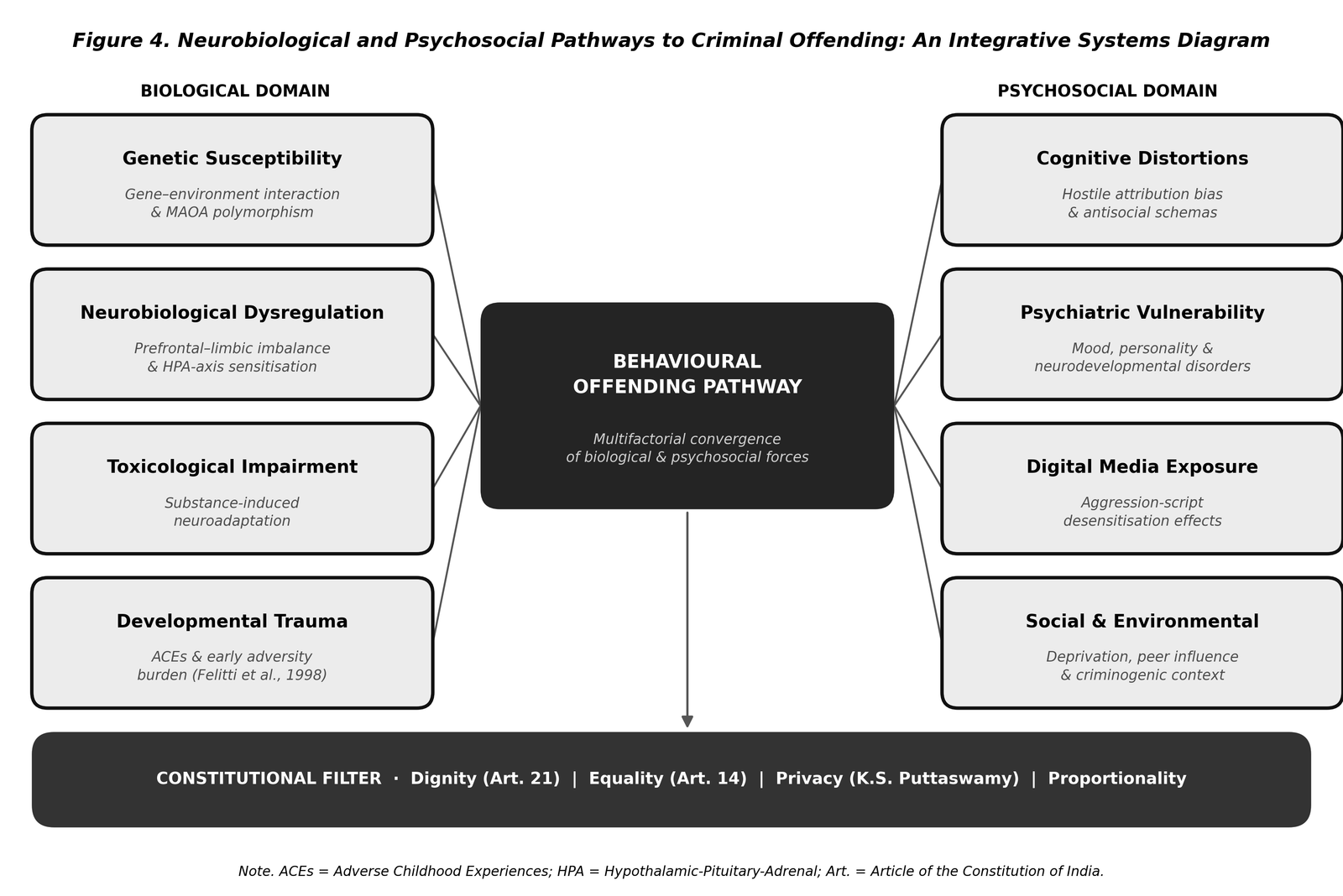
Figure 4. Neurobiological and Psychosocial Pathways to Criminal Offending: An Integrative Systems Diagram. Biological and psychosocial influences converge on the behavioural offending pathway before being subjected to constitutional filtering. ACEs = Adverse Childhood Experiences; HPA = Hypothalamic-Pituitary-Adrenal; Art. = Article of the Constitution of India.
Forensic psychiatry, mental-state evaluation, and the limits of diagnosis
The relationship between mental disorder and criminal responsibility is one of the most extensively theorised and frequently misunderstood areas at the intersection of medicine and law. The forensic psychiatric literature has, over several decades, produced an increasingly sophisticated account of how mental conditions may, and may not, bear on criminal liability. This article draws on that account while insisting on its constitutional contextualisation.
Mental disorders are substantially over-represented in criminal justice populations. Fazel and Danesh25 found that 3.7 per cent of male prisoners and 4.0 per cent of female prisoners met criteria for a psychotic illness, and reported that prisoners were several times more likely than the general population to have psychosis and major depression, and about ten times more likely to have antisocial personality disorder. Fazel and colleagues26 extended this analysis across more recent data sets, finding consistent over-representation of psychiatric morbidity in incarcerated populations across diverse national contexts. These findings, however striking, carry a nuance that is frequently lost in legal applications: elevated prevalence establishes correlation, not causation. The great majority of individuals living with psychiatric conditions never engage in criminal offending.27 Many who do offend do so through pathways in which the diagnosed condition plays no direct causal role. The legally relevant question is not whether an accused person has a psychiatric diagnosis but whether, and in what specific way, a psychiatric condition materially affected the accused’s perception, judgment, or behavioural control at the relevant time.
Under Indian criminal law, the most directly relevant doctrine was for more than a century found in Section 84 of the Indian Penal Code, 1860, which provided a defence to a person who, at the time of the act, was incapable of knowing the nature of the act or that it was wrong or contrary to law, by reason of unsoundness of mind. The Supreme Court interpreted that provision in cases including Jai Lal v. Delhi Administration,28 emphasising the contemporaneity requirement, namely that the mental condition must have operated at the material time. The provision has been carried forward without substantive alteration as Section 22 of the Bharatiya Nyaya Sanhita, 2023, which governs offences committed on or after 1 July 2024,29 so the accumulated case law on the contemporaneity requirement remains directly applicable. Procedurally, Section 105 of the Mental Healthcare Act, 2017, now obliges a competent court, where proof of mental illness is produced and contested during a judicial proceeding, to refer the question to the Mental Health Review Board for expert opinion.30 Psychiatric evidence within the proposed framework must accordingly be directed not merely at the existence of a diagnosis but at the question of how the condition manifested during the alleged offence.
Substance use disorders warrant specific attention within forensic psychiatric assessment because they straddle the boundary between acute intoxication, which may bear on mens rea, and chronic dependence, which may inform treatment and sentencing decisions. Contemporary nosological frameworks classify substance use disorder as a chronic relapsing medical condition characterised by impaired control, compulsive use, and neurobiological changes affecting reward circuitry and executive function.31 These characterisations support treatment-oriented legal responses where clinically indicated and constitutionally appropriate. They do not support blanket mitigation or automatic reduction of culpability.
Forensic toxicology and addiction science: impairment, dependence, and legal response
Forensic toxicology provides the most direct evidential basis for assessing the pharmacological state of an accused person at or near the time of an alleged offence. Within the proposed framework, toxicological evidence serves two analytically distinct but practically connected functions. The first is event reconstruction: determining what substances were present, at what approximate concentrations, and with what likely pharmacological effects at the material time. The second is longitudinal contextualisation: establishing the nature, severity, and chronicity of substance use patterns that may bear on sentencing, treatment, and rehabilitation decisions.
The critical caveat, one that forensic toxicologists emphasise and courts frequently overlook, is that the presence of a substance in a biological sample does not automatically establish pharmacological impairment at the time of the alleged offence, and impairment does not automatically establish reduced criminal responsibility. These are distinct inferential steps, each requiring specific evidential support. Individual tolerance, dose-response relationships, timing of sampling relative to the alleged offence, metabolic variability, and polysubstance interactions all substantially mediate the relationship between measured concentration and behavioural state. Expert evidence that elides these intermediate steps, moving directly from toxicological finding to culpability conclusion, exceeds its proper evidentiary mandate and should be challenged on both scientific and constitutional grounds.
The distinction between acute intoxication and chronic addiction is legally significant and neurobiologically grounded. Acute intoxication may, in appropriate circumstances, bear on the mental element of specific intent offences, a point well established in common law jurisdictions and accommodated by the voluntary intoxication doctrine. Chronic addiction, by contrast, implicates sustained neurobiological changes in dopaminergic reward pathways and prefrontal regulatory circuits that have been documented through neuroimaging studies of substance-dependent populations.32 These changes may contextualise patterns of repeated substance-driven offending in ways that support treatment-oriented dispositions, not because addiction excuses conduct but because it may explain the dynamics of recurrent behaviour in ways that purely punitive responses are structurally ill-equipped to address.
Forensic genetics and serology: biological evidence and its constitutional boundaries
Forensic genetics operates simultaneously at two levels that are constitutionally very different from one another, and conflating them generates both scientific confusion and constitutional risk. At the identification level, DNA profiling, the analysis of specific genetic loci for the purpose of linking individuals to biological traces recovered from crime scenes, is one of the most reliable evidentiary tools available in criminal adjudication. Its reliability, when properly conducted, is not seriously contested, and its constitutional profile is relatively straightforward. It is governed primarily by lawful authorisation requirements for sampling and by the privacy standard, rather than by the protection against self-incrimination: in Selvi v. State of Karnataka33 the Supreme Court confirmed that Article 20(3) is engaged by the involuntary extraction of personal knowledge, and that the compulsory taking of physical samples for identification and comparison does not by itself amount to testimonial compulsion. The constitutional constraint on genetic sampling therefore lies in Article 21, statutory authorisation, and proportionality rather than in Article 20(3).
At the behavioural level, however, forensic genetics becomes substantially more complex and constitutionally fraught. The behavioural genetics literature indicates that genetic factors contribute modestly to variance in temperamental traits, including impulsivity, sensation-seeking, and stress reactivity, that are statistically associated with offending risk.34 The MAOA polymorphism literature, initiated by the work of Caspi and colleagues,35 represents the most widely discussed example: a specific genetic variant was found to moderate the relationship between childhood maltreatment and antisocial outcomes in a prospective longitudinal study. That finding has been replicated in some subsequent studies and not in others; its effect size is modest; and, critically, it operates at the population level in ways that cannot generate reliable individual-level predictions.
The constitutional implications are correspondingly severe. Using genetic profiles to construct presumptions about an individual’s criminality or dangerousness would violate Article 14’s prohibition on arbitrary classification, the dignity guarantee within Article 21, and the right to privacy confirmed in Puttaswamy. The historical shadow of eugenics, which operated on exactly the logic that hereditary characteristics could predict and justify adverse legal treatment of individuals, should inform judicial caution when genetic evidence is offered for behavioural purposes. The framework proposed in this article accordingly restricts genetic evidence to identification and event reconstruction, where its reliability is established, and to limited contextual vulnerability indication, where it may contribute as one among many factors to an individualised assessment under strict constitutional scrutiny.
Forensic serology, the identification and analysis of biological fluids including blood, semen, and saliva, occupies a constitutionally simpler position. Its contribution to criminal proceedings is factual rather than behavioural: it establishes who was present, what physical events occurred, and whether factual narratives are consistent with the biological evidence recovered. Serology does not explain behaviour; it reconstructs events. Its role in the framework is accordingly confined to Stage I factual assessment, and its constitutional footprint is governed primarily by lawful collection and reliable analysis requirements.
Trauma science and injury consistency analysis
Trauma science, encompassing orthopaedic injury analysis, wound morphology, biomechanical assessment, and healing trajectory evaluation, plays a role in criminal proceedings that is often underappreciated by both legal practitioners and forensic scientists in other disciplines. Its primary contribution is the assessment of whether observed physical findings are consistent or inconsistent with competing factual accounts of how injuries were sustained. In cases involving allegations of assault, domestic violence, custodial injury, sexual violence, or disputed self-defence, this evidentiary function can be decisive.
The constitutional-forensic framework assigns trauma science a precisely bounded role: it is an evidentiary support discipline, not a culpability assignment mechanism. Trauma specialists are qualified to assess whether a fracture pattern is consistent with a claimed mechanism, whether bruise distribution is consistent with defensive action, or whether a wound morphology is consistent with a particular weapon type. They are not, in general, qualified to determine who caused an injury, with what intention, or in what precise sequence of events. Courts must be scrupulous in distinguishing these functions, and expert witnesses in this field carry a professional and legal obligation to resist the advocacy pressures that push them toward overclaimed certainty.
From a defence perspective, trauma evidence may be particularly valuable in cases where prosecution narratives rest on physical assumptions that do not survive biomechanical scrutiny, or where alternative injury mechanisms, whether accidental, self-inflicted, or caused by third parties, have not been adequately investigated. Equally, where the prosecution relies on trauma evidence to establish the severity or mechanism of alleged violence, defence experts may test those conclusions through independent analysis of the same findings. The framework treats trauma science as inherently bidirectional: its function is objective evaluation, not partisan support.
Digital forensics, media exposure, and the right to information privacy
The digital environment constitutes an increasingly influential, and increasingly investigated, dimension of individual behaviour. Algorithmically curated social media feeds, immersive gaming environments, streaming platforms, encrypted messaging applications, and online communities collectively constitute the digital ecology within which substantial portions of contemporary social life take place, including, for many young people, the development of attitudes, norms, and behavioural scripts. The forensic investigation of this ecology is technically sophisticated; its constitutionality is imperfectly theorised; and its evidentiary significance is genuinely contested.
The media exposure and aggression literature has produced findings that support at most a cautious contextual use of digital evidence. Anderson and colleagues36 reported meta-analytic associations across a large body of research; Ferguson and Kilburn37 provided a methodologically rigorous rebuttal emphasising publication bias and the ecological validity problem of laboratory aggression paradigms. The current state of the evidence supports the conclusion that repeated exposure to violent media content may constitute one environmental factor among several that shapes aggression-related cognition in susceptible individuals under specific conditions, a conclusion that is too tentative and too conditional to support causal inference in individual criminal proceedings.
The constitutional constraints on digital evidence use are substantial and have been considerably strengthened by Puttaswamy. Informational privacy, the right of individuals to control information about themselves, is among the dimensions of privacy expressly recognised by the Supreme Court as fundamental. An accused person’s browsing history, viewing habits, messaging content, and online community memberships constitute deeply personal information, the investigative reach into which must be strictly limited by authorisation, necessity, and proportionality. The investigation of lawful media consumption as potential evidence of criminal disposition comes close to the kind of guilt-by-association reasoning that due process and equality principles prohibit. Digital evidence should accordingly be admitted within the framework only where it demonstrates a specific, demonstrable connection to the facts of the case, and not as generalised evidence of character or disposition.
A practical implication for defence counsel is that digital evidence should routinely be subjected to critical scrutiny regarding its collection methodology, the scope of the investigation warrant, if any, and the interpretive framework applied by the examining expert. Claims about the criminogenic significance of specific digital content require rigorous evidential foundation and should not be admitted as though the association between media exposure and aggression were settled fact.
| Discipline | Primary function | Legal application | Constitutional constraint (India-anchored) |
|---|---|---|---|
| Forensic psychology | Behavioural regulation, cognitive assessment, developmental history | Culpability mitigation, rehabilitation, diversion, RNR-based intervention | Cannot establish propensity; Article 14 prohibits categorical assumptions; individual assessment mandatory |
| Forensic psychiatry | Mental-state evaluation, diagnostic formulation, competency assessment | BNS s. 22 (formerly IPC s. 84) defence; competency; sentencing mitigation; treatment orders; MHCA s. 105 reference | Diagnosis alone insufficient; specific causal nexus to the offence required; Article 21 dignity |
| Toxicology | Intoxication assessment, substance identification, pharmacokinetic profiling | Contextualisation of mens rea; treatment disposition; mitigation | Presence does not establish impairment; sampling requires lawful statutory authorisation; Article 21 |
| Forensic genetics | DNA identification; limited behavioural vulnerability indicators | Event reconstruction; strictly limited contextual vulnerability use | Deterministic use prohibited; Selvi confines Article 20(3) to testimonial compulsion, so sampling is governed by lawful authorisation, Puttaswamy privacy and proportionality; Article 14 anti-discrimination |
| Forensic serology | Biological trace identification; fluid analysis; DNA profiling | Event reconstruction; participant identification; narrative corroboration | Lawful collection mandatory; relevance confined to factual reconstruction |
| Trauma science | Injury pattern, mechanism and biomechanical consistency analysis | Narrative testing; disputed mechanism assessment; injury severity | Probabilistic conclusions only; Article 21 fair trial; expert must not overclaim certainty |
| Digital forensics | Online behaviour, media exposure, communication pattern analysis | Environmental contextualisation; aggression-script indicator (contextual only) | Puttaswamy privacy; Article 19 expression; causal inference prohibited; proportionality required |
Table 1. Forensic discipline functions, legal applications, and constitutional constraints within the proposed framework. Note. RNR = risk-needs-responsivity; BNS = Bharatiya Nyaya Sanhita, 2023; IPC = Indian Penal Code, 1860; MHCA = Mental Healthcare Act, 2017. All applications are subject to Stage II constitutional filtering. Constitutional provisions refer to the Constitution of India unless otherwise stated.
Application across offender categories
A. Juvenile offenders
Juvenile offenders represent the paradigmatic case for the proposed framework. The convergence of developmental neuroscience, psychological research on childhood adversity, and comparative constitutional law produces an unusually strong and coherent evidence base for an approach centred on diversion, rehabilitation, and restorative response rather than punitive incarceration. The Juvenile Justice (Care and Protection of Children) Act, 2015, reflects this orientation legislatively; the constitutional-forensic framework supplies its scientific and doctrinal foundations.
Prefrontal cortical immaturity, documented through neuroimaging studies of adolescent populations, implies that the systems governing impulse control, risk appraisal, and long-term consequential reasoning are genuinely less developed in adolescents than in adults, and not merely less exercised. This is not an excuse but a material fact about the developmental state of the decision-making apparatus at the time of the alleged conduct. Steinberg and Scott38 argued that this evidence supports legal recognition of reduced culpability that is categorically, and not merely quantitatively, different from adult criminal responsibility. The Supreme Court’s recognition in Salil Bali v. Union of India,39 upholding the age threshold of eighteen years under the Juvenile Justice (Care and Protection of Children) Act, 2000, of the restorative rather than retributive character of juvenile justice is consonant with this position.
The multidisciplinary assessment recommended for juvenile accused persons within the framework should integrate developmental psychological evaluation, assessment of adverse childhood experience burden, psychiatric screening, educational and cognitive assessment, and social contextual analysis. Where substance use is present or suspected, toxicological and addiction assessment should be added. The framework’s Stage III response options, comprising diversion, educational intervention, family-based rehabilitation, restorative justice, and probation, map directly onto the evidence base for effective juvenile justice intervention.
B. First-time offenders
First-time offenders without prior criminal history represent a population for whom early, well-targeted intervention may have the greatest impact on long-term trajectories. The criminogenic-needs literature indicates that isolated offending episodes frequently involve situational stressors, acute psychiatric crisis, discrete intoxication episodes, or other contextual factors that do not reflect entrenched criminogenic patterns.40 Multidisciplinary assessment can assist in differentiating these presentations from those that reflect emerging chronic offending patterns, supporting diversion or community-based responses where the evidence indicates that incarceration would be disproportionate and clinically counterproductive.
C. Repeated offenders
Repeated offending presents the framework’s most analytically challenging application. Recidivism may reflect entrenched behavioural dysregulation, undertreated psychiatric morbidity, chronic substance dependence, adverse and criminogenic social environments, or complex interactions among these factors in varying proportions. A critical function of the framework in this context is distinguishing between individuals who remain genuinely responsive to well-structured rehabilitative intervention, and whose recidivism may partly reflect inadequate prior treatment rather than intractable criminal motivation, and those for whom some degree of incapacitative response may be temporarily necessary for public protection.
The constitutional framework remains relevant here because repeated offending does not extinguish constitutional rights. Article 21 does not admit of suspension for recidivists. Due process requirements apply fully. The individualised assessment that the framework requires is, if anything, more important for repeated offenders than for first-time accused persons, because the temptation to rely on actuarial generalisations is greatest, and most constitutionally problematic, in this population.
D. Addiction-linked offenders
Addiction-linked offending represents the most compelling application of the integrated framework and the context in which the gap between current legal practice and available scientific knowledge is most glaring. Where convergent evidence from toxicological, psychiatric, psychological, and social-contextual assessment reveals a coherent pattern of conduct substantially driven by substance dependence, the case for a treatment-oriented judicial response is strongest. The neurobiological characterisation of addiction, as involving measurable changes in dopaminergic reward pathways, prefrontal regulatory systems, and stress response circuits,41 provides a scientific basis for understanding why purely punitive responses to addiction-linked offending often produce recidivism rather than reform.
Indian law already contains the statutory footholds for such a response. Section 39 of the Narcotic Drugs and Psychotropic Substances Act, 1985, permits a court to release certain offenders on probation or for medical treatment in lieu of imprisonment, and Section 64A confers immunity from prosecution on addicts charged with consumption or with offences involving small quantities who voluntarily seek de-addiction treatment at a recognised facility.42 These provisions are used inconsistently and remain widely unfamiliar to practitioners. The constitutional-forensic framework supplies the evidential and doctrinal basis for invoking and strengthening them through systematic multidisciplinary assessment and constitutionally grounded individualised response.
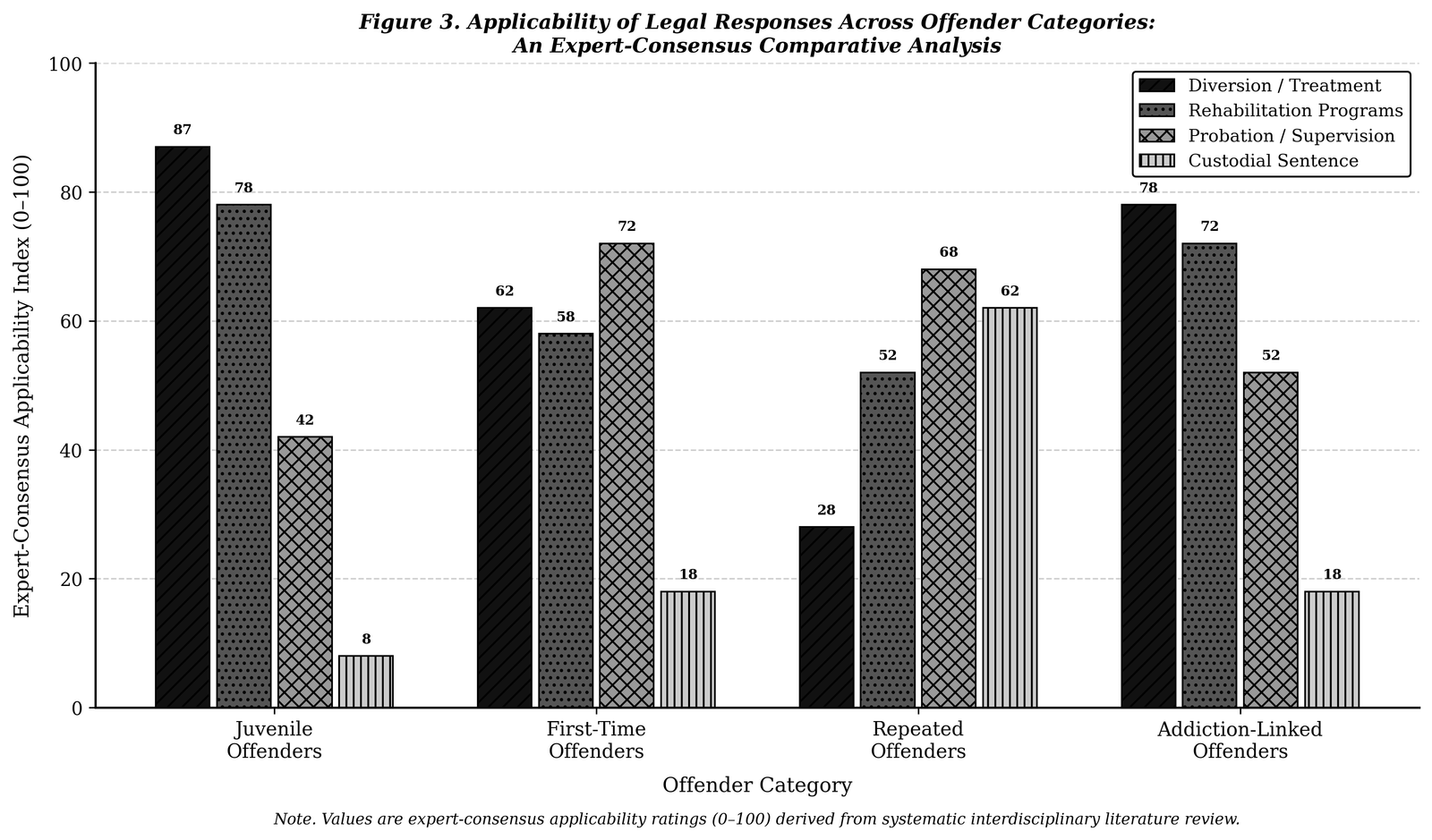
Figure 3. Applicability of Legal Responses Across Offender Categories. Values are illustrative applicability indices constructed by the author (0-100) rather than empirically derived scores. Higher scores reflect the author’s reading of the strength of empirical and clinical support for each response category within the relevant offender population.
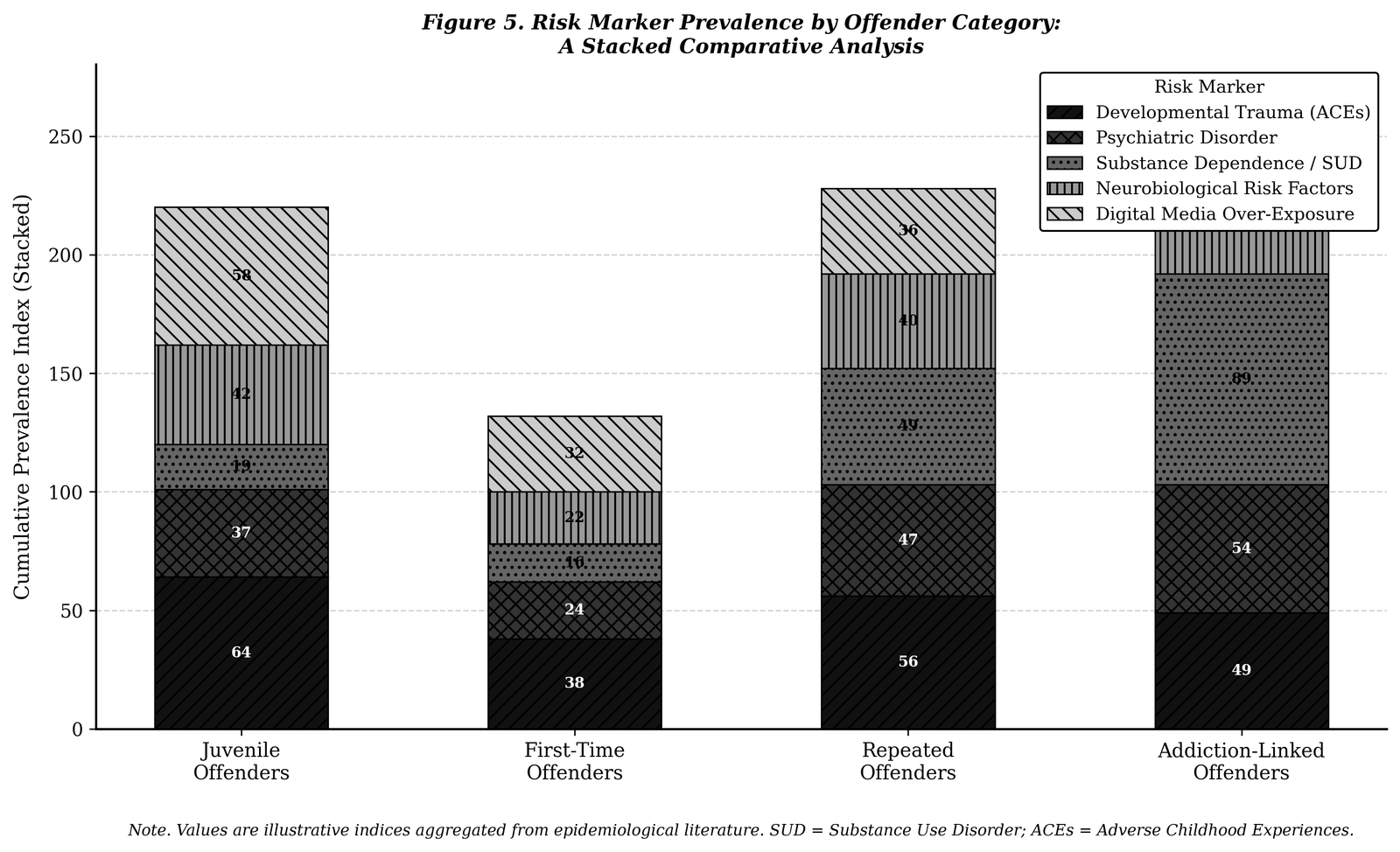
Figure 5. Risk Marker Prevalence by Offender Category: A Stacked Comparative Analysis. Values are illustrative indices constructed by the author to depict relative patterns reported in the epidemiological literature; they are not measured prevalence rates. ACEs = Adverse Childhood Experiences; SUD = Substance Use Disorder.
The three-stage constitutional-forensic model: consolidated structure
The central analytical contribution of this article is the three-stage model presented in Figure 1 and elaborated in the preceding sections. Stage I involves scientific assessment: the systematic collection and integration of relevant evidence from each of the seven forensic disciplines. The objective at this stage is explanatory rather than predictive, namely to identify scientifically supported indicators relevant to the circumstances of the particular case, and not to generate an offender profile or assign the individual to a risk category. Assessment is cumulative and integrative: findings from each discipline are evaluated in light of findings from others, with the expectation that convergent evidence carries greater explanatory weight than isolated findings from a single domain.
Stage II involves constitutional filtering: the evaluation of each item of evidence against the constitutional requirements developed above, namely dignity, equality, privacy, due process, evidentiary reliability, proportionality, and non-discrimination. Evidence that fails constitutional scrutiny at this stage is excluded from Stage III consideration, regardless of its scientific sophistication. This sequencing reflects the lexical priority of constitutional principle articulated in the framework’s theoretical foundations.
Stage III involves individualised legal response: the selection, from among the available range of dispositions, of the response most consistent with the constitutionally admitted evidence and the applicable principles of proportionality and fairness. This stage requires genuine judicial engagement. The framework organises the inquiry and constrains the range of constitutionally permissible responses, but it does not resolve the individual case algorithmically. The judge must still exercise judgment, informed now by an integrated and constitutionally filtered body of scientific evidence rather than by isolated and fragmented expert opinions.
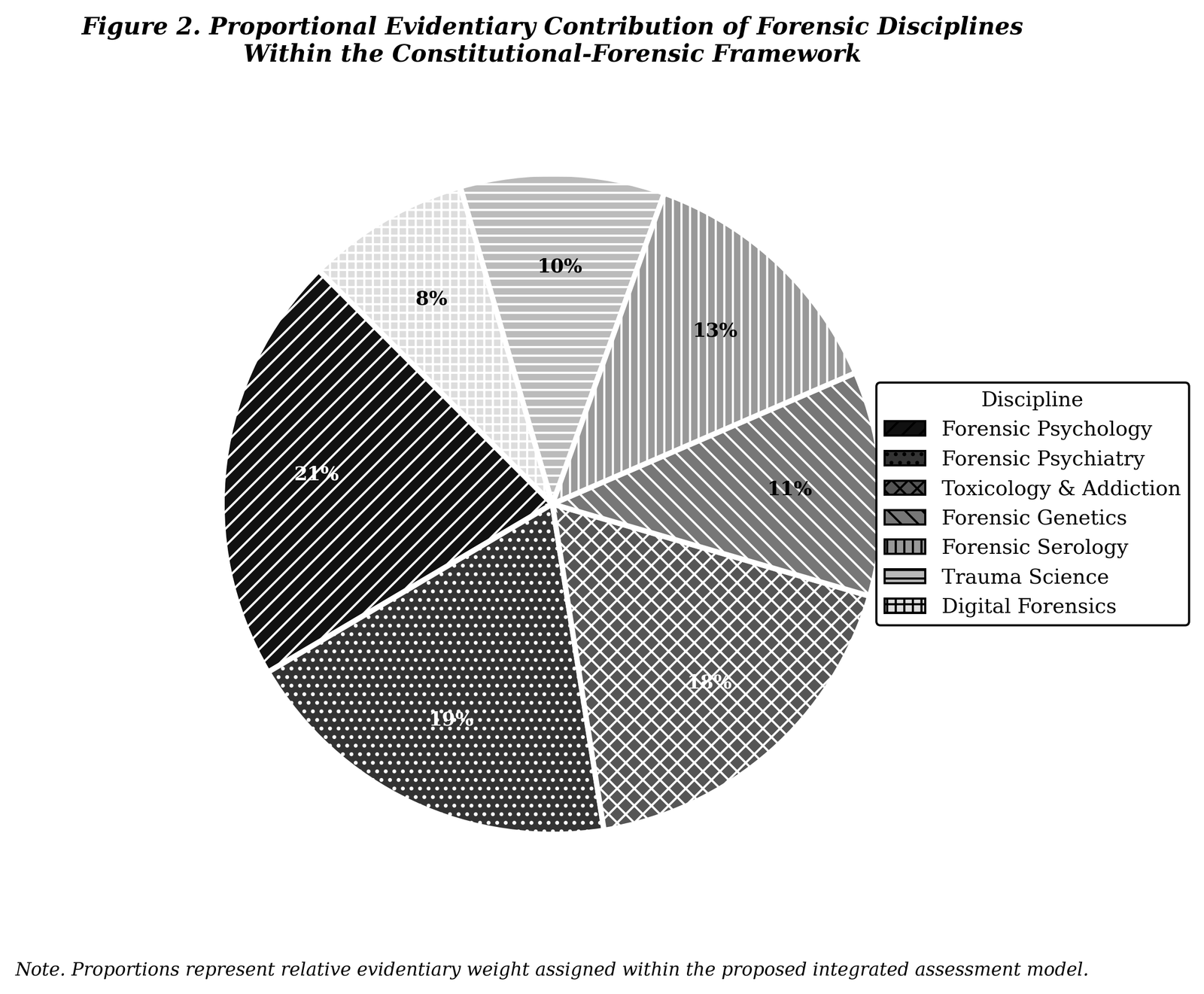
Figure 2. Proportional Evidentiary Contribution of Forensic Disciplines Within the Constitutional-Forensic Framework. Proportions illustrate the author’s estimate of relative evidentiary weight in the integrated Stage I assessment process.
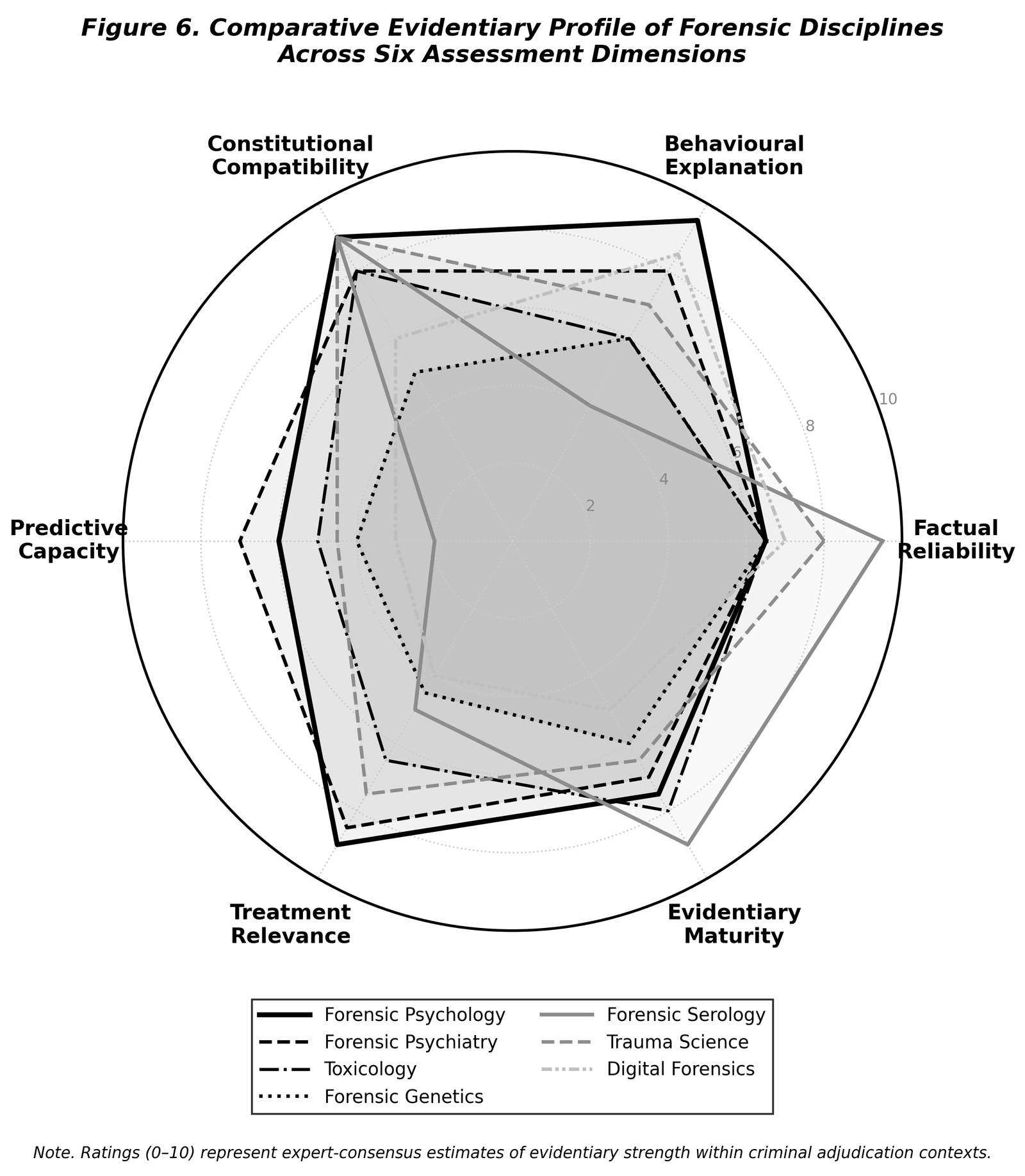
Figure 6. Comparative Evidentiary Profile of Forensic Disciplines Across Six Assessment Dimensions. Ratings (0-10) are the author’s illustrative estimates of evidentiary strength within criminal adjudication contexts and are not derived from a structured expert panel.
| Risk marker | Clinical significance | Framework application | Constitutional constraint |
|---|---|---|---|
| Severe addiction or substance use disorder | Neurobiological reward dysregulation; impaired executive control43 | Treatment disposition; RNR substance-use targeting; NDPS Act alternatives under ss. 39 and 64A | Does not negate responsibility; treatment suitability requires individual assessment; Article 21 |
| Developmental trauma (adverse childhood experiences) | HPA sensitisation; attachment disruption; prefrontal regulatory deficit44 | Sentencing mitigation; diversion; JJ Act 2015 framework; rehabilitation planning | Deterministic inference prohibited; individual developmental assessment required; Article 14 |
| Psychiatric disorder | Impaired perception, judgment, or reality-testing; comorbid substance use disorder frequent | BNS s. 22 evaluation; competency; MHCA s. 105 reference; treatment order | Specific causal nexus to the offence required; diagnosis insufficient; Article 21 dignity |
| Acute toxicological impairment | Pharmacological reduction of executive control and judgment at the material time | Contextualisation of mens rea; engagement of the voluntary intoxication doctrine | Pharmacokinetic context mandatory; individual tolerance must be assessed; lawful statutory authorisation for sampling |
| Developmental immaturity | Prefrontal cortical immaturity; reduced impulse control and temporal discounting45 | Juvenile culpability mitigation; JJ Act diversion; restorative justice | Age alone insufficient; individual neurodevelopmental assessment required; Salil Bali |
| Digital or media over-exposure | Potential aggression-script reinforcement and desensitisation in susceptible individuals | Environmental contextualisation only; no deterministic or causal inference | Puttaswamy privacy; Article 19 expression; causal inference constitutionally impermissible |
| Genetic susceptibility | Probabilistic temperamental trait associations; gene-environment interaction only46 | Strictly limited contextual vulnerability indication; not standalone evidence | Deterministic and predictive use prohibited; Puttaswamy; Article 14; lawful authorisation for sampling |
Table 2. Risk-marker matrix: clinical significance, framework application, and constitutional constraints. Note. RNR = risk-needs-responsivity; HPA = hypothalamic-pituitary-adrenal; JJ Act = Juvenile Justice (Care and Protection of Children) Act, 2015; NDPS = Narcotic Drugs and Psychotropic Substances Act, 1985; BNS = Bharatiya Nyaya Sanhita, 2023; MHCA = Mental Healthcare Act, 2017. Constitutional provisions refer to the Constitution of India.
On the originality of the contribution
A direct engagement with the question of whether this article contributes something genuinely new is both appropriate and necessary. The answer offered here is affirmative, and for reasons that require specificity rather than assertion.
First, no prior scholarship traced by this author has integrated all seven forensic disciplines, namely psychology, psychiatry, toxicology, genetics, serology, trauma science, and digital forensics, into a single, constitutionally operable analytical model. Prior interdisciplinary scholarship has combined two or three of these disciplines, typically around a specific offender type or a specific legal question. The present synthesis is structurally more ambitious and practically more useful.
Second, no prior scholarship traced in the Indian context has systematically applied the constitutional provisions most directly relevant to forensic evidence use, namely Articles 14, 19, 20(3), and 21, the Puttaswamy right to privacy, the limits on testimonial compulsion drawn in Selvi, and the proportionality standard of Modern Dental College, to the question of multidisciplinary forensic evidence in criminal adjudication. There is a substantial Indian literature on each of these constitutional provisions separately, and a separate literature on individual forensic disciplines in criminal proceedings. There is no prior work known to this author that connects them within a unified framework.
Third, the framework is differentiated in its application across offender categories in a way that reflects genuine forensic distinctions rather than merely taxonomic ones. The juvenile offender, the first-time offender, the repeated offender, and the addiction-linked offender do not merely represent different legal categories; they represent meaningfully different forensic profiles that warrant correspondingly differentiated approaches to evidence collection, constitutional filtering, and legal response. This differentiated architecture is original to this article.
What the article does not claim is empirical validation of the model through prospective application. That work remains to be done, and this article identifies it as the primary agenda for future research. The present contribution is theoretical and doctrinal: it constructs the framework, provides its foundations, and demonstrates its potential applications.
Limitations
Four limitations merit candid acknowledgment. First, the framework is conceptual and has not yet been prospectively tested in actual criminal proceedings. The evidentiary ratings in Figure 6 and the applicability indices in Figures 3 and 5 are the author’s illustrative estimates rather than empirically derived or panel-validated scores, and future research should subject them to validation through structured expert consultation and Delphi-method exercises.
Second, the seven forensic disciplines addressed differ substantially in evidentiary maturity and methodological reliability. Forensic serology and validated toxicological analysis carry well-established scientific foundations; media exposure research and behavioural genetics are substantially more contested. The framework’s Stage II constitutional filter is designed partly to manage these differences, but their existence means that courts applying the framework must be equipped to engage with the relative evidentiary weights of different disciplinary contributions.
Third, the constitutional analysis is primarily anchored in Indian constitutional law, with comparative reference to international human rights standards and common law jurisdictions. The framework will require jurisdictional adaptation, particularly in civil law jurisdictions and in common law systems with constitutional architectures that differ from India’s, before it can be applied without modification.
Fourth, any framework that integrates multiple risk markers and vulnerability indicators runs the risk, in practice, of creating an aggregate impression of dangerousness or diminished culpability that distorts rather than informs judicial decision-making. Courts and practitioners applying the framework must remain alert to this risk and must insist that each piece of evidence be evaluated individually before cumulative conclusions are drawn.
Conclusion
This article has proposed, developed, and applied a defence-oriented constitutional-forensic framework for understanding criminal offending pathways across four categories of accused persons whose forensic profiles have historically been inadequately served by conventional legal analysis. The framework integrates forensic psychology, psychiatry, toxicology, genetics, serology, trauma science, and digital forensics within a three-stage analytical model governed by the constitutional principles of dignity, equality, privacy, due process, proportionality, and non-discrimination, anchored in Articles 14, 19, and 21 of the Constitution of India and their evolving judicial elaboration.
The argument of this article is not that criminal responsibility is a scientific fiction or that forensic complexity should displace individual accountability. Neither of those positions is defensible, and neither is asserted here. The argument, rather, is that criminal adjudication claims to be both accurate and just, and that it cannot reliably achieve either goal if it persists in treating the complex human beings who appear before criminal courts as if their conduct could be adequately understood without reference to the biological, psychological, environmental, and digital realities that shaped it. The forensic sciences are not alternatives to legal reasoning; they are resources that legal reasoning, properly applied, cannot responsibly ignore.
By providing a constitutional filter through which scientific evidence must pass before it influences legal outcomes, the framework simultaneously harnesses the explanatory power of forensic science and preserves the constitutional commitments to equality, dignity, and due process that define a legitimate criminal justice system. This is not a minor technical contribution to evidence law. It is, or so this article argues, a contribution to the kind of criminal justice system that a constitutional democracy is obliged to maintain.
Future research should focus on three priorities: empirical validation of the framework through implementation studies in courts with established forensic services; comparative constitutional analysis extending the framework to civil law and mixed jurisdictions; and the development of standardised Stage I assessment protocols drawing on all seven forensic disciplines and capable of being administered consistently across different forensic practice contexts. The framework proposed here provides the conceptual foundation for each of these research agendas.
*****
Footnotes
1. K.S. Puttaswamy v. Union of India, (2017) 10 SCC 1 (India).
2. D.A. Andrews & James Bonta, The Psychology of Criminal Conduct (6th ed. 2017).
3. Vincent J. Felitti et al., Relationship of Childhood Abuse and Household Dysfunction to Many of the Leading Causes of Death in Adults: The Adverse Childhood Experiences (ACE) Study, 14 American Journal of Preventive Medicine 245 (1998).
4. Seena Fazel & John Danesh, Serious Mental Disorder in 23,000 Prisoners: A Systematic Review of 62 Surveys, 359 The Lancet 545 (2002).
5. Seena Fazel et al., Mental Health of Prisoners: Prevalence, Adverse Outcomes, and Interventions, 3 The Lancet Psychiatry 871 (2016).
6. Drug-Facilitated Sexual Assault: A Forensic Handbook (Marc A. LeBeau & Ashraf Mozayani eds., 2001).
7. The Nurture Versus Biosocial Debate in Criminology: On the Origins of Criminal Behavior and Criminality (Kevin M. Beaver, J.C. Barnes & Brian B. Boutwell eds., 2014).
8. Avshalom Caspi et al., Role of Genotype in the Cycle of Violence in Maltreated Children, 297 Science 851 (2002).
9. Craig A. Anderson et al., Violent Video Game Effects on Aggression, Empathy, and Prosocial Behavior in Eastern and Western Countries: A Meta-Analytic Review, 136 Psychological Bulletin 151 (2010).
10. Christopher J. Ferguson & John Kilburn, Much Ado About Nothing: The Misestimation and Overinterpretation of Violent Video Game Effects in Eastern and Western Nations: Comment on Anderson et al. (2010), 136 Psychological Bulletin 174 (2010).
11. Modern Dental College & Research Centre v. State of Madhya Pradesh, (2016) 7 SCC 353 (India).
12. Puttaswamy, (2017) 10 SCC 1.
13. Selvi v. State of Karnataka, (2010) 7 SCC 263 (India).
14. Modern Dental College, (2016) 7 SCC 353, at 400-04.
15. Francis Coralie Mullin v. Administrator, Union Territory of Delhi, (1981) 1 SCC 608, AIR 1981 SC 746 (India).
16. Puttaswamy, (2017) 10 SCC 1, at 638-42.
17. Modern Dental College, (2016) 7 SCC 353.
18. Anuradha Bhasin v. Union of India, (2020) 3 SCC 637 (India).
19. Andrews & Bonta, supra note 2.
20. Felitti et al., supra note 3, at 248-51.
21. Shanta R. Dube et al., Childhood Abuse, Neglect, and Household Dysfunction and the Risk of Illicit Drug Use: The Adverse Childhood Experiences Study, 111 Pediatrics 564 (2003).
22. Martin H. Teicher, Jacqueline A. Samson, Carl M. Anderson & Kyoko Ohashi, The Effects of Childhood Maltreatment on Brain Structure, Function and Connectivity, 17 Nature Reviews Neuroscience 652 (2016).
23. Andrews & Bonta, supra note 2 (surveying antisocial cognition as a central criminogenic need).
24. Laurence Steinberg & Elizabeth S. Scott, Less Guilty by Reason of Adolescence: Developmental Immaturity, Diminished Responsibility, and the Juvenile Death Penalty, 58 American Psychologist 1009 (2003).
25. Fazel & Danesh, supra note 4, at 545-47.
26. Fazel et al., supra note 5.
27. Id. at 874-76.
28. Jai Lal v. Delhi Administration, AIR 1969 SC 15 (India).
29. Bharatiya Nyaya Sanhita, 2023, No. 45 of 2023, s. 22 (India), which reproduces the substance of s. 84 of the Indian Penal Code, 1860, No. 45 of 1860 (India), and applies to offences committed on or after 1 July 2024.
30. Mental Healthcare Act, 2017, No. 10 of 2017, s. 105 (India).
31. American Psychiatric Association, Diagnostic and Statistical Manual of Mental Disorders (5th ed., text rev. 2022); World Health Organization, International Classification of Diseases (11th rev. 2022); Nora D. Volkow, George F. Koob & A. Thomas McLellan, Neurobiologic Advances from the Brain Disease Model of Addiction, 374 New England Journal of Medicine 363 (2016).
32. Volkow, Koob & McLellan, supra note 31, at 365-67.
33. Selvi, (2010) 7 SCC 263, at 316-20.
34. Adrian Raine, The Anatomy of Violence: The Biological Roots of Crime (2013).
35. Caspi et al., supra note 8.
36. Anderson et al., supra note 9.
37. Ferguson & Kilburn, supra note 10.
38. Steinberg & Scott, supra note 24, at 1014-16.
39. Salil Bali v. Union of India, (2013) 7 SCC 705 (India).
40. Andrews & Bonta, supra note 2 (distinguishing situational from entrenched criminogenic presentations).
41. Volkow, Koob & McLellan, supra note 31, at 364-66.
42. Narcotic Drugs and Psychotropic Substances Act, 1985, No. 61 of 1985, ss. 39, 64A (India).
43. Volkow, Koob & McLellan, supra note 31.
44. Teicher et al., supra note 22.
45. Steinberg & Scott, supra note 24.
46. Caspi et al., supra note 8.