
Impact of HIMURJA’s Solar Energy Initiatives on Facilitating Quality Education in Tribal Areas of Himachal Pradesh: A Study of District Kinnaur
Reliable electricity is fundamental to creating safe, inclusive, and effective learning environments, particularly in geographically remote tribal regions where educational institutions often face infrastructure constraints. This study examines the impact of solar energy initiatives implemented by the Himachal Pradesh Energy Development Agency (HIMURJA) on the quality of education in beneficiary educational institutions in Kinnaur district, Himachal Pradesh. Employing a qualitative research design, the study draws on primary data collected through semi-structured interviews with representatives of schools, colleges, and Industrial Training Institutes (ITIs). The findings indicate that solar energy initiatives have strengthened educational infrastructure by ensuring a reliable electricity supply, supporting digital teaching and learning processes, improving institutional functioning, enhancing campus safety, and facilitating vocational and technical education. However, challenges such as limited technical awareness, inadequate battery storage capacity, irregular maintenance support, and insufficient financial provisions for post-warranty maintenance continue to affect the long-term sustainability of these interventions. The study concludes that solar energy initiatives contribute not only to clean energy access but also to strengthening the physical and functional foundations of quality education in tribal areas. It recommends expanding solar energy coverage alongside robust technical and financial support mechanisms to enhance the sustainability and effectiveness of such initiatives and advance the achievement of SDG 4 (Quality Education).
Introduction
Education is widely recognised as a fundamental human right and a critical instrument for promoting social inclusion, economic development, and human well-being. Reflecting its transformative role, the 2030 Agenda for Sustainable Development places education at the centre of global development efforts through Sustainable Development Goal 4 (SDG 4), which seeks to ensure inclusive and equitable quality education and promote lifelong learning opportunities for all. The contemporary understanding of quality education extends beyond mere access to schooling and encompasses supportive learning environments, adequate educational facilities, and opportunities for effective teaching and learning. In this regard, SDG Target 4.a emphasises the importance of building and upgrading educational facilities that provide safe, inclusive, and effective learning environments for all learners. Despite considerable progress in expanding educational access, achieving quality education remains a challenge in many geographically remote and socio-economically disadvantaged regions, where infrastructural constraints continue to affect educational outcomes.
Modern educational facilities increasingly depend on reliable electricity for lighting, digital learning technologies, internet connectivity, computer laboratories, and other educational services. The attainment of quality education is closely linked to the availability of adequate educational infrastructure and conducive learning environments. Among the various components of educational infrastructure, access to reliable electricity has emerged as a critical requirement in contemporary education systems. Electricity supports basic educational functions such as lighting and the operation of institutional facilities, and enables the use of information and communication technologies, computer laboratories, internet connectivity, and other digital learning resources. UNESCO has identified electricity as a basic necessity for a quality learning environment, while UNICEF considers access to electricity an essential school service that facilitates the effective use of information and communication technology for educational purposes. Consequently, the availability of reliable energy infrastructure has become increasingly important for strengthening teaching and learning processes and enhancing the overall quality of education.
In geographically remote and mountainous regions like the district of Kinnaur, ensuring a reliable electricity supply through conventional grid infrastructure is often constrained by difficult terrain, dispersed settlements, and high maintenance costs. In such contexts, solar energy has emerged as a viable and sustainable alternative to strengthen institutional energy access. Solar photovoltaic systems can provide decentralised, reliable electricity to public institutions, including educational establishments, thereby supporting essential educational functions and digital learning infrastructure. The suitability of solar energy for remote areas has led governments and development agencies to increasingly promote solar-based interventions to enhance service delivery and support broader developmental objectives. Within Himachal Pradesh, HIMURJA has been pivotal in facilitating the deployment of solar energy technologies across remote and tribal regions, including educational institutions.
A. District Kinnaur: A Brief Description
| Information | Details |
|---|---|
| Subdivisions | 3 (Kalpa, Nichar, Pooh) |
| Tehsils | 5 (Nichar, Kalpa, Sangla, Moorang, Pooh) |
| Sub-Tehsils | 2 (Tapri and Hangrang) |
| Revenue Villages | 662 |
| Development Blocks | 3 (Nichar, Kalpa, Pooh) |
| Gram Panchayats | 65 |
| Population | 84,121 |
| Area (sq. km) | 6,401 |
| Density (per sq. km) | 13 |
| Average Literacy | 80% |
| Sex Ratio | 819 |
Table 1: Administrative and Demographic Details of District Kinnaur
Source: hpkinnaur.nic.in.
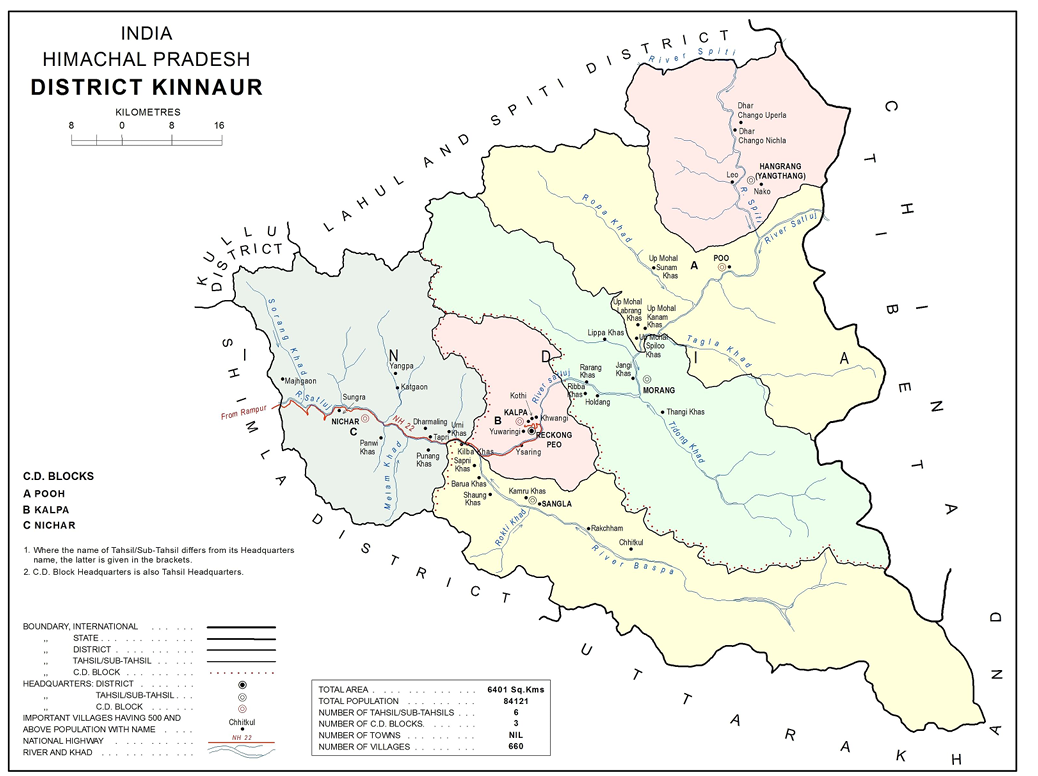
Figure 1: Map of District Kinnaur
Source: Office of the Registrar General & Census Commissioner, India (2011), District Census Handbook: Kinnaur (Series 03, Part XII-B), Ministry of Home Affairs, Government of India.
B. Educational Infrastructure in District Kinnaur
Kinnaur has a relatively extensive educational infrastructure despite its remote, tribal, and mountainous terrain. At the elementary level, the district has 181 Government Primary Schools and 34 Government Middle Schools, supplemented by 43 recognised private primary and upper-primary institutions. Free and compulsory education is provided to children aged 6-14 years, along with free textbooks, uniforms, and mid-day meals. At the secondary and senior secondary levels, the district is served by 22 Government Senior Secondary Schools, 20 Government High Schools, and 15 privately managed High and Senior Secondary Schools. Educational quality has been strengthened through significant digital infrastructure, including 32 IT laboratories, 46 ICT laboratories, 52 Computer-Aided Learning (CAL) laboratories, and 52 Smart Virtual Classrooms. Furthermore, two schools have been upgraded to Aadarsh Vidyalayas under the Mukhyamantri Adarsh Vidyalaya Yojana, with additional investments in smart classrooms, computer laboratories, libraries, sports facilities, and related infrastructure. The presence of science and commerce streams in government senior secondary schools, together with the expansion of digital learning facilities, reflects ongoing efforts to improve educational access and quality in this geographically challenging tribal district.
HIMURJA (Himachal Pradesh Energy Development Agency)
HIMURJA is the State Nodal Agency responsible for promoting and implementing renewable energy programmes in Himachal Pradesh and operates under the administrative control of the Department of Non-Conventional Energy Sources. Established on 18 March 1989 as an autonomous body under the Societies Registration Act, 1860, HIMURJA was created to institutionalise renewable energy initiatives suited to the state's unique geographical conditions. Guided by national renewable energy priorities and state-specific sustainability goals, the agency works to expand the adoption of clean energy technologies, particularly solar energy and small hydropower. Its core functions include facilitating the installation of renewable energy systems, administering government-supported schemes and incentives, developing small hydro projects, modernising traditional water mills (Gharats), and coordinating with relevant energy institutions to implement projects and integrate them into the grid. In addition, HIMURJA undertakes awareness-raising, training, and capacity-building activities to promote broader acceptance of renewable energy technologies, thereby contributing to sustainable and inclusive energy development across Himachal Pradesh.
By installing solar photovoltaic systems in public institutions, including educational establishments, HIMURJA helps strengthen energy access in geographically isolated regions. These interventions can support educational infrastructure by providing reliable electricity for lighting, administrative functions, and digital learning facilities.
Solar Energy in India
India possesses immense solar energy potential owing to its favourable geographical location. The country receives an estimated 5,000 trillion kWh of solar energy annually, with most regions receiving an average solar radiation of 4-7 kWh per square metre per day. This abundant resource has positioned solar energy as a key component of India's renewable energy strategy. Solar photovoltaic (PV) technology offers significant advantages, including scalability, rapid deployment, and the ability to provide both grid-connected and decentralised electricity solutions. These characteristics make it particularly suitable for geographically remote and underserved regions where conventional electricity infrastructure is either inadequate or unreliable.
Over the past decade, solar energy has emerged as one of the fastest-growing sources of electricity in India, contributing substantially to the country's renewable energy capacity and energy security. In addition to supporting sustainable economic development, decentralised solar energy systems have improved access to reliable electricity for essential public services in rural and remote areas. Consequently, solar energy has assumed a pivotal role in advancing inclusive development and strengthening infrastructure across sectors, including education, healthcare, and other public institutions.
The country's installed solar power capacity has grown more than thirty-ninefold, from 2.82 GW in 2014 to 110.9 GW in 2025, including a record addition of 23.83 GW during 2024-25 alone. India has also significantly strengthened its domestic solar manufacturing capabilities. Between 2014 and March 2025, solar photovoltaic (PV) module manufacturing capacity increased from 2.3 GW to 88 GW, while solar PV cell manufacturing capacity expanded from 1.2 GW to 25 GW. This rapid growth has been supported by several major government initiatives and policy interventions. Prominent among these are the PM-Surya Ghar: Muft Bijli Yojana, launched in 2024 to promote rooftop solar systems for one crore households; the PM-KUSUM Scheme, launched in 2019 to enhance farmers' energy security through solar-powered agricultural pumps and decentralised solar plants; the Solar Parks Scheme, which facilitates large-scale grid-connected solar projects; and the Production Linked Incentive (PLI) Scheme for High Efficiency Solar PV Modules, aimed at strengthening domestic manufacturing and reducing import dependence. Collectively, these initiatives have played an important role in accelerating solar energy adoption, promoting sustainable development, strengthening energy security, and supporting India's transition to a cleaner, low-carbon energy economy.
Literature Review
Solar energy is energy in the form of heat and radiation. It is produced by sunlight and is a renewable source that does not run out. Every hour, enough sunlight reaches the earth to meet the world's energy needs for a whole year (Shaikh et al., 2017). Solar energy provides a clean and abundant power source that helps cut greenhouse gas emissions, and it supports sustainable development by ensuring energy access, especially in remote and underserved areas (Maka & Alabid, 2022). The Himalayan region, especially Himachal Pradesh, receives abundant sunlight year-round, making it ideal for solar energy; even a small portion of available land could generate a large amount of clean electricity (Ramachandra & Krishnadas, 2012). Access to solar energy has improved the socio-economic well-being of tribal communities by enhancing household convenience, strengthening perceptions of safety, and reducing dependence on traditional energy sources. However, the sustainability of these benefits depends on complementary measures such as technical training, local support services, and opportunities for productive use of solar technologies (Paswan, 2026). Extending the use of solar energy beyond households to educational institutions, Riskiono et al. (2021) demonstrated that implementing a School Solar Panel System (SSPS) ensured a reliable electricity supply at a rural primary school experiencing frequent power outages. The system enabled uninterrupted use of technology-based teaching, digital school administration, and other essential educational activities, highlighting the role of solar energy in strengthening the resilience of educational infrastructure in electricity-deficient areas. Agoramoorthy and Hsu (2009) reported that the introduction of solar lanterns in rural and tribal areas enhanced educational opportunities by extending children's study hours through reliable evening lighting; the intervention also reduced household energy expenditure and improved the quality of life, demonstrating the wider developmental benefits of decentralised solar energy in underserved communities. LaVallie (2023) identified that the success of tribal solar energy initiatives depends on strong community participation, institutional capacity, and sustained collaboration among tribal communities, government agencies, and technical partners, emphasising that local leadership, capacity building, and culturally appropriate planning are essential for ensuring the long-term sustainability and acceptance of solar energy projects in tribal areas.
Research Gap
Although previous studies have examined solar energy from technical, environmental, and energy-access perspectives, limited scholarly attention has been devoted to understanding its contribution to educational development in tribal regions. Existing literature offers scant empirical evidence on how solar energy interventions affect the functioning of educational institutions, strengthen educational infrastructure, and facilitate quality education in remote mountainous areas. Furthermore, there is a notable lack of empirical research examining the perceptions and experiences of beneficiary educational institutions regarding the implementation and effectiveness of HIMURJA's solar energy initiatives in Kinnaur district. This gap is particularly significant given the growing emphasis on quality education under SDG 4 and the increasing reliance of educational institutions on reliable energy infrastructure.
A. Research Objectives
• To examine the solar energy initiatives implemented by HIMURJA in educational institutions of Kinnaur district.
• To assess the perceived contribution of HIMURJA's solar energy initiatives to educational infrastructure and institutional functioning.
• To analyse the role of solar energy interventions in facilitating quality education in beneficiary educational institutions.
• To identify challenges affecting the effectiveness and sustainability of solar energy installations.
B. Research Methodology
The present study adopts a descriptive and analytical research design to examine the impact of HIMURJA's solar energy initiatives on the facilitation of quality education in educational institutions in the tribal district of Kinnaur, Himachal Pradesh. While the descriptive component of the study provides an account of the nature and extent of solar energy interventions implemented by HIMURJA, the analytical component assesses their perceived contribution to educational infrastructure, institutional functioning, and the broader objective of facilitating quality education.
C. Sources of Data
The study draws on both primary and secondary data sources. Primary data were collected from beneficiary educational institutions that had solar energy systems installed under HIMURJA's initiatives. Secondary data were obtained from HIMURJA's official reports and publications, government documents, district statistical records, educational reports, and relevant academic literature on solar energy, educational infrastructure, and quality education.
D. Universe and Coverage of the Study
The study was conducted in Kinnaur district, a notified tribal district in Himachal Pradesh's north-eastern region. The district is characterised by rugged mountainous terrain, dispersed settlements, harsh climatic conditions, and limited physical accessibility, all of which pose significant challenges to infrastructure development and the delivery of public services. Despite these geographical constraints, Kinnaur has a well-established network of educational institutions that play a pivotal role in expanding access to education and fostering human development in the tribal region. The district was selected for the present study because it has witnessed HIMURJA implementing multiple solar energy initiatives across educational institutions during the study period.
The study covered all educational institutions in Kinnaur district that received solar energy installations through HIMURJA between 2016 and 2024. The beneficiary institutions were provided with various solar interventions, including grid-connected solar photovoltaic (PV) systems, solar water heating systems, and solar street lighting systems. Given the limited number of beneficiary institutions in the district, a census approach was adopted, including all educational institutions that received solar installations during the study period.
E. Data Collection
The study utilised both primary and secondary data sources. Primary data were collected through a structured interview schedule administered to representatives of beneficiary educational institutions where solar energy systems had been installed under HIMURJA's initiatives. Information was gathered on the nature and utilisation of solar installations, their perceived contribution to institutional functioning and educational activities, and the challenges associated with their operation and maintenance. Field observations were also undertaken wherever feasible to supplement the primary data.
Secondary data were collected from official reports and publications of HIMURJA, government documents, census reports, educational statistics, and relevant academic literature. These sources were used to obtain information on the study area, educational infrastructure, solar energy initiatives, and the broader policy and conceptual context of the study.
Findings and Discussion
| Sr. No. | Institution | Type of Solar Initiative | Capacity | Quantity |
|---|---|---|---|---|
| 1 | GSSS Recong Peo | Grid-Connected SPV System | 3 kWp | 1 |
| 2 | GSSS Sangla | Grid-Connected SPV System | 7 kWp | 1 |
| 3 | ITI Recong Peo | Grid-Connected SPV System | 35 kWp | 1 |
| 4 | Govt. Degree College Recong Peo | Solar Water Heating System | 200 LPD | 1 |
| 5 | JNV Recong Peo | Solar Street Lights | 9 W | 4 |
| 6 | GSSS Recong Peo | Solar Street Lights | 12 W | 1 |
| 7 | EMRS Nichar | Solar Street Lights | 7 W | 10 |
| 8 | Gurukul School Sangla | Solar Street Lights | 7 W | 2 |
Table 2: HIMURJA's Solar Energy Initiatives in Educational Institutions of Kinnaur District: An Overview
Source: HIMURJA official data.
The data demonstrate that HIMURJA implemented a range of solar energy interventions in educational institutions across Kinnaur district between 2016 and 2024. These interventions comprised grid-connected solar photovoltaic (SPV) systems, solar water-heating systems, and solar street-lighting installations. Among these, grid-connected SPV systems were the most significant in terms of energy generation capacity, with installations ranging from 3 kWp at Government Senior Secondary School (GSSS) Recong Peo to 35 kWp at the Industrial Training Institute (ITI), Recong Peo. The larger capacity at ITI Recong Peo reflects the comparatively higher energy requirements associated with vocational and technical training activities.
In addition to electricity-generating systems, HIMURJA facilitated the installation of a 200 LPD solar water heating system at Government Degree College, Recong Peo. The agency also supported educational institutions with solar street lighting, including installations at Jawahar Navodaya Vidyalaya (JNV) Recong Peo, GSSS Recong Peo, Eklavya Model Residential School (EMRS) Nichar, and Gurukul School Sangla. These installations were intended to enhance campus lighting and improve the overall institutional environment.
The distribution of solar energy initiatives among educational institutions by category demonstrates HIMURJA's efforts to address diverse energy requirements within the education sector. While solar photovoltaic systems primarily contributed to electricity generation and institutional operations, solar water heating and solar street lighting addressed specific functional needs related to campus infrastructure and service provision. Collectively, these interventions represent an important step towards strengthening energy access in educational institutions in the geographically remote and tribal region of Kinnaur.
| Institution | Number of Respondents |
|---|---|
| GSSS Recong Peo | 4 |
| GSSS Sangla | 2 |
| ITI Recong Peo | 2 |
| Govt. Degree College Recong Peo | 2 |
| JNV Recong Peo | 2 |
| EMRS Nichar | 2 |
| Gurukul School Sangla | 2 |
| Total | 16 |
Table 3: Distribution of Respondents by Type of Educational Institution
Source: Primary data.
| Sr. No. | Dimension | Institutional Assessment |
|---|---|---|
| 1 | Awareness of the existence of solar installations | High |
| 2 | Understanding of the primary purpose of the installation | Moderate to High |
| 3 | Awareness of basic system functioning | Moderate |
| 4 | Awareness of system capacity and limitations | Low |
| 5 | Awareness of maintenance responsibilities | Low |
Table 4: Institutional Awareness and Utilisation of Solar Energy Systems
Source: Primary data.
The findings indicate that beneficiary educational institutions generally exhibited a high level of awareness of the presence of installed solar energy systems. The visibility of the installations and their regular use in supporting institutional activities contributed to widespread recognition of their presence among institutional personnel. Most respondents were also able to identify the primary purpose of the installed systems, including electricity generation, campus lighting, and water heating, suggesting a moderate to high level of functional awareness.
However, awareness of the systems' technical and operational aspects declined considerably. Institutional representatives demonstrated only a moderate understanding of basic system functioning and were often unfamiliar with the operational requirements for the efficient utilisation of solar installations. Knowledge of installed capacity, energy output, and system limitations was particularly limited across institutions. Consequently, respondents were often unable to accurately assess the extent to which the installations could meet institutional energy requirements.
Similarly, awareness of maintenance responsibilities was low. Several institutions reported uncertainty about the roles of HIMURJA, installation vendors, and institutional authorities in maintaining and repairing solar systems. This ambiguity may hinder timely fault reporting and adversely affect the long-term sustainability of the installations.
Overall, the findings suggest that although solar energy systems have become integrated into the routine functioning of beneficiary educational institutions, institutional awareness remains largely confined to their day-to-day use. Limited understanding of system capacity, operational requirements, and maintenance responsibilities underscores the need for greater institutional capacity-building and post-installation support to ensure the sustained effectiveness of solar energy initiatives.
| Sr. No. | Dimension | Institutional Assessment |
|---|---|---|
| 1 | Functional utility of solar energy systems in institutional operations | High |
| 2 | Contribution to the continuity of institutional services during power outages | High |
| 3 | Reduction in dependence on conventional energy sources | Moderate |
| 4 | Support for communication and coordination during electricity disruptions | High |
| 5 | Reliability of solar power supply under normal operating conditions | Moderate |
| 6 | Influence of battery storage on system reliability | High |
| 7 | Regularity and adequacy of maintenance | Low |
| 8 | Reliability during nighttime and low-sunlight conditions | Low to Moderate |
| 9 | Overall institutional confidence in solar energy systems | Moderate |
Table 5: Institutional Assessment of the Contribution of Solar Energy Initiatives to Educational Infrastructure and Institutional Functioning
Source: Primary data.
The findings demonstrate that HIMURJA's solar energy initiatives have strengthened educational infrastructure and supported the routine functioning of beneficiary educational institutions in Kinnaur district. Respondents reported that solar installations have become an important part of institutional operations, supporting lighting, basic equipment, and backup power. The systems were particularly valued for maintaining essential educational and administrative activities during grid outages, thereby reducing disruptions in remote tribal areas.
Perceptions varied across institutions. Respondents from ITI Recong Peo expressed particularly positive views, owing to the larger 35 kWp grid-connected solar photovoltaic system, which was reported to meet a substantial share of the institution's electricity requirements, including powering training equipment and other energy-intensive facilities. Similarly, residential educational institutions highlighted the role of solar energy in supporting educational and residential services from morning until late evening, particularly during power disruptions.
A notable benefit was also reported at the hostel of Government Degree College, Recong Peo, where the solar water heating system has improved access to hot water during the harsh winter months. Respondents viewed this as a significant improvement in student welfare and hostel infrastructure, reducing dependence on conventional energy sources for daily needs.
Institutions also reported moderate reductions in dependence on conventional energy sources and in associated electricity expenditure. However, the extent of these benefits varied with system capacity and technical constraints, including net-metering issues. At the same time, concerns were raised about battery degradation, limited storage capacity, and irregular maintenance, which affected system reliability, particularly at night and during prolonged periods of low solar radiation. These challenges contributed to only moderate institutional confidence in the long-term dependability of solar energy systems.
Overall, the findings suggest that HIMURJA's solar energy initiatives have enhanced the functional capacity and infrastructure resilience of educational institutions in Kinnaur district. Nevertheless, their long-term effectiveness depends on improved maintenance support, timely component replacement, and strengthened energy storage capacity.
| Sr. No. | Dimension | Institutional Assessment | Interpretation of Institutional Responses |
|---|---|---|---|
| 1 | Improvement in classroom and campus lighting | High | Solar installations improved illumination in educational premises and supported institutional activities during periods of inadequate grid supply. |
| 2 | Continuity of teaching-learning activities during electricity disruptions | High | Solar systems helped minimise interruptions to educational and administrative activities caused by power outages. |
| 3 | Improvement in campus safety and security | High | Solar street lighting enhanced visibility and safety within educational campuses, particularly during evening hours. |
| 4 | Support for residential and student welfare facilities | High | Solar energy systems contributed to improved hostel and residential facilities by providing essential services such as hot water and lighting. |
| 5 | Enhancement of the overall learning environment | High | Respondents perceived solar energy initiatives as contributing positively to the learning environment and educational services, resulting in a more conducive and supportive educational environment. |
| 6 | Support for practical training and experimental learning | High | Solar-powered machinery, tools, laboratory equipment, and other instructional resources are used for practical, skills-based learning, thereby supporting experiential, hands-on educational activities. |
Table 6: Institutional Assessment of the Contribution of Solar Energy Initiatives to Learning Environment and Educational Services
Source: Primary data.
The findings demonstrate that HIMURJA's solar energy initiatives have positively contributed to the learning environment and educational services at beneficiary institutions across Kinnaur district. Respondents reported that solar installations improved classroom and campus lighting, thereby supporting educational activities during periods of inadequate grid electricity supply and creating a more conducive environment for teaching and learning.
Institutions also acknowledged the role of solar energy in supporting digital learning and educational technologies. The availability of a reliable power source facilitated the operation of computers, ICT facilities, smart classrooms, and other technology-enabled educational resources, thereby strengthening access to modern teaching-learning tools. Furthermore, respondents noted that solar systems helped minimise disruptions to academic and administrative activities during electricity outages, ensuring greater continuity in institutional functioning.
Solar street lighting installations were perceived as enhancing campus safety and security, particularly during evening hours. This benefit was especially significant in residential educational institutions, where students and staff continue to utilise campus facilities beyond regular school hours. Respondents also highlighted the contribution of solar energy initiatives to student welfare. The solar water heating system installed at the hostel of Government Degree College, Recong Peo, was reported to provide reliable access to hot water during the harsh winter months, thereby improving residential facilities and student comfort.
The educational significance of solar energy was particularly evident at ITI (Industrial Training Institute) Recong Peo. Respondents reported that the 35 kWp grid-connected solar photovoltaic system supported a substantial share of the institution's electricity requirements, facilitating the operation of machinery, tools, and workshop equipment essential for vocational and technical training. Given the practical nature of skill-based education, reliable electricity was perceived as crucial for effective training and learning outcomes.
Overall, respondents viewed solar energy initiatives as contributing positively to the overall learning environment by strengthening educational infrastructure, supporting learning-related activities, enhancing student welfare, and improving institutional resilience against power disruptions. These findings suggest that solar energy interventions have played an important role in creating conditions conducive to effective teaching and learning in the tribal areas of Himachal Pradesh.
Challenges Affecting the Sustainability of Solar Energy Initiatives
Despite the positive contributions of HIMURJA's solar energy initiatives, the findings reveal several challenges that may affect their long-term effectiveness and sustainability. A key concern is limited institutional awareness of system capacity, operational requirements, and maintenance responsibilities. In several institutions, respondents reported uncertainty about the roles of HIMURJA, installation vendors, and institutional authorities in maintaining solar systems.
Technical constraints also emerged as significant challenges. Respondents highlighted the adverse effects of battery degradation and inadequate storage capacity on system reliability, particularly at night and during prolonged periods of low solar radiation. These limitations reduced some installations' ability to provide uninterrupted power beyond daylight hours. In addition, net-metering constraints and variations in system performance were reported to affect the overall efficiency of certain installations.
The findings further indicate that maintenance support remained irregular across several institutions. Delays in servicing, fault rectification, and component replacement were reported to adversely affect system performance and institutional confidence in the installations. A particularly significant concern is the lack of dedicated financial provisions for the repair and maintenance of solar energy systems after the warranty period, which is generally five years. Several institutions reported difficulties in mobilising resources to maintain or replace critical components after warranty coverage ended. This challenge is especially pronounced in remote tribal regions, where maintenance costs and logistical constraints are comparatively higher. The absence of a structured post-warranty maintenance mechanism emerged as a major institutional gap affecting the long-term sustainability of solar installations. Overall, while solar energy initiatives have contributed positively to educational infrastructure and learning environments, addressing challenges related to technical awareness, maintenance mechanisms, energy storage capacity, and post-warranty financial support is essential to enhance their long-term sustainability and effectiveness in supporting educational institutions in tribal areas.
Policy Suggestions
Based on the findings of the study, the following policy measures are recommended:
• The coverage of solar energy initiatives may be expanded to a larger number of educational institutions in tribal areas, particularly remote schools and institutions offering science, computer education, and vocational training, where uninterrupted electricity is essential for laboratories, ICT facilities, and practical learning.
• Dedicated financial provisions may be considered for the post-warranty repair, maintenance, and replacement of solar energy systems through the Tribal Sub-Plan (TSP) or similar government funding mechanisms to ensure the long-term sustainability of installations and their continued contribution to quality education.
• Post-installation technical support could be strengthened by introducing periodic inspections, preventive maintenance schedules, and timely servicing of solar energy systems to enhance their reliability and operational efficiency.
• Institutional capacity may be enhanced through regular orientation programmes on the operation, efficient utilisation, and basic maintenance of solar energy systems, accompanied by clearly defined guidelines on maintenance responsibilities and fault-reporting mechanisms.
• Future educational infrastructure planning may integrate solar energy initiatives by recognising reliable electricity as an essential component of quality education and aligning such initiatives with SDG 4 to promote safe, inclusive, and effective learning environments in tribal educational institutions.
Conclusion
This study examined the impact of HIMURJA's solar energy initiatives on the quality of education in beneficiary educational institutions in Kinnaur district, Himachal Pradesh. The findings demonstrate that solar energy interventions have strengthened educational infrastructure, improved institutional functioning, supported digital and practical learning, enhanced campus safety, and promoted student welfare. By ensuring greater continuity of educational services during power disruptions, these initiatives have created learning environments that are more conducive to effective teaching and learning in the geographically remote tribal region.
At the same time, the study identified several challenges to the long-term sustainability of these interventions, including limited technical awareness, inadequate battery storage, irregular maintenance, and the absence of dedicated financial provisions for repairs and maintenance after the warranty period. Addressing these challenges is essential to maximise the long-term effectiveness of solar energy systems and ensure uninterrupted educational services in remote institutions.
Overall, the study demonstrates that solar energy initiatives go beyond providing clean electricity and play an important role in advancing quality education by strengthening the physical and functional foundations of educational institutions. Expanding the coverage of such initiatives to more remote educational institutions, while ensuring sustained technical and financial support for their maintenance, can significantly enhance educational resilience and help achieve SDG 4 (Quality Education) by fostering safe, inclusive, and effective learning environments in the tribal areas of Himachal Pradesh.
*****
- Agoramoorthy, G., & Hsu, M. J. (2009). Lighting the lives of the impoverished in India’s rural and tribal drylands. Human Ecology, 37(4), 513–517. https://doi.org/10.1007/s10745-009-9246-y
- Government of Himachal Pradesh. (n.d.). District profile: Kinnaur. https://hpkinnaur.nic.in/documents/
- Government of Himachal Pradesh. (n.d.). Education: District Kinnaur. https://hpkinnaur.nic.in/education/
- Himachal Pradesh Energy Development Agency. (n.d.). Official website. https://himurja.hp.gov.in/
- LaVallie, S. (2023). Illuminating common ground: Success factors for tribal solar energy development [Master’s thesis, University of Minnesota]. University of Minnesota Digital Conservancy. https://hdl.handle.net/11299/269419
- Maka, A. O. M., & Alabid, J. M. (2022). Solar energy technology and its roles in sustainable development. Clean Energy, 6(3), 476–483. https://doi.org/10.1093/ce/zkac023
- Ministry of New and Renewable Energy. (n.d.). Schemes and programmes. https://mnre.gov.in/
- Ministry of New and Renewable Energy. (n.d.). Solar overview. https://mnre.gov.in/solar-overview
- Paswan, A. (2026). The impact of solar energy on the lives of tribal women: With special reference to Sonbhadra District, Uttar Pradesh. International Journal of Research and Scientific Innovation (IJRSI), 13(1). https://doi.org/10.51244/IJRSI.2026.13010103
- Press Information Bureau. (2025, December 2). India’s solar momentum: 129 GW solar push takes non-fossil share beyond 50% of total installed capacity. https://www.pib.gov.in/PressReleasePage.aspx?PRID=2199729
- Ramachandra, T. V., & Krishnadas, G. (2012). Harnessing solar energy in the Himalayan region. Renewable and Sustainable Energy Reviews, 16(8), 6803–6812. https://doi.org/10.1016/j.rser.2012.08.004
- Riskiono, S. D., Oktaviani, L., & Sari, F. M. (2021). Implementation of the School Solar Panel System to support the availability of electricity supply at SDN 4 Mesuji Timur. In Proceedings of the 1st International Conference on Advanced Information Technology and Communication (IC-AITC 2021) (pp. 82–87). Atlantis Press. https://doi.org/10.2991/assehr.k.211101.013
- Shaikh, M. R. S., Waghmare, S. B., Labade, S. S., Fuke, P. V., & Tekale, A. (2017). A review paper on electricity generation from solar energy. International Journal for Research in Applied Science & Engineering Technology, 5(9), 1884–1889. https://doi.org/10.22214/ijraset.2017.9272
- United Nations. (2015). Transforming our world: The 2030 Agenda for Sustainable Development. https://sdgs.un.org/2030agenda
- United Nations. (n.d.). Goal 4: Ensure inclusive and equitable quality education and promote lifelong learning opportunities for all. https://sdgs.un.org/goals/goal4
- United Nations Educational, Scientific and Cultural Organisation. (2024). Global education monitoring report. https://www.unesco.org/gem-report/en