

Introduction
In the twenty-first century, sustainable development and environmental preservation have become pressing global concerns. The adoption of the Sustainable Development Goals (SDGs) by the United Nations established a worldwide framework for striking a balance between social justice, economic progress and environmental conservation. Through traditional ecological practices and sustainable lifestyles, indigenous and tribal communities in India have historically contributed significantly to the preservation of forests, wildlife and natural resources.
India is home to many tribal and indigenous groups whose traditions are closely associated with the natural world. The importance of safeguarding both the environment and indigenous rights is acknowledged by international obligations, environmental regulations, forest rights legislation and constitutional measures.
Meaning and concept of sustainable development
Sustainable development is the organising principle for achieving human development objectives while maintaining the capacity of natural systems to supply the natural resources and ecosystem services on which the economy and society rely. It entails providing for present needs without compromising the ability of future generations to provide for their own. The Sustainable Development Goals, also known as the Global Goals, were adopted by the United Nations in 2015 as a universal call to action to end poverty, protect the planet and ensure that, by 2030, all people enjoy peace and prosperity. The seventeen SDGs are integrated; they recognise that action in one area will affect outcomes in others, and that development must balance social, economic and environmental sustainability.1
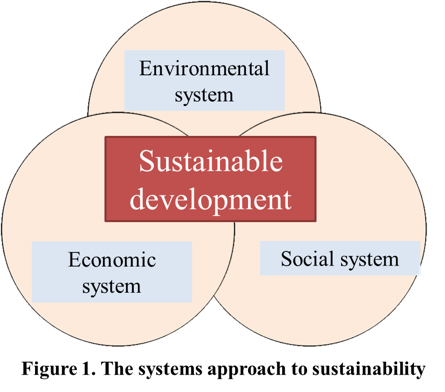
There are three main pillars of sustainable development: environmental sustainability, economic sustainability and social sustainability.2
A. Environmental sustainability
Environmental sustainability calls for the responsible use and preservation of the natural environment in order to guarantee that natural resources remain available for both present and future generations. It involves preserving ecological balance by reducing pollution, protecting biodiversity, making effective use of resources and encouraging environmentally friendly behaviour. The goal of environmental sustainability is to provide for human necessities, including food, water, energy and development, without harming the planet’s ecosystems. To ensure a healthy and balanced environment for all living things, it promotes sustainable development through waste management, renewable energy, forest and wildlife protection, and the mitigation of climate change.
B. Economic sustainability
Economic sustainability is the ability of an economy to sustain long-term economic growth without adversely compromising the social, environmental and cultural facets of society. It emphasises responsible production and consumption, steady employment prospects, resource efficiency and the preservation of financial stability for both present and future generations.
C. Social sustainability
Social sustainability is the ability of a society to preserve and enhance people’s equality, well-being and standard of living for both present and future generations. It focuses on building inclusive communities in which people have access to necessities including employment, healthcare, education, social justice, human rights and cultural preservation.
Concept of Sustainable Development Goals (SDGs)
The Sustainable Development Goals are a collection of seventeen worldwide objectives adopted in 2015 as part of the 2030 Agenda for Sustainable Development. The SDGs seek to address poverty, inequality, environmental degradation, climate change, peace and justice, among other issues. Regardless of a nation’s level of development, the SDGs apply to all nations. They aim to balance the social, economic and environmental dimensions of development and are interrelated.3
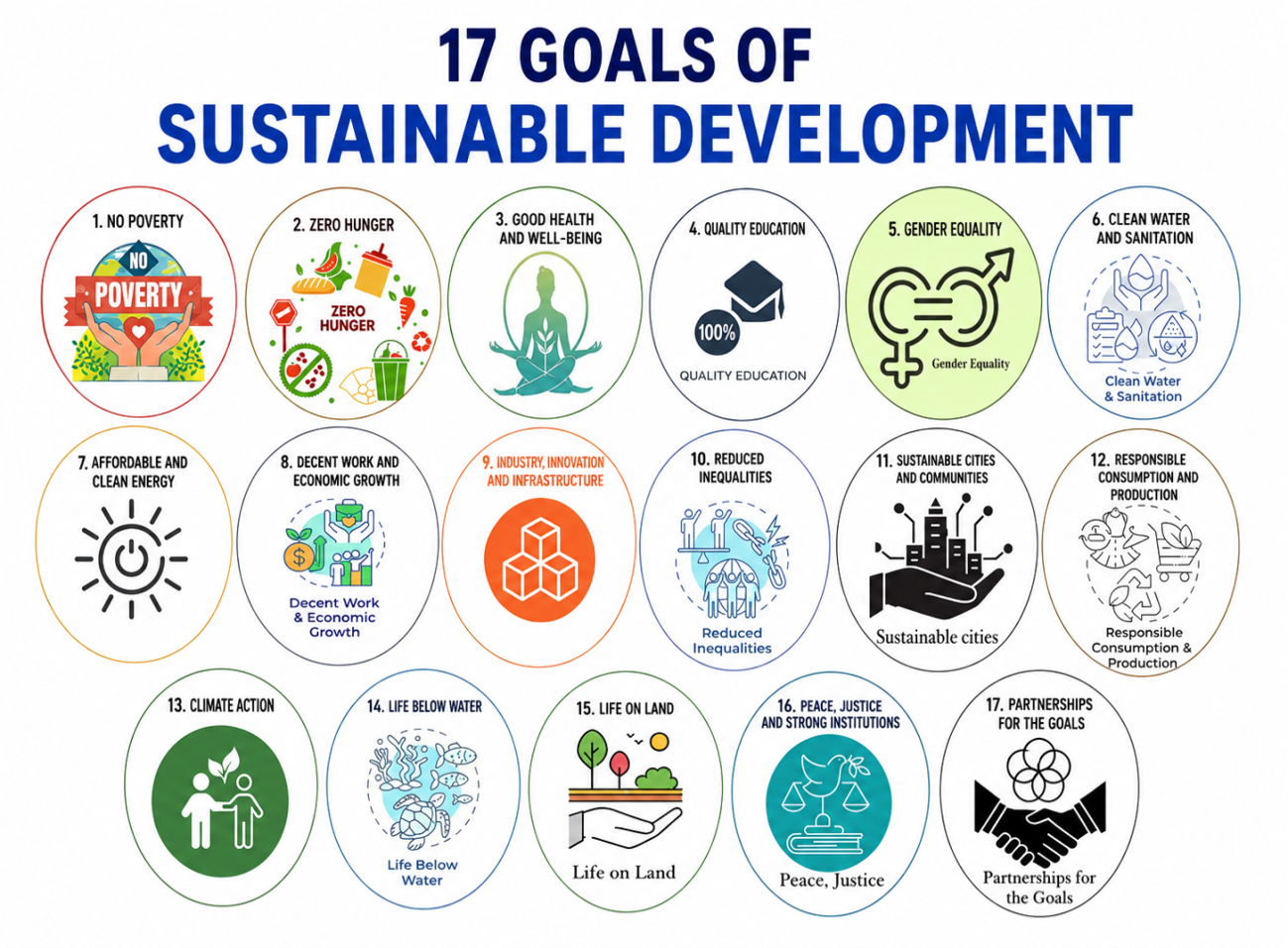
The United Nations approved the Sustainable Development Goals as a global framework in 2015 to support balanced development that satisfies present demands without jeopardising the capacity of future generations to satisfy their own. The SDGs are a collection of seventeen interrelated objectives intended to tackle significant worldwide issues such as poverty, inequality, climate change, environmental degradation, peace, justice, education, health and economic growth.
The concept of sustainable development arose from the notion that development should be environmentally sustainable, economically feasible and socially inclusive. The SDGs form a component of the 2030 Agenda for Sustainable Development, which has been approved by every UN member state. By guaranteeing equality, protecting the environment, using natural resources responsibly and promoting inclusive economic growth, these objectives seek to build a better and more sustainable future for all.4 The objectives acknowledge that problems such as hunger, poverty, gender inequality, climate change and environmental degradation are interrelated and call for international cooperation.5
This paper focuses particularly on the environmental aspects, which include the following Goals. SDG 6 (Clean Water and Sanitation) seeks to ensure the availability and sustainable management of water and sanitation for all. SDG 7 (Affordable and Clean Energy) seeks to ensure access to affordable, reliable, sustainable and modern energy for all. SDG 13 (Climate Action) calls for urgent action to combat climate change and its impacts on the environment. SDG 14 (Life Below Water) seeks to conserve and sustainably use the oceans, seas and marine resources for sustainable development. SDG 15 (Life on Land) seeks to protect, restore and promote the sustainable use of terrestrial ecosystems, sustainably manage forests, combat desertification, and halt and reverse land degradation and biodiversity loss. SDG 16 (Peace, Justice and Strong Institutions) seeks to promote peaceful and inclusive societies for sustainable development, provide access to justice for all, and build effective, accountable and inclusive institutions at all levels of society.
Legal framework relating to indigenous and tribal communities in India
India is one of the countries with the largest number of native communities in the world. These communities, popularly known as Scheduled Tribes, have their own culture, traditions, language and way of life linked to forests, lands and natural resources. The importance of tribal peoples lies in their long history of playing a crucial role in balancing the ecological system and biodiversity, and in their traditional knowledge. Even though they have contributed greatly to society and the environment, they have consistently been victims of social exclusion, poverty and exploitation, and have been denied their traditional rights of forest and land ownership.
To promote the welfare of the Scheduled Tribes and protect their interests, various provisions of the Indian Constitution as well as laws and regulations are dedicated to safeguarding their rights. The Indian Constitution offers various protections, rights and privileges to Scheduled Tribes by enshrining their rights in the Fundamental Rights and the Directive Principles of State Policy, and through special constitutional provisions in the Fifth and Sixth Schedules. In addition, Indian statutes such as the Forest Rights Act, 2006 and the Panchayats (Extension to Scheduled Areas) Act, 1996 also safeguard their various rights.
A. Constitutional provisions relating to tribal communities
Article 14 (Right to Equality). This Article ensures equality before the law and the equal protection of the laws for all citizens, including tribal groups. It safeguards the interests of the tribes by ensuring that they are protected from any form of discrimination or unfair treatment.
Article 15(4) (Special Measures for Development). This Article empowers the State to enact special measures to advance the socially and educationally backward sections of society, including the Scheduled Tribes. It provides for reservations in education and welfare programmes.
Article 16(4) (Reservations in Public Employment). Under Article 16(4), the State is permitted to provide reservations in public employment for backward classes, including the Scheduled Tribes, in order to ensure their adequate representation in public service.
Article 19(5) (Restrictions on Movement or Residence in Tribal Areas). This Article authorises the State to regulate the movement or residence of persons in tribal areas in order to protect their cultural identity, practices and resources.
Article 21 (Right to Life and Personal Liberty). Article 21 has been interpreted to encompass not only life and personal liberty but also a right to livelihood, environment, shelter and cultural identity for tribes who depend upon forests for their livelihood.6
Article 46 (Promotion of Educational and Economic Interests). Article 46, one of the Directive Principles of State Policy, provides that the State shall promote the educational and economic interests of the Scheduled Tribes and protect them from exploitation and social injustice.
Fifth Schedule. The Fifth Schedule relates to the administration and control of Scheduled Areas and Scheduled Tribes in States other than those of the North-East region. It confers power on Governors to frame regulations for the maintenance of peace and good governance in tribal areas.
Sixth Schedule. The Sixth Schedule makes provision for autonomous district councils in the tribal areas of the States of Assam, Meghalaya, Tripura and Mizoram.
Articles 244 and 275. Article 244 relates to the administration of Scheduled Areas and tribal areas, while Article 275 provides for financial assistance from the Union Government for the welfare of the tribes.7
B. The Panchayats (Extension to Scheduled Areas) Act, 1996
The Panchayats (Extension to Scheduled Areas) Act, 1996 grants self-rule to tribal communities inhabiting Scheduled Areas. It recognises the Gram Sabha as the primary decision-making body in local government and preserves the traditions of the tribal population. It authorises Gram Sabhas to govern natural resources and requires prior consultation before land acquisition or relocation. It also prevents exploitation by regulating local commerce and lending practices.8
C. The Forest Rights Act, 2006
The Scheduled Tribes and Other Traditional Forest Dwellers (Recognition of Forest Rights) Act, 2006, also referred to as the Forest Rights Act, recognises the traditional rights of forest-dwelling tribes over forest land and resources. It grants the right to inhabit and cultivate forest land, the community right to use forest produce, pasture and fishing rights, the preservation of cultural heritage and the right to forest conservation.9
D. The Forest (Conservation) Act, 1980
The Forest (Conservation) Act, 1980 regulates the diversion of forest land for non-forest use. Prior permission from the Central Government is required before forest land may be used for development purposes. The Act prevents indiscriminate deforestation, secures the livelihoods of tribes who depend on forests, and promotes the conservation of the environment and the sustainability of resources.10
E. The Environment (Protection) Act, 1986
The Environment (Protection) Act, 1986 is comprehensive legislation for protecting the environment and controlling pollution. It safeguards tribal environments from environmental degradation, regulates industrial and development activities in tribal territories, and promotes ecological balance for the sustenance of the tribes. The Act gained importance in the aftermath of the Bhopal gas tragedy.11
F. The Biological Diversity Act, 2002
The Biological Diversity Act, 2002 is designed to conserve biological diversity and to ensure the equitable sharing of the benefits derived from it. It assists in recognising the traditional knowledge of tribal peoples, conserving biodiversity and protecting tribal knowledge from commercial exploitation.12
G. The Right to Fair Compensation and Transparency in Land Acquisition, Rehabilitation and Resettlement Act, 2013
The Right to Fair Compensation and Transparency in Land Acquisition, Rehabilitation and Resettlement Act, 2013 provides measures for tribes who may be affected by the land acquisition process. The Act requires the approval of the Gram Sabha in Scheduled Areas, provides for rehabilitation and resettlement, and grants compensation for displacement and loss of livelihood. The legislation seeks to mitigate the involuntary displacement of indigenous peoples in the context of development initiatives.13
International obligations and indigenous rights for SDGs and environmental protection
It has become necessary for the protection of indigenous rights to be incorporated into international environmental law and the SDGs. Indigenous communities possess ecological wisdom, sustainable resource-utilisation skills and cultures that make them very important to the conservation of biodiversity and environmental sustainability. Under various international laws and agreements, a duty is placed upon States to protect indigenous peoples while developing sustainably and protecting the environment.
A. United Nations Declaration on the Rights of Indigenous Peoples (UNDRIP), 2007
The United Nations Declaration on the Rights of Indigenous Peoples is arguably one of the most significant international instruments safeguarding indigenous rights. Among the important rights it recognises is the right to self-determination, affirmed under Article 3. With regard to land and natural resources, Articles 25 and 26 recognise that indigenous communities have rights to the property, occupation and management of their traditional lands and resources. The Declaration also requires the free, prior and informed consent of indigenous groups before States approve developmental projects, and it protects the cultures, practices and customary knowledge of indigenous communities. According to UNDRIP, indigenous communities play crucial roles in guarding biodiversity and natural ecosystems.14
B. Convention on Biological Diversity (CBD), 1992
The Convention on Biological Diversity acknowledges the contribution of indigenous communities to the preservation of biological diversity. Article 8(j) obliges States to respect the knowledge of indigenous communities. It also directs States to ensure benefit-sharing from biological resources and to involve indigenous communities in conservation strategies. Indigenous communities preserve forests, medicinal plants and wildlife through traditional methods.15
C. Paris Agreement, 2015
The Paris Agreement, adopted under the United Nations Framework Convention on Climate Change, stresses the significance of acknowledging indigenous rights within climate policy. It recognises traditional knowledge within climate adaptation, the engagement of indigenous communities in climate governance, and the preservation of the ecosystems and forest areas in which indigenous tribes reside. Indigenous knowledge plays an important role in climate adaptation and environmental sustainability.16
D. Rio Declaration on Environment and Development, 1992
The Rio Declaration on Environment and Development emphasises public participation and environmental justice. Principle 22 notes that the contribution of indigenous communities is essential for the effective management and development of the environment, owing to their indigenous knowledge and practices, and that their identity and cultural interests must be recognised.17
E. Universal Declaration of Human Rights (UDHR), 1948
There is increasing awareness in international human rights law of the linkage between human rights and environmental protection. The relevant rights include the right to life, the right to health, the right to culture, the right to livelihood and the right to a healthy environment. Environmental degradation often results in the displacement of native peoples, the loss of livelihood and the extinction of their culture. Environmental protection has therefore become an important aspect of human rights.18
Role of the judiciary, institutions and tribal communities in environmental protection and sustainable development
Environmental protection and sustainable development have become very important aims for all nations in the present world. In India, tribal peoples have always lived close to nature, and their contribution to the conservation of forests, biodiversity and ecological balance has been significant. Their cultural heritage, traditional wisdom and resource dependency make a major contribution to environmental sustainability. However, industrialisation, deforestation, mining and developmental projects pose grave dangers both to them and to the environment. The involvement of the tribes in the environmental management process is therefore crucial.
In addition, the judiciary and several other governmental and non-governmental institutions have contributed significantly to environmental protection and the protection of tribal rights. The Indian judiciary, especially the Supreme Court of India and the respective High Courts, has developed the field of environmental law through various landmark judgments grounded in the principles of sustainable development and justice, together with the protection of tribal rights. Bodies such as the Ministry of Environment, Forest and Climate Change, the National Green Tribunal, the Tribal Welfare Departments and self-governing institutions all contribute to the enforcement of environmental legislation and policy.
A. Role of the judiciary
In Subhash Kumar v. State of Bihar, the Supreme Court of India held that the right to life under Article 21 of the Constitution included the right to enjoy pollution-free water and air for the fullest enjoyment of life. The Court observed that the right to life includes the right of enjoyment of pollution-free water and air. The case arose from a petition alleging that the discharge of industrial waste and slurry by the Tata Iron and Steel Company had polluted the Bokaro River in Bihar, rendering it unfit for irrigation and human consumption. The landmark judgment brought the following points to light. Environmental protection forms an integral part of the fundamental right guaranteed under Article 21. A person has the right to file a case before the Supreme Court under Article 32 in respect of environmental pollution. Public interest litigation is also available for environmental purposes; however, it must be understood that public interest litigation should not be filed for personal or private causes. The final verdict was that, even though the Supreme Court acknowledged the right to a pollution-free environment, the petition was dismissed because it appeared to be motivated by personal gain on the part of the petitioner.19
In Vellore Citizens Welfare Forum v. Union of India, the Supreme Court of India held that the discharge of untreated pollutants from tanneries in Tamil Nadu constituted a major environmental problem and a violation of the right to life under Article 21. The Court adopted the principles of sustainable development, the precautionary principle and the polluter pays principle as essential elements of Indian environmental jurisprudence. The industries were ordered to pay compensation to the affected people and to restore the environment, thereby bearing the costs incurred. The Court also clarified that development should not come at the cost of the environment and public health.20
In Samatha v. State of Andhra Pradesh, the Supreme Court of India held that the transfer of the lands of tribes located in Scheduled Areas to non-tribal persons, private mining companies and industries was illegal under Article 244 of the Constitution and the Andhra Pradesh Scheduled Areas Land Transfer Regulation, 1959. The Court emphasised that the purpose behind this constitutional provision is to ensure that the rights, culture and economy of the tribes remain secure. According to the Court, government lands, forest lands and the lands of tribes located in Scheduled Areas could not be leased to private non-tribal mining companies, which would exploit the tribes and destroy the environment.21
In Orissa Mining Corporation v. Ministry of Environment and Forests, the Supreme Court of India declared that the religious, cultural and community rights of the Dongria Kondh tribe concerning the Niyamgiri Hills had to be safeguarded before mining could be permitted in the region. The Court held that the rights of Scheduled Tribes and other traditional forest dwellers under the Forest Rights Act, 2006, including their rights to worship and to maintain their sacred forests, are an essential part of protecting the environment and developing sustainably. The Court also held that the Gram Sabhas of the affected areas had to determine whether mining would infringe the community’s rights to practise their religion and culture.22
B. Role of institutions
Several institutions assist in promoting environmental protection and the welfare of the tribes in India. The National Green Tribunal was constituted under the National Green Tribunal Act, 2010, and its role is to deal with environmental cases effectively and promptly.23 The Ministry of Environment, Forest and Climate Change is responsible for formulating policies and programmes for environmental conservation and wildlife protection, mitigating climate change and implementing laws relating to environmental issues.24 At the local level, the Panchayats (Extension to Scheduled Areas) Act, 1996 empowers Gram Panchayats in Scheduled Areas to conserve their own traditions and to manage community and natural resources.25
C. Role of tribal communities
Traditional communities have always coexisted in harmony with nature and possess ecological knowledge of the natural world. The sustainable livelihoods and conservation practices of tribal peoples make an important contribution to the protection of biodiversity. Various tribal peoples engage in sustainable farming, the conservation of water resources, the protection of sacred groves and the management of forest lands.26
The Scheduled Tribes and Other Traditional Forest Dwellers (Recognition of Forest Rights) Act, 2006 recognises the rights of tribes residing in forests over forest land and resources.27 The Act also enables the Gram Sabha to conserve flora and fauna, forests and biodiversity. Tribal involvement is crucial to attaining the United Nations Sustainable Development Goals, particularly those concerned with climate action, life on land, the elimination of poverty and sustainable communities.
Challenges faced by indigenous communities in achieving the SDGs, suggestions and conclusion
A. Challenges experienced by tribal groups in meeting the SDGs and environmental conservation
Indigenous and tribal groups are significant contributors to environmental sustainability. Although these tribes make efforts towards biodiversity conservation and environmental protection, they nonetheless experience several legal, environmental, social and economic challenges. The following discussion highlights some of these problems, which affect both their livelihoods and the achievement of the SDGs.
The first challenge is displacement and the loss of land. The displacement of tribes from their territories is one of the greatest problems they face today. Activities such as mining, industry, the building of dams and other projects are carried out in forests and tribal regions, leading to the displacement of indigenous peoples from their land. Such displacement not only has economic implications but also destroys the cultural bond between the tribes and their environment.28
The second challenge is environmental degradation and the exploitation of natural resources. The exploitation of natural resources such as forests, mines and water has seriously damaged the lives of indigenous peoples. As corporations extract minerals from these forests, they bring about environmental degradation and contamination in the area, leading to the depletion of natural resources in tribal regions.29
The third challenge is poverty and inadequate infrastructure. Many tribal societies still grapple with poverty, unemployment, illiteracy, malnutrition and insufficient medical services. Geographical remoteness and the lack of infrastructure obstruct access to education, sanitation, drinking water and social security initiatives. These factors make it difficult to attain the SDGs relating to poverty alleviation, healthcare and quality education.30
The fourth challenge is insufficient law enforcement. Despite legislative measures such as the Forest Rights Act, 2006 and the Panchayats (Extension to Scheduled Areas) Act, 1996, enforcement has been ineffective in numerous areas. Tribes struggle with bureaucratic hurdles, inadequate information and procedural delays in exercising their rights concerning land and forest use.31
The fifth challenge is climate change and environmental degradation. Climate change poses major threats to indigenous groups. Unpredictable rainfall patterns, droughts, floods, forest fires and the reduction of biodiversity adversely affect the livelihoods of tribes that rely on agriculture, forestry and the use of natural resources. Environmental degradation endangers the indigenous ecological wisdom and practices passed down through generations.32
The sixth challenge is cultural neglect. Globalisation and modernisation have resulted in cultural assimilation among indigenous peoples. These societies are often excluded from decision-making processes and marginalised in environmental management efforts.
B. Recommendations for enhancing tribal engagement in the SDGs and environmental conservation
There should be adequate enforcement of forest and land rights. The Scheduled Tribes and Other Traditional Forest Dwellers (Recognition of Forest Rights) Act, 2006 should be properly enforced, and the tribes should be granted legal recognition of their lands and forest resources.
There should be greater community participation in decision-making. The participation of Gram Sabhas and local tribal bodies in decisions concerning environmental conservation should be enhanced, and it should be mandatory to obtain the free, prior and informed consent of the tribal communities for developmental projects in tribal regions.
Eco-friendly livelihood opportunities should be developed. Environmentally sustainable livelihood activities, such as community forests, organic agriculture, handloom production, eco-tourism and the use of minor forest produce, should be promoted.
Indigenous traditions should be safeguarded. Indigenous knowledge systems concerning biodiversity conservation, the use of medicinal plants, the management of water resources and sustainable agriculture should be protected, and intellectual property rights protection should be provided for the traditional practices of tribal groups.
Access to education and healthcare should be ensured. Efforts should be made to enhance access to education and healthcare among the tribal communities, and educational policies should preserve the linguistic diversity and cultural heritage of the tribes.
Climate change adaptation strategies should be adopted. Climate change adaptation programmes should be considered for the tribes; afforestation, sustainable agricultural practices, water conservation and disaster management will assist them in adapting to environmental change.
Legal and institutional support should be strengthened. It is essential that the judiciary and the constitutional authorities continue to safeguard the rights of the tribes and ensure environmental justice, and that illegal activities such as mining and deforestation be strictly monitored.
C. Conclusion
Indigenous and tribal groups have always been protectors of nature and biodiversity. The lifestyle of indigenous peoples and their ecological wisdom play an important role in protecting the environment. Yet they continue to face problems such as displacement, poverty, environmental pollution and the ineffective implementation of the laws meant to protect them.
To make sustainable development a reality, it is imperative that the tribes be regarded as equal partners in environmental governance and development policy. There is a need for robust legal protection, community participation, respect for traditional knowledge and the effective implementation of environmental and tribal welfare laws. Protecting the rights of the indigenous population is crucial not only for their benefit but also for sustainable development and the protection of the environment.
*****
Footnotes
1. What Are the Sustainable Development Goals?, United Nations Development Programme, https://www.undp.org/sustainable-development-goals (last visited May 16, 2026).
2. S. Srimathi, Sustainable Development of India: An Overview, 6(2) Journal of Emerging Technologies and Innovative Research 8, 8-9 (2019).
3. G.A. Res. 70/1, Transforming Our World: The 2030 Agenda for Sustainable Development, at 14-26 (Sept. 25, 2015).
4. United Nations, The Sustainable Development Goals Report 2023, at 5-7 (2023).
5. Id. at 8.
6. India Const. arts. 14, 15(4), 16(4), 19(5), 21.
7. India Const. art. 46, sch. 5, sch. 6, arts. 244, 275.
8. The Panchayats (Extension to the Scheduled Areas) Act, 1996, No. 40, Acts of Parliament, 1996 (India).
9. The Scheduled Tribes and Other Traditional Forest Dwellers (Recognition of Forest Rights) Act, 2006, No. 2, Acts of Parliament, 2007 (India).
10. The Forest (Conservation) Act, 1980, No. 69, Acts of Parliament, 1980 (India).
11. The Environment (Protection) Act, 1986, No. 29, Acts of Parliament, 1986 (India).
12. The Biological Diversity Act, 2002, No. 18, Acts of Parliament, 2003 (India).
13. The Right to Fair Compensation and Transparency in Land Acquisition, Rehabilitation and Resettlement Act, 2013, No. 30, Acts of Parliament, 2013 (India).
14. G.A. Res. 61/295, United Nations Declaration on the Rights of Indigenous Peoples, arts. 3, 25, 26 (Sept. 13, 2007).
15. Convention on Biological Diversity art. 8(j), June 5, 1992, 1760 U.N.T.S. 79.
16. Paris Agreement, Dec. 12, 2015, T.I.A.S. No. 16-1104.
17. Rio Declaration on Environment and Development, princ. 22, U.N. Doc. A/CONF.151/26/Rev.1 (Vol. I) (June 14, 1992).
18. Universal Declaration of Human Rights, G.A. Res. 217 (III) A (Dec. 10, 1948).
19. Subhash Kumar v. State of Bihar, (1991) 1 SCC 598 (India).
20. Vellore Citizens Welfare Forum v. Union of India, (1996) 5 SCC 647 (India).
21. Samatha v. State of Andhra Pradesh, (1997) 8 SCC 191 (India).
22. Orissa Mining Corp. v. Ministry of Env’t & Forests, (2013) 6 SCC 476 (India).
23. The National Green Tribunal Act, 2010, No. 19, Acts of Parliament, 2010 (India).
24. Ministry of Environment, Forest and Climate Change, Government of India, https://moef.gov.in (last visited May 16, 2026).
25. The Panchayats (Extension to the Scheduled Areas) Act, 1996, No. 40, Acts of Parliament, 1996 (India).
26. Madhav Gadgil & Ramachandra Guha, This Fissured Land: An Ecological History of India (1992).
27. The Scheduled Tribes and Other Traditional Forest Dwellers (Recognition of Forest Rights) Act, 2006, No. 2, Acts of Parliament, 2007 (India).
28. Samatha v. State of Andhra Pradesh, (1997) 8 SCC 191 (India).
29. Orissa Mining Corp. v. Ministry of Env’t & Forests, (2013) 6 SCC 476 (India).
30. United Nations Development Programme, Human Development Report (2022).
31. The Scheduled Tribes and Other Traditional Forest Dwellers (Recognition of Forest Rights) Act, 2006, No. 2, Acts of Parliament, 2007 (India).
32. Intergovernmental Panel on Climate Change, Climate Change 2023: Synthesis Report (2023).