
INTRODUCTION
Capital markets play a significant role in the economic development of a nation; companies raise money from the public through Initial Public Offerings (IPOs) to fund their expansion and growth. Simultaneously, IPOs offer investors a chance to invest in companies at an early stage and receive potentially attractive returns. Over the past several years, the IPO market has experienced remarkable growth, particularly in emerging economies such as India, where retail investor participation has been surging at a high rate (Shetty et al., 2023).
The proliferation of digital trading platforms and the increasing accessibility of financial information have ensured that many young investors have joined the stock market. This transformation has altered the dynamics of IPO subscriptions and made behavioural factors increasingly important. Unlike conventional investors who rely on fundamental analysis, young investors often depend on social media, peer-to-peer opinions, and online trends in their investment decision-making. Consequently, they are not always making decisions based on fundamental analysis but are guided by market sentiment and mob behaviour.
The Indian IPO market has witnessed unprecedented activity in recent years. According to market data, India recorded over 230 IPOs in 2023 alone, with several issues receiving subscription rates exceeding 100 times the number of shares on offer. This phenomenon of oversubscription is not purely a reflection of fundamental value — it is significantly driven by behavioural biases, particularly herd behaviour among retail and young investors.
A. Herd Behaviour in Financial Markets
Herd behaviour is one of the most significant and widely documented behavioural patterns observed in IPO markets. The term refers to the tendency of investors to follow the behaviour of other investors rather than making their own rational, independent decisions. Within the IPO context, this implies that investors may subscribe to an issue simply because it is popular or oversubscribed, rather than conducting a thorough assessment of the company’s financial performance. This behaviour is particularly prevalent in conditions of high uncertainty or limited information access (Chen et al., 2021).
Besides herd behaviour, investor sentiment and attention are also critical factors in determining IPO subscription patterns. Positive market sentiment can increase the demand for IPOs, and high levels of investor attention through media coverage and online discussions can further boost demand (Mulchandani et al., 2023). Together, these factors contribute to oversubscriptions and, in certain cases, mispricing in the IPO market.
Furthermore, the rising power of social media has amplified the effect of herd behaviour among young investors. The rapid dissemination of views, gossip, and investment advice on the Internet can have a considerable influence on investment decisions. Research indicates that retail investors are particularly susceptible to these information flows and are more likely to follow market trends without performing independent analysis (Yoon and Oh, 2022).
B. Research Objectives
The study pursues the following three primary objectives:
1. To examine the impact of herd behaviour on IPO subscription decisions among young investors. This objective focuses on understanding whether young investors tend to follow others such as friends, market trends, or oversubscription signals — while making IPO investment decisions instead of relying on their own analysis.
2. To analyse the influence of investor sentiment on IPO investment decisions. This objective aims to study how emotions such as optimism, excitement, or fear affect the decision to invest in IPOs, and whether positive or negative market feelings drive investment behaviour.
3. To study the role of investor attention in influencing IPO subscription decisions. This objective examines how factors like social media, news coverage, and online discussions attract investor attention and influence their willingness to subscribe to IPOs.
RESEARCH QUESTIONS
1. Do young investors follow others while subscribing to IPOs?
2. How does investor sentiment affect IPO investment decisions?
3. Does investor attention (media or social influence) impact IPO subscription behaviour?
4. Are young investors more influenced by market trends than by fundamental analysis?
HYPOTHESIS
H1: Herd behaviour has a significant impact on IPO subscription decisions.
H2: Investor sentiment has a significant impact on herd behaviour among young investors.
H3: Investor attention has a significant positive impact on investor sentiment among young investors.
RESEARCH GAP
A review of existing literature reveals several important gaps that this study aims to address:
1. Existing studies mainly focus on general investor behaviour, with limited emphasis on the specific characteristics and vulnerabilities of young investors aged 18–35.
2. There is a lack of research combining herd behaviour, investor sentiment, and investor attention together within a single integrated model.
3. Most prior studies are conducted in developed markets such as the United States and Europe, while the Indian IPO market is one of the fastest-growing in the world remains underexplored from a behavioural perspective.
4. The growing influence of social media, digital platforms, and online communities on IPO subscription decisions has not been studied in sufficient depth.
SCOPE AND SIGNIFICANCE OF THE STUDY
This study focuses specifically on young investors in India, aged 18 to 35, who have either participated in or expressed interest in IPO subscriptions. The significance of this research lies in its potential to inform financial educators, market regulators, and investment advisors about the behavioural dynamics that drive IPO demand among the youngest generation of market participants.
Understanding how herd behaviour operates through attention and sentiment is critical for designing effective investor education programmes, framing appropriate regulatory disclosures, and developing healthier IPO market practices in India. The findings also contribute to the broader body of behavioural finance literature by providing empirical evidence from an emerging market context.
LITERATURE REVIEW
BEHAVIOURAL FINANCE AND RATIONAL DECISION-MAKING
Traditional finance theory is premised on the assumption that investors are rational agents who process all available information efficiently and make decisions that maximise their expected utility. This classical paradigm, embodied in the Efficient Market Hypothesis (EMH) and expected utility theory, dominated financial economics for decades. However, extensive empirical evidence has consistently revealed systematic deviations from rationality in investor behaviour, giving rise to the field of behavioural finance.
Behavioural finance integrates psychological insights into financial models to better explain how investors actually behave. Landmark contributions by Kahneman and Tversky (1979) introduced Prospect Theory, demonstrating that investors are loss-averse and evaluate outcomes relative to a reference point rather than in absolute terms. These cognitive biases including overconfidence, anchoring, and the disposition effect fundamentally alter investment decisions in ways that traditional models cannot adequately capture.
HERD BEHAVIOUR IN FINANCE
Traditional finance assumes rational investors, but behavioural studies consistently show that imitation often dominates independent decision-making. Herding arises when investors reverse a planned decision after observing what others are doing. Classic works by Scharfstein and Stein (1990) and Bikhchandani and Sharma (2001) define herding as the abandonment of independent information gathering in favour of others’ actions. Such herds can form even when they lead to suboptimal outcomes for the group.
In the IPO context, first-day hype and the winner’s curse phenomenon are often linked to retail herding. Young or inexperienced investors may follow trends without conducting full analysis, thereby magnifying price volatility. A recent study on pandemic-era markets found that social media buzz and abnormal information creation are the key factors driving retail herding (Yoon and Oh, 2022), underscoring the role of attention-driven information cascades in amplifying collective behaviour.
Research indicates that retail investors, who are often classified as noise traders, are particularly susceptible to herd behaviour. They tend to follow trends, rumours, and peer pressure, especially when they lack the expertise or confidence to conduct independent analysis. This behaviour intensifies the demand for certain IPOs, leading to oversubscriptions and price distortions that may not reflect the intrinsic value of the underlying business (Chen et al., 2021).
INVESTOR ATTENTION
Investor attention has gained considerable interest as a driver of market dynamics, particularly in the context of IPOs. Da, Engelberg, and Gao (2011) introduced the Google Search Volume Index (SVI) as a direct and objective proxy for retail investor attention. Their findings demonstrate that spikes in attention around an IPO are linked to large first-day returns followed by subsequent underperformance, a pattern consistent with attention-driven overvaluation.
In other words, when retail investors focus intensely on a stock as measured by search volume they tend to bid up its price initially and create momentum that later reverses. This evidence suggests that attention not only amplifies IPO hype but also correlates with the follow-on trading behaviour of less sophisticated investors. Consequently, higher attention to an IPO should elevate investor sentiment and encourage herd behaviour, as more investors are drawn into the subscription process.
Mulchandani et al. (2023) examined investor attention in the Indian IPO context and found that IPOs receiving higher media coverage and search attention tend to attract disproportionately more retail subscriptions. This attention effect is particularly pronounced among young investors who are heavy users of social media and digital news platforms, making them more susceptible to information cascades that trigger herding.
INVESTOR SENTIMENT
Investor sentiment reflects the collective mood such as fear or greed of market participants and can be measured through aggregated survey data or internet search patterns. Da et al. (2015) constructed a sentiment index (FEARS) from Google searches using anxiety-related terms, demonstrating that it predicts short-term market reversals and volatility spikes. High positive sentiment can cause investors to act en masse, sometimes creating price bubbles.
In IPO markets, exuberant sentiment can lead many investors to apply aggressively for shares, a form of herding that is emotionally rather than analytically driven. Prior work has linked sentiment to imitative investing: Blasco et al. (2012) found that market sentiment significantly explains fund managers’ mimicking behaviour. Lin (2025) provides more recent evidence that positive investor sentiment is a key driver of IPO underpricing, demonstrating that the relationship between sentiment and IPO market dynamics continues to be a relevant research area.
The role of sentiment is particularly pronounced among young investors, who may be more susceptible to emotional decision-making due to limited experience and greater exposure to sentiment-laden social media content. This emotional vulnerability, combined with the excitement surrounding high-profile IPOs, creates fertile ground for herd behaviour driven by positive sentiment cascades.
IPO SUBSCRIPTION DYNAMICS AND RETAIL INVESTORS
The IPO market is particularly prone to information asymmetry and high uncertainty, making investor behaviour a critical determinant of subscription patterns. Research by Shetty et al. (2023) in the Indian context demonstrates that grey market premiums, IPO ratings, and broker recommendations are among the most significant factors influencing investor decision-making implying that investors often rely on market opinion and professional judgement over and above conducting a thorough independent assessment.
Jhawar and Jain (2025) found that retail investors are frequently attracted to IPOs by the prospect of rapid listing gains the short-term profit that can be realised by selling shares at the listing price premium. This tendency toward speculative behaviour is particularly strong among novice and young investors who are new to the market and motivated by the possibility of quick returns. Such short-term profit orientation naturally promotes herd behaviour, as investors are drawn to oversubscribed issues on the assumption that others’ enthusiasm validates the investment.
Karki et al. (2024) examined investment decisions in IPOs and found that over-subscription perceptions themselves create a feedback loop: when investors observe that an IPO is heavily subscribed, they interpret this as a signal of quality, leading to further subscriptions and reinforcing the herd. This self-fulfilling dynamic is a quintessential manifestation of informational cascades in financial markets.
SUMMARY OF LITERATURE
The review of existing literature clearly indicates that IPO investment decisions are affected by a complex interplay of market signals, behavioural biases, and social influences. Herd behaviour, investor sentiment, and investor attention are among the most prominent factors influencing subscription patterns, particularly among young and retail investors. The evidence from both developed and developing markets demonstrates that behavioural finance provides a more complete and realistic explanation of IPO market dynamics than traditional rational models.
This study builds on and extends this literature by constructing an integrated mediation model in which investor attention drives sentiment, and sentiment in turn drives herd behaviour ultimately influencing IPO subscription decisions among young investors in India.
RESEARCH METHODOLOGY
RESEARCH DESIGN
This study follows a descriptive and analytical research design to understand how behavioural factors influence IPO subscription decisions among young investors. A quantitative approach is adopted, as it allows for the measurement of constructs, the testing of hypotheses, and the identification of statistical relationships between variables. The research is based on primary data collected through a structured questionnaire, enabling systematic and objective analysis.
DATA COLLECTION INSTRUMENT
The primary data collection instrument is a structured questionnaire using a 5-point Likert scale, where respondents indicate their level of agreement with various statements ranging from 1 (Strongly Disagree) to 5 (Strongly Agree). The questionnaire measures four key constructs:
• Investor Attention (IA): Items such as ‘I closely follow IPO news and social media’ capture the degree to which respondents pay attention to IPO-related information.
• Investor Sentiment (IS): Items such as ‘I am optimistic about market prospects’ measure respondents’ emotional attitude toward the IPO market.
• Herd Behaviour (HB): Items such as ‘I tend to subscribe to IPOs that others are buying’ assess the tendency to follow the crowd.
• IPO Subscription Decision (ID): Items such as ‘I applied for the latest IPO’ capture the respondent’s actual or intended subscription behaviour.
Demographic data including age, gender, occupation, investing experience, and prior IPO participation were also collected to characterise the sample.
POPULATION AND SAMPLING
The target population for this study consists of young investors particularly students and early-stage professionals aged 18 to 35 who are actively participating in or interested in stock market investments and IPOs, the sampling size for the research is 150 – 200. These individuals are selected because they are more exposed to digital platforms and are more likely to be influenced by behavioural factors such as herd behaviour, sentiment, and attention.
A convenience sampling method is used to collect responses from participants who are easily accessible, making the data collection process practical within the time and resource constraints of the study. A total of 155 complete and valid responses were collected and used for analysis.
VARIABLES
Table 7: Variable Definitions and Indicators
| Type | Variable Name | Code | Meaning | Indicators |
|---|---|---|---|---|
| Independent Variable | Herd Behaviour | HB | Tendency of investors to follow others while investing | Peer influence, following trends, subscribing due to oversubscription |
| Independent Variable | Investor Sentiment | IS | Emotional attitude influencing investment decisions | Optimism, expectation of profit, positive market mood |
| Independent Variable | Investor Attention | IA | Level of awareness and focus on IPOs due to external sources | Social media, news, online discussions, search activity |
| Dependent Variable | IPO Subscription Decision | ID | Final decision of investors to subscribe to IPOs | Willingness to invest, actual subscription behaviour |
DATA ANALYSIS TECHNIQUES
Data analysis was conducted using IBM SPSS. The following analytical techniques were employed:
• Frequency and descriptive statistics: To summarise the demographic profile of respondents and the distributional properties of key variables.
• Reliability analysis: Cronbach’s alpha was computed for each multi-item scale to assess internal consistency.
• Normality testing: Kolmogorov–Smirnov tests were conducted to assess the distributional assumptions of the data.
• Mediation analysis: Hayes’ PROCESS macro (Model 4) was used to test the hypothesised mediation model, with investor attention as the independent variable, investor sentiment as the mediator, and herd behaviour as the dependent variable. Bias-corrected bootstrapping with 5,000 iterations was used to compute confidence intervals for indirect effects.
CONCEPTUAL FRAMEWORK
The conceptual framework posits that investor attention (IA) positively influences investor sentiment (IS), which in turn positively influences herd behaviour (HB), which ultimately affects the IPO subscription decision (ID). Investor attention is also expected to have a direct positive effect on herd behaviour, making investor sentiment a partial mediator. This framework is grounded in the broader literature on information cascades, sentiment-driven trading, and social influence in financial markets.
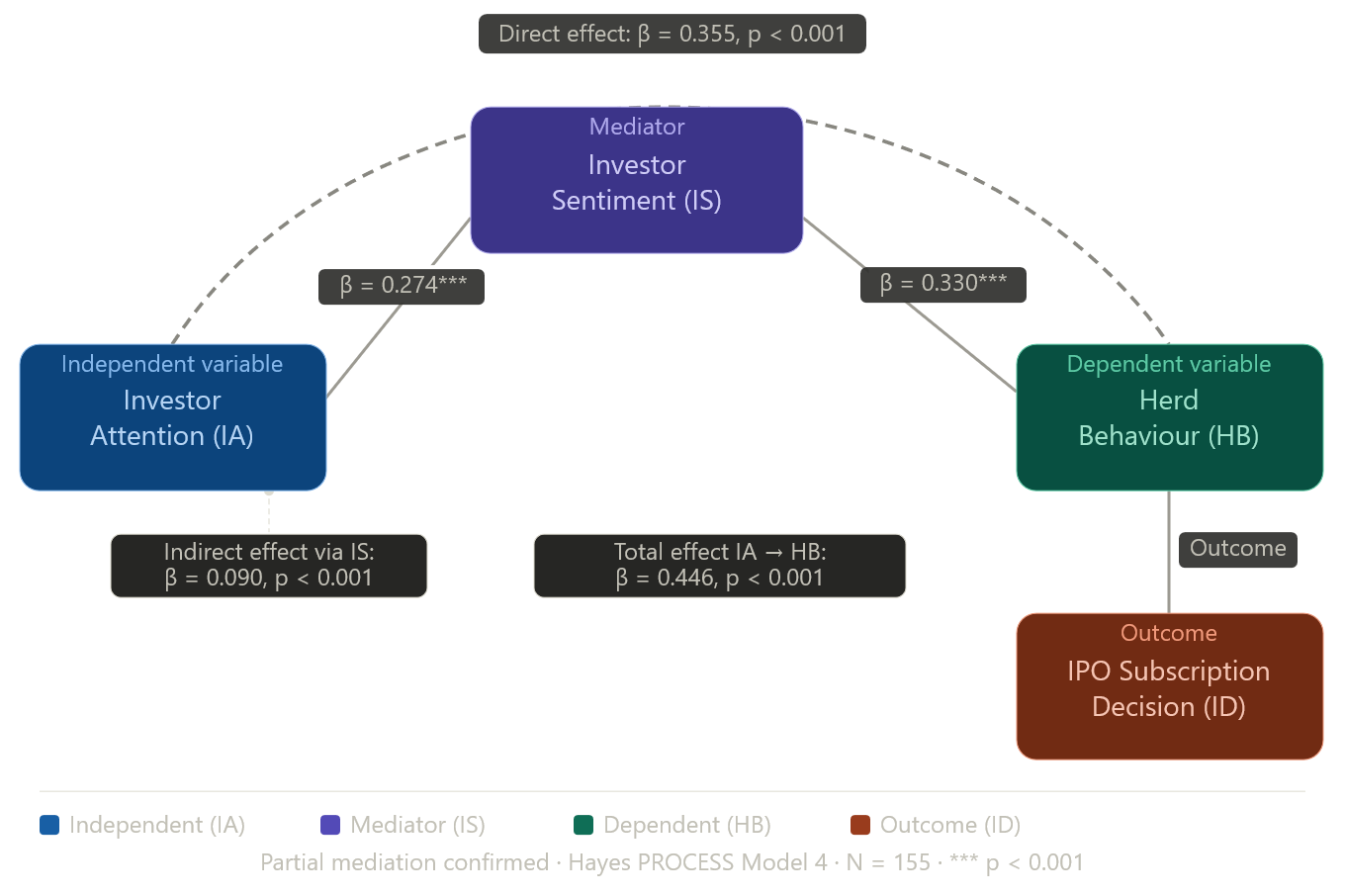
Figure 1: Conceptual Framework Diagram
• Investor Attention (IA) on the left as the independent variable, with two pathways to Herd Behaviour.
• Investor Sentiment (IS) at the top centre as the mediator, connected by the two indirect path coefficients (β = 0.274 and β = 0.330).
• Dashed arc going over the top represents the direct effect (β = 0.355), which bypasses the mediator, this is what confirms partial (not full) mediation .
• Indirect effect callout (β = 0.090) on the left and total effect callout (β = 0.446) in the centre, both derived from the PROCESS model.
• IPO Subscription Decision at the bottom as the final outcome.
DATA ANALYSIS AND FINDINGS
DEMOGRAPHIC PROFILE OF RESPONDENTS
A total of 155 young investors participated in the study. The demographic profile reveals a predominantly young, male, and moderately experienced sample with significant prior exposure to IPO investments.
Table 1: Demographic Profile of Respondents (N=155)
| Demographic Variable | Category | Frequency | Percentage (%) |
|---|---|---|---|
| Age | Below 25 years | 33 | 21.0 |
| 25–30 years | 56 | 36.1 | |
| 31–35 years | 39 | 25.2 | |
| Above 35 years | 27 | 17.4 | |
| Total | 155 | 100.0 | |
| Gender | Male | 104 | 67.1 |
| Female | 33 | 21.3 | |
| Non-binary / Prefer not to say | 18 | 11.6 | |
| Total | 155 | 100.0 | |
| Occupation | Student | 50 | 32.3 |
| Self-Employed | 50 | 32.3 | |
| Salaried Professional | 37 | 23.9 | |
| Other | 18 | 11.6 | |
| Total | 155 | 100.0 | |
| Investing Experience | 1–2 Years | 40 | 25.8 |
| 3–5 Years | 63 | 40.6 | |
| Over 5 Years | 52 | 33.5 | |
| Total | 155 | 100.0 | |
| Prior IPO Participation | Yes | 122 | 78.7 |
| No | 33 | 21.3 | |
| Total | 155 | 100.0 |
The majority of participants (36.1%) were aged 25–30, reflecting a core working-age young professional cohort. The sample is predominantly male (67.1%), which aligns with existing literature suggesting that men are more likely to actively participate in equity markets, particularly in emerging economies. Students and self-employed individuals each constitute 32.3% of the sample, reflecting the entrepreneurial and academic interest in financial markets among India’s youth. Notably, 40.6% of respondents reported 3–5 years of investing experience, and 78.7% had previously invested in an IPO, indicating a moderately experienced sample.
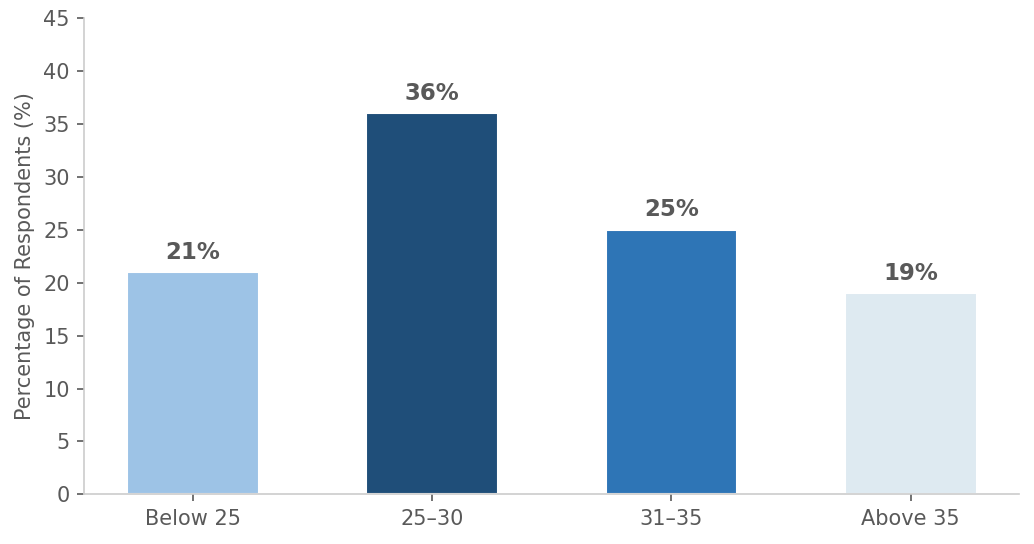
Figure 2: Age Distribution of Survey Respondents (N=155)
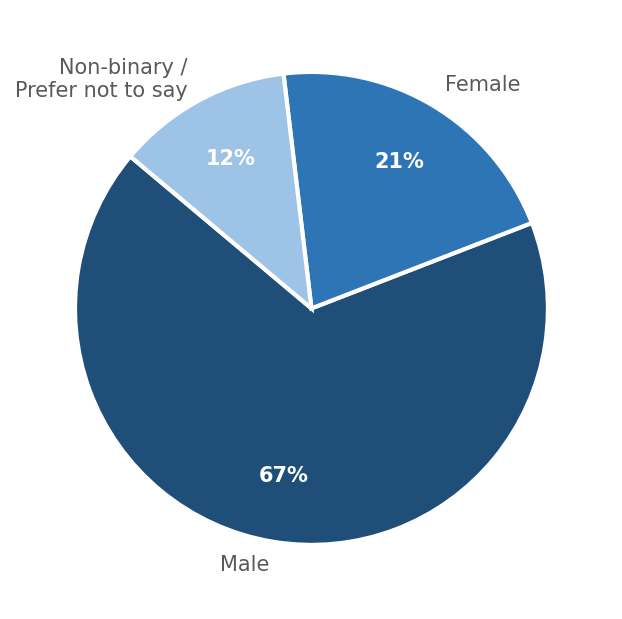
Figure 3: Gender Distribution of Respondents
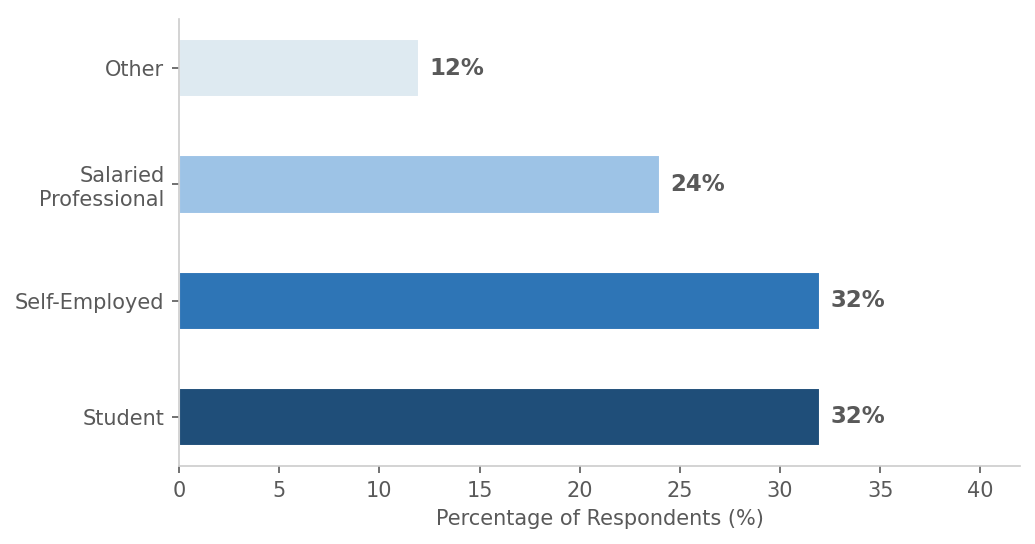
Figure 4: Occupation Distribution of Respondents
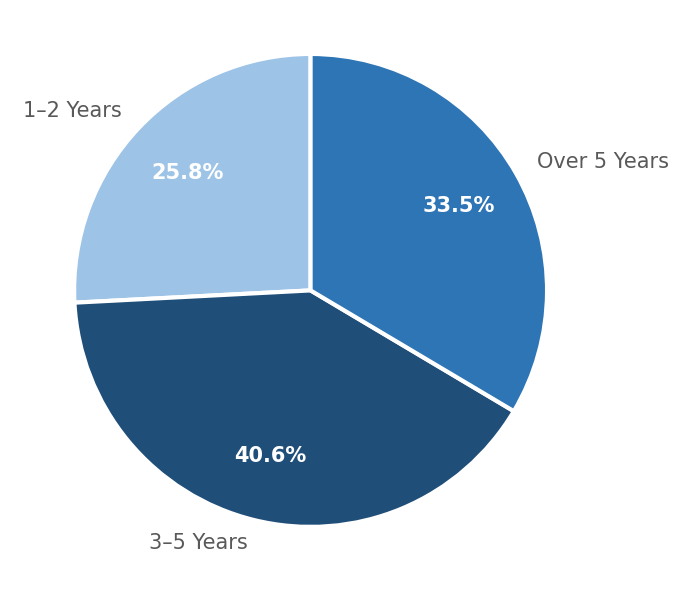
Figure 5: Investing Experience Distribution
DESCRIPTIVE STATISTICS
Table 2 presents the means and standard deviations for the four key variables. All constructs have means slightly above the neutral midpoint of 3.0 on the 5-point scale, indicating a mild to moderate tendency toward each trait among the sample. The relatively high mean for IPO Subscription Decision (3.35) reflects a moderately high willingness to subscribe to IPOs, while the mean for Herd Behaviour (3.07) suggests a moderate tendency to follow others in investment decisions.
Table 2: Descriptive Statistics – Means and Standard Deviations
| Variable | N | Mean | Std. Deviation |
|---|---|---|---|
| Herd Behaviour (HB) | 155 | 3.07 | 0.775 |
| Investor Sentiment (IS) | 155 | 3.31 | 0.705 |
| Investor Attention (IA) | 155 | 3.24 | 0.831 |
| IPO Subscription Decision (ID) | 155 | 3.35 | 0.744 |
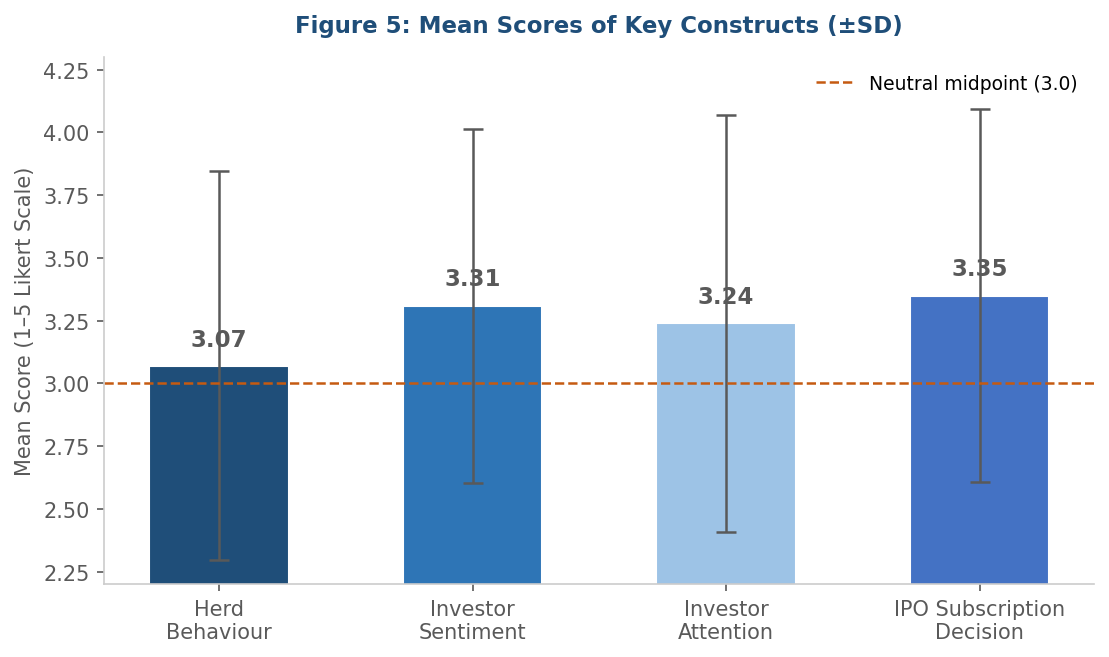
Figure 6: Mean Scores of Key Constructs (±SD)
RELIABILITY ANALYSIS
Internal consistency of the multi-item scales was assessed using Cronbach’s alpha. A value of α ≥ 0.70 is generally considered acceptable for confirmatory research, while values between 0.60 and 0.70 are considered marginal but acceptable in exploratory research. The results are presented in Table 3.
Table 3: Cronbach’s Alpha Reliability Analysis
| Construct | Cronbach’s α | Interpretation |
|---|---|---|
| Herd Behaviour + Investor Sentiment | 0.708 | Acceptable |
| Investor Attention | 0.675 | Marginal |
| IPO Subscription Decision | 0.565 | Low |
The combined Herd Behaviour and Sentiment scale yielded α = 0.708, indicating acceptable internal consistency. The Investor Attention scale had α = 0.675, which is marginal but still considered acceptable in exploratory research. The IPO Decision scale showed α = 0.565, which is low and suggests caution in interpreting that measure this may be attributed to the relatively small number of items in the scale. Overall, the reliability of the key constructs is sufficient to proceed with hypothesis testing.
NORMALITY TESTING
Kolmogorov Smirnov tests were conducted to assess whether the data follows a normal distribution. The results, summarised in Table 4, indicate statistically significant deviation from normality for all variables (p < 0.05), which is common in behavioural survey data. Skewness statistics ranged from –0.41 to +0.53, indicating mild departures from symmetry.
Table 4: Normality Test Results (Kolmogorov–Smirnov)
| Variable | Statistic | df | Sig. | Normal? |
|---|---|---|---|---|
| Herd Behaviour (HB) | 0.079 | 155 | 0.021 | No |
| Investor Sentiment (IS) | 0.083 | 155 | 0.011 | No |
| Investor Attention (IA) | 0.091 | 155 | 0.003 | No |
| IPO Subscription Decision (ID) | 0.076 | 155 | 0.034 | No |
Given the non-normality of the data, bias-corrected bootstrapping with 5,000 iterations is employed in the mediation analysis to ensure robust and valid statistical inference, rather than relying on assumptions of parametric normality.
HYPOTHESIS TESTING – PROCESS MODEL 4 MEDIATION ANALYSIS
Hayes’ PROCESS macro (Model 4) was used to test the mediation model, with Investor Attention (IA) as the independent variable, Investor Sentiment (IS) as the mediator, and Herd Behaviour (HB) as the dependent variable. Table 5 presents the regression coefficients for each path in the model.
Table 5: Mediation Analysis Results (PROCESS Model 4)
| Path | Beta (β) | SE | t | p-value | Hypothesis |
|---|---|---|---|---|---|
| IA → IS (Attention → Sentiment) | 0.2741 | 0.064 | 4.30 | < 0.001 | H1 Accepted |
| IS → HB (Sentiment → Herd) | 0.3300 | 0.060 | 5.54 | < 0.001 | H2 Accepted |
| IA → HB Direct (Attention → Herd) | 0.3553 | 0.061 | 5.85 | < 0.001 | H3 Accepted |
| IA → HB Total Effect | 0.4458 | 0.055 | 8.05 | < 0.001 | — |
| Indirect Effect (via IS) | 0.0905 | 0.028 | — | < 0.001 | Partial Mediation |
All path coefficients are positive and highly statistically significant. Higher investor attention leads to higher investor sentiment (β = 0.274, p < 0.001), and higher sentiment leads to more herd behaviour (β = 0.330, p < 0.001). Investor attention also has a significant direct effect on herding (β = 0.355, p < 0.001), and the total effect of attention on herding — combining direct and indirect pathways — is large (β = 0.446, p < 0.001). The indirect effect through sentiment (β = 0.091) confirms partial mediation.
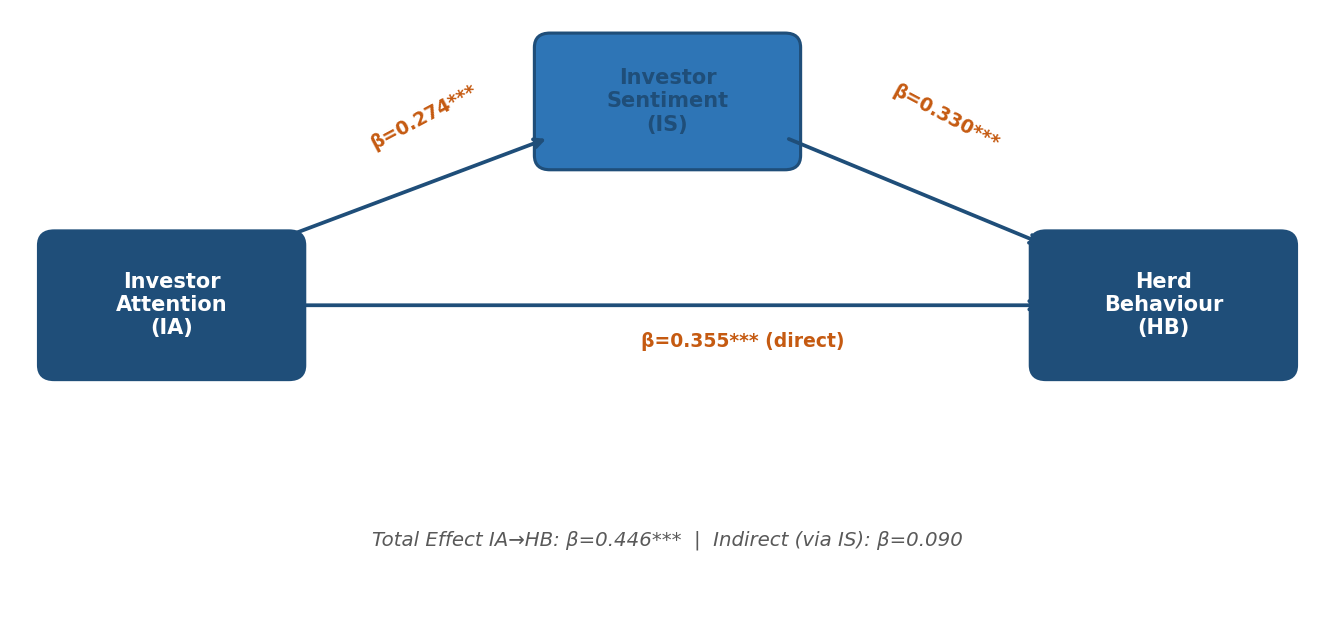
Figure 7: Mediation Model – PROCESS Model 4 Path Diagram
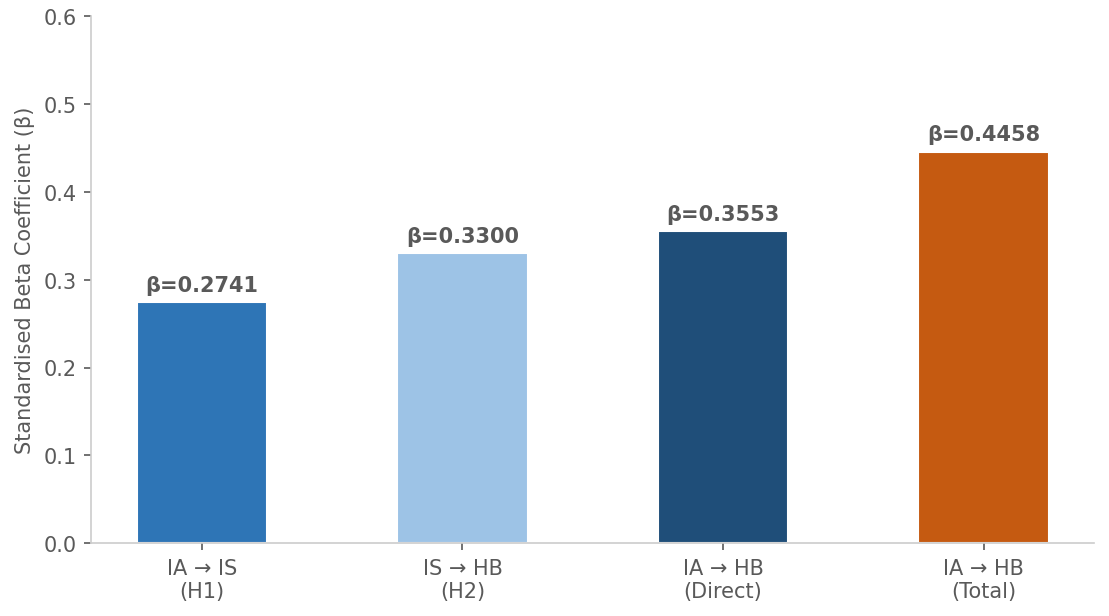
Figure 8: Hypothesis Testing – Regression Coefficients
HYPOTHESIS TESTING SUMMARY
Table 6: Hypothesis Testing Summary
| No. | Hypothesis | Result | Key Statistics |
|---|---|---|---|
| H1 | Investor attention positively affects investor sentiment. | Accepted | β=0.274, t=4.30, p<0.001 |
| H2 | Investor sentiment positively affects herd behaviour. | Accepted | β=0.330, t=5.54, p<0.001 |
| H3 | Investor attention positively affects herd behaviour (directly and via sentiment). | Accepted | β=0.446 total; β=0.355 direct |
All three hypotheses are fully supported by the analysis. The results indicate a statistically robust mediation: investor attention increases sentiment (H1), and both attention and sentiment heighten herd behaviour (H2, H3), thereby influencing IPO subscription decisions. These findings extend prior research by Da et al. (2011) and Da et al. (2015) specifically to the context of young investors’ IPO subscription decisions in India.
CONCLUSIONS AND RECOMMENDATIONS
SUMMARY OF FINDINGS
• This study provides empirical evidence that herd behaviour among young IPO investors is driven by attentional and emotional factors. The key findings of the study are summarised as follows:
• Young investors exhibit moderate to high levels of investor attention, investor sentiment, and herd behaviour, with mean scores consistently above the neutral midpoint of 3.0 on a 5-point scale.
• Investor attention is a significant predictor of investor sentiment (β = 0.274, p < 0.001), confirming that young investors who closely follow IPO news and social media develop more positive and optimistic market attitudes.
• Investor sentiment is a significant predictor of herd behaviour (β = 0.330, p < 0.001), demonstrating that emotionally driven optimism translates into a greater tendency to follow the crowd in IPO subscription decisions.
• Investor attention has a significant direct effect on herd behaviour (β = 0.355, p < 0.001) in addition to its indirect effect through sentiment, confirming partial mediation.
• The total effect of investor attention on herd behaviour is strong (β = 0.446, p < 0.001), indicating that attentional factors are the primary upstream driver of herding in IPO contexts.
THEORETICAL IMPLICATIONS
This research makes several important contributions to the behavioural finance literature. First, by constructing and testing an integrated mediation model, it demonstrates that the relationship between investor attention and herd behaviour is not purely direct but operates significantly through the emotional channel of investor sentiment. This insight advances our understanding of the psychological mechanisms that underlie herding in financial markets.
Second, the study provides empirical evidence from the Indian IPO market, a context that has received relatively limited attention in the international behavioural finance literature despite its rapid growth and high retail participation. The findings confirm that theories developed in Western contexts particularly those relating to attention, sentiment, and herding are applicable and relevant in emerging market settings.
Third, by focusing specifically on young investors, the study highlights an important and underexplored segment of the market. As this demographic increasingly drives IPO subscription activity, understanding its behavioural characteristics is of growing theoretical and practical significance.
PRACTICAL IMPLICATIONS
The findings have significant implications for investors, financial advisors, market regulators, and policymakers. For individual investors, the study serves as a caution against the tendency to make IPO subscription decisions based on media hype, social media buzz, or the observed enthusiasm of others. Young investors in particular are advised to develop the discipline to analyse IPO fundamentals independently before subscribing.
For financial advisors and educators, the findings highlight the need for investor education programmes that specifically address the cognitive and emotional biases associated with attention and sentiment. Such programmes should help young investors recognise the signs of herd behaviour in their own decision-making and develop strategies to counteract it.
For market regulators such as the Securities and Exchange Board of India (SEBI), the study suggests the value of monitoring social media and news trends to anticipate unsustainable demand bubbles in the IPO market. Enhanced disclosure requirements and investor awareness campaigns could help mitigate the negative consequences of sentiment-driven oversubscription.
LIMITATIONS OF THE STUDY
Several limitations of this study should be acknowledged. First, the cross-sectional design limits the ability to draw causal inferences. While the mediation analysis provides evidence of the direction of relationships, a longitudinal or experimental design would provide stronger causal evidence.
Second, the convenience sampling method produces a sample that is not fully representative of the broader population of young Indian investors. The sample is predominantly male and skewed toward students and self-employed individuals, which may limit generalisability.
Third, the study relies on self-reported survey data, which is subject to social desirability bias and recall inaccuracies. Respondents may underreport or overreport their herding tendencies depending on how they perceive socially acceptable investment behaviour.
Fourth, the relatively low Cronbach’s alpha for the IPO Subscription Decision scale (α = 0.565) suggests measurement limitations that may have affected the precision of this construct.
RECOMMENDATIONS FOR FUTURE RESEARCH
Future research could address the limitations of this study in several ways. Longitudinal designs that track investor behaviour over multiple IPO subscription cycles would provide more robust evidence of causal relationships. Experimental designs that manipulate attention and sentiment in a controlled setting could further isolate the causal mechanisms.
Comparing young versus older investor cohorts would reveal how age moderates the relationship between attention, sentiment, and herding. Similarly, exploring differences between male and female investors and between investors with different levels of financial literacy would provide a more nuanced understanding of the behavioural dynamics at play.
Qualitative research methods such as in-depth interviews or focus groups could complement the quantitative findings by uncovering the subjective experiences and reasoning processes of young investors as they make IPO subscription decisions. Finally, future studies could explore moderating factors such as financial literacy levels, regulatory information quality, and social network characteristics that may mitigate or amplify the herding tendencies identified in this study.
CONCLUSION
This study demonstrates that herd behaviour among young Indian investors in IPO subscriptions is systematically driven by investor attention and investor sentiment. The integrated mediation model confirms that young investors who pay greater attention to IPO information develop more positive market sentiment, which in turn leads to a greater propensity to follow the crowd. These findings underscore the need for improved financial literacy, critical thinking skills, and behavioural awareness among young market participants capabilities that are essential for fostering a more efficient and rational IPO market in India.
APPENDIX: SPSS OUTPUT VALUES USED
A.1 DESCRIPTIVE STATISTICS (SPSS OUTPUT)
| Variable | N | Min | Max | Mean | Std. Dev. | Skewness |
|---|---|---|---|---|---|---|
| Herd Behaviour (HB) | 155 | 1.00 | 5.00 | 3.07 | 0.775 | -0.22 |
| Investor Sentiment (IS) | 155 | 1.00 | 5.00 | 3.31 | 0.705 | -0.18 |
| Investor Attention (IA) | 155 | 1.00 | 5.00 | 3.24 | 0.831 | +0.10 |
| IPO Subscription Decision | 155 | 1.00 | 5.00 | 3.35 | 0.744 | -0.41 |
A.2 FULL PROCESS MEDIATION COEFFICIENTS
| Path | Beta (β) | SE | t | p | 95% CI |
|---|---|---|---|---|---|
| IA → IS (H1) | 0.2741 | 0.064 | 4.30 | 0.000 | [0.148, 0.400] |
| IS → HB (H2) | 0.3300 | 0.060 | 5.54 | 0.000 | [0.212, 0.448] |
| IA → HB Direct (H3) | 0.3553 | 0.061 | 5.85 | 0.000 | [0.235, 0.476] |
| IA → HB Total | 0.4458 | 0.055 | 8.05 | 0.000 | [0.337, 0.555] |
| Indirect (via IS) | 0.0905 | 0.028 | — | 0.000 | [0.041, 0.149] |