
INTRODUCTION
Light pollution has emerged as a significant environmental issue primarily due to rapid urban growth, industrial expansion, and increasing dependence on artificial lighting. It refers to the excessive, misdirected, or inappropriate use of artificial light, especially during nighttime, which disrupts the natural darkness of the environment. Unlike other forms of pollution, light pollution is often overlooked despite its far-reaching consequences on ecosystems, human health, and energy consumption.1 Artificial lighting, when used without proper regulation, interferes with natural biological processes. It alters wildlife behaviour, disturbs ecological balance, and contributes indirectly to climate change through increased energy consumption and carbon emissions. Light pollution is generally categorized into four major forms: glare (excessive brightness causing visual discomfort), skyglow (brightening of the night sky over inhabited areas), clutter (overlapping and excessive groupings of lights), and light trespass (unwanted light entering private or natural spaces).2
The impact of such lighting extends beyond environmental degradation. It disrupts circadian rhythms in humans, leading to sleep disorders, hormonal imbalance, increased stress levels, and various health complications. Similarly, in the natural world, it affects migration patterns, feeding behaviour, reproduction cycles, and predator-prey interactions. For instance, pollination processes essential for plant reproduction are negatively influenced due to altered nocturnal activity of insects. Amphibians and other species also experience disturbances in breeding and foraging due to artificial illumination.3 Recent global studies indicate a sharp decline in the visibility of stars due to increasing artificial brightness. Over the past decade, there has been a consistent reduction in the number of stars visible to the naked eye, demonstrating the severity of skyglow. A large portion of the global population now lives under light-polluted skies, where even the Milky Way is no longer visible. Additionally, excessive lighting results in substantial economic losses due to wasted energy and contributes significantly to greenhouse gas emissions.4
In the Indian context, light pollution has been steadily increasing, particularly in urban and industrial regions. Metropolitan cities such as Delhi, Bengaluru, and Mumbai have witnessed a noticeable rise in nighttime brightness. Satellite data and environmental studies reveal that several Indian states have experienced high levels of light intensity over the years. This trend highlights the urgent need for regulatory intervention and sustainable lighting practices.
LIGHT POLLUTION AND ITS MULTIDIMENSIONAL EFFECTS
Light pollution, defined as the excessive, misdirected, or intrusive use of artificial light, has emerged as a significant environmental concern with far-reaching and multidimensional impacts. It disrupts the natural cycle of light and darkness, which is essential for maintaining ecological balance and biological rhythms across species. Although often overlooked in comparison to air, water, or noise pollution, its consequences are equally serious and increasingly visible in both developed and developing regions.5 One of the most prominent dimensions of light pollution is its ecological impact. Many species, particularly nocturnal and migratory animals, depend on natural darkness for navigation, reproduction, feeding, and survival. Artificial lighting interferes with these natural processes, leading to disorientation, altered behavioural patterns, and in many cases, mortality.6 For instance, migratory birds are often attracted to or confused by bright city lights, resulting in collisions with buildings and other structures. Similarly, marine species such as sea turtles rely on natural light cues for orientation, and artificial lighting can misguide hatchlings away from the ocean.7 Additionally, light pollution affects plant life by disrupting processes such as pollination and photosynthesis, thereby disturbing the broader ecosystem. The loss of natural nightscapes due to skyglow further contributes to ecological imbalance, affecting both terrestrial and aquatic environments.8
Another critical dimension is its impact on human health. Exposure to artificial light at night (ALAN), particularly blue-rich light from LEDs and electronic devices, interferes with the human circadian rhythm. This disruption affects sleep patterns and can lead to various health issues, including insomnia, stress, hormonal imbalances, and an increased risk of chronic conditions such as cardiovascular diseases. The suppression of melatonin, a hormone essential for regulating sleep, is one of the key biological effects of prolonged exposure to artificial light.9 Thus, light pollution not only affects environmental health but also poses a direct threat to human well-being. From an environmental and economic perspective, light pollution contributes to energy inefficiency and resource wastage. Excessive and poorly designed lighting systems lead to unnecessary electricity consumption, much of which is generated from fossil fuels.10 This, in turn, results in increased greenhouse gas emissions, contributing indirectly to climate change and air pollution. The widespread use of high-intensity lighting in urban areas, commercial establishments, and infrastructure projects often exceeds actual requirements, reflecting a lack of sustainable planning and regulation.11
Light pollution also has significant implications for astronomy and cultural heritage. The increasing brightness of the night sky due to artificial lighting obscures the visibility of stars, planets, and other celestial bodies. This not only hampers scientific research and astronomical observations but also deprives society of the cultural and aesthetic value associated with the natural night sky. For centuries, the night sky has been an integral part of human civilisation, influencing art, science, and philosophy; its gradual disappearance represents a loss of both scientific opportunity and cultural connection.12
In the Indian context, rapid urbanisation, infrastructural expansion, and increased reliance on artificial lighting have intensified the problem. Metropolitan regions experience high levels of illumination, often without adequate regulation or environmental consideration. Despite its growing impact, light pollution remains largely unaddressed within the existing legal framework, highlighting a significant gap in environmental governance.13
CAUSES AND SOURCES OF LIGHT POLLUTION
Light pollution is primarily the result of excessive, misdirected, and unregulated use of artificial lighting, driven largely by rapid urbanisation, industrial growth, and technological advancement. One of the most significant contributors is the expansion of urban infrastructure, where streetlights, highways, flyovers, and public spaces are illuminated without adequate planning or shielding mechanisms. In many cases, lighting fixtures are designed in a manner that allows light to scatter upward and outward rather than being focused on the intended area, thereby contributing to skyglow and unnecessary illumination of the surrounding environment. This problem is further aggravated in metropolitan areas where continuous development and high population density demand extensive and prolonged use of artificial lighting.14
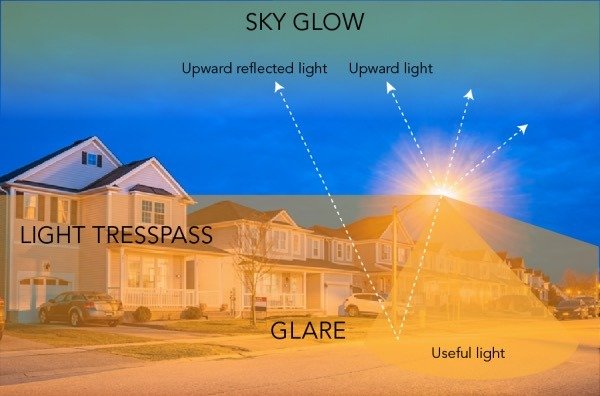
Commercial and economic activities constitute another major source of light pollution.15 Shopping malls, office complexes, hotels, restaurants, and advertising billboards rely heavily on high-intensity lighting to attract attention and ensure visibility, often operating throughout the night without restrictions.16 The growing culture of consumerism and competition among businesses has led to the excessive use of decorative and display lighting, which significantly increases overall light emissions. Similarly, residential areas contribute through the widespread use of outdoor lighting, security lights, garden illumination, and festive decorations, many of which remain switched on unnecessarily, reflecting a lack of awareness and regulation. The increasing adoption of LED technology, while promoted as an energy-efficient alternative, has paradoxically intensified light pollution due to its affordability, higher brightness, and widespread availability. Instead of reducing overall light usage, LEDs have encouraged over-illumination, often being installed in greater numbers and with higher intensity than required.17 The absence of proper guidelines regarding brightness levels, colour temperature, and directional focus further exacerbates the issue, leading to increased glare and disruption of natural darkness.
In addition, transportation systems serve as a continuous and significant source of artificial lighting. Vehicle headlights, street traffic signals, railway stations, airports, and port facilities contribute to persistent illumination, particularly in urban and industrial regions.18 These sources not only increase brightness levels but also introduce dynamic and scattered light, which can be particularly disruptive to both human vision and wildlife behaviour. Periodic sources such as festivals, public events, and cultural celebrations also play a role, as they involve extensive decorative lighting and high-powered illumination, temporarily but substantially increasing light pollution levels.19
Industrial operations and construction activities further intensify the problem through the use of powerful floodlights for safety, security, and productivity during night hours. These lights are often installed without proper shielding or direction, resulting in significant light trespass into nearby residential areas and natural habitats. Overall, the persistence and growth of these sources are largely due to the absence of specific legal regulations, inadequate urban planning, and limited public awareness regarding sustainable lighting practices, making light pollution an increasingly complex environmental challenge.
LEGAL FRAMEWORK ON LIGHT POLLUTION: A COMPARATIVE ANALYSIS
Various countries across the world have recognized the growing threat of light pollution and have taken legislative measures to address it. European nations have been at the forefront in developing comprehensive frameworks to regulate artificial lighting. Countries such as France, Italy, Spain, and Slovenia have implemented both regional and national laws to control excessive illumination and preserve natural darkness.20 One of the earliest legislative efforts in Europe was undertaken by the Czech Republic, which introduced a national law specifically targeting light pollution. Slovenia followed with regulatory measures focusing on limiting permissible lighting levels. The United Kingdom also addressed the issue by categorizing light pollution as a statutory nuisance under environmental laws. Over time, several European jurisdictions have incorporated strict standards related to brightness levels, energy efficiency, and environmental impact of lighting systems.21
The European Union has further strengthened its approach by introducing policies such as the Green Public Procurement criteria for lighting systems. These guidelines promote sustainable lighting practices by emphasizing reduced energy consumption, minimal environmental disturbance, and controlled emission of artificial light. Principles such as maintaining lighting levels “as low as reasonably achievable” have been adopted to balance human needs with environmental protection. In the United States, multiple states have enacted laws aimed at preserving dark skies and minimizing unnecessary lighting.22 These laws typically focus on the use of shielded lighting fixtures, reduction of glare, and limitation on operational hours of outdoor lighting. Some states have also integrated these principles into urban planning and zoning regulations. Specific regions, particularly those with astronomical observatories, have adopted stricter standards to ensure minimal interference with scientific observations.
Asian countries have also started addressing light pollution through legal and policy frameworks. South Korea, for instance, enacted a dedicated law to regulate artificial lighting and protect public health and the environment. This legislation outlines responsibilities of both the government and citizens, establishes permissible lighting limits, and imposes penalties for violations. Similarly, China has introduced city-level regulations, particularly in urban centres like Shanghai, to control excessive lighting and ensure that residential areas are not adversely affected. In contrast, India currently lacks a specific legal framework directly addressing light pollution. However, certain constitutional provisions and environmental principles provide indirect support for its regulation. The right to a clean and healthy environment has been recognized as part of the fundamental right to life under Article 21 of the Constitution. Additionally, Directive Principles and Fundamental Duties emphasize environmental protection and ecological balance. Judicial interpretations have also contributed indirectly to addressing issues related to light and noise disturbances. The judiciary has acknowledged the importance of peaceful living conditions, including the right to sleep and protection from excessive disturbances. Although these developments do not specifically target light pollution, they lay the foundation for future regulatory mechanisms in India.23
APPLYING THE (PRECAUTIONARY) APPROACH TO ADDRESS LIGHT POLLUTION
The precautionary principle, often described as a preventive approach in environmental governance, is a foundational concept that emphasizes early action to avoid potential harm to the environment and human health. Instead of waiting for complete scientific certainty, this principle supports intervention at an initial stage where there is a reasonable possibility of risk. In modern environmental jurisprudence, it has evolved into a guiding norm, particularly in situations involving emerging or less visible forms of pollution such as light pollution. At its core, the precautionary principle shifts the traditional burden of proof. Rather than requiring affected communities or regulators to demonstrate harm, it places responsibility on those engaging in potentially harmful activities to prove that their actions are environmentally safe. This shift is particularly relevant in the context of artificial lighting, where the long-term ecological and health impacts are still being studied but early evidence indicates serious concerns.24
The principle operates through several key elements. Firstly, it calls for anticipatory action, meaning that preventive measures must be taken even in the absence of conclusive scientific evidence. Secondly, it promotes the exploration of safer alternatives that may achieve the same objective with lesser environmental impact.25 Thirdly, it emphasizes proportionality, ensuring that regulatory responses are appropriate to the level of risk involved. Lastly, it encourages transparency and public participation, allowing communities to be actively involved in environmental decision-making processes. When applied to light pollution, the precautionary approach supports the adoption of responsible lighting practices aimed at minimizing unnecessary illumination.26 This includes limiting the use of artificial light to situations where it is genuinely required, reducing the intensity of lighting to the minimum effective level, and ensuring that lighting is used only for the duration necessary. The idea is not to eliminate artificial lighting altogether but to optimize its use in a manner that balances human needs with ecological preservation.27
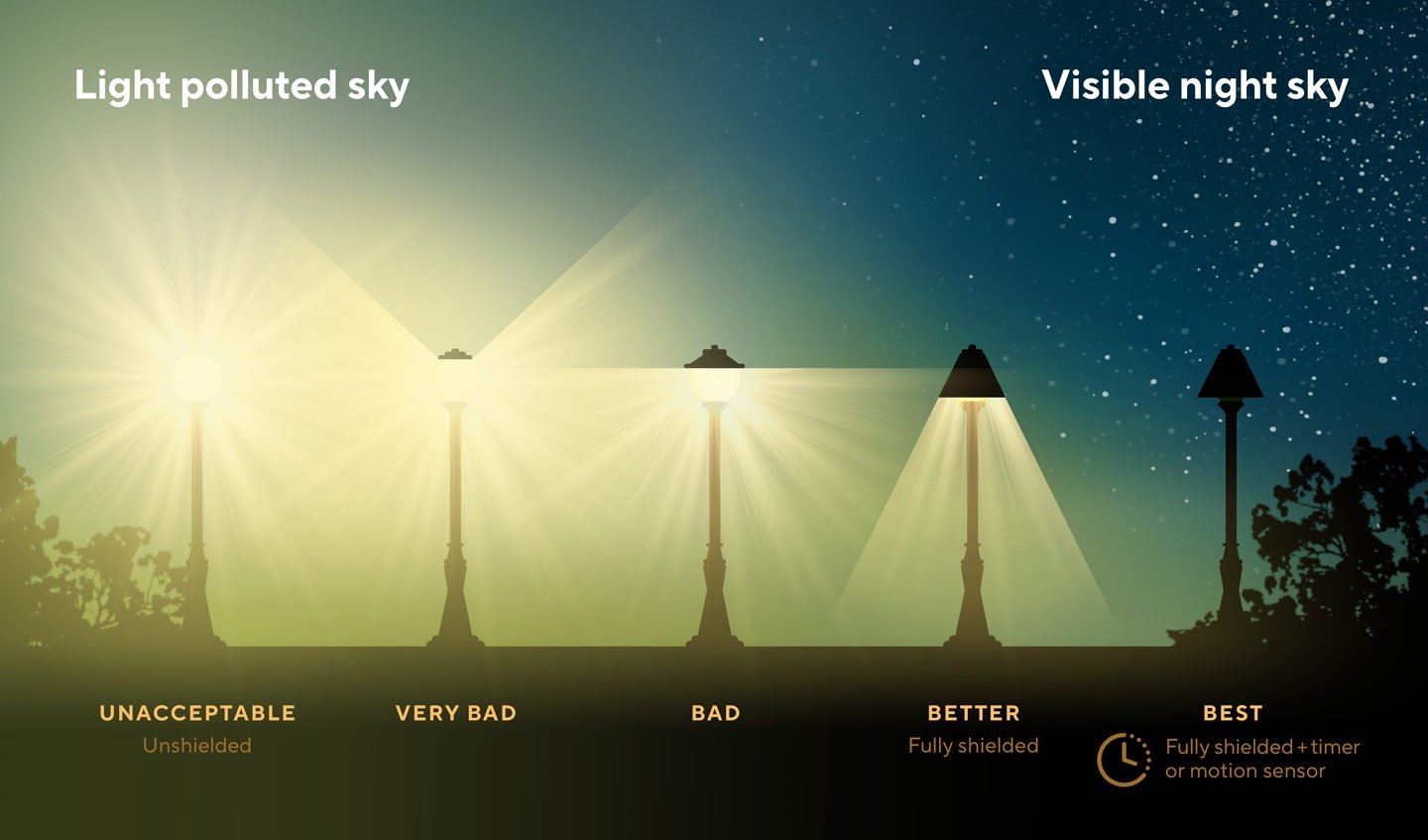
International initiatives and environmental organizations have incorporated this approach into practical frameworks. The concept of “appropriate lighting” or “right lighting” has gained recognition, which focuses on using light in the right place, at the right time, and in the right amount. This ensures that visibility and safety are maintained while reducing adverse environmental effects. For example, the use of shielded lighting fixtures that direct light downward helps prevent unnecessary dispersion into the sky and surrounding areas. Another important aspect involves controlling the spectral composition of light. Research suggests that shorter wavelengths, particularly blue light, have a more disruptive impact on both human circadian rhythms and wildlife behaviour. Therefore, adopting warmer lighting options with lower colour temperatures is increasingly recommended as a precautionary measure.28
From a policy perspective, the precautionary principle also supports the development of regulatory standards and guidelines even in the absence of comprehensive national laws. Governments can introduce building codes, urban planning norms, and environmental impact assessment requirements that incorporate lighting considerations. Such measures can significantly reduce the cumulative impact of light pollution over time. Public awareness and behavioural change are equally important under this approach. Educating individuals, institutions, and industries about the consequences of excessive lighting can lead to more responsible usage patterns. Simple actions, such as switching off unnecessary lights, using motion sensors, and adopting energy-efficient technologies, can collectively make a substantial difference. In essence, the precautionary principle provides a proactive and flexible framework for addressing light pollution. It recognizes that waiting for absolute scientific certainty may result in irreversible environmental damage. Therefore, it advocates for timely, informed, and cautious decision-making to safeguard ecological balance, protect human health, and ensure sustainable development.29
EVOLVING JUDICIAL APPROACH TO LIGHT POLLUTION AND ENVIRONMENTAL PROTECTION
1. The Rohit Joshi v. BMC & Ors. case before the Bombay High Court marked a significant step in judicial recognition of light pollution as an environmental concern. The Public Interest Litigation (PIL) brought attention to the excessive use of decorative lighting on trees during festivals in Mumbai, which was found to adversely affect local biodiversity. The Court acknowledged that such practices not only disturb ecological balance but also contribute to unnecessary energy consumption and, indirectly, to greenhouse gas emissions. Consequently, directions were issued to municipal authorities, including BMC, TMC, MBMC, and the State Government, to remove such lighting and adopt preventive measures against light pollution.
2. In a Suo Motu proceeding initiated by the National Green Tribunal concerning flamingo deaths in Navi Mumbai (December 23, 2024), the Tribunal highlighted the direct ecological consequences of artificial lighting. The case arose from the death of several flamingos near DPS Lake, where newly installed LED lights reportedly disoriented the birds, impairing their vision and leading to fatal collisions. This incident underscored the vulnerability of wildlife to artificial illumination and emphasized the broader environmental implications, including energy overuse and its indirect link to climate change. The Tribunal’s intervention reflects the growing judicial sensitivity towards emerging forms of pollution affecting biodiversity.
3. In Anil Mehta vs. State of Rajasthan & Ors., the National Green Tribunal (Central Zone Bench) explicitly recognized light pollution as an emerging environmental threat requiring urgent attention.30 The Tribunal observed that excessive artificial lighting disrupts ecological systems and poses risks not only to wildlife but also to human health. It stressed the need for scientific research and policy formulation in this domain and directed the Ministry of Environment, Forest and Climate Change (MoEF&CC) to undertake detailed studies and develop appropriate regulatory guidelines. These observations were subsequently reinforced in Panchtatva Foundation vs. MoEF&CC & Ors., thereby strengthening the judicial stance that light pollution constitutes a significant aspect of environmental degradation with implications for climate change and biodiversity conservation.31
CONCLUSION AND FORWARD-LOOKING RECOMMENDATIONS
Light pollution, though often underestimated, represents a growing environmental concern that reflects the unintended consequences of rapid urbanisation, technological advancement, and unsustainable development practices. Unlike conventional forms of pollution, it is intangible and less visible in policy discourse, yet its impacts are profound—affecting ecological systems, human health, energy efficiency, and even cultural and scientific engagement with the natural night sky. The increasing intrusion of artificial light into natural darkness has disrupted biological rhythms, endangered nocturnal biodiversity, and contributed indirectly to climate change through excessive energy consumption. The comparative legal analysis reveals that while several jurisdictions across the globe have proactively addressed this issue through dedicated legislation and policy frameworks, India still lacks a comprehensive and direct regulatory mechanism. Although constitutional provisions and judicial interpretations provide an indirect foundation for environmental protection, the absence of targeted laws on light pollution highlights a significant regulatory gap. In this context, the application of the precautionary principle becomes essential, urging policymakers to adopt preventive measures even in the face of evolving scientific understanding.32
Moving forward, a multi-dimensional and technology-driven approach is necessary to effectively combat light pollution. One of the most promising avenues lies in the integration of Artificial Intelligence (AI) and smart technologies into urban lighting systems. AI-enabled smart lighting can dynamically adjust brightness levels based on real-time conditions such as human presence, traffic density, and natural light availability. For instance, adaptive street lighting systems can reduce illumination during low-activity hours, thereby conserving energy and minimizing unnecessary light dispersion. Additionally, the use of Internet of Things (IoT)-based lighting infrastructure can enable centralized monitoring and control of urban lighting networks. Such systems can detect inefficiencies, automate switching mechanisms, and ensure compliance with environmental standards. Satellite data and geospatial technologies can further assist in mapping light pollution hotspots, enabling policymakers to design targeted interventions and monitor progress over time.
From a regulatory perspective, India should consider enacting a dedicated legal framework addressing light pollution, drawing inspiration from international best practices. This may include the establishment of permissible lighting standards, mandatory use of shielded fixtures, restrictions on high-intensity and blue-rich lighting, and zoning regulations for sensitive ecological and residential areas. Incorporating light pollution assessments into Environmental Impact Assessment (EIA) processes would also strengthen preventive governance. Urban planning must also play a critical role. The concept of “dark sky reserves” or protected areas with minimal artificial lighting should be promoted, especially in ecologically sensitive zones and regions of astronomical importance. Such initiatives not only preserve biodiversity but also promote eco-tourism and scientific research.33
Equally important is the role of public awareness and behavioural change. Educational campaigns, community participation, and institutional responsibility can significantly contribute to reducing unnecessary lighting practices. Encouraging the adoption of energy-efficient lighting technologies, such as LED systems with appropriate colour temperatures, can further align environmental sustainability with economic efficiency. In conclusion, addressing light pollution requires a shift from reactive to proactive governance, supported by legal reforms, technological innovation, and societal awareness. The integration of AI and smart systems offers a transformative opportunity to reconcile development with environmental preservation. By adopting a holistic and forward-looking approach, it is possible to restore the balance between artificial illumination and natural darkness, thereby ensuring a sustainable and healthier future for both humanity and the planet.
*****
Footnotes
1. Bob Mizon, Light pollution: Responses and remedies, (Springer London Ltd, Germany, 2001).
2. Ibid.
3. Ron Chepesiuk, “Missing the Dark: Health Effects of Light Pollution” 116 Environmental Health Perspectives (2009).
4. Supra note 2.
5. Komal Kaushik, Soumya Nair and Arif Ahamad, “Studying Light Pollution as an Emerging Environmental Concern in India” Journal of Urban Management (n.d.), available at: https://www.elsevier.com/locate/jum (last visited on June 21, 2025).
6. Ibid.
7. Zoe Truscott, David T. Booth and Colin J. Limpus, “The Effect of On-Shore Light Pollution on Sea-Turtle Hatchlings Commencing Their Off-Shore Swim” 44(2) Wildlife Research 127–134 (2017).
8. Ibid.
9. American Medical Association, Council on Science and Public Health, Report on Light Pollution: Adverse Health Effects of Night-time Lighting (2012).
10. Najmaldin Ezaldin Hassan, “Light Pollution and Its Effects on Human Health and the Environment: A Review” 23(10) Asian Journal of Environment and Ecology 96–108 ( 2024).
11. Ibid.
12. Light Pollution wastes Energy and money and damages the climate, International Dark Sky Association, available at: https://darksky.org/resources/what-is-light-pollution/effects/energy-climate/ (last visited on 3rd July, 2025)
13. Ibid.
14. Rasna Rajkhowa, “Light Pollution and Impact of Light Pollution” 3 International Journal of Science and Research (2014).
15. Ibid.
16. Komal Kaushik, Soumya Nair et. al., “Studying Light Pollution as an Emerging Environmental Concern in India” 11 Journal of Urban Management (2022).
17. Ibid.
18. Supra note 15.
19. Héctor Linares Arroyo, Angela Abascal, et. al, “Monitoring, Trends and Impacts of Light Pollution” 5 Nature Reviews Earth & Environment (2024).
20. Article 3, of the France’s Order (Arrêté) of 27 December 2018 (NOR: TREP1831126A) on the prevention, reduction, and limitation of light pollution: Artificial light emissions from outdoor lighting installations and interior lighting emitted outside shall be designed to prevent, limit, and reduce light pollution, particularly excessive disturbance to people, fauna, flora, or ecosystems, energy waste, or obstruction of night sky observation. American Medical Association, Council on Science and Public Health, Report on Light Pollution: Adverse Health Effects of Night-time Lighting (2012).)
21. Johan Eklof, The Darkness Manifesto: How Light Pollution Threatens the Ancient Rhythms of Life, (The Bodley Head UK and Scribner U.S Publishers, Sweden, 2020)
22. Ahiri, Arista, Arup Chakraborty, et.al., “Effect of Light Pollution on Self-Reported Sleep Quality and its Components: Comparative Assessment among Healthy Adult Populations in a Rural and an Urban Area of West Bengal, India” 64(3) Indian Journal of Public Health 229-235 (2020).; Ron Chepesiuk, “Missing the Dark: Health Effects of Light Pollution” 117(1) Environmental Health Perspectives (2009). ; Giulia Menculini, Federica Cirimbilli, et.al., “Insights into the Effect of Light Pollution on Mental Health: Focus on Affective Disorders, A Narrative Review” 14(8) Brain Sciences 802 (2024), available at: https://pmc.ncbi.nlm.nih.gov/articles/PMC11352354/ ; Tina Bonde Sorensen, Robin Wilson, et.al., “Is Night-Time Light Intensity Associated with Cardiovascular Disease Risk Factors among Adults in Early-Stage Urbanisation in South India? A Cross-Sectional Study of the Andhra Pradesh Children and Parents Study” 10(11) (2020), available at: https://pmc.ncbi.nlm.nih.gov/articles/PMC11352354/ (last visited on 3rd July, 2025)
23. Supra note 23.
24. Le-Bing Wang & Hong-Xing Zou et al., “Reducing Artificial Light at Night Exposure in the Urban Environment Could Decrease Light Pollution-Related Hypertension in Children” 48 Hypertension Research (2025).
25. Ibid.
26. Sahana Ghosh, Light Pollution on the rise in India: Study, Mongabay India, available at: https://india.mongabay.com/2019/01/light-pollution-on-the-rise-in-india-study/ (last visited on 2nd July 2025)
27. Puthenveetil Ali Shahidha & Govindaraj Kamalam Dinesh et al., “Light Pollution Causes and Effects in the Anthropocene: Impacts on Ecosystems and Human Health-A Narrative Review” 2 Cornous Environmental Sciences (2025).
28. Supra Note 23.
29. Levente Hufnagel, Light Pollution, Urbanization and Ecology, (Intech Open Publisher, USA, 2022).
30. Anil Mehta v. State of Rajasthan, Original Application No. 102/2022, Misc. Application No. 5/2023 (Nat. Green Trib., Central Zone Bench, Bhopal, Dec. 14, 2023).
31. Panchtatva Foundation v. Ministry of Environment, Forest, and Climate Change & Ors., Original Application No. 1380/2024 (Nat. Green Trib. Principal Bench, New Delhi)
33. Bahri, C. (2017, December 3). Light pollution; India losing its night at over 3 times the world average. Business Standard. https://www.business-standard.com/article/current-affairs/light-pollution-india-losing-its-night-at-over-3-times-world-average-117120300415_1.html